Shop BITR Apparel Shop Now
We independently review everything we recommend. When you buy through our links, we may earn a commission.
10.6 oz. (302 g) for a US M9 / 8.8 oz. (250 g) for a US W7.5
43 mm in heel, 37 mm in forefoot (6 mm drop)
Recovery days and easy miles
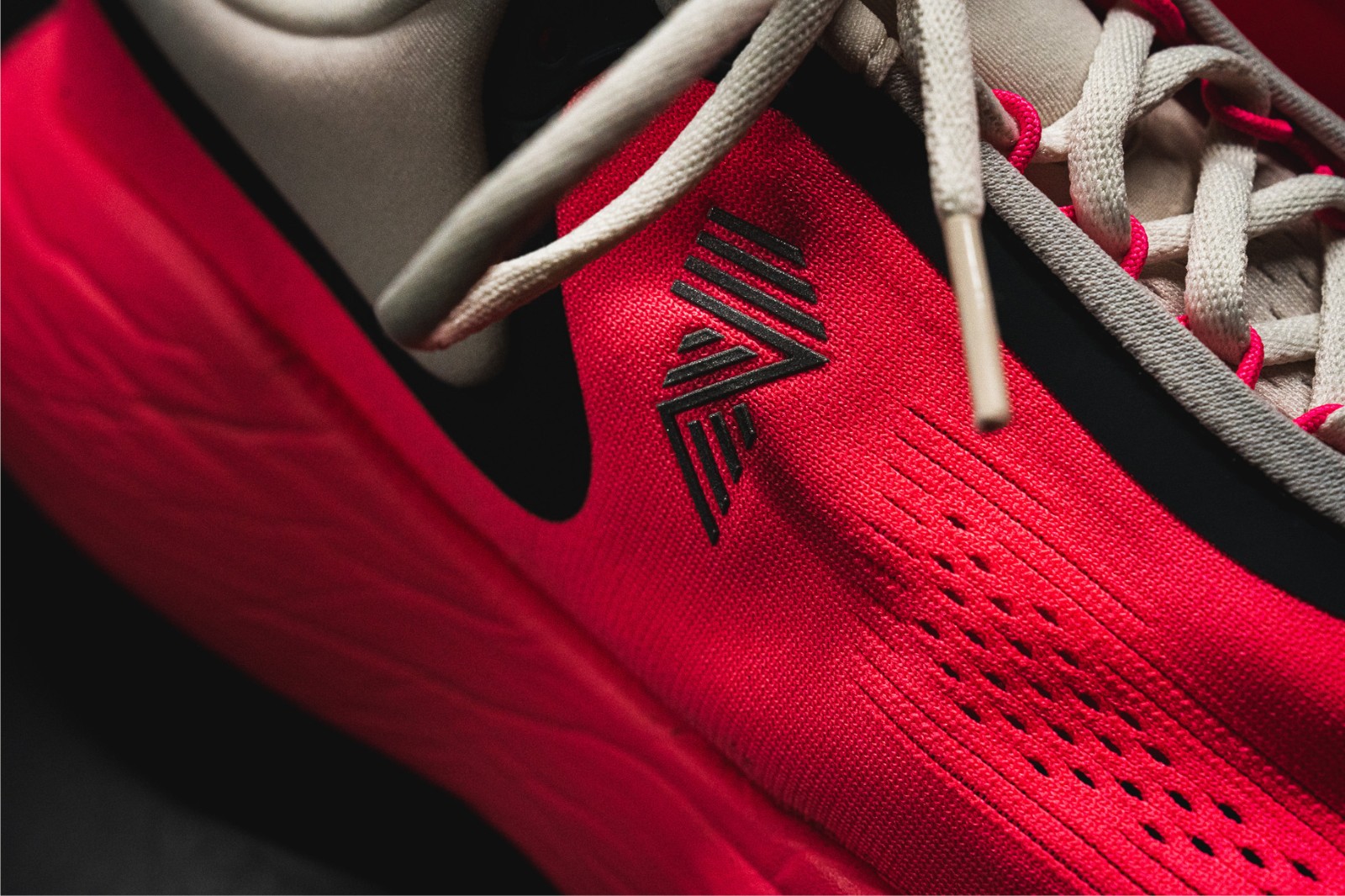
IncrediRun midsole, higher sidewalls and broad platform, engineered mesh upper
Available July 1 for $200
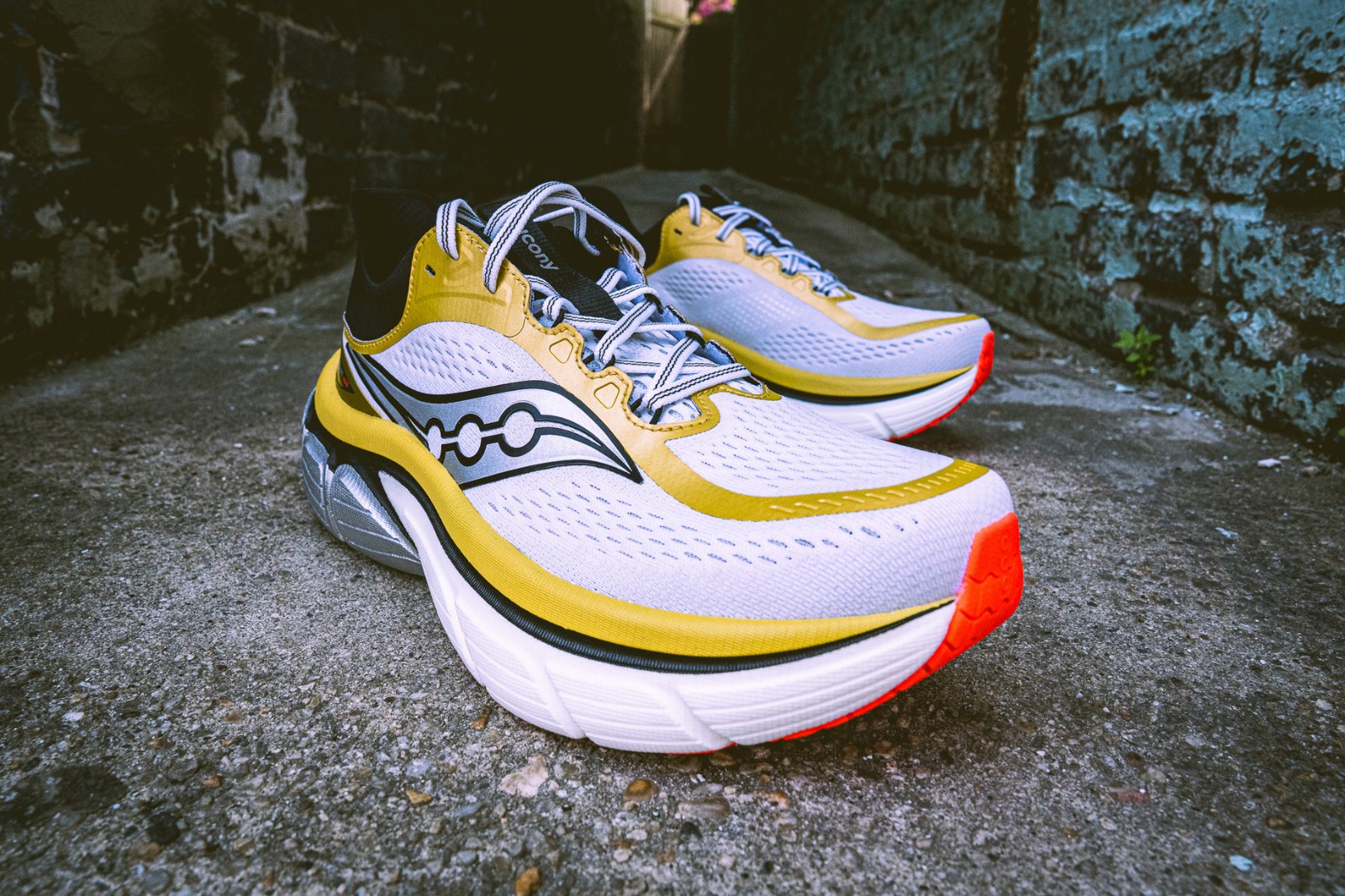
MEAGHAN: Despite the name, Saucony isn’t launching a new streaming service — it’s introducing an all-new max-cushioned trainer: the Paramount Max. Even though the shoe made an appearance at The Running Event, we hadn’t seen it in person until a pair showed up a few weeks ago.
There had already been some buzz online, mostly centered around Saucony’s IncrediRun foam — the same ultra-soft compound used in the Endorphin Elite 2 and Elite 3 — making its way into this model. As someone who gravitates toward soft, high-stack shoes, that immediately caught my attention.
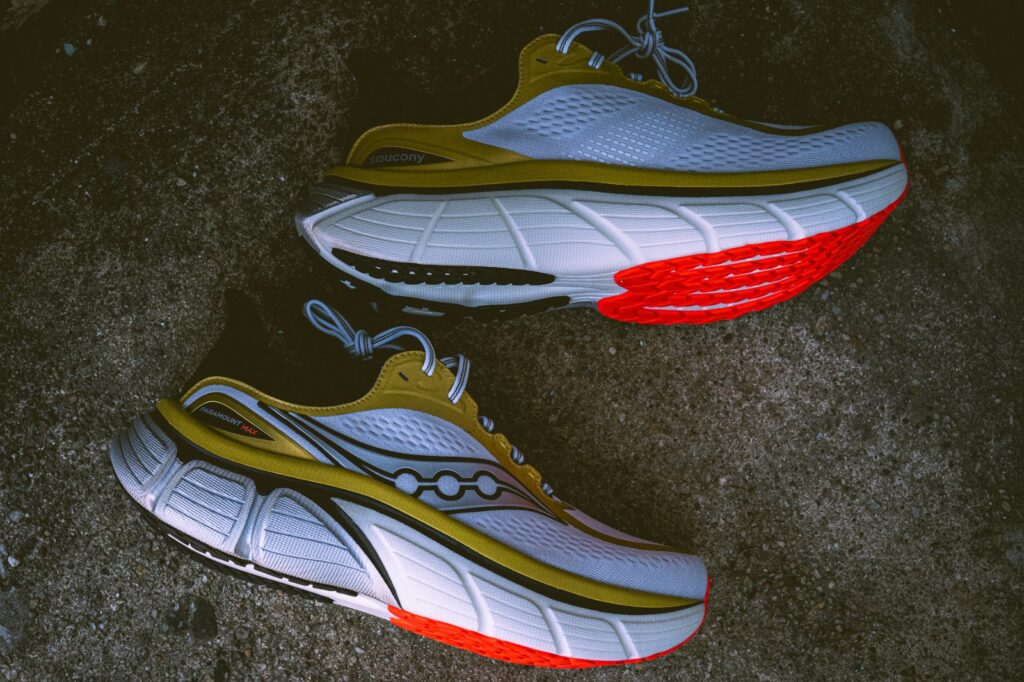
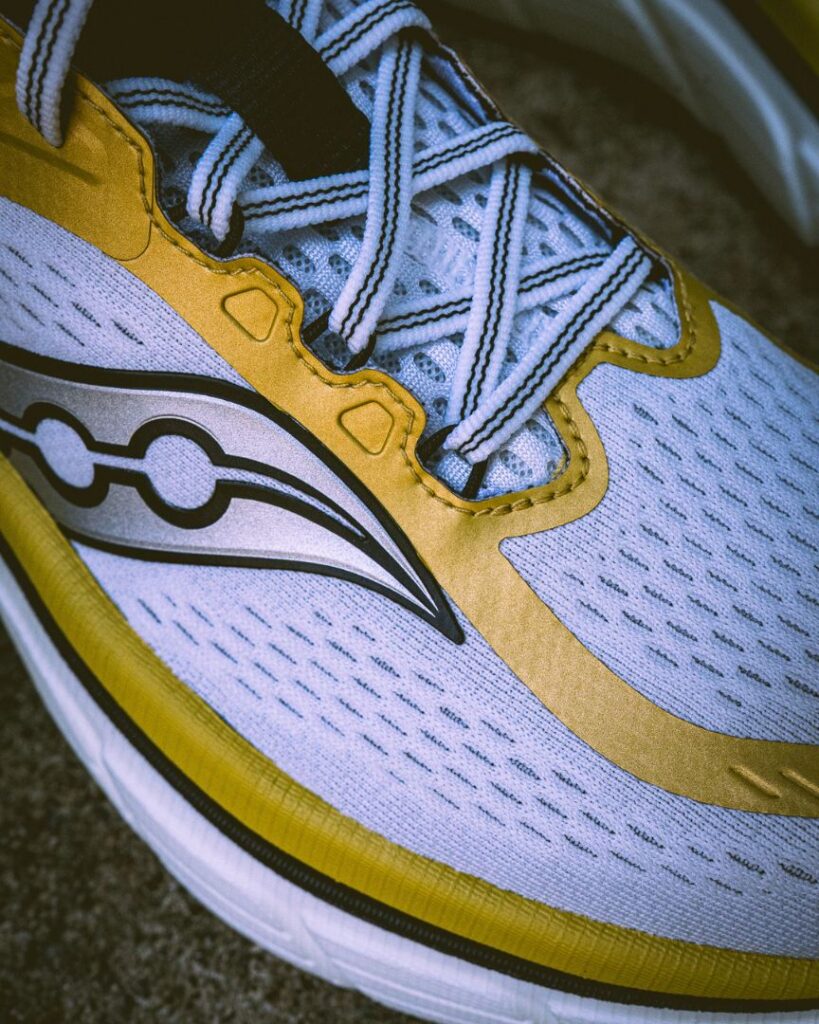
Unlike a race-day shoe, there’s no carbon plate or rigid stabilizing element here, just 43 mm of plush foam underfoot paired with strategic rubber on the outsole for durability. Up top, you get a breathable engineered mesh and an intriguing “anatomical molded heel” designed to deliver irritation-free comfort and a secure fit. And despite its substantial look, my US W7.5 weighed in at just 8.4 oz (238 g).
So, can the Paramount Max capture some of that same magic as Saucony’s race-day lineup? Let’s take a closer look.
THOMAS: Saucony has danced around the max-cushion category for a while now, throwing a few contenders at the wall without ever fully committing. Until this one. While it experimented, the Endorphin Elite 2 became a quiet training day staple, my guilty pleasure miles, 20-milers in a race shoe, I just loved it. It felt wrong. It also felt incredible. IncrediRun will do that to you.
So when Saucony announced a trainer built around that same foam, the reaction here was pretty simple: finally. Meg had one question going in: Does it hit the same notes as the Elite 2? Short answer: cushioning, yes. Performance, not quite. Let’s get into it.
KARL: Admittedly, Saucony usually isn’t the first brand I turn to when it comes to max cushion. I know there are some models in its catalog, like the Triumph and Hurricane, that are technically in that category, but never really satisfied the need for soft, plush, max-cushioned shoes. I haven’t run in the Saucony Endorphin Elite 2, so I never tried the IncrediRun foam until this shoe, but knowing how soft this feels on the scale, I was excited to give it a test.
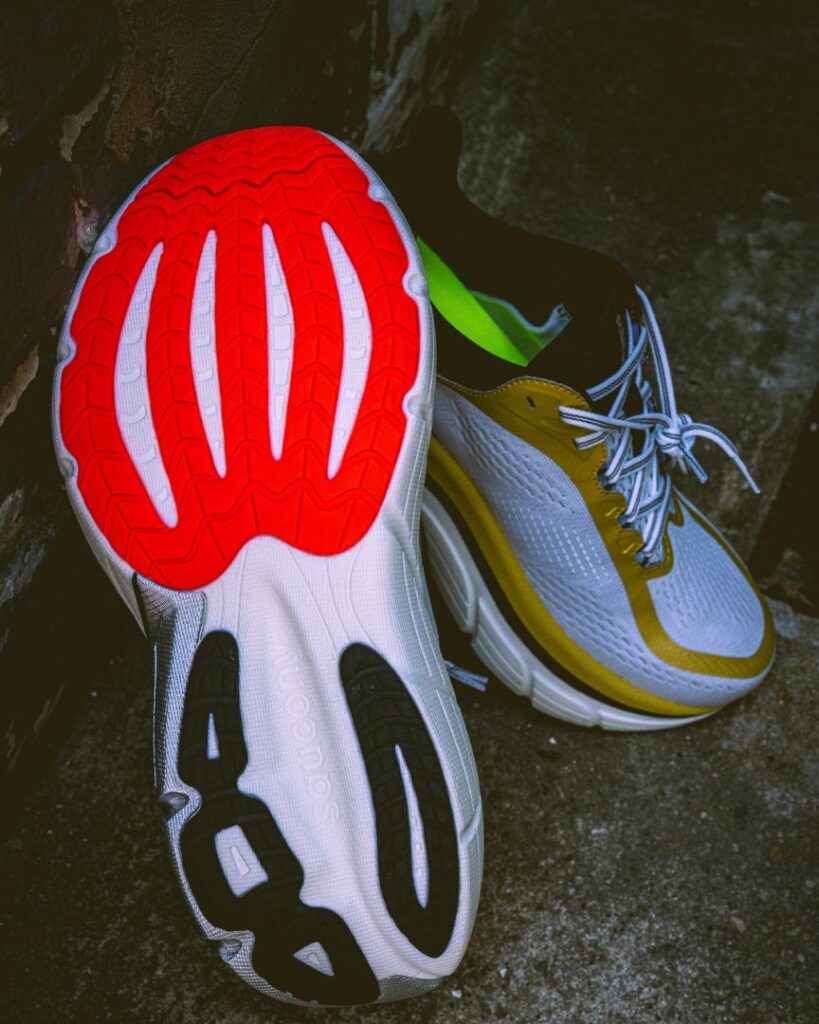
MEAGHAN: I always lead with aesthetics, but we’ll circle back to that later — for now, let’s dive straight into the step-in feel. From the moment you slip this shoe on, the plushness is apparent. The midsole foam has a satisfyingly squishy, cushioned feel underfoot, while the generously padded tongue adds an extra layer of comfort. The notably wide build also gives your feet and toes plenty of room to splay naturally, making these feel right at home straight out of the box — heel counter aside, but more on that later.
Out on the roads, the Paramount Max delivers exactly what you’d expect for a max cushioned shoe. The ride is soft, comfortable, and genuinely enjoyable. What’s impressive is that despite the tall, pillowy foam stack, the wide platform keeps things remarkably stable — you get all the fun without any of the wobbliness, which is always a welcome combination.
After Boston, I reached for this shoe day after day on my recovery runs, and it was the perfect antidote to sore, tired legs. Forgiving enough to take the edge off the fatigue, yet bouncy and engaging enough to keep you motivated to head out the door each morning.
While I kept my efforts under an hour (around 7 miles), I have little doubt these would shine on longer, easy days as well, making it a solid option for both recovery runs and casual everyday mileage.
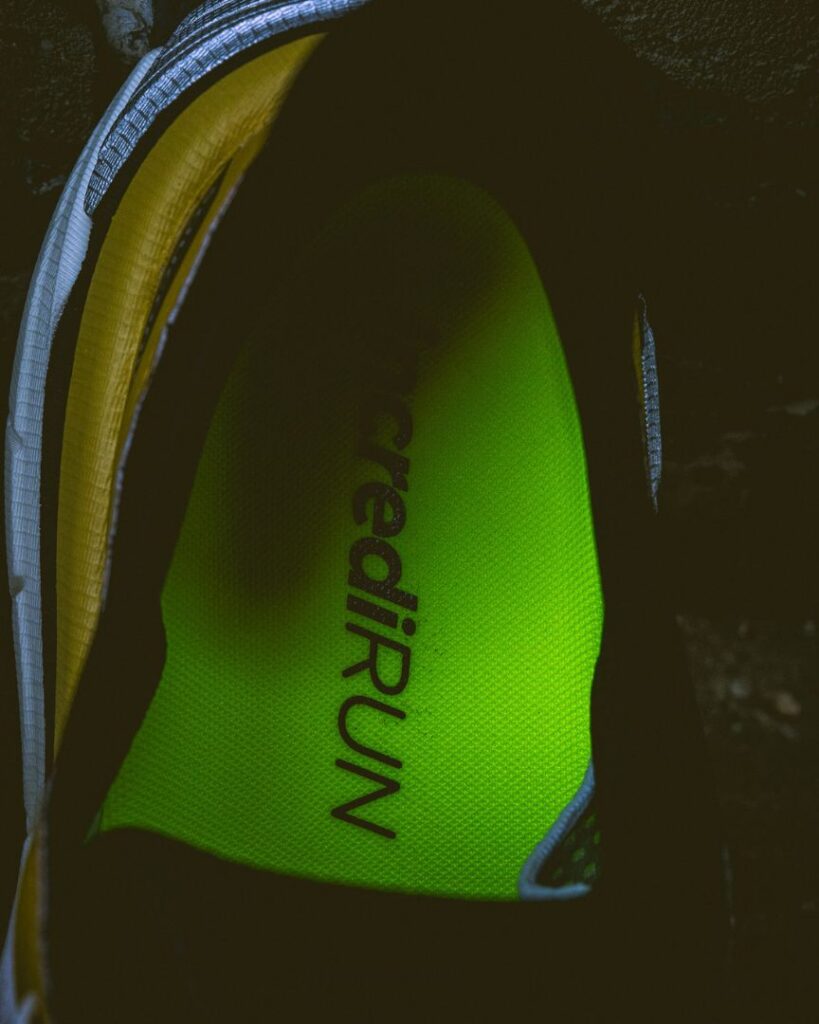
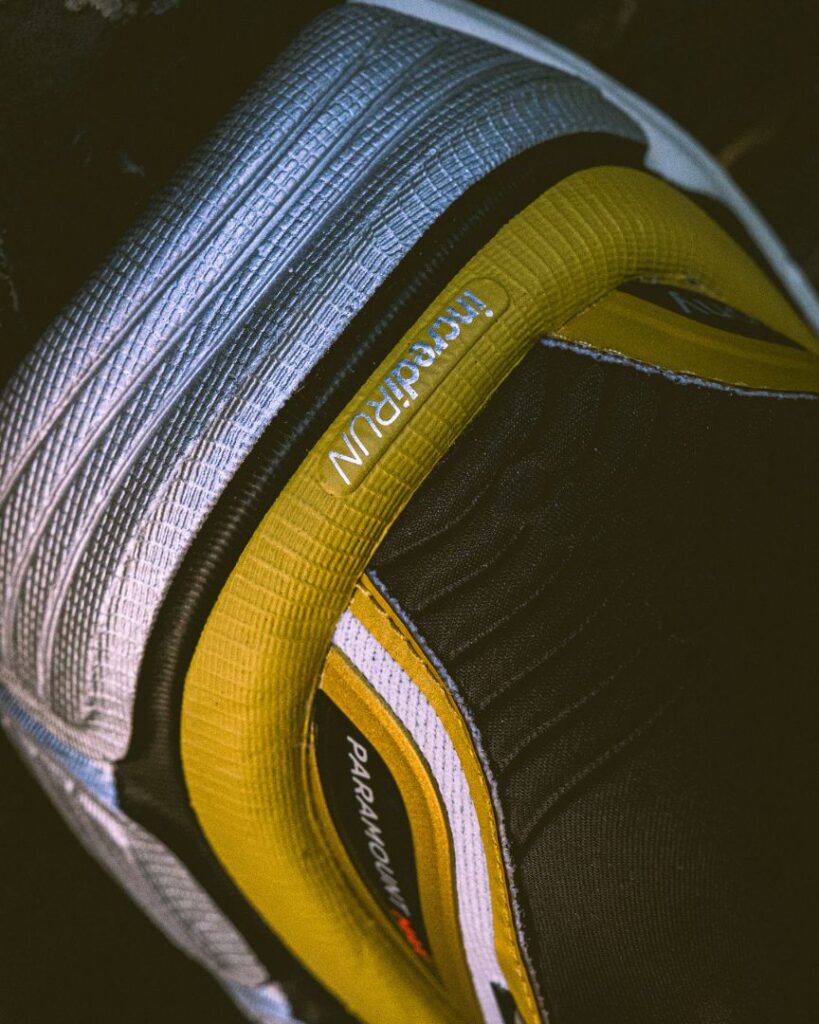
THOMAS: If Peeps made midsoles, they’d be IncrediRun. Airy, soft, borderline absurd, this is as close as running gets to hopping across marshmallows. In the office, the closest comp we landed on was Nike’s ZoomX in the Infinity line. I might throw the R.A.D. UFO in the mix, too. It’s got the same pillowy energy, though the Paramount Max’s geometry does a better job keeping things stable underfoot. ZoomX in the Infinity can get a little squirrelly; this and the UFO don’t.
Where the Paramount Max earns its keep is recovery and easy days. Post-long run, post-workout, the foam is just relentlessly kind to the legs. And for a shoe this plush, 10.5 oz. / 300 g feels like a typo with this much cush.
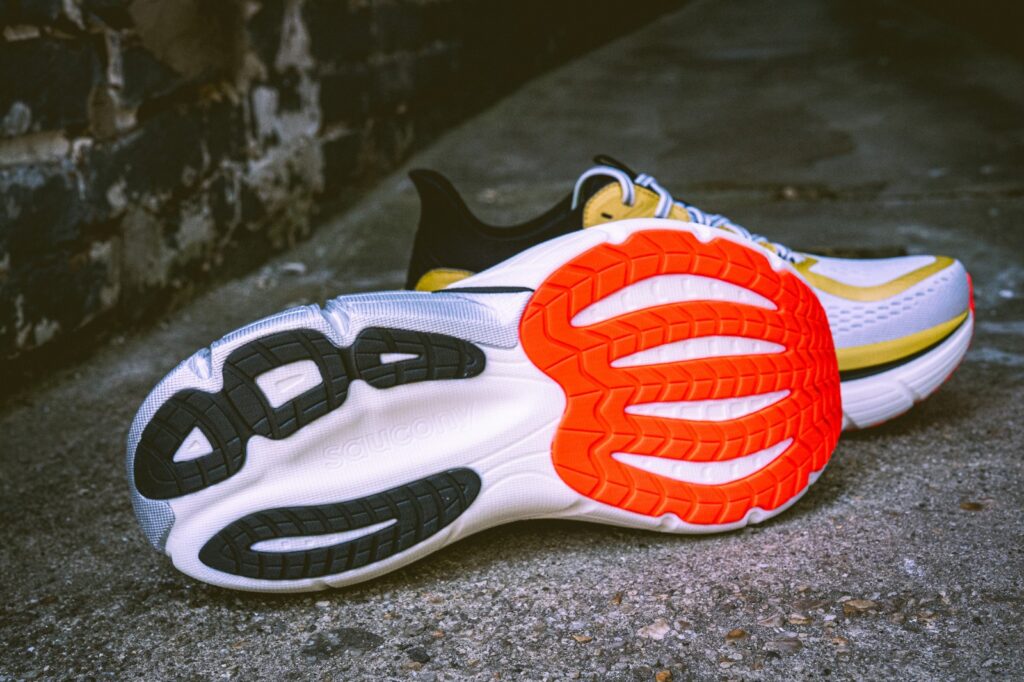
KARL: Off the bat, I would say that the super soft foam won’t be for everybody. I, however, am a sucker for this type of cushioning when done right. During my first run, I was immediately reminded of the Nike Invincible Run (1 and 2). The ZoomX foam used in those iterations was so “plushy” and “marshmallow-ey” that running in the Paramount Max brought me back to those days. There have been very few shoes I’ve tested so far that have reached this level of softness, and apparently, this isn’t even as soft as the Endorphin Elite 2 and 3, according to Thomas and Meg’s testing.
I also enjoyed the wide platform. The problem with the Nike Invincible Run was its rounded, narrow platform, which made for a relatively unstable ride. It was kind of fixed in the Invincible Run 3 thanks to the addition of the strobel board and slight firming up of the ZoomX, but it kind of took away the magic (and ultimately ended up being the last of that line). So to have something a bit more stable in the Saucony Paramount Max was a plus for me.
The weight is also pretty solid for the amount of cushion you get. Being under 11 oz. in this category, it’s a huge plus, and it never felt like I was fighting with the shoe at the end of my stride. I had a relatively secure lockdown with no rubbing or hot spots anywhere.
Shop The Shoe - Men Shop The Shoe - Women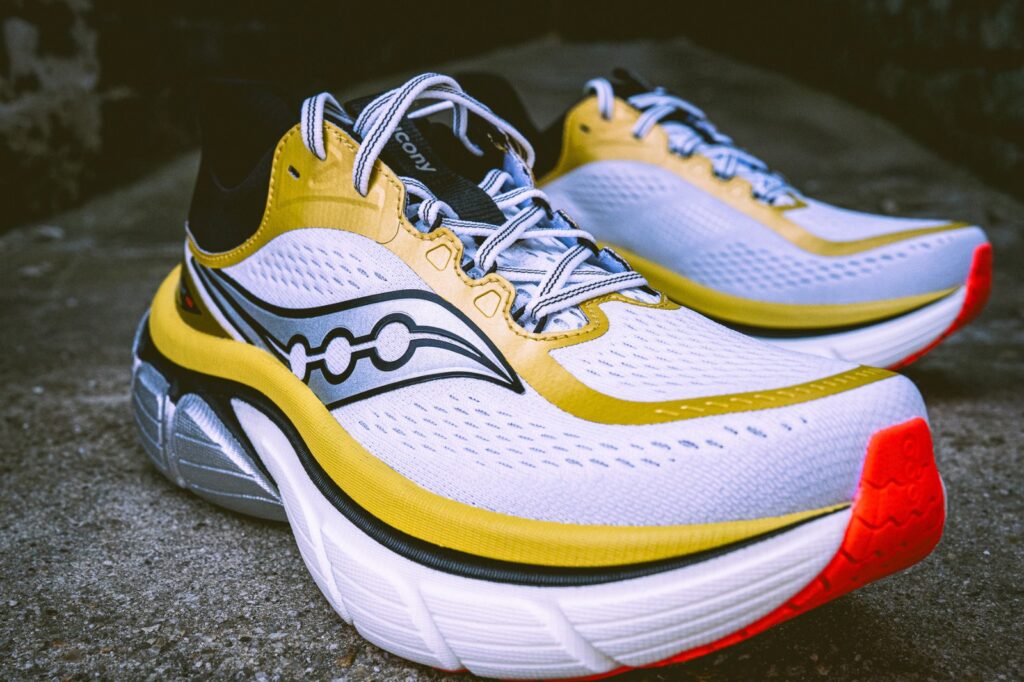
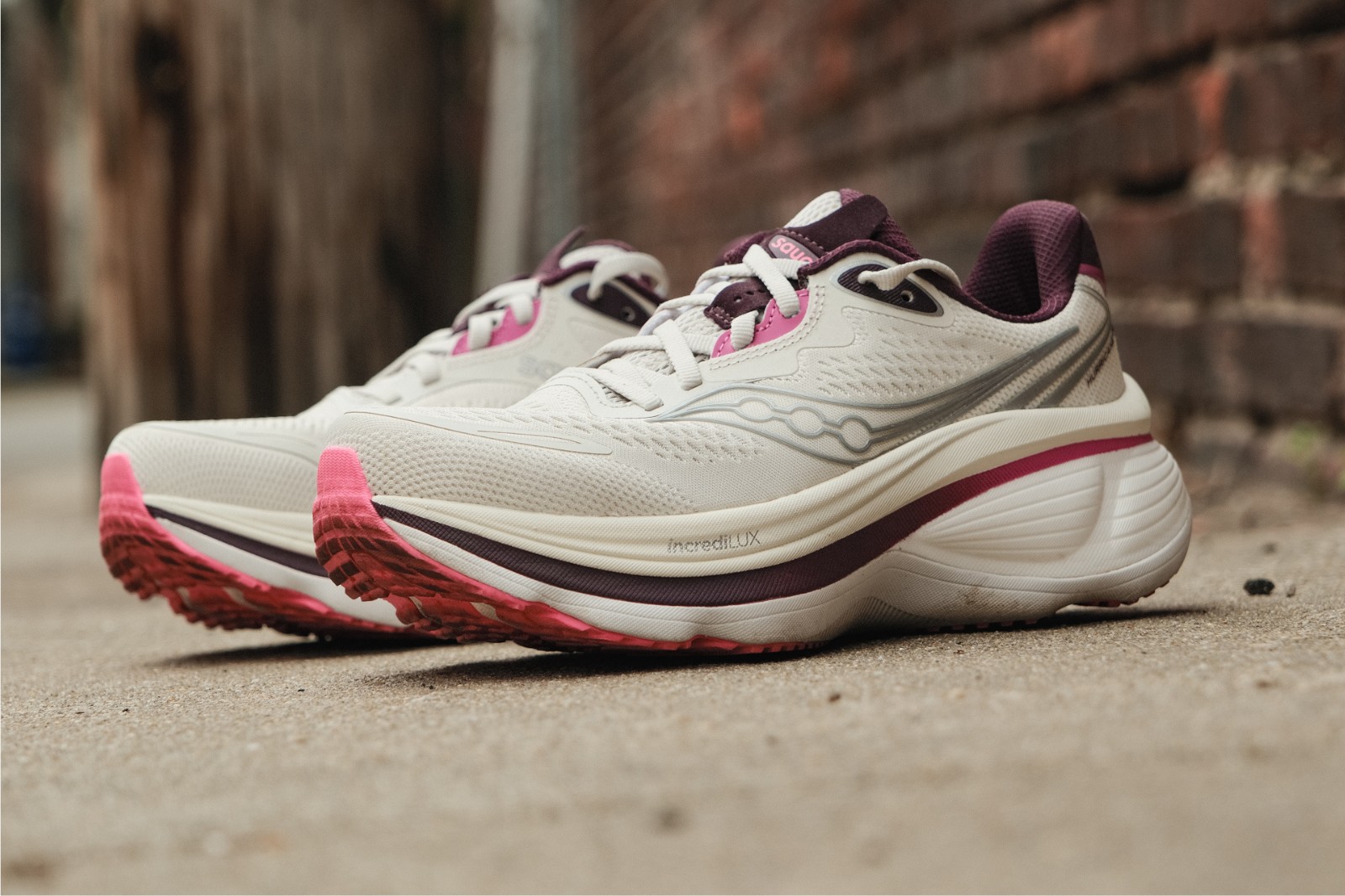
MEAGHAN: While I understand this shoe draws inspiration from retro aesthetics, I think that approach translates better to lifestyle sneakers than performance footwear. The silhouette came across as overly bulky, and at first glance, you’d expect a stiff, firm ride, but in reality, it’s closer to a full-on marshmallow.
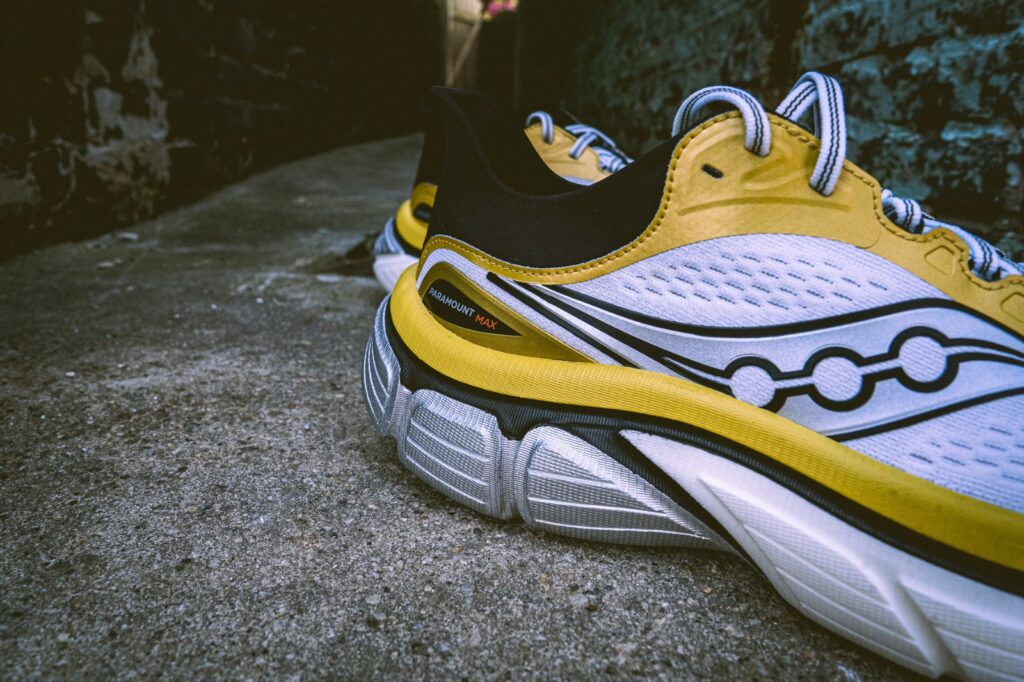
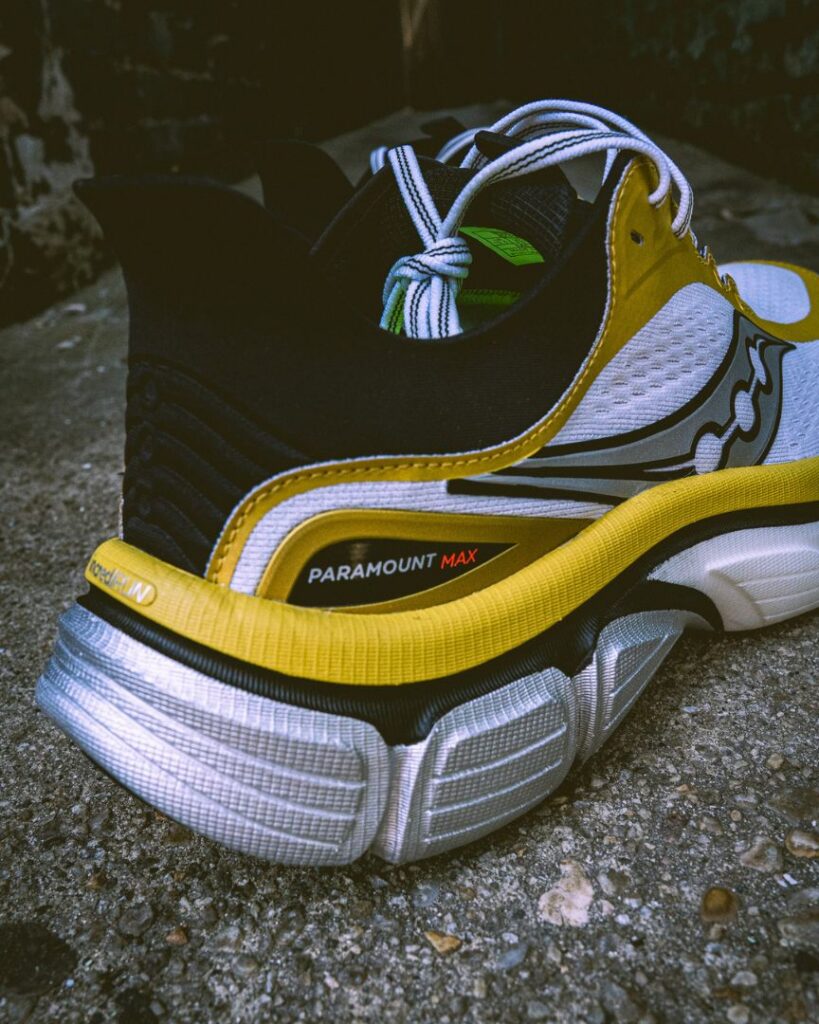
I also noticed a significant disconnect between the tongue and the upper, compared to the collar and the heel counter. Saucony’s so-called “anatomical” construction ironically worked against its intended purpose, creating friction and irritation at the heel when worn with shorter socks. The silver lining, however, is that this issue completely disappears with a mid-crew sock or higher — so as long as you’re mindful of your sock height, it’s a non-issue.
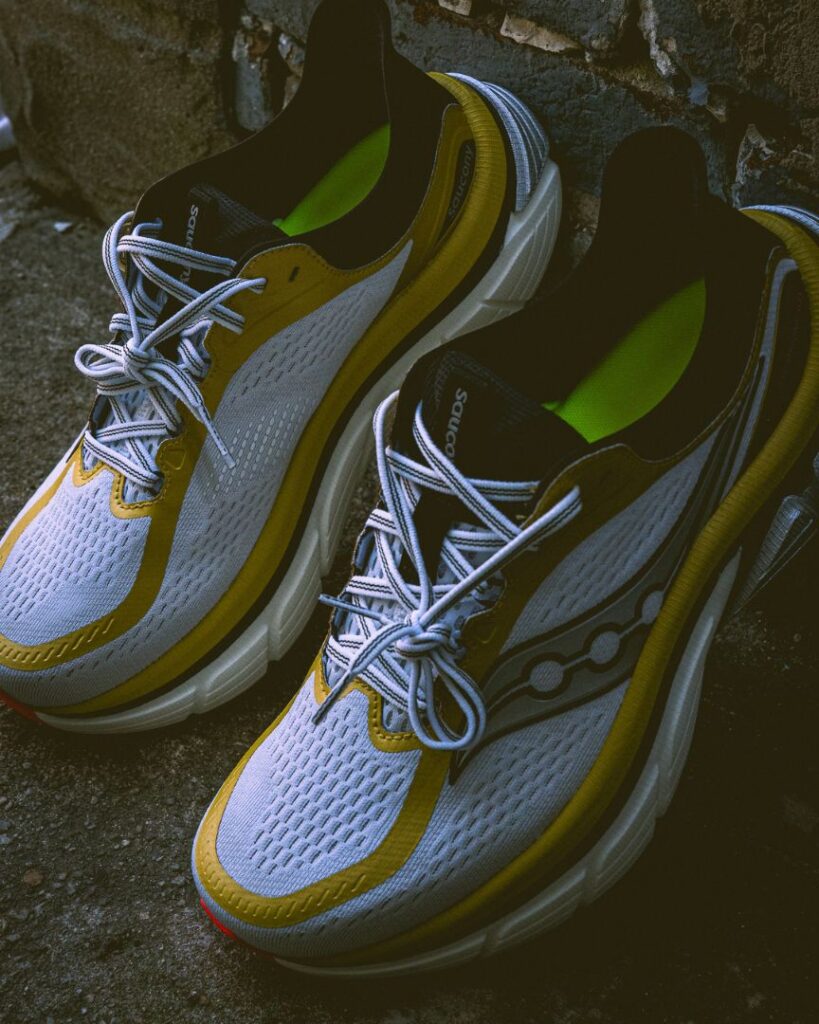
THOMAS: Fair warning: fit is personal, and my bad might be your good, so take this for what it is. The Paramount Max runs wide. Like, noticeably wide. Getting a solid lockdown meant cinching the laces more than felt reasonable, and even then, the wide midsole had a habit of clipping my opposing ankle mid-run.
In the video review, I said the toe-down look reminded me of a flounder. While I didn’t love the way the retro colors and styling translated onto the Paramount Max, I do love the idea of incorporating some nostalgia into the design.
KARL: I don’t mind the vintage-esque look of the shoe, but it definitely could use a bit more work, in my opinion (most of Saucony’s lineup could use some styling upgrades, to be honest). I agree with Meg that the tooling of the midsole makes it look like a firm shoe, even though it’s quite the opposite. I also agree that the disconnect between the tongue/upper and the heel collar and counter is quite jarring, and I noticed it upon unboxing.
Lastly, given the durometer of the midsole, this is a shoe I would strictly save for recovery days and shorter daily runs. I’m sure some runners would love to take this out on anything over ten miles, but for me, it starts to become fatiguing around that distance. Because the ride is so soft and squishy, it’s something I found myself lacing up the day after my long runs with no regret.
Shop The Shoe - Men Shop The Shoe - Women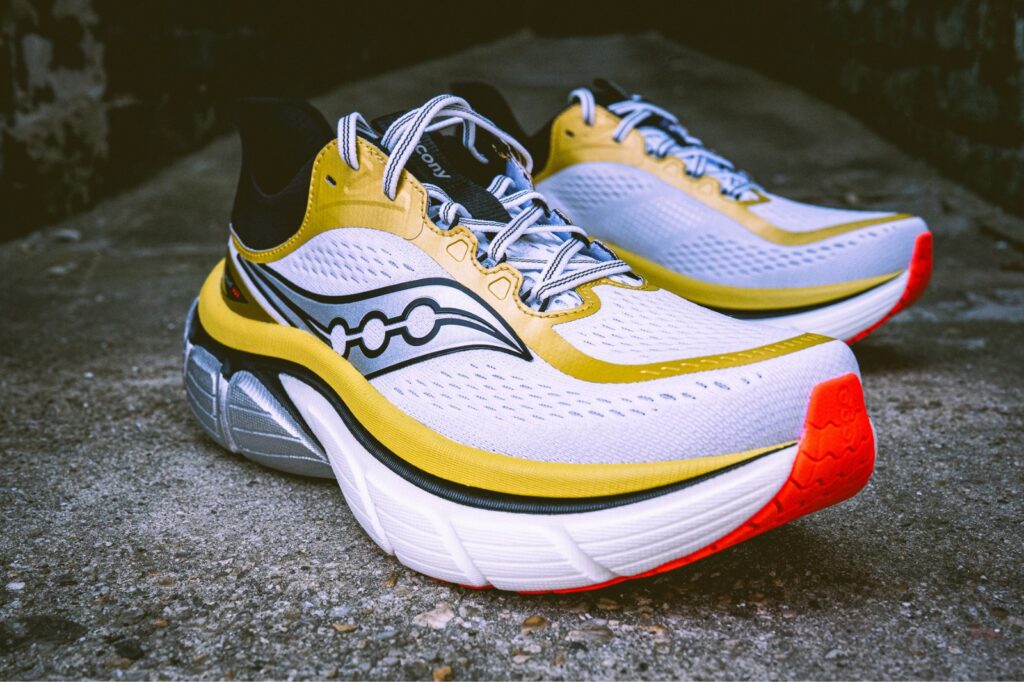
MEAGHAN: The Saucony Paramount Max is a genuinely enjoyable, soft, and cushioned daily trainer that has been the ideal recovery companion following the Boston Marathon. However, it’s worth noting that the $200 price point is an increasingly competitive space. Options like the Superblast 3 and Hyperboost Edge are sitting in the same bracket, and some arguably offer a more versatile ride. But if plush comfort and a wide fit are at the top of your list, the Paramount Max absolutely deserves a spot in the conversation.
THOMAS: The foam is legitimately great, and as a first real swing at max cushion, Saucony connects. The Paramount Max does exactly what it’s designed to do; it just does it for a pretty narrow slice of the weekly schedule. The target runner here is either someone who wants comfort above everything else or someone deep enough in the rotation game to justify a single-use trainer.
At $200, though, that’s a tough sell. That price range offers genuinely versatile options that don’t require you to sacrifice cushioning to get there. The Adidas Hyperboost Edge, R.A.D. UFO, and Asics Superblast 3 are all worth a look before you commit. Wide-foot crew, however, this might actually be your shoe. The fit issue that hurt it for me could be exactly what you’ve been waiting for.
KARL: Overall, I really enjoyed the miles I put in the Saucony Paramount Max. I think Saucony hit a home run with the Incredirun formulation and hope to see it put in some more products down the line. If they can put this in a chassis more akin to the Azura or an Endorphin shoe, I think you’d have pretty much the perfect soft shoe. All that said, this still wouldn’t be my only shoe in the rotation, but it’s certainly a welcome addition if you can spare the $200 price tag.
You can pick up the Saucony Paramount Max for $200 on July 1 from Running Warehouse (featuring free shipping and 90-day returns) by using the buttons below.
Shop The Shoe - Men Shop The Shoe - Women
Saucony Paramount Max | Full Review
Have something to say? Leave a Comment
Sign in or create a free account to comment. You'll come right back here.
Sign in / Sign up


Meaghan signed up for her first marathon three weeks before the race, because it was $10 more than the half she planned to run. She learned everything in running the hard way. Now a USATF & UESCA certified run coach, she loves encouraging friends to go for big goals as she continues to chase faster times. She enjoys a hot cup of coffee, a cold martini, and making bagels for friends and family.
More from Meaghan
As the founder of Believe in the Run, Thomas’s goal is to help runners pick the shoes and gear that will make their running experience the best that it can be.
More from Thomas
Karl is the Media Coordinator for Believe in the Run. Prior to joining the team, Karl spent the last decade working in the media industry as a cinematographer, director, screenwriter, and editor. He’s also an avid musician and craft beer aficionado. If he’s not running, he’s recording music, watching movies, or wandering around with his photo camera.
More from Karl

Be one of the first runners to rate it.


$200 is insane pricing for this and that’s not even factoring in how ugly it is.