Shop BITR Apparel Shop Now
We independently review everything we recommend. When you buy through our links, we may earn a commission.
9.6 oz. (270 g) for a US M10.5 / 7.9 oz. (225 g) for a US W7.5
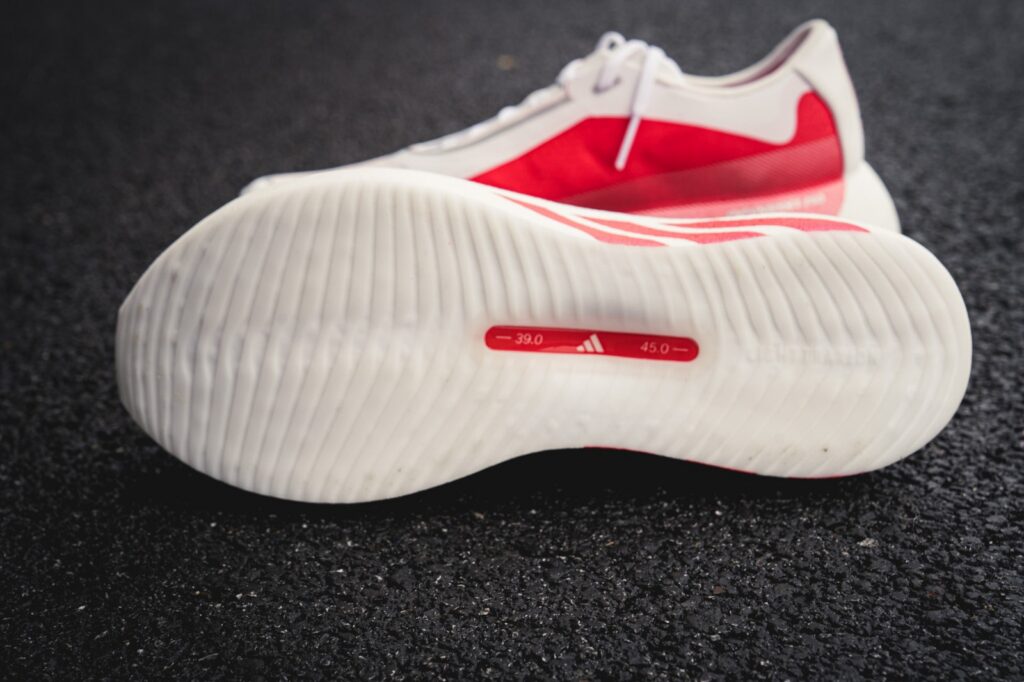
45 mm in heel, 39 mm in forefoot (6 mm drop)
Daily training, long runs, and uptempo efforts
Hyperboost Pro foam, Primeweave Upper, Lighttraxion outsole
Available now for $200
THOMAS: The first Boost shoe debuted 13 years ago, and over the past seven or so years, whenever we reviewed an Adidas Boost running shoe, the reaction from runners was almost predictable: “That’s a lifestyle shoe, Boost is cooked.” While Boost once had its moment in the spotlight, it was eventually outpaced by lighter, more energetic foams. We struggled to defend it, often relegating it to the “gym shoe you might jog a couple of miles in” category.
That perception shifted during the 2024 Road to Records event at Adidas headquarters in Herzogenaurach, Germany. I was invited into the lab to test several shoes, three of which resembled the UltraBoost.
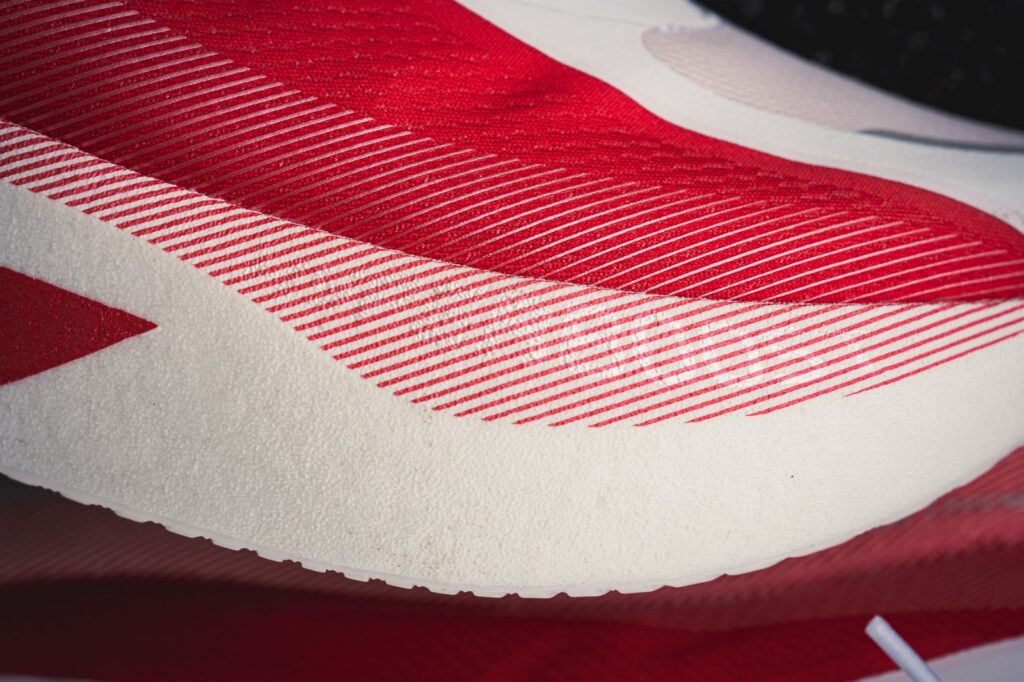
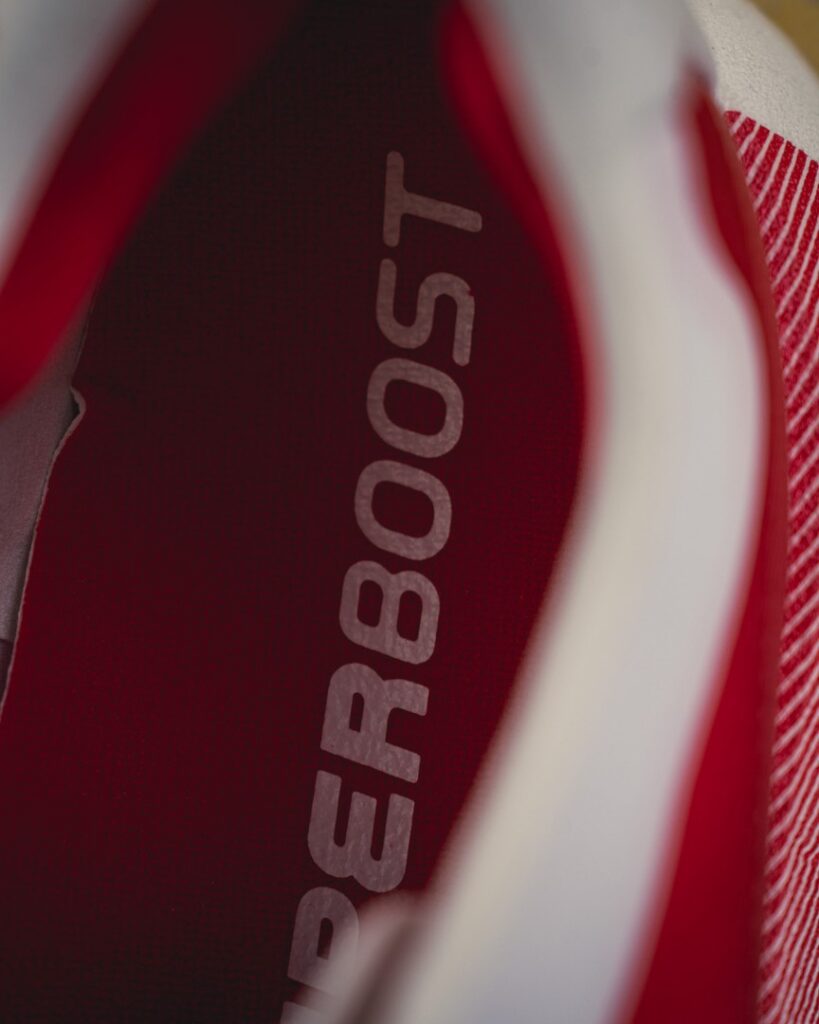
One pair immediately stood out, prompting me to say, “Boost is back!” It felt lighter, springier, and noticeably more dynamic. Simply put, fun to run in. The difference? A new foam called Hyperboost Pro. Adidas reengineered the chemical composition of its Lightstrike Pro foam and pelletized it, creating a next-generation version of Boost.
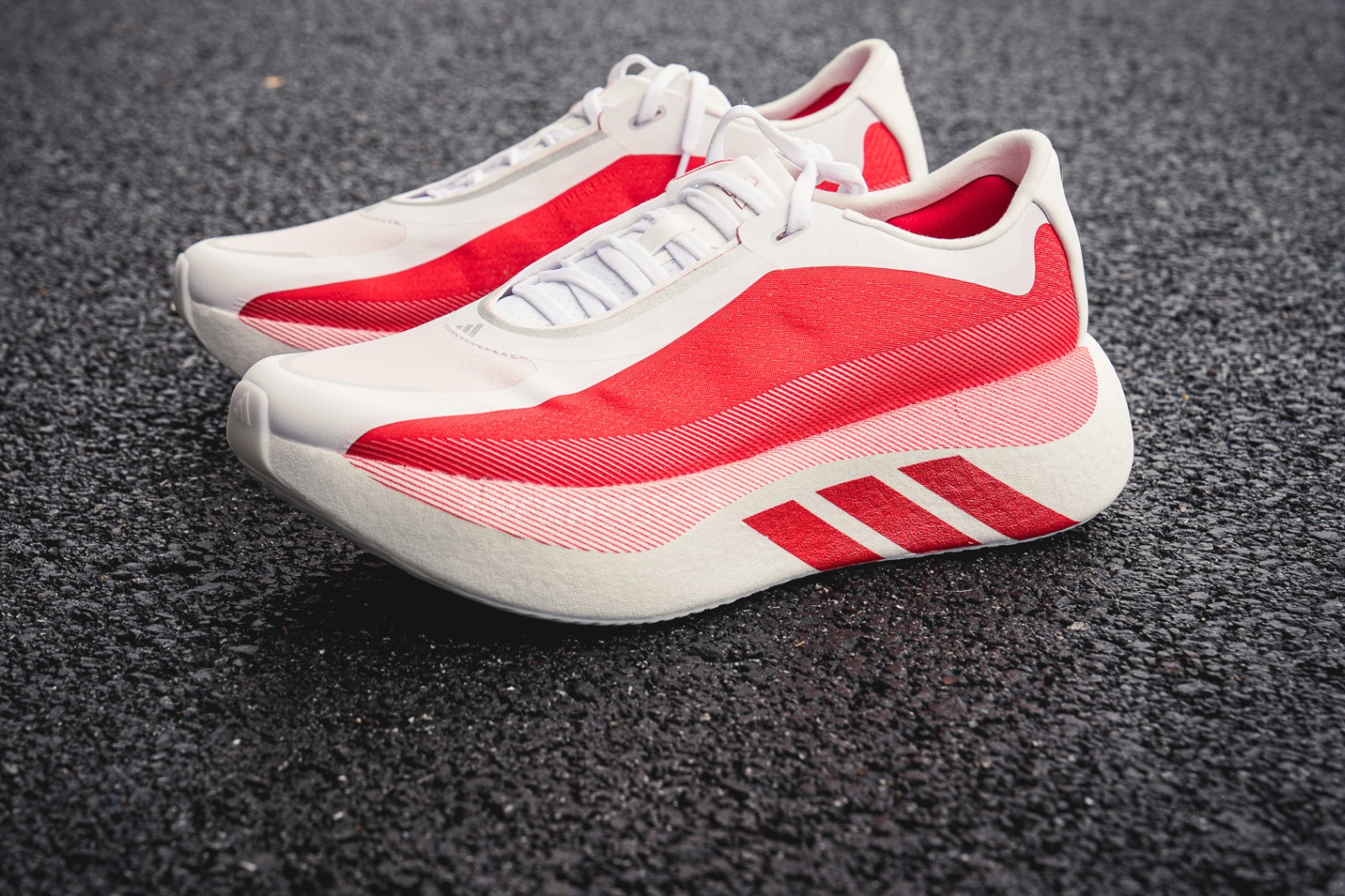
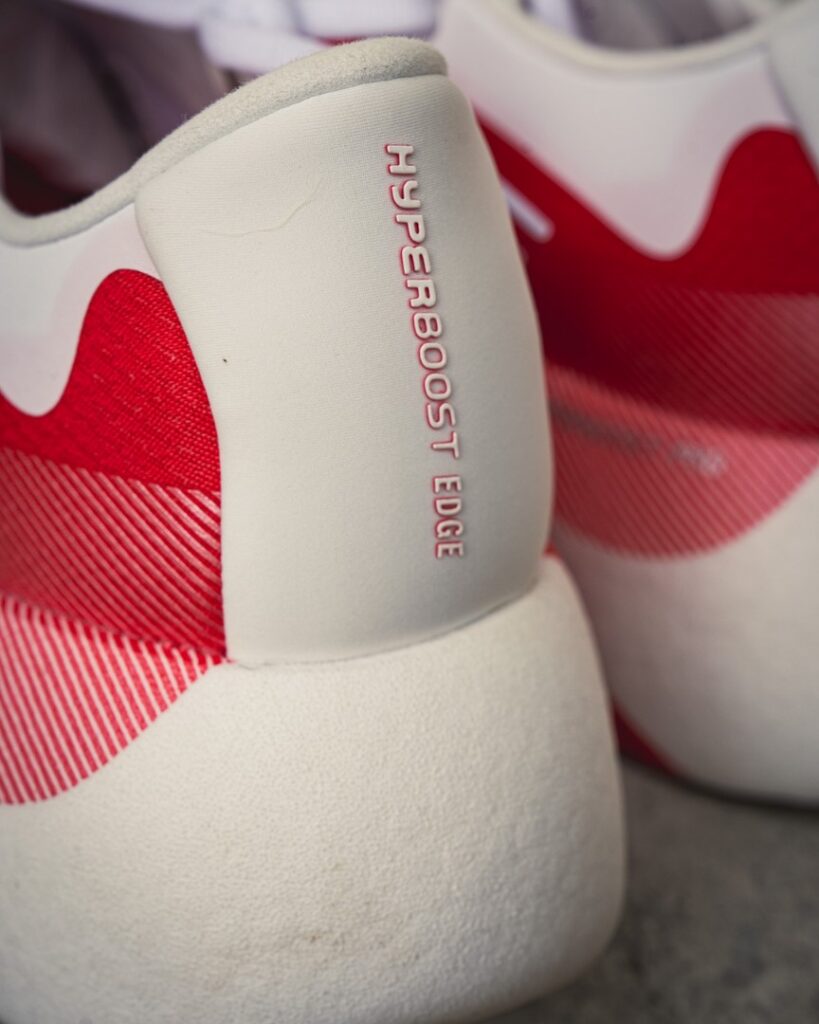
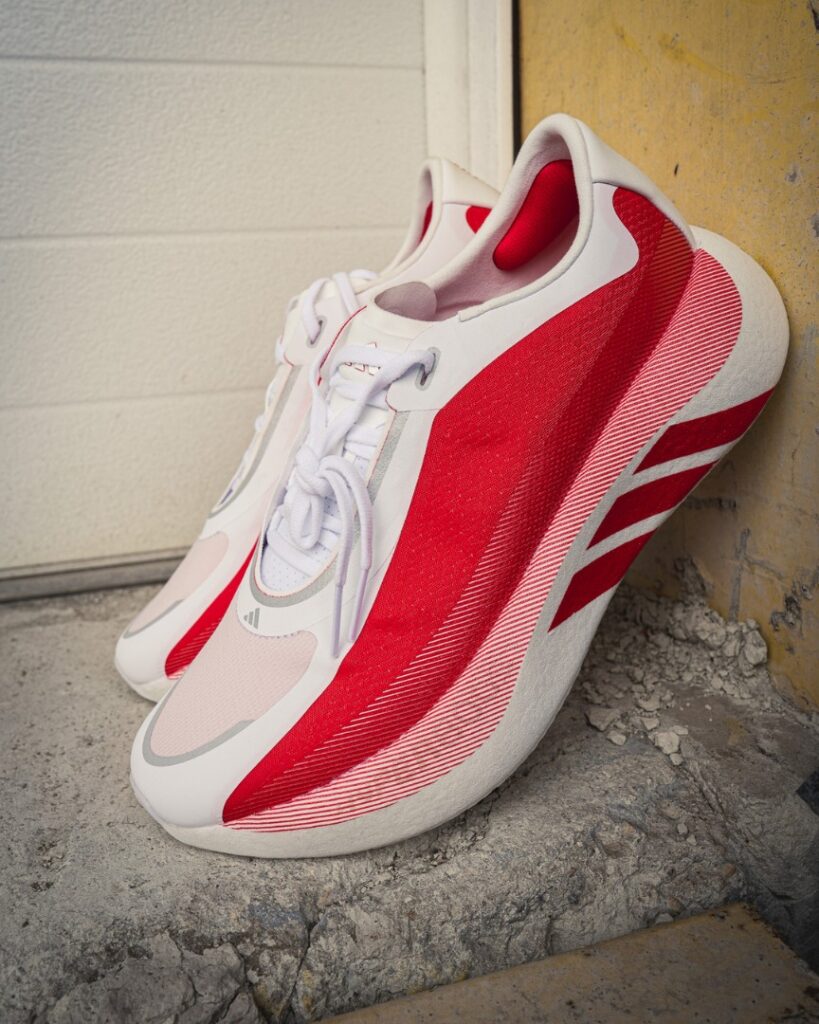
This updated foam is stacked generously — 45 mm in the heel and 39 mm in the forefoot —on the Hyperboost Edge. Adidas paired it with a redesigned Primeweave upper and a full-coverage Lightraxion outsole. The midsole is the clear star of the show.
Where many shoes rely on a dual-foam setup to achieve balance, this single foam delivers cushioning, rebound, and stability all at once. It’s soft on impact, responsive on toe-off, and smooth through every phase of the stride. Boost isn’t just back, it’s better than ever.
MEAGHAN: Thomas delivered a compelling history lesson on Boost foam, and I share his view that Boost truly had its heyday more than a decade ago. Since then, it seems to have found a stronger foothold in the lifestyle space rather than performance running. I’ll admit, I wasn’t convinced Boost would ever stage a real comeback, yet here we are discussing a brand-new model from Adidas, the Hyperboost Edge.
I didn’t even realize this shoe was in development until we caught our first glimpse of it at The Running Event last year. The design immediately stood out with its futuristic aesthetic, and the foam felt noticeably lighter in hand. Still, I had my doubts. In the past, every shoe I tried with a Boost midsole felt somewhat heavy and clunky. But once I finally laced up a pair myself, those concerns quickly disappeared.
CHAD: So in all my time running, I’ve run in numerous pairs of Adidas shoes, mostly in the Adizero lineup (Adios Pro, Takumi Sen, Prime X Strung). In fact, I have never once laced up a pair of shoes from the Boost line, despite finding them very visually appealing.
Once I saw the early tech specs and details for the Hyperboost Edge, I prayed I would be blessed to review it. Thomas and Meg hit on some of the specs, like the max stack height (45 mm / 39 mm) of the new Hyperboost midsole foam, and their backgrounds rocking the Boost models. So let’s just get to how the shoe performed.
THOMAS: The first time I slipped on the Hyperboost Edge, I was standing on the cement floor of Adidas’ “Laces” building. Our host had her phone out and caught the grin spreading across my face. I felt both excited and relieved by how good the shoe felt underfoot. We’d made the trip to Herzo (as the cool kids call it) specifically to cover this launch. If the Hyperboost had been a dud, it would’ve been painfully awkward.
What struck me immediately was the sensation of the midsole compressing and snapping back. The bounce is unmistakable, and the shoe feels impressively light, especially considering the lightest Boost models in the past were at least 3 ounces (85 grams) heavier. At first, I wasn’t sold on the look, but from above it’s sharp, and once the midsole started to sing on the run, I grew to appreciate its unique style.
I wouldn’t peg the Hyperboost as a pure speed shoe, but it can definitely move. On an early morning run with Meg, who, as always, pushed the pace harder than I would on my own. I was scheduled for six miles. The first three felt so smooth that I just kept going. We ended up covering eight miles, nearly a minute per mile (8:19) faster than my usual easy pace. The ride stayed fluid from start to finish, and even better, my legs felt fantastic afterward.
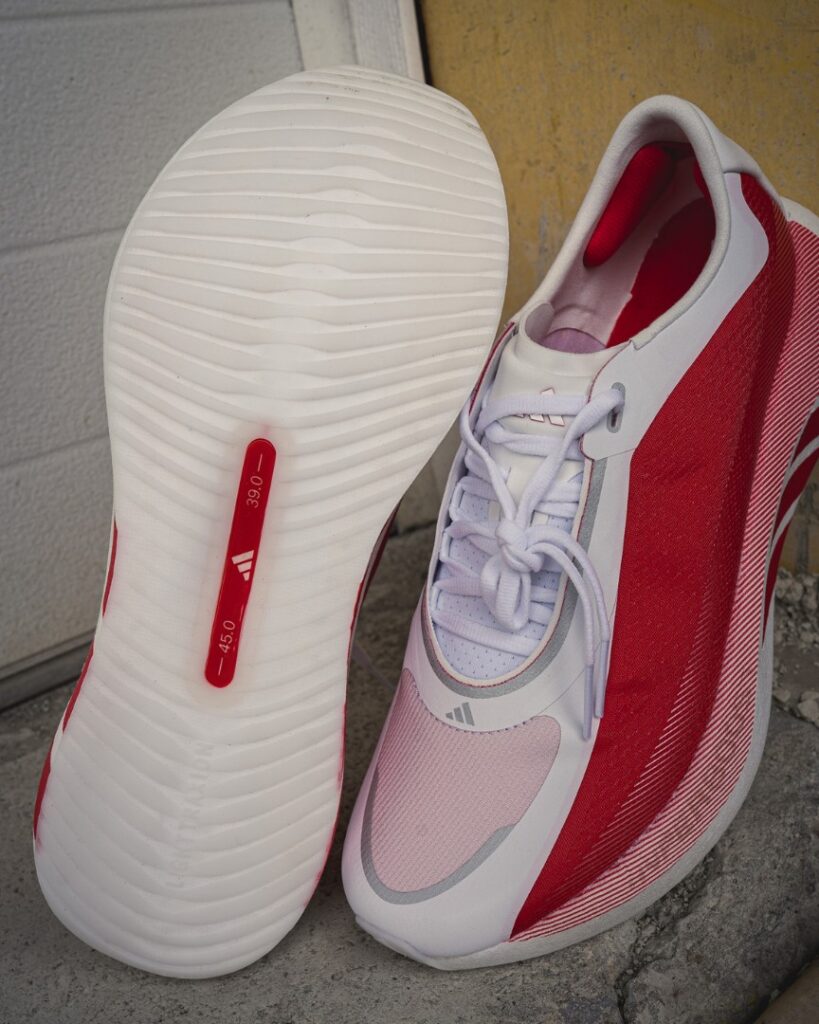
To top it off, the full-coverage Lighttraxion outsole delivers excellent traction and grip, adding confidence to every stride.
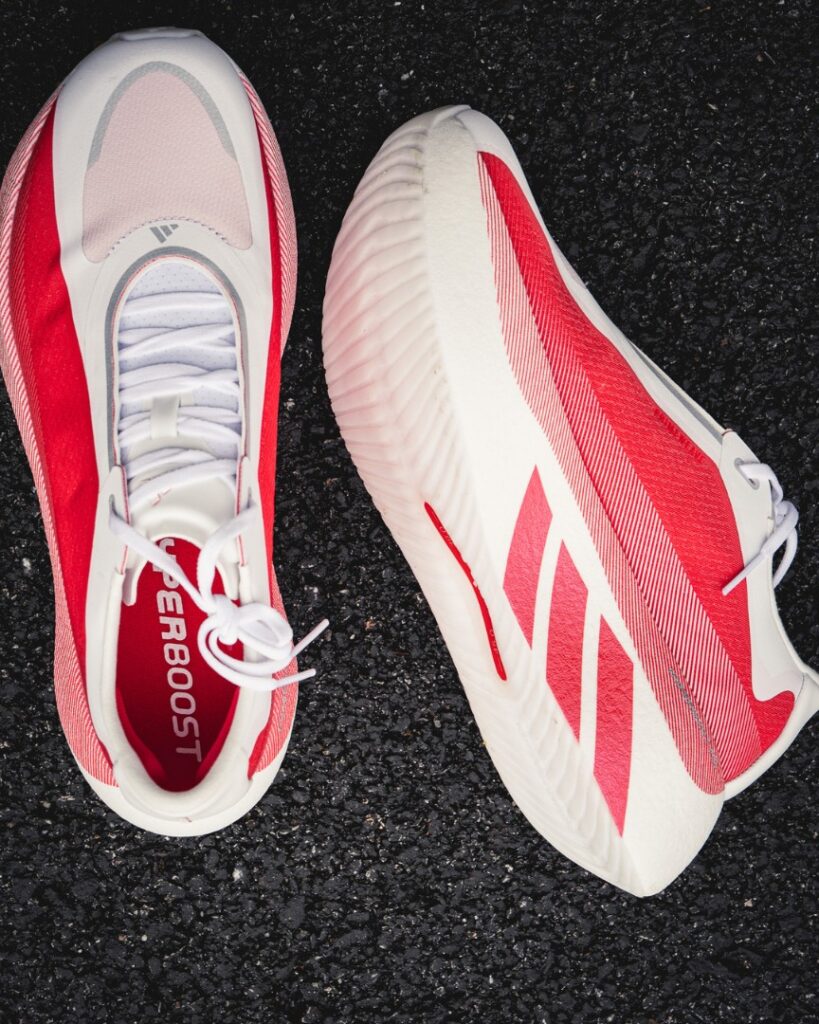
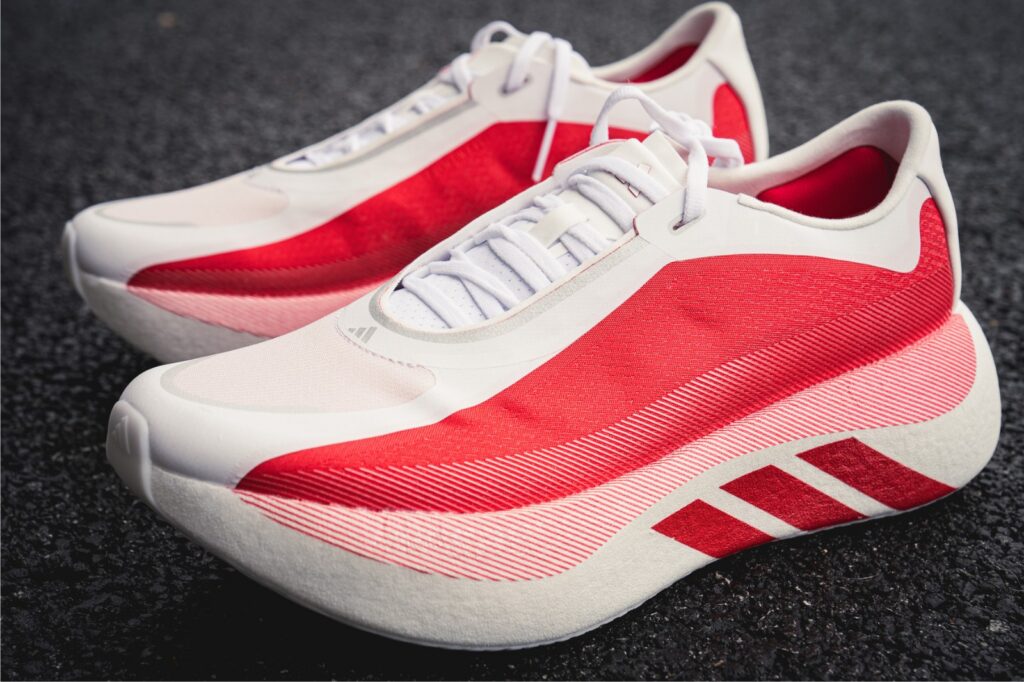
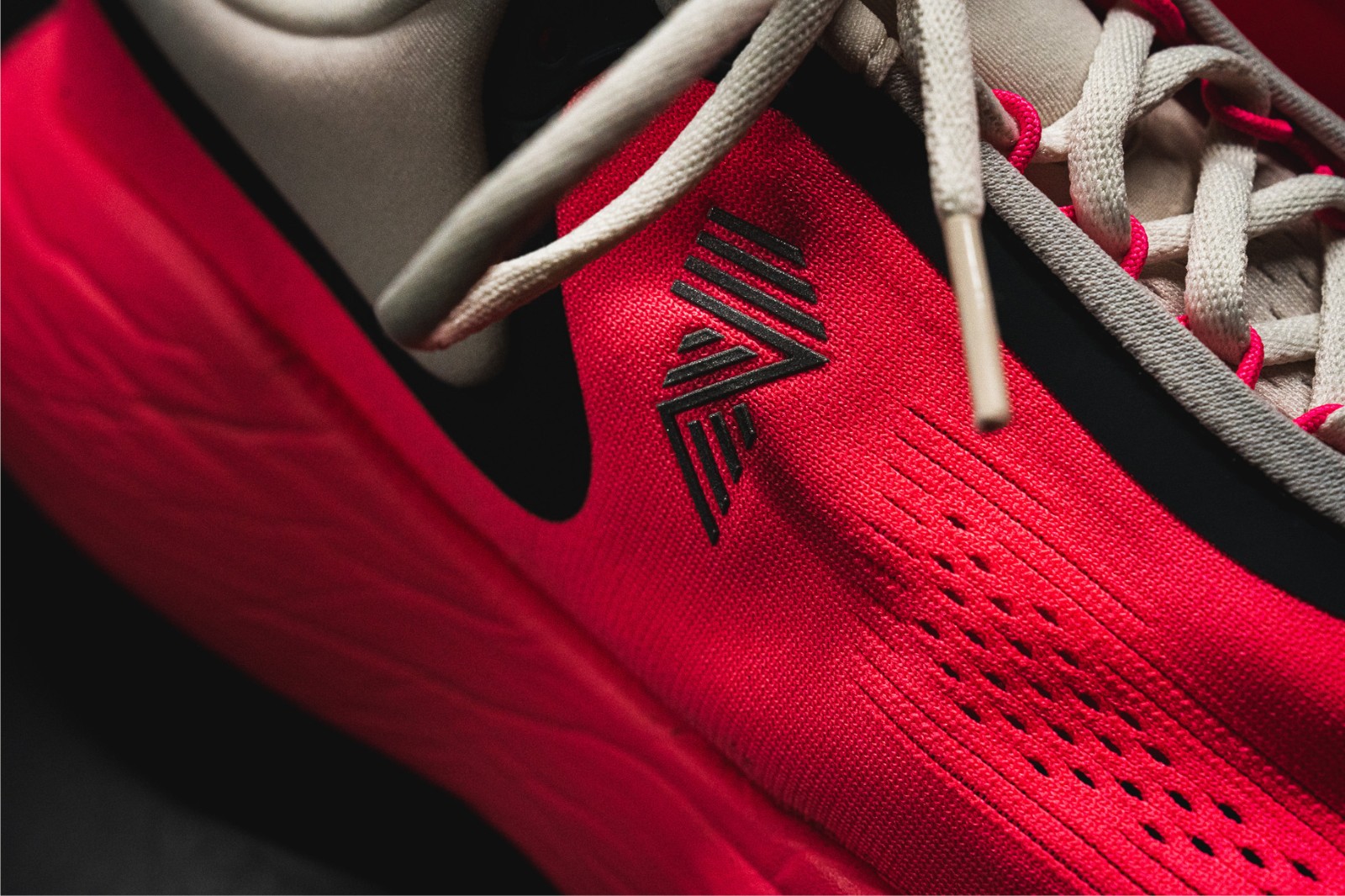
MEAGHAN: It wasn’t exactly love at first step-in, largely because the initial fit wasn’t as seamless as I’d hoped (more on that later). Still, even though red isn’t usually my go-to colorway, the futuristic lines and clean, minimalist build, accented by the bold three stripes, feel unmistakably Adidas. And I dig it.
Underfoot, there’s a massive slab of foam, 45 mm in the heel, which is always a lovely sight. The fit runs true to size, with a generously accommodating forefoot and laces that do an excellent job of locking the foot down. The upper is best described as substantial, particularly around the collar and heel. It delivers a secure, held-in sensation, more so than I’ve felt in other shoes, but it never ran overly warm during my miles.
The real star of the show, though, is the new Hyperboost Pro midsole. As Thomas mentioned, it’s essentially a pelletized version of Lightstrike Pro (an ePEBA compound), meaning it’s Boost in name more than composition. Adidas has taken the high-performance DNA of its race-day foams and reworked it into a durable, energetic platform built for everyday training, long runs, and just about any run you throw at it. I loved the underfoot sensation of this shoe from mile 1 to mile 12, and the bounce never seems to die. I wouldn’t say this is a ‘fast’ shoe by any means, but you could definitely pick up the pace if you wanted. I found myself lacing these up most often for recovery runs or easy mid- to long-distance runs (around 10-12 miles).
It’s also worth noting that the weight is substantially lower than that of your typical Boost shoe… My US W7.5 came in at 7.9 oz (225 g), and while that’s on the heavier side for a daily trainer, the weight is well distributed throughout the shoe, and it doesn’t feel heavy at all out on the road.
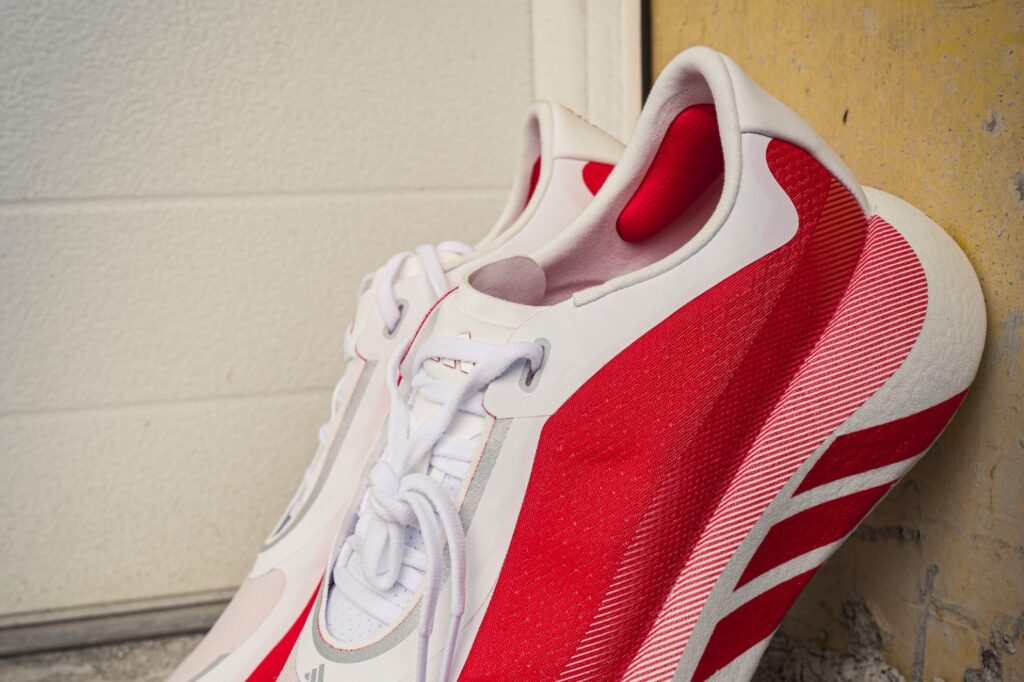
CHAD: Full transparency, the main reason I wanted to try this shoe is that I thought the Hyperboost Edge had one of the best aesthetics I had ever seen in an Adidas shoe. And that is saying something, because I think Adidas overall in the Adizero line has the cleanest-looking shoes consistently in the market.
Having the iconic three stripes in red on the midsole was a bold choice that I think paid off, as was the decision to go with bold red. I think it all worked really well, as the overall design looks very futuristic, coupled with the integrated, thinly padded tongue. I’ll get to the upper fit and comfort later… but not in this section.
With looks being important, performance is importanter… and yes, I just made up that word. I was absolutely blown away by the underfoot feel of this shoe on initial step and as I started to run. The new foam, Hyperboot Pro, which is a beaded form of the ePEBA that Adidas calls Lightstrike Pro, feels like any elite superfoam you’ll find on the market, or even better.
In fact, given how they softened up the Lightstrike Pro for the new Adios Pro 4, I’m going to go on record and say I enjoyed the Hyperboost Pro more as a bigger runner, as I felt like I was getting more back in the form of energy return. The pace on my easy miles was much faster than I anticipated, and the ride was surprisingly stable for the stack height.
Shop The Shoe - Men Shop The Shoe - Women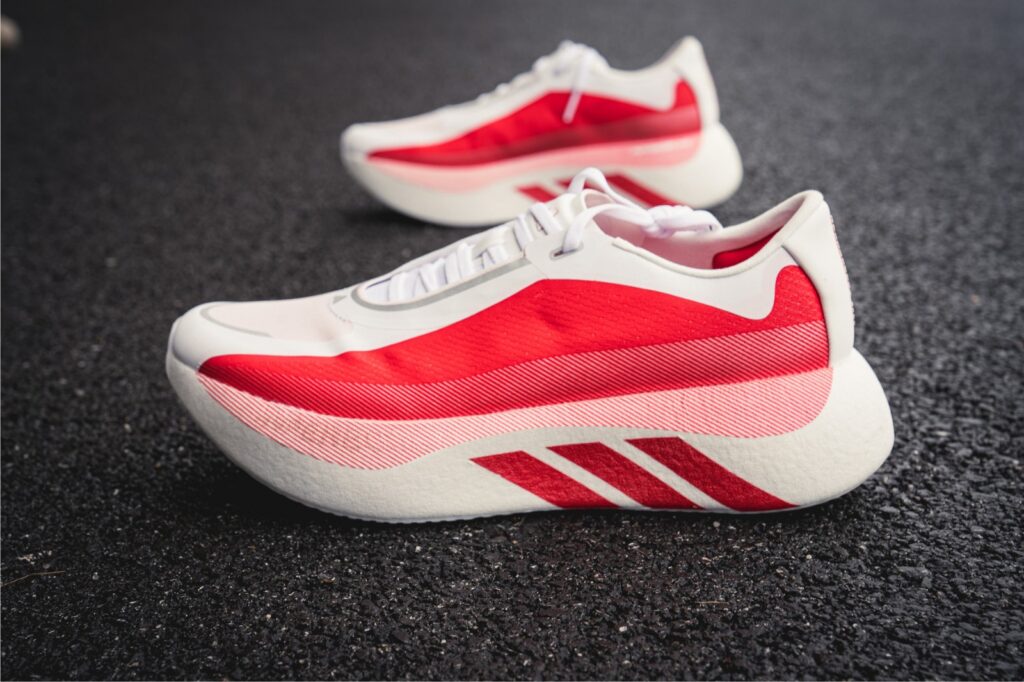
THOMAS: As much as I love this shoe, and I really do, it isn’t perfect. The issue lies in the collar of the upper. The material feels borderline rigid and stiff, and it sits just beneath the ankle bone. While it doesn’t bother me during runs, I’ve found it can be irritating when walking around.
Of course, that will depend on how the collar lines up with your ankle, but I can see it being a genuine problem for some runners. The other complaint I have is about how hard it is to get the shoe on. That rigid collar makes it hard to slide in.
I fully expected this shoe to earn an S-tier rating without hesitation. However, because of the collar discomfort, I had to bump it down a notch.
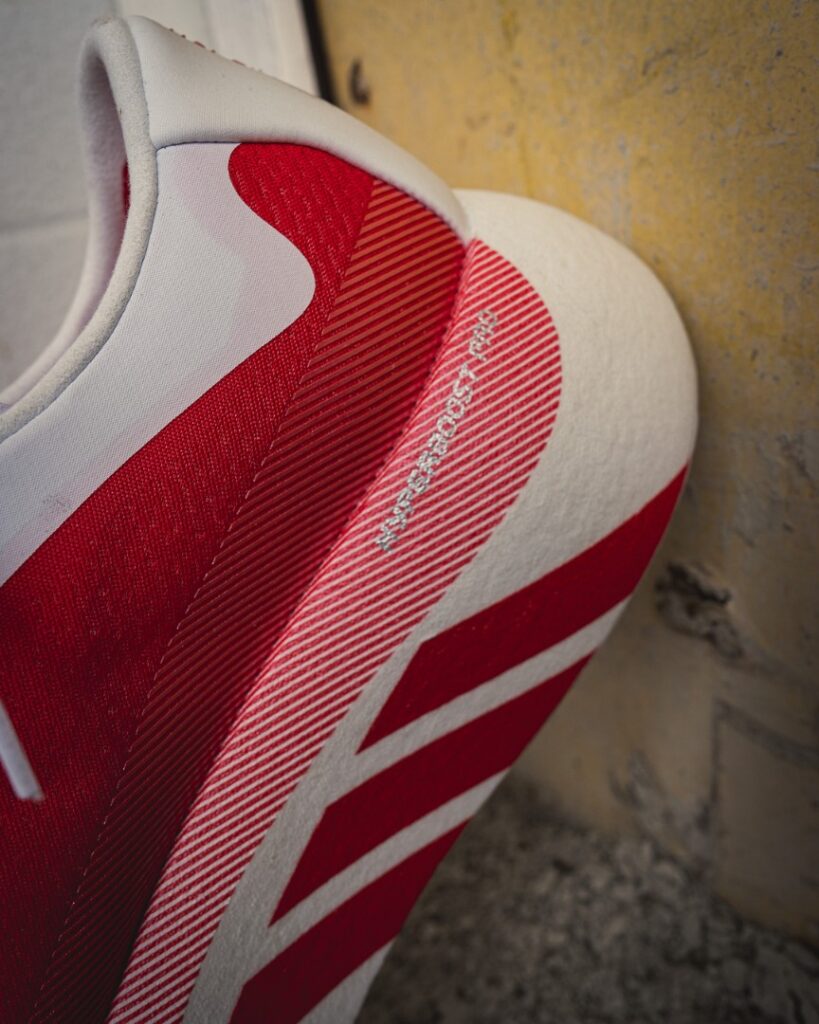
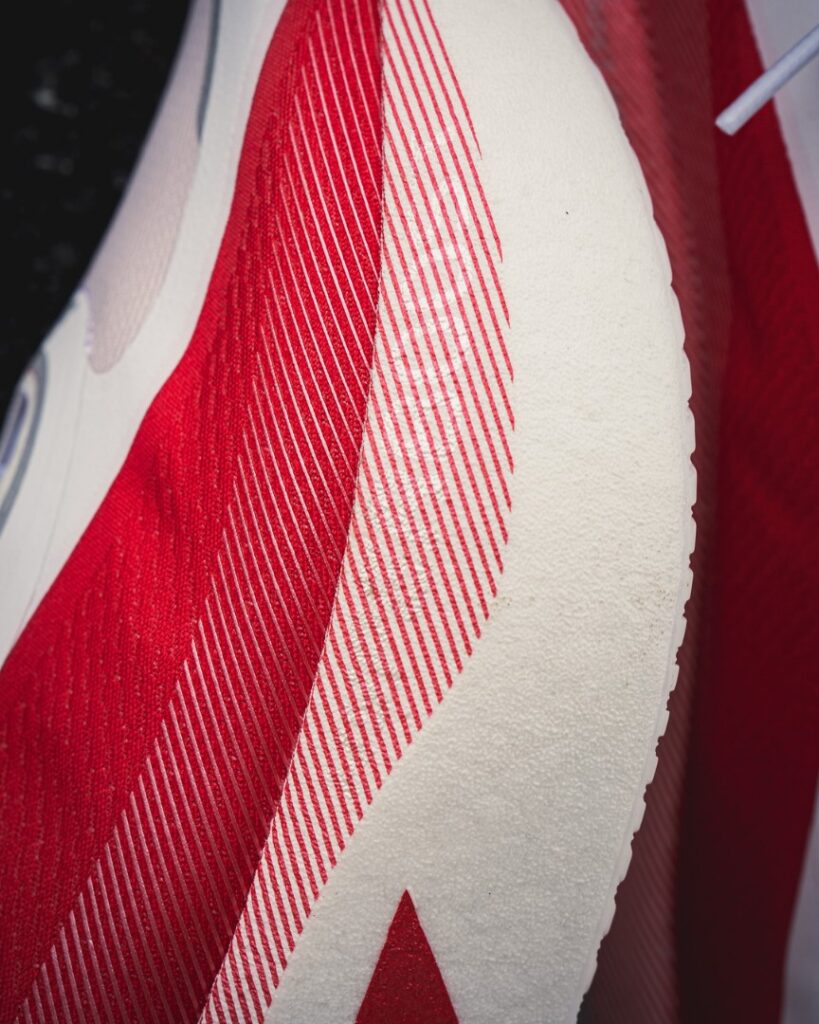
MEAGHAN: I agree with Thomas that the upper leans a bit rigid. What he didn’t mention — and what I hinted at earlier — is that this stiffness makes the shoe somewhat tricky to get on. You really have to loosen the laces to slide your foot in. That said, once it’s on, the fit feels dialed in and secure.
I was also concerned about potential ankle rubbing, given how firm the material feels in the hand. Surprisingly, that never became an issue on the run. In fact, the stiffness was more noticeable while walking around, but once I picked up the pace, it completely disappeared from my mind.
CHAD: I like 95% of this shoe. But the upper is far too stiff and rigid, especially around the collar. When running on a completely flat surface, it wasn’t too bad, but as soon as the road cambered to the left, the collar of the shoe was digging into my ankle bones, causing considerable pain. The same is true just walking around in the shoe, which had me in the pain cave during my cool-down walks after my runs. Luckily, I wear quality running socks, so I didn’t get any blisters or rubbing, but these were a recipe for discomfort.
The stiffness and rigidity of the shoe also make it a brute to get on the foot, even with the laces completely loosened. I received a US M11 rather than the M11.5 or 12 I normally wear, but luckily, Adidas shoes tend to run long, so I still had enough room in the toes to run in it. That said, even if I had gotten the correct size, as Thomas and Meg did, I would still have faced the same issue. Oh, and give me a heel tab next time!
Shop The Shoe - Men Shop The Shoe - Women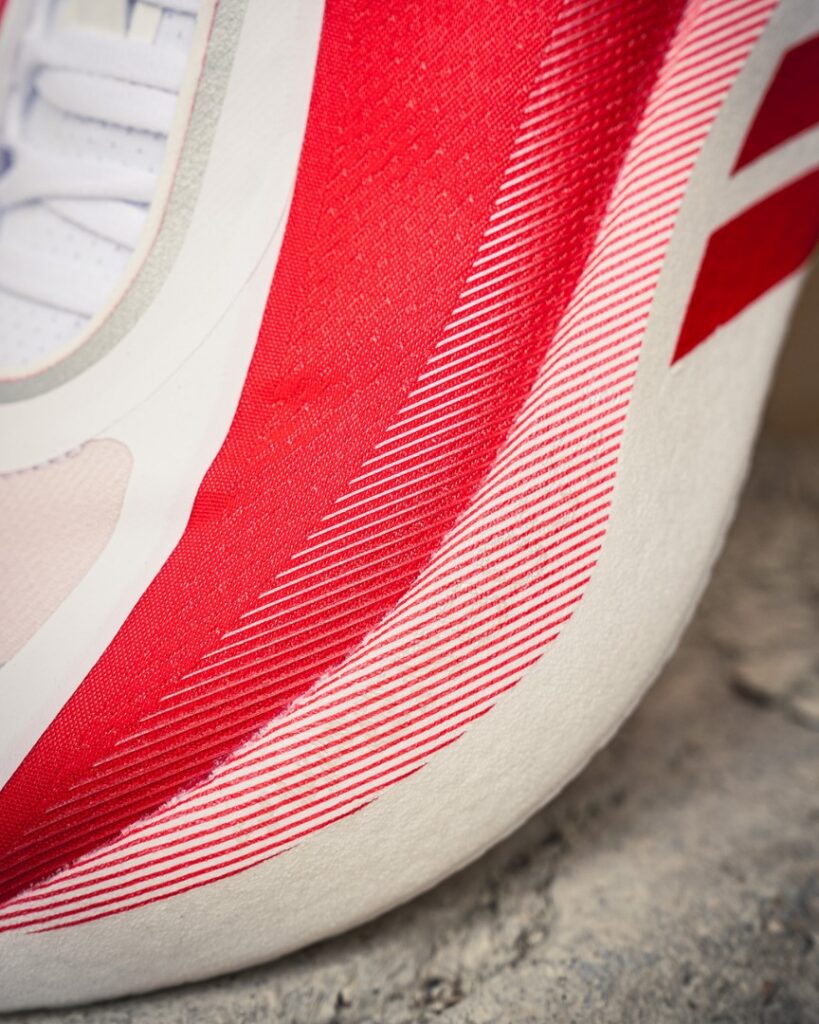
THOMAS: I have two other shoes that land in the same lane as the Hyperboost Edge: the Asics Superblast 3 and the On LightSpray Cloudmonster 3 Hyper. All three are priced at $200 or more. Each features a premium foam underfoot, and all three deliver that undeniable “fun factor” on the run.
That said, I’d choose each shoe for different reasons.
I’d put the Hyperboost Edge on a pedestal solely for its foam. The Hyperboost Pro midsole is the most dynamic of the trio. It compresses, rebounds, and keeps the ride lively in a way that feels special. It’s also priced $80 less than the LightSpray Cloudmonster 3 Hyper, while the Superblast 3 comes in about $10 more than the Hyperboost Edge.
The Superblast 3 has the edge in weight and offers an upper that will work for nearly every runner. It’s a safe bet and an easy recommendation. Still, when it comes down to pure enjoyment, I just loved running in the Hyperboost Edge.
MEAGHAN: The Hyperboost Edge ended up being a genuinely fun surprise. Thomas compared it to the Superblast 3 and Cloudmonster Hyper 3, and while I understand the overlap in use case, each of those shoes delivers a very different experience on the road. Of the three, the Hyperboost Edge easily offers the most responsive, energetic ride. It has a lively bounce that feels both controlled and durable—like the foam is built to go the distance without losing its pop.
The platform is a touch denser than I typically gravitate toward, but it still feels dynamic and enjoyable underfoot. And honestly, can we get this in an all-white colorway? I’d happily wear it for my miles and straight to post-run coffee. The aesthetic is good.
CHAD: Look good, run good… right? Well, that is definitely true for the Adidas Hyperboost Edge. The new foam could very well be a game-changer for the Boost line from Adidas, possibly rivaling the Adizero shoes in performance.
If the upper material and collar hadn’t caused me so many problems, this absolutely would have been an S-tier shoe. But the fit and discomfort issues are definitely something you need to be aware of, especially if you run on cambered, country roads like me. Treadmill only runner? This could be a no-brainer, even at $200, which is definitely a high price.
You can pick up the Adidas Hyperboost Edge for $200 on March 17, 2026, from Adidas by using the buttons below.
Shop The Shoe - Men Shop The Shoe - Women
Adidas Hyperboost Edge | Full Review
Have something to say? Leave a Comment
Sign in or create a free account to comment. You'll come right back here.
Sign in / Sign up


As the founder of Believe in the Run, Thomas’s goal is to help runners pick the shoes and gear that will make their running experience the best that it can be.
More from Thomas
Meaghan signed up for her first marathon three weeks before the race, because it was $10 more than the half she planned to run. She learned everything in running the hard way. Now a USATF & UESCA certified run coach, she loves encouraging friends to go for big goals as she continues to chase faster times. She enjoys a hot cup of coffee, a cold martini, and making bagels for friends and family.
More from Meaghan
An attorney by day, Chad lives in Central Pennsylvania with his wife and three kids. Never much for running growing up, Chad began running as a way to improve his physical health. He went from his first 5k in 2015 to running the Paris Marathon in 2016. Given his larger physical build, Chad is the resident Clydesdale runner, providing shoe and gear insights for those with a bigger build and taller stature.
More from Chad
A average from 25 runners · 2 runners have this saved
Juancs11on their wall since October 20, 2026
Initial review · October 20, 2026
A
Great daily trainer and think it could be great for long runs.. that TBD
Coach6472on their wall since October 12, 2026
Initial review · October 12, 2026
B
Adamruns1987882on their wall since October 1, 2026
Initial review · October 1, 2026
A
Anonymouson their wall since September 30, 2026
Initial review · September 30, 2026
S
At ~200lbs this shoe is amazing. The ride is smooth and the foam is soft without being mushy or feeling like running in memory foam. I use this shoe mainly for tempo and long runs.
Seth1980on their wall since September 19, 2026
Initial review · September 19, 2026
B
Update · September 27, 2026 · ~12 miles
B
These ran so hot underfoot that I could only manage a couple of runs in them. I was legit concerned that the ball of my foot was going to get a blister. I had to return them - not for me.
Anonymouson their wall since September 26, 2026
Initial review · September 26, 2026
C
Outsole seems great, midsole was surprisingly bouncy. The upper is just awful. It worked well enough at recovery paces, but any faster and I started sliding around with the lack of a heel lock. I have cut my own extra eyelet in the shoes with a pocket knife to do a runner's loop. It feels like it should do the job, but I haven't tested them again yet.
Jeff_Watkins1on their wall since September 25, 2026
Initial review · September 25, 2026
S
I have 50 miles in the shoe so far, but this is easily one of the best shoes that I have ever run in. I really like that the bottom of the shoe is still in great shape even after all these miles. I have PB my 8K in it and set a 3 fast 5K for the year, all in a non-peak race. It is still a bulk shoe though; it runs better than it looks in my opinion. I heard it described as a basketball shoe and I felt that same way about the ascetics.
standoutrunningon their wall since September 24, 2026
Initial review · September 24, 2026
B
If by going by foam alone this shoe would be an A bordering S, but the upper pulls it back. I did not mind it as much as other people did, but I still had my problems. When I took it out for a long run it tore up my feet. Not to mention how stiff it feels. The foam is one of my favorites and hope to see more models using it.
Anonymouson their wall since September 23, 2026
Initial review · September 23, 2026
A
First Adidas shoe I've owned. Adidas normally doesn't fit my narrow foot well. These are a bit hard to get locked down, but once you do it's a great long mileage shoe.
jzimlich87on their wall since September 19, 2026
Initial review · September 19, 2026
S
pmruns13pt1on their wall since September 19, 2026
Initial review · September 19, 2026
C
The fit, heel “collar”, foot volume and lacing system are nothing short of awful. I can’t understand how this shoe passed any prototyping evaluations. The midsole foam has been lauded by reviewers but I haven’t been able to get a decent extended run in them as I’m trying to make the fit work. I’ll reserve giving it a D for now and revisit.
Luigi Mon their wall since September 19, 2026
Initial review · September 19, 2026
S
The perfect shoe (ever) for Z2 long training
robertkasperon their wall since September 18, 2026
Initial review · September 18, 2026
B
Underfoot, these are a lot of fun. The upper is a problem. It is too warm and stiff, even after 30+ miles. I look forward to cooler weather when I can extract more from these.
HyanRaineson their wall since September 17, 2026
Initial review · September 17, 2026
S
Be one of the first runners to rate it.


I’m not in the camp that believes a “massive slab” of foam is a “lovely sight.” In fact, while I don’t doubt any of you on the midsole being good, I find the continued trend to high stack shoes boring and lazy. Gimme a Takumi Sen or a Hitogami (I ran a sub-3 marathon in a pair back in the day). I don’t want some zero-drop five fingers silliness, but I do long for the days when some companies (adidas, actually) made svelte, fast shoes that you saw on those svelte, fast Europeans.
I’ll probably pass on this shoe, and the Megawhatever, and I will reach for the Proprio Nitros or something.
Bro is acting like the Evo SL doesn’t exist and hasn’t been the most popular shoe in the last year…