Shop BITR Apparel Shop Now
We independently review everything we recommend. When you buy through our links, we may earn a commission.
9.2 oz. (260 g) for a US M9 / W10.5 (Unisex sizing)
43 mm in heel, 37 mm in forefoot (6 mm drop)
Gravel and door-to-trail racing
Dual-layer OptiFoam+ midsole, Energy Blade plate, Quicklace Neo system, knit gaiter upper
Available now for $250
TAYLOR: You’re getting sick of me talking about gravel, I get it. Hopefully, the term has stuck to where we all know it falls into the same basket as the road-to-trail, door-to-forest, pub-to-peak (That’s a new one to me. Thanks, Brandon).
It’s not a revolutionary idea. What I can’t argue is the newfound zeal this category has. Almost every brand has a specific option that fits the category, and some of those brands are now trying to innovate by pushing from both ends of the running spectrum of road on one side and trail on the other. This is the category that’s meant to bridge the two.
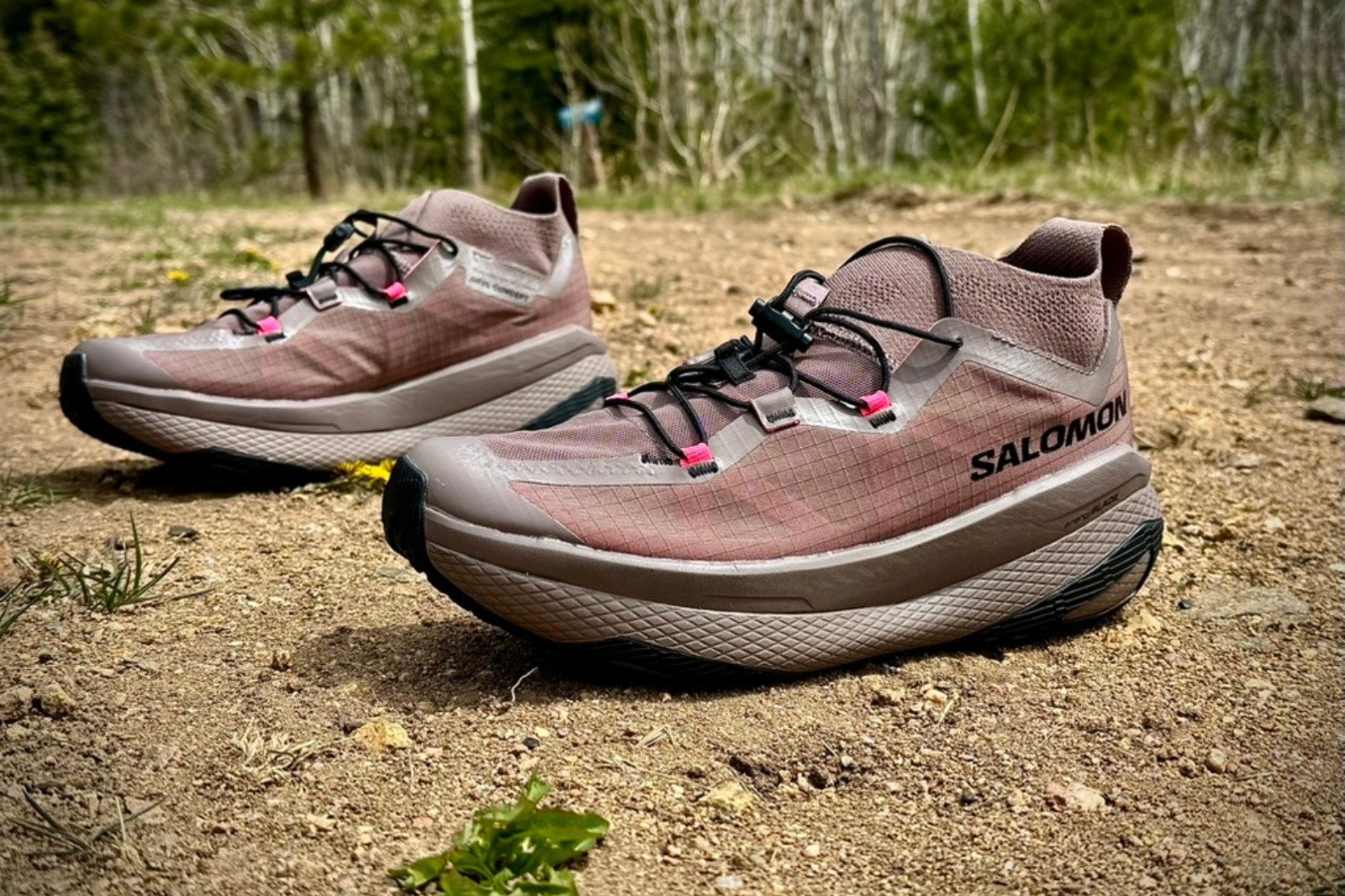
This is why the Salmon GRVL Concept shoe is so intriguing. It leaves behind the idea of simply having a gravel option available and moves toward the best gravel option.
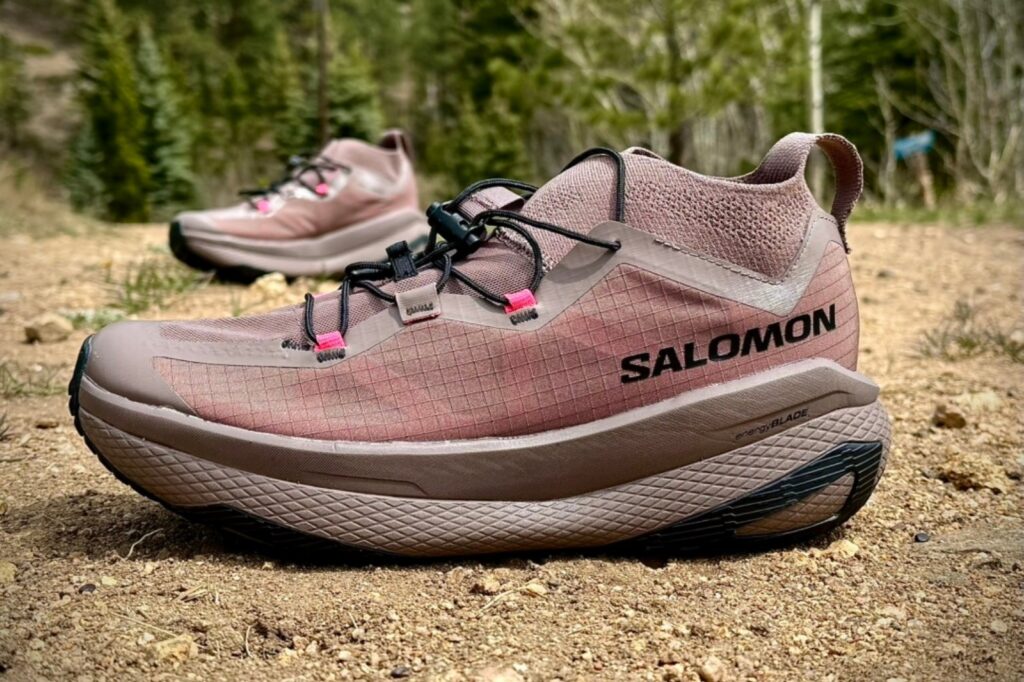
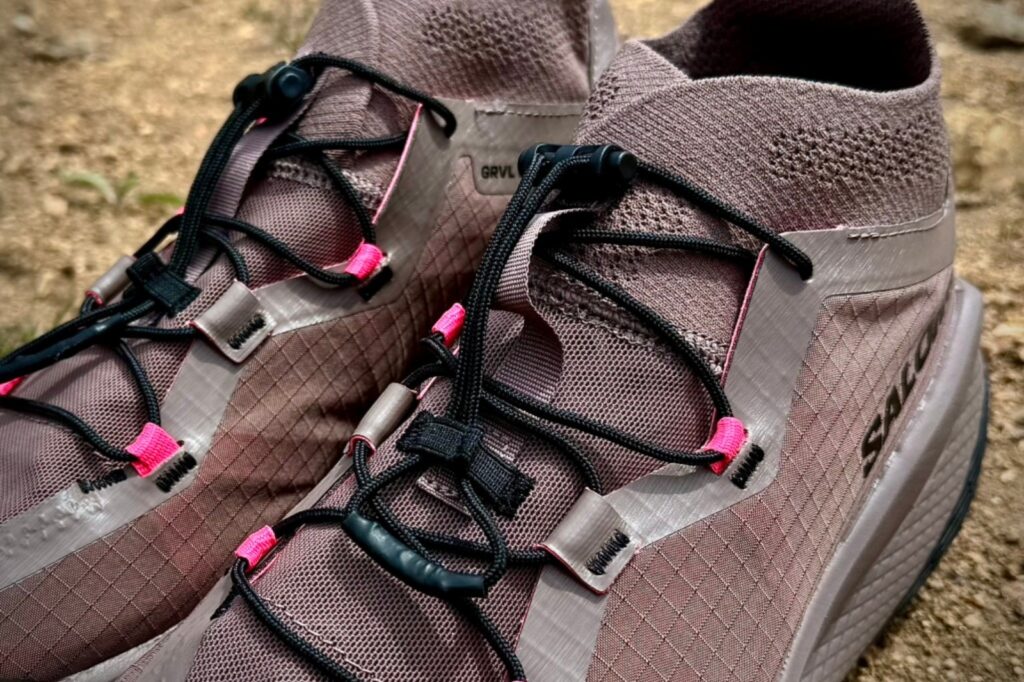
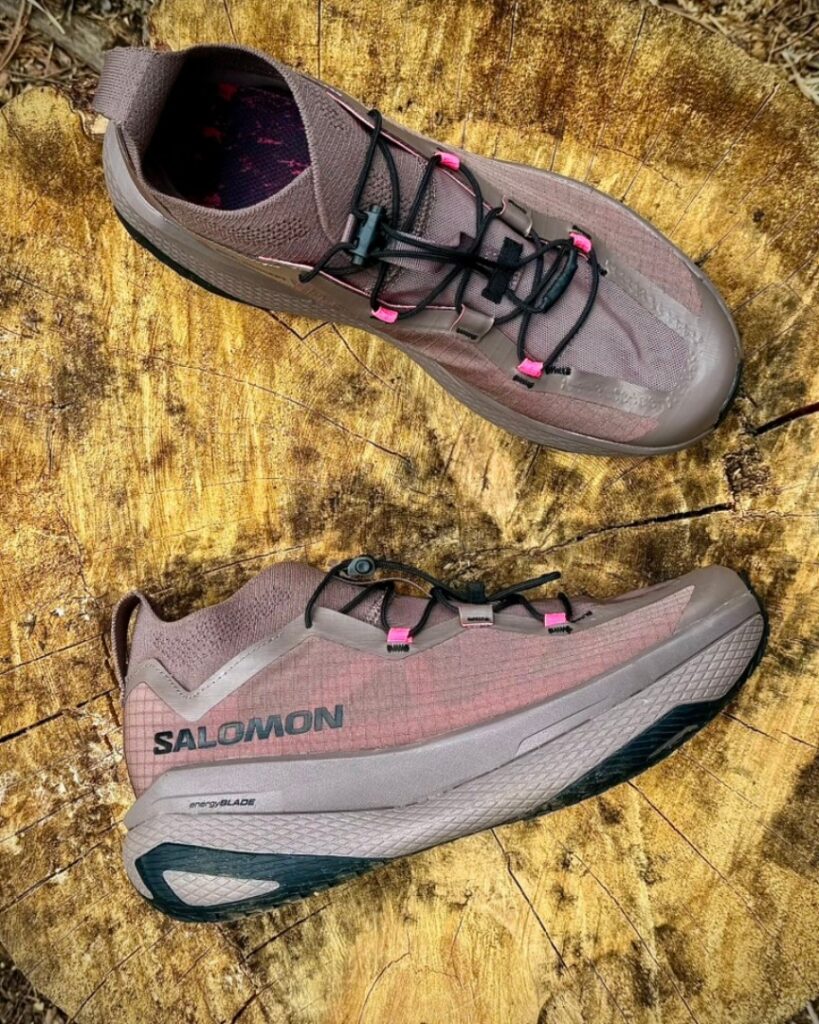
Just from a materials standpoint, we can tell that Salomon means business. There’s an entirely unique upper that focuses on fit above all else, two layers of their most proven OptiFoam+, a specialized Energy Blade plate, and a Contragrip outsole like no other.
From one perspective, it seems that Solomon really isn’t playing around here. Other perspectives might show otherwise. I like to think that, after putting many enjoyable miles into this shoe, they’re having some serious fun with the GRVL Concept.
TAYLOR: Even though I’m a trail runner through and through, I have to give credit where it’s due. For these gravel scenarios, it’s certainly best practice to leverage technologies that lean toward the road scene. We’re talking about high-energy foams, plates, and the like.
The Salomon GRVL Concept, like the Hoka Rocket X Trail and Puma Deviate Nitro Elite Trail, leverages a foam recipe that’s very similar to its road-racing counterpart. Salomon’s OptiFoam+ is probably the softest foam I have ever taken to the trails, and it handled in both expected and unexpected ways.
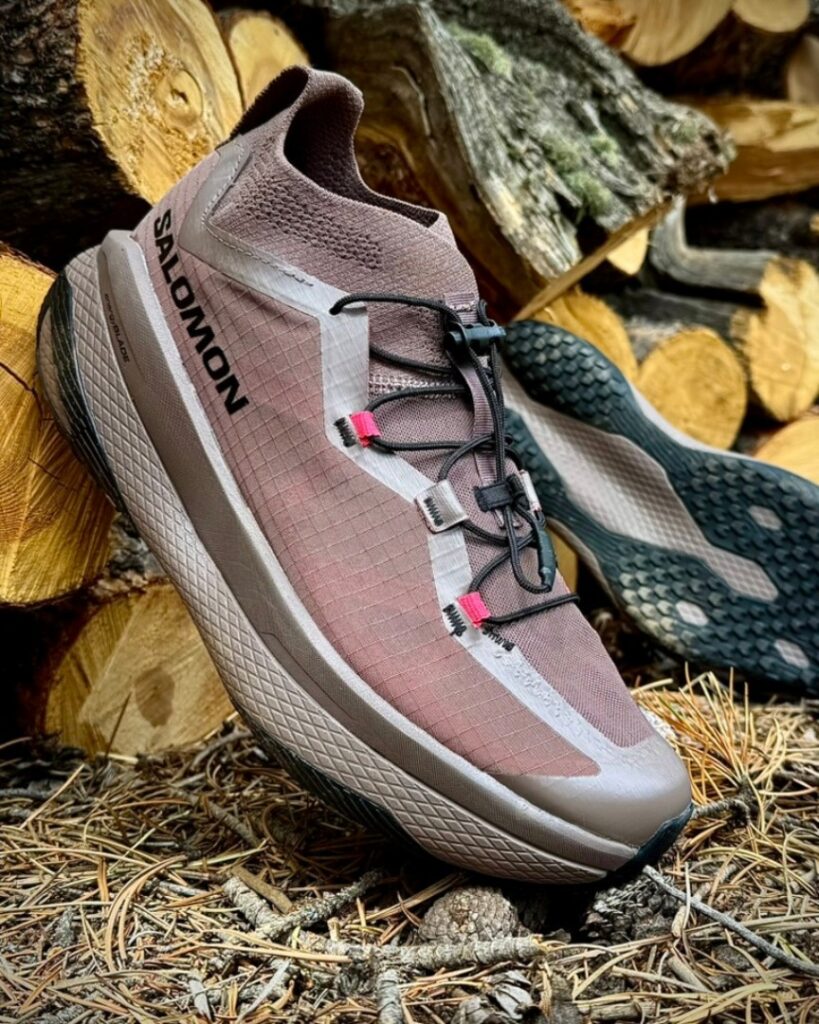
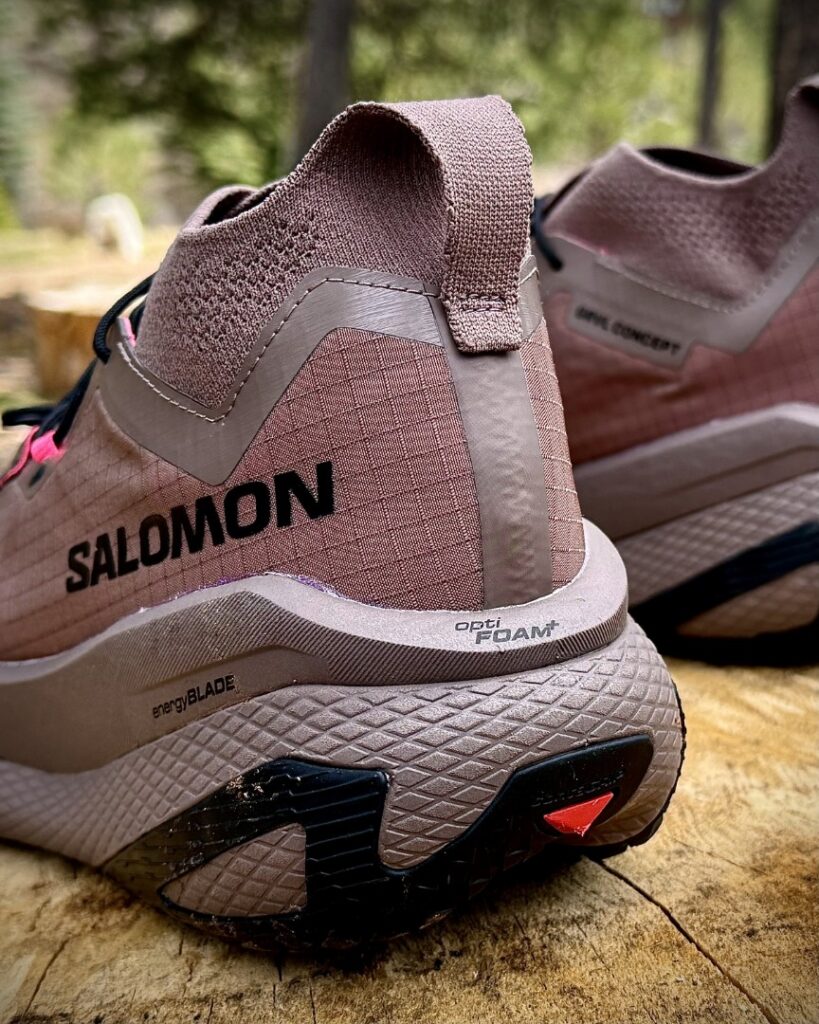
OptiFoam+ (also found in Salomon S/Lab Phantasm 3 and S/Lab Ultra Glide 2) is a peba-based foam. There are two layers of it that sandwich a unique Energy Blade plate. At a 43/37 mm of stack I felt a ton of soft cushion and bounce, especially when I was on hard-packed surfaces. Closest comparisons in the trail running space are the Norda 005’s Arnitel foam and the Brooks Cascadia Elite’s DNA Gold foam. As I said, the OptiFoam+ midsole in the Salomon GRVL Concept also provided more perceived energy return than competitors.
While the foam itself is directly borrowed from the S/Lab Phantasm 3, I have a hunch the midsole design sits somewhere between the S/Lab Spectur and the Aero Glide 4 GRVL.
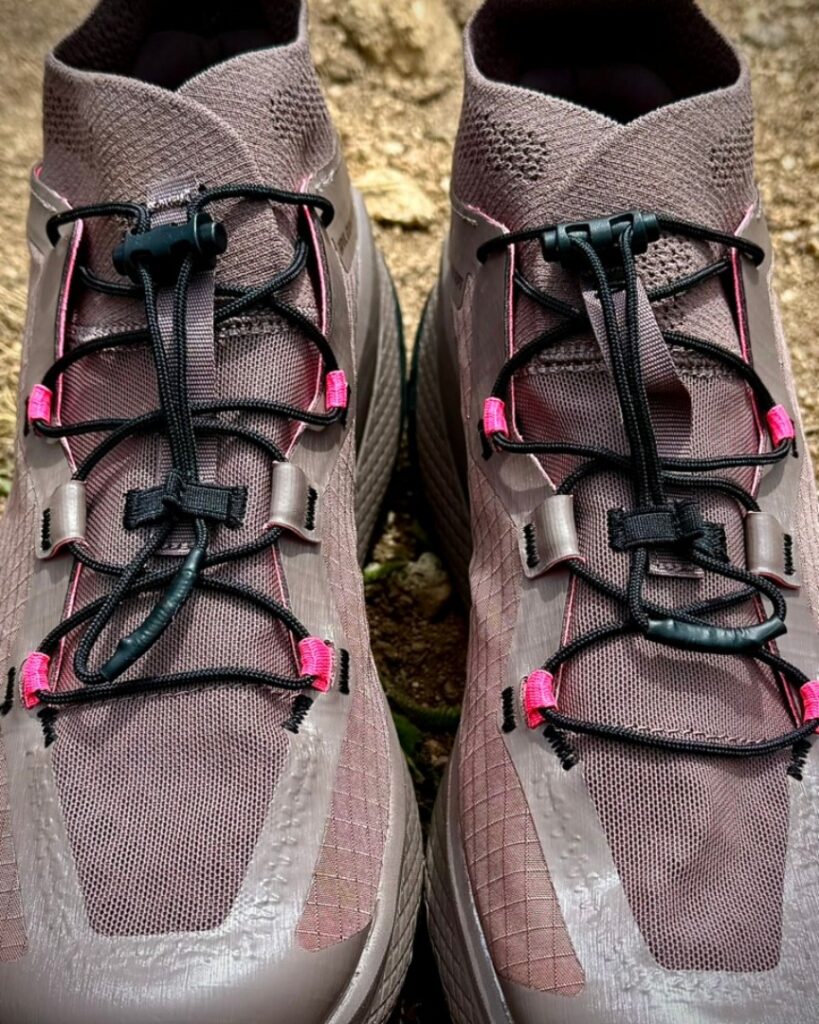
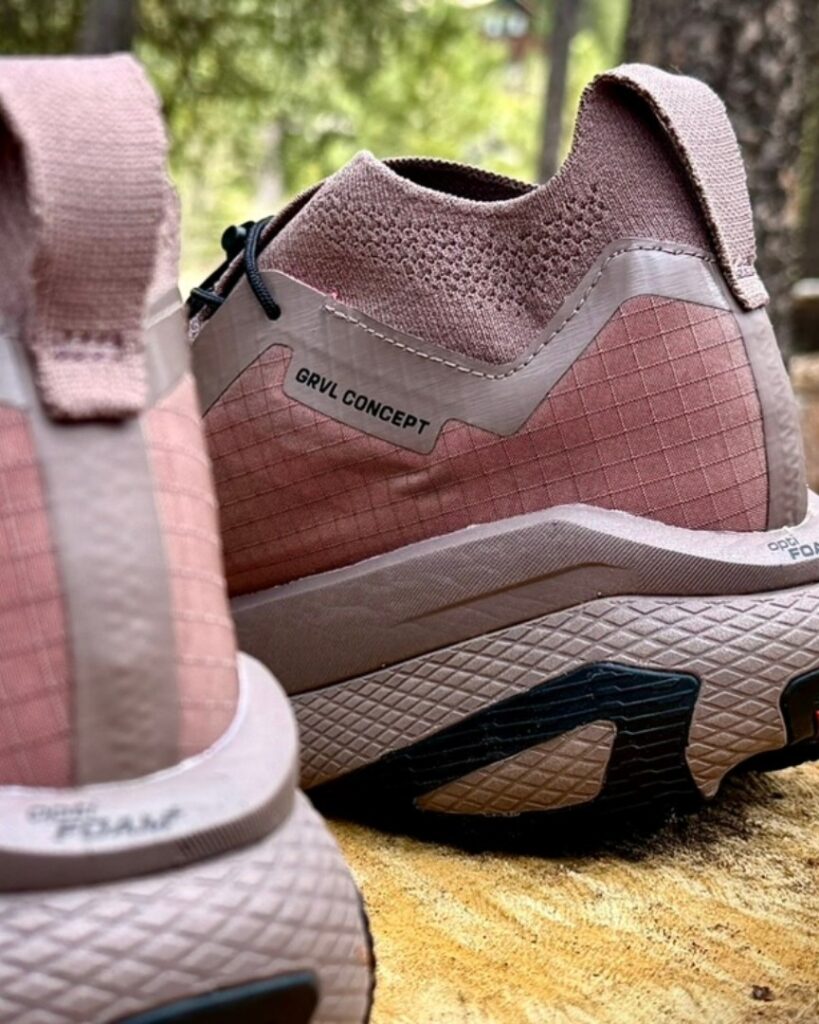
As mentioned, there is certainly some fun to be had in this package, but there seems to be an effort to be uber-efficient. Toe-off was quite smooth and bouncy, but not snappy, because of a rounded profile that wasn’t as aggressive as many race day options out there. The On Cloudultra Pro, Brooks Cascadia Elite, Hoka Rocket X Trail, and even the Puma Deviate Nitro Elite Trail all tone it down slightly for their ultra-distance racers, and I felt the same with the Salomon GRVL Concept.
If it weren’t for a few other components, I think this midsole, as fun as it is, would have a hard time handling anything off-pavement.
I’m really thankful for the forked carbon Energy Blade to give a little more zip, but mostly stabilize this max stack racer through the mid and forefoot. It could handle the different angles my foot struck on smoother terrain, yet still put energy into a forward motion. The Energy Blade alone made the Salomon GRVL Concept a more versatile option than before.
It doesn’t do it alone, though. The midsole design progressively widens as it gets closer to the ground (especially in the heel). Many high-stack shoes have used this recipe, and it works here too. With such a soft foam, it would be easy to be topsy-turvy, but I had a consistently fairly stable foot strike in this one.
Another reason for confidence on a mix of surfaces is in the upper. Even though the GRVL Concept uses a thinner technical mesh and a softer vamp in the forefoot, there’s enough structure and a secure enough fit to keep the foot directly over the good stuff. We experienced how much a sturdier upper mattered in the Aero Glide 4 GRVL. The same goes here.
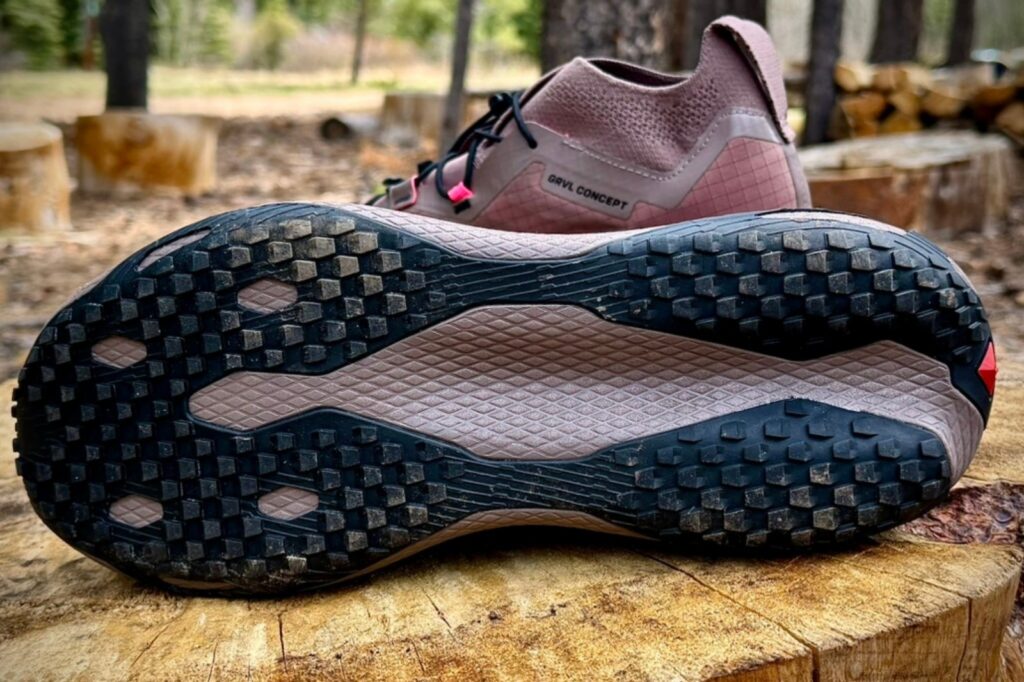
As for fit, I went down a half size and found the length satisfactory for runs of less than a handful of hours. Overall volume and width were semi-snug but not tight or narrow. It has to be on the same or similar last as the Aero Glide 4, just with a more technical upper that cinches things up a little.
Speaking of cinching things up, the Quicklace Neo lacing system was simple to use. Like any other Quicklace system, it took a few tries to perfect. When I did, it was a system that kept me locked in and comfortable, even with no true tongue to provide cushion.
Instead, a soft knit booty construction added a little more security and sock-like comfort throughout the foot. Honestly, I had no issues with fit, except for wanting a little extra length for long runs.
If you’ve stuck around this long, I know you’re wondering about that snake-skin-like outsole. I’ve thought about counting how many lugs there are, but I didn’t because all you really need to know is that this outsole performs impressively well.
I didn’t have many expectations once I hit the true trails. Truthfully, it wouldn’t have mattered if my lugs were 4 mm or the 1.5 mm that they are, because they handled most light to moderate trails just fine! As long as the conditions were mostly dry and the grade was below 13-15%, I had zero issues.
Shop The Shoe - Unisex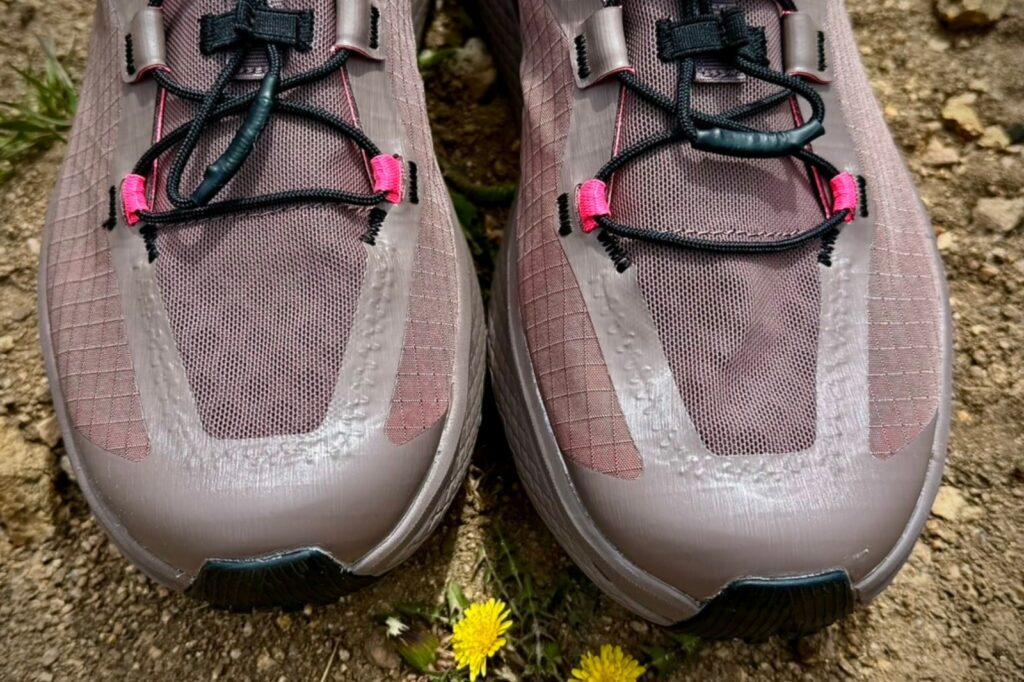
TAYLOR: Let’s start with an obvious one: 43 mm in the heel has a propensity to be squirrely on the trails simply because it’s so high. This is a true max stack option, and the softer foam does get more wild the further off-road you take it. I never felt completely stable on trails that required hard, fast turns, frequent dancing over or around rocks, or on sidehills. Even heel striking on downhills would cause some speed wobbles because of the soft, high stack of foam.
Because Salomon never specifically says this shoe is meant for light trail, I can’t knock it too hard for this. At the same time, what is this shoe for if not for the cross-over appeal onto trails? So much of this shoe can directly be tied to performance on courses like Western States. Can we just be up front about that, too?
Another obvious limitation is the outsole. Any moisture allowed dirt to pack around the subtle lugs, making them ineffective for digging in. So, pavement, dry gravel roads/paths, hard-packed singletrack, and Cali-carpet are optimal for such a shoe. Other conditions can pose some issues quite quickly.
I will be 100% honest and say that there was a little bit of lace bite over the top of my midfoot, but I was able to quickly figure it out. Some folks are very hostile to the system. While no version of it has been perfect, I’ve always been satisfied. The only reason I mention something in this section is that there is a very short routine involved… like, just start from the toebox and work your way up like a traditional lacing system, then zzzhooop, pull the dang lace, and tuck it in.
Shop The Shoe - Unisex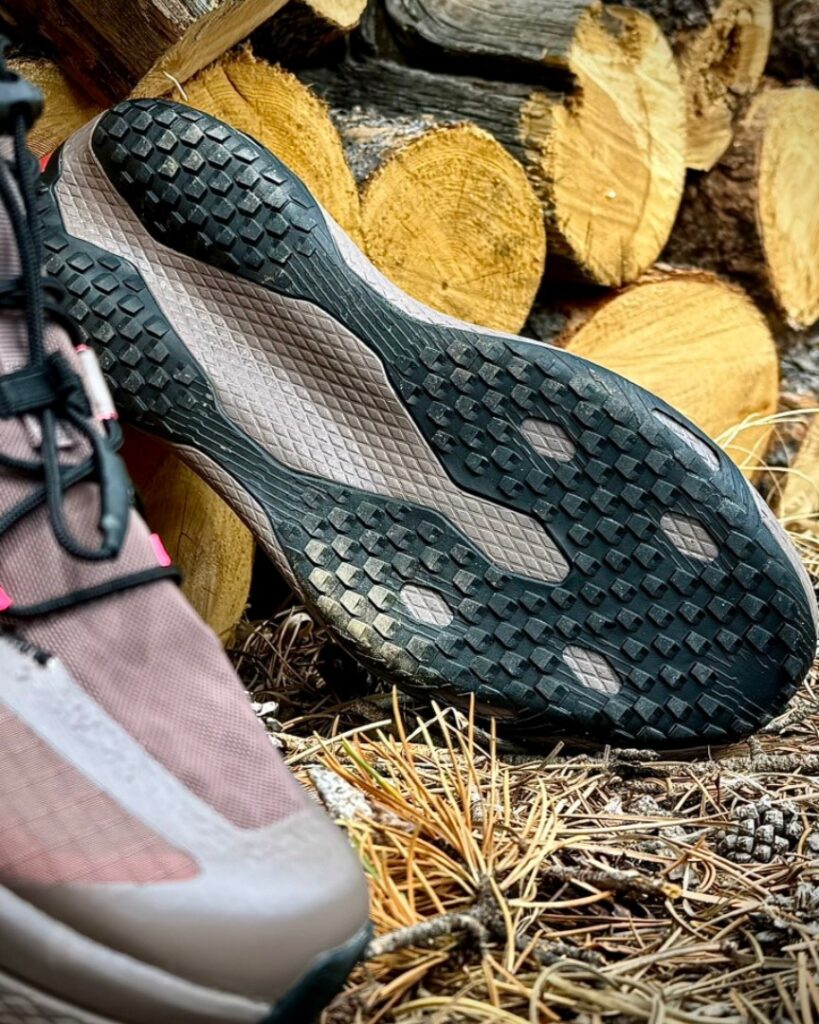
TAYLOR: If you have a Cheryl Crow mentality about running, the Salomon GRVL Concept may just be all you need to have some fun! This shoe would also do you well if you’re on the opposite side of the spectrum and want serious performance.
The Salomon GRVL Concept is absolutely a shoe that can crush the middle ground between pavements and serious trails. Do I wish it was a little more trail ready? Yes. Small tweaks here and there are all that’s needed. It performs best on the more predictable smoother conditions where the underfoot concoction can work its magic of providing bountiful bounce and comfort.
At the end of the day, no matter what Salomon marketing puts on their website (boasting pavement and city parks performance is very much underselling this option), I think this is their attempt at a Western States race day option, and I think it can perform on such a course with not much to worry about… especially after the high country.
You can pick up the Salomon GRVL Concept for $250 from Running Warehouse (featuring free shipping and 90-day returns) by using the buttons below.
Shop The Shoe - Unisex
Salomon GRVL Concept | First Thoughts
Have something to say? Leave a Comment
Sign in or create a free account to comment. You'll come right back here.
Sign in / Sign up


Taylor Bodin is a trail and ultra runner living in Estes Park, Colo., with his wife and daughters. As the head of the Dirt Division at Believe in the Run, trail running is pretty much the only hobby he can manage right now and loves it. Every so often, he will pop off a race or FKT attempt because competition is pure and the original motivator for him getting into running anyway.
More from Taylor
Be one of the first runners to rate it.