Shop BITR Apparel Shop Now
We independently review everything we recommend. When you buy through our links, we may earn a commission.
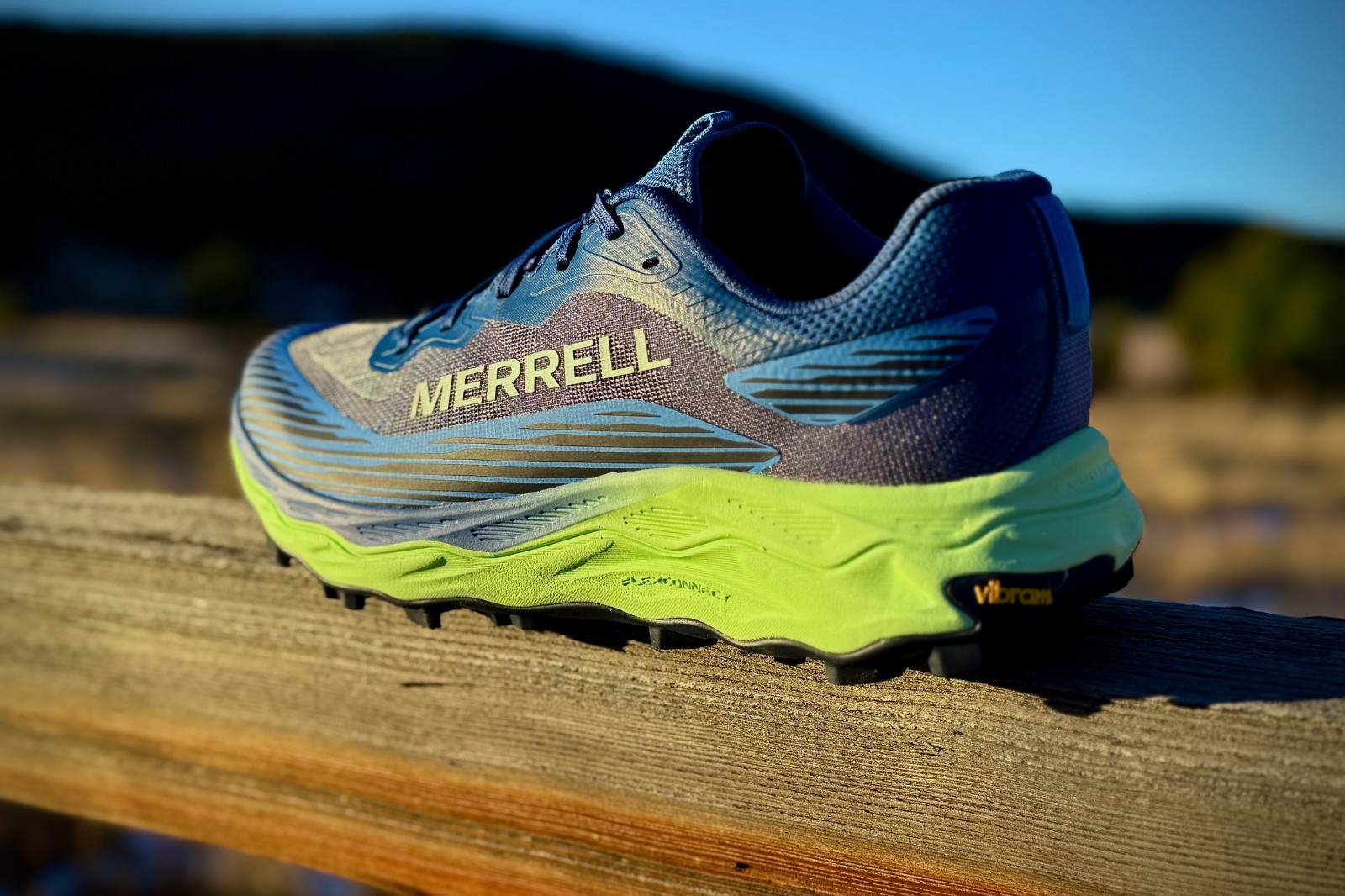
9.5 oz. (270 g) for a US M9 / 7.9 oz. (225 g) for a US W7
32 mm in heel, 26 mm in forefoot (6 mm drop)
Technical treks
Updated fit, Vibram Megagrip outsole with 5 mm lugs, FloatPro midsole
Available now for $160
TAYLOR: Every time we get a new Merrell shoe in for review, I have a few extra quick heart palpitations, but I never know which end of the emotional spectrum will trigger them.
For starters, I’m reminded of how consistent Merrell has been in putting out simple yet quality offerings; however, it baffles me that we don’t see more folks sporting the brand as their daily trail grinder.
It was really the Agility Peak 5 that seemed to finally break that mold for Merrell. Even so, the Long Sky 2 was arguably the brand’s best all-around performer, while the MTL Adapt and Skyfire 2 added unique innovations to the lineup.
The recipe for success is there, so what’s going on? Why hasn’t Merrell made it big? Sadly, its perceived nature as hiking shoes and, now, as fashion shoes, isn’t helping its case in terms of performance. It puts a brand in a tough spot as you’re trying to tackle shoe design from so many angles. Of course, it can be done, but at what cost?
As its overall popularity in the trail running space has grown over the last couple of years, the Merrell Agility Peak 6 generated excitement because, on paper, it seemed to be an ideal update to sustain that growth. It focused on fit, weight, and maintaining continuity, all of which are important with an update.
And, although I’ll say I noticed all of those things on the run, I’ll tease you and say there were some surprises along the way, too.
REESE: Lately, Merrell has been really stepping up its trail running shoe game. Many of its shoes have been so close, but not quite right. Typically, it was just the roomy heel that caused me problems. Unfortunately, a loose heel can be a bit of a deal-breaker for a shoe. I just never feel quite confident enough in it to reach for it every time.
However, I am (was?) hopeful for their 2026 lineup. We were told that the promised land of a snug heel was on the way. The Agility Peak 6 is my first 2026 Merrell shoe to review this year, and I’m using it as my litmus test for the rest of the shoes. Have things improved? On first glance of the tech sheet and unboxing Agilgity Peak 6, I thought this shoe would be one I’d love. It has all the right ingredients. Vibram Megagrip, FloatPro foam midsole, and an overall simple construction.
Judge a book by its cover? We’ll see.
MICHAEL: It’s no secret that Merrell is no longer your uncle’s office/hiking/Home Depot/church shoe, as the beloved brand has been about the business of developing their line of performance trail shoes now for a considerable amount of time. Its latest offering, the Agility Peak 6, builds on the success of version 5 with a few tweaks, hopefully making it an even more secure and therefore capable daily trail shoe with a knack for technical terrain.
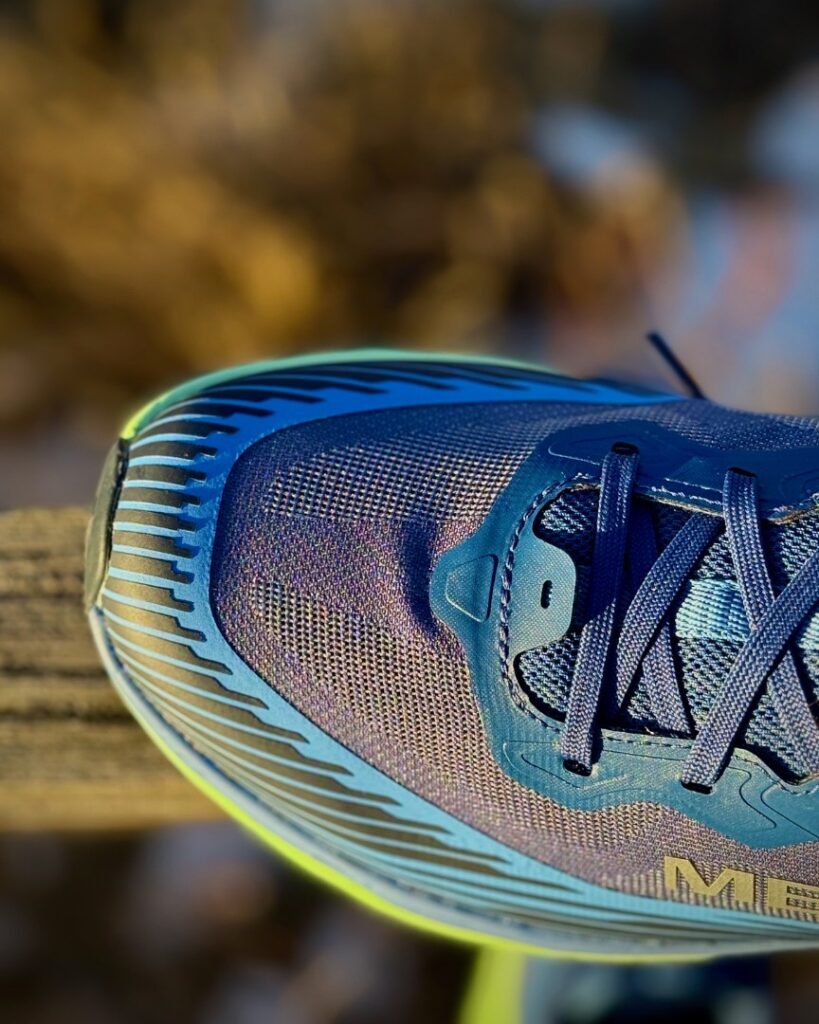
TAYLOR: There’s really no other way I can kick this off other than by remarking on fit. Personally, the midfoot and forefoot have always been pleasing, but it’s the heel that has caused problems. I can’t express how much of a relief it is to say that they have basically fixed that problem in the Agility Peak 6!
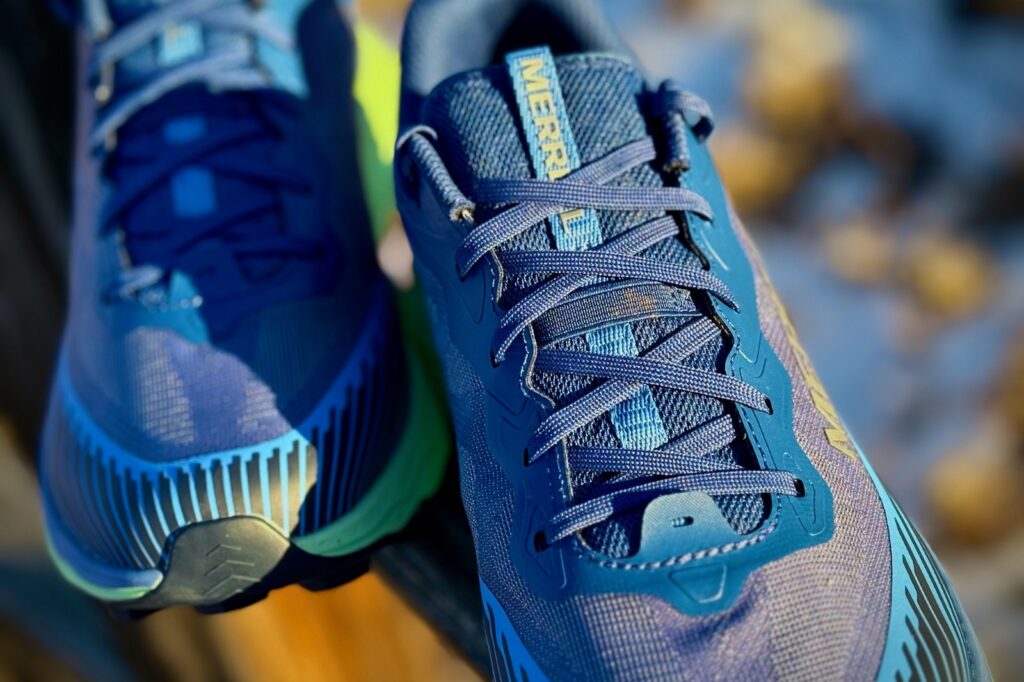
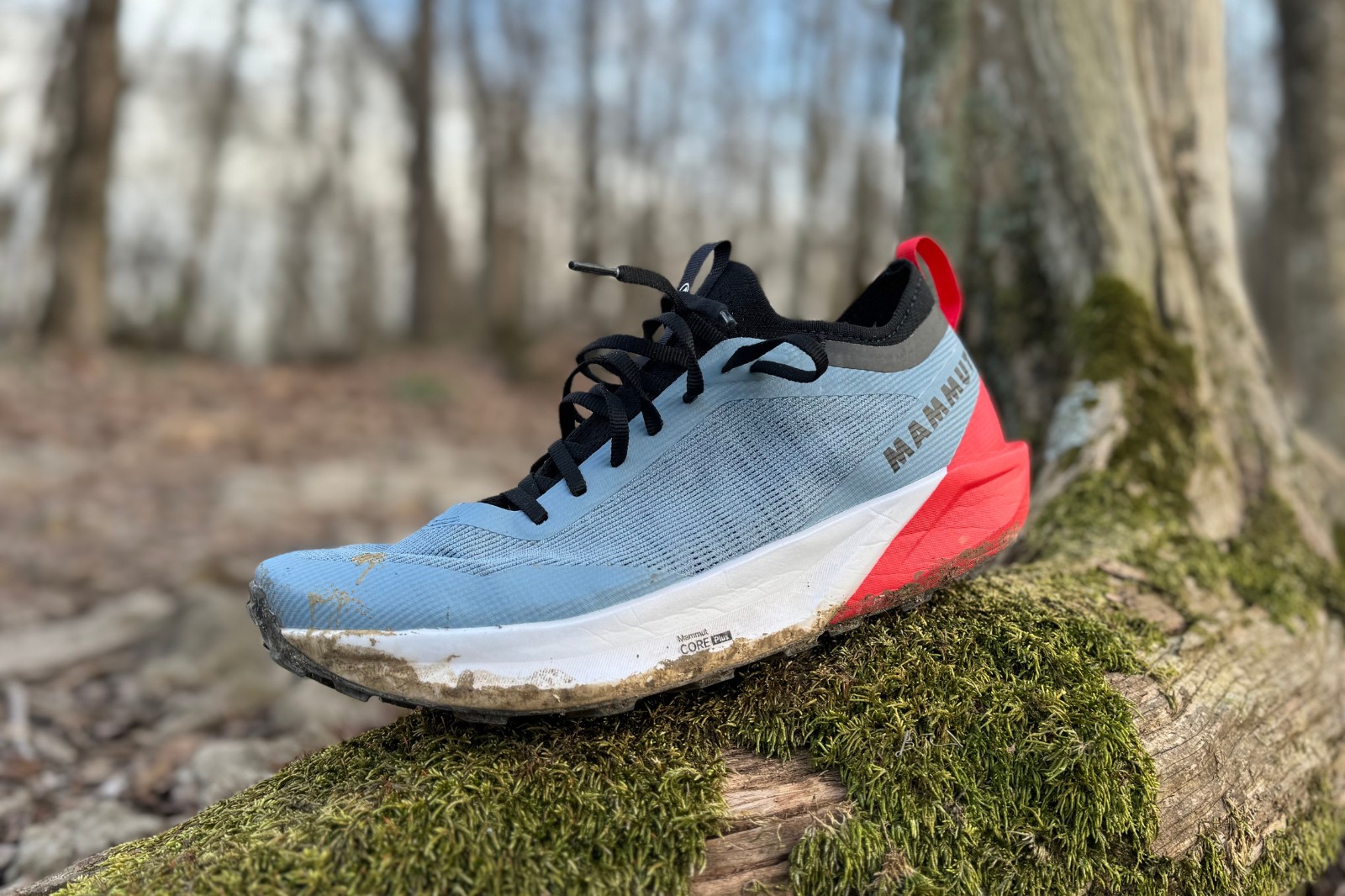
One of the major changes was that they built the shoe on a new last. It is the same slim, trim mold as the Skyfire 2, but there is simply more material around the foot for support. A durable, breathable engineered mesh complements the moderate padding and structure in the heel.
From that perspective, the midfoot and forefoot had noticeably less volume but a secure fit. So, if you like the more “fitted” experience — similar to the Hoka Speedgoat 7, Nike Terra Kiger 10, Craft Pure Trail X, and the Nnormal Tomir 2.0 — the Merrell Agility Peak 6 will likely please.
Heel lockdown was achievable without compromising circulation. Even though I much preferred the fit when putting the laces through the upper eyelets, I was elated to have that major box checked even before taking it to the trail. I’m not saying that it was absolutely perfect, but the fit was a non-issue this time around, which is absolutely paramount to this recipe.
Moving on down to the midsole. It’s said to have the same blended FloatPro midsole compound as the previous model. While my experience was much firmer in this new version than in the previous one, it isn’t all bad. The firmer midsole softened slightly as I put in miles.
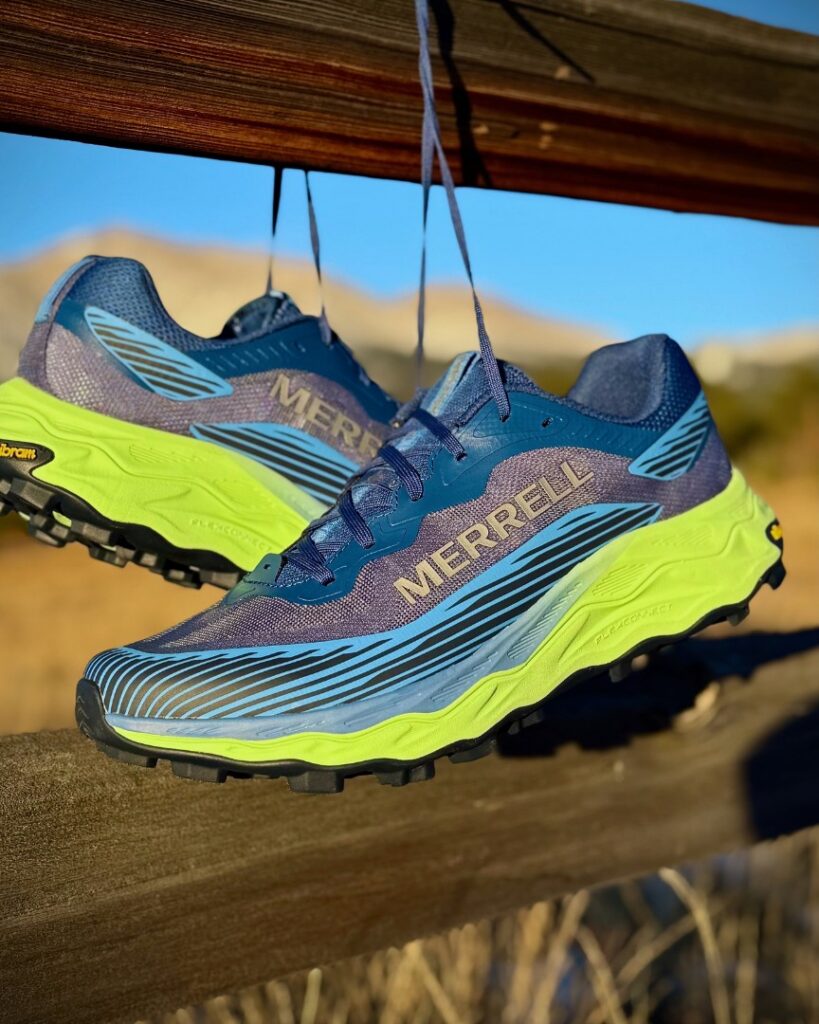
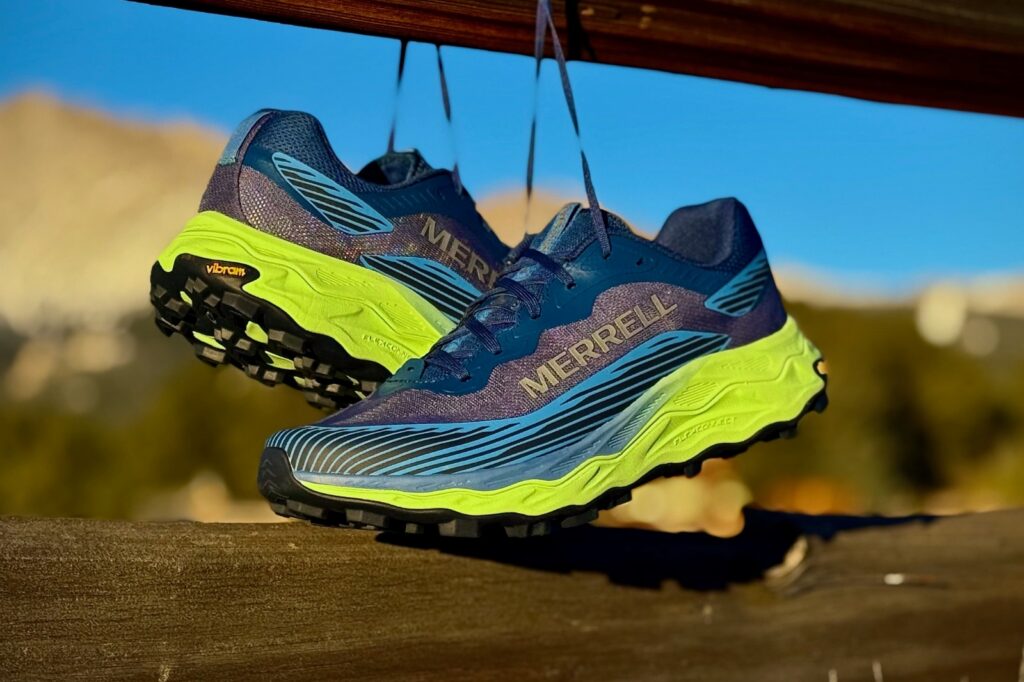
While I don’t think this is the preferred sensation for much of the current market, I cannot argue with the fact that it was protective and flexible enough (thanks to the FlexConnect grooves that run the length of the shoe) to romp on moderate to technical terrain without concern. Some ground feel was notable for natural control as well.
Overall, it gives old school, for sure. This will please those who prefer a firmer, more secure ride. I can definitely get along with it for specific outings. I’m looking at you, Beast Coasters, and you who love alpine peak bagging!
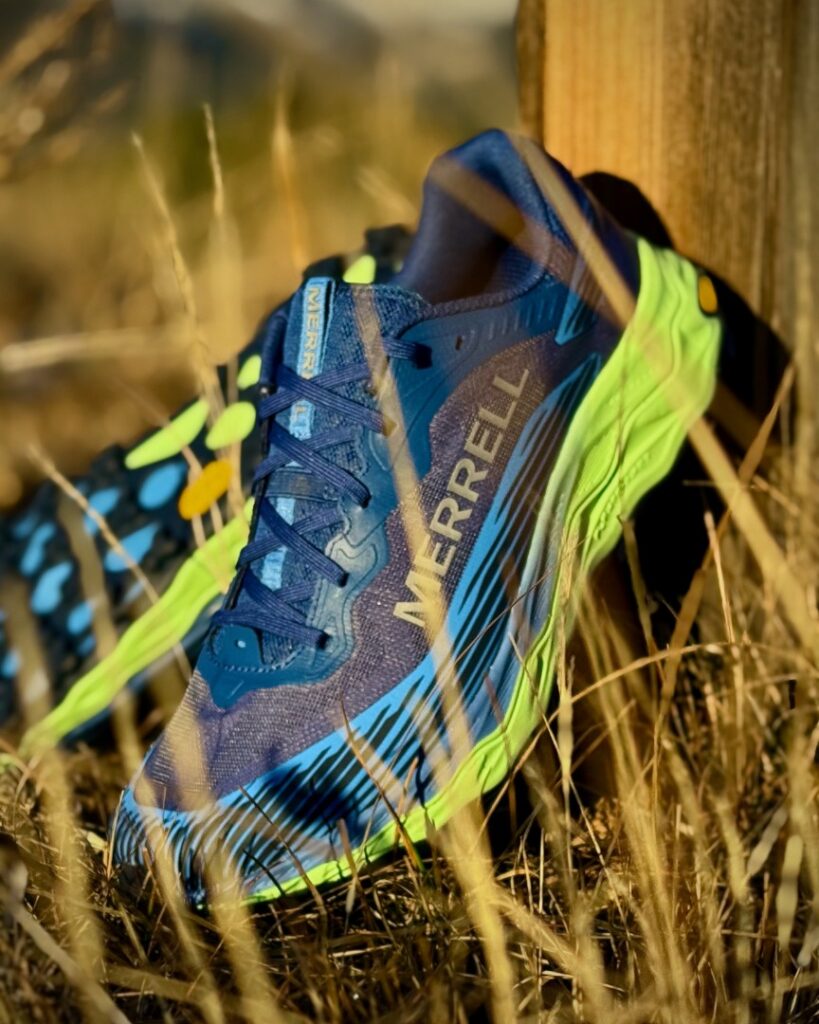
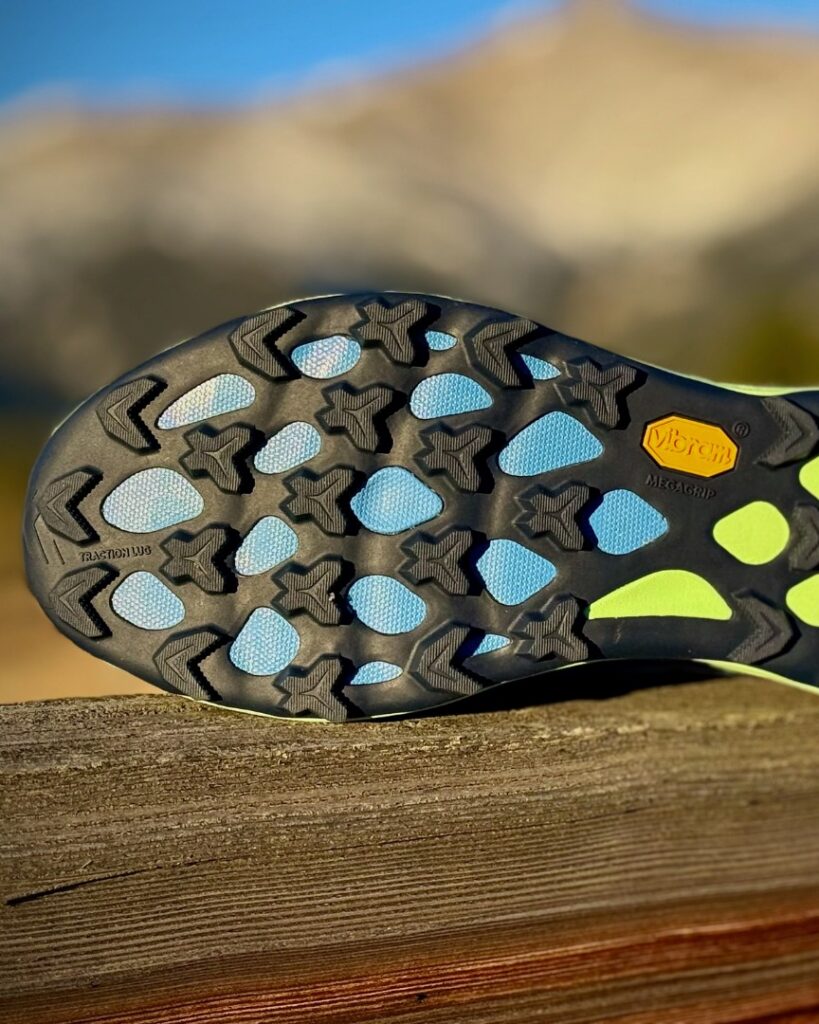
The highlight of the Merrell Agility Peak 6 is the grippiest outsole I have ever experienced. Not only does it have Vibram Megagrip, which we’ve given grade A marks for years now, but it also has some of the most aggressive 5 mm lugs. These X-shaped diggers claw into the earth like no other. For insurance, they also come equipped with the little nubbies called Vibram Traction Lugs. From soft ground to hard-packed, wet surface to dry, this outsole conquered them all.
If all that isn’t confidence-inducing enough, this package is lighter than before, and I’m convinced this shoe will retain its character for a very long time. In fact, based on the current trend, breaking in the Merrell Agility Peak 6 will only make it better. $160 is a solid value for a shoe that boasts technical performance and long-term durability.
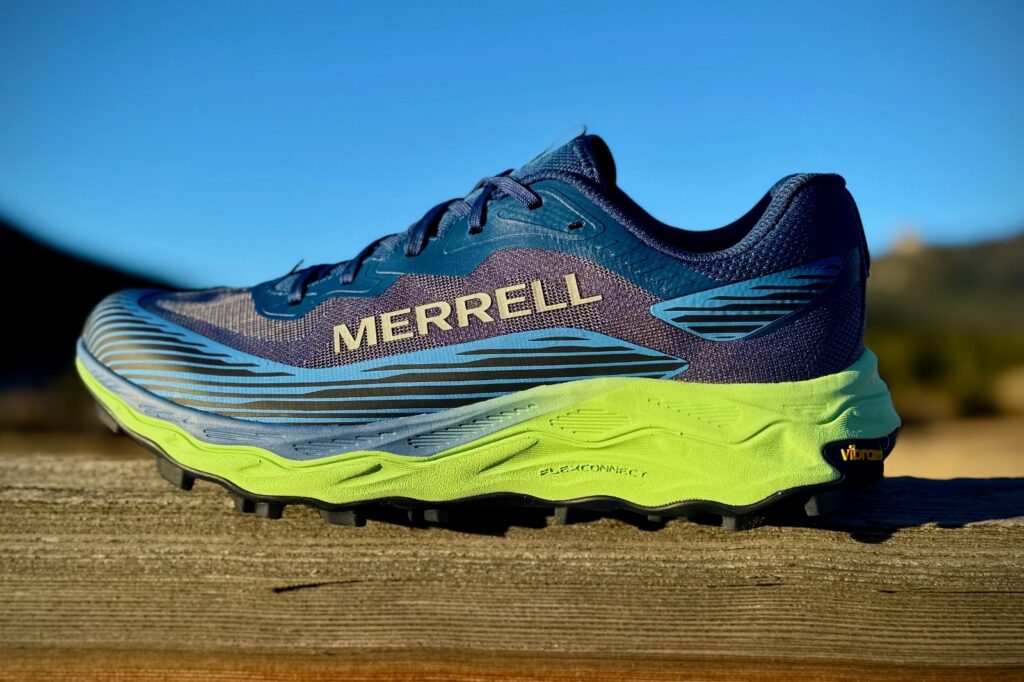
REESE: The first thing I noticed about this shoe is the traction. The lugs, measuring 5 mm, are prominent. Merrell claims that these lugs increase traction by 25% and add stability and surface area by 50%. Because I can’t use a lab or even compare this shoe to the previous one, that claim is hard to validate, but the shoes are indeed super great at running up or down rocks/non-flowy trail or paved surfaces. Merrell opted for a web-like outsole pattern, shedding some weight from the shoe. However, we’ll get to some drawbacks of the outsole in the next section.
The fit of the shoe is nearly what I would expect in a shoe boasting 5 mm lugs. It’s snug through the midfoot and forefoot. The heel, while better than other Merrell shoes I’ve worn, like the Merrell MTL Adapt Matryx, is not quite snug enough for my liking. The rest of the shoe feels secure when running up, down, across, or through. I felt confident if I needed to jump around the trail, but when it came to smaller obstacles, well, let’s just say that’s for the next section.
MICHAEL: In the remarks above, Taylor mentioned that due to its secure fit, “old-school” midsole and rock plate, and insane outsole, this shoe might be one for those of us residing on the aptly named “beast coast.” And honestly, he couldn’t be more right.
Reese and Taylor have already mentioned basically everything I also love about this shoe, but I do want to expound briefly on the weight. My US M9 came in at a solid (but not crazy) 9.5 ounces. While this can’t quite compete with the truly feathery racing kicks out there, I do think it’s worth noting when “daily running” shoes come in under 10 ounces, especially when they have as much awesome protection as the Agility Peak 6.
And about that protection — this is where this shoe really shines on the “holy guacamole that’s technical” terrain we got out here on the East Coast. I love me a good ol’ fashioned rock plate, and this shoe has a stout one. No Kevlar fabric flimsy stuff, this is a real solid rock plate, encompassing all of the forefoot and giving the shoe stiffness and protection that harkens back to the early days of the Brooks Cascadia (and them’s early days y’all).
Lastly, the lugs on this shoe basically suggest this could have been marketed as a fell running shoe or a bona fide mud shoe, which is totally awesome for this class and weight in my book, further adding to its versatility.
Shop The Shoe - Men Shop The Shoe - Women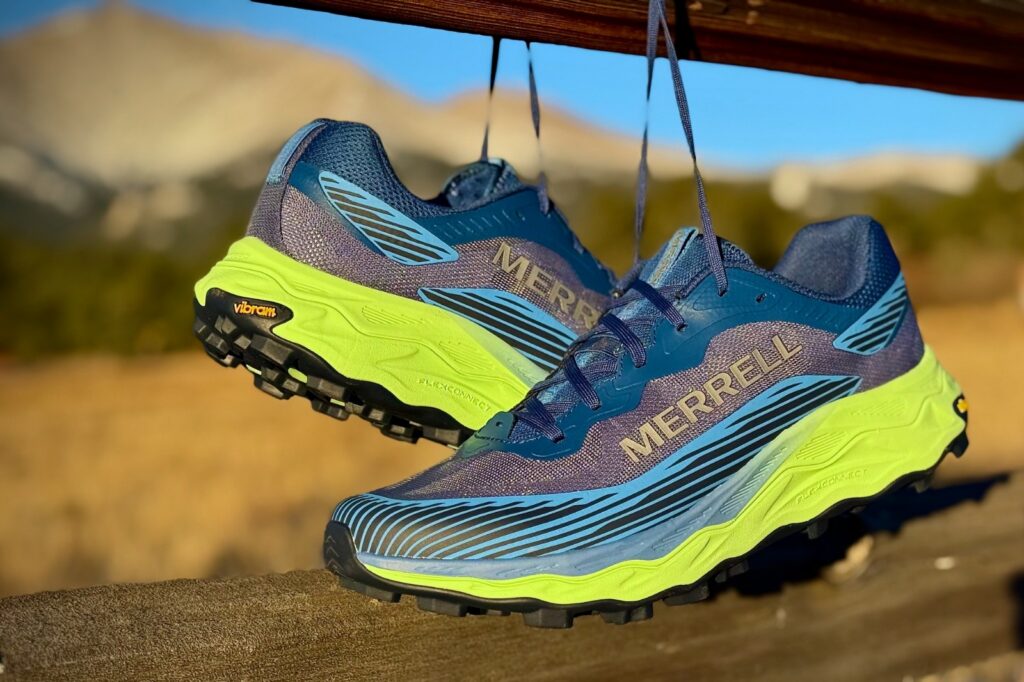
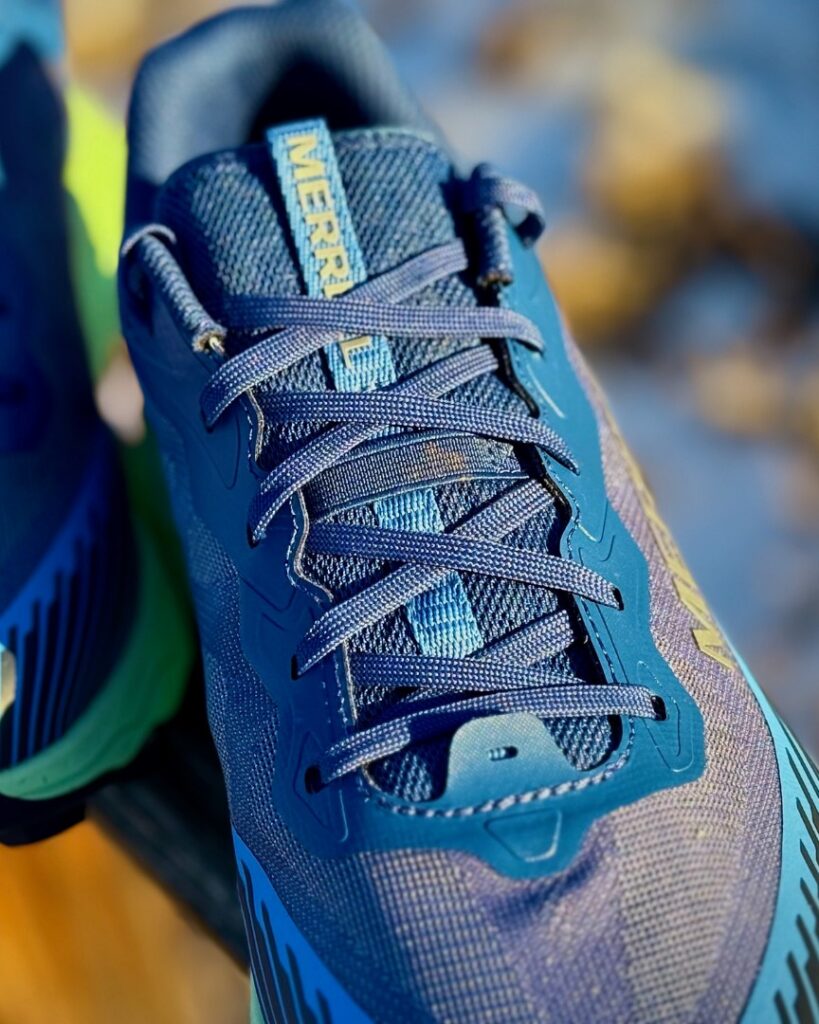
TAYLOR: I’ll continue by coming back to the top. While the ankle collar region is massively improved, there’s still some ground to cover to make it pristine. Honestly, this time around, the eyelet placement seems to be the only real issue. Scooch that puppy back a little further, and I think the Merrell Agility Peak 6 will have it! Especially on technical and steep terrain, I would prefer a smidge more security.
We’ve said it before, but foam is the future… and it’s very much the present. The best shoes on the market tend to bring a lot to the table in large part because of the character that comes with modern foams. Again, while this shoe is supposed to have the same compound as the previous one, the Merrell Agility Peak 6’s FloatPro foam is a major step back. There’s very little to note about it other than protection. If you’re looking for a similar stack and a softer, more energetic experience, there are plenty of options out there.
REESE: I wanted to like this shoe. It seems right up my alley — pretty simple in design, with a lower stack (32 mm heel, 26 mm forefoot). However, this is not going to be my go-to shoe.
Merrell suggests this shoe is for distances up to 100k. Honestly, a half-marathon might be enough time in this shoe for me. I thought it would break in, but the foam, combined with the large lugs and super-stiff outsole, makes the ride pretty unresponsive and harsh. On smoother, runnable trails, it felt like no energy was returned with each stride.
And on trails that had smaller obstacles, think pointy rocks that are smaller than baby head-sized rocks, I felt like the shoe didn’t flex at all over them. The Flexconnect grooves in the midsole are supposed to improve stability by providing flexibility, but I didn’t find that to be the case at all. The shoe felt like a truck with a stiff suspension.
I found that because the shoe was so stiff, my ankle or knee normally took the brunt of the flexibility. If you needed to run up or down a rock (think Moab or just slabs of rocks), I think this shoe shines there, but on trails where you’re encountering small, mostly unavoidable rocks, it’s pretty jarring.
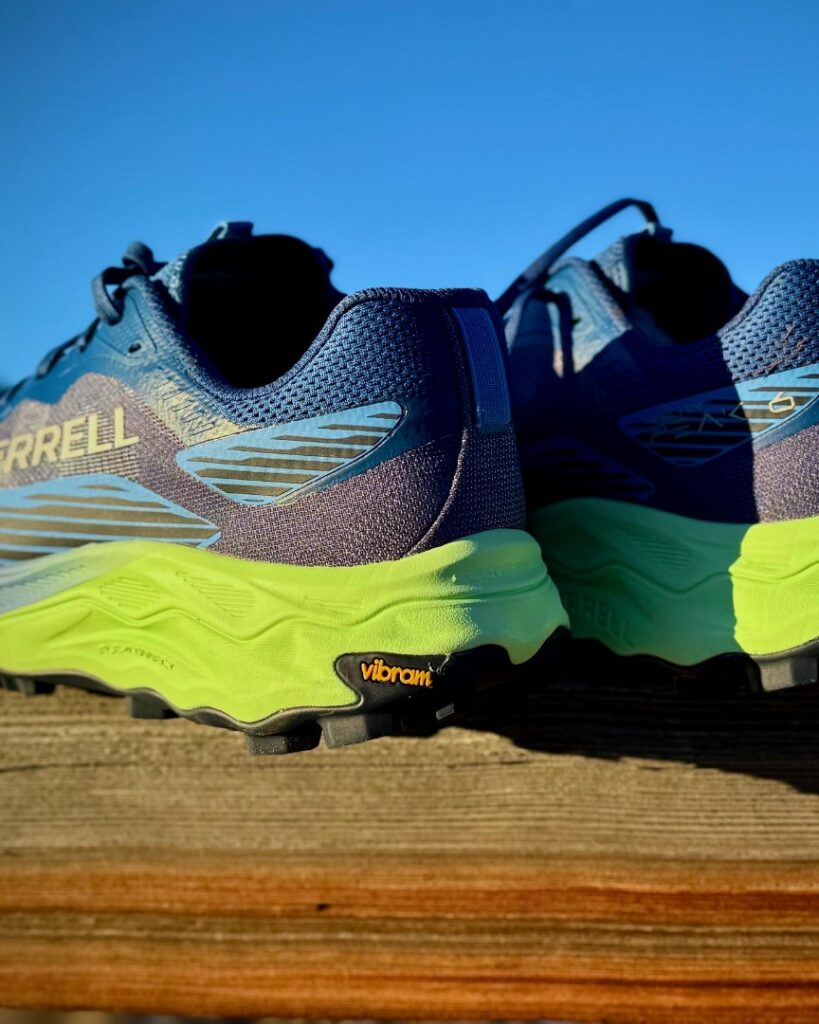
The heel is yet again a problem for me on this Merrell shoe. Even with the furthest-back lace, I was never able to snug my heel down. Which, for a shoe that is intended for technical terrain, is something that would be a requirement- having a fully secure foot. And because I had to use the last lace eyelet, this somehow made the laces nearly too short. I found I couldn’t double-knot them, which they needed to be, as they came untied, and, because they were so short, I couldn’t use the lace keeper.
MICHAEL: Like Reese, I experienced some lift in the heel cup that, unfortunately, betrayed an otherwise secure fit throughout the rest of the shoe. It wasn’t a dealbreaker, but something more secure would have been welcome for a shoe that’s otherwise so ready to take on super technical terrain.
From what I felt, the main culprit for this lift seems to be the exceptional stiffness in the forefoot of the shoe, brought about by the rock plate. I’d be curious to know if we’d be singing praises of this fit had Merrell added in some segmentation in the full-coverage plate. Additionally, I had to drop down a half size to a US M9 from my normal 9.5, though either shoe may have worked for me.
Taylor is right to call out Merrall on this foam. This shoe has the potential to vibe with the La Sportiva Prodigios of the world, but instead feels like it’s hanging out in the same lane as the not-as-flashy Saucony Peregrine due to the lackluster foam. Then again, we shouldn’t try to make this shoe something it’s not, as foam certainly doesn’t prevent the Agility Peak 6 from being a great all-around shoe for technical terrain.
Shop The Shoe - Men Shop The Shoe - Women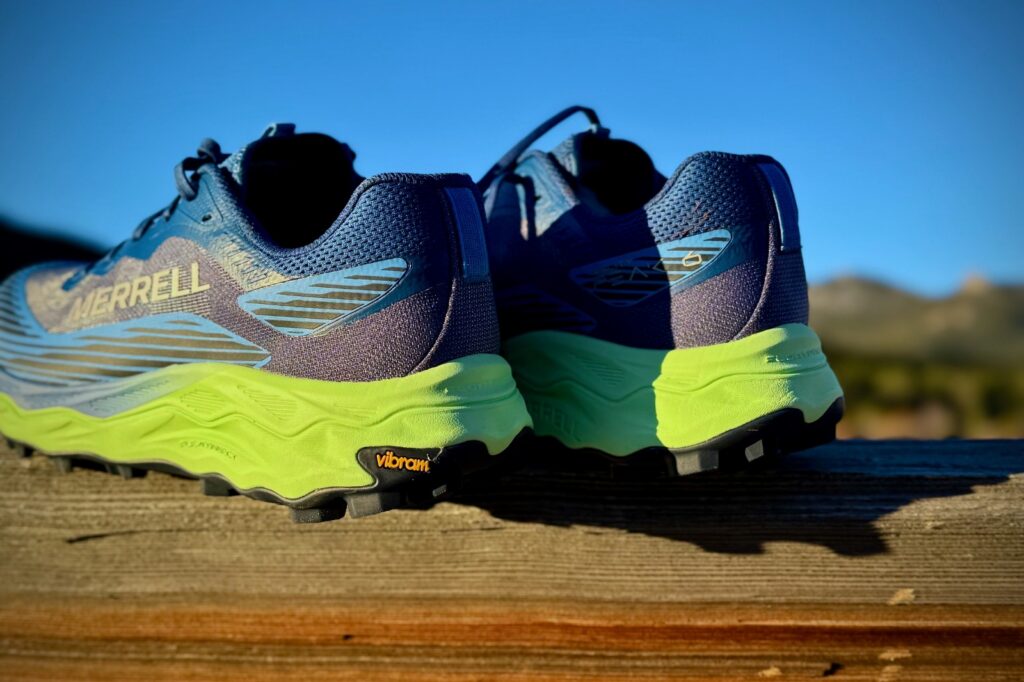
TAYLOR: Personally, the Merrell Agility Peak 6 is two-thirds of the way there. That’s what I would have said about the previous version, too, just in different ways.
The fit was greatly improved by changing lasts and diving further into the heel construction. Pair that with the industry’s grippiest outsole, and it made for a trail shoe that could easily run a wide variety of technical terrain with very few issues. Knowing that will be enough for many people!
The one-third that’s missing in this version is the underfoot feel. Softening that up slightly will bring comfort back into the equation. While this midsole rounds out a durable, dependable package, it lacks the preferred comfort that those long days on the trail beckon.
What’s the Merrell Agility Peak 6 best for? It will find a home on the gnarly and techy trails with runners who need protection and grip more than anything.
REESE: Truly, I wanted to like this shoe. I’m in my low-stack, simple shoe era, and I thought this would do the trick for me. But it feels more like a shoe I could use if I ever wanted to hike 75% of the trail and run 25% of it, which I’m not sure I’d ever do. I think my preference is the other way around. But, if you’re looking for a trail shoe that would be a good hiker, this would be the one to reach for.
The heel not locking down isn’t a huge deal-breaker for me. It was annoying, sure, but barely noticeable compared to the rest of the shoe’s rigidity. This shoe needs a little more flex or a little less lug for it to feel like a trail running shoe.
MICHAEL: If I had to pass along one thought to our readers from this piece, it’s that more people should be running in Merrell shoes — period. The quality is absolutely there at the price point, and while the Agility Peak 6 is not necessarily a unique shoe, it does blur some lines between a mud/fell running shoe like the Inov8 TrailTalon, a technical trail beast like the La Sportiva Mutant, and a protected daily runner like the Saucony Peregrine 15.
You can pick up the Merrell Agility Peak 6 for $160 from REI by using the buttons below.
Shop The Shoe - Men Shop The Shoe - Women
Merrell Agility Peak 6 | Full Review
Have something to say? Leave a Comment
Sign in or create a free account to comment. You'll come right back here.
Sign in / Sign up


Taylor Bodin is a trail and ultra runner living in Estes Park, Colo., with his wife and daughters. As the head of the Dirt Division at Believe in the Run, trail running is pretty much the only hobby he can manage right now and loves it. Every so often, he will pop off a race or FKT attempt because competition is pure and the original motivator for him getting into running anyway.
More from Taylor
Reese Ruland is a Fort Collins-based ultra trail runner and coach with more than 15 years of competitive experience. When she’s not on the trails, you’ll usually find her at the horse barn or riding a bike, at the archery range, or hacking her way through a round of golf. Reese also has a serious obsession with her two French Bulldogs, Loaf and Oatie.
More from Reese
A mechanical engineer living in the slippery singletrack haven of Huntsville, AL, Michael is a lifelong gear nerd with an unfortunate knack for wordiness. While he appreciates all of the varied terrain the US has to offer, he’s certainly most at home training and racing on the technical trails of the Southeast. In between reviewing shoes, he enjoys reading good books, riding bikes, and tinkering on Vern, his 1999 Subaru Forester. Most of all, Michael truly loves the daily pursuit of being a good husband and friend.
More from Michael
B average from 1 runner
TaylorDirtDivisionon their wall since August 11, 2026
Initial review · August 11, 2026
B
The fit is better this time around and the outsole is fantastic. I wish the midsole was a little more flexible and comfortable, though.
Be one of the first runners to rate it.


Did you feel like the traction held up well on different terrains? I’ve always wondered about that with hiking shoes.
Hi Bic. Yes. The traction was very good on all surfaces. The only time they felt “odd” was on really hard packed smooth surfaces (i.e. paths and pavement) simple because the lugs were so big. These would be a really awesome hiker, IMO.