Shop BITR Apparel Shop Now
We independently review everything we recommend. When you buy through our links, we may earn a commission.
11.9 oz. (340 g) for a US M9 / 9.7 oz. (275 g) for a US W8
33 mm in heel, 27 mm in forefoot (6 mm drop)
Runs where you need extra protection
Synthetic mesh upper, DynaType midsole, Vibram Megagrip outsole
Available now for $190
SAM: Back when I sold outdoor gear at Eastern Mountain Sports 14 years ago (we’ll ignore the existential crisis that time scale just prompted), Lowa was the hiking boot on the shoe wall we’d point at as the example of a BOOT. The Lowa models we had were bulky, bulletproof wafflestompers that cost way more than anything else on the wall, and we were all kind of in awe of them and simultaneously kind of terrified to invest the money and break-in time to see the glorious performance they could offer.
But, without fail, we would point at them and tell the clueless dad and son outfitting themselves for a school backpacking excursion that yes, these Merrell Moabs would probably do, but that Lowa there, that’s a REAL boot.
And they would lace them up and clomp around for a couple of minutes, and usually they would walk out with the much more friendly Merrells, but every once in a while we’d get a brave soul who would walk out with a $300 pair of Lowa boots under their arm and the potential of adventure in their heart. I’d like to think those special few took those boots to the ends of the earth — the boots sure could make it. Probably, though, they’re still in the back of a closet somewhere, too small now and adorned with a bare smattering of miles.
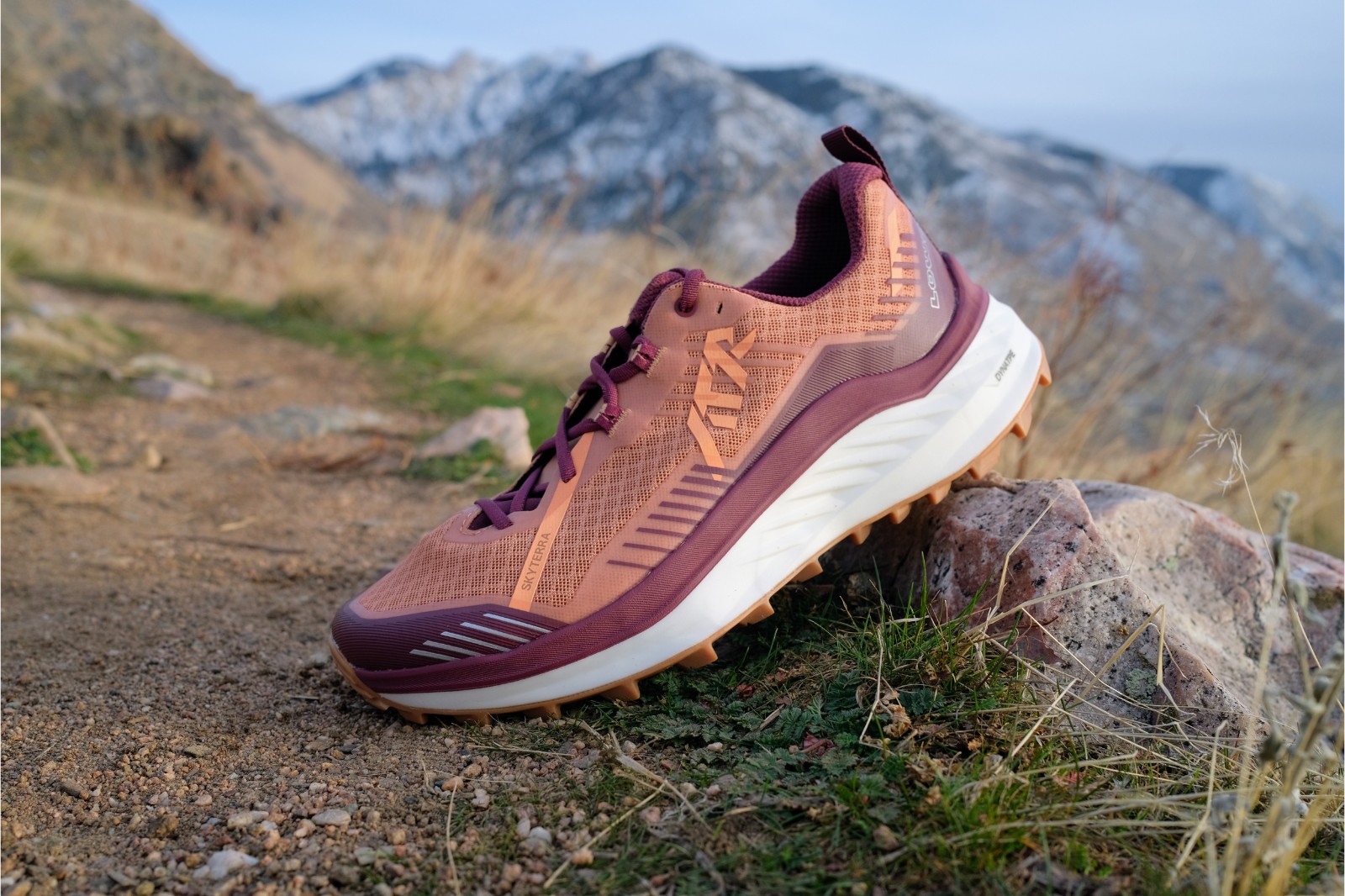
This Lowa, though, the Skyterra, is not some pounding wafflestomper meant to support expeditions under load (as much as it might want to be). The Skyterra is Lowa’s entry into the middle-to-long distance performance trail running range, and to support that goal, it’s equipped with a tough ripstop upper, a supercritical DynaType midsole, and a rugged Vibram outsole with 4.5 mm lugs. It’s a grinder, but how does it look back on the boot heritage that’s baked into Lowa?
MELISSA: This was my first experience with Lowa, and right away it felt like stepping back into my early days of ultrarunning. Think early 2000s, when shoes prioritized durability and protection over speed. Back then, I needed a shoe that was built to help me survive the miles. The Skyterra has that same grounded, no-nonsense feel.
Out of the box, it’s clear this is a sturdy, beefy shoe. Everything about it says durability, from the upper construction to the overall structure. It doesn’t try to feel light or overly modern. Instead, it leans into a more traditional, mountain-ready design that feels built to last.
Visually, the Skyterra stays pretty true to that same philosophy. The colorway doesn’t particularly stand out, and there’s nothing overly bold or modern about it. It leans more utilitarian, which honestly fits the overall identity of the shoe.
There’s a certain confidence in Lowa’s approach. This isn’t a shoe trying to win you over in the first miles. It feels like one that earns trust over time, especially on longer efforts and rough terrain.
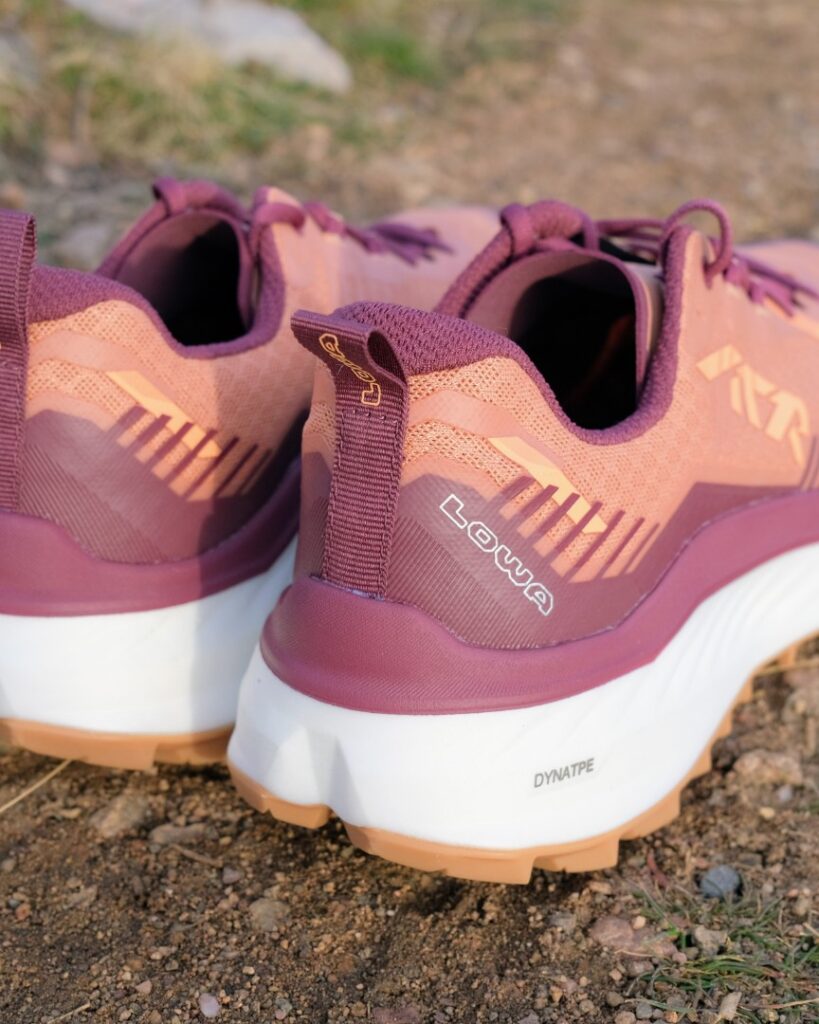
SAM: The Lowa Skyterra is doing its absolute best to stay true to the alpine expedition footwear heritage that precedes it. This is a trail runner, and a pretty good one at that, but you can feel it just screaming to be a mountaineering boot.
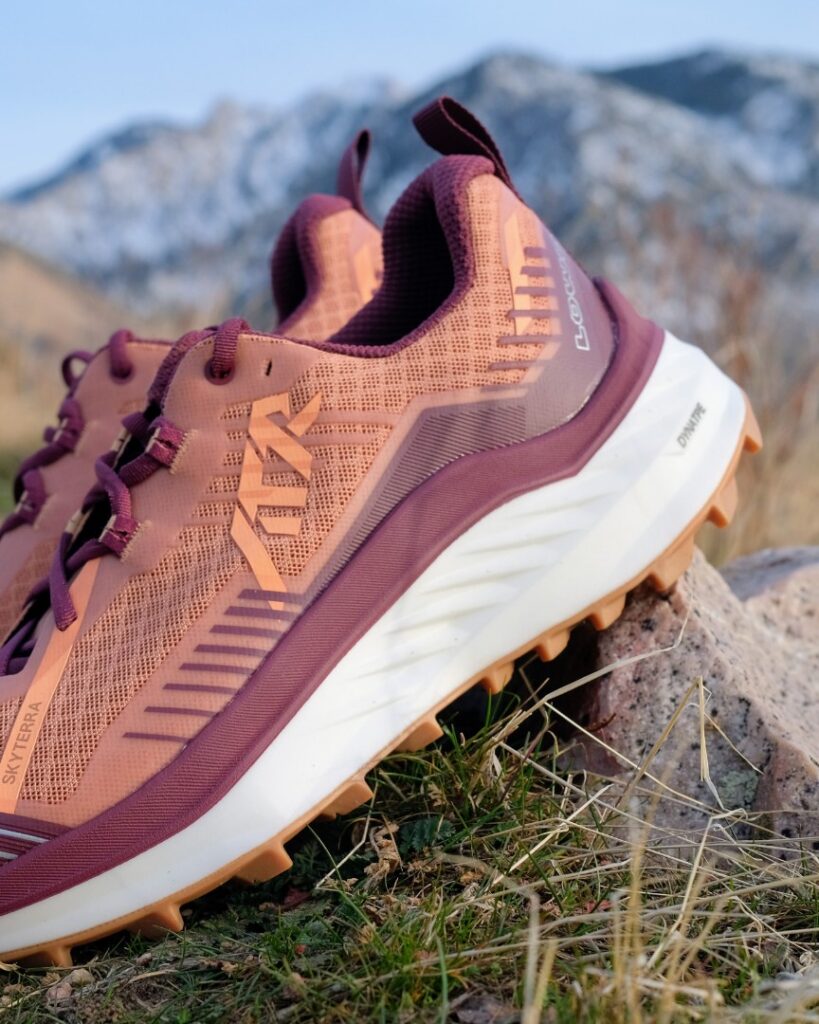
You can see it first in the shoe’s design. It has that early-2000s modern-technological look that swept so many hiking boots just after the turn of the century. It’s all speedy overlays, ripstop, and hard angles. Honestly, I kind of like it. It has character and can almost feel retro (there’s that time-inspired existential crisis again).
That ripstop upper material is chock full of a characteristic that is the leading quality of this shoe — one you’ll see Melissa and me repeat throughout this review: durability. The ripstop woven engineered mesh is tough. It’s pretty stiff before a 15-mile or so break-in, but it, plus the ample overlays, will provide all the protection you could need. There’s extra coverage over the toes from those overlays, and a generously padded tongue with a thick covering to protect the top of your foot. It feels like a thin, modern version of the engineered mesh uppers companies like Lowa put on their performance hiking boots.
I love the heel fit on this shoe. It holds securely without any rub points and has just the right amount of structure. It manages to lock in that security while still offering a sense of openness. This is the kind of heel on a trail running shoe that just disappears with the miles.
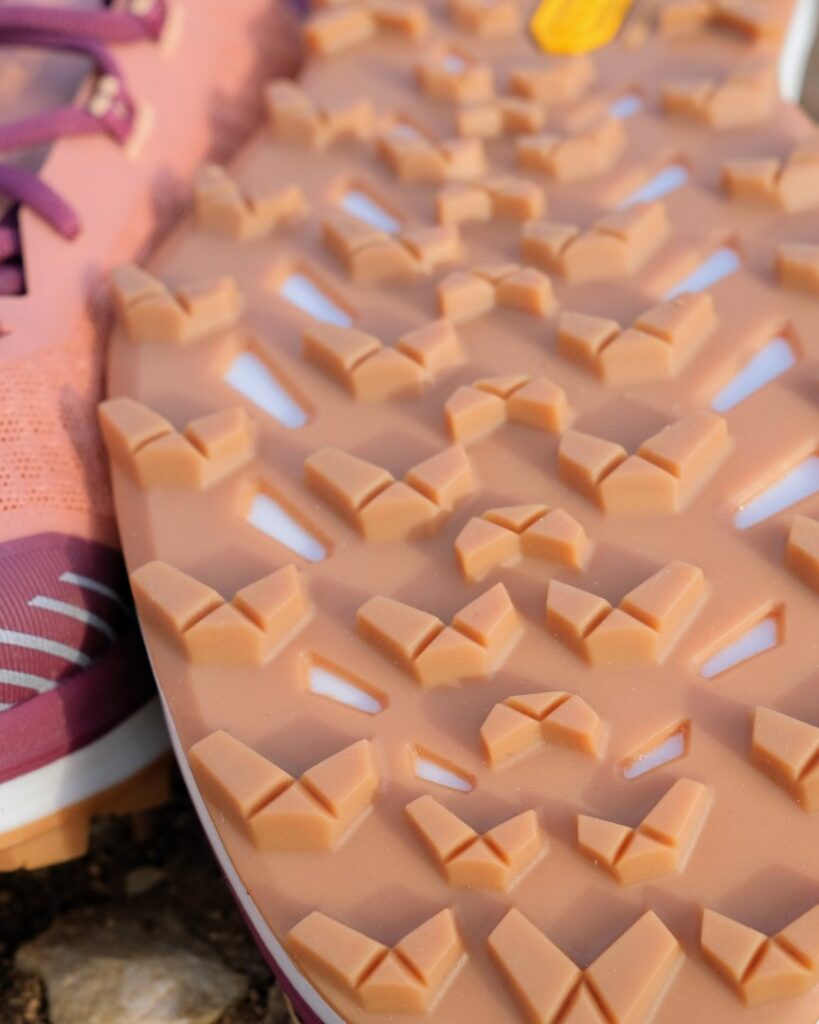
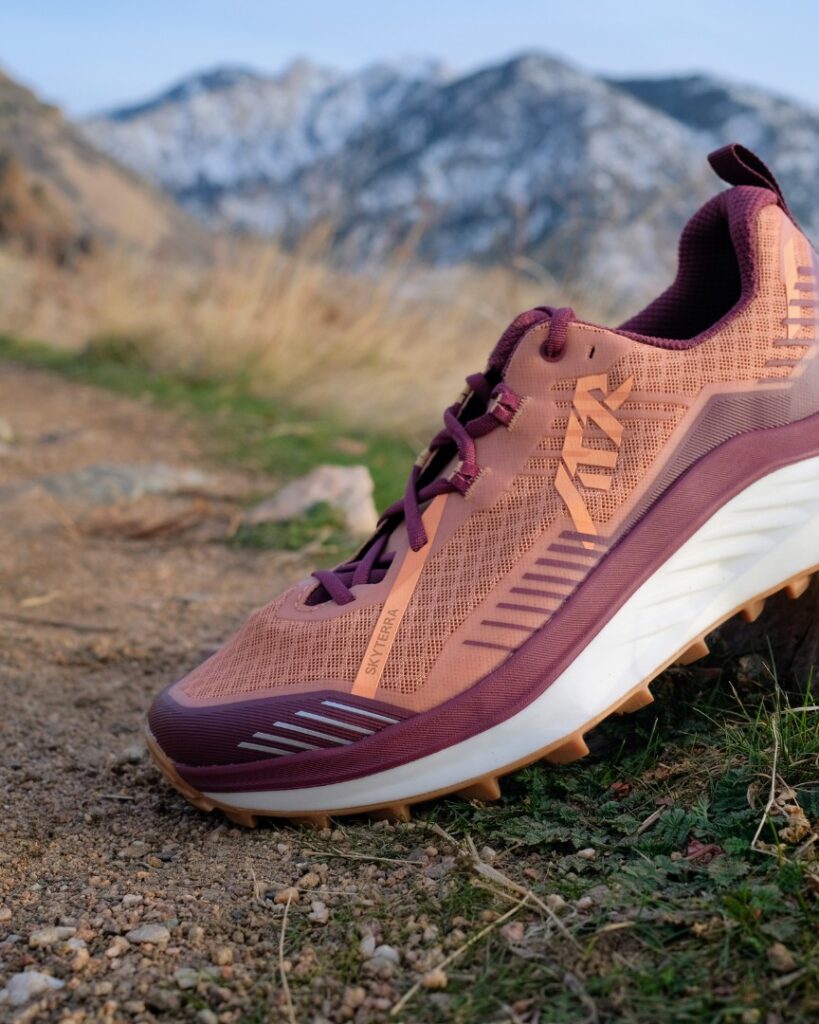
The supercritical DynaType midsole is firm in the tradition of many European trail running midsoles, but it offers nice responsiveness. It’s shaped like a boot sole, and it transitions underfoot a little more like a boot than a modern trail runner. That is, it’s pretty stiff with minimal flex. The protection is next level — this is not a shoe where you’ll get much of any trail feel. You might think all of this is the antithesis of what we often see in trail shoes today, but it runs really nicely.
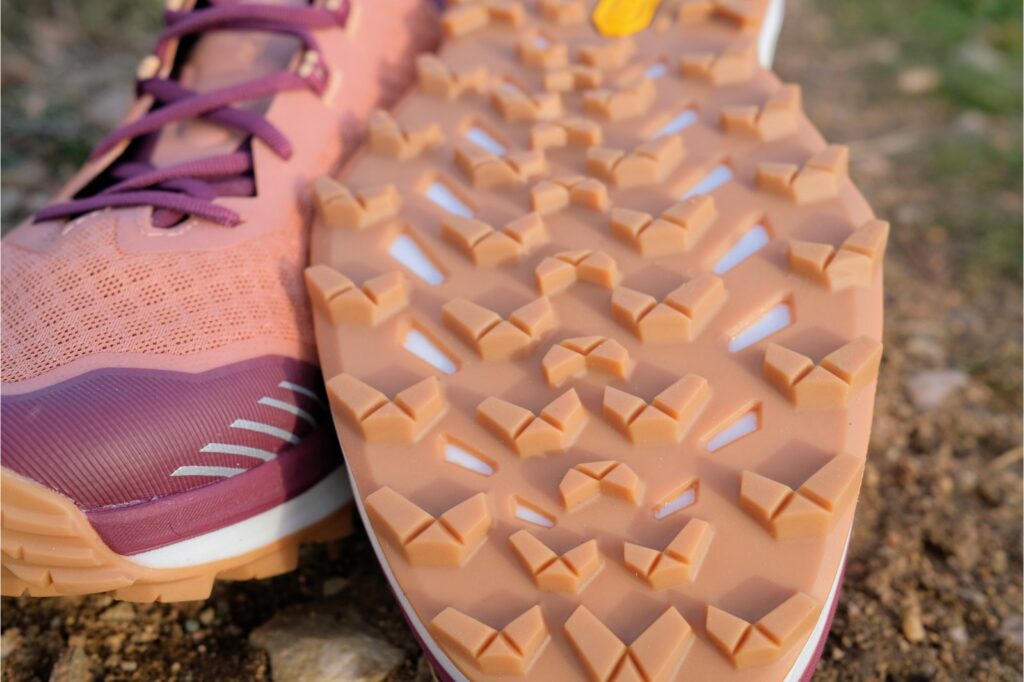
Under that midsole is an (almost) full coverage Vibram Megagrip soleplate. I say almost there because there’s a small cutout under the heel to enhance cushioning, and some small weight-saving cutouts down the forefoot, but otherwise the Skyterra has a whole footful of extra-grippy 4.5 mm chevron lugs. We do a lot of extolling the virtues of Vibram Megagrip here in the dirt division, but this outsole is one of the absolute grippiest I’ve ever come across. I rolled over deep leaf coverage, mud, wet rocks, and scree with nary a slip to be had.
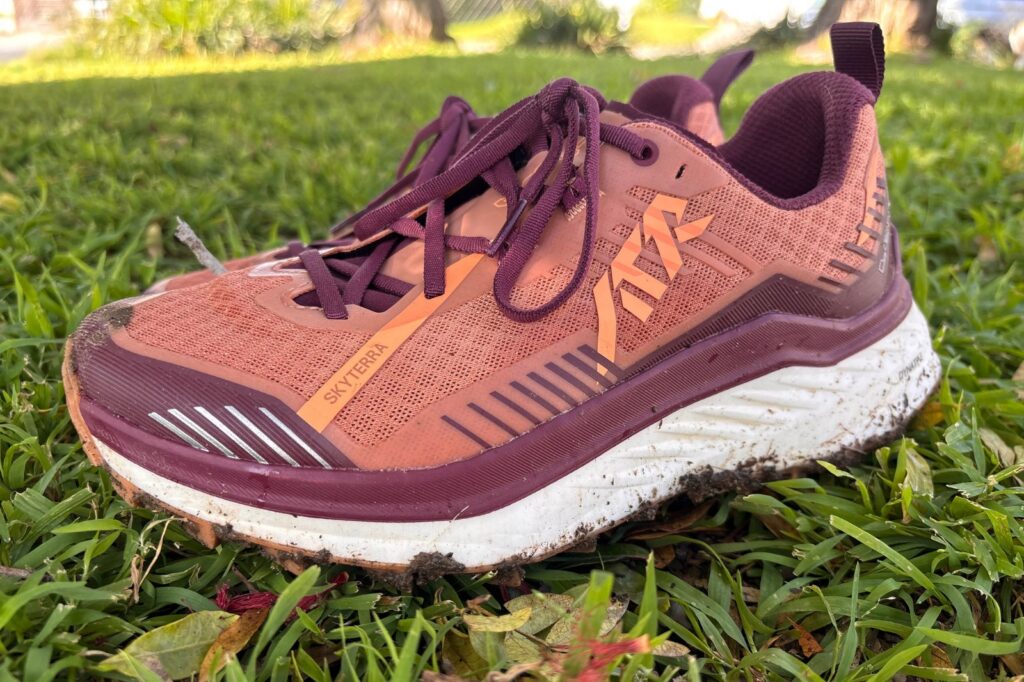
MELISSA: What stood out most to me is how grounded and reliable the Skyterra feels. It really does bring me back to an earlier era of trail running. The Skyterra feels like a true workhorse. It’s the kind of shoe I’d reach for on long training days where I’m less concerned about pace and more focused on time on feet and confidence across all terrain.
The upper’s durability is immediately noticeable, with a construction that feels tough without being overly rigid, and it holds structure well over uneven terrain. There’s enough breathability to make it viable for longer efforts, but the priority here is clearly protection and longevity.
The midsole leans a bit firm, but not rock-solid. There’s a stable, protective cushion that holds up over distance, which is where I think this shoe really shines. It feels dependable — something I’d trust for an ultra where consistency and comfort matter more than bounce.
The grip, unsurprisingly, is a standout. It performs well across varied surfaces, as expected from Vibram Megagrip. Overall, there’s plenty of stability and control.
I also appreciate that Lowa didn’t overcomplicate the design. The simplicity works in its favor, and everything feels intentional and well-built. This is the kind of shoe that quietly does its job well.
Shop The Shoe - Men Shop The Shoe - Women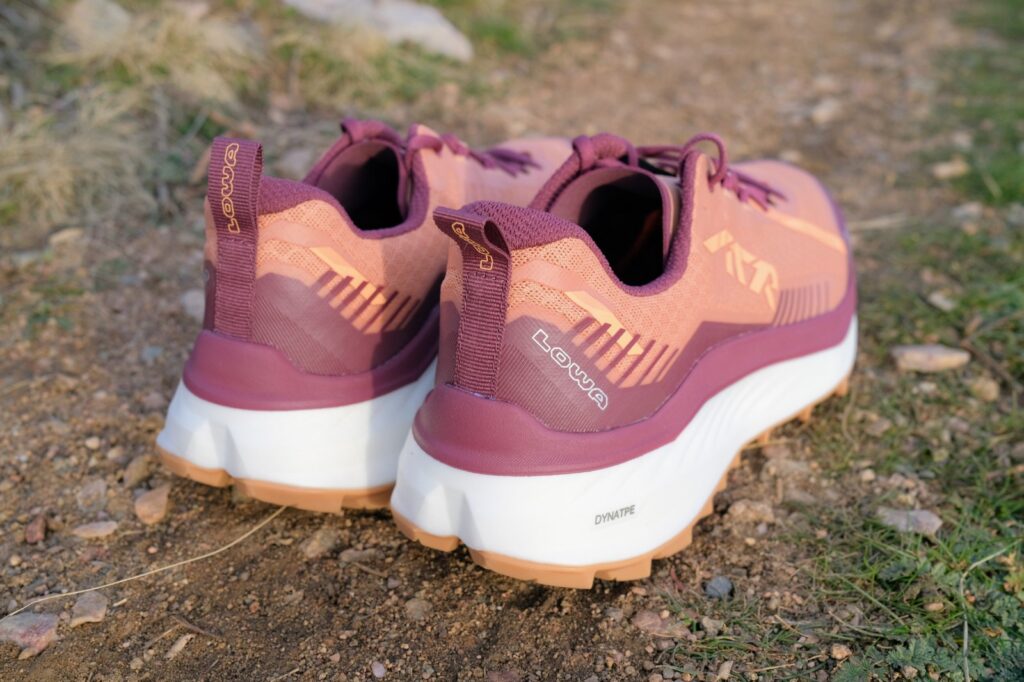
SAM: The Lowa Skyterra’s best characteristic, its boot-like ruggedness, is also one of its issues. This shoe wants to be a boot, and it feels a little clompy between the stiffness of the midsole and how much it weighs. It still runs pretty nicely, as I said above, but this is not a nimble or fast shoe.
The toe box fit is exceedingly generous. I like a wider shoe, and I experienced only a slight bunching in the upper fabric, but the toe box in my US M10 was downright cavernous. Slightly long and wide through my toes and the ball of my foot.
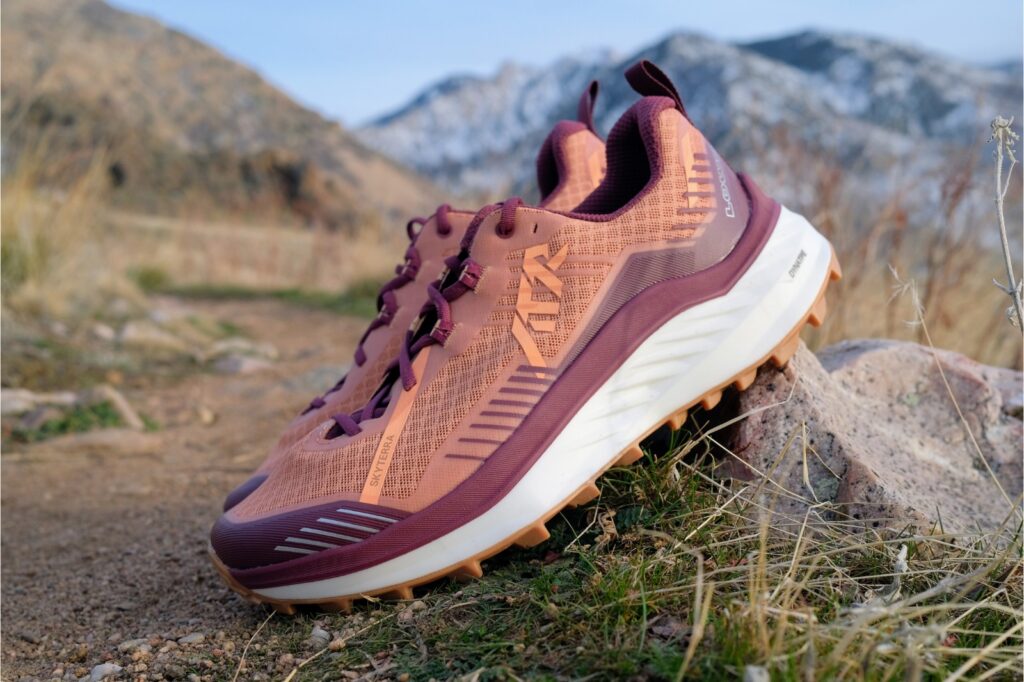
MELISSA: Fit-wise, the Skyterra runs a tad long and provides a very roomy toe box (possibly too roomy for some). I generally appreciate extra space, especially with a wider midfoot, but this felt just a bit oversized for me. That said, I could see this working well with thicker socks or in colder conditions, where that extra space becomes more of an advantage.
The best way I’d describe the Skyterra is that it’s a Jeep 4×4 of a shoe. It’s built to handle rough terrain and long days, but you’re not reaching for it when you want something nimble, quick, or responsive.
Shop The Shoe - Men Shop The Shoe - Women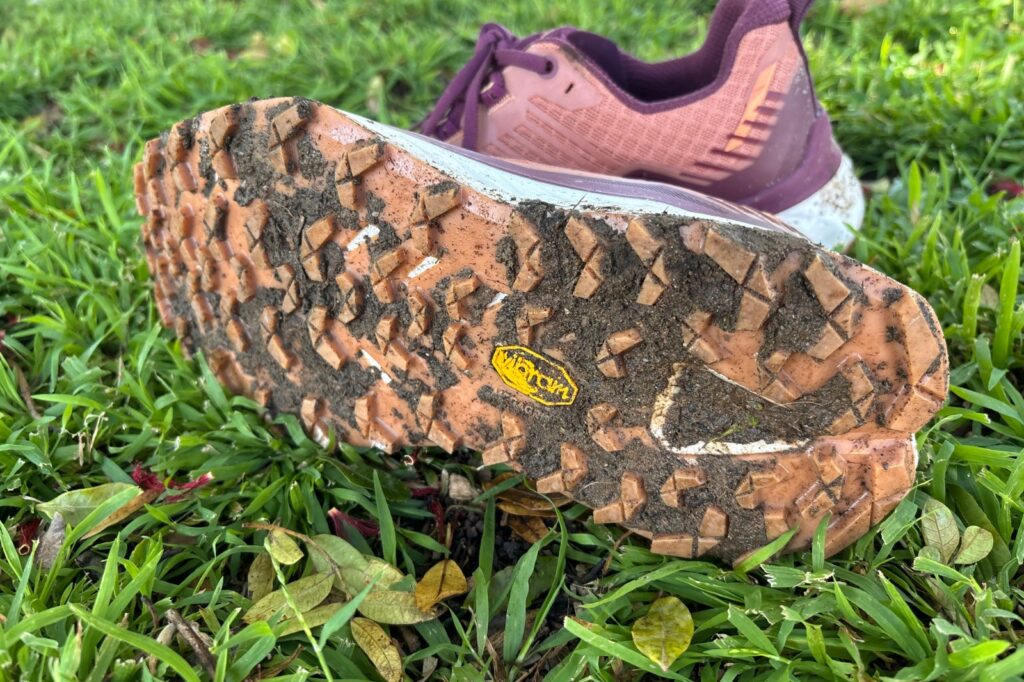
SAM: The Lowa Skyterra is a trail runner that bleeds its hiking boot heritage out of its last pore. If you are the kind of runner who is looking for protection from top-to-bottom and grip for days on end, this could very well be your perfect shoe.
It’s a grinder that will keep the trail underfoot where it belongs, albeit one with weight, stiffness, and a fit to also match the characteristics of the boots Lowa is known for. This is a shoe for the runner with a backpacking background who always loved the stiff familiarity of a hiking boot.
MELISSA: The Lowa Skyterra feels like a very intentional entry into the trail running space from a brand with deep roots in mountain footwear. You can feel that heritage in every part of the shoe — from the durability of the upper to the stability underfoot.
This isn’t a shoe for everyone. Runners who prefer something lighter, more flexible, or more responsive may find the Skyterra too stiff and heavy. But for those who prioritize protection, grip, and long-haul reliability, it fills a very specific niche. This is a shoe that tries to impress — it’s one that will prove itself over time.
For me, the Skyterra is not an everyday pick, but it’s one I’d keep in rotation for long, rugged efforts where I want something that I don’t have to think twice about.
You can pick up the Lowa Skyterra for $190 from Lowa by using the buttons below.
Shop The Shoe - Men Shop The Shoe - WomenHave something to say? Leave a Comment


Sam lives in Baltimore with his wife and two kids and spends his days fixing espresso machines for Ceremony Coffee Roasters. He runs with the Faster Bastards when he can, races ultras, and has been working on completing the AT section by section. He thinks the best days are made of long miles on nasty trails, but that a good surf session, a really stunning book, or a day of board games are pretty all right too.
All-time favorite shoes: Saucony Xodus Ultra, Topo Athletic Ultraventure 3, Altra Lone Peak
More from Sam
East Coast raised and West Coast trained, Melissa is now retired from racing ultras but still holds a deep love for long miles and time on trail. She’s currently doing what she can to delay a hip replacement, at least until completing a full lap around the earth, which she expects to hit in 2026.
Based on the Southern California coast, she now enjoys slower, easier miles, stroller runs, and time in the gym focusing on strength training. (And still sneaks in some spicy running when she can)
More from Melissa
Sign in or create a free account to comment. You'll come right back here.
Sign in / Sign upBe one of the first runners to rate it.