Shop BITR Apparel Shop Now
We independently review everything we recommend. When you buy through our links, we may earn a commission.
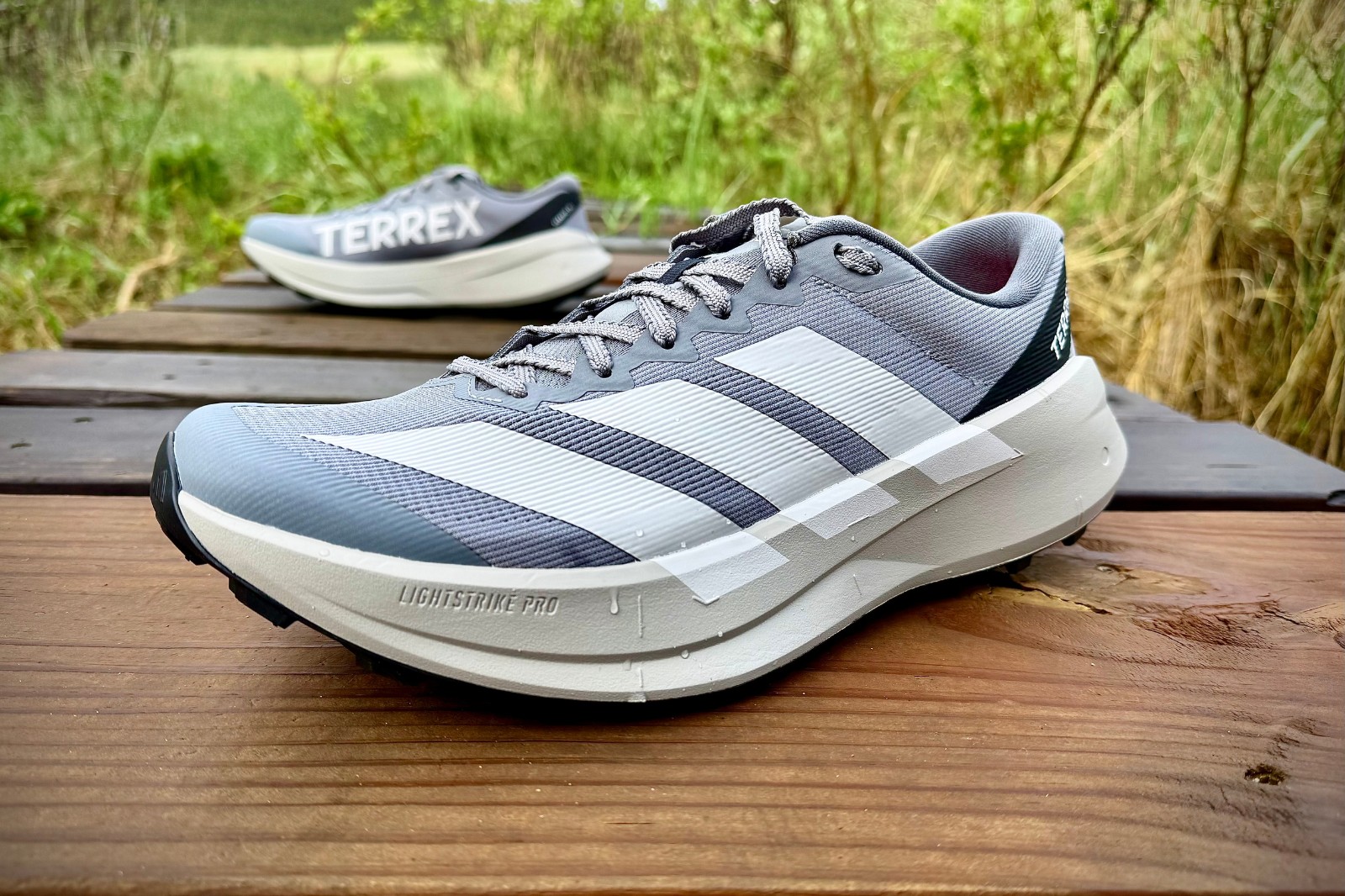
9.7 oz. (277 g) for a US M9 / 8.4 oz. (240 g) for a US W7
38 mm in heel, 30 mm in forefoot (8 mm drop)
Speedy trail runs on technical terrain
Lightstrike midsole, Continental rubber outsole, Synthetic upper
Available now for $145
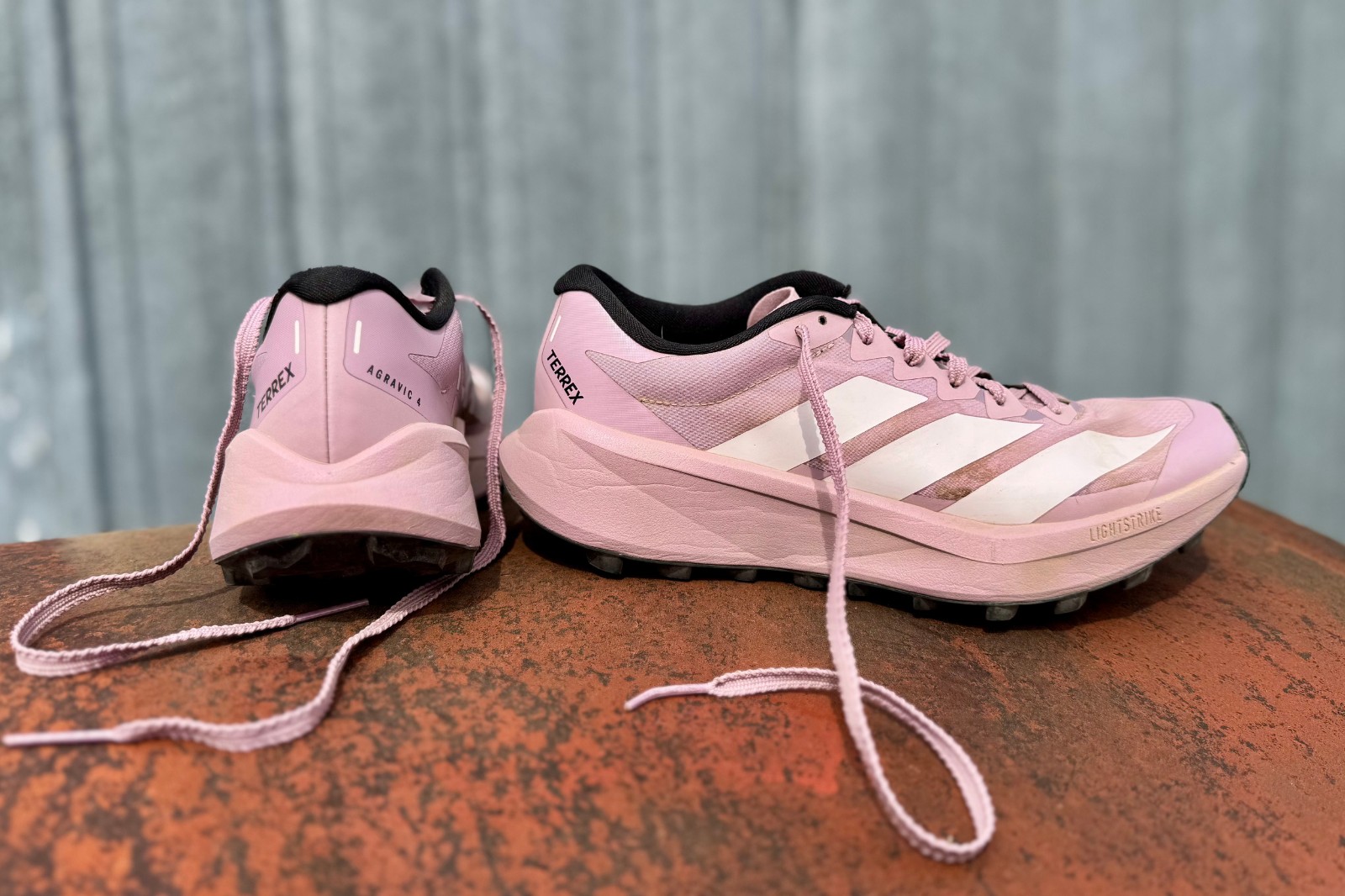
MICHAEL: Spring has sprung here in Huntsville, and the rainy season will soon be upon us. By proxy, the chirping birds, slippery mud and limestone, blooming trilliums, and the occasional tornado are on their way to the Rocket City as well. Given the possibility of poor conditions posed by such sporadic weather patterns (especially tornadoes), I find that low-to-the-ground shoes with a slim fit and deep lugs seem suitable for this time of year.
Needless to say, I was eager to try the Adidas Terrex Agravic 4, as it seemed to fit the bill and met all my spring criteria. Additionally, the vibes reminded me of the cleats I retired after my last season of middle school soccer, and later on, yet another pair of cleats I used for two seasons of both intramural ultimate frisbee and Spikeball in college. That, ladies and gentlemen, is not something that can be said of every shoe. Let’s just hope it’s not the only thing exceptional about the Agravic 4.
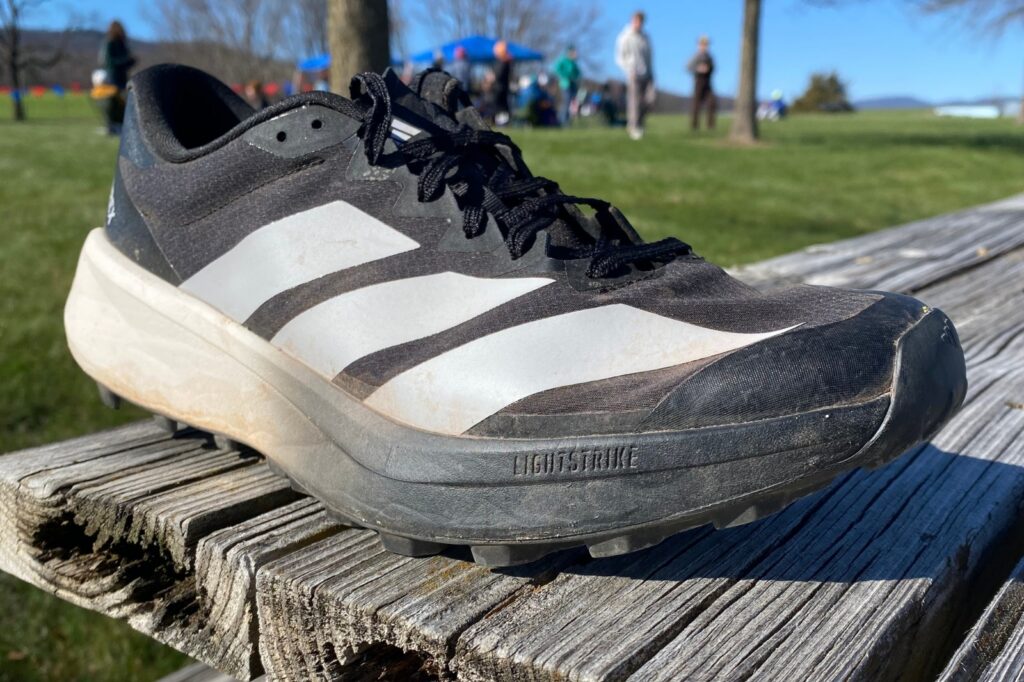
JOHN: Usually, when you get to the 4th episode of a series, you’re either in or out. I was kind of iffy on the HBO show Task initially, but by the 4th episode, I was 100% all in. It’s been bumpy at times with the Adidas Terrex Agravic trail shoe, but there’s been a clear progression. My first review at Believe in the Run was the Adidas Soulstride, and it was a cool shoe, but it lacked a lot of identity. When I got the Agravic 4 in the mail, I got really excited. It came at a great time because I had a brutal race that weekend, so I got to test it right out of the box!
Anyway, time for some more background information. I reviewed the Agravic 3 back in June of 2024. It was an impressive $130 shoe for local trails or less technical terrain. Well, Adidas just rolled out part 4, and it’s a much bigger update — lighter, with an updated stack height, drop, and upper.
Ever since reviewing the Adidas Terrex Agravic Speed 2, I’ve been really big on Adidas Terrex. It was a really fun review and set the bar pretty high. To really test this big update to the Agravic, I used it at the Hone Quarry 40 miler: technical mountain terrain with lots of uphill, downhill, water crossings, road, and pretty much name it, it’s got it.
RENEE: I haven’t watched HBO’s Task, but John’s shoe-to-show/movie analogies are usually spot on. Another thing I haven’t done is run in any previous version of the Agravic. I guess my show analogy for the Agravic 4 is Antiques Roadshow. You can hop into the fourth episode of any season and not be lost.
And a fun part about watching old seasons of Antiques Roadshow is watching the appraisals change. That oil painting appraised at $10,000 in 1998? Well, now it’s $600.
Speaking of money, Adidas keeps the Agravic 4 at a very reasonable price. I received the shoe the same day as the Agravic Speed Ultra 2 and the Speed 2. I was eager to run with those shoes and left the Agravic 4 for last. While on paper the Agravic 4 sounds less exciting, the shoe fills a solid spot in a trail shoe lineup.
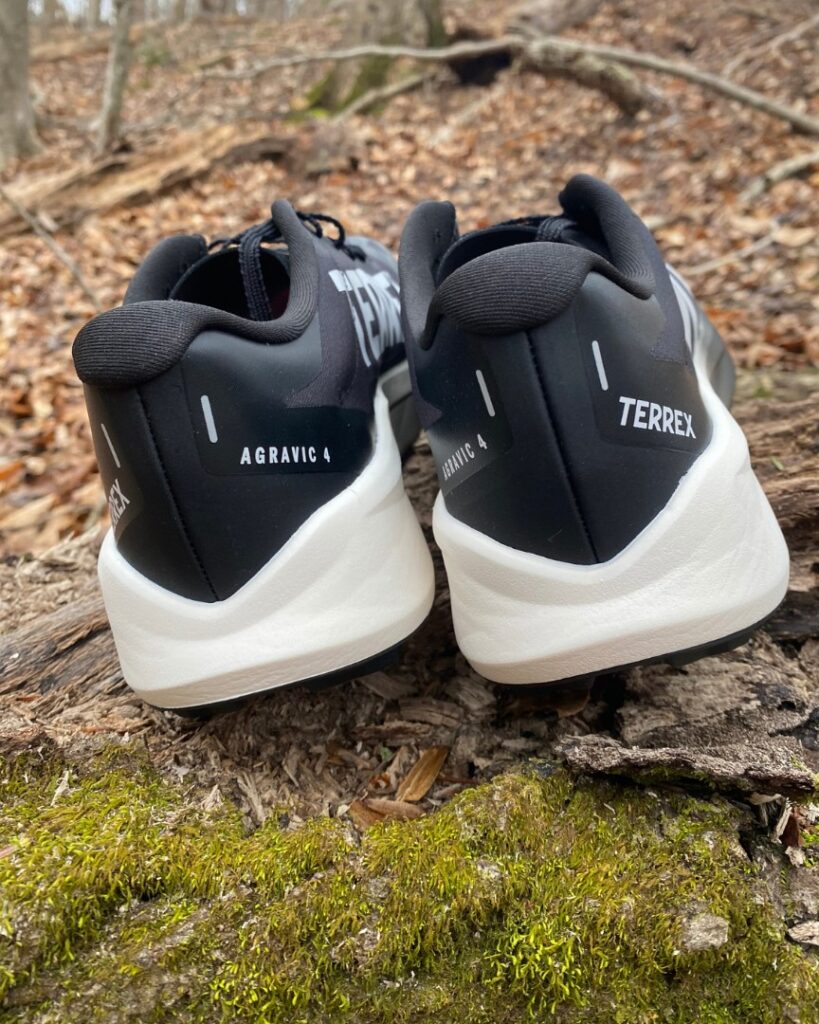
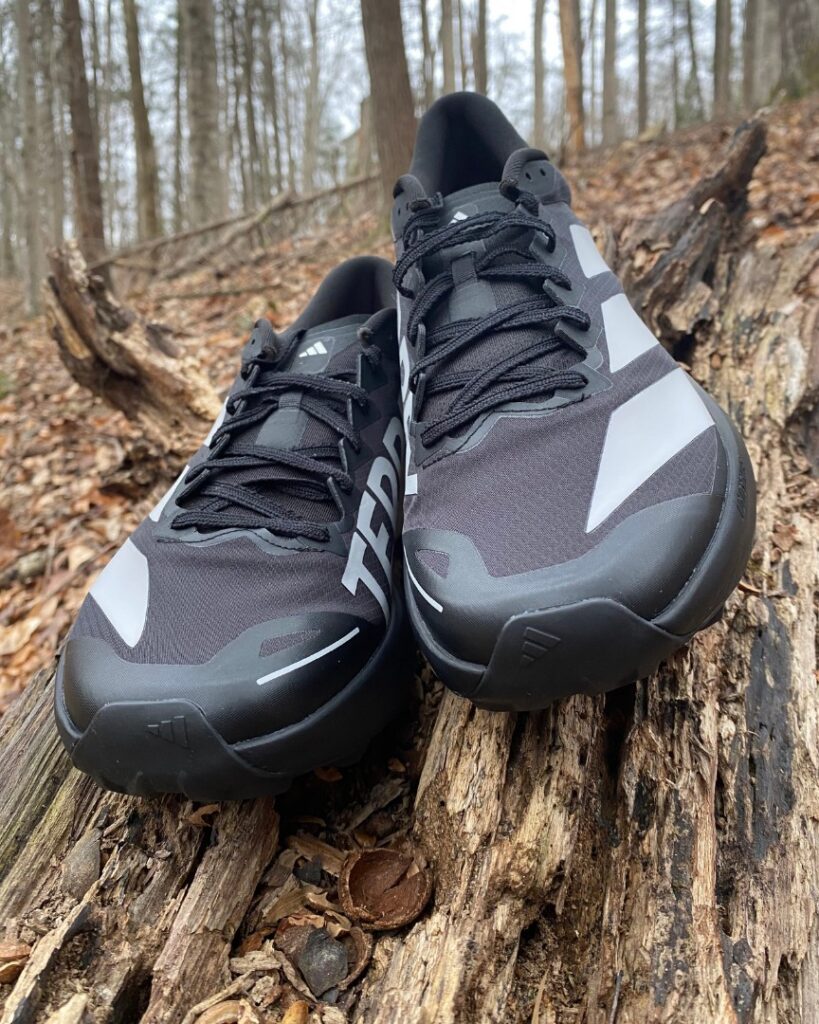
MICHAEL: Following an initial break-in period (more on that later), the Agravic 4 quickly showed it had something to offer as an interesting hybrid between speedy tempo and VK-oriented shoes like the Brooks Catamount or the Scott Supertrac RC 3, and more traditional everyday mileage shoes that err on the technical side, such as the Saucony Peregrine or the Altra Lone Peak.
First, the shoe’s fit, ironically, seems to take some cues from its intramural cleat relatives. Once I got the lacing set correctly (a rather pleasant experience thanks to the serrated laces borrowed from its pricier cousins), the upper seemed to perfectly contour the top of my foot without creating hot spots, something I don’t often experience given my foot’s low volume and slimmer-than-average profile.
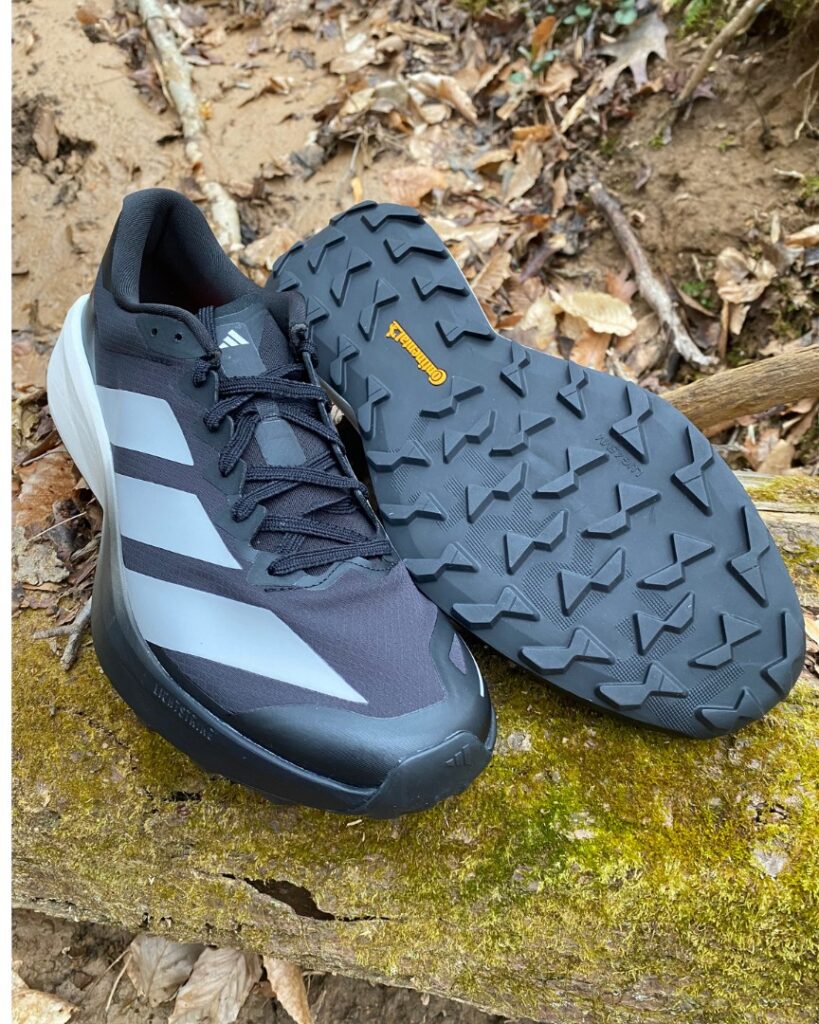
Additionally, the fit through the heel, tongue, and forefoot was equally precise and locked in, with no hotspots or blisters. The same could not be said for those old cleats, unfortunately. Coupled with the full coverage outsole and visually aggressive 4.5 mm lug pattern, the dialed fit gave the shoe fantastic confidence in slippery conditions and naturally lent itself to picking up the pace.
Sandwiched between the outsole and upper is, in my humble opinion, a very interesting choice for a midsole in terms of both composition and form. The material itself is Adidas’ Lightstrike EVA foam. To my limited knowledge of the storied brand’s road offerings, I believe the foam was first used long ago in the Boston 10 and 11, and was met with a distinct lack of praise from pundits worldwide due to its dense, dead feeling underfoot. I don’t think it’s any coincidence that the material is now used rather sparingly in their road line, so I thought it odd that the Agravic 4 features a full bed of the material out of the box.
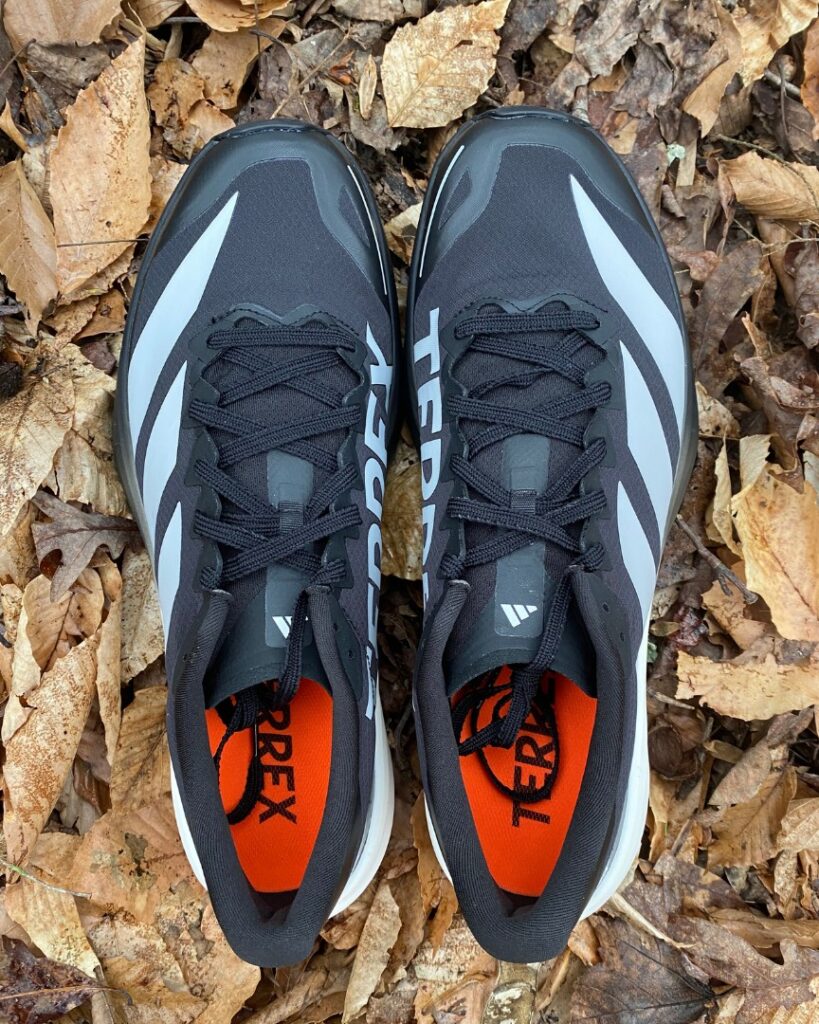
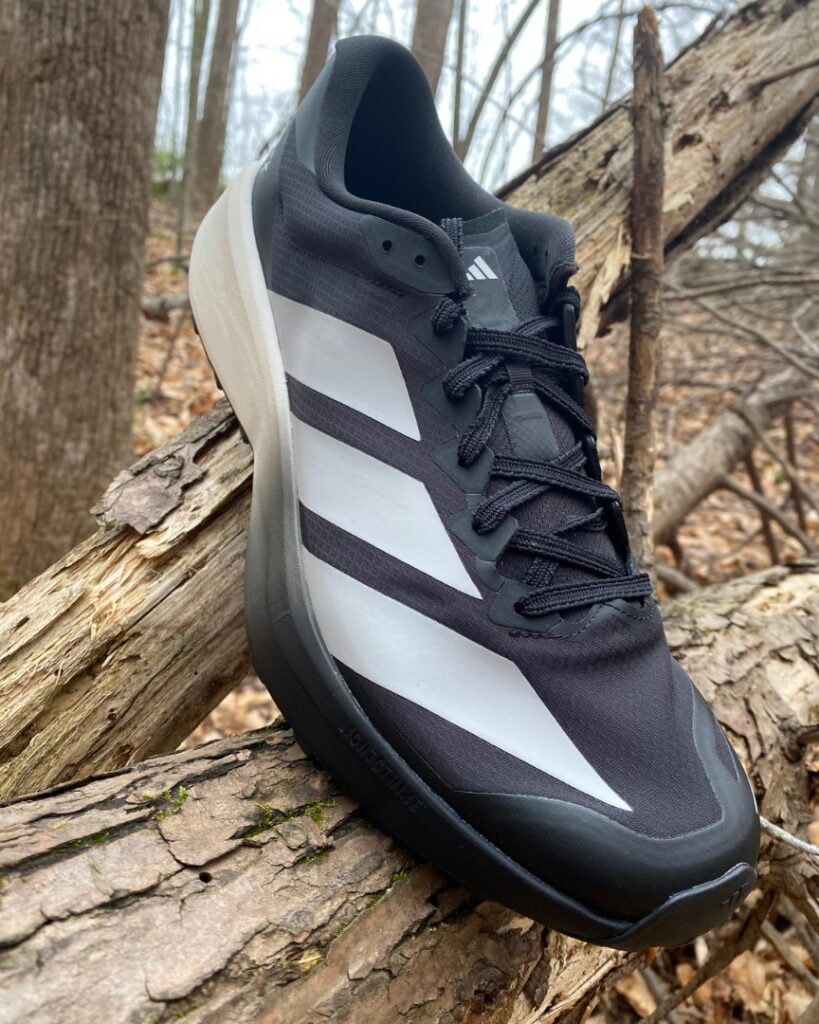
To me, this choice of material would make more sense if the shoe fully embraced the low-stack vibes of the Scott Supertrac RC3, but the 38/30 stack height of the Agravic 4 suggests the shoe may be meant more for everyday mileage than for red-lining it up and down your nearest peak.
Despite my cynicism, I found the combo worked fairly well. The foam’s density keeps the shoe feeling stable despite the higher stack and does a good job supporting the full-coverage rubber outsole’s underfoot protection. And while I did pick up some hints of that characteristic Lightstrike deadness, the shoe’s distinct forefoot rocker geometry resulted in a quick toe-off and a peppy feel when opening it up. One more positive note is that, in addition to the quick toe-off, the Agravic 4’s slightly lighter weight (compared to other daily trainers at its price point) allows it to climb a little quicker than the competition.
All in all, I think what we’re looking at here is a fairly solid example of what it might look like for a shoe like the peregrine or the lone peak to shed a slight bit of weight, and tweak both its geometry underfoot and upper to make for a quicker toe-off and ultra-secure fit for faster, uptempo mileage. That’s all to say the Agravic 4 has potential for the everyday runner looking for something that picks up the pace a little quicker than its counterparts at the sub-$150 price point. And yet, I do have my gripes.
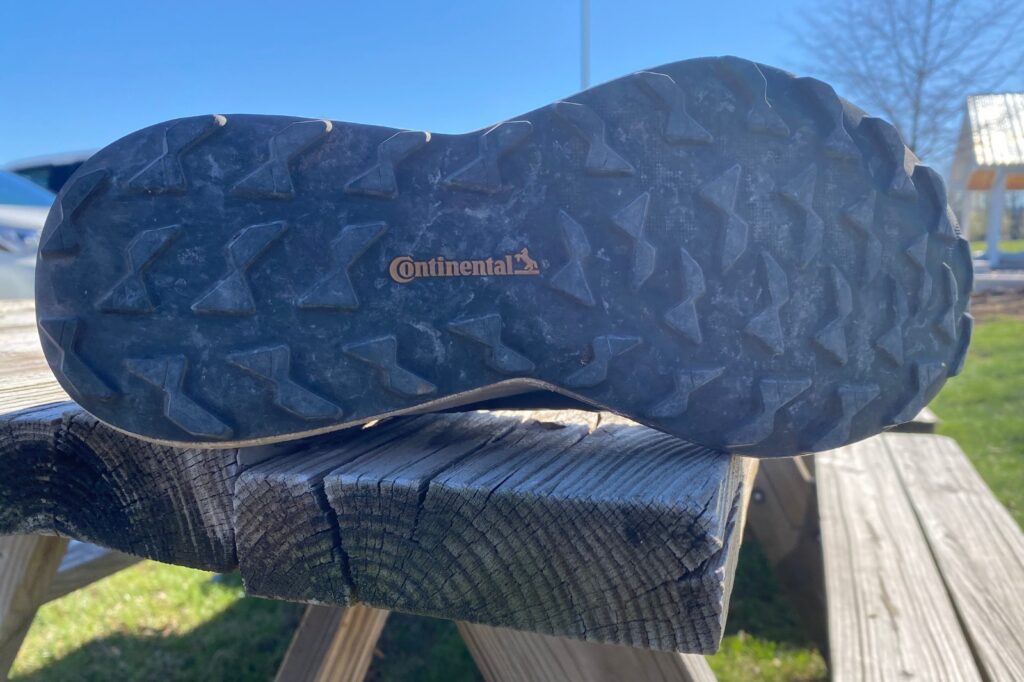
JOHN: Initially, after using the Speed 2, I was worried I wouldn’t like the fit and feel of the Agravic 4 because it has a pretty consistent look across previous updates, but don’t let that fool you. It doesn’t feel bulky to run in, and it’s much more protective than the previous model. I kicked stuff accidentally and did not feel it at all in the way that I had in the Agravic 3.
My feet felt comfortably locked in for the entire 40 miles, and the way Hone Quarry works is that you get wet right away in the race and have wet feet for pretty much the duration, yet my feet still felt great! It drained well and did a good job of keeping out debris.
The Agravic 4 felt extremely stable even when dancing on rocks with wet feet, navigating technical terrain, traversing uneven surfaces, and tackling soul-crushing climbs. If you have to run some road, too, it’s not bad at all; you could do much worse.
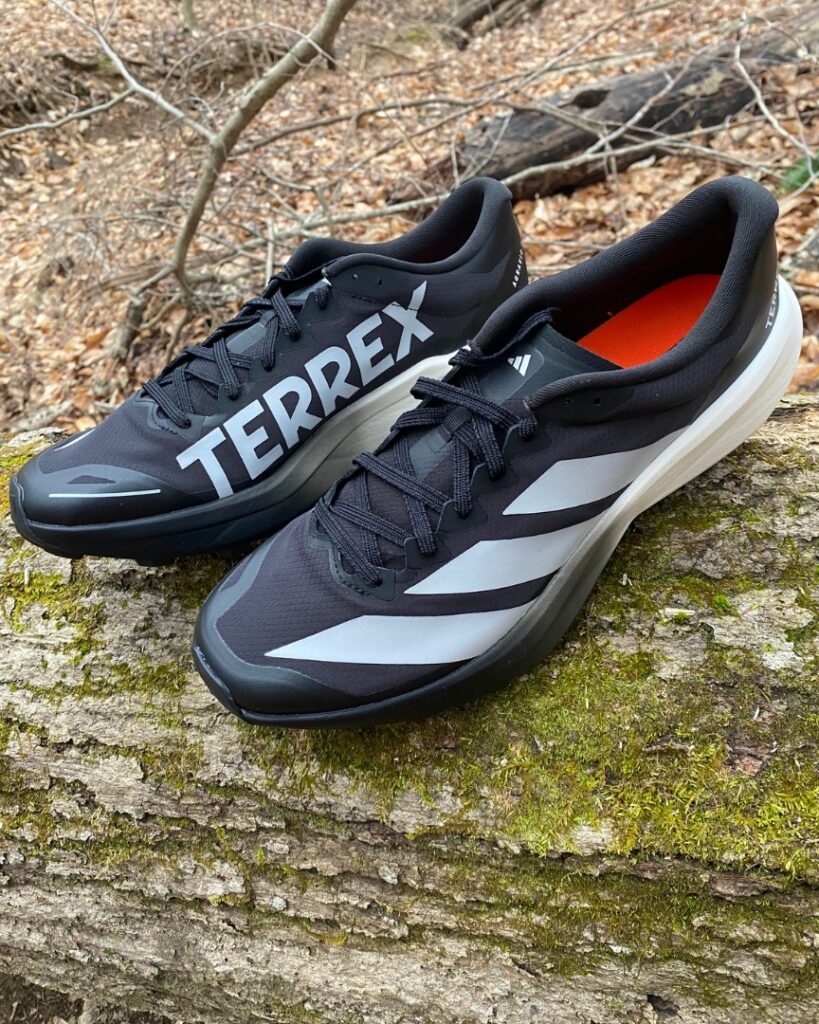
The look of the shoe is great. The black drew many people’s attention on the trail. I have some jokes about this in the next section, but it’s an eye-catching shoe. When you see the 3 stripes, you think of cool stuff like track suits, David Beckham, and old-school hip-hop. Adidas has so much cool baked in and is really coming into its own with trail shoes. If you look at the progression in style from the Soulstride to now, it’s pretty incredible. Good job, Adidas.
So, with everything I’ve listed and the fact that it’s only $145, I’m giving it an A. It’s pretty simple math here: if you have a mountain race coming up or need a workhorse that can do whatever, I highly encourage you to buy this shoe.
RENEE: John calls the shoe a workhorse. He’s right. For $145, the Agravic 4 can be a do-it-all shoe for those who can’t afford a massive shoe rotation. And if not for reviewing gear, I’d be in the “I can afford only one shoe to do everything” category. Budget trail shoes exist, but a quality do-it-all shoe for $145 is about as low as they come these days.
After running with the Speed Ultra 2 and Speed 2, the Agravic 4 felt a bit slow and dull in my first miles. I’m not saying the shoe needs a break-in period, but give it a few miles before judging.
The shoe is stable with just the right amount of nimbleness and flex. I don’t have the Agravic TT, but when running on single-track trails with constant switchbacks and roots, the Agravic 4 is clearly (for my ability) the safer choice compared to the Speed 2 and definitely the Speed Ultra 2. I initially thought the full coverage outsole was overkill, but it’s protective and flexible. Plus, it’s not a heavy shoe. Not light, but not heavy. I wouldn’t have guessed the drop at 8 mm, so if a high-drop trail shoe sounds unappealing to you, the Agravic 4 runs like a lower-drop shoe.
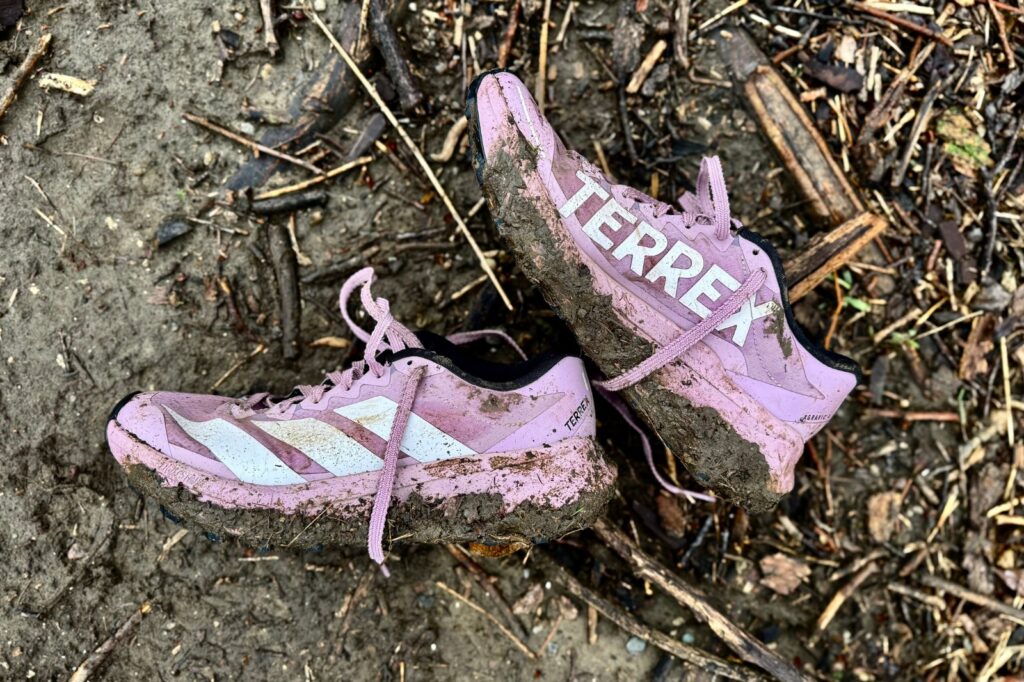
As early spring weather arrives, so does the mud. For clarification, I’m not tearing up public trails when conditions are super muddy, but I am running circles around the fields (planting hasn’t started yet). The shoe runs well in mud and soft ground. The heel counter and collar sit lower enough that they don’t hit my ankles, and the ground feel, plus the 4.5 mm lugs, make the shoe easy to control.
Shop The Shoe - Men Shop The Shoe - Women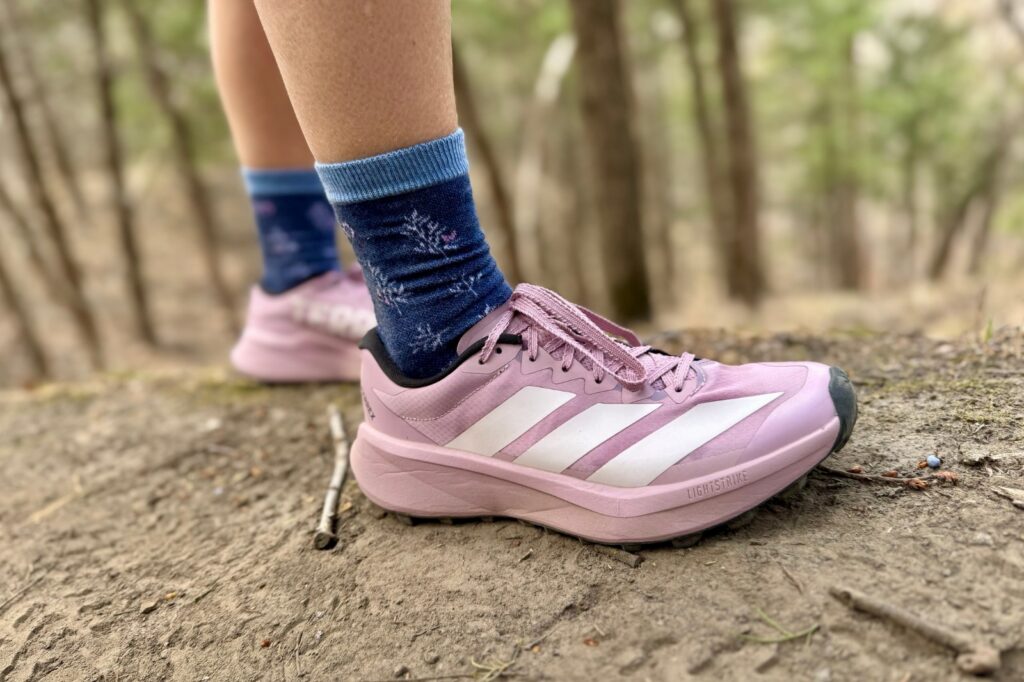
MICHAEL: While I do think the midsole design does a good job of balancing versatility and a speedy, lighter feel underfoot compared to other trainers in its class, most of my complaints still stem from the use of Lightstrike. Or, more specifically, using Lightstrike throughout the midsole.
On my first outing in the shoe, it honestly felt like a proper brick. I am happy to report that some hints of plushness emerged after a break-in period, but the overall feel of the midsole remains rather uninspiring. Perhaps I would have fewer complaints about the firmness were the midsole lower in stack height, but I have to nitpick something, right? But honestly, the year is 2026, and Lightstrike was debuted somewhere around 2021. For clarity’s sake, I’m not trying to bash Adidas’ decision to keep costs low with a full EVA offering, but there are lots of much better-performing EVA foams out there that are still being released.
The Hoka Speedgoat 7, NNormal Kjerag, and the recently released Altamesa 300 v2 from The North Face quickly come to mind and provide compelling reasons for why EVA in general is not a thing of the past. Still, I’m confused about why Adidas is sticking with such a dull foam, if for no other reason than its bad associations with failed applications in the Boston 10 and 11? Who’s to say, maybe I’m a bit of a grudge holder.
In the end, my complaints are not necessarily with what the shoe currently is, but rather what it could be. For instance, I think a Lightstrike Pro sock liner or a Lightstrike Pro puck wrapped in an EVA carrier foam would make all the difference in these shoes’ responsiveness, and bring the overall experience underfoot on par with what’s on offer here from the upper. Wait, did I just describe the recently released Agravic TT and Agravic Speed 2, both of which received mostly positive reviews from my fellow reviewers? Simply put, it’s no coincidence that lightstrike foam is scarcely to be found anywhere else in the Terrex Agravic line.
JOHN: The only time the shoe felt rough for me was going down a steep, extremely runnable descent that I let loose on after a soul-crushing climb when I needed to make up time. It definitely felt rough underfoot when pounding the trail like that, and I was extremely happy once I got to the bottom, which is really perverse because you should be happy to have runnable downhill after climbs to make up time. That shouldn’t be something that stresses you out on ultras.
This is a silly critique, but I have problems saying the word Agravic on the fly while running, especially when trying not to die on trails because I’m a clumsy roadrunner who still runs all the ultras (because it’s my twisted form of therapy that makes me feel like a kid at PE).
When someone sees the shoe at a race and is like, ” Whoa, what is that?” I have to say it a few times before it’s properly communicated. I’ve said this in other reviews, too. People just think it’s a Boost. Part of me wants to be like, yes, this is an Adidas Boost, and I’m trying to get in this tempo run up on the mountain, but I always promote the shoe and say the name to the best of my dyslexic ability.
RENEE: I’ll add to John’s thoughts about the underfoot ride. On runnable terrain or stretches, the forefoot can be rough. I haven’t yet, but switching out the insole to a TPU insole might be what the shoe needs to add a bit more comfort and pop underfoot. The shoe works great for gravel miles, but this is where the underfoot feel might be less dynamic and less comforting than ideal. The shoe is clearly meant for trails.
The overlay on the lateral side of the toebox caused some irritation when I wasn’t wearing thick socks. The third stripe of the Adidas “three stripes” logo was hitting my little toe just right (or wrong). I guess Adidas can’t rightly take away that stripe. Two stripes would be the off-brand Adidas I wore in elementary school. Long live Payless Shoes.
I wore the same size in the Agravic 4 as the Speed 2 and Speed Ultra 2, yet I have a bit more length in the Agravic 4. The toebox shape is the same as that of other Adidas shoes, just a bit longer and more angled than I prefer. I had some bunching of the tongue too, not as bad as I have in those other Adidas shoes, but enough where I’d need a thicker sock and second-guess using the shoe for an ultra.
Shop The Shoe - Men Shop The Shoe - Women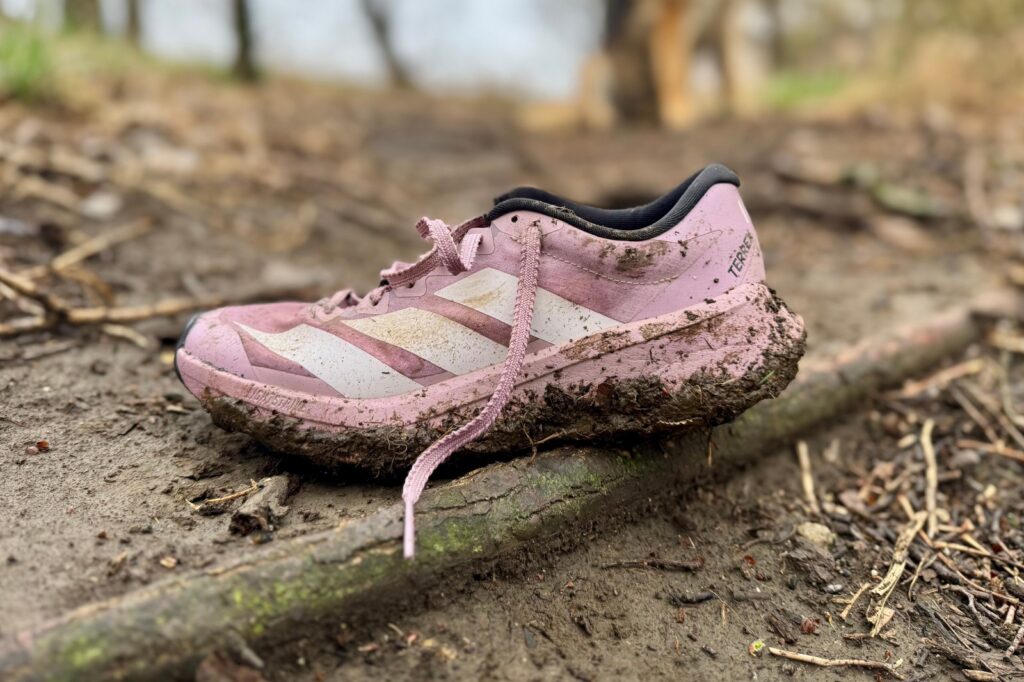
MICHAEL: My condemnations of Lightstrike aside, this shoe does occupy a space in the market that I think is fairly unique for a $145 shoe. If you like a firm ride, aggressive outsole, and an ultra-secure upper, you’ll likely enjoy what’s on offer in the Agravic 4 for your daily mileage and maybe some short races. I enjoyed the shoe for uptempo miles and felt locked in and confident the whole time.
However, if you’re looking for a midsole that feels like it wasn’t made 7 years ago, I would recommend checking out the previously mentioned Adidas Agravic TT or Agravic Speed 2. Despite my budget-conscious tendencies, I do feel they’d be worth the extra dough, as well as offer a sprinkling of nostalgia for your middle school soccer glory days. Or, if you’re like me, getting swept in the first round of the intramural spikeball tournament with my best friend Jon. Jon, if you’re reading this, know you deserved a more hand-eye coordinated partner.
JOHN: I pummeled the Agravic 4 over 9 hours, 40 miles, and around 8k of vert across technical terrain, mud, and streams, and it did amazing. My pair really didn’t get that dirty or show signs of wear either.
If you have seen me run trails, especially running technical downhill, you know I’m a klutz and slow down big time to be safe. I felt very safe in this shoe and more empowered to push myself on stuff that would normally scare me.
Even if you are late to the party, or never even showed up on Adidas trail shoes, use the Agravic 4 to jump in. For $145, this is an excellent shoe for training rotation, surviving a tough ultra, or even racing in. It’s versatile, checks off all the boxes, and my only real critique is that extreme downhill running got uncomfortable after a long stretch, which (let’s be honest) you are lucky to have this problem on an ultra because most of the time you are climbing, in water, dancing on rocks, or some other form of meditative torture that us adults need to even out.
As I mentioned in the review of Adidas Terrex Agravic Speed 2, Adidas is really getting better at making trail shoes. I’m very impressed. The difference between the Agravic 3 (which wasn’t bad at all) and the 4 really is mind-blowing.
RENEE: The Adidas Terrex Agravic 4 is a workhorse for trails for those who can’t justify paying more than $145. The shoe is a close comparison in terms of use and price to the Saucony Peregrine. I have a better upper fit in the Peregrine, albeit in a half size larger than I wear in Agravic 4. The Peregrine has a TPU insole, which gives a bit more responsiveness. Between the insole and the better fit, that’s why I prefer the Peregrine. That said, for those who get a good fit with other Adidas trail shoes, the Agravic might be the better choice.
You can pick up the Adidas Terrex Agravic 4 for $145 from Adidas by using the buttons below.
Shop The Shoe - Men Shop The Shoe - WomenHave something to say? Leave a Comment

A mechanical engineer living in the slippery singletrack haven of Huntsville, AL, Michael is a lifelong gear nerd with an unfortunate knack for wordiness. While he appreciates all of the varied terrain the US has to offer, he’s certainly most at home training and racing on the technical trails of the Southeast. In between reviewing shoes, he enjoys reading good books, riding bikes, and tinkering on Vern, his 1999 Subaru Forester. Most of all, Michael truly loves the daily pursuit of being a good husband and friend.
More from Michael


An obsessed runner, John has run in most ultra races in the Mid-Atlantic area. Since he’s an ultra runner, it’s no surprise he’s also a lover of food. He’s also a dedicated father, caregiver, and veteran.
More from John

Renee lives in rural Nebraska and runs on gravel roads that may or may not be maintained depending on the time of year. If she’s not running on gravel or dirt, she usually opts to run trails instead of paved roads. Fun face: every Boston-qualifying road marathon she has registered for has been canceled.
More from Renee
Sign in or create a free account to comment. You'll come right back here.
Sign in / Sign upBe one of the first runners to rate it.


It’s sad that we have become so inured to the increase in price of running shoes in the last few years that $145 is viewed as “cheap”. Yes, everything is relative, and this is a good shoe for the price…but rather than cheap, perhaps “good value” might be a more appropriate description.
Absolutely valid, I remember when $130 was the sweet spot for a quick daily trainer (think NB Rebel v2). It’s not entirely fair to call the shoe cheap, but you’d be surprised how many more people google “cheap trail shoes” than “good value trail shoes.”