We independently review everything we recommend. When you buy through our links, we may earn a commission.
11.3 oz. (320g) for a US M10 / 9.6 oz. (272g) for a US W8
Men: 44mm in heel, 39mm in forefoot (5mm drop)
Women: 43mm in heel, 38mm in forefoot (5mm drop)
Long, easy road-to-trail miles
H-frame for stability, Molded overlay cage, Durabrasion all-terrain outsole
Available now for $180
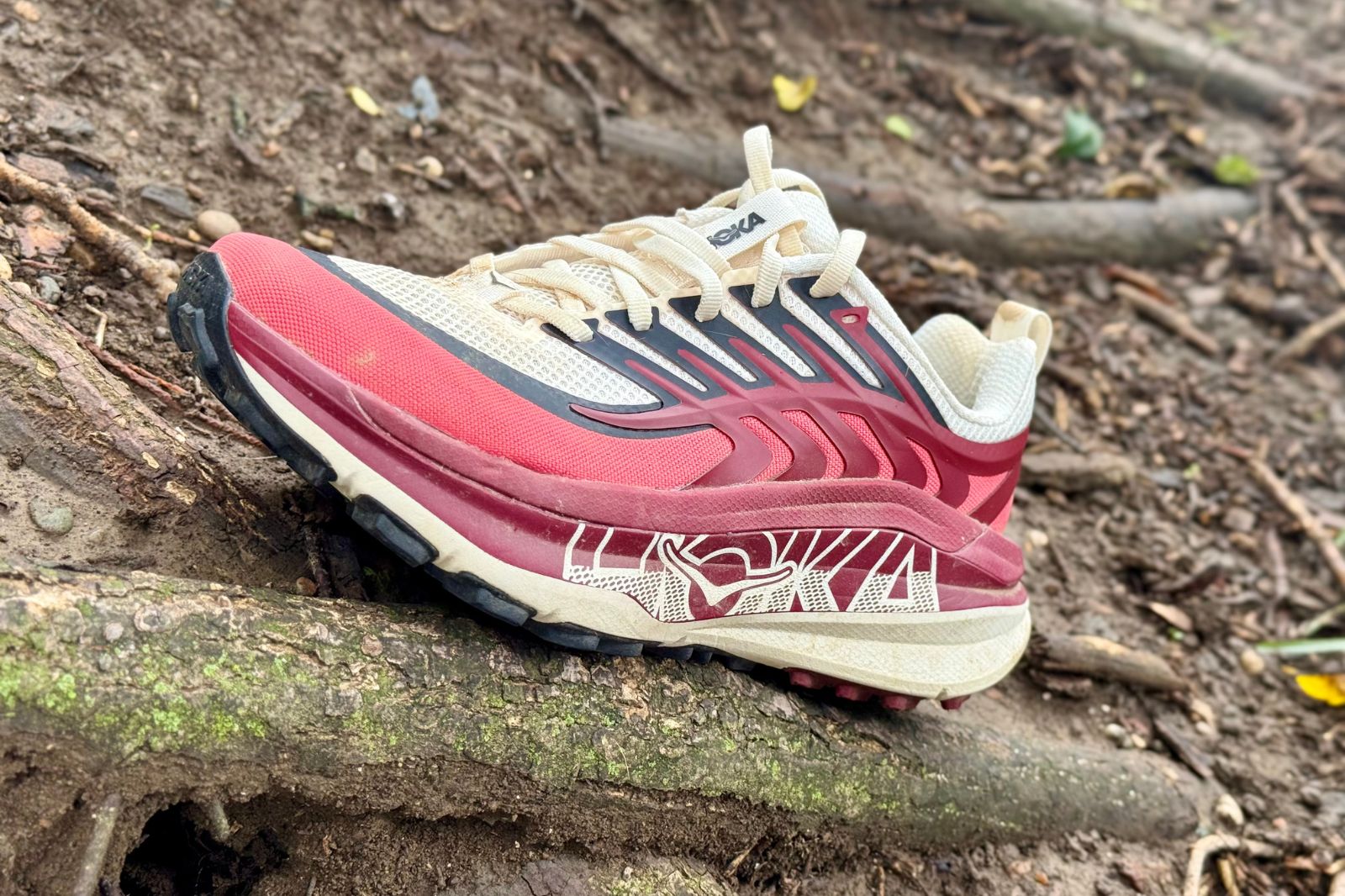
RENEE: Big. Broad. Beefy. The Stinson is a Hoka’s Hoka. It hits all of the Hoka-iest traits, and that’s probably why I never ran in the shoe until this version.
I normally prefer lightweight, nimble shoes, and the Stinson doesn’t exactly fit those criteria. I could be wrong, but I’m fairly certain my first Hoka was the Torrent 2, which is still among my favorite all-time trail shoes. As my mileage has increased year after year, my back-to-back long runs now make up my weekly runs. I’m older, and admittedly, I need more underfoot these days. Plus, a bulk of my miles are on rural dirt and gravel roads, terrain where the Stinson can be useful. Of course, one never really knows until putting in the miles, and this is a shoe that needed high mileage before a solid review.
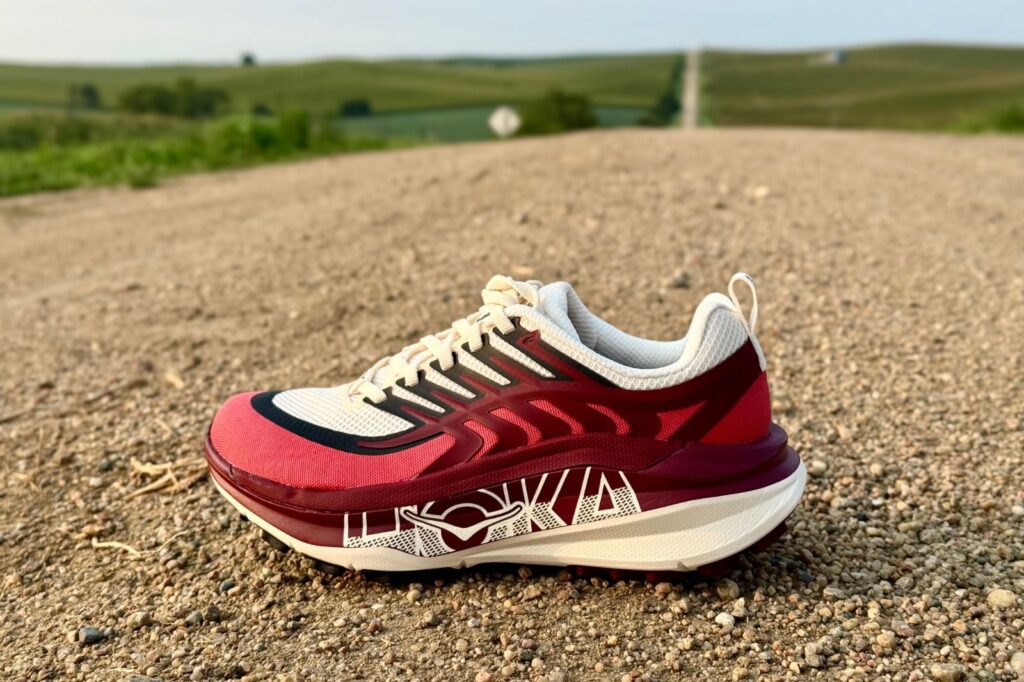
I was pleasantly surprised when I opened the box. I was expecting a clunky hiker. Instead, I got a shoe that is (in my opinion) one of Hoka’s best colorways.
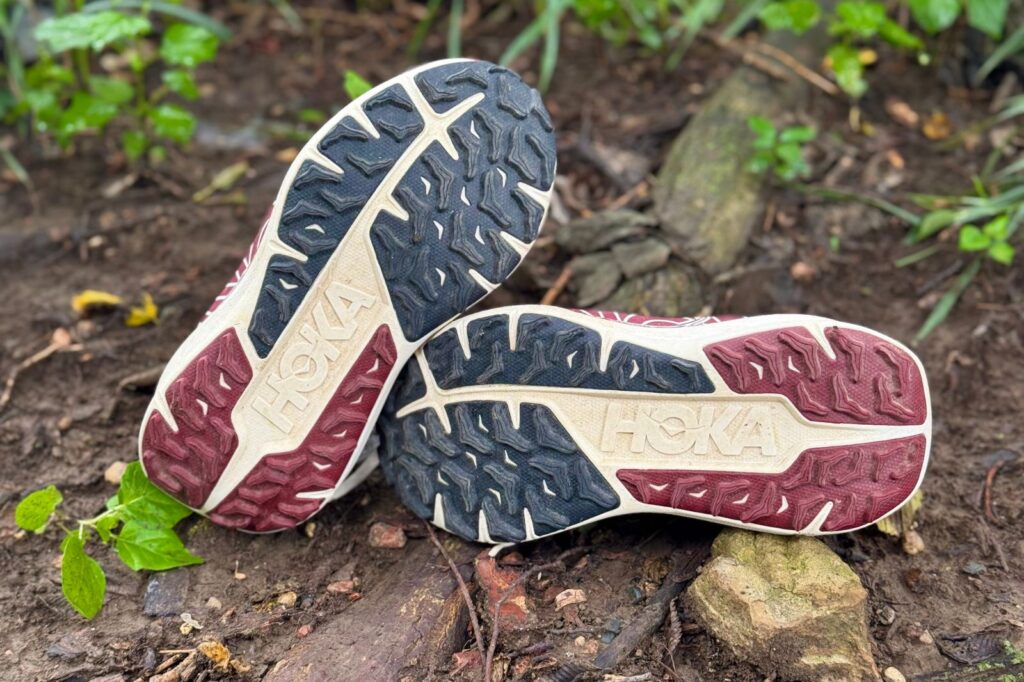
The main updates from the previous version include 1mm less stack, 0.5mm less in the lug depth, an enhanced H-frame, and a traditional heel collar. All of that equates to a lower weight.
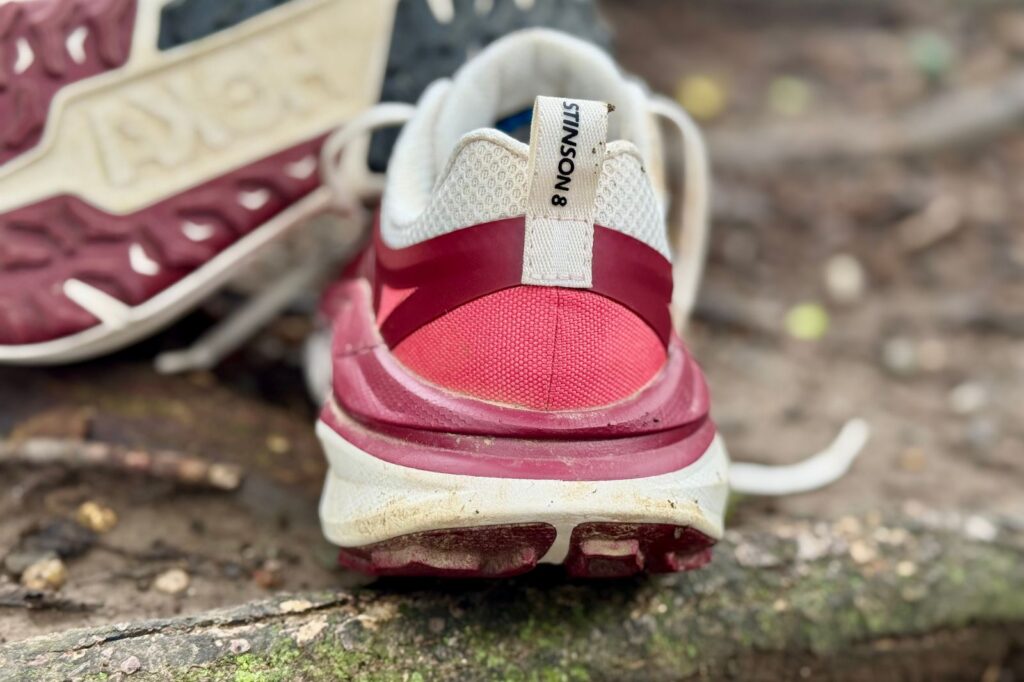
MELISSA: I’ve been running in Hoka Stinson off and on over the years, so I came into this review with a pretty good sense of what I want from this shoe. For me, the Stinson has always occupied a useful space between road and trail; plenty of cushion and stability for longer miles, but enough trail capability that I don’t have to think twice about jumping onto a local trail.
I approached scoring the Stinson 8 based on both my long history with the shoe and what it is designed to be: a road-to-trail hybrid. I don’t think it’s fair to judge a hybrid against a dedicated trail shoe. If I’m heading out on technical terrain, I’d choose other shoes. But as a hybrid, this checks all the boxes for me.
This version feels strong in the areas I value most: cushion, stability, comfort, and versatility. Hoka redesigned the Stinson 8 with a softer bottom layer of foam, an updated H-Frame for stability and easy transition, a more breathable upper, and a new lug pattern intended for hybrid use. On the run, this feels like a shoe that knows exactly what it’s designed to be.
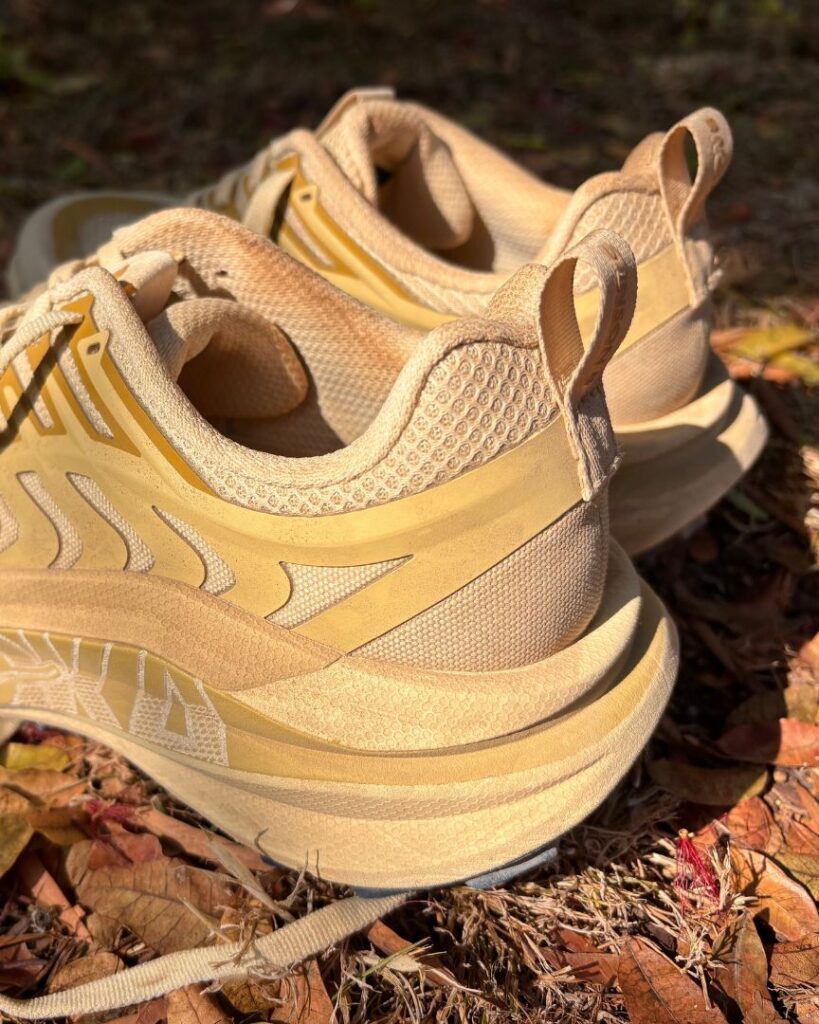
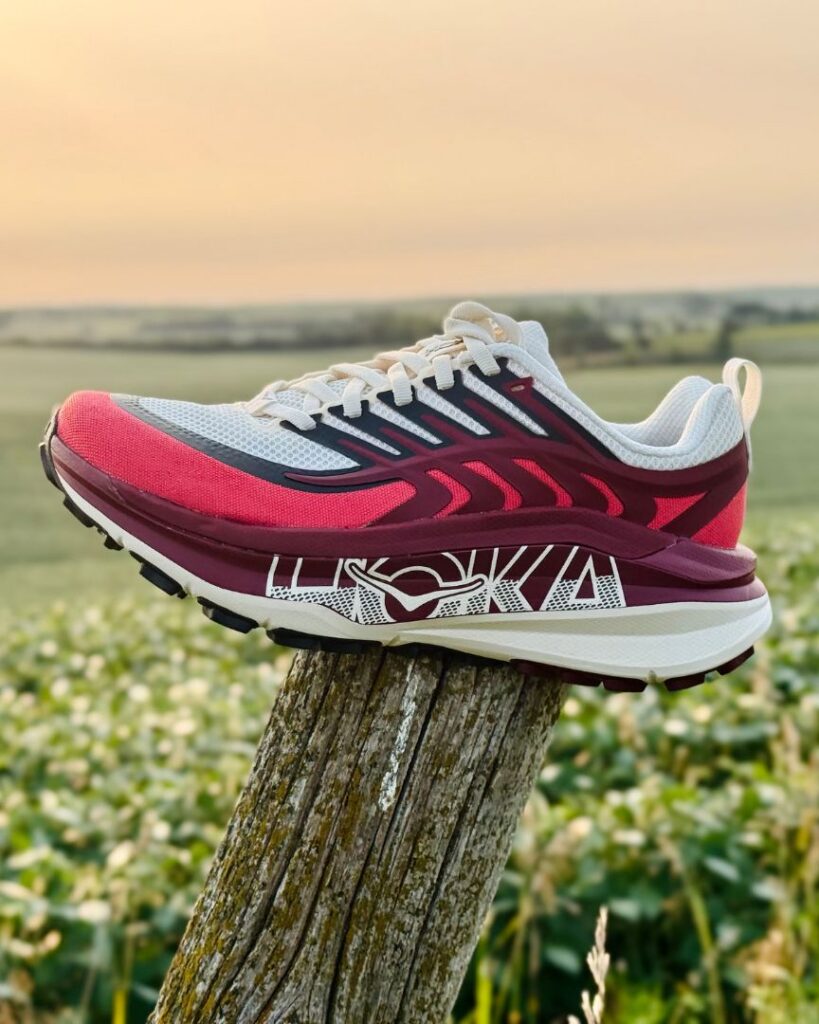
RENEE: A big, beefy trail shoe can look, from an aesthetic point of view, ugly. And while style can be subjective, I think the Stinson 8 is a good-looking shoe with thoughtful overlays on the upper. For comfort with just enough security for its use, the Stinson 8 is well designed. The sizing is typical for any other Hoka, so if you’re a Hoka fan, true to size will work.
As Melissa states, the Stinson 8’s ride is stable without feeling overly chunky, a real asset for a shoe that’s in the “big, beefy” category. This is not a speed shoe by any means, but it’s not slow. On the downhills, the ride is great, offering control so you can let gravity take over without feeling like you’re going to fall on your face. The H-frame is well integrated for rolling, gravel terrain.
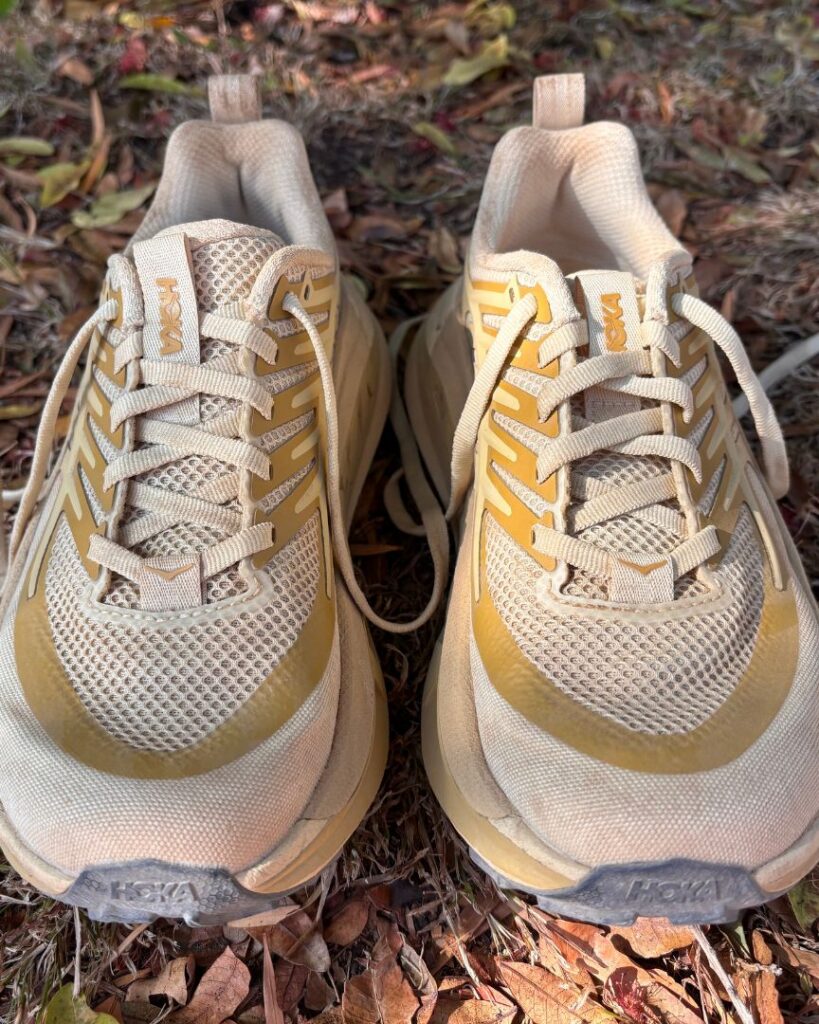
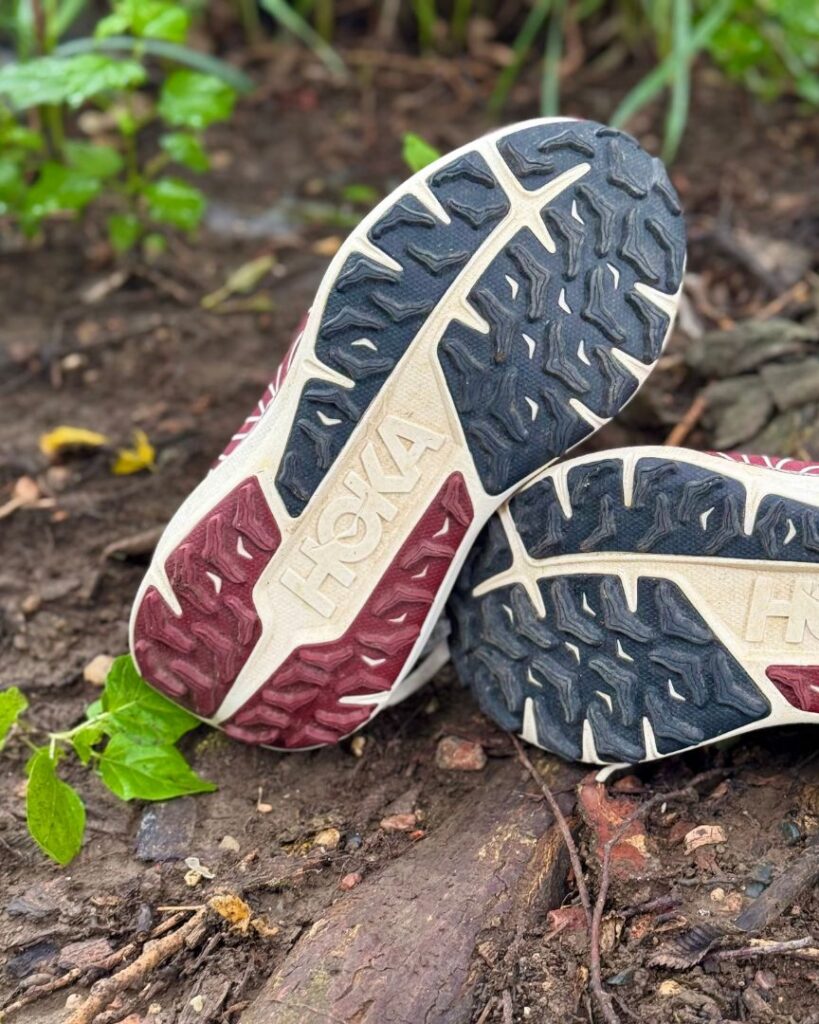
MELISSA: The Hoka Stinson 8’s upper is breathable and comfortable without feeling bulky. I tend to prefer more traditional mesh or fabric uppers on trail shoes, especially for longer days, and the Stinson 8 has that familiar, breathable feel while still providing enough structure and lockdown for trail use. Hoka updated the upper on the 8 for increased breathability and lockdown, and I think the design works well here.
Where the Stinson 8 really stands out for me, though, is its stability. I place a lot of value on a stable platform, especially when dealing with my hip issues, and this shoe feels extremely grounded. The outsole and midsole flare outward considerably from the foot to the ground, creating a broad base. Combined with the H-Frame, that gives the shoe a stable, supported feeling.
There is ample cushioning, but not over the top. And there’s just enough responsiveness to keep you from feeling like you’re running on marshmallows. It’s a nice balance between protection, softness, and bounciness, which is useful for longer efforts where comfort really matters.
Shop The Shoe - Men Shop The Shoe - Women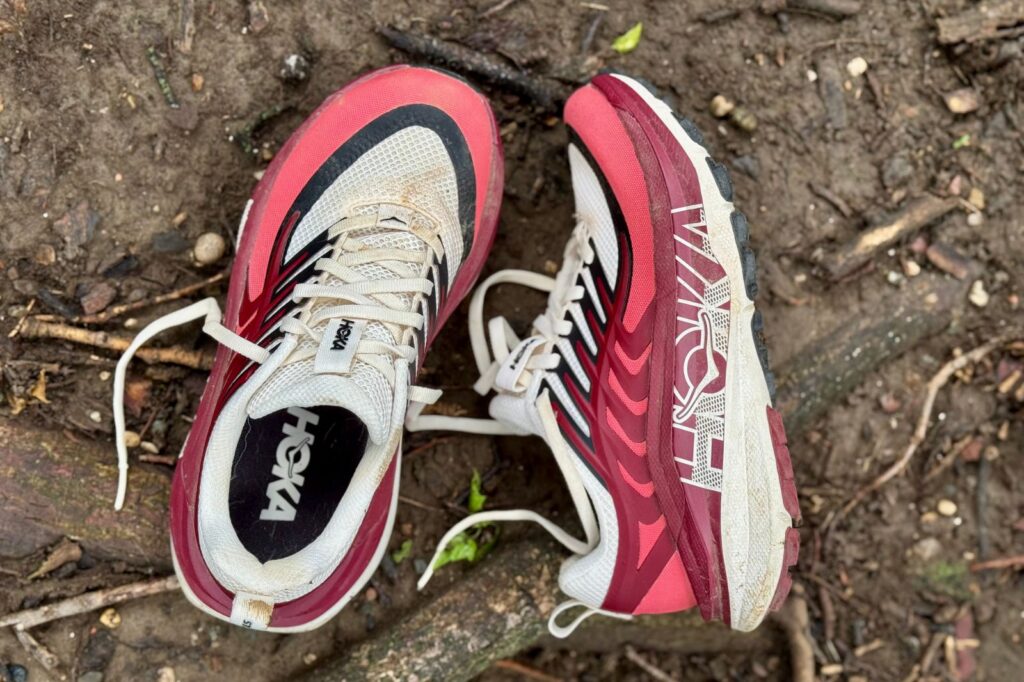
RENEE: Melissa and I agree here too. When viewing the Stinson 8 as a road-to-trail shoe, it checks all the boxes. Calling it a “street to summit” shoe is a bit misleading. If the summit is a big hill on rolling terrain, then sure. If the summit is a literal mountain with some loose rock and scrambling, then no.
The shoe feels like the anti-Nnormal Cadi, a shoe that felt a bit too narrow and stiff under my midfoot but actually works better than it looks on mountain scrambles given that it’s a shoe for mellow terrain. The platform of the Stinson is far too wide to be a shoe for nimble landing on rocky or narrow single trails. The stability on uneven terrain applies to wider trails and smooth, buffed surfaces rather than technical trails. I guess it’s not trying to be that shoe, but since the marketing of the shoe mentions “street to summit” and “stability on uneven terrain,” I think it’s worth mentioning these descriptions have their limits.
Speaking of hilly summits, the shoe rolls forward great on flat terrain and is surprisingly fun and stable on the downhill, even on loose gravel. Uphill, the shoe’s wide platform and rocker can be less than ideal. It’s like running in first gear even when trying to pick up the pace. Runners who like a lightweight road-to-trail shoe will prefer the Challenger 8, although that shoe is not nearly as cushioned underfoot. Speaking of the Challenger 8, I found both shoes a bit narrow on the medial side, and I don’t have wide feet.
MELISSA: The Stinson 8 isn’t a shoe I’d reach for when speed or technical performance is a priority. There’s a lot of shoe to manage, and while the cushioning and broad platform bring their benefits, they don’t lend themselves to fast turnover or nimble running.
I’d also be cautious on rocky or technical terrain. The wide base can make foot placement difficult when you’re navigating around rocks. Traction was another limitation on loose dirt and gravel. The Stinson uses 3.5 mm lugs, which makes sense, but I wouldn’t expect the same performance as a dedicated trail shoe on steep or loose terrain.
These tradeoffs make sense given the Stinson 8’s design brief. For road-to-trail running, fire roads, and light to moderately technical trails, I think the Stinson 8 works. I just wouldn’t choose it for technical running.
Shop The Shoe - Men Shop The Shoe - Women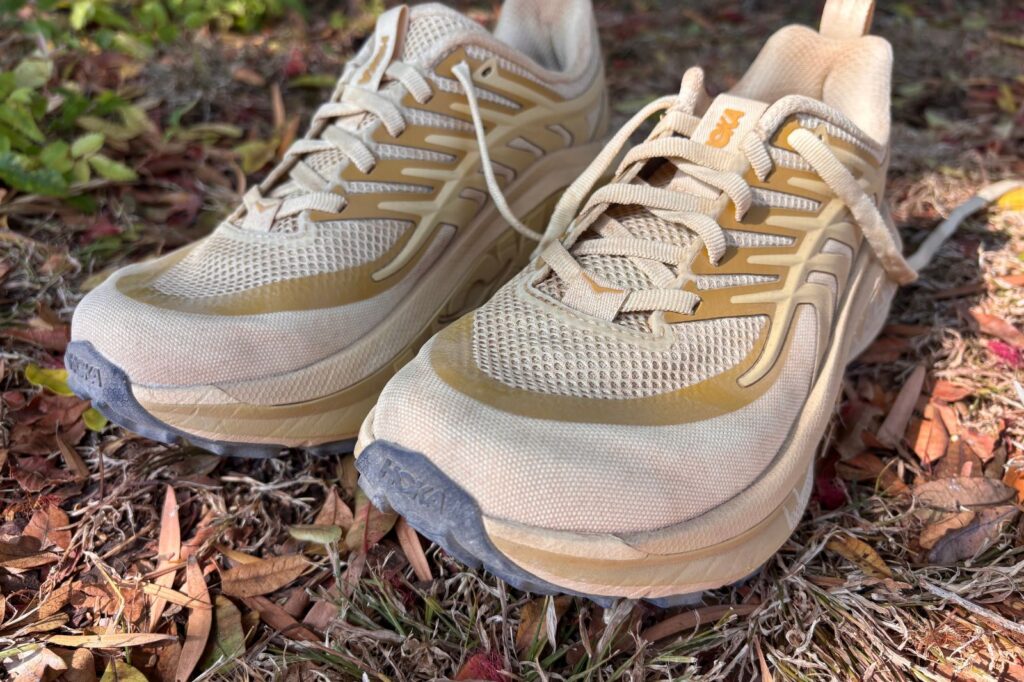
RENEE: Whatever you expect from the Stinson 8, you’ll get. The shoe is a wide-based, big-cushioned shoe for rolling terrain. As a runner who normally enjoys some ground-feel in a light, nimble shoe, I liked the Stinson 8. For long and/or easy runs on gravel and buffed, smooth trails, the Stinson 8 is a winner.
Another comparable shoe we’ve enjoyed is The North Face Altamesa 500 v2, a shoe that is lighter and a bit more useful on trails for me. The upper of the Stinson 8 has more structure, and overall, if you want cushion and a rolling rocker, the Stinson 8 might be better. For a faster, more responsive ride on trails, the Altamesa 500 v2 is a better option.
MELISSA: All in all, I think the Hoka Stinson 8 is a great option as a cushioned, stable road-to-trail shoe. It gives you enough trail capability without sacrificing the necessities.
At $180, it’s on the higher end, but its versatility and durability help justify the price for me. If your regular routes involve a mix of pavement and light trails, or you simply prefer cushion and stability over other qualities, this is a really solid option.
You can pick up the Hoka Stinson 8 for $180 from Hoka by using the buttons below.
Shop The Shoe - Men Shop The Shoe - WomenHave something to say? Leave a Comment
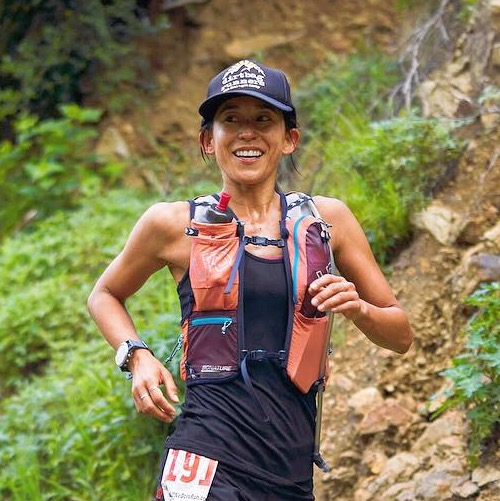

East Coast raised and West Coast trained, Melissa is now retired from racing ultras but still holds a deep love for long miles and time on trail. She’s currently doing what she can to delay a hip replacement, at least until completing a full lap around the earth, which she expects to hit in 2026.
Based on the Southern California coast, she now enjoys slower, easier miles, stroller runs, and time in the gym focusing on strength training. (And still sneaks in some spicy running when she can)
More from Melissa

Renee lives in rural Nebraska and runs on gravel roads that may or may not be maintained depending on the time of year. If she’s not running on gravel or dirt, she usually opts to run trails instead of paved roads. Fun face: every Boston-qualifying road marathon she has registered for has been canceled.
More from Renee