Shop BITR Apparel Shop Now
Breckenridge, CO
A hike to show off the Teva TrailPeak
$160, September 1, 2026
REESE: Planning a press event for a shoe launch has to be terribly exhausting. On the surface, these events sound straightforward and just like one awesome experience, one that is easy to plan and attend. They are usually in some spectacular, better yet remote, mountain town with a lovely hotel and curated experience, and non-stop availability of snacks and drinks.
The hosting brand then invites all these people that they want to love their product and talk great about it, and provide them, the guests, with an experience that is fit for the product and their fitness level (which is generally unknown), coordinate schedules, plan for food allergies, fill the day with things to do, and generally be “on” the entire time. Small potatoes, right? You ever plan a family vacation?
As an attendee, you, too, have to be on and positive, and gracious, and thoughtful, and talk to tons of people you’ve never met for the entire event, which sometimes lasts a few days. I’ve been a part of many of these events both for work and as a guest. I’ve planned and participated, and I can confirm that by the end, everyone is exhausted from their respective duties.
In the moment, though, when asked to go on these trips, I tend to overlook my usual exhaustion. After all, it’s gonna look good on my personal ‘gram. Of course, I generally always enjoy myself, but going on a press trip isn’t the same as going on a vacation. Not exactly anyway.
On a vacation, no one expects anything from me, except that I may expect that I see some interesting places and generally enjoy myself. On a press trip, there is a deliverable. I’m normally obsessing about the details a little too much, questioning how this all aligns to whatever product is launching, asking way too many questions about said product, and generally just being a little too critically observant.
Which is how I landed at the Teva TrailPeak launch in Breckenridge, ready to absorb the experience to accurately write about it and Teva’s newest trail running shoe, the TrailPeak. And at first, it seemed like Teva was checking all the boxes. The hotel was terrific, thanks, Gravity Haus. There was a gift bag waiting in the room with snacks and cute sandals; I loved it. There was even juice in the fridge. Genuinely very thoughtful touches that were not lost on me.
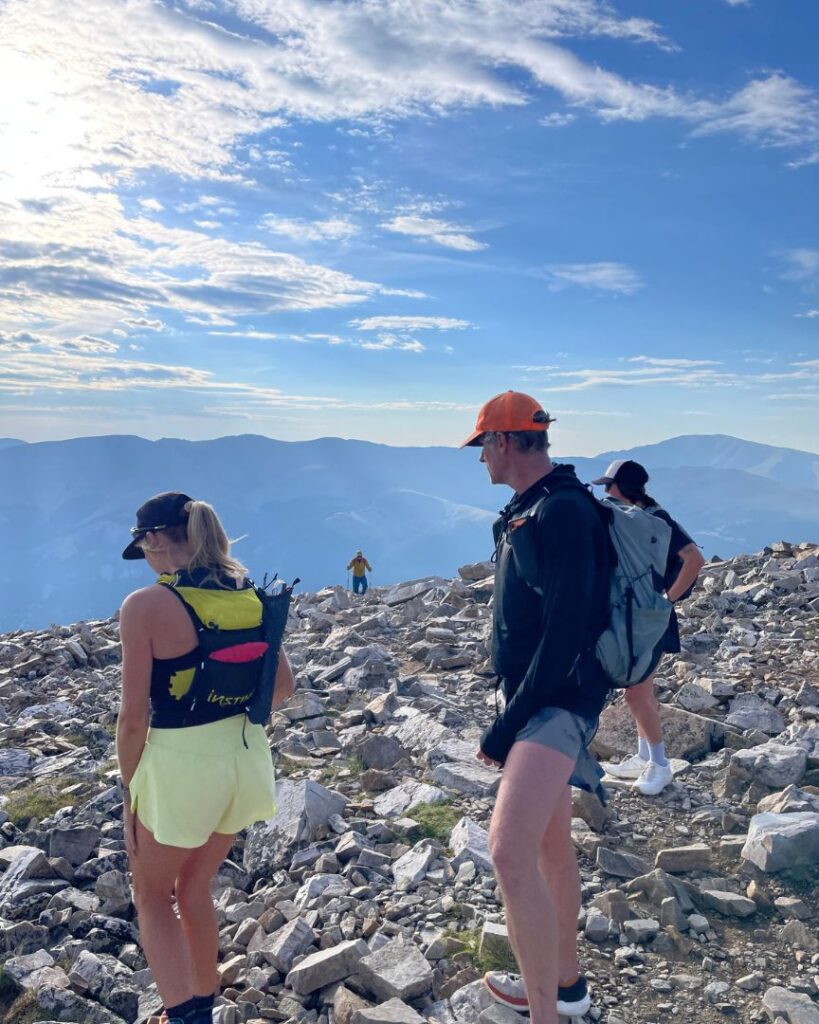
REESE: I didn’t know much about the crew for this event, but I understood the plan was to go up Quandry, a 14,000-foot peak, the next day. TrailPeak, mountain peak, makes sense. However, even though this is a trail running shoe, we were going to hike the peak. Suggested time for a 7-mile hike was seven hours. Cue eyes popping out of head. Interesting. This is where the product vs experience started feeling incongruent for me.
In the swag bag, there was a card that said, “You’ll experience the landscapes, terrain, and challenges that inspired its creation… The shoe was tested across sharp switchbacks, technical trails, and fast-moving mountain routes, with every mile helping shape its performance. These athlete insights helped refine everything from the shoe’s responsiveness to its overall stability and comfort, resulting in a nimble, lightweight trail runner that’s quick on ascents, secure on descents, and built for confidence when the terrain gets technical.”
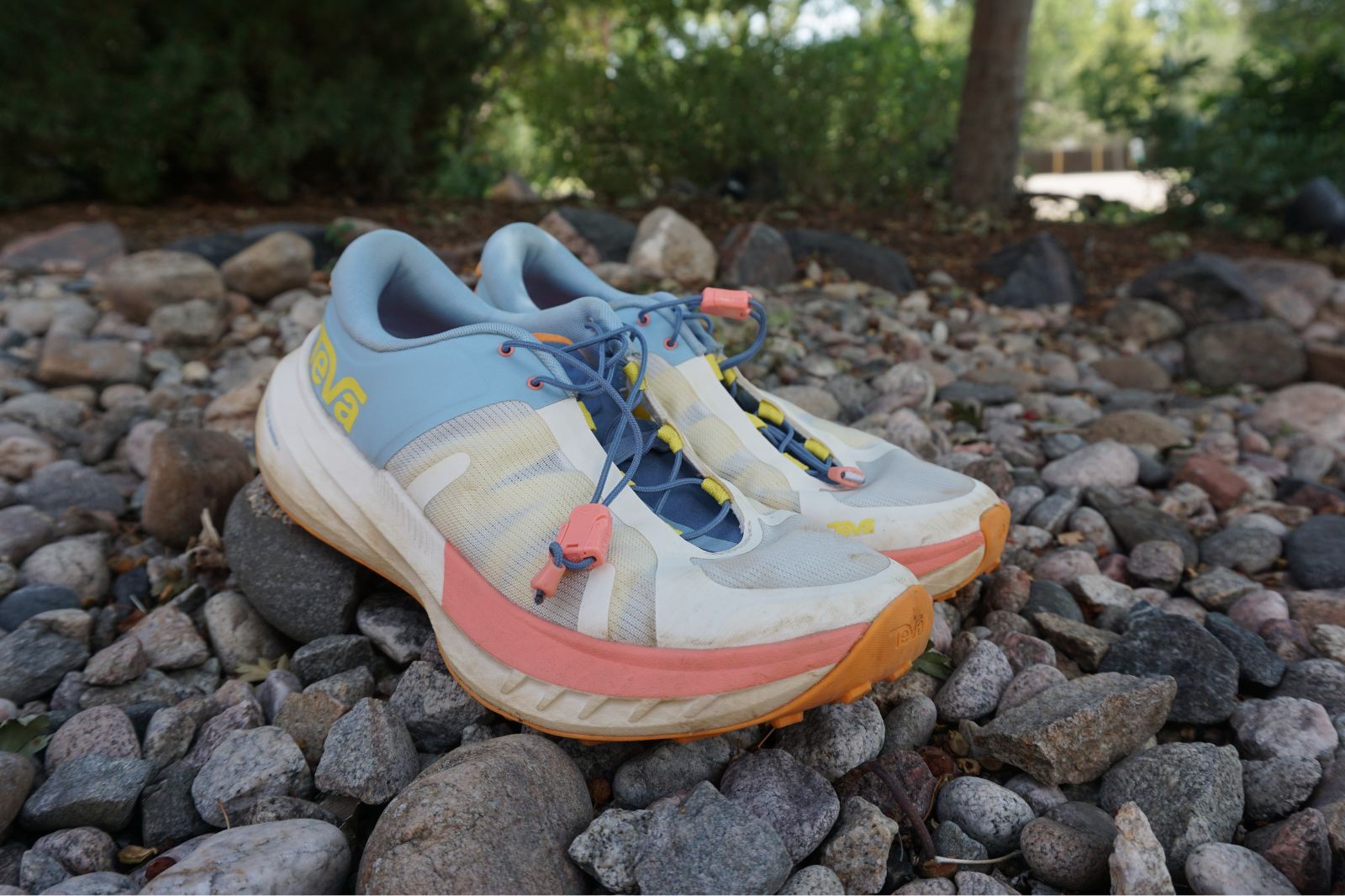
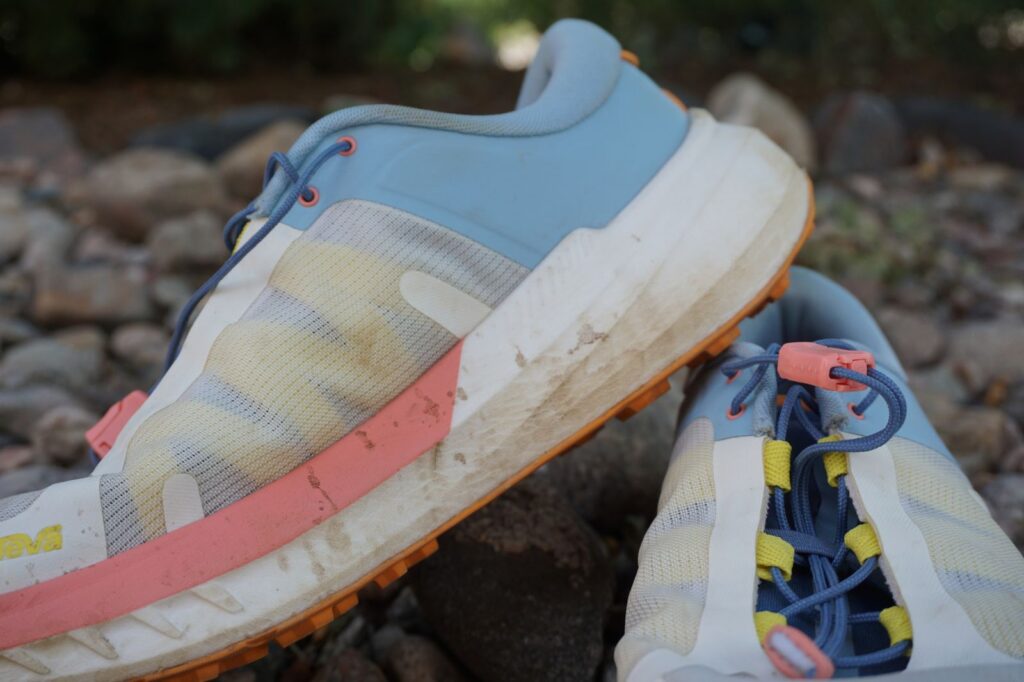
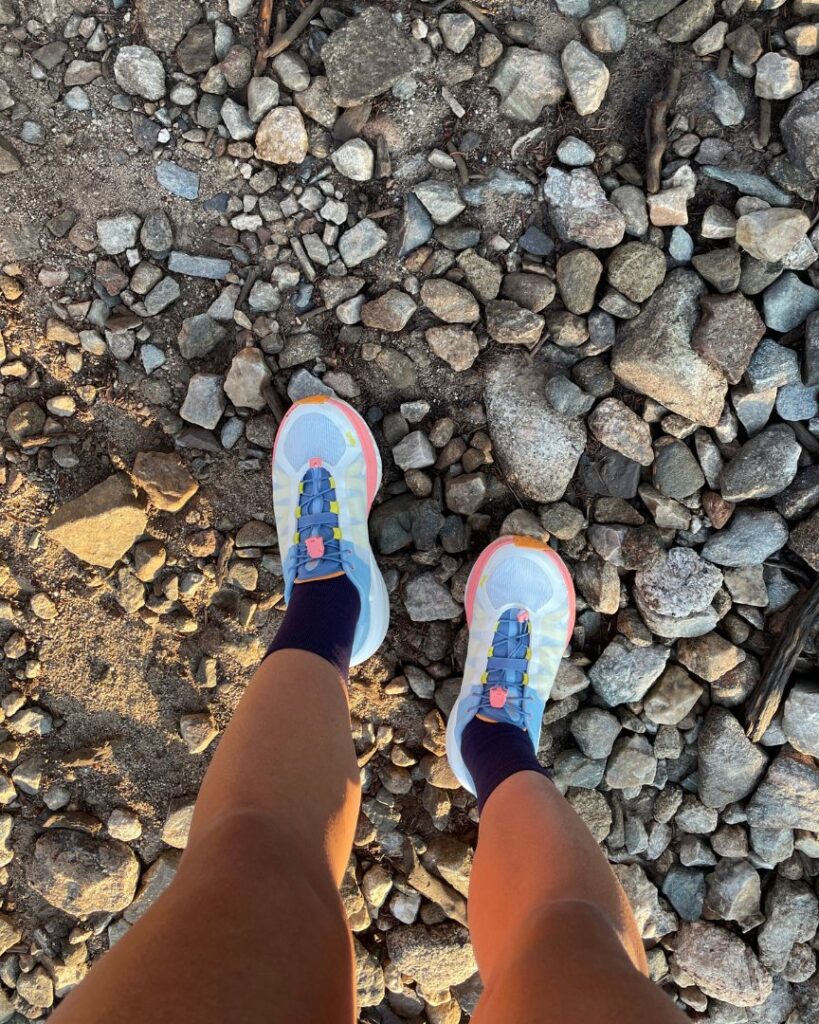
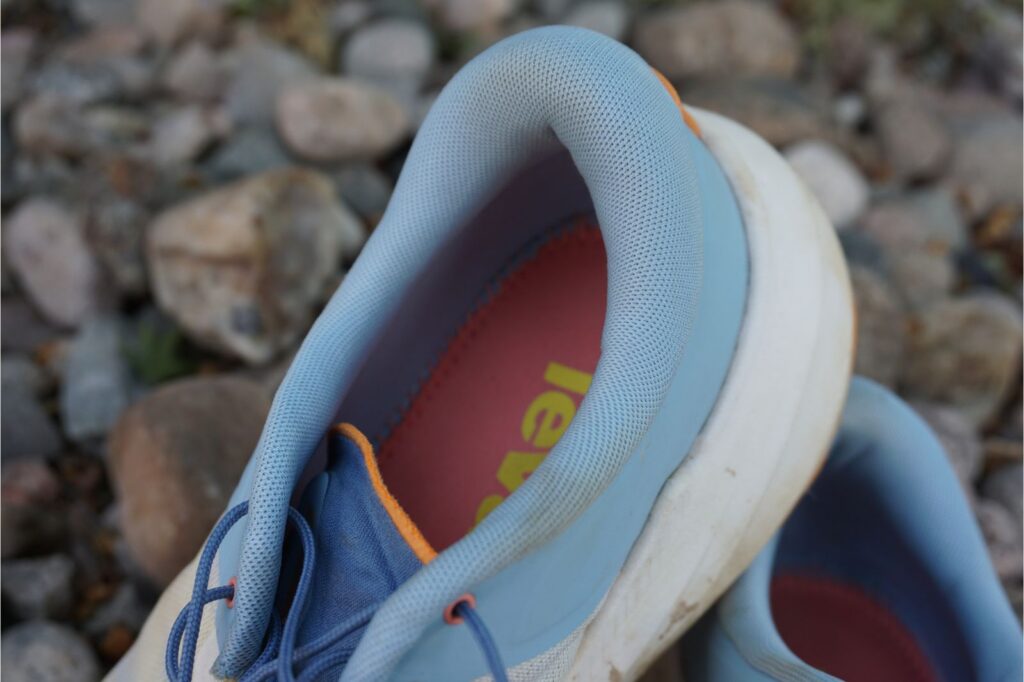
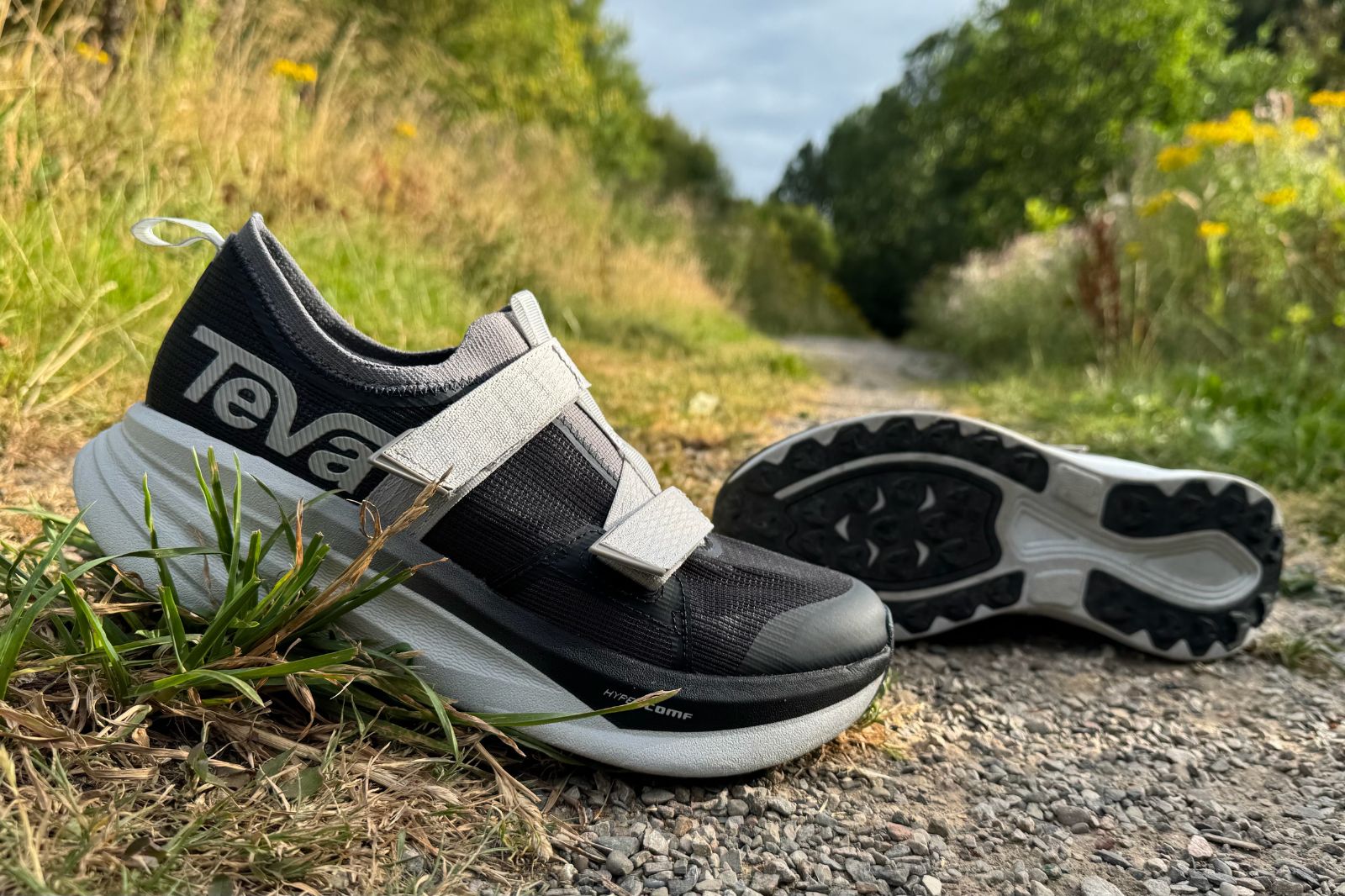
I say incongruent because when I looked at the shoe, nothing about it really stood out as being a super technical hiking or running shoe. It is indeed light, 185g for a W7 or 235g for an M9, but part of that is because there is no footbed insole; your foot sits directly on the Strobel layer. And without a rock plate or carbon plate, you save some weight, but you’ll also feel everything with even a little bit of a point to it when you land. Ouch. On top of that, the Spider Rubber Endure 3mm lugs didn’t inspire confidence, just from their appearance, as my first choice on a technical mountain trail.
This is all a long way of saying, the product I was looking at in my hands and then eventually wore on my feet (obviously) did not align with the words and experience laid out before me. This shoe did not seem right for hiking (or running) a 14er. And maybe at one point it was inspired by big mountains, but the final product was many clicks away from the big mountains, somewhere at a much lower elevation, far from stabby rocks and steep grades.
REESE: At dinner, it became even more obvious that while planning this event there might have been a few too many cooks in the ol’ Teva kitchen. Most of the attendees, besides yours truly, were not primarily runners. They were indeed exceptional folks, but by and large, most of them were thru hikers (insanely impressive resumes on these folks btw).
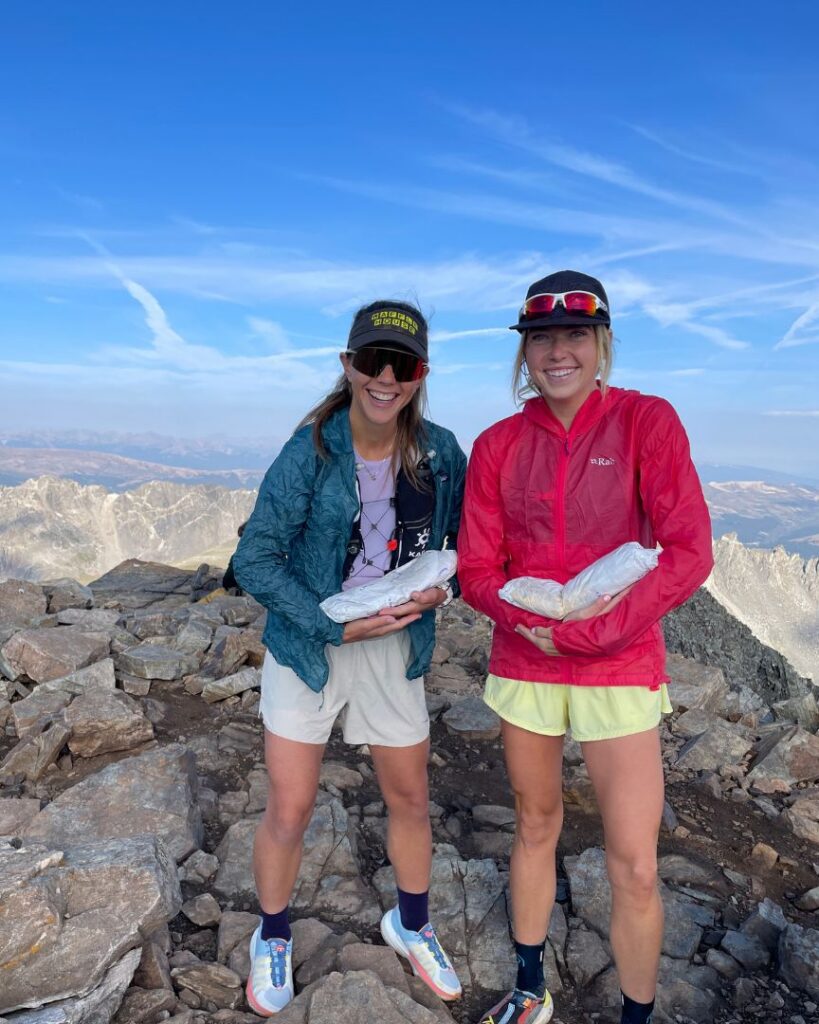
Everyone was overqualified for this hike; I mean, a corgi summited the day we went, so it’s not like we were going up an 8,000m peak (though I know Teva athlete Erin Ton, who was there, indeed could do that). Still, given how this shoe was positioned, I’d have guessed we’d be going on a run, not a hike up a mountain with a Snarf’s sandwich on our backs. But that’s what we did. (I left my enormous sandwich in the car and opted for a more performance-oriented food, a Pop-Tart).
Quickly, though, I realized the shoe just isn’t what you said it was for. I’ve since learned that, based on feedback, Teva is tweaking some of the positioning to make this shoe less for technical trails and more for daily runs, but even so, there is a mismatch of words vs experience. But where was this feedback months ago? Years ago?
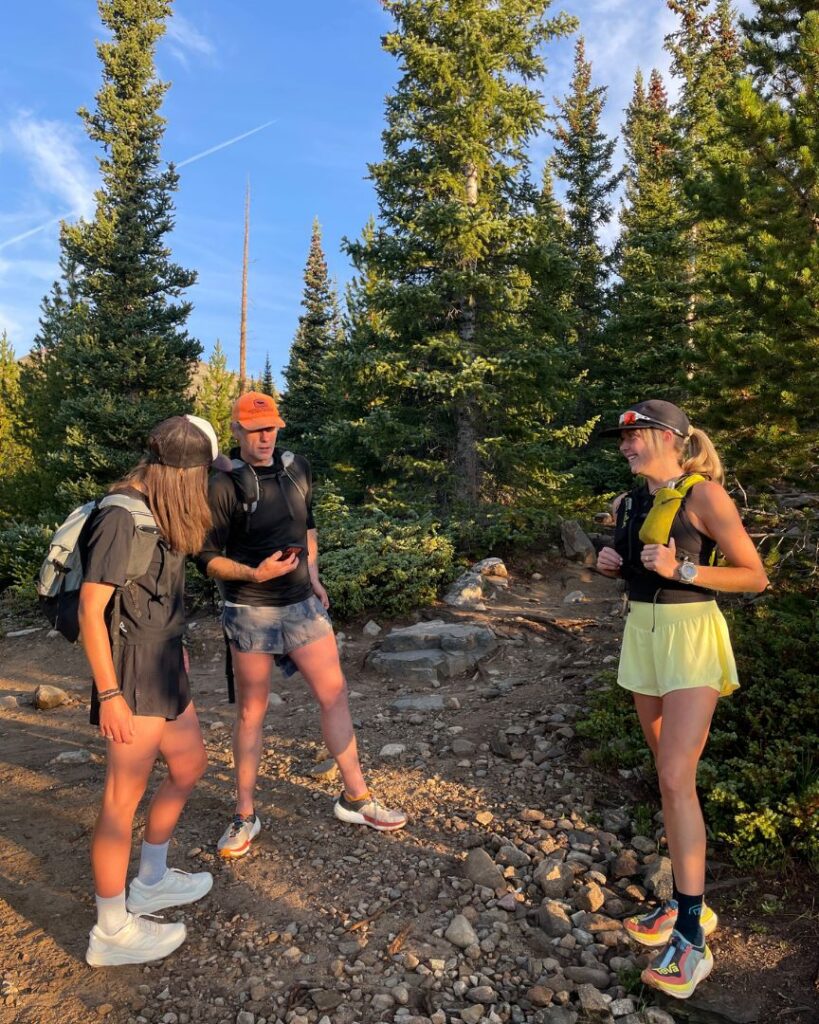
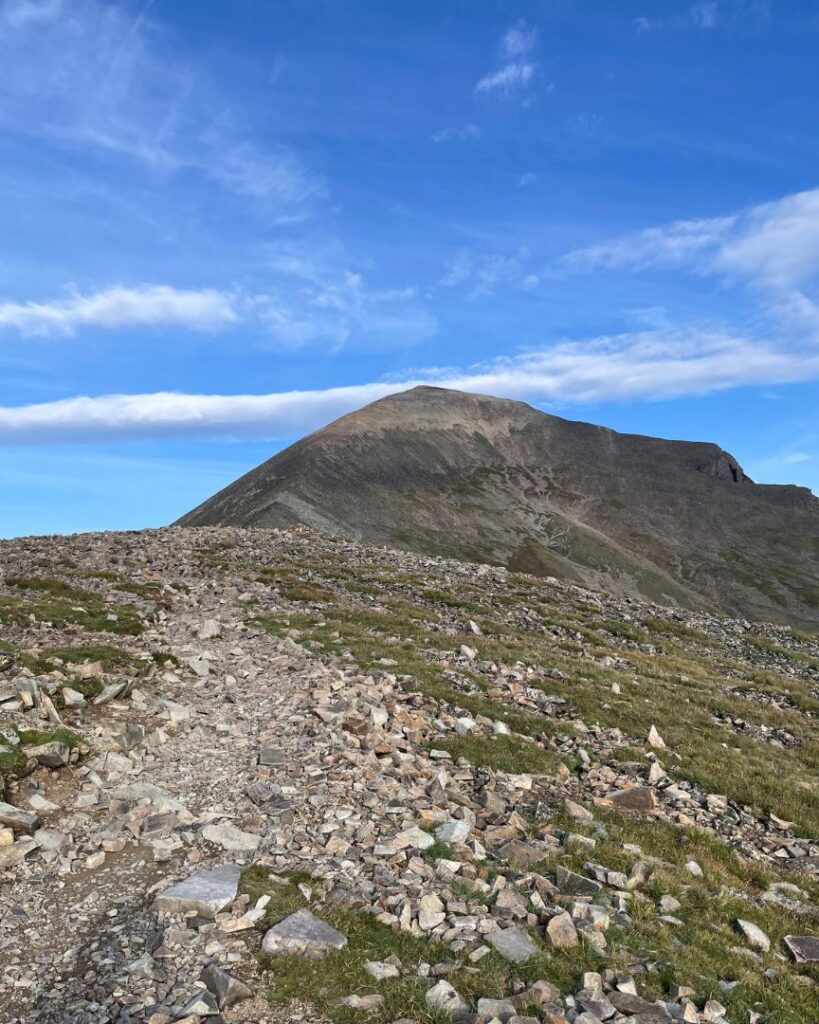
REESE: On the hike, we naturally broke up into a few little groups. The crew I stuck with ended up running down the mountain just a bit, but that was more than enough for me. The lack of insole or rock plate was an immediate problem. At one point, a rock stabbed up through my arch, and I’m pretty sure my knee buckled when it all but felt like it went through my sock (exaggeration for effect, but it did actually hurt).
The 3mm lugs and Spider Rubber were not sticky enough to give me an iota of confidence on the descents. I was sliding down rocks. And to add to that, and this is very individualized to me, the toe box of the TrailPeak is intentionally roomy, which left my somewhat narrow foot to slide around. The shoe tends to bend, which I can see how some folks would enjoy, but descending on a trail and trying to avoid rocks or land strategically on them, the bending didn’t provide the stability I was hoping for.
This sounds like I’m trashing this shoe, and I kind of am, but it’s just not a shoe meant for running technical terrain. Put this shoe on a rock-free singletrack trail? It would be fine for that. Not everything needs to be a mountain monster, but a brand needs to call a spade a spade when it has one in its hand.
Like so many other brands, Teva is hoping to attract the wandering eyes of trail runners everywhere, those folks looking for the perfect shoe for their big mountain adventures, the shoe that can handle the side scramble, is responsive on the run, and generally does everything all at once. But when a shoe (or anything/anyone) tries to do everything all at once – it wants to be a good gravel shoe and a mountain shoe, while also carrying some brand narrative and brand standard materials.
Sometimes, that’s just too much.
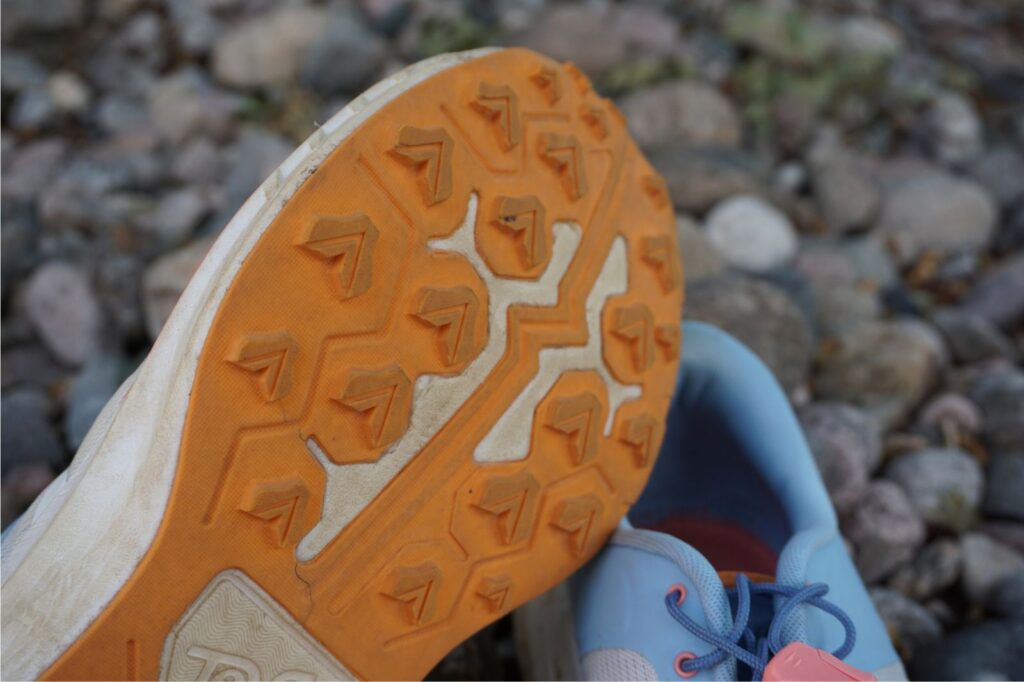
REESE: When I look at the TrailPeak, it’s not a shoe meant for big mountains and scrambling, nor technical ascents and descents. And it’s also not exactly what I want for all my daily runs, though it is better suited for that. It’s not a technical shoe, because the outsole isn’t going to cut the mustard on big rocks or steep climbs, either up or down.
The midsole, lacking a plate and my tender little foot sitting on top of the Strobel layer, is absorbing every single bump and rock I step on, and it’s not crazy fun. The midsole material, composed of supercritical Hyper-Comf Plus foam, feels more suited in terms of durability to less destructive trails. I, and others, had this material chip away from the outsole. Add in the slip n’ slide toe box, and no matter how hard I try to tighten up the quick lace, I still slide, and I’m a mess.
It’s also not my first choice for everyday runs, but it is far more suited for everyday runs. Because it was designed (inspired) for technical terrain but never actualized that vision, the parts they left out (namely the rock plate and footbed insert) make for an interesting runner, even for an entry-level shoe. If I look at the Brooks Ghost Trail, which is squarely an everyday runner at a lower price point, that shoe makes sense to me. It’s good on gravel, light trails, and has a little bit of a higher drop for those folks used to road shoes, so if I’m looking for a shoe that can do a lot without getting too specific, it’s a reasonable option. I’d be comfortable wearing it most places (that aren’t crazy techy).
The Teva TrailPeak doesn’t offer the nice responsive ride I’d want on smooth single track because it lacks the nicety of a plate and the ability to either put in a sole insert (size up if you want to do that) or come with one. It’s a bit harsh. I love ground feel, but I have limits. It does perform better as a daily trainer, though.
And if you’re someone who loves more natural running, ground feel, or you have a wider toe box, I really do think you’ll love this. But right now this shoe is trying to position itself in a niche, yet it only went part of the way there by making a few one-way changes that keep the shoe feeling much too general.
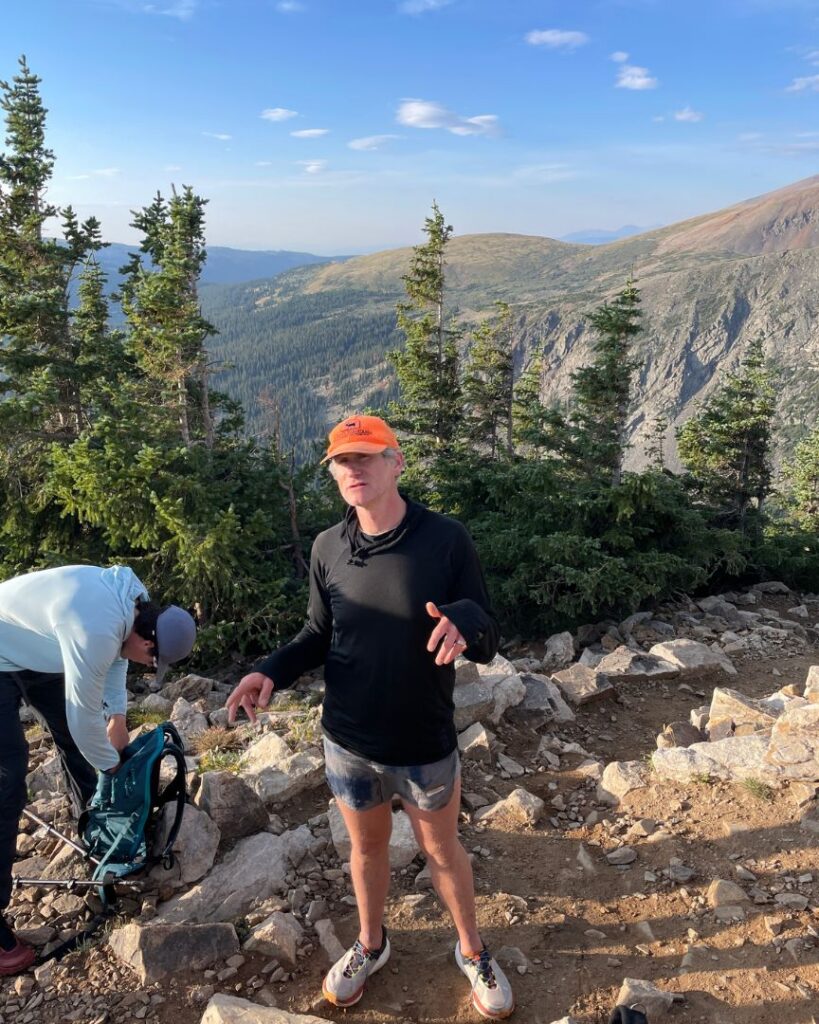
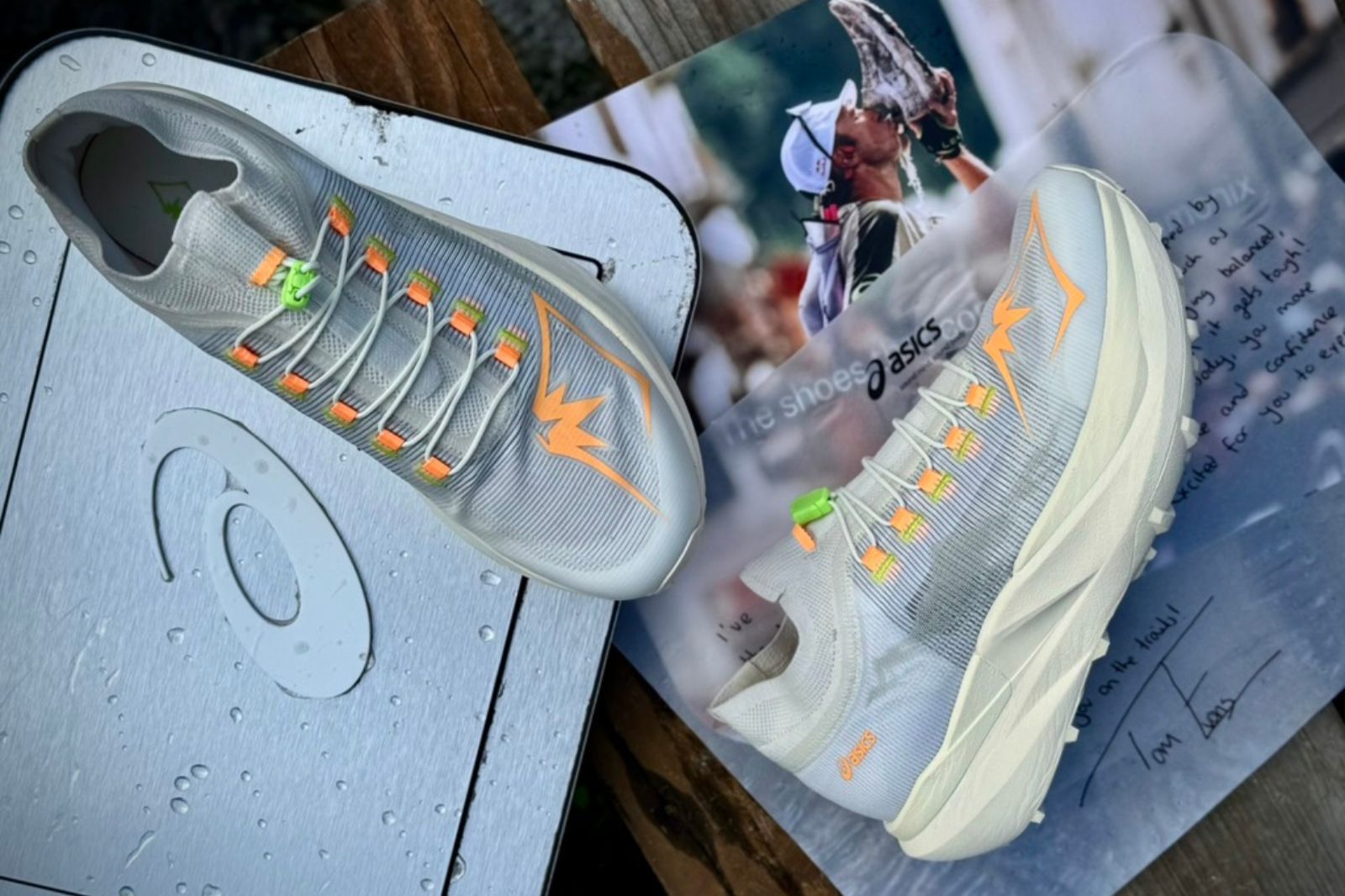
REESE: Teva has done what a lot of brands have done this year. It’s made a product with good intentions; let marketing go a little ham, embellished its capabilities, and then left us to figure that out. I’m thinking of the Nike ACG Ultrafly Trail (not meant for all conditions; I’ve seen so many people wreck their ankles in this in races). The Asics MetaFuji Trail 2 comes to mind, too. It’s an amazing gravel shoe, not a great all-mountain shoe. There’s even the Mount to Coast M1, which is too unstable for the big mountains. Everyone wants to claim their shoe is for everything; it’s for the crazy runs, the big adventures.
First, those things are a fraction of what most of us do daily. And second, in practice, the product choices don’t align with the words I’m seeing in marketing for the above-mentioned shoes, the TrailPeak, etc etc and it leaves the consumer in a weird spot. Designing a shoe based on professional athlete feedback is sometimes helpful, but for most of us who aren’t pushing the athletic envelope day in, day out, we need a more pedestrian take. Again, the shoe is our co-pilot.
I love that Teva is investing more into trail shoes and really supporting folks like Erin. I’ve seen some of their future releases, and I think the TrailPeak is just the starting point. It feels like they’re trying to find where they fit in the market, a market that is getting louder and more crowded every day. And the brand history of Teva, much more aligned to the everyday outdoorsy person and best known for their sandals, means it is expected that there are some growing pains as they branch out.
Looking back, the event was fun and exhausting, as expected. I’m sure everyone was exhausted by the end of it and wanted to be alone in their room eating tiny squares of Tony’s dark chocolate (speaking for myself). Teva really did put together a great experience for all of their guests. But, my allegiance in reviews is, of course, to the readers. That means providing a fair and accurate view of the shoe, not one that is clouded by really nice dinners, and that’s what I hope I’ve done.
Shop Teva Trail Running - Men Shop Teva Trail Running - WomenHave something to say? Leave a Comment
Sign in or create a free account to comment. You'll come right back here.
Sign in / Sign up

Reese Ruland is a Fort Collins-based ultra trail runner and coach with more than 15 years of competitive experience. When she’s not on the trails, you’ll usually find her at the horse barn or riding a bike, at the archery range, or hacking her way through a round of golf. Reese also has a serious obsession with her two French Bulldogs, Loaf and Oatie.
More from Reese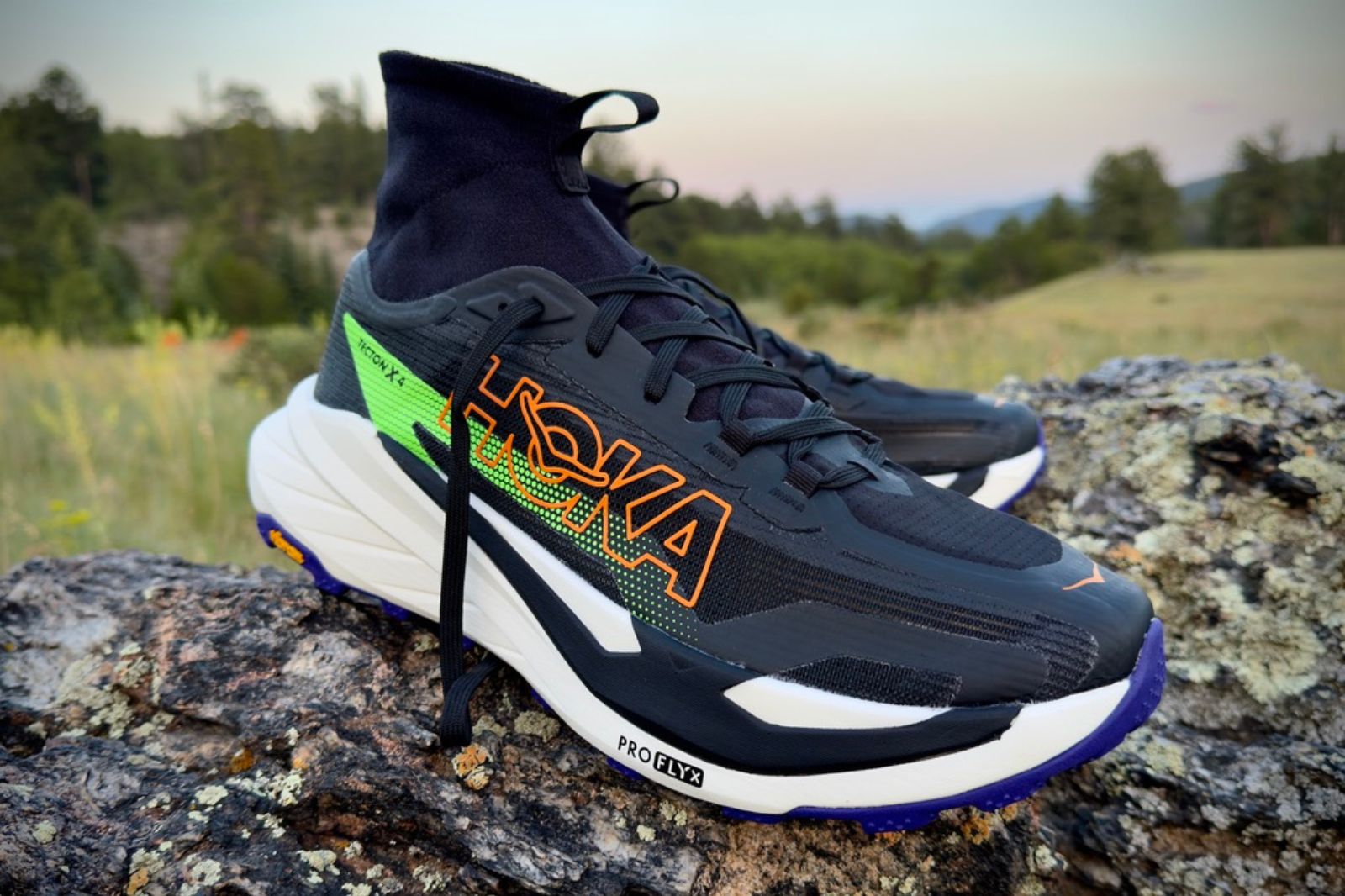
Be one of the first runners to rate it.