Shop BITR Apparel Shop Now
We independently review everything we recommend. When you buy through our links, we may earn a commission.
9.3 oz. (264g) for a US M9 / 8 oz. (227g) for a US W7.5
29mm in heel, 23mm in forefoot (6mm drop)
Technical trails and long adventures
Dreambound midsole, ScreeGuard gaiter, SurfaceCTRL outsole
Available now for $190
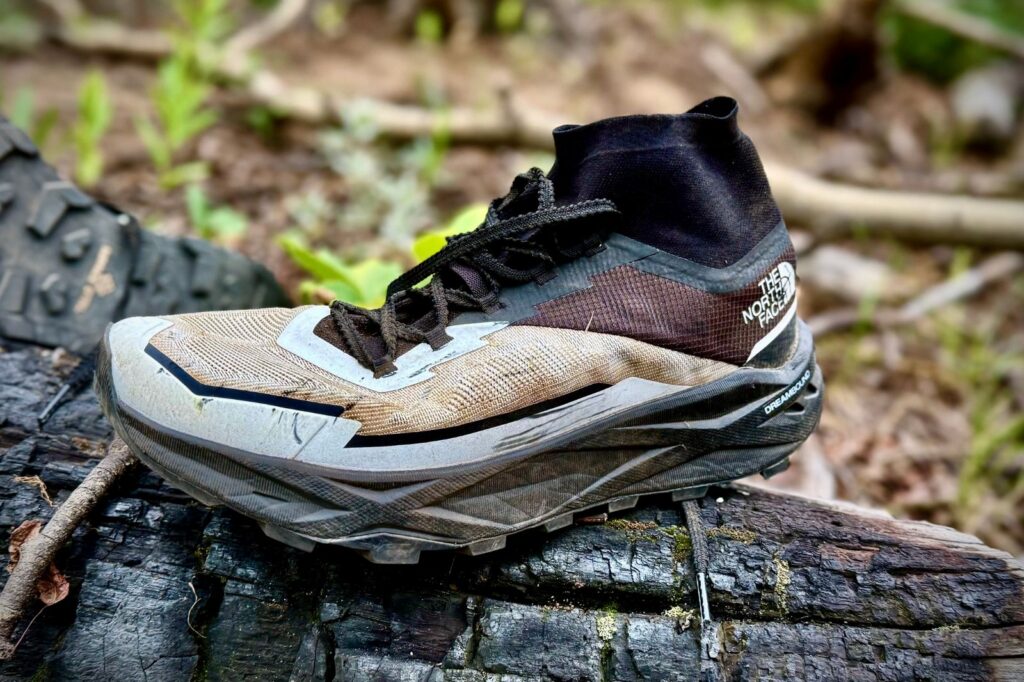
TAYLOR: We’ve all heard it said, “Curiosity killed the cat.” That was at least the case in National Lampoon’s Christmas Vacation.
I’m a curious fella… but I’m not a cat, and I’m not dead yet. My Strava can certainly vouch for that, as many of my maps reveal routes that look like they produced spores. Little offshoots call to me: game trails, vistas, cool rocks; nothing is out of the question.
Many trail running shoes can do fine on these unplanned excursions; however, there are very few designed with that in mind.
That’s where the North Face Offtrail Ultra enters the chat. Its very existence is because of this adventurous mindset. Its purpose is for the rugged terrain and conditions where less of the running population wants to be. These are the shoes I measure with “confidence points.” Confidence, assuredness, whatever you want to call it, will always be the best indicator of a good shoe for technical terrain.
The Offtrail Ultra contains a bunch of specific components that are atypical yet fashions them with the technical runner in mind. Those bold nuances are exactly what make this such a functional tool for a variety of terrain.
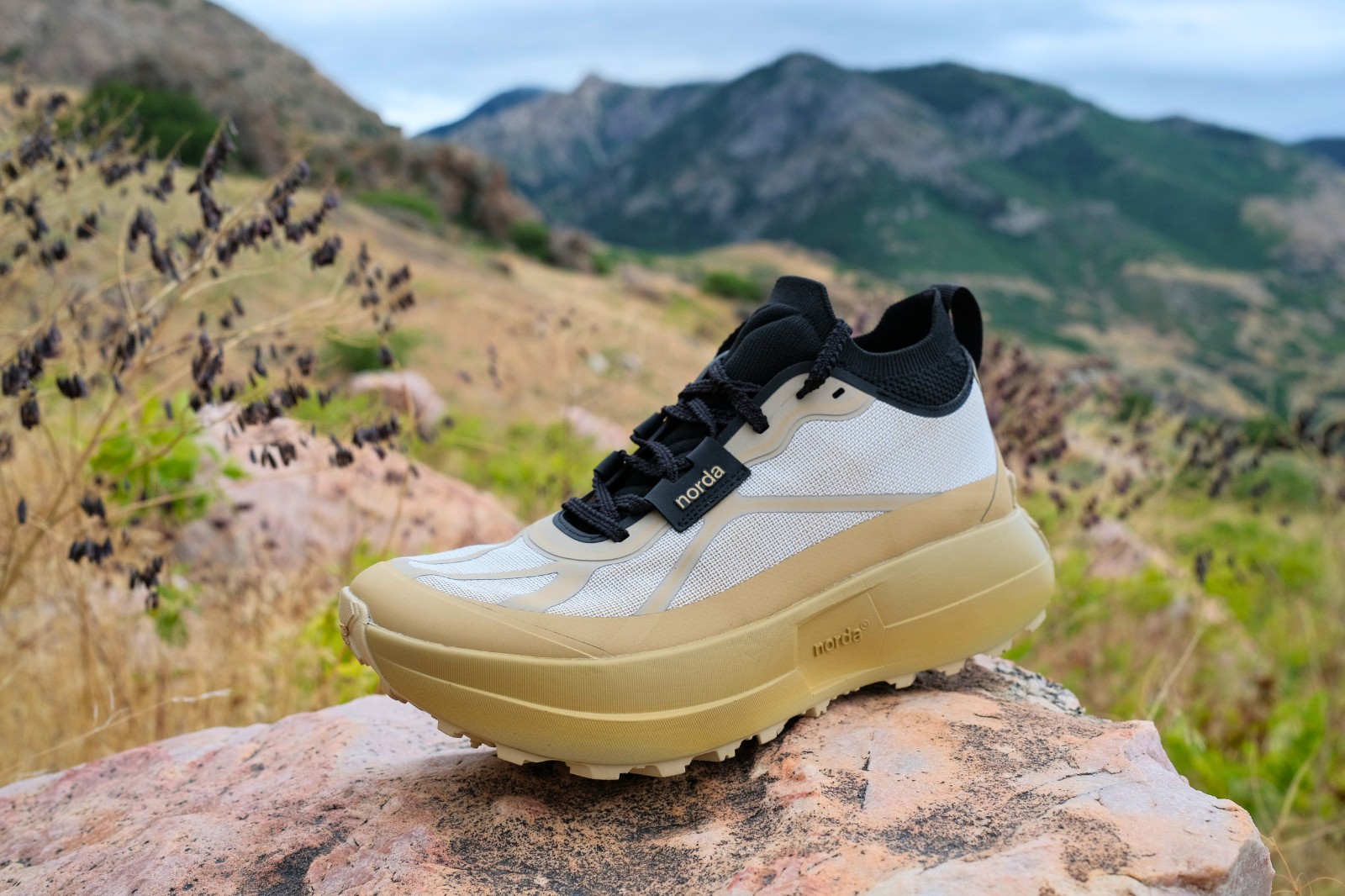
ALEX: I have to admit I had to actively challenge myself not to draw too many direct comparisons to the freshly released and highly rated Norda 055. The Norda 055 and The North Face Offtrail Ultra feel like friends with a lot in common. They both love big mountains, technical trails, and are happy to get off the beaten path. Both are protective, confidence-inspiring, and happiest on rugged terrain where traction and stability matter.
The difference is in their personalities. The Norda 055 is the friend who’s happy to keep going all day, while the Offtrail Ultra is the one who truly comes alive when the route gets steep, rocky, and a little more adventurous.
MICHAEL: Last year, following the release of the La Sportiva Prodigio Pro and the Norda 005, one could easily predict that we’d see similar releases from other brands in the years that followed. The move away from plated supershoes hasn’t been seismic necessarily, but it’s worth noting that these shoes have been a pretty big hit among both normal consumers like you and me and pro runners alike. In fact, Ryan Montgomery (who, at the time of writing this, doesn’t have an official shoe sponsor) recently ran under 14 hours for a 3rd place finish at Western States in the Prodigio Pro.
It’s only natural that other brands would want to tap into that market. The Offtrail Ultra represents the next foray into the non-plated world. In this case, that world is specifically steep, loose, and highly technical trails, or lack thereof.
TAYLOR: Since Alex brought up the Norda 055 already, and we’ve received a huge number of questions comparing these two new models, I’ll briefly go there too. Besides their technical prowess, the only true similarity between the two was my hopes for them. Neither shoe ended up being exactly what I expected; however, they ended up being very high-performing shoes in their own respect – one in a broader sense and the other in a more specific way.
With specificity in mind, the North Face Offtrail Ultra really shined. Moderate to technical terrain is where this shoe wants to exist, and that’s where it thrived.
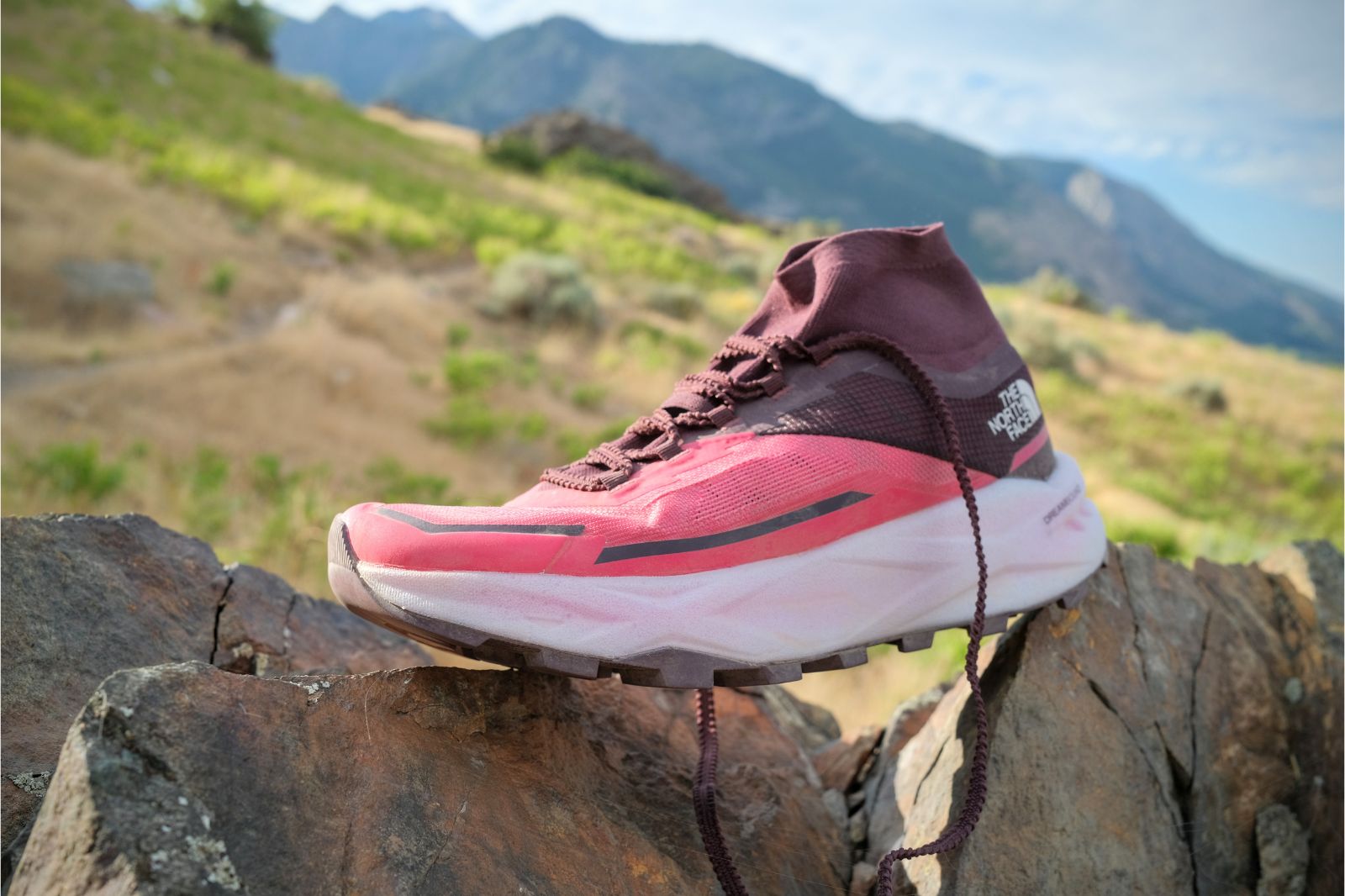
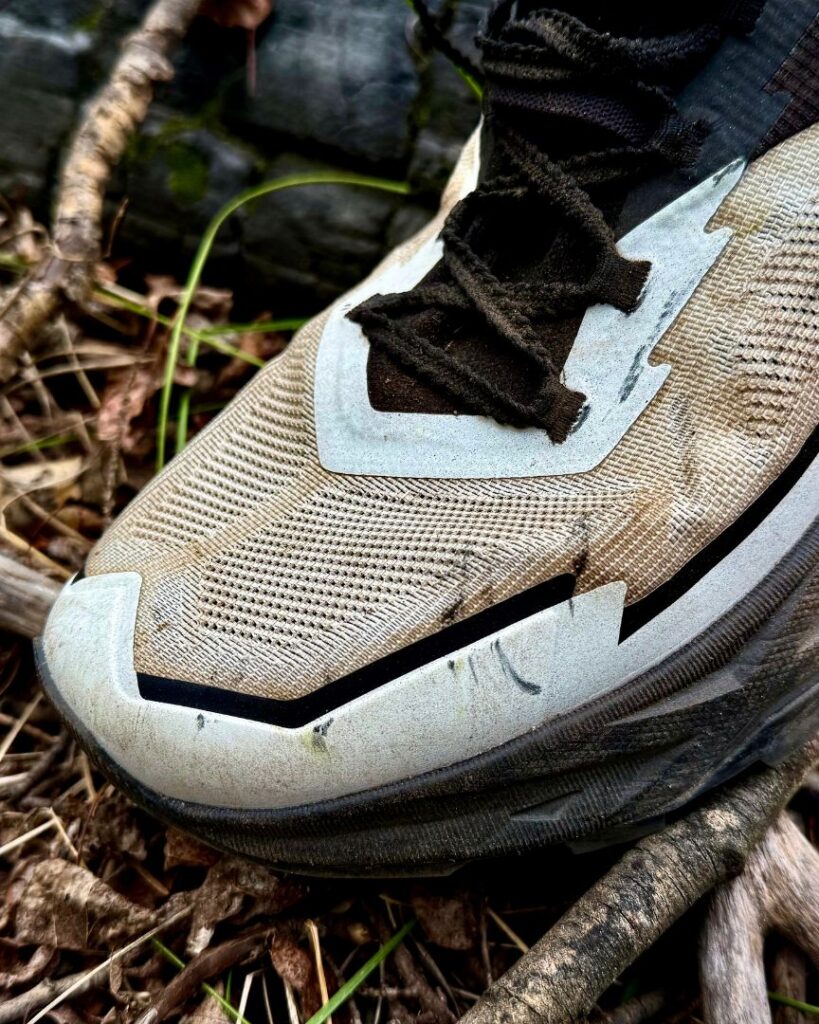
Visually, the most interesting aspect of this shoe was the upper. It has its pros and cons, but I would say the positives take the lead. I’m particularly fond of the integrated gaiter. The knit sock was on the lighter end of compression and thickness. While it didn’t help as much as some in the ankle stability department (Mount to Coast BITR H1, Hoka Tecton X 4, Norda 055), it worked beautifully for keeping out debris.
The North Face utilized a new last (mold that the shoe was built around) that leans toward the fit of the Altamesa series. This move was undoubtedly with comfort in mind. There was noticeable roominess in the upper. This was true from the toe all the way to the heel. Historically, techy shoes have a slimmer fit for security. Even though it’s not as expected (or necessarily as desired), it actually worked for my average/wide foot.
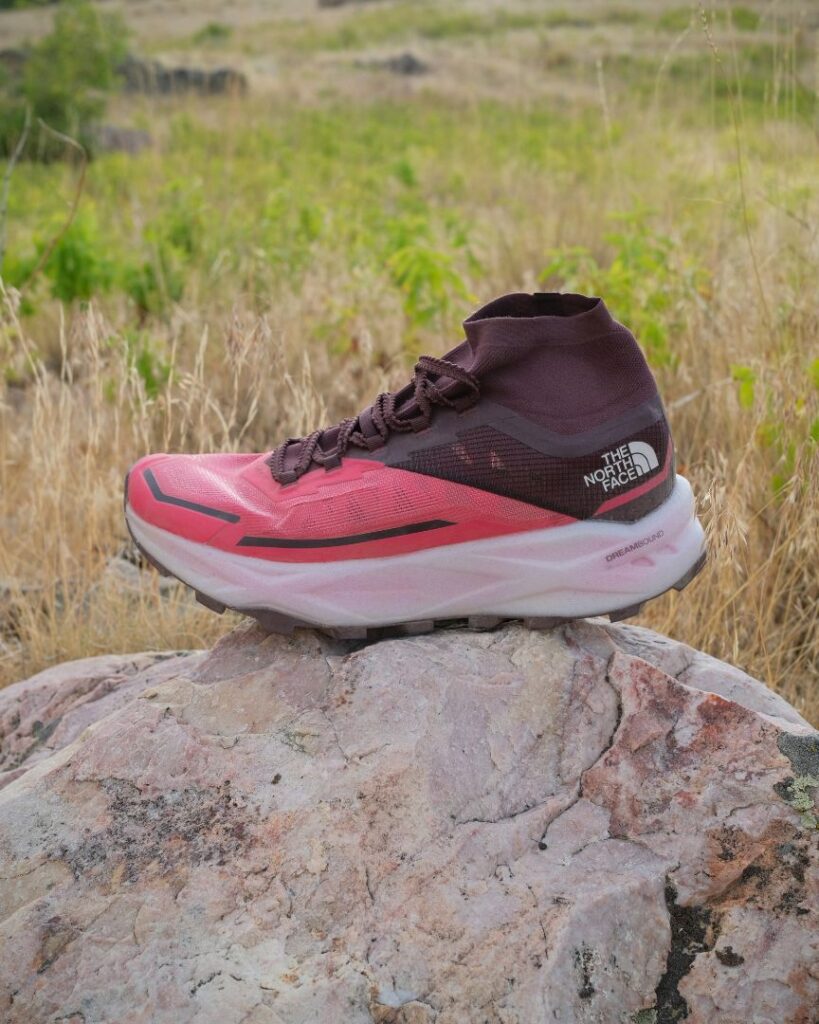
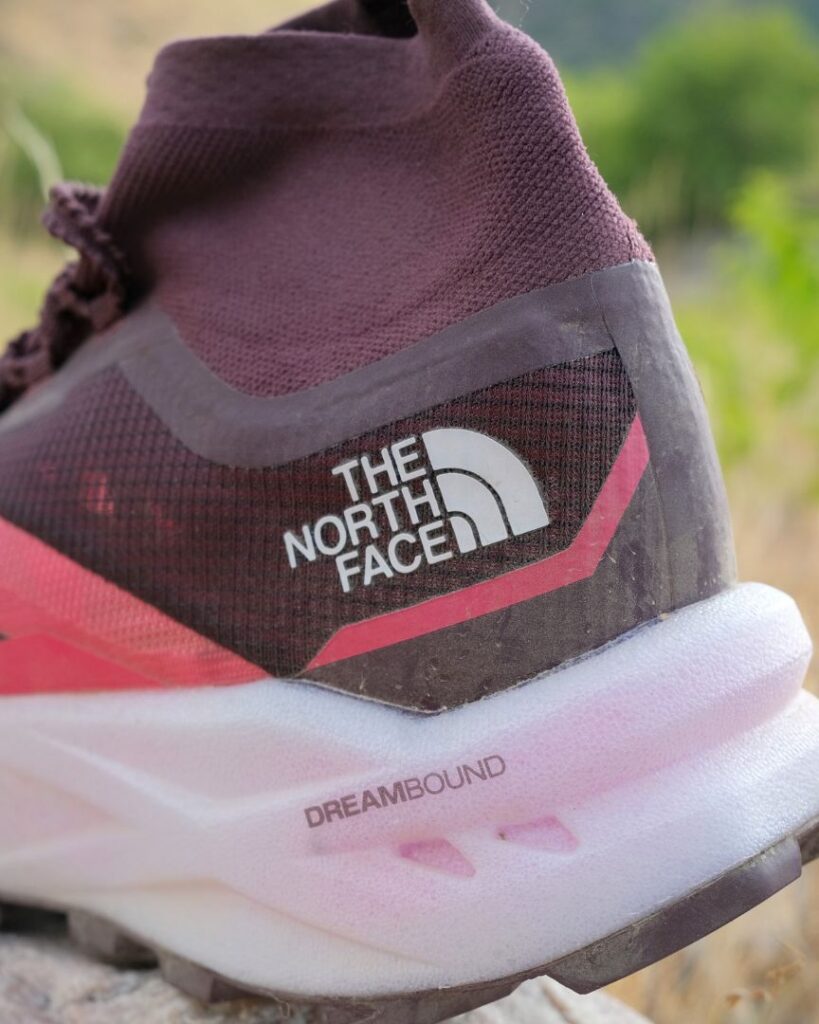
It was one of those fits that I simply had to get used to on technical terrain in order to be confident. Atypical is a good way to describe the fit, but I can’t deny that it really performed. There was no significant foot movement to report.
The durable and breathable engineered mesh and integrated knit sock collar only helped with comfort and foot security. While there was extra room for comfort, my foot stayed surprisingly well. There is a really nice skeletal system on the inside that provided strategic structure and support through the shoe but especially in the midfoot.
Part of the upper’s success certainly hinged on the midsole design. A subtle bathtub construction allowed my foot to sit down into the midsole, which promoted stability. Typically, we see this employed in a higher stack of softer foam; however, this was a perfect application of the higher sidewalls working well with a moderate stack of firmer foam as well. I would actually give more confidence points to the midsole design than any other part of this shoe.
Speaking of, the new Dreambound foam was spectacular for the intended terrain. It is a slab of blended foams that was uniquely brought to life to create a seamless dual-density midsole. It played out in a way that brought a trace amount of sponginess directly underfoot and progressively got a little denser from the inside out. This is one of the rare modern foams that required some break-in time to reach the fairly medium density I got used to.
That’s exactly how it felt on foot too. While it’s not a zingy foam, it was certainly protective, and the intentional rocker made it a smooth-running package for a variety of terrain. At the same time, the Dreambound foam was stable and predictable for surefootedness.
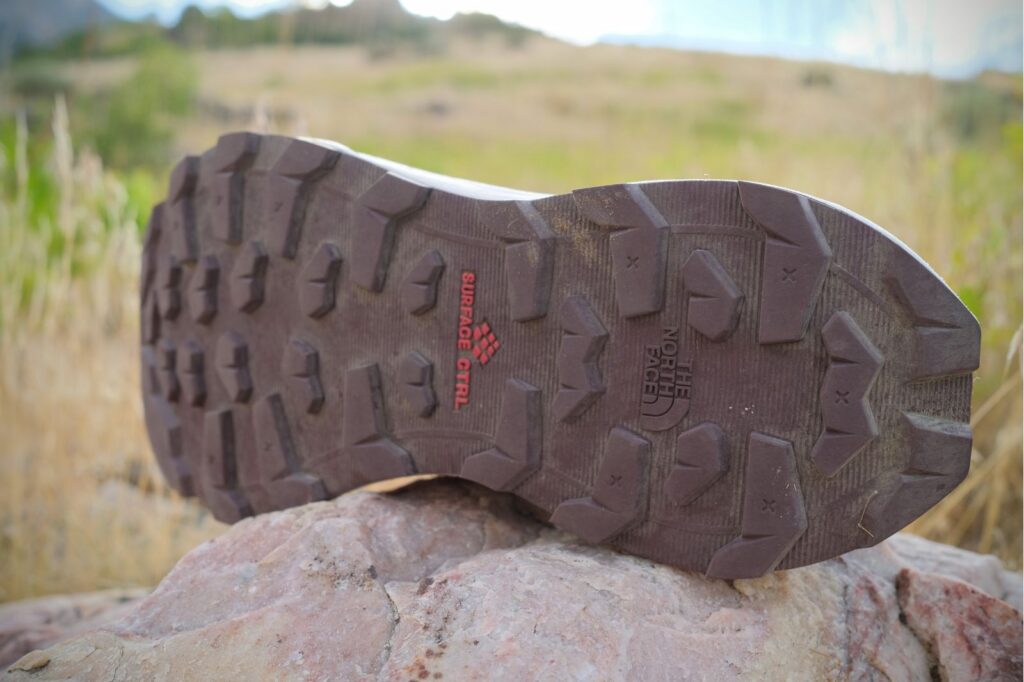
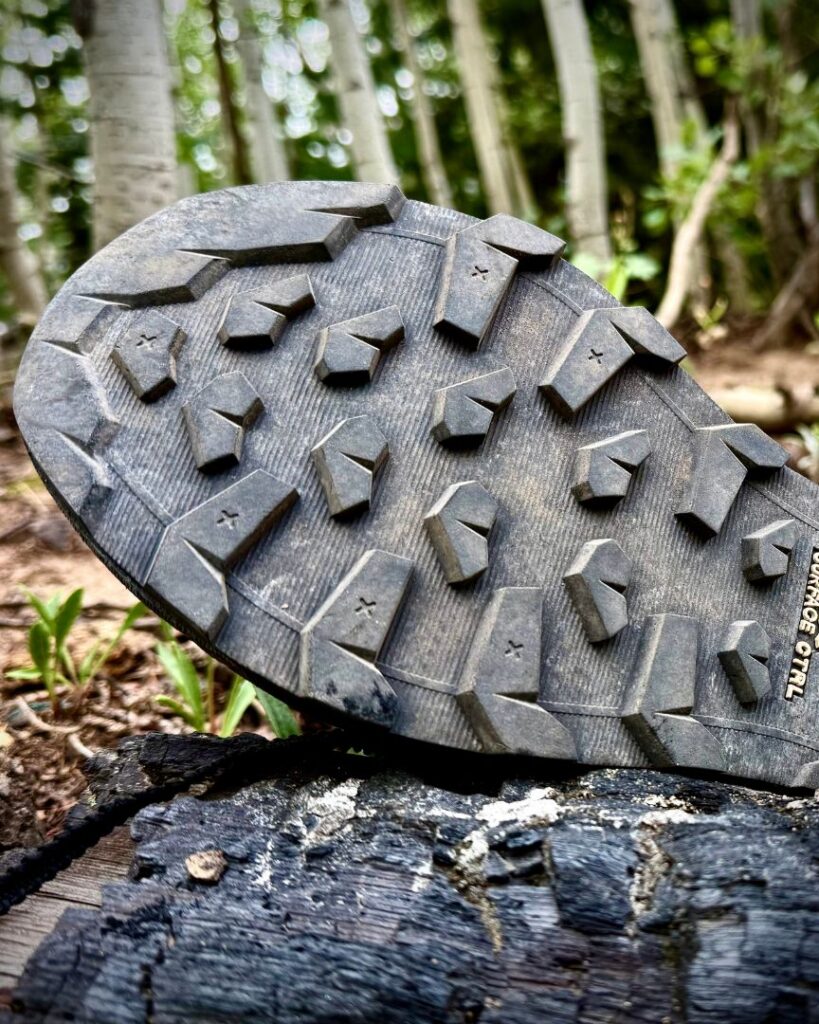
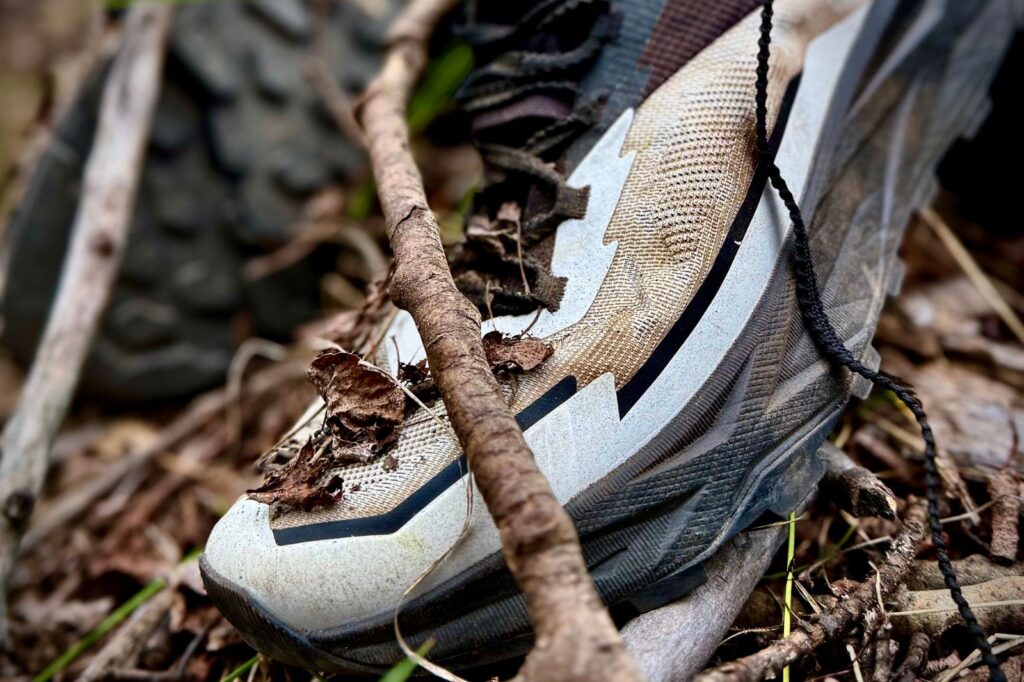
The North Face Offtrail Ultra boasts a more alpine-inspired outsole design. Flat broad lugs are perfect for that environment where surface area is the way to gain traction as opposed to the typical trail running lugs that are made to dig into dirt. While I did notice the lack of digging power into the typical trail terrain, I reveled in the confidence when above treeline and off-camber, off-trail scenarios where the broad 5mm lugs could do their thing.
As a package, this will be a durable option to say the least. I’m sure some alpinists could shred through a pair in a season; however, the trail runner who uses them more exclusively for scrambling and alpine excursions will get multiple seasons of wear.
ALEX: One of the first things that stood out to me about the Offtrail Ultra was the traction. On loose dirt, rock, steep climbs, and technical terrain, the outsole consistently inspired confidence. I rarely found myself second-guessing my footing, which allowed me to focus more on moving efficiently than on where I placed every step. This is big for me because I tend to be overly cautious when it comes to loose, steep terrain. I have experienced a lot of outsoles that feel like they are slipping out from under me in those conditions. You know, the banana peel-like slip and fall.
The shoe also feels incredibly agile. It provides enough protection for rugged mountain terrain without becoming bulky or cumbersome. It encourages precise foot placement and, as a result, is super fun on scrambles and terrain where balance and overall footing are critical. There was one instance where a larger rock rolled over the toe box, and it left me wishing for a more protective toe bumper, but overall the upper was protective enough.
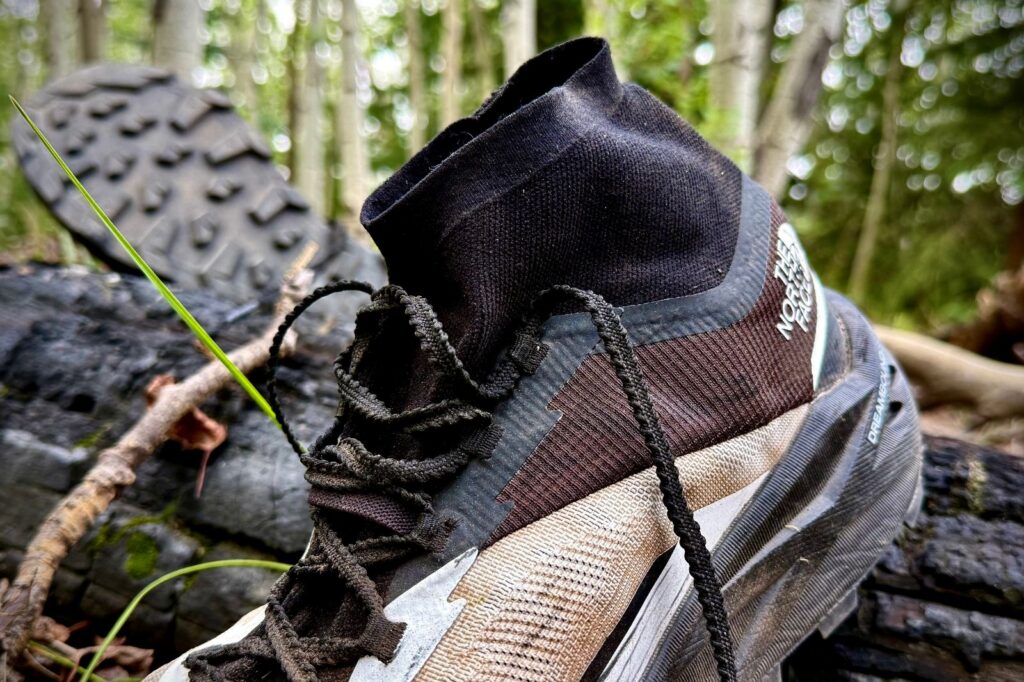
I was pleasantly surprised by the integrated gaiter. In the past, I have struggled with the design of these. Additionally, built-in gaiters can sometimes feel more like a funnel than a barrier, but that wasn’t the case here. It fits very snugly and effectively keeps rocks, dirt, and other trail debris out without feeling overly tight or restrictive.
North Face always seems to nail the rocker geometry. It contributes to the shoe’s smooth ride, helping maintain forward momentum without feeling exaggerated underfoot. Combined with the Dreambound dual-density midsole foam, it creates a ride that is both protective and stable. The cushioning absorbed impact from rough terrain while maintaining enough trail feel to stay connected.
I think what impressed me most is that the Offtrail Ultra delivers on its purpose. In a market where so many trail shoes try to be everything to everyone, this shoe felt focused. It was designed for technical mountain terrain, and every part of the shoe, from the traction to the fit to the ride, supports that purpose.
MICHAEL: While the two shoes are built for markedly different environments, the fit and ride of the Offtrail Ultra can be compared most directly to its recent predecessor, the Altamesa 300 v2.
I absolutely loved that shoe, so it’s not surprising I found much to enjoy about the Offtrail Ultra. Despite the lack of a razor-slim fit and low-stack midsole we typically see from technical shoes such as the Arc’teryx Vertex Speed Low or the Scott Supertrac RC 3, the Offtrail Ultra features a more relaxed, yet secure upper atop a generous bed of Dreambound supercritical EVA. I think this is where the “Ultra” part of this shoe’s name makes sense, as this lent the shoe to efforts from 10-20 miles. Of course, 20 miles isn’t exactly “Ultra,” but it is certainly more capable over significant distances than, say, the Supertrac RC 3. Moving further down, I found the gnarly outsole to be aggressively awesome. I loved pointing this shoe down rough descents and had no issues trusting the traction on offer. Lastly, the low weight of the shoe keeps things quick and race-ready.
While it’s not necessarily the most objective mode of analysis, I often like to reflect on the kind of trail or adventure I most naturally begin to daydream about on my first run in a shoe. For the Offtrail Ultra, I quickly thought about the next chance I’d get to go on a run in the Smokies, specifically linking up huge sustained climbing and descending over storied footpaths such as the Appalachian Trail, replete with a thousand roots and rocks that would certainly take their toll as the miles ticked on.
In this way, it might be easy to conclude the Offtrail Ultra was a pretty darn great success. Of course, I have my hesitations.
Shop The Shoe - Men Shop The Shoe - Women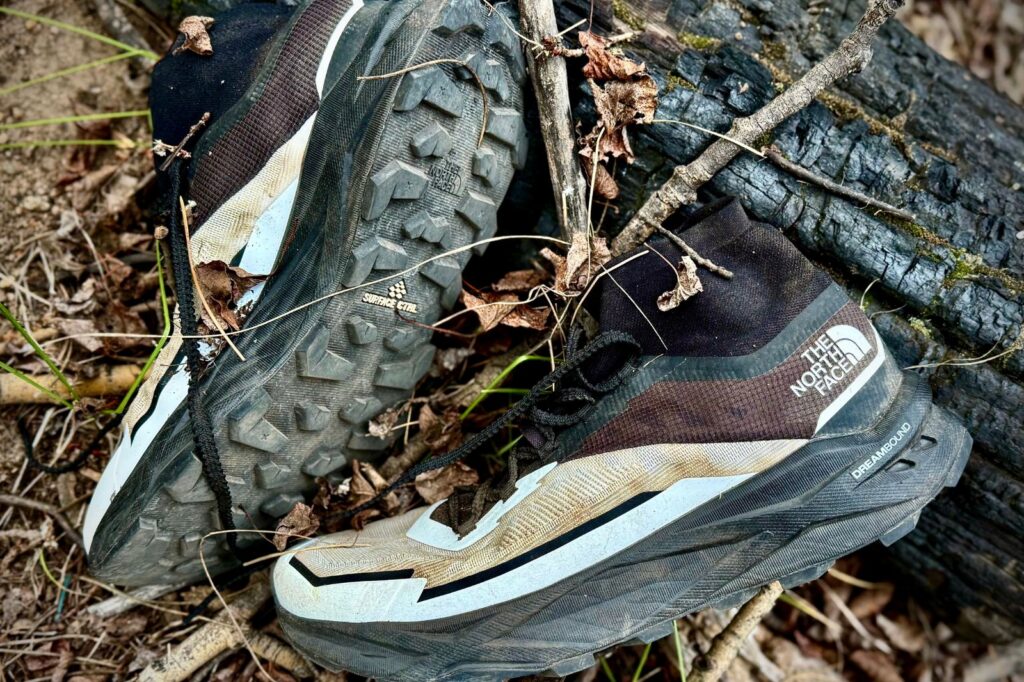
TAYLOR: I intentionally used the word significant in the previous section to describe the surprising lack of foot movement. While the extra room in the shoe was appreciated for all-day comfort, I would trade the roominess for more security. I learned how to lace up and gain confidence with less security from the upper, but I still found myself wanting the ability to cinch up even tighter for technical terrain. Again, while I can’t knock the performance of the shoe, I was really looking for more assurance from the upper, especially in the midfoot and heel.
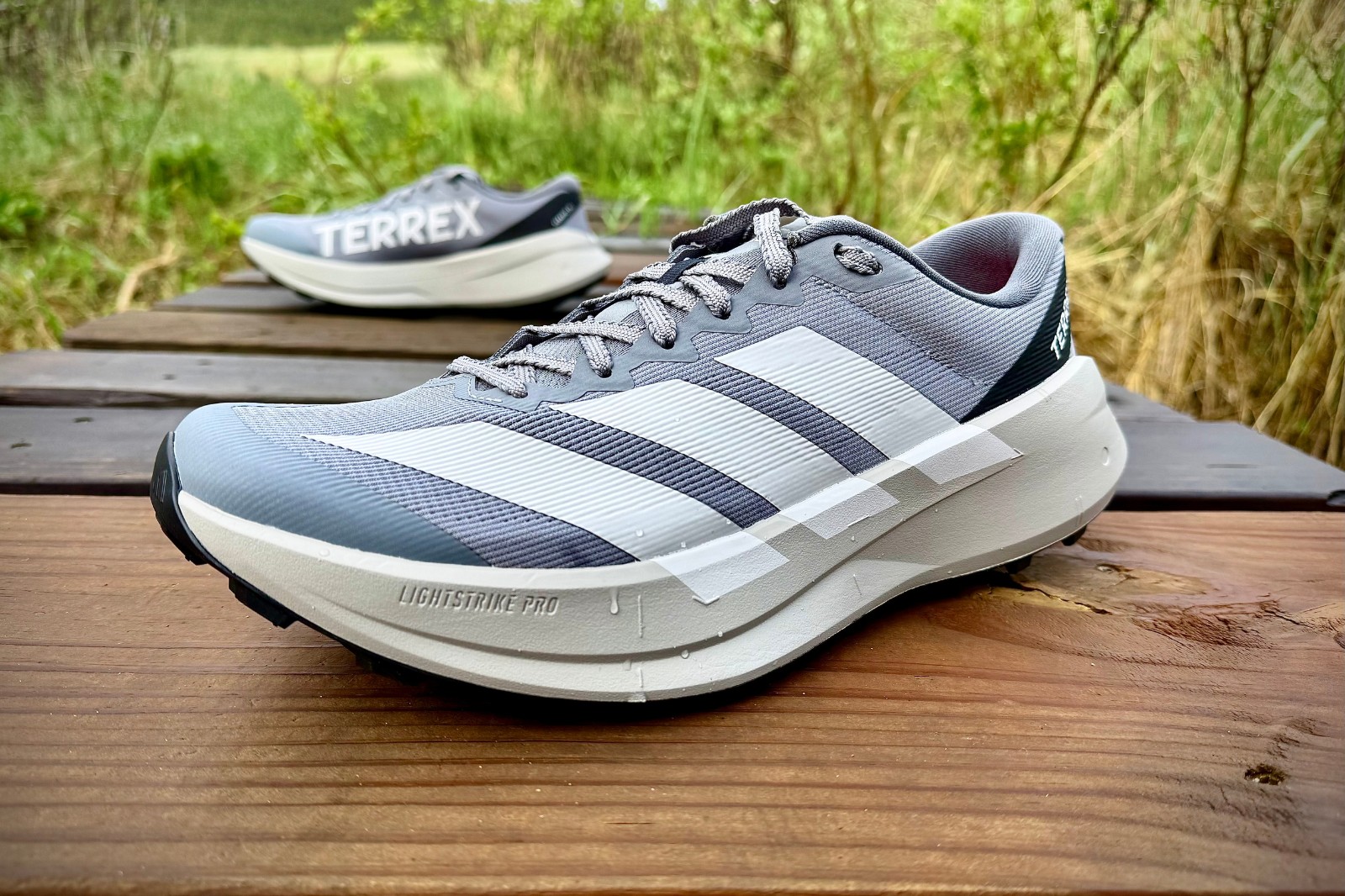
Balance was another issue. Similar to the Adidas Terrex Agravic SL, the top and bottom felt a little out of whack. The robust outsole and denser foam created a bottom heaviness that was more distracting than anything. After all, my US M10.5 came in at only 10 oz. (283g). That’s quite light for what this package boasts. Many modern shoes, even at a heftier weight, can run so smoothly that you don’t perceive the weight. This, for some reason, is not one of those shoes.
I’ll let the other reviewers speak to some slight heel issues, as we all had a similar experience.
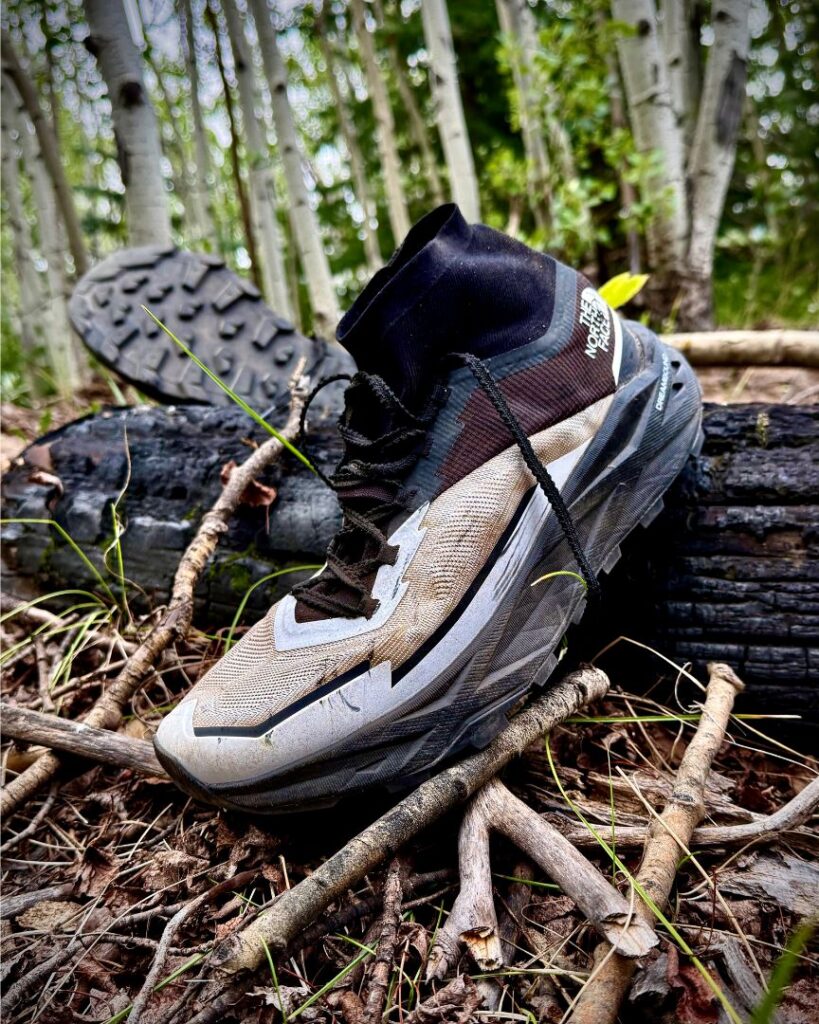
ALEX: My complaints on this one are relatively minor. I would’ve loved a heel pull loop to make getting the shoe on easier, especially since it’s the first impression of the shoe. The bright pink colorway won’t be for everyone, and I found the toe box felt a bit shallow over the top of my toes, even with my narrow, low-volume feet. I also would’ve liked a more secure ankle lockdown and a tongue with a bit more padding or structure, as I could feel the laces pressing across the top of my foot on descents.
MICHAEL: While The North Face markets the integrated ankle gaiter under the Screeguard moniker, I found the material itself to be both too thin and too easily stretched to provide any substantial protection from errant rocks or roots. Rather than a thick elastic featured on shoes like the Mount to Coast BITR H1, the Offtrail Ultra’s gaiter feels like a threadbare cotton sock. That being said, it performed admirably at keeping loose dirt out of the shoe.
Also, while the overall shape of the shoe’s last was well suited to the strenuous terrain it was designed for, I ran into issues with bunching of the sock-like gaiter material in the tongue and, since it was so thin, found it difficult to cinch the laces down on top of my foot to my liking without cutting into the top of my foot. This brings me to my last complaint, which, as you might be able to predict, was some slight heel slip from the loose laces.
I’d also note that this is a great example of why simple material choices matter, even in an age when most shoes are mostly great. Swap out the thin gaiter/tongue material of the Offtrail Ultra for something more substantial, and all of these problems would go away in one fell swoop. Just things to look forward to for version two, I reckon.
Shop The Shoe - Men Shop The Shoe - Women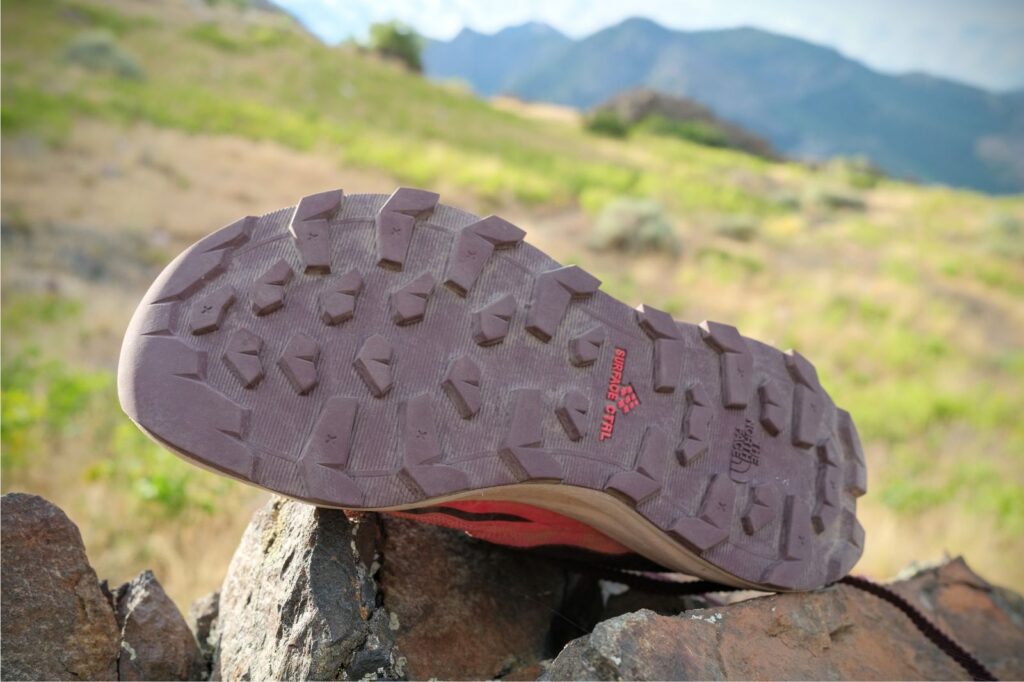
TAYLOR: Swap out “Offtrail” for “All Day,” and I think that would be a better portrayal of what this shoe is best for. You know, those alpine adventures that link rocky ridges and amass buckets of vert. They likely involve bushwacking or route finding too. Maybe the route is 10-20 miles and takes all morning or even the day to complete. That’s where the various components of the North Face Offtrail Ultra cement themselves as a standout option.
As for general trail use, this shoe is admittedly similar to the rock crawler Jeeps. It can handle the smooth stuff as needed, but it’s completely overbuilt to do so.
Harking back to my “confidence points,” do I feel confident in the North Face Offtrail Ultra? Absolutely. Even with a few desired adjustments, it’s well documented here that the North Face Offtrail Ultra absolutely rocks when the terrain is iffy. Better yet, if the adventure takes some time. At any rate, this new take on a technical trail rover will certainly move the needle as one of the most functional and comfortable in the class.
ALEX: The Offtrail Ultra does what it says it will do. For me, it’s the shoe I’d choose for vertical kilometers, technical mountain races up to about 50K, scrambling routes, and off-trail adventures where precision, stability, and confidence matter more than covering a hundred miles.
Too many trail shoes try to be everything at once, (over)promising speed, comfort, technical performance, and ultra-distance comfort in a single package. The result is often a shoe that does many things fine, but doesn’t excel in any of those areas. The Offtrail Ultra takes the opposite approach. The design intent is clear, and the performance delivers on those intentions. Rather than chasing versatility for the sake of marketing, it commits to a specific purpose, and that’s one of its biggest strengths.
MICHAEL: Like Alex noted in her concluding thoughts, this shoe isn’t necessarily compelling on the ultra-distance front; it’s highly suited to technical endeavors that trod off the beaten path. I look forward to using the Offtrail Ultra in these contexts, as well as some subtle changes to version 2 that will hopefully pay off big for versatility in the long run (no pun intended). The North Face has been pretty hit-or-miss for me recently. If the Offtrail Ultra is the last model I receive from the growing trail brand this year, I’d have to say that shoe was a pretty solid success.
You can pick up the The North Face Offtrail Ultra for $190 from Running Warehouse (featuring free shipping and 90-day returns) by using the buttons below.
Shop The Shoe - Men Shop The Shoe - WomenHave something to say? Leave a Comment
Sign in or create a free account to comment. You'll come right back here.
Sign in / Sign up


Taylor Bodin is a trail and ultra runner living in Estes Park, Colo., with his wife and daughters. As the head of the Dirt Division at Believe in the Run, trail running is pretty much the only hobby he can manage right now and loves it. Every so often, he will pop off a race or FKT attempt because competition is pure and the original motivator for him getting into running anyway.
More from Taylor
Alex is a trail and ultra runner originally from Minnesota, where she built her foundation on long winters and the rugged, rooty trails of Lake Superior’s North Shore. Now based in Utah, she trains along the Wasatch Front and continues to lean into long, multi-day efforts. She was the first female to set a supported FKT on the 310-mile Superior Hiking Trail and gravitates toward races that demand durability — especially in tough conditions, where sleep deprivation blurs the edges, and she’s learned to make friends with the hallucinations.
More from Alex
A mechanical engineer living in the slippery singletrack haven of Huntsville, AL, Michael is a lifelong gear nerd with an unfortunate knack for wordiness. While he appreciates all of the varied terrain the US has to offer, he’s certainly most at home training and racing on the technical trails of the Southeast. In between reviewing shoes, he enjoys reading good books, riding bikes, and tinkering on Vern, his 1999 Subaru Forester. Most of all, Michael truly loves the daily pursuit of being a good husband and friend.
More from Michael
Be one of the first runners to rate it.