Shop BITR Apparel Shop Now
We independently review everything we recommend. When you buy through our links, we may earn a commission.
8.1 oz. (230g) for a US M9 / 7.2 oz. (205g) for a US W7
40.5mm in heel, 32mm in forefoot (8.5mm drop)
Tackling light to mixed terrain
Hyper-Comf supercritical EVA midsole, Spider Rubber outsole, W Strapping system
Available now for $150
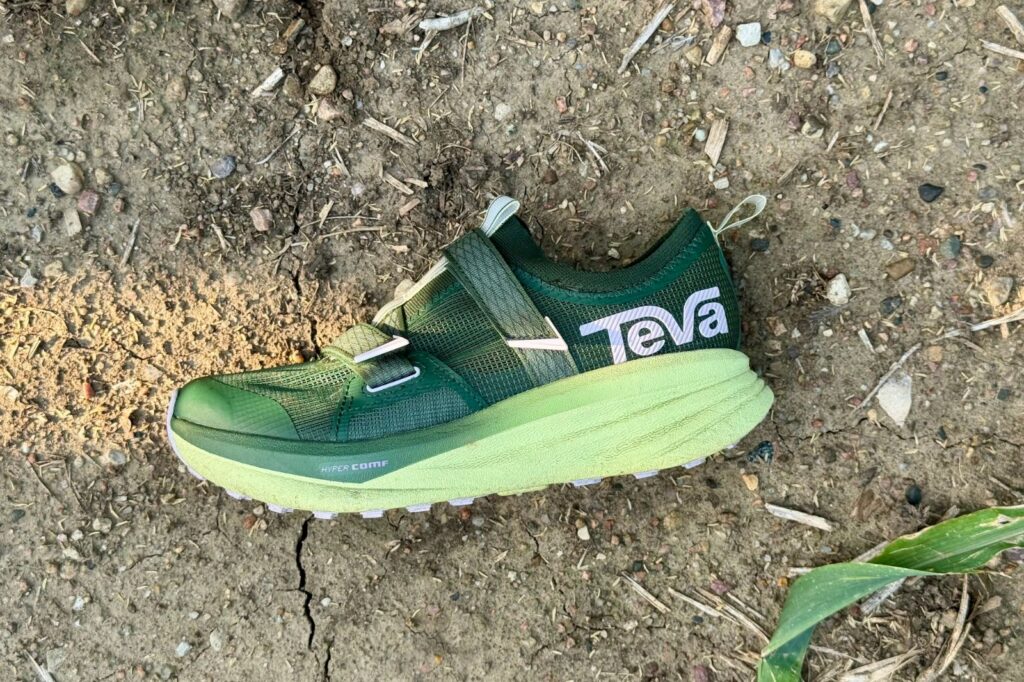
JOHNNY: The Aventrail Road-2-Trail (R2T from here on out) is my first experience of running in a trail shoe from Teva, a brand I wouldn’t have immediately associated with the sport. I guess they’ve always been logged somewhere in my subconscious because they’ve been around since the mid ‘80s, but until recently Teva would have evoked thoughts of camping, hiking, water sports, and general outdoor adventure rather than trail running.
Talk to any Teva representative who knows their stuff, and you’ll quickly hear the brand’s origin story: when a Grand Canyon River guide famously attached a pair of straps to a flip-flop to stop it floating away, creating the blueprint for what would become one of the most recognizable sandals in the outdoor industry. More than 40 years later, those same strapping principles remain central to many of the brand’s products.
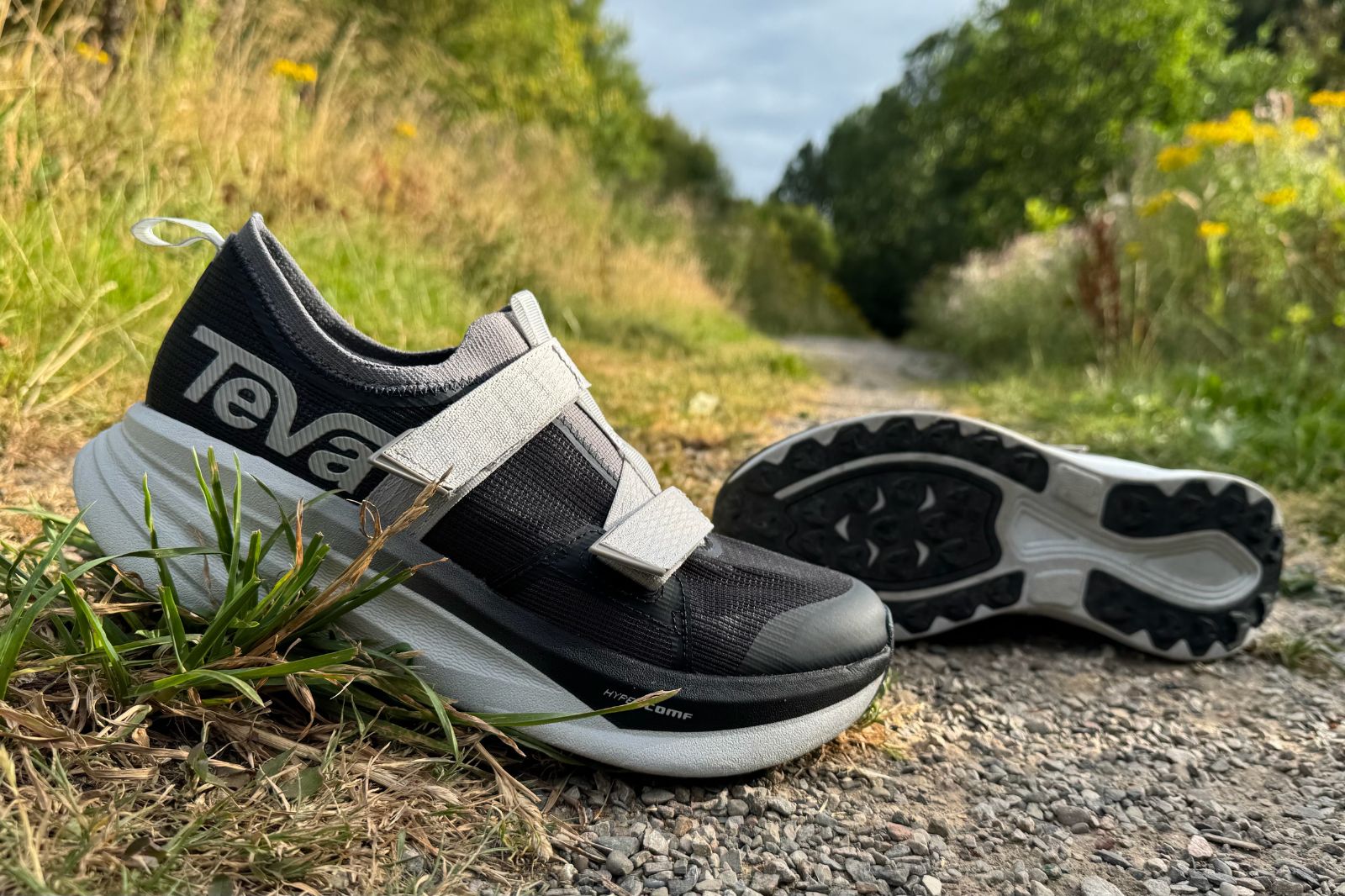
Casting an eye over the Aventrail R2T, I can quickly see the same brand ethos underpinning the development of this unique-looking trail shoe. In many ways, it resembles an evolved running sandal (because it’s also available as one), just with enhanced protection to shield the foot from typical trail obstacles and debris. Teva has even carried across its signature W Strapping System, replacing traditional laces with a simple but highly adjustable hook-and-loop configuration.
There’s an ever-growing, versatile subcategory of trail shoe commonly referred to as gravel, road-to-trail, and even door-to-forest, all denoting the shoe’s ability to perform efficiently on multi-surface routes. You’ll probably be way ahead of me here, but R2T stands for Road-to-Trail, and that’s exactly where this shoe wants to live. Rather than focusing solely on technical mountain terrain, it’s been designed for runners who want to leave their front door, tick off a few miles of tarmac, link together gravel tracks and cycle paths, and eventually find themselves on easier trails without having to think twice about changing footwear.
Teva’s R2T abbreviation is snappy, but I must confess whenever I saw it, I couldn’t help thinking about a certain white-and-blue droid from a galaxy far, far away, and with that image firmly lodged in my mind, I strapped in and headed out for some mixed-terrain mile munching.
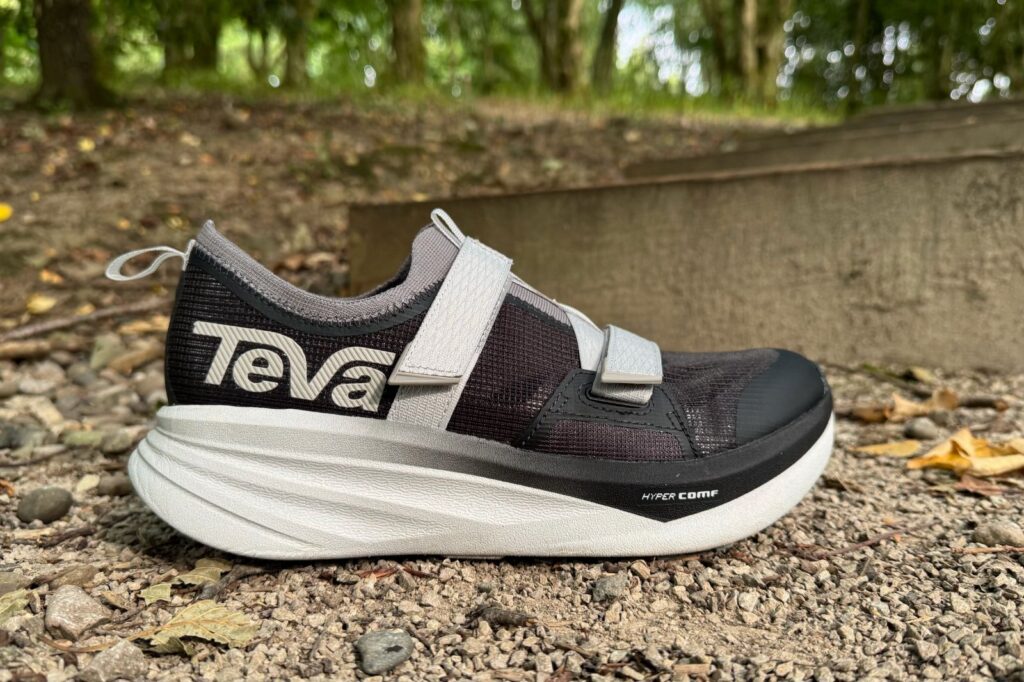
JOHN: Teva and I go back to 2018, when I learned about the brand through people who run The Last Annual Vol State 500k. Since then, I’ve done a lot of runs and ultras in Teva sandals; my favorite was the Minam. I would use it with toe socks, and it really felt solid. Eventually, though, I switched goals and gear and stopped using sandals, reaching for Xero shoes when I wanted a minimal/natural feel instead.
Then, when a local hero here in Virginia, Mike Wardian, a highly accomplished runner and devoted Taco Bell enthusiast, switched from Hoka to Teva, it definitely caught everyone’s attention. As soon as Teva started releasing running shoes, I began begging Believe in the Run for the opportunity to review them.
Well, that day has arrived. And, because I love a good story and adventure, I’ll be wearing the Teva Aventrail R2T shoe on Burning River 100 straight out of the box for all 100 miles. This wouldn’t be the first time I’ve gone full Hunter Thompson and sacrificed any chance of a PR using a shoe I’ve never used on a 100-miler, so let’s see how it went!
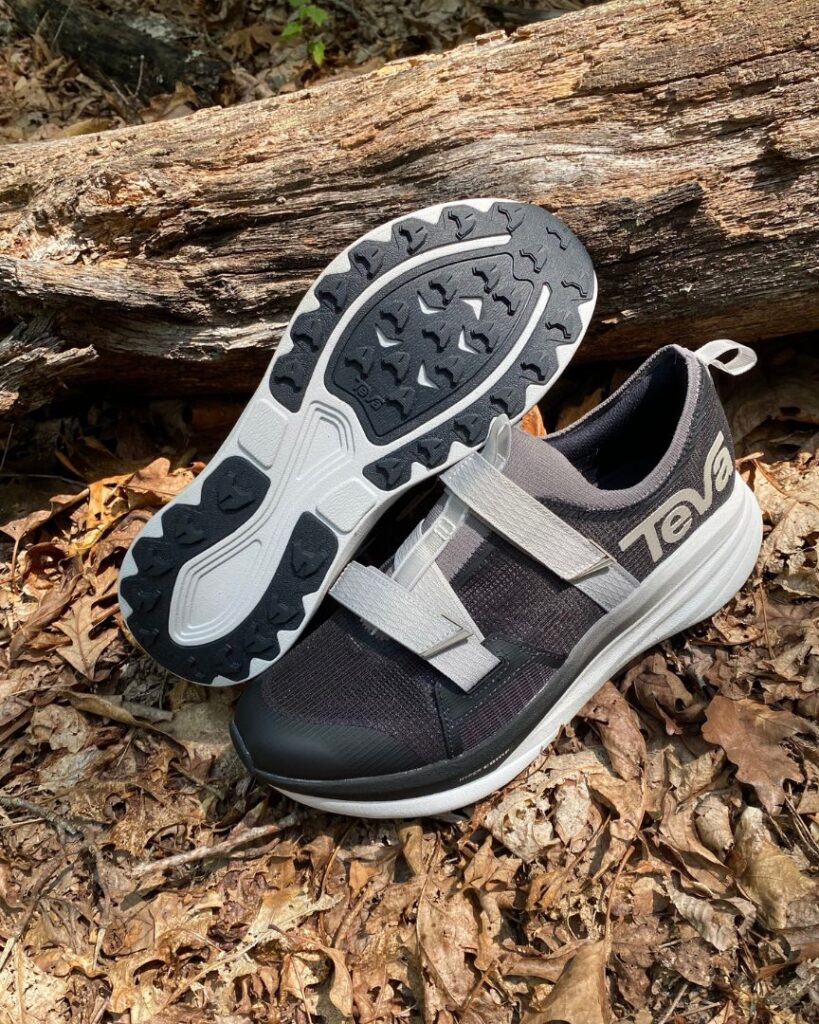
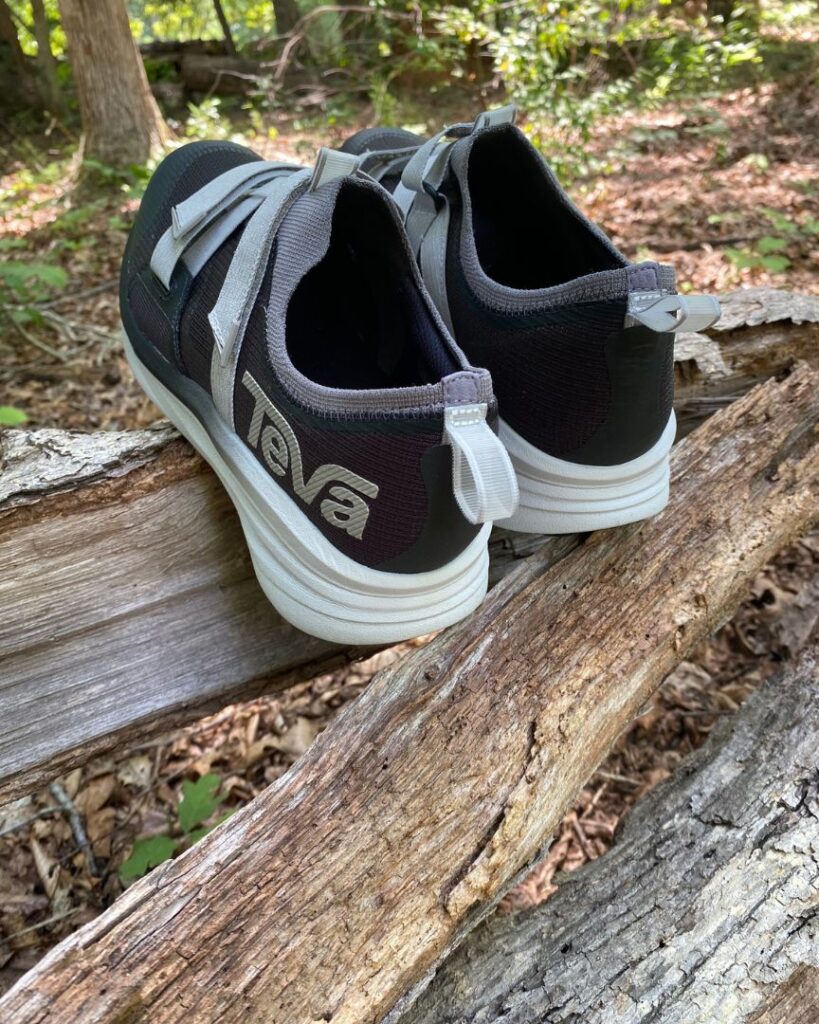
RENEE: I’d like to take a moment to appreciate John’s ability and willingness to wear a shoe for a 100-miler right out of the box. I didn’t do that, nor would I do that, but I think it sets up our chance to talk Teva really nicely.
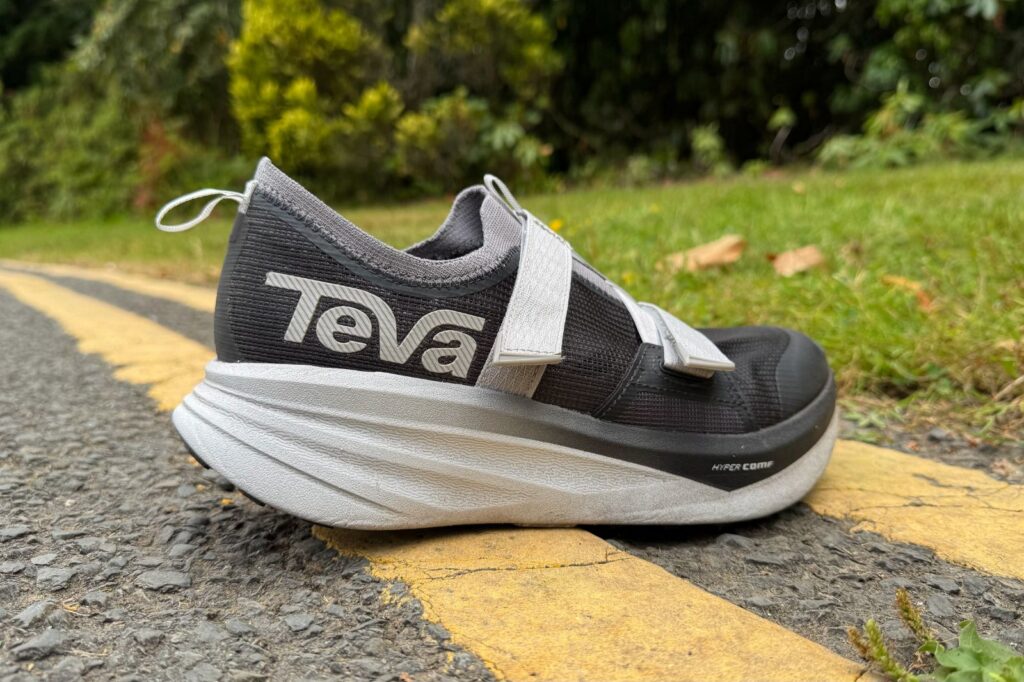
JOHNNY: The standout feature of the Aventrail R2T is undoubtedly its fit system. Teva has leveraged decades of experience developing sandal strapping systems and translated that expertise into a running shoe. While I was initially skeptical about replacing traditional laces with hook-and-loop straps and less than enthusiastic about the appearance, the system quickly proved itself very user-friendly. It only took seconds to secure the fit, allowed an impressive amount of fine-tuning, and could even be altered mid-run.
Once I dialed it in, I achieved a secure lockdown across the midfoot without the unwanted pressure points that can sometimes develop when pulling traditional laces too tightly. The heel hold was also surprisingly good thanks to the ergonomic internal heel padding, with my foot planted securely over the midsole with very little unwanted movement, even when taking sharp turns or transitioning between unpredictable surfaces. The upper deserves praise, too. Breathability is excellent, and the lightweight mesh construction kept my feet comfortable during warmer runs.
Underfoot, I found myself appreciating the forefoot rocker more than the midsole foam, which we’ll get into in a moment. The rocker geometry gave a smooth rolling sensation that helped me maintain momentum on road sections, compact gravel paths, and faster flowing trails. On predictable terrain it encouraged an efficient stride and helped me transition cleanly through the gait cycle; I was genuinely surprised at some of the paces I was comfortably holding in this shoe. I also enjoyed the initial step-in comfort. The footbed felt comfortable immediately, giving the shoe a welcoming first impression. While I don’t think this necessarily translated into significant performance gains once running, it did add a little comfort during easier miles.
The Spider Rubber Endure outsole and widely spaced 3.5mm-deep lugs of the Aventrail R2T reflect the design brief well. Teva opted for a versatile lug pattern designed to provide just the right amount of grip on trails, but not so much that you feel it’s working against you on faster road sections. I’m happy to say the Aventrail R2T’s grip never let me down across a wide variety of surfaces.
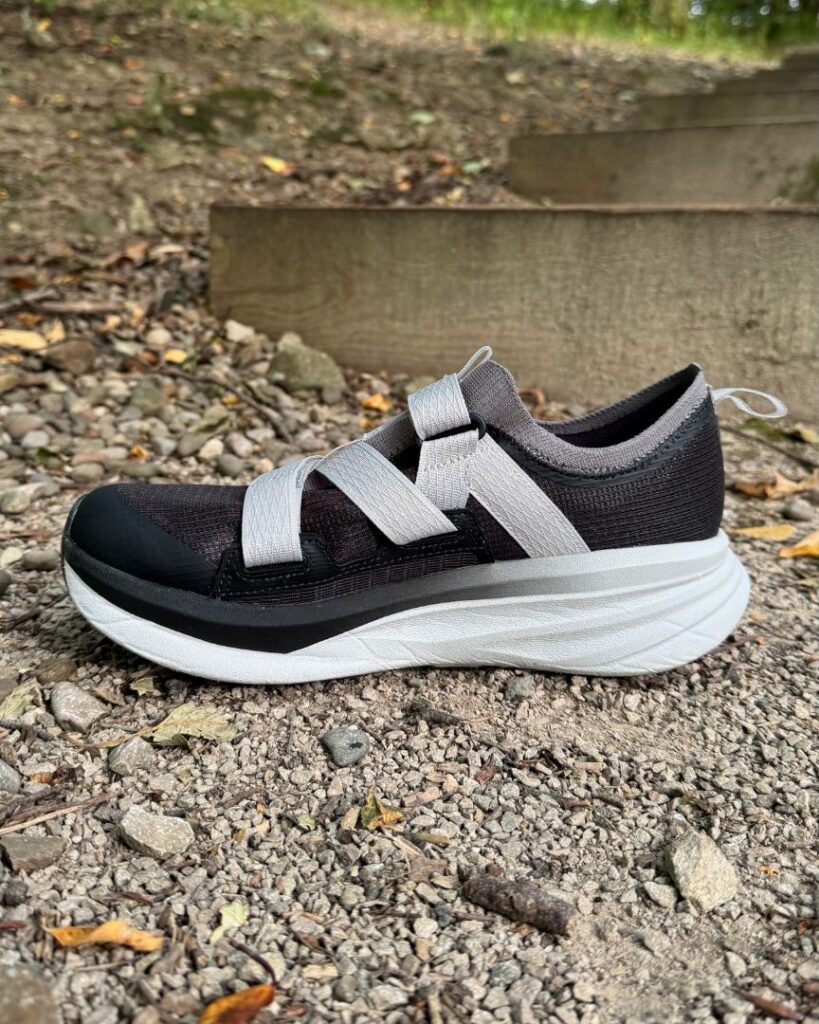
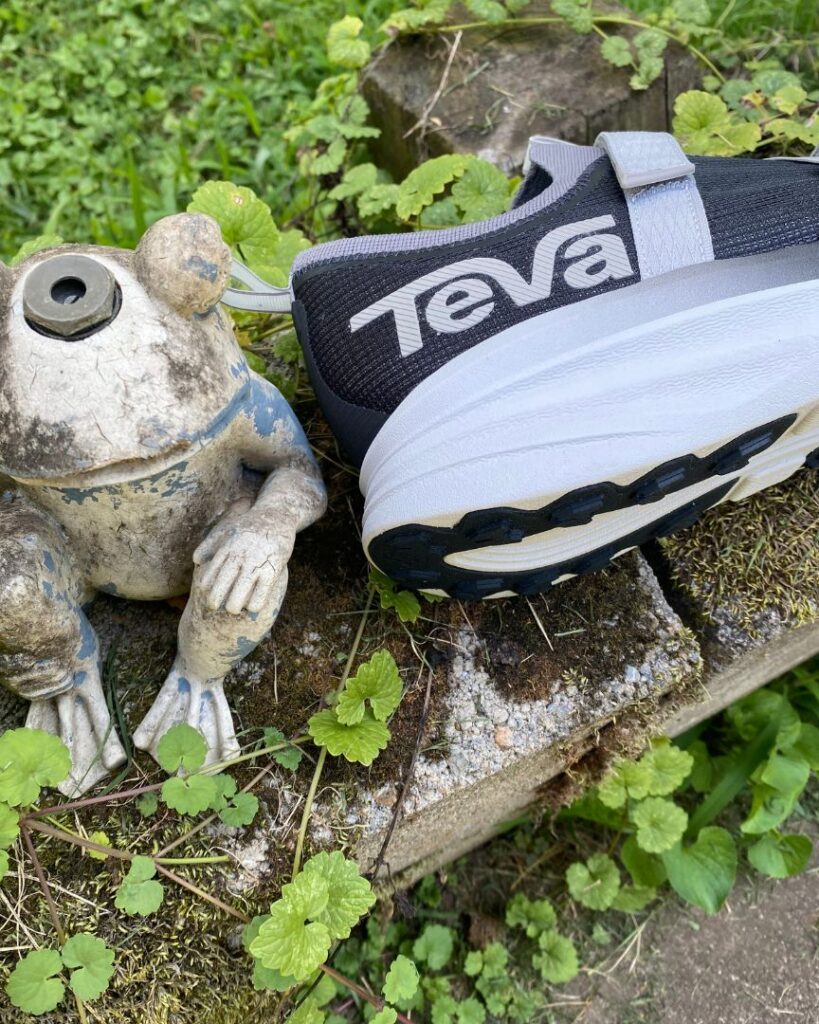
JOHN: So why didn’t I choose to run in a more traditional trail shoe like the Salomon Genesis 2? Why didn’t I run in a carbon-plated road shoe and try to get a PR on less-technical terrain? Oh, I’ll tell you why: because the Aventrail R2T is unique and different! I’ve never used a hook-and-loop shoe before. My biggest concern was getting blisters because the upper wouldn’t lock my feet down and there would be too much movement. Surprisingly, that wasn’t fully the case. I’ll get to the straps in the next section, but for the most part the upper worked pretty well. I finished Burning River 100 wearing them and had no blisters or foot problems. I was kind of shocked. Great job Teva!
During the race, the Aventrail R2T felt pretty good. I didn’t want to run fast in it but fast enough to make cutoffs. As serviceable as this is as a running shoe, I think it’s a better hiking shoe. I’m normally a very slow hiker on ultras, but the rocker on this shoe makes it great to walk in. Burning River has a bit of every surface: some technical stuff, road, towpath, and some gravel. For the most part, the Aventrail worked well across the board, especially walking up hills or when I was too tired to run. It’s good to know you can fall back to a hike during an ultra and not lose too much pace. In some really hot sections in exposed sun, I just hiked to save energy, and it felt great!
I want to take a moment and highlight an area where this shoe really shines: water crossings. It did great, and the shoe dried extremely fast. Also, very little debris got in the shoe during the 100 miles. A nice part about the straps is they make the shoe easy to get on and off, especially if you need to during a race. I’m the type of ultrarunner who won’t take off my shoes during a race even if there are rocks in my shoe, but the ease of slipping the Aventrail on and off makes it kind of worth it.
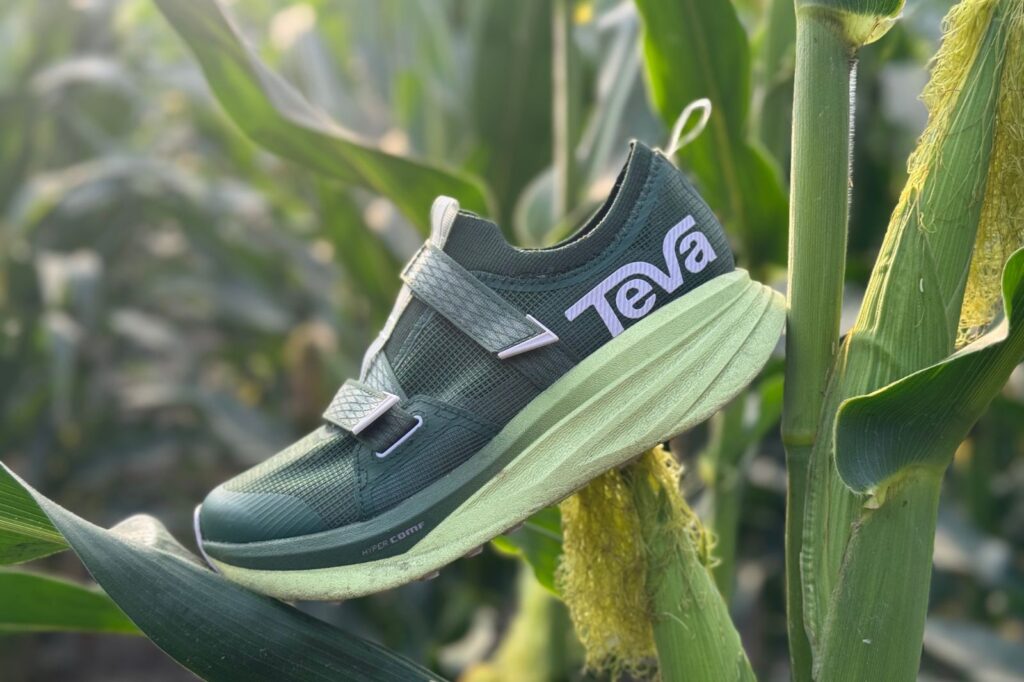
RENEE: The fact that John wore this shoe for a 100-miler right from the box should tell you something. The shoe has plenty of cushion and comfort underfoot, especially when compared to more technical-oriented trail shoes. It’s easy to slip on and off, and I found myself leaving it by the door and wearing it for non-running activities. I agree with John about the shoe being a good hiking option, and let’s be real, those of us who are mid- and back-packers in the ultra distances are hiking a good amount.
Shop The Shoe - Men Shop The Shoe - Women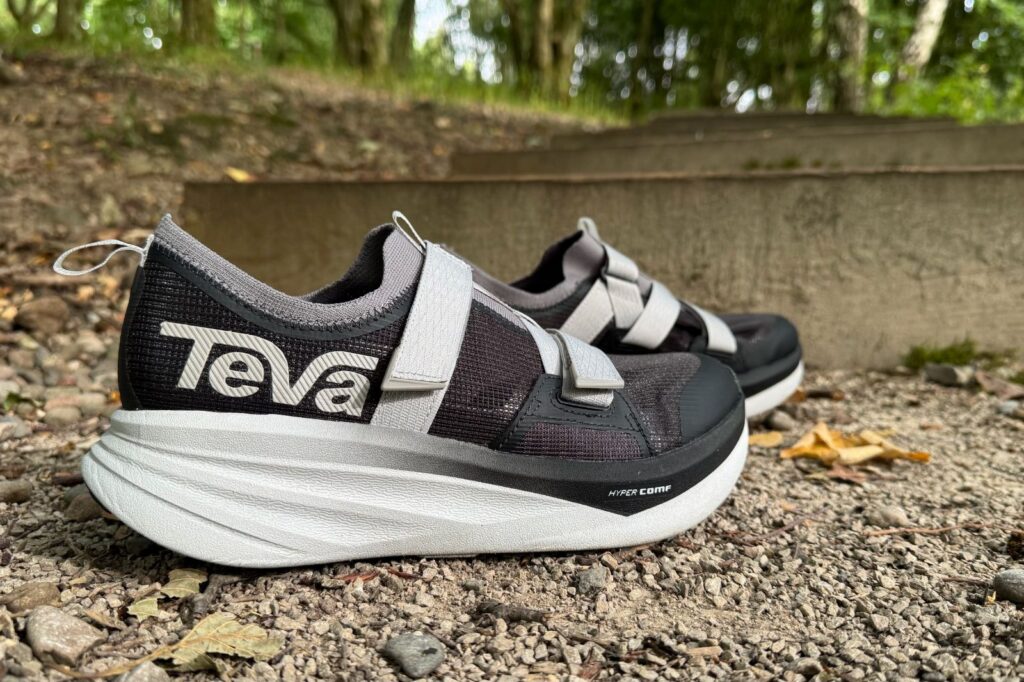
JOHNY: Let’s start with the obvious, and yes, aesthetics are subjective, but I really struggled with the styling. I appreciate that design preferences vary enormously, and there will be runners who love the sandal-inspired appearance, but the black and gray colorway I tested did very little for me. The contrasting grey straps stood out prominently against the darker upper and not in a particularly flattering way. Every time I looked down, I was reminded less of a modern trail running shoe and more of a basic spin-class cycling shoe.
Moving beyond appearances, my biggest criticism concerns the midsole foam. Teva’s Hyper-Comf supercritical EVA foam didn’t live up to its naming convention, and out on the trails I found the ride rather average. The foam never felt particularly plush, nor did it deliver the kind of energetic rebound we’ve come to expect from many modern trail shoes. The rear of the shoe felt especially lifeless. Heel strikers should take note, as that was the area of the midsole that was the most lacking in responsiveness and cushioning. Runners who tend to land on their forefoot or midfoot will likely notice this less, particularly because the forefoot rocker does most of the heavy lifting in creating forward momentum.
The underwhelming midsole foam could reflect the shoe’s positioning within Teva’s range and the Aventrail R2T’s relatively moderate pricing. Not every shoe needs cutting-edge technology or race-day performance credentials; however, in a market where brand competitors are increasingly introducing highly dynamic foams, lightweight constructions, and more innovative ride characteristics, the Aventrail R2T does feel a step behind. The result was a running experience that never really excited me. It was functional and efficient, but I found myself finishing runs appreciating the fit system far more than the actual ride.
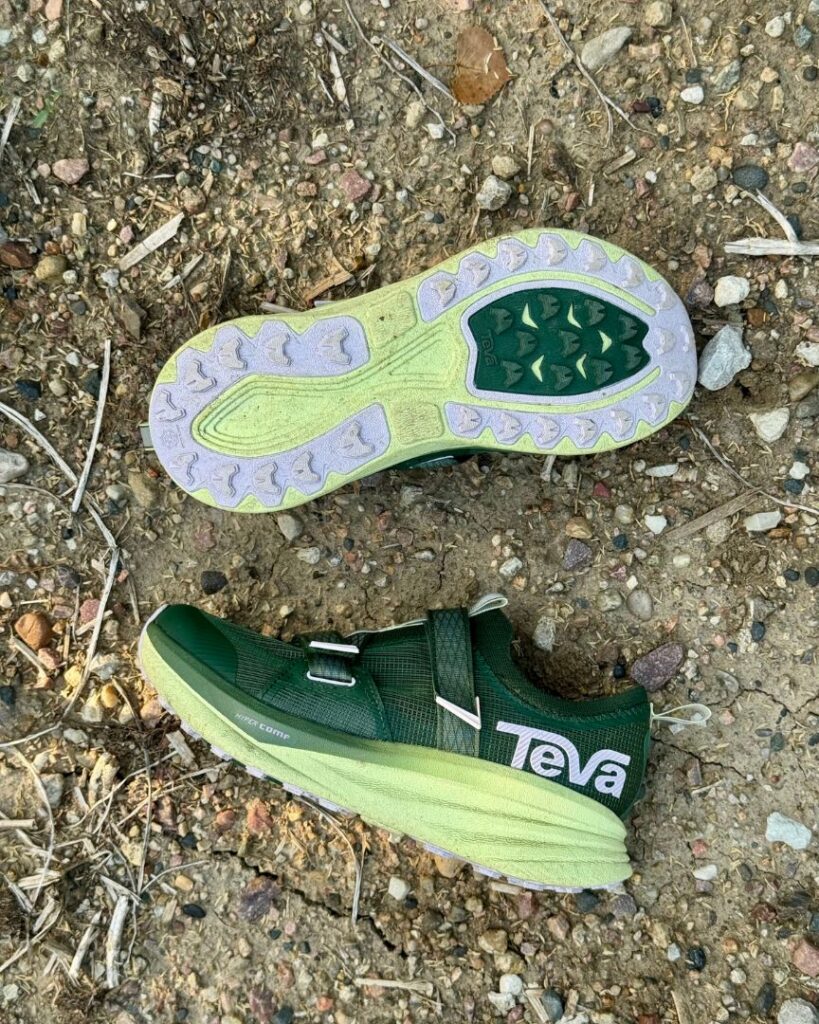
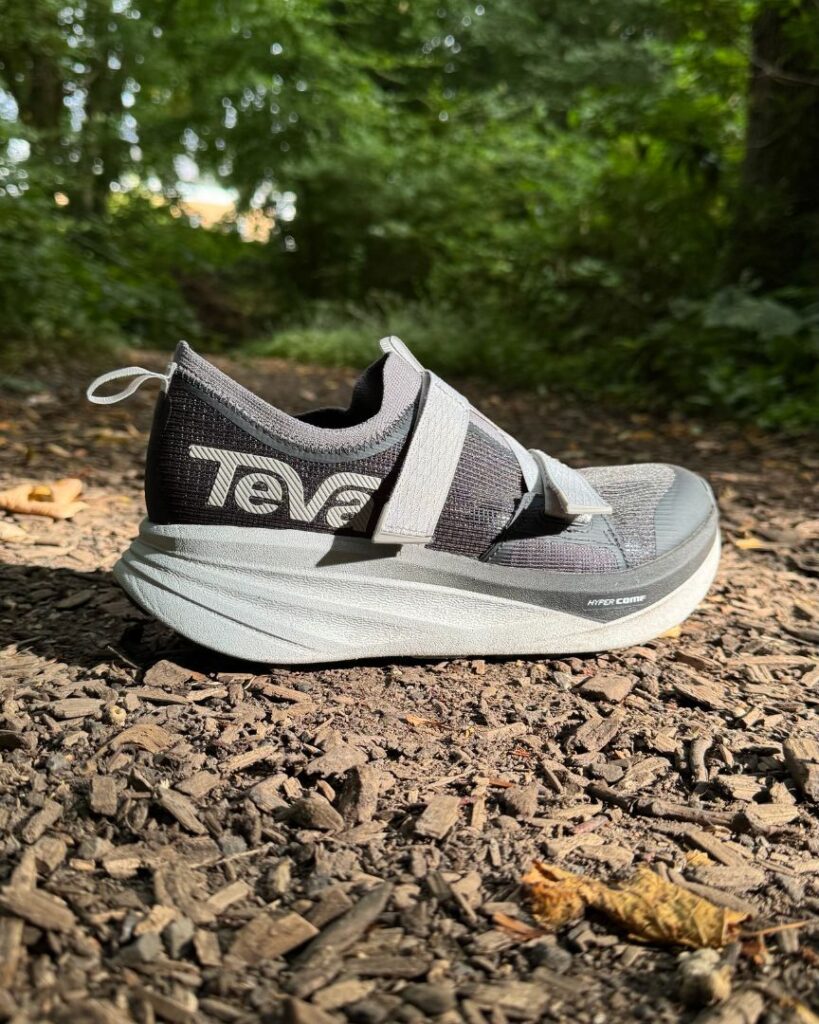
JOHN: The straps need an overhaul. They weren’t terrible, but they are kind of messy. I couldn’t find a great way to secure them because they’re too long and they bounce. I totally understand how some foot shapes and sizes may have problems with lockdown in this shoe, but to me the larger issue is the outsole because it could potentially leave your foot open to vulnerability.
So, all around I found this really interesting. Initially, when inspecting the Aventrail R2T shoe, I was concerned that the upper would cause blisters due to fit issues and wasn’t really interested in the outsole. I just assumed it wouldn’t be an issue. Also, Taylor mentioned he liked the foam, and he’s totally right. This is a comfortable shoe in terms of foam and feels amazing even during the course of 100 miles. My main issue with the Aventrail R2T shoe is the exposed foam on the outsole on the heel and midfoot.
I did an ultra using the Speedgoat 4, and a stick went right through the exposed foam. A similar thing happened with the R2T shoe at Burning River 100; a rock went deep inside the outsole. I don’t think I felt it or when it happened, so the shoe did a great job keeping my feet protected, but the exposed foam on this shoe is a liability because it’s just too soft. Even on a more basic surface, there’s always a potential for a rock to get stuck in there and go deep into the shoe. The rest of the outsole was great, but rocks can go right through the exposed foam.
Now, I did use this shoe 100 miles, and I did beat it up. With that said, though, the exposed foam is so soft that I think it could happen at any point, even on much shorter runs and even on just gravel, not just rugged trail or even on road. You could catch a rock in it almost anywhere. Also, just to be clear, I do not know when this occurred during the 100 miles. So even though this rock took out a chunk of the foam, the Aventrail R2T shoe was tough enough for me to finish the race, and I had no idea I caught a rock that badly until I looked at the shoe after.
RENEE: For running purposes, the Aventrail R2T Shoe is a tough sell for me. I have the Aventrail Sandal, and it’s comfortable, but it didn’t work whatsoever for running. I found it chunky, and I didn’t get a good lockdown with the upper for anything beyond walking. The Aventrail R2T Shoe upper works better in terms of security but not as well as I need with my low-volume foot. I had to pull the straps tight, to the extent where the hook-and-loop was barely connecting. The underfoot geometry is fine for hiking, but for running the shoe felt clunky in both a mid and forefoot landing. Yes, it’s protective but not fluid.
And to Johnny’s point, the shoe might be ugly. Might be. Looks are subjective, and I can see someone young and hip making this shoe work for a certain vibe. I am neither young nor hip, so it ends up looking like an orthopedic shoe. The outsole is best suited for moderate or gravel, and with a slew of other shoes in the gravel market, the Aventrail R2T Shoe falls short in terms of performance.
Shop The Shoe - Men Shop The Shoe - Women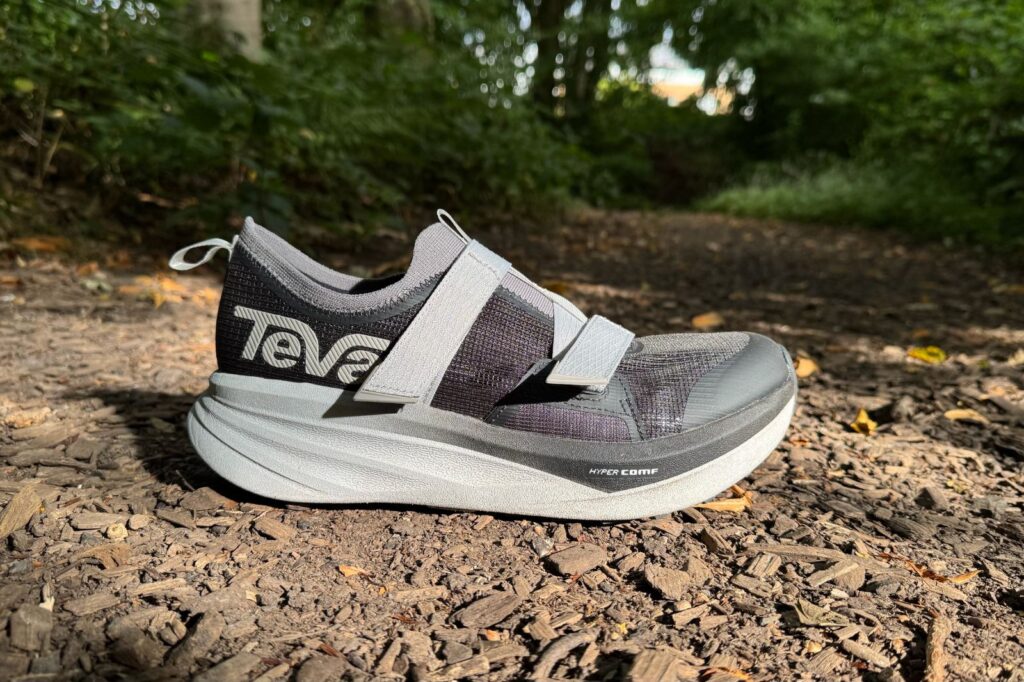
JOHNNY: Ultimately, the Aventrail R2T’s strengths come from its practicality. The closure system is genuinely effective, the upper is comfortable and breathable, and the rocker helps create a smooth, efficient ride across the sort of mixed terrain this shoe was built to tackle. But this is a shoe I respect more than I enjoy.
The brand’s sandal heritage gives it a genuinely unique point of difference, and it’s encouraging to see continued innovation beyond its traditional product categories. I’ve already seen signs of more ambitious Teva trail footwear on the horizon, including designs with more advanced midsole constructions, updated fastening systems, and a stronger visual identity.
With the Aventrail R2T, what Teva has essentially created is an evolved running sandal with the additional protection and coverage needed for longer mixed-terrain adventures. The challenge for me was that the running experience never quite matched the promise. The midsole felt dated compared to many of its road-to-trail rivals and, despite the excellent fit and smooth rocker geometry, I was left wanting more excitement underfoot.
Continuing to confuse R2T with a certain white-and-blue droid, I’ll end with a badly paraphrased Jedi Master: “These are not the trail shoes I am looking for.”
JOHN: So, I’m not an elite runner, not even close. But I was able to use the Aventrail R2T Shoe right out of the box and finish a pretty hard 100-miler (they’re all hard). Yes, this shoe has a couple of real annoying flaws, but it’s not bad. I can’t even call this shoe average because I finished a 100-mile run in it and had no foot issues. That right there is a win. I feel like the Aventrail R2T could be great simply by fixing some basic stuff.
So with everything said, I cannot justify giving this shoe a C grade just for the simple fact it did better than a lot of other shoes I’ve used on this distance. It’s a shame, but it’s got some annoying little issues. I’m giving it a B but totally understand if my fellow reviewers didn’t enjoy it. I’ve had Teva in my life a long time and am very used to them. When moving forward, Teva may want to look at the Minam and other sandals, because the outsole on those is tough as nails. You can see the outsole does pay tribute to those models, but something has to be improved with the exposed foam areas of the outsole.
I don’t find the Aventrail R2T offensive like some reboot movie that doesn’t live up to the original (Alien Covenant) because I think this shoe does, but it just needs to be dialed in better on future updates. Also, I can totally get the case Teva purists are going to make that this is a Hoka-ey mutation, which is valid. Don’t get me wrong, a Teva/Hoka mutation is not a bad thing, but a major reason I wore Teva is that the outsole is tough. With some tweaks, I really think Teva has something special here!
RENEE: I’m convinced John could wear literally any shoe for a 100 miler. We really should try to test this theory. The Velcro straps and upper don’t work for me, and the underfoot geometry isn’t great for what I prefer when running. Still, I won’t discount the shoe as a solid option for those who like to slip on a shoe and go out for an adventure of hiking mixed with running. If you have good luck in the Aventrail Sandal, you’ll enjoy the underfoot ride of the Aventrail R2T Shoe with the bonus of the full upper.
You can pick up the Teva Aventrail R2T Shoe for $150 from Teva by using the buttons below.
Shop The Shoe - Men Shop The Shoe - WomenHave something to say? Leave a Comment
Sign in or create a free account to comment. You'll come right back here.
Sign in / Sign up


An obsessed runner, John has run in most ultra races in the Mid-Atlantic area. Since he’s an ultra runner, it’s no surprise he’s also a lover of food. He’s also a dedicated father, caregiver, and veteran.
More from JohnJohnny Dodgin is a self-confessed shoe nerd who will talk endlessly about midsole foams and general running shoe tech to anyone who will listen. Having worked as a footwear product line manager, he carries a wealth of technical running industry knowledge, blending this with his real-world experience of being a devoted trail and road runner. Living in the North West of England, Johnny is perfectly positioned to test shoes and gear in one of the coldest, wettest parts of the world, where technical trails and muddy conditions dominate his running adventures.
More from Johnny

Renee lives in rural Nebraska and runs on gravel roads that may or may not be maintained depending on the time of year. If she’s not running on gravel or dirt, she usually opts to run trails instead of paved roads. Fun face: every Boston-qualifying road marathon she has registered for has been canceled.
More from Renee
Be one of the first runners to rate it.