We independently review everything we recommend. When you buy through our links, we may earn a commission.
9.9 oz. (280 g) for a US M9/ 8.9 oz. (252 g) for a US W7
41 mm in heel, 35 mm in forefoot (6 mm drop)
Technical trail, mixed terrain, fast hiking, ultra distance training
Contagrip outsole, breathable mesh upper, OptiFoam midsole material, Quicklace system
Available now for $150
RENEE: A popular run influencer/coach/runner stated in a recent podcast that shoe reviewers are “inbred.” For clarification, my parents are not related. I will accept “rural” or “country” as adjectives, but not inbred.
Apparently, “inbred” meant that reviewers write only favorable reviews of shoes to gain good relations with brands. I assure you, brands don’t care what I think and they aren’t paying me. I’m not that special. My reviews are from a non-rich person perspective.
I’ve had the luck of reviewing run gear and meeting brand reps for the past 6+ years. However, I write for the runner who saves up gift cards to buy their one or two shoes per year because they can’t afford a five-shoe rotation every 3 months.
So let’s determine if the Ultra Glide 4 is gift card worthy.
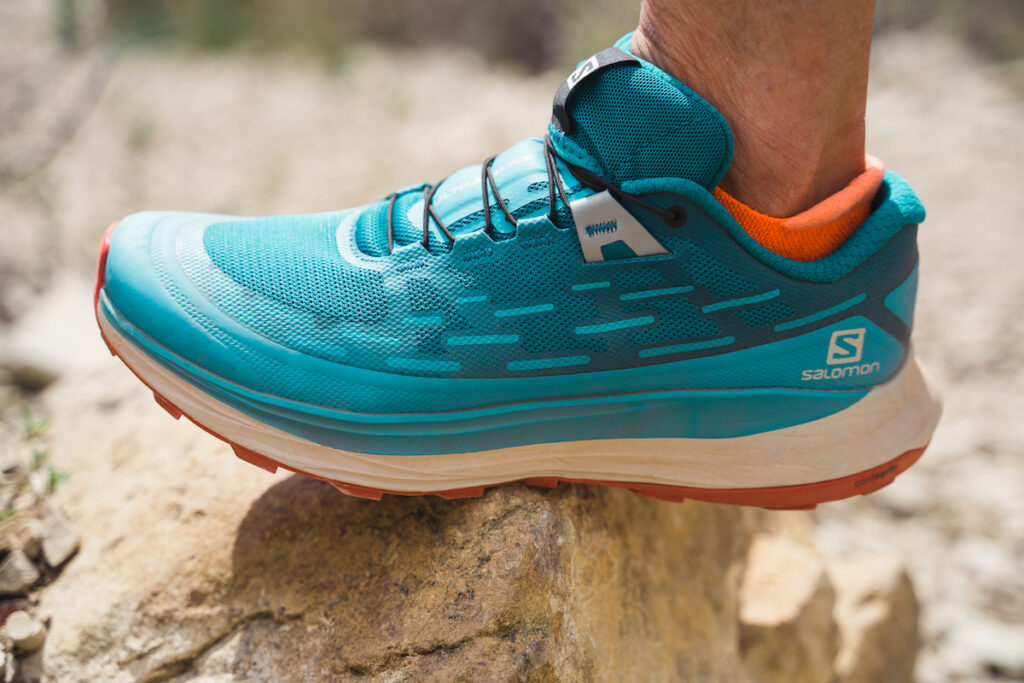
Salomon Ultra Glide 1
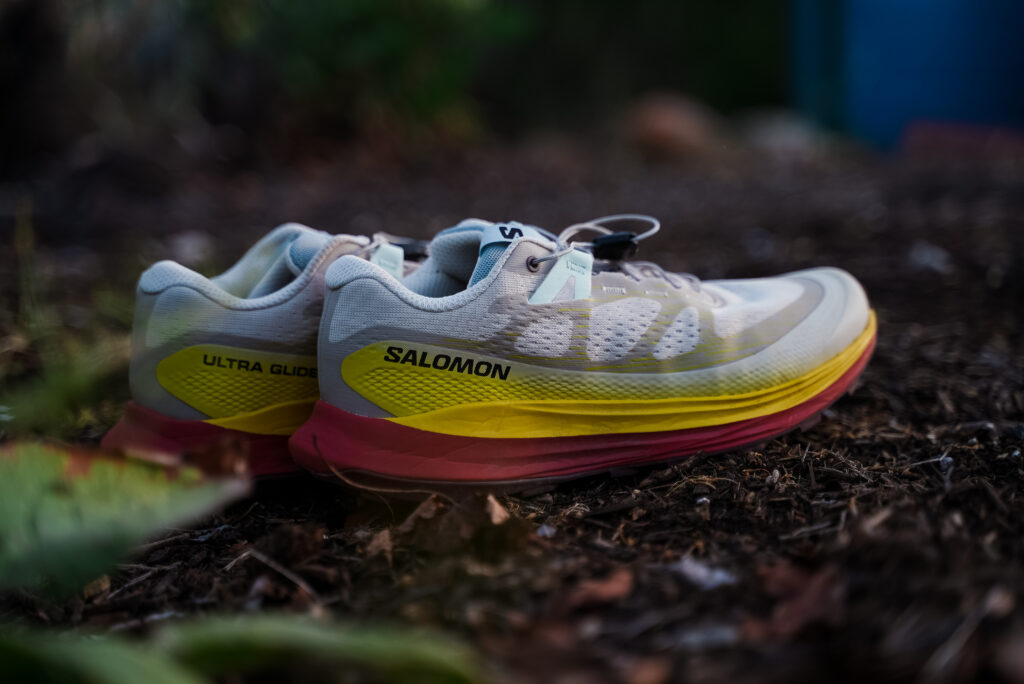
Salomon Ultra Glide 2

Salomon S/Lab Ultra Glide
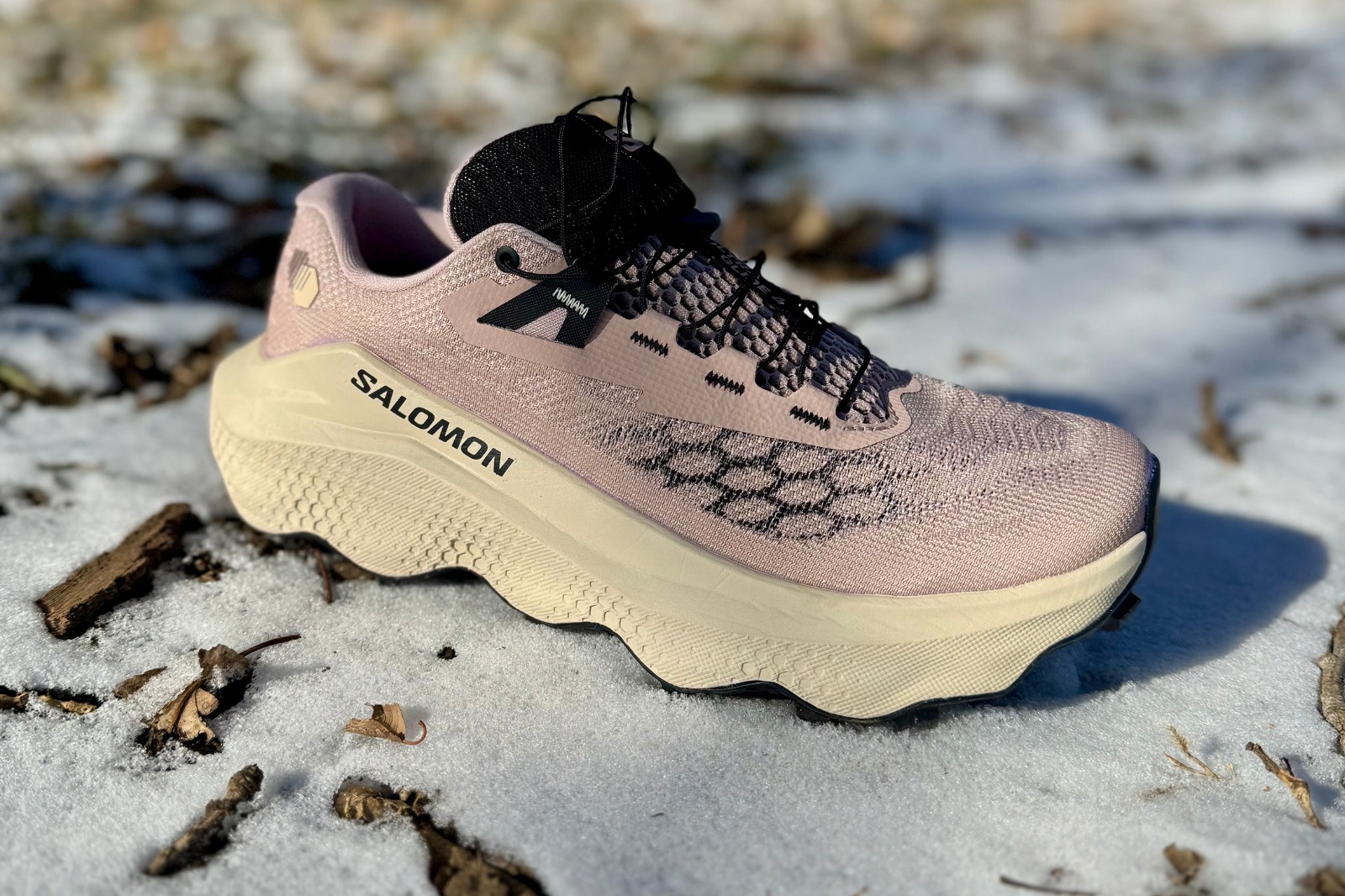
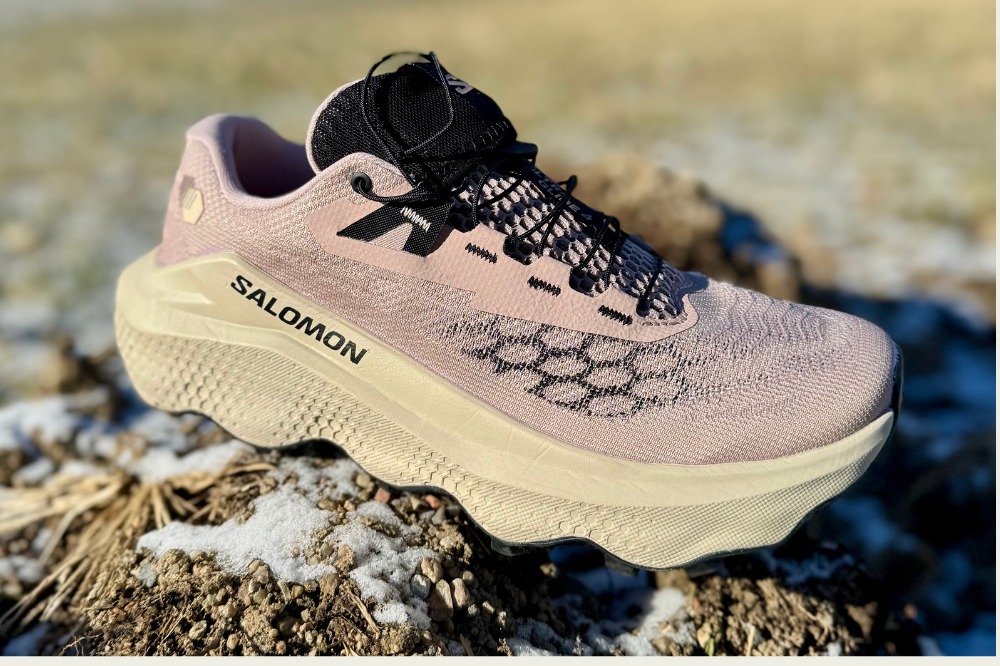
SAM: The Salomon Ultra Glide 4 is a clear example of how running shoe tech trickles down from Salomon’s experimental, boundary-pushing S/Lab series and into its main shoe offerings. The wavy, oddly dimpled midsole/outsole configuration on the Ultra Glide 4 was flashy new S/Lab tech almost two years ago on the Salomon S/Lab Ultra Glide, and then on the S/Lab Ultra Glide 1.5 (which was the exact same shoe with a better heel). Salomon calls this tech RelieveSphere, and its purpose is to diffuse the randomized impact of rocks and other trail litter, with the goal of preserving the integrity of your feet for the long haul.
I was pretty skeptical of this when I first got the S/Lab Ultra Glide. That shoe has a two-part midsole featuring a core of Energy Foam Plus and a carrier of Energy Foam (the EVA blend found in stalwarts like the Salomon Genesis); however, the underfoot ride assuaged my skepticism almost immediately. The S/Lab Ultra Glide (and, spoilers, the Ultra Glide 4) is just as comfortable cruising over sharp rocks and technical trail section as it is on flat, buttery single track. I’ve never run in something that manages to make ankle-twisting rock fields “comfortable,” but Salomon’s ReliveSphere tech manages to do it.
This is only good news for the Ultra Glide 4. There were a couple of fiddly issues I had with the S/Lab Ultra Glide, namely it’s slightly above average weight, and the sensation of that weight on foot, and the tendency of its Quicklace system to self tighten the toe box uncomfortably every 6-7 miles. I was really excited to see how the unique ReliveSphere geometry could be deployed in a shoe for daily trail miles. At the very least, the Ultra Glide 4 is fractionally lighter than its S/Lab cousin (9.9 oz for a US M9 as compared to 10.2 oz). You’ll have to continue below to figure out how else it shapes up (spherically, or otherwise).
CHAD: I had a few people @ me on Instagram because I wasn’t exactly a huge fan of the Salomon Aero Glide 3, a shoe that the Believe in the Run crew tagged as the Honorable Mention Best Under the Radar shoe of 2025 in the Best In Gear awards for road running. Don’t get me wrong, I thought it was a perfectly fine shoe; I just didn’t get the special sort of feel that everyone else seemed to get, including Justin, one of our other big guy reviewers. Could very well just be a “me” problem, as so many things are (especially if you ask my wife). But I digress.
Salomon was given the chance to redeem itself in my eyes when I received my first Dirt Division assignment: the Salomon Ultra Glide 4. I am coming at this shoe with incredibly fresh eyes; however, even my fellow Dirt Division members weren’t able to test the Ultra Glide 3, since Salomon did not release it in the United States. So the last Ultra Glide tested by BITR (non S/Lab of course) was the second version.
Salomon touts the Ultra Glide 4 as being the most comfortable trail shoe in their lineup, and claims that the current iteration is both lighter, more breathable, and more durable than prior versions. What more could a newbie trail runner like myself possibly want?
Shop The Shoe - Men Shop The Shoe - Women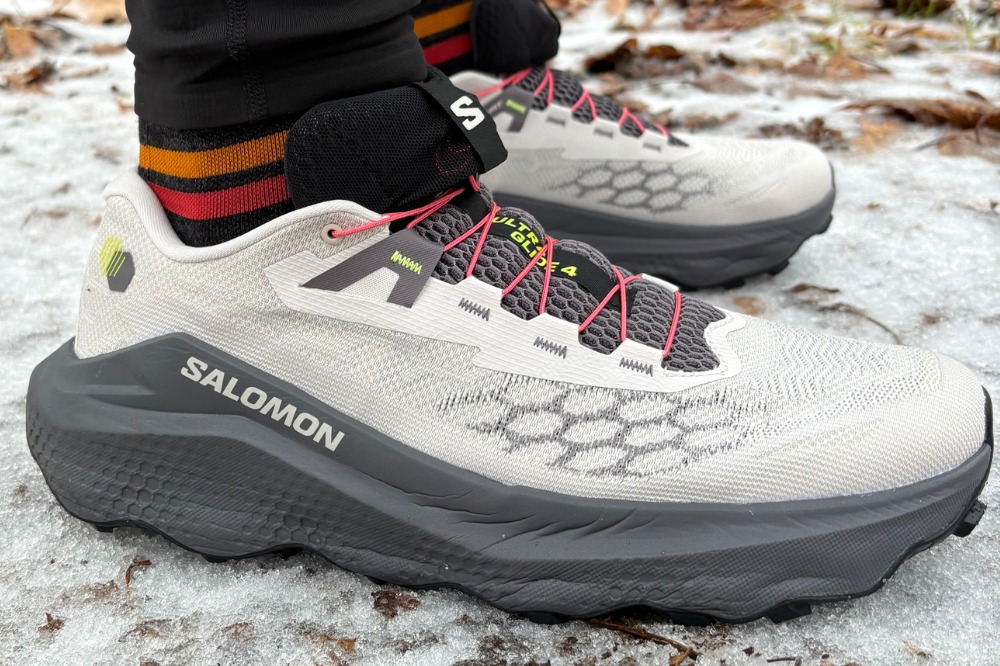
RENEE: The shoe fills a nice spot between the more technical Salomon shoes that I have (S/Lab Genesis, S/Lab Pulsar 4, or Sense Ride 5) and their more mellow “gravel” options (the Blaze GRVL and Glide GRVL).
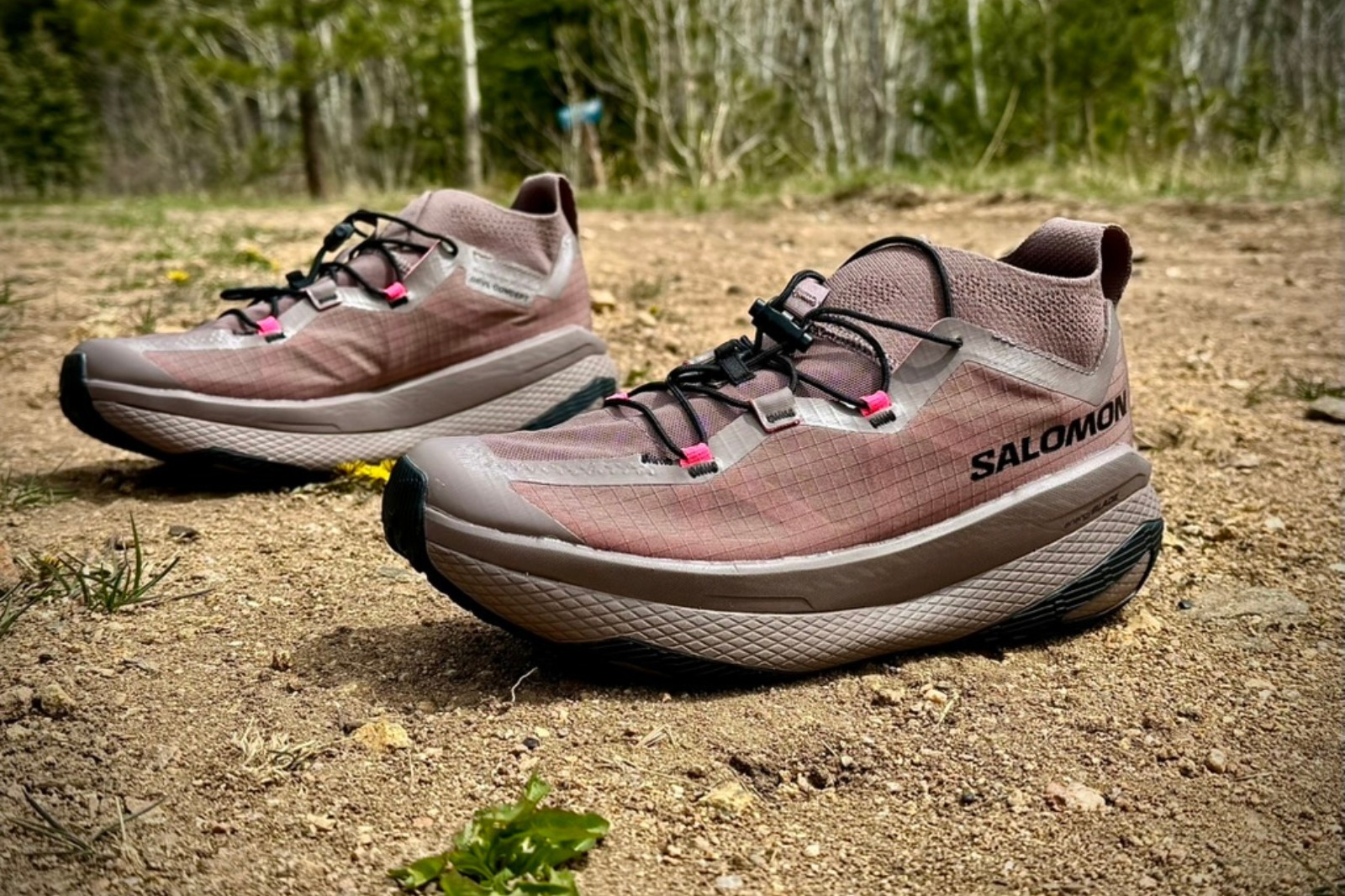
At first glance, the divots (i.e. RelieveSphere) on the outsole gave me unstable vibes. I don’t know the science behind that fancy name, but the shoe runs far less clunky than I would imagine for its stack. Actually, it’s not clunky at all. The outsole has full coverage and it’s flexible. There’s flexing underfoot when landing on uneven terrain, which is one reason the shoe runs well on single track for its stack.
And speaking of the outsole, the Contagrip feels tackier than I remember in a fresh pair of the S/Lab Pulsar 4 or S/Lab Genesis.
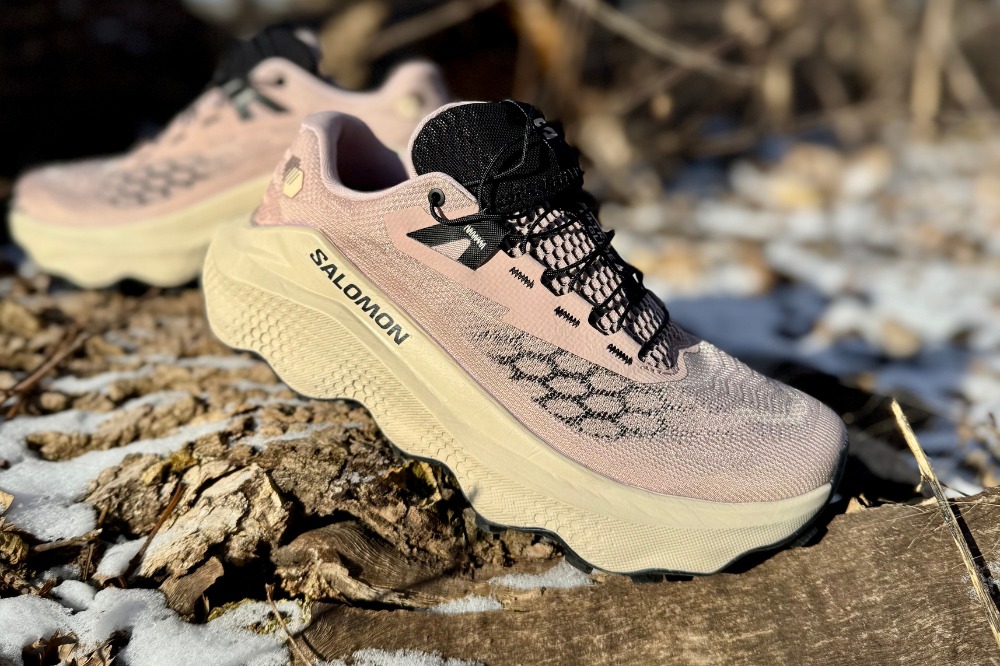
Underfoot, the OptiFoam is soft and it’s clear the Ultra Glide 4 is exactly as Salomon advertises: the brand’s most comfortable trail shoe. Soft and comfortable don’t exactly scream “technical” shoe but the midsole isn’t too mushy. I found the midsole of Glide 3 GRVL to be too soft and pliable for anything but the smoothest terrain, at which point I’m wearing a road shoe. As someone who runs gravel and trail, I’d rather buy the Ultra Glide 4 and skip the Glide GRVL.
The platform width is average, so it’s not hard to land confidently on uneven single track as compared to high stack shoes with a wide base (TNF Altramesa 500 v2, for example). The upper’s security aids with the shoe’s ability to navigate technical terrain. The geometry is traditional, no rocker, which works better for me than the Hoka Speedgoat (I haven’t run in the new v7 yet).
SAM: I’ve been a huge fan of both the design and colorway of most Salomon trail releases over the past few years, and the Salomon Ultra Glide 4 is no exception. Of particular note are the colorways, which are all muted earth tones except for the red/white that’s reminiscent of the similarly very attractive S/Lab Ultra Glide. The single layer woven mesh in the upper is similar to what we’ve seen in some Topo Athletic shoes like the Vista, where the tightness of the weave varies across the upper to allow for targeted ventilation. And, one of the side effects of a chunky, wavy midsole is that it’s eye-catching.
On the technical side, the attractiveness of the upper covers a characteristically secure Salomon fit that has enough lockdown to feel comfortable on technical sections, but with enough room through the entirety of the last. I definitely prefer this toebox to other slightly more slim optionsI’ve tried from Salomon recently, like the S/Lab Ultra Glide or the Genesis. Even with a little more room the Ultra Glide 4 is structured through the heel, despite the simplicity in the upper. It fits true to size.
I’m still a big fan of the RelieveSphere midsole. The new Optifoam blend feels like the Energy Foam found in the Salomon Genesis more so than the new Optifoam found in the Aero Glide 3 GRVL, but holds up a bit better over time than Energy Foam and has a touch more energy return. It’s definitely softer than the dual foam configuration in the S/Lab Ultra Glide, and there’s less pop to this foam, but I think the overall comfort of the midsole is boosted by the softer foam.
I cannot emphasize enough that this RelieveSphere thing isn’t a gimmick, although it screams gimmick loudly. It truly diffuses uneven impact over time. Just like in the S/Lab Ultra Glide, this shoe is nearly more comfortable on uneven rocks than on flat ground. That means that the Ultra Glide 4 is a big miles shoe that services just great on moderately technical terrain. It probably falls just a bit short of being a full high-stack skyrunner, but it’s not sold to be that.
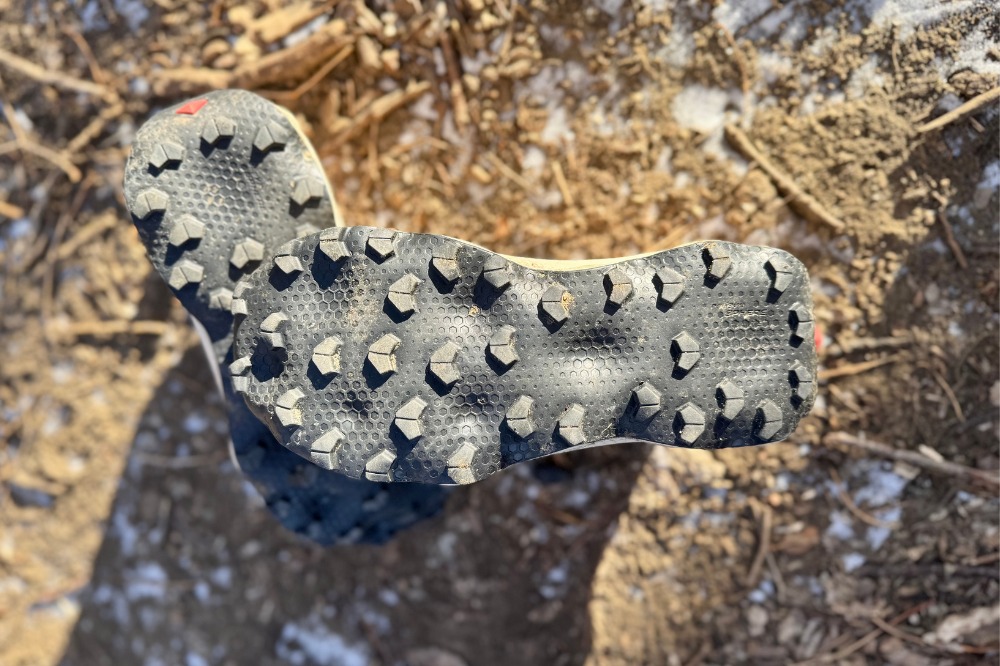
I agree with Renee that the full soleplate of Contagrip seems stickier here. Pretty solid grip in all conditions, for the most part. Durable enough for long haul trail use. I’m seeing a little bit of wear after about 50+ miles on varied terrain, but no real shaving on the lugs. This is good, because there aren’t many of those lugs on this thing.
CHAD: If you’ve not read my road running shoe reviews before, if a shoe strikes my eye from an aesthetics standpoint, I usually start my commentary there. Well, consider my eyes struck because I think Salomon put together a really good looking shoe in the Ultra Glide 4. I received the Lilac Ash/Excalibur/Pink Yarrow (read: off-white upper, grey midsole and accents, and pink lacing system) colorway, and everything goes together quite nicely. Having seen the technical specs sheet, there’s not a bad colorway of this shoe. Also, as an aside, the shoe comes in a wide version, in this colorway, labelled as being unisex.
But the looks department is only the start of Salomon’s success with the Ultra Glide 4. This shoe is as comfortable on the foot as almost any road shoe I’ve worn, regardless of the terrain that I was running on. The Ultra Glide has a Contagrip outsole with 4mm lugs providing full length coverage for surefootedness in nearly all conditions. I took this out for a 10+ mile run the day after a half inch of freezing rain fell, on a mix of technical trails, some bouldering sections, gravel trails, and smooth single track. At no point during the run did I have any concerns or issues with traction. My last run in the shoe prior to review was a warm, 50-degree day where the paths had thawed and were muddy, and once again, I had very little concern, other than some sliding on some descents in the mud (but that can’t really be helped).
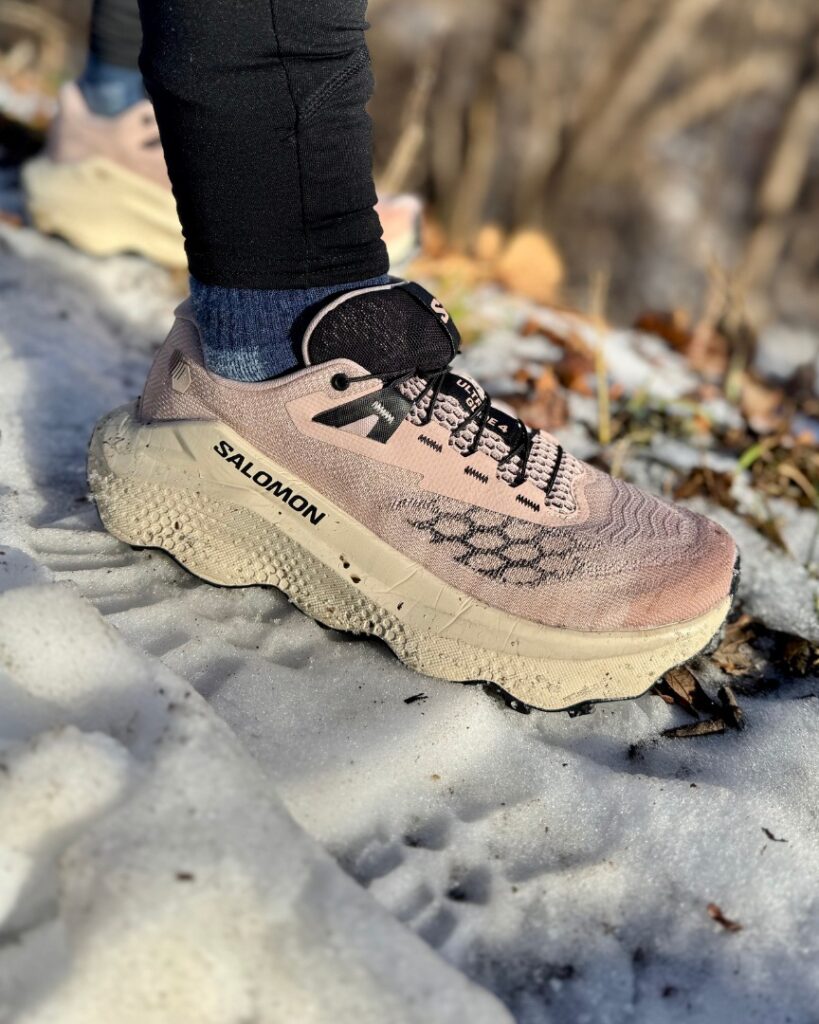
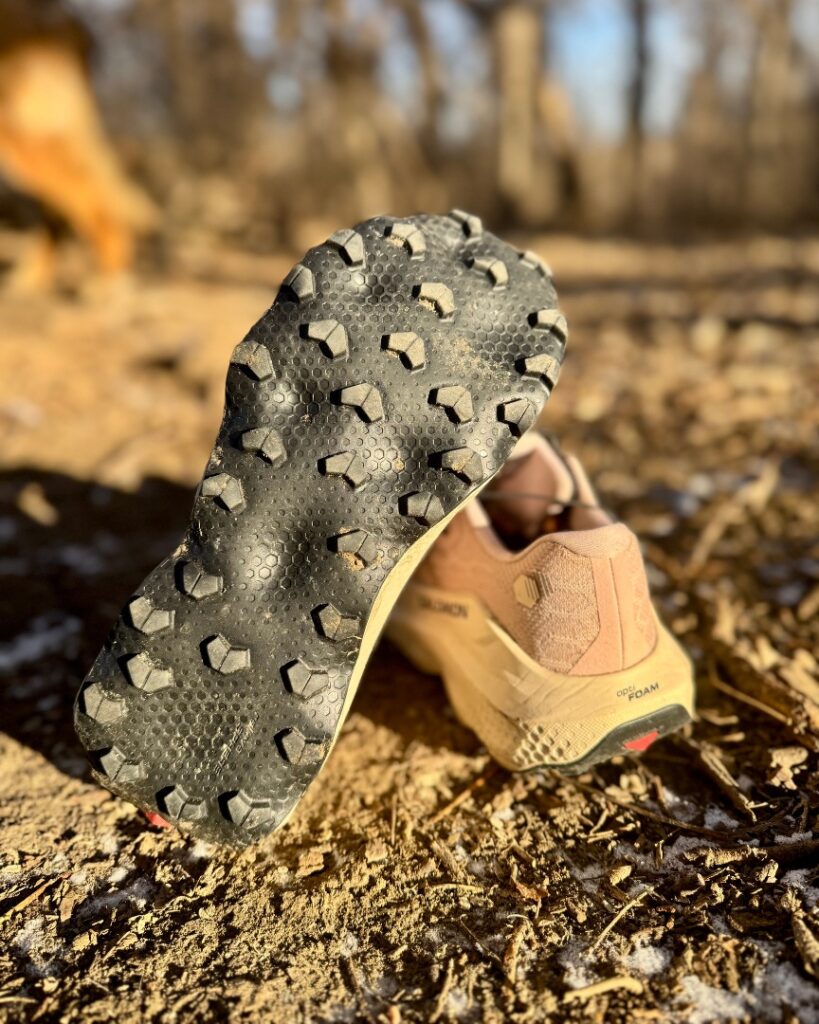
The upper definitely fits the bill as being breathable as well. I could feel the colder winter air on my toes, which made me thankful for merino wool blend socks. That said, it’ll feel really great come summertime. I think the thin, yet secure, breathable upper helped Salomon shed weight, with a US M9 coming in at 9.9 oz., a pretty shockingly low number considering the full length outsole and 41mm/36mm stack height. The OptiFoam midsole material is plush and comfortable underfoot without sacrificing stability, something a new trail runner like me definitely needs as my ankles get used to the terrain.
I could see this shoe being one that would be great for longer distance training runs or even ultra racing, if comfort underfoot is your main concern. And while I was skeptical that the dimples/divots on the bottom called RelieveSphere would make any difference regarding avoiding pressure points, even on parts of the trails where I was climbing over rocks or downed trees I never felt any significant pressure on the bottom of my feet. Not sure how they came up with it, but they really do help disperse the load you might feel underfoot on certain terrain.
Lastly, Salomon’s QuickLace system is one of my favorite things about this shoe. Once dialed in, the laces hold the foot securely in place, and the little pocket on the tongue to hold the excess lacing material is a nice touch. The last thing I would want to worry about on the trails would be the sensation of that bouncing around on the top of my foot or possibly getting snagged on something.
Shop The Shoe - Men Shop The Shoe - Women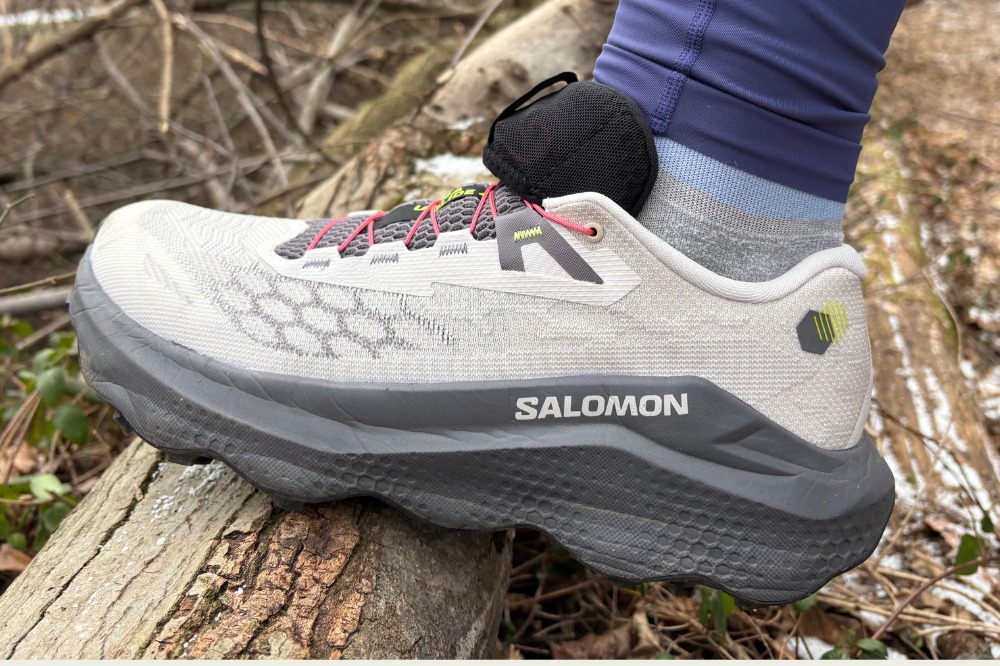
RENEE: Salomon’s quick laces always secure my feet better than I assume, but getting the laces into the garage is a hit or miss. The S/Lab Pulsar 4 is the only garage where tucking the laces is quick and easy.
For the Ultra Glide, I pull the laces tight, and I have to fiddle to get them tucked in. It’s like putting a sugar-high toddler to bed on Christmas Eve. You can do it, but it gets frustrating and takes time.
The Ultra Glide 4 is not a lightweight shoe, although it’s on par with similar shoes and lighter than a few other beefy trail shoes. It’s much lighter than the Hoka Mafate 5 and Merrell MTL Adapt Matryx. The Mafate 5 has a firmer and more dynamic midsole, and it’s a touch easier to control on uneven terrain for that reason. But it’s heavy. The MTL Adapt Matryx is more shoe than I need and it felt clunky. Same with the Nike Zegama (v1).
The forefoot might be narrow for some runners. I recently reviewed The North Face Altamesa 500 v2 and the Altra Timp 4, both shoes with wide to roomy toe boxes. In comparison, the Ultra Glide 4 is narrow, which is not an issue for me. I actually think the narrower shape helps the shoe’s stability on single track, given its stack and softer midsole.
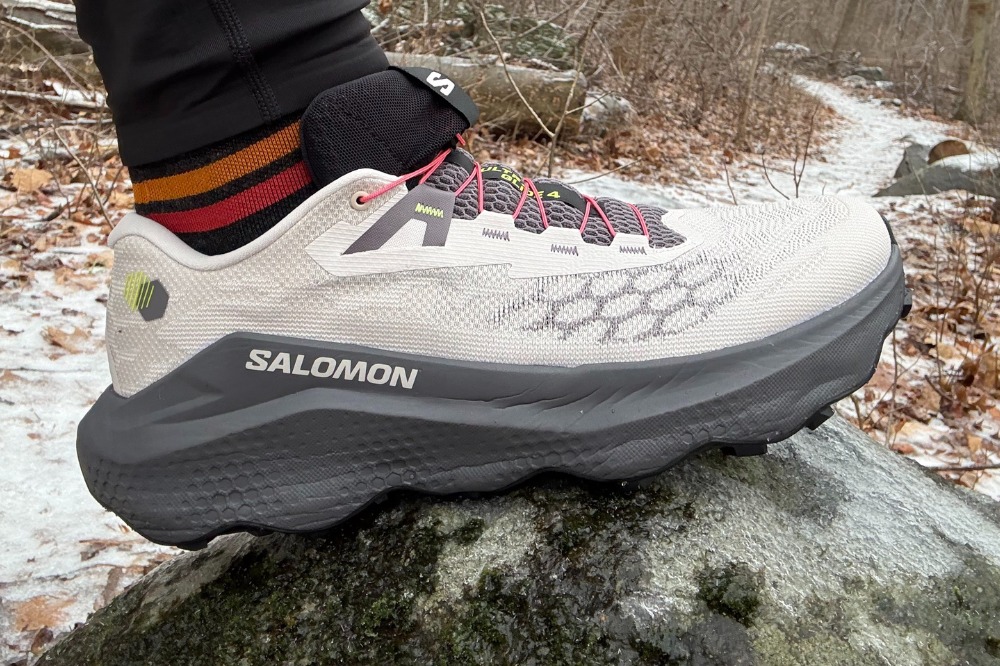
If you have wide feet, the forefoot and midfoot might be too narrow, on par with Salomon’s S/Lab shoes although not as tight. If that’s the case, check out the wide version of the shoe.
As with any high stack shoe with a soft forgiving midsole, the shoe might be hard on the knees during steep, single track descents. My single track runs have short but constant ups and downs (200 ft per mile vertical gain) so this isn’t an issue for me, but as a mediocre runner I could see the shoe not being my top choice on mountain when the downhills last several miles at a time. On gentle downhills, not an issue.
For speed, a lighter shoe with a firmer, more dynamic midsole will be better, especially for short distances.
Honestly, there isn’t anything that’s definitely problematic about the Salomon Ultra Glide 4. This thing is the Phase 2 Marvel Movie of trail running shoes: it’s a shoe that will excel at all purposes. Just about everyone is going to enjoy it.
However, it’s just good enough that I want it to be truly, efficiently, great. I want the Ultra Glide 4 to be that shoe this year, and there are just a few things holding it back.
First, it’s just slightly too difficult to find a fully secure fit that’s actually comfortable. Sure, I can crank down the Quicklace and my feet don’t go anywhere, but my toes start losing feeling around mile 4. When I tighten the laces more reasonably I struggle to keep my heels set. They slide forward slightly on downhills, and I have some lateral play. As I said above, the lacing is more sustainable than what I experienced with the S/Lab Ultra Glide, it’s just not fully there yet.
Second, with the softer Optifoam, the RelieveSphere midsole geometry starts to show weak points, especially in the ball of my foot and my big toe. There’s a divot directly under my big toe, and at times when it compresses, it applies some lateral torsion to my toe. Part of my toe is on the regular thickness of foam, and the rest drops with the compression of the “sphere.” It’s not hugely problematic, but it’s not comfortable. There also aren’t any lugs directly under that big toe and I feel like the traction suffers some on toe-off because of this.
Speaking of lugs, there’s one measly lug directly under the ball of my foot behind my big toe, and that little lug was doing the Lord’s work on my runs. The wide lug spacing on the rest of the outsole is fine, but I feel like the ball of the foot could use a denser cluster of multidirectional lugs to really enhance traction and power from impact through to toe-off.
CHAD: It may just be that QuickLace systems are new to me, but I had to do a lot of fiddling when I was first trying this shoe on and before all of my runs. I originally erred on the side of having them too loose and had my foot not feeling super secure. Then I ended up finding myself on the opposite end of the spectrum and having them too tight and being a bit uncomfortable. Luckily the tongue was plush enough that I didn’t suffer lace bite, because the thin laces would probably destroy the top of my feet.
Shop The Shoe - Men Shop The Shoe - Women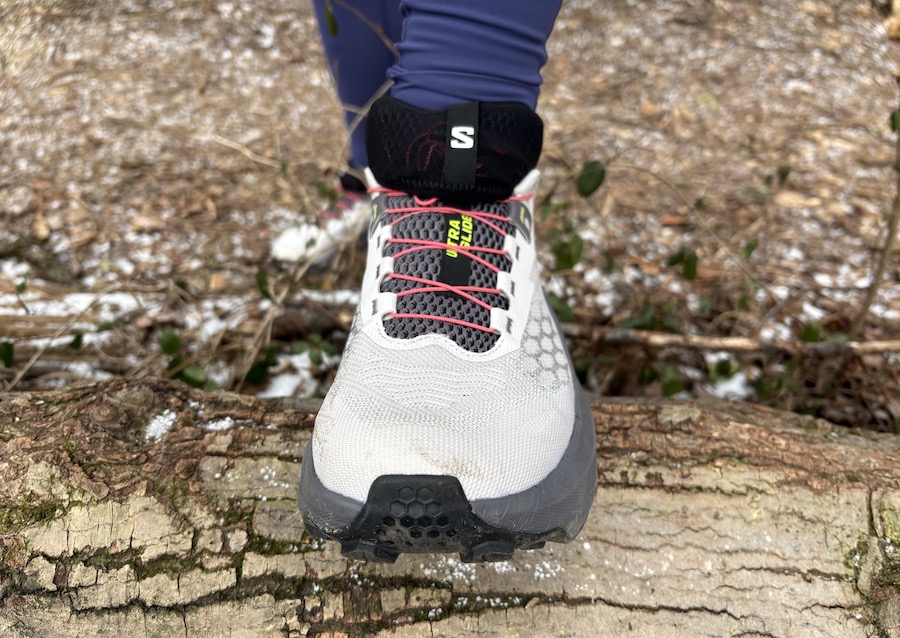
RENEE: If you want my honest thoughts about the shoe, please subscribe to my Patreon. Just kidding. I don’t have one. I’m just here to help.
The Ultra Glide 4 is for runners who need comfort from the upper and comfort underfoot. This is a comfort shoe.
The midsole is soft and forgiving but not too mushy, making it comfortable on uneven trails. I don’t have ankle issues, so as long as a high-stack shoe doesn’t have an overly wide forefoot, I don’t have problems with uneven landings. As with any soft midsole trail shoe, those with ankle problems might disagree with the shoe’s use on technical terrain.
The stack is moderate to high, so those who need ground feel and a firmer midsole for control on technical trail might look at one of the S/Lab options. The S/Lab Pulsar and S/Lab Genesis have notably better ground feel and running on steep switchbacks is far quicker and safer in those shoes. I don’t have the S/Lab version of Ultra Glide, so I suggest reading that review once it’s out.
For sizing, I tend to look at EU sizes for Salomon. I’m between half sizes in US sizing, and for the non S/Lab shoes, I prefer a half size smaller.
The forgivingness underfoot makes the shoe useful for easy to moderate terrain as well as more technical single track, so those running a mix of terrain can get good use from the $160 shoe. For daily miles and ultras, the Ultra Glide 4 is for comfort on trails.
SAM: I’m all in on the Salomon Ultra Glide 4. This is a shoe that takes new shoe tech from elite lines and deploys it in a way that’s accessible and eminently comfortable. There might not be anything inherently flashy about this new Ultra Glide, but it’s a near-perfect example of a versatile trail shoe. This will serve on all terrains for basically any distance. It would be great as a hiking shoe, but can also pick up the pace if you need a little more out of it.
Analogues right now would be the Topo Athletic Ultraventure 4, New Balance Fresh Foam Hierro v9, Brooks Caldera 9, and The North Face Altamesa 500 v2. Of these, it probably rises to the top for technical prowess, which is saying quite a bit, because those are some of the best trail shoes on the market right now.
CHAD: Well, it didn’t take me long to find my first favorite trail running shoe in the Salomon Ultra Glide 4. It is reasonably lightweight, had incredible traction in nearly all conditions I wore it in, and was as comfortable as nearly any shoe I’ve done my road long runs in. Plus, it looks really good, too. I think this shoe at $150 is an incredible value. I’ll be running my first 50K in May at the Dirty German in Philadelphia, a race that is mostly single track with some creek crossings and not a ton of vertical climb. Don’t be surprised if my race day photos show me wearing the Ultra Glide 4.
You can pick up the Salomon Ultra Glide 4 now for $150 by using the shop link below.
Shop The Shoe - Men Shop The Shoe - WomenHave something to say? Leave a Comment


Renee lives in rural Nebraska and runs on gravel roads that may or may not be maintained depending on the time of year. If she’s not running on gravel or dirt, she usually opts to run trails instead of paved roads. Fun face: every Boston-qualifying road marathon she has registered for has been canceled.
More from Renee


Sam lives in Baltimore with his wife and two kids and spends his days fixing espresso machines for Ceremony Coffee Roasters. He runs with the Faster Bastards when he can, races ultras, and has been working on completing the AT section by section. He thinks the best days are made of long miles on nasty trails, but that a good surf session, a really stunning book, or a day of board games are pretty all right too.
All-time favorite shoes: Saucony Xodus Ultra, Topo Athletic Ultraventure 3, Altra Lone Peak
More from Sam
An attorney by day, Chad lives in Central Pennsylvania with his wife and three kids. Never much for running growing up, Chad began running as a way to improve his physical health. He went from his first 5k in 2015 to running the Paris Marathon in 2016. Given his larger physical build, Chad is the resident Clydesdale runner, providing shoe and gear insights for those with a bigger build and taller stature.
More from Chad