Shop BITR Apparel Shop Now
We independently review everything we recommend. When you buy through our links, we may earn a commission.
10.4 oz. (295 g) for a US M9 / W10.5 (Unisex sizing)
41 mm in heel, 35 mm in forefoot (6 mm drop)
Long-distance trail runs and races
Dual-layer OptiFoam+ and OptiFoam midsole, RelieveSphere geometry, All-Terrain ContaGrip rubber outsole, Matryx upper
Available now for $250
TAYLOR: There’s constantly a tension within me between praise and improvement. Athletes tend to have that quality, and, in a healthy scenario, there’s an appropriate amount of positive and negative feedback that will push us forward. For me personally, this tension exists in my job, coaching, parenting, etc. It’s a very real human experience that you likely feel too.
As a teacher, coach, and parent, I used the phrase, “Try, try, and try again,” to motivate and illustrate the process of improvement. Whatever the endeavor, it’s rare that the desired outcome will happen the first time, may not happen the next, and it’s possible that the pursuit continues thereafter. In every attempt, it’s the trying that’s worth it.
This sentiment is certainly at the front of my mind whenever I pull the QuickLace system on the Salomon S/Lab Ultra Glide 2. This is actually the fourth iteration of this shoe, and only one (major) ingredient has really been changed each time. Each attempt has refined the recipe to be exactly what Salomon desires: a long-distance trail racing shoe that can access any terrain. From a purely human perspective, I really appreciate Salomon’s continual progression through each model.
CHAD: Boy, did I end up falling into the trail shoe review pool with both feet! Within just a few weeks of my joining the Dirt Division, one day, I had a very large package on my front steps. After bringing the box inside, the first shoe I pulled out was the Salomon Aero Glide 4 GRVL, a shoe which I gave very high marks and think will be in the upper echelon of shoes when it comes time to pick a shoe of the year; definitely will be a contender for best Hybrid/Gravel/Light Trail shoe.
The second shoe awaiting me in the box was one that none of us seemed to know was coming to me, the S/Lab Ultra Glide 2. Despite being new to the trail space, I am an avid reader of all of Believe in the Run’s content. I knew most of the background of the first S/Lab Ultra Glide, which unfortunately involved the need for the reissued Ultra Glide 1.5 to fix a wonky heel collar.
I had been lucky enough to review the regular Ultra Glide 4 as my first Dirt Division assignment, so I was thoroughly excited to give the elite, long-distance race day offering a try.
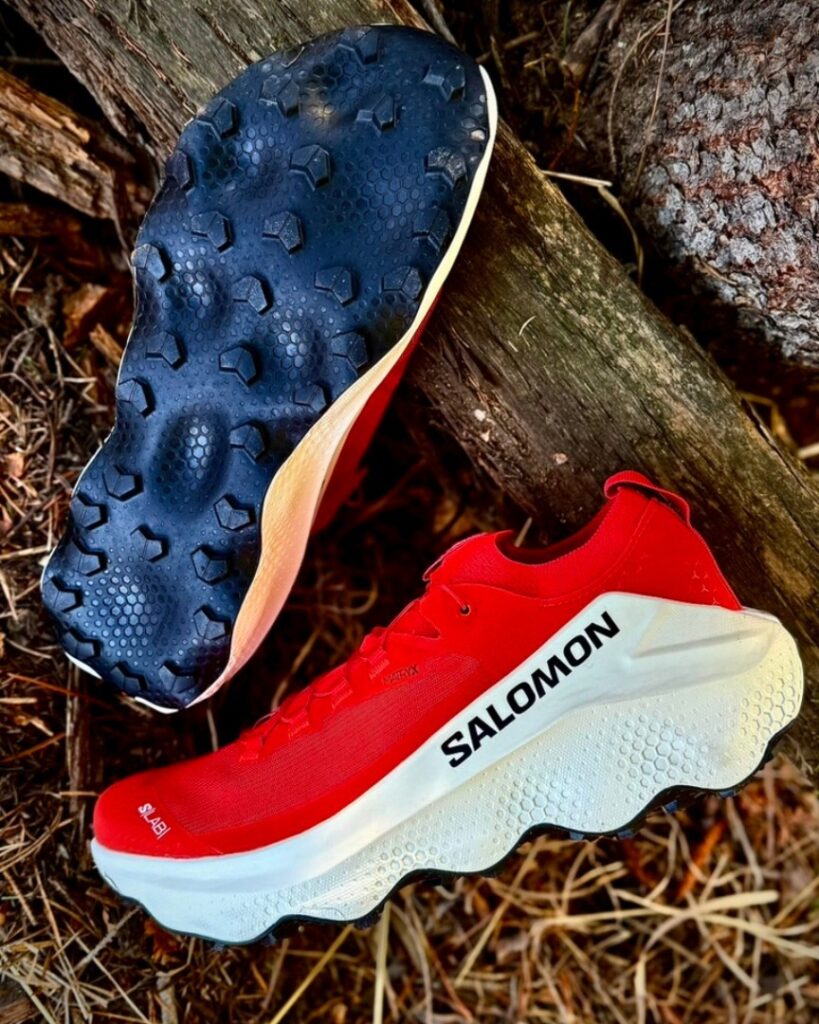
TAYLOR: Just as in the past three models, Salomon put the microscope on the S/Lab Ultra Glide 2. While the first version had some fit issues (specifically around the heel), the S/Lab Ultra Glide 1.5 drastically improved it, and now the S/Lab Ultra Glide 2 took it up a notch yet again.
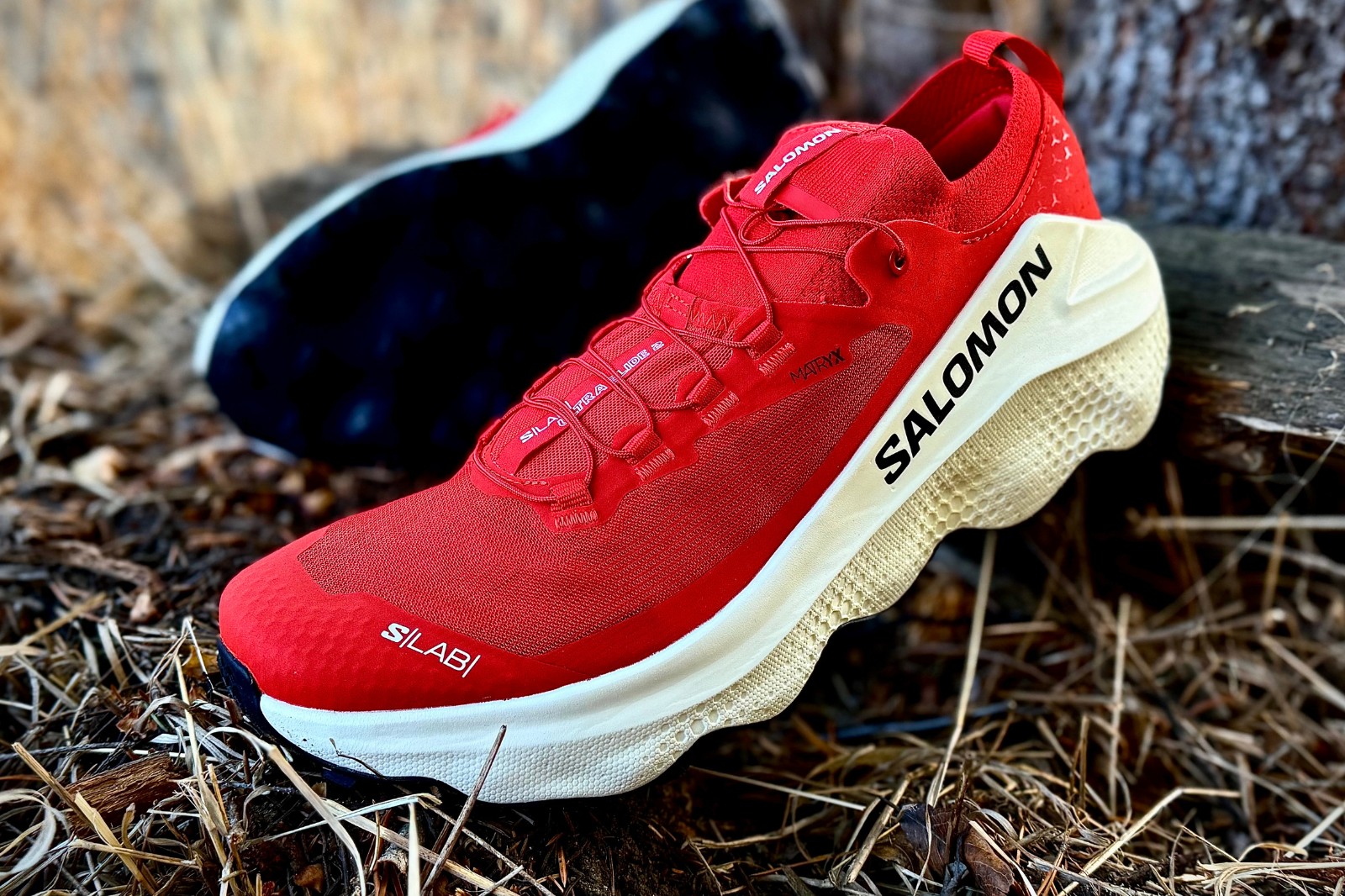
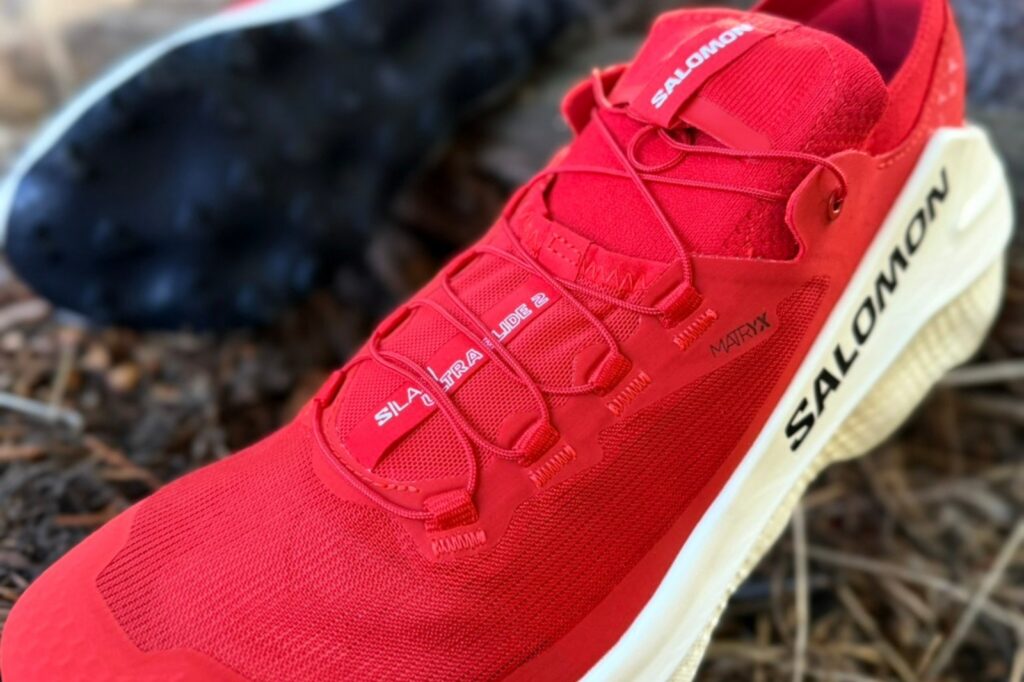
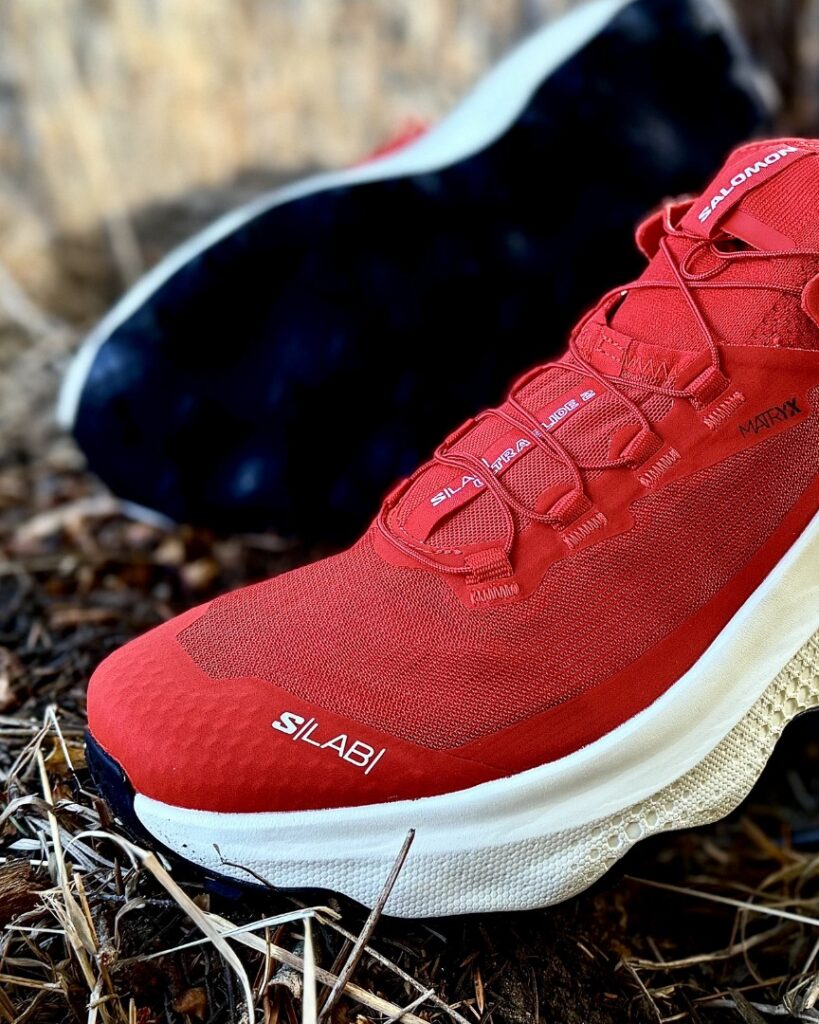
The new construction is very similar (read: nearly identical) to Salomon’s most popular race-day model, the S/Lab Genesis. It utilized a sock-like collar and integrated liner with Matryx Micro material over top. Both comfort and lockdown were achieved in a way that none of the other versions have, which left me thinking, “Why didn’t Salomon do this in the first place?”
One aspect that sets the two race models apart is that the S/Lab Ultra Glide 2 has a broader fit throughout to go the distance. It’s pretty consistent with the previous models, with a generous forefoot and gradually tapers closer to the foot through the midfoot and heel. It is one of the few fits in a max-stack trail shoe that is actually conducive to more technical terrain. What’s better is that I didn’t have to go on a golden goose chase to achieve the optimal fit either.
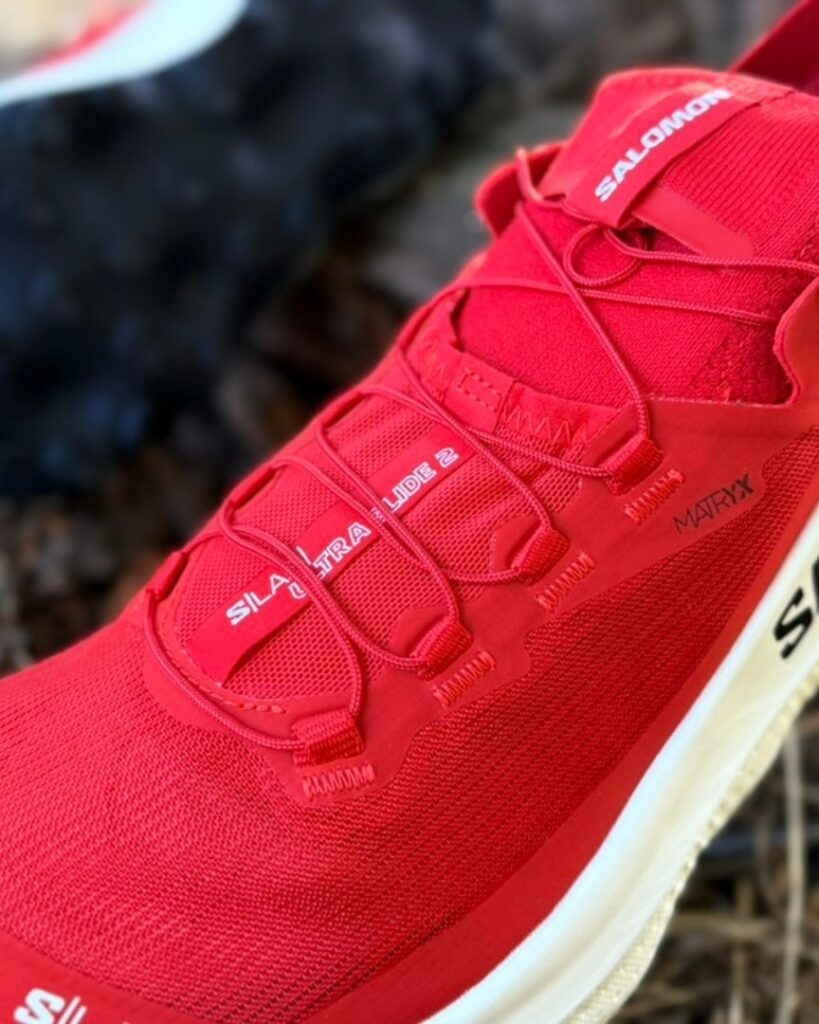
Even more so, there is extra padding in the heel and over the top of the foot that tends to be lacking in shoes that have an integrated booty/liner. I was able to cinch up the thin, durable Quicklace system without putting too much pressure on my midfoot or ankle collar. Two thumbs up for upper comfort.
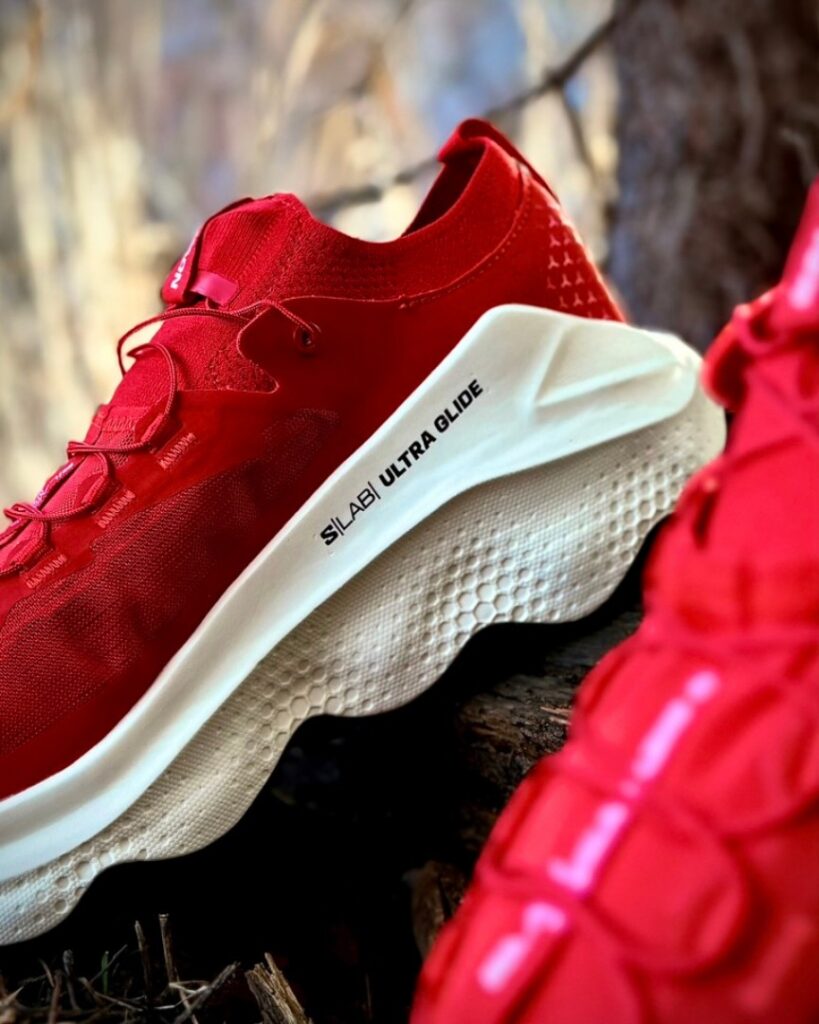
Doubling down on the upper, the Matryx material is known to be extremely durable, lightweight, breathable, and mapped well to the foot. All of those boxes are checked here, too.
Underfoot, the recipe remains the same as in previous iterations. While I am looking forward to how they will innovate this concoction, it still holds up as performance-oriented, thanks to high-quality foams, a unique design, and overall comfort. It’s a recipe that Salomon obviously believes in. I do too.
Runnability is important in a race-day shoe, wouldn’t ya think? Though this isn’t the lightest option on the market, it still runs extremely well because of the aforementioned foams and forefoot rocker. Downhills were especially fun to rip, while the rest of the terrain offered a comfortable, buttery ride.
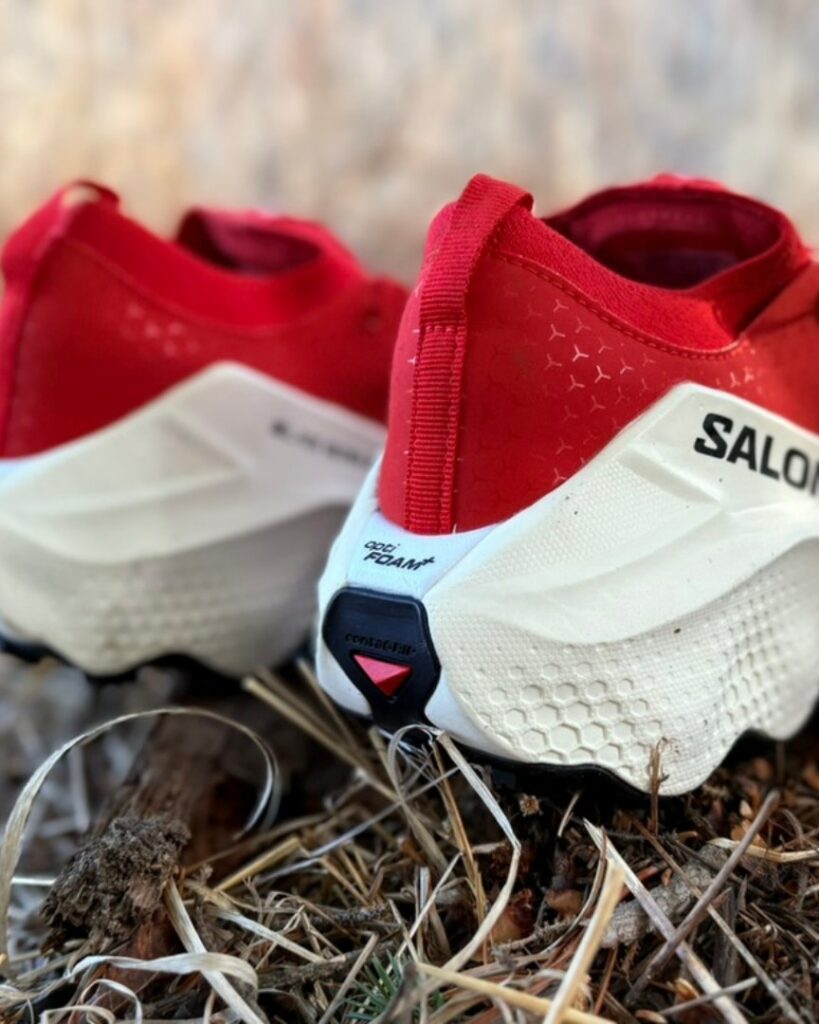
There are good reasons for these notable qualities. OptiFoam+ (the same foam found in the S/Lab Phantasm) is directly underfoot. It is their most dynamic foam with very high rebound and a soft sensation. In all versions, this is certainly a highlight that felt sensational and brought fun to the equation.
On its own, it might not be the best option for the trails; however, an OptiFoam carrier harnesses the high-quality characteristics properly. The wider platform and bathtub construction brought an appropriate amount of stability to the mix, helping you feel confident whether you’re on more techy stuff or hours deep into the run. In fact, there has to be some sort of kitty cat juju going on here. This shoe seemed so stable that it resisted any sort of tipping.
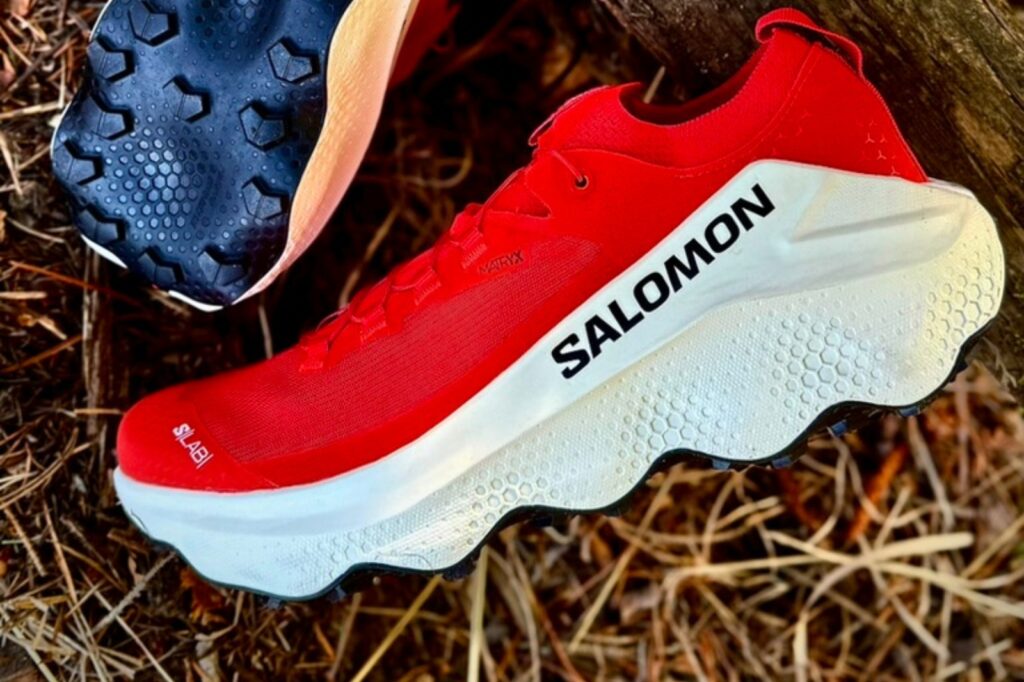
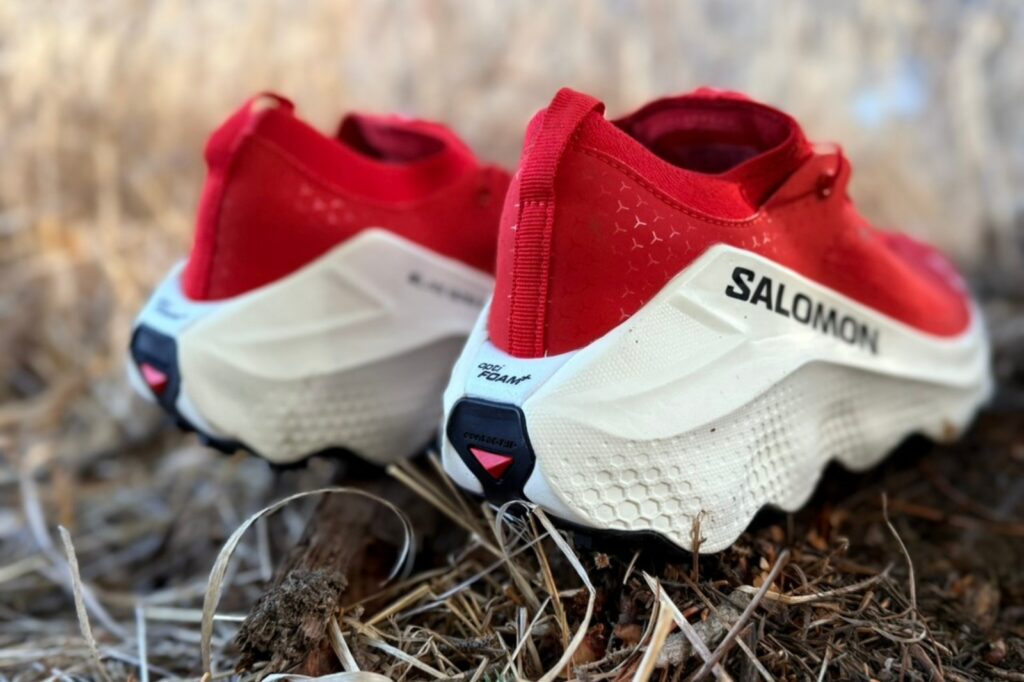
Typically, that kind of stability comes with an undeniable blockiness, but not here. Believe it or not, I think a lot of this comes from the complexities of the midsole’s geometry. These waves are not just for show. The Relievesphere actually created a monster-truck-like quality, allowing the S/Lab Ultra Glide 2 to roll over any terrain at a variety of speeds without consequences. Not only is this one of the highest-stacked trail shoes to date (41 mm in the heel to 35 mm in the forefoot), but it is the RelieveSphere that provides so much mile-to-mile comfort.
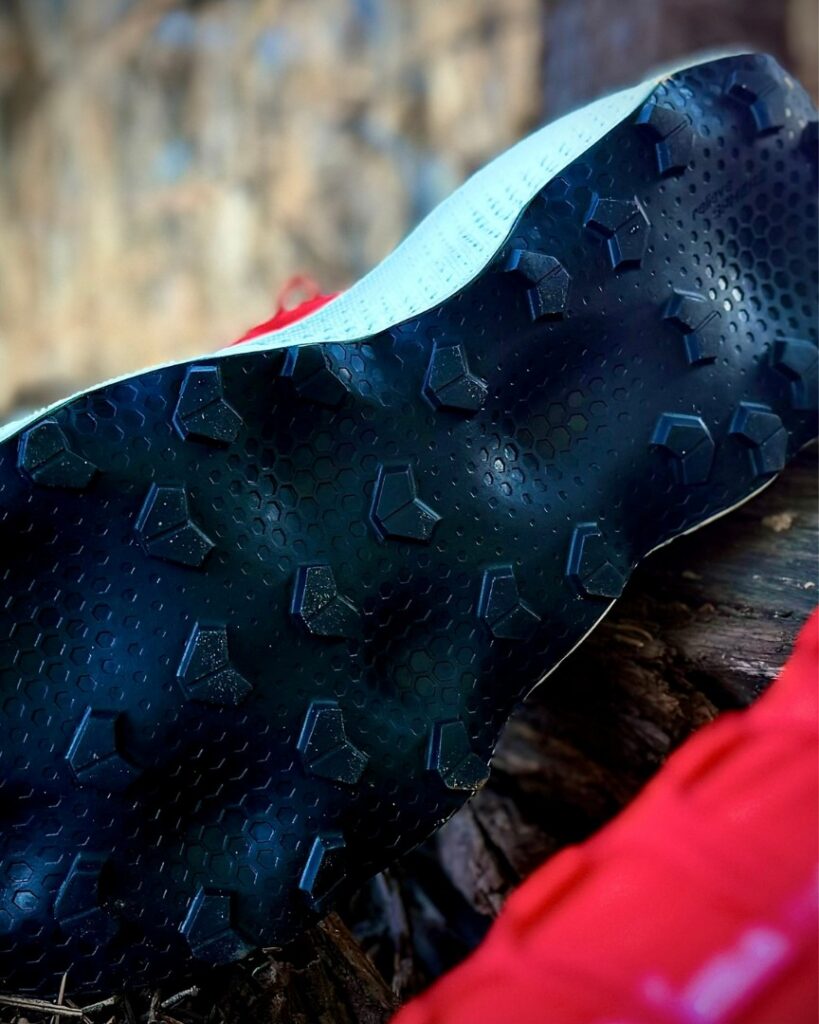
ContaGrip has had mixed reviews with us lately; however, the full coverage, 4 mm lugs, and extra support via the RelieveSphere left me quite satisfied with the performance. Maybe it’s not the grippiest, but it worked over a wide variety of terrain and conditions.
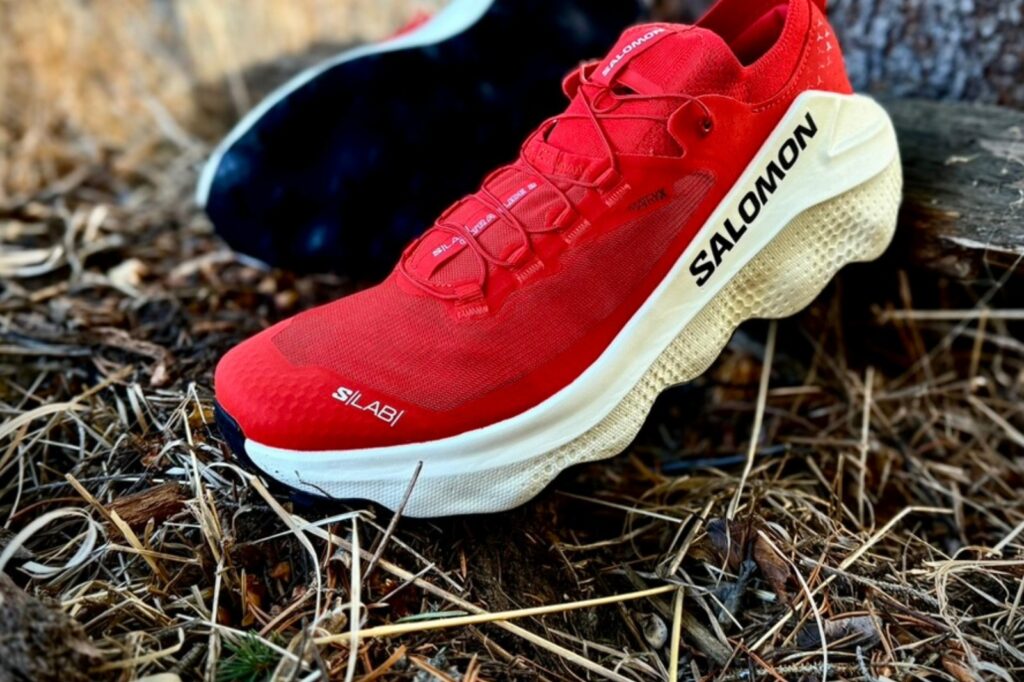
CHAD: I was glad I was able to get the S/Lab Ultra Glide 2 when I did in early 2026, because in Central PA, we had an absolutely brutal stretch of weather from late January through early March. To be frank, February sucked, and it meant that not a lot of time was spent out on the trails. However, I was able to get a good chunk of mileage in the shoe over several runs on varying terrain before the weather took a turn for the worse.
The best way I would describe the fit of the S/Lab Ultra Glide 2 is that it feels race-day ready. The upper is an incredibly breathable, lightweight Matryx mesh with a one-piece, booty-style construction. Salomon also continues its tradition with the QuickLace system, making the fit fairly easy to dial in consistently. The area over the top of the foot is padded just enough to avoid adding weight while providing protection, especially given the thin, harsh laces of the QuickLace system.
Despite sharing many of the same features as the Ultra Glide 4 (RelieveSphere dimples on the button, ContaGrip outsole with 4 mm lugs, and a generous stack height), the overall feel of this shoe is very different. While comfort is the main goal of the Ultra Glide 4, the S/Lab Ultra Glide 2 is definitely designed to move and move quickly. The midsole is Optifoam+, which is lightweight, responsive, and bouncy, giving that tip-of-the-spear feel for speed.
I noticed on sections of the trail where I felt confident in opening the throttle (which is not super frequent, given my meager trail experience) that the turnover of the shoe was akin to that of some of the race-day offerings you would find on the road. That RelieveSphere, which I worried was a gimmick on the Ultra Glide 4, is present on this model as well and helps provide a comfortable feel underfoot regardless of the terrain.
Shop The Shoe - Unisex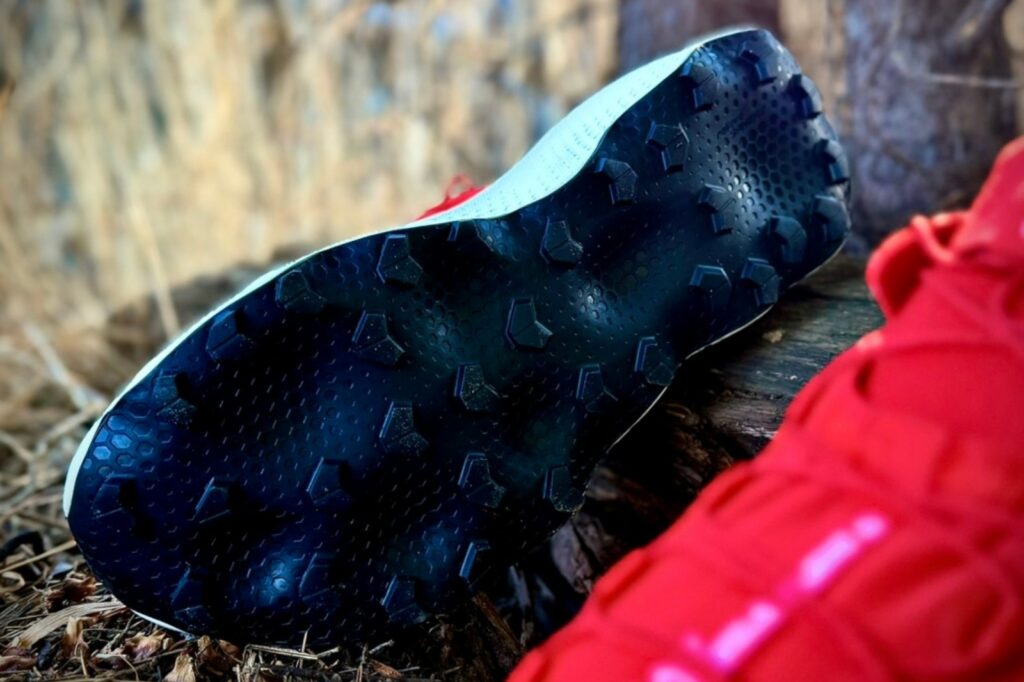
TAYLOR: The story arc of the Salomon S/Lab Ultra Glide series is basically that this upper construction is a hard one to nail down. It’s a whole lot of shoe that requires the extra thoughtfulness surrounding the upper. While this is, no doubt, their best application, I still had a little bit of heel rubbing.
Don’t be too alarmed — it dissipated after the first couple of runs. So, with some weathering and some anti-chafe cream, I’m fairly certain this is a solvable problem for most runners. After two more recent runs, I haven’t felt a thing. At the same time, keep this as a small note because of the fit history in this particular line.
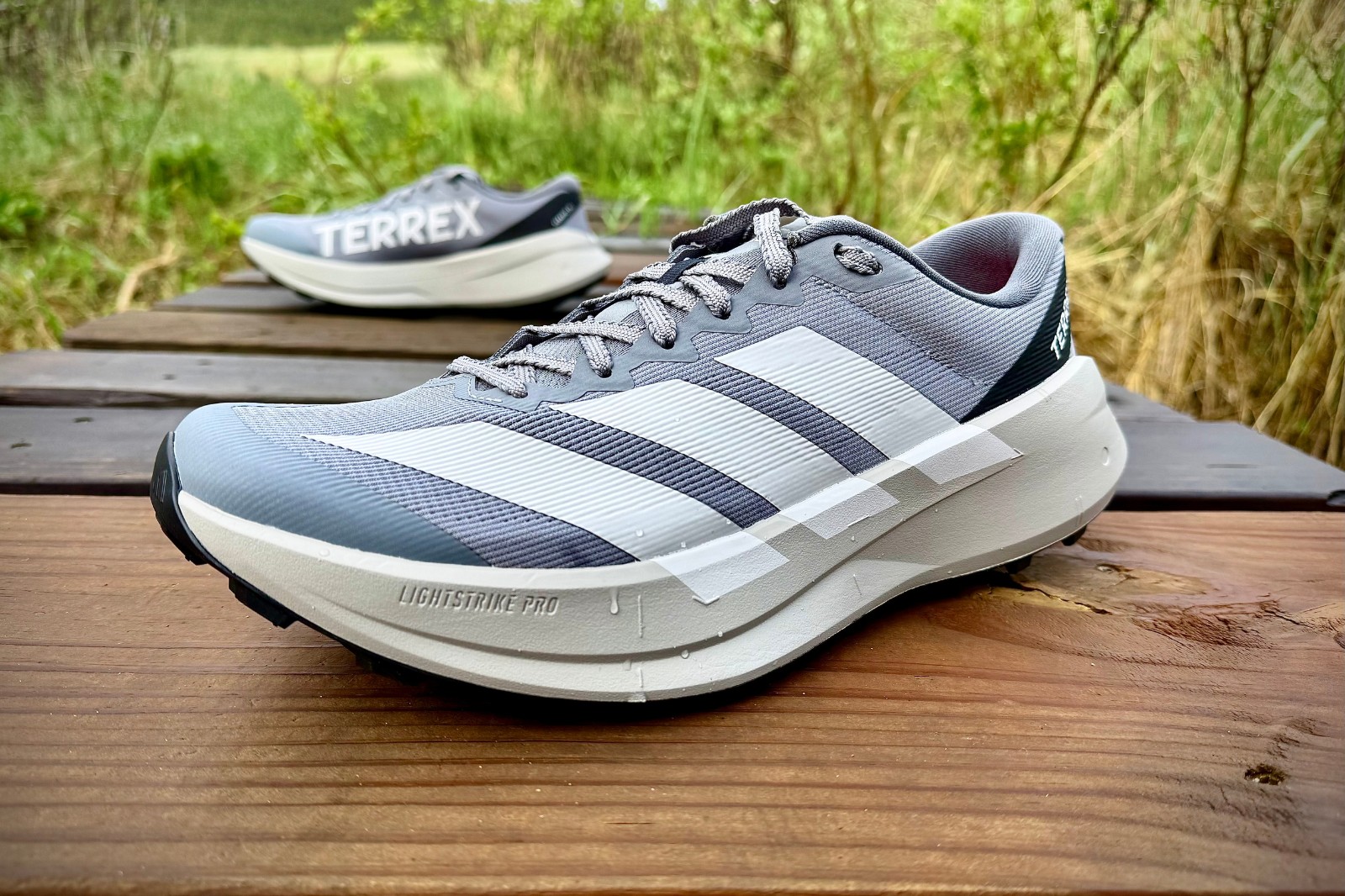
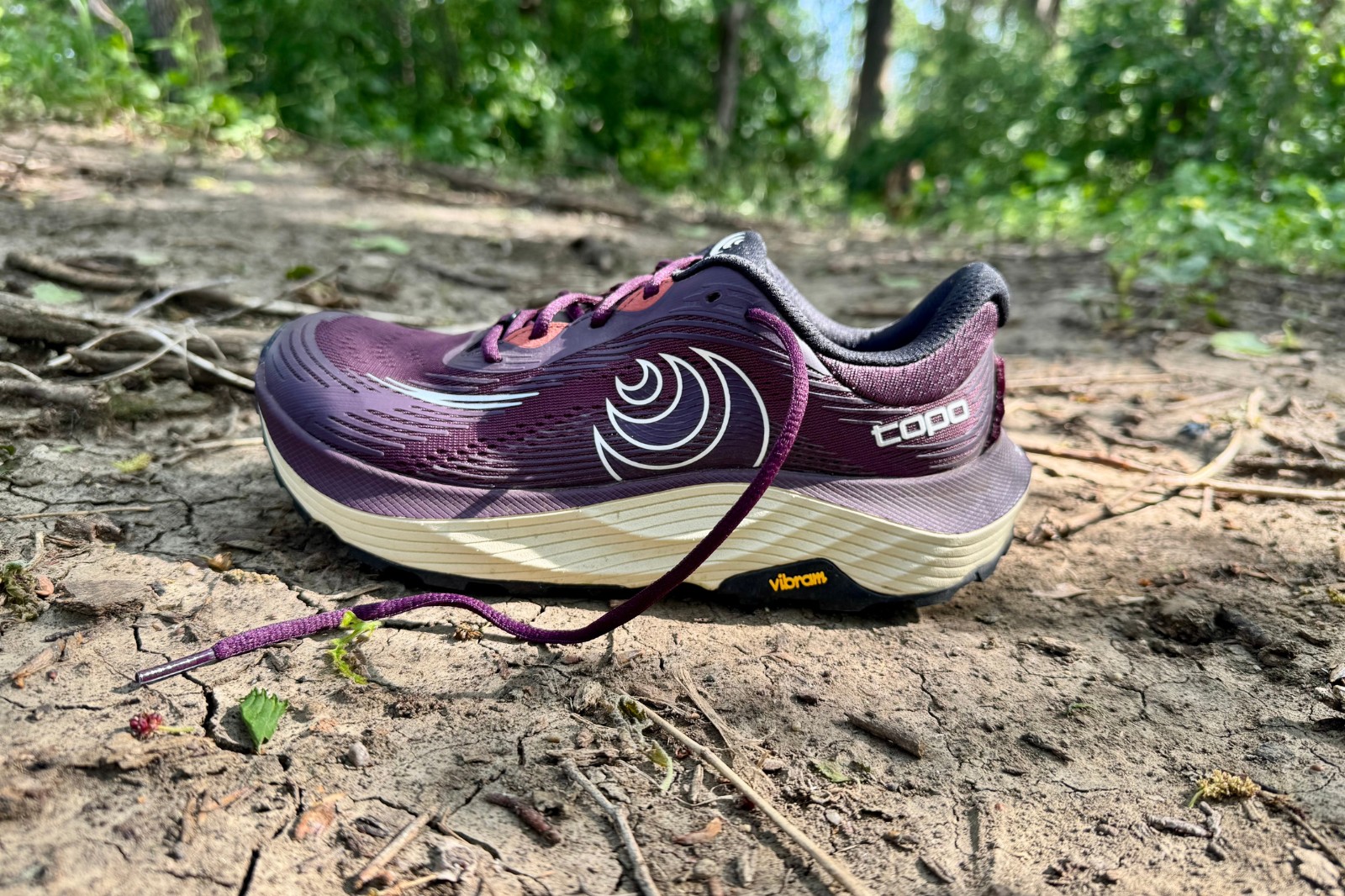
Another repeat offender for this series has been weight. It’s still a minor issue in the latest iteration simply because it’s one of the larger shoes and lacks some “race day dynamism” because of it; I’d argue most max-stack options do. At 11.2 oz. for a US M10.5, it is slightly lighter than many others in its category. The Hoka Mafate 5 weighed 11.8 oz; the Adidas Terrex Agravic, 11.5 oz; the Topo Athletic Vista, 12.2 oz. I could go on. I present all this more as a challenge, because I think this model could certainly optimize performance by bringing the weight down a little more. It’s something to consider as you’re weighing your options as a racer or everyday trail runner.
I can’t speak for everyone’s pocketbook. I would need a lot of good reasons to spend $250 on anything. Do I think the Salomon S/Lab Ultra Glide 2 has premium performance in its class? Definitely. Is it premium enough to undoubtedly choose over other fairly similar options? I’m not 100% convinced.
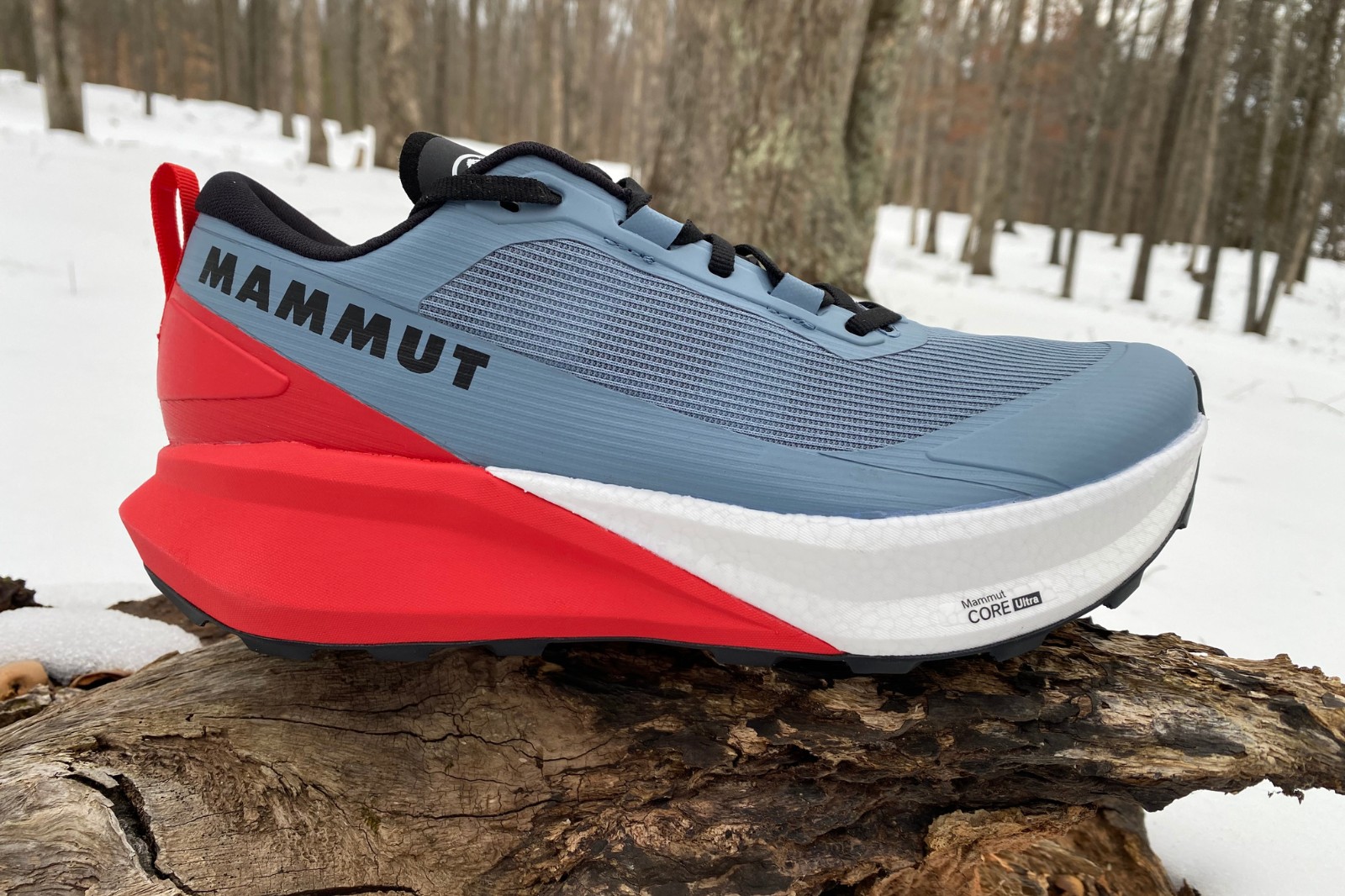
For those looking for the qualities that the S/Lab Ultra Glide 2 provides, you may be pleased enough with many options that perform similarly. I’d look at shoes like the Hoka Mafate 5 ($180), Adidas Terrex Agravic TT ($185), Topo Athletic Vista ($170), Merrell MTL Adapt ($180), and the Kiprun Kipsummit Max ($150), all of which come between $50-100 cheaper.
CHAD: As tends to happen, a race-day fit and race-day feel come with a sacrifice to comfort, and that is true here. On a double-digit trail run with fairly technical sections and some damp conditions, I got a gnarly blood blister on my right foot, adjacent to the base of my big toe, I believe, due to rubbing from the Matryx upper. That rubbing, unfortunately, was not limited to the forefoot, and I, like Taylor, also initially had some heel/ankle damage from the heel collar. Also, like Taylor, mine went away after a bit, so I think it could be a break-in thing.
One design feature that I think Salomon struggled with on the S/Lab Ultra Glide 2 was the excess lace pocket for the QuickLace system. On the Ultra Glide 4, there was a large mesh and elastic pouch at the top of the tongue, making it easy to tuck the excess lace in. On the S/Lab Ultra Glide 2, the pocket is underneath the lacing system, providing very little room to tuck the lace, which was incredibly difficult to use, especially with gloves.
I had to keep echoing Taylor, but weight is worth noting as well. Despite having OptiFoam+ and a Matryx upper, the S/Lab Ultra Glide 2’s weight feels similar to the Ultra Glide 4, which features a traditional mesh upper and OptiFoam. I would have expected the shoe to be a bit lighter based on those changes. That said, I don’t mind if a trail shoe carries a bit of extra weight, so long as it’s protective.
Finally, I will once AGAIN follow in Taylor’s footsteps, and harp on the price… $250 is a lot of money for this shoe (or any shoe for that matter). Truth be told, and this may simply be because I’m very new to trail running, I didn’t see enough benefits from the S/Lab Ultra Glide 2 to justify paying $100 more than I’d spend on the Ultra Glide 4.
Shop The Shoe - Unisex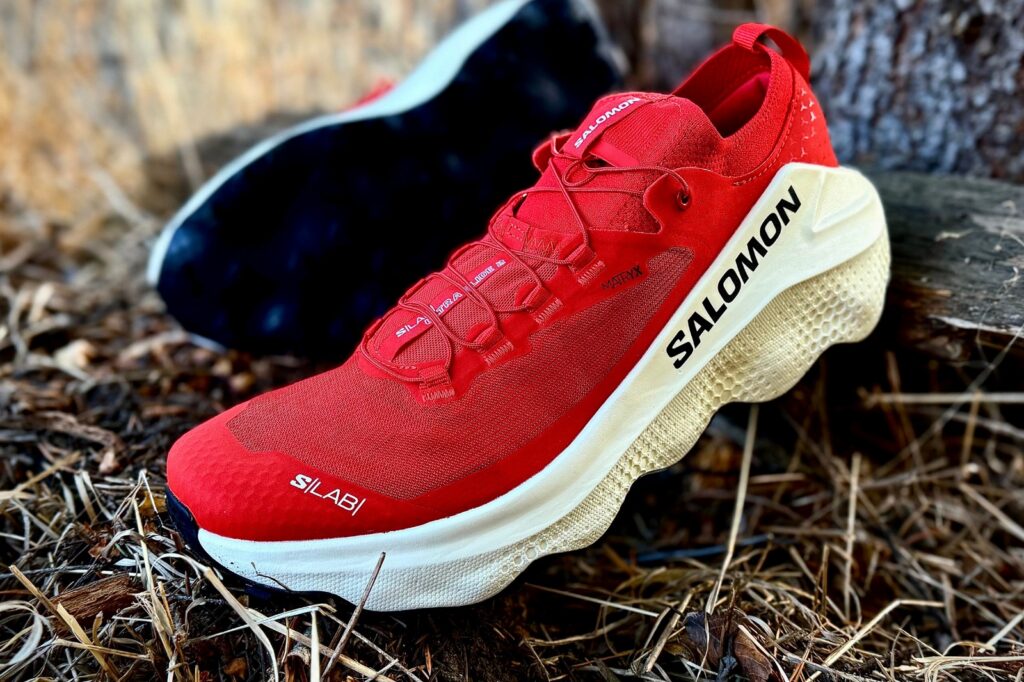
TAYLOR: At the end of the day, the Salomon S/Lab Ultra Glide 2 is absolutely a max-stack racing option that has the capabilities to go long and feel good. That’s exactly what Salomon wanted this line to be about. For that, I give major kudos!
I think it’s a more versatile option than many in its category, thanks to the renewed fit that adds a whole lot of function. Of course, we can’t forget to give proper snaps to the tried-and-true midsole concoction.
If comfort, stability, security, and fun are a mix that interests you, I don’t think you can really go wrong with the Salomon S/Lab Ultra Glide 2.
CHAD: The S/Lab Ultra Glide 2 is a very good shoe, and from what I read of the first version and the 1.5, it definitely seems like Salomon is making strides with this model. The ride was smooth and fairly comfortable, and I felt steady when I attempted to pick up the pace on smoother sections of the trails I run on. While there were some fit/design-related issues that I think were just personal to me, this shoe performed as I expected. Ultimately, deciding to buy this shoe will require a big commitment at $250, especially given the plethora of options in the trail-shoe market.
You can pick up the Salomon S/Lab Ultra Glide 2 for $250 from Salomon by using the buttons below.
Shop The Shoe - Unisex
Salomon S/Lab Ultra Glide 2 | First Thoughts
Have something to say? Leave a Comment
Sign in or create a free account to comment. You'll come right back here.
Sign in / Sign up


Taylor Bodin is a trail and ultra runner living in Estes Park, Colo., with his wife and daughters. As the head of the Dirt Division at Believe in the Run, trail running is pretty much the only hobby he can manage right now and loves it. Every so often, he will pop off a race or FKT attempt because competition is pure and the original motivator for him getting into running anyway.
More from Taylor
An attorney by day, Chad lives in Central Pennsylvania with his wife and three kids. Never much for running growing up, Chad began running as a way to improve his physical health. He went from his first 5k in 2015 to running the Paris Marathon in 2016. Given his larger physical build, Chad is the resident Clydesdale runner, providing shoe and gear insights for those with a bigger build and taller stature.
More from Chad
Be one of the first runners to rate it.


S/Lab Genesis upper on the S/Lab UG? Yes please, and thank you… great freaking shoe!!!