Shop BITR Apparel Shop Now
We independently review everything we recommend. When you buy through our links, we may earn a commission.
10.5 oz. (297 g) for a US M9 / 9.5 oz. (265 g) for a US W7.5
25 mm in heel, 17 mm in forefoot (8 mm drop, midsole only)
Gravel roads and light trails
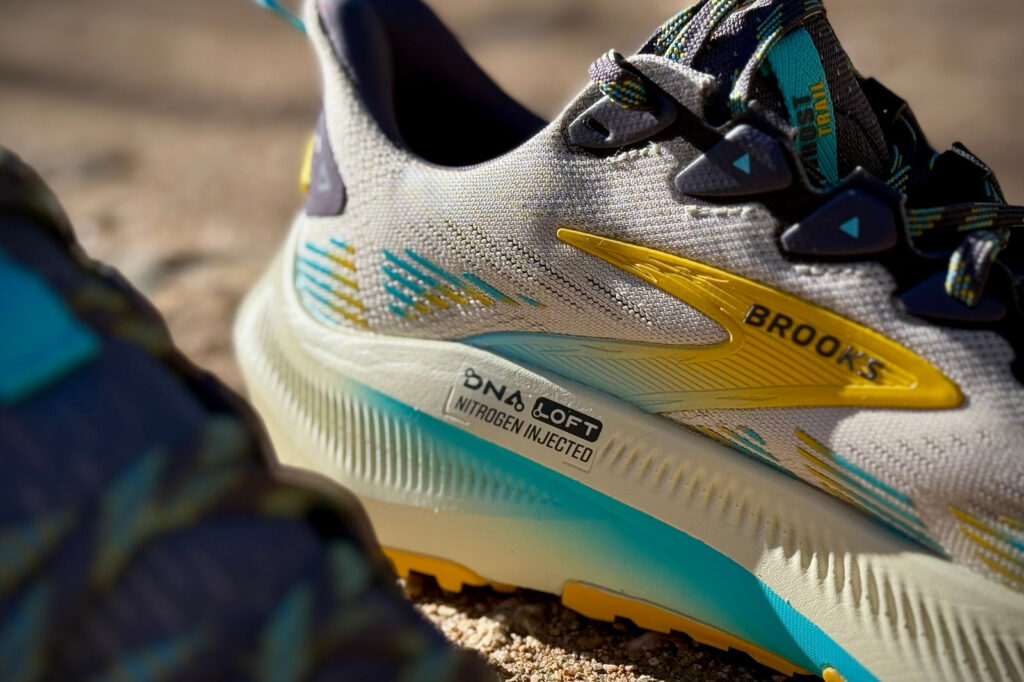
DNA Loft v3 midsole, TrailTack Green outsole
Available now for $149
SAM: The gravel shoe has come into its own. I can’t track how many reviews this year we’ve written that involve some variation on “hey, this hybrid/road-to-trail/gravel shoe is actually good and not some lesser amalgamation of two purposes.” Until recently, the best gravel shoes had been trail shoes that really shone on flat ground, such as the original Hoka Tecton X. Most everything explicitly made to be a hybrid shoe felt like a werewolf stuck halfway through its transformation.
Gravel shoes were nearly always the unfinished, lesser parts of both road and trail shoes, stuck in a weird, unfinished limbo. But now we’ve fully transitioned, baby. The gravel shoe has come into itself, and we’re finally (hopefully) settling on that “gravel” as the name for the category. These are the shoes that run well on roads and trails. They usually feature comfortable cushioning underfoot, some aggressiveness in the outsole, and an upper that is both comfortable and forgiving, yet provides enough lockdown to navigate uneven surfaces.
As the categorization has hardened and shoe technology has caught up with the dreams of a “do-it-all” shoe, it seems like every company has hopped on board the gravel train. And we’ve gotten some bangers out of this upswing. Just this year, we have the Craft Xplor 2, the Mount to Coast H1, the Scott Pursuit Gravel, and the Salomon Aero Glide 3 GRVL.
In defiance of the above naming convention, Brooks is jumping farther into the space that all these great shoes have filled with the new Ghost Trail (to be fair, Ghost Gravel sounds like a trap you’d roll out of a “?” box in Mario Kart). Brooks already offers the Divide, their budget-friendly intro trail runner, which is now in its fifth iteration.
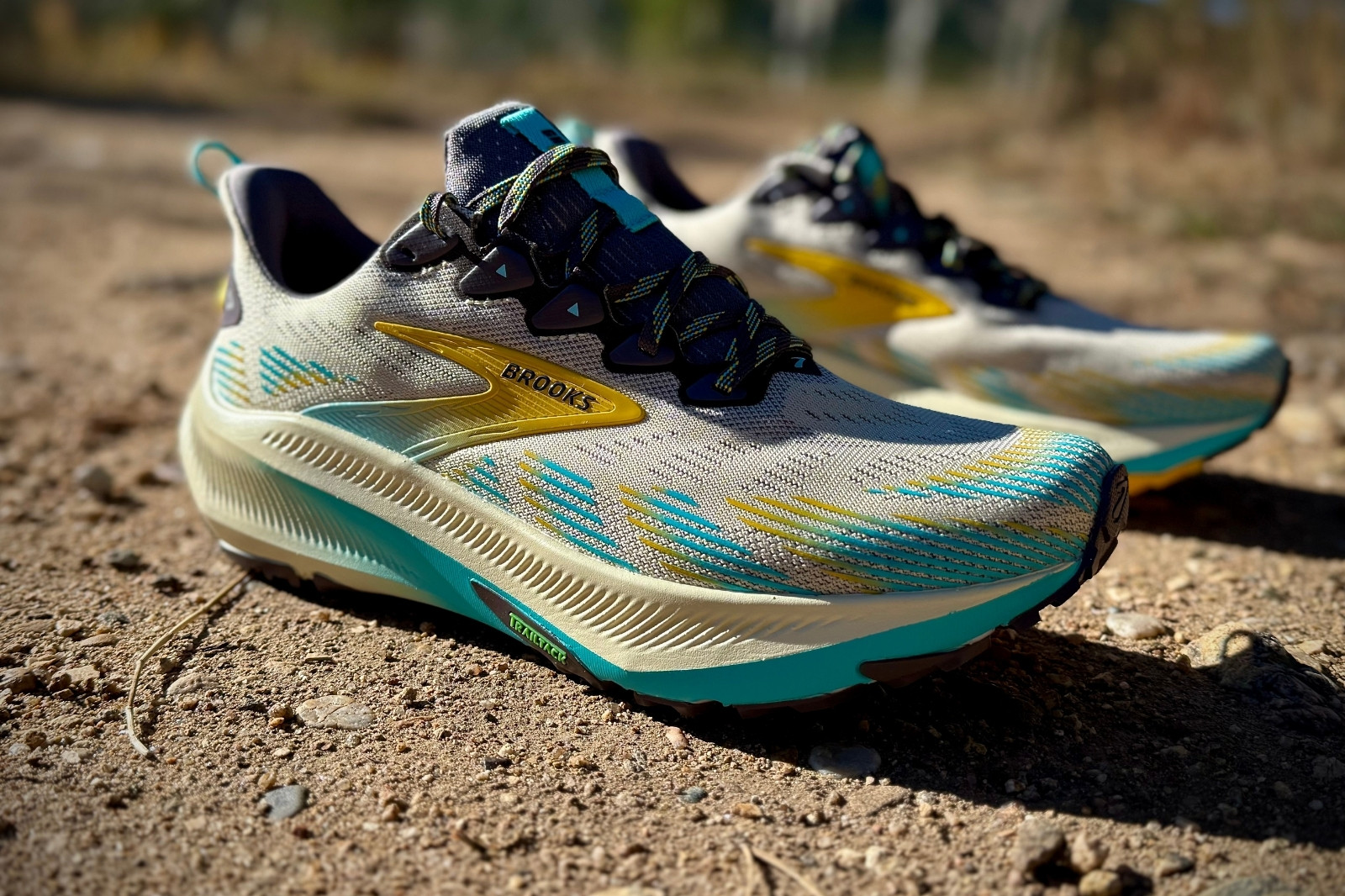
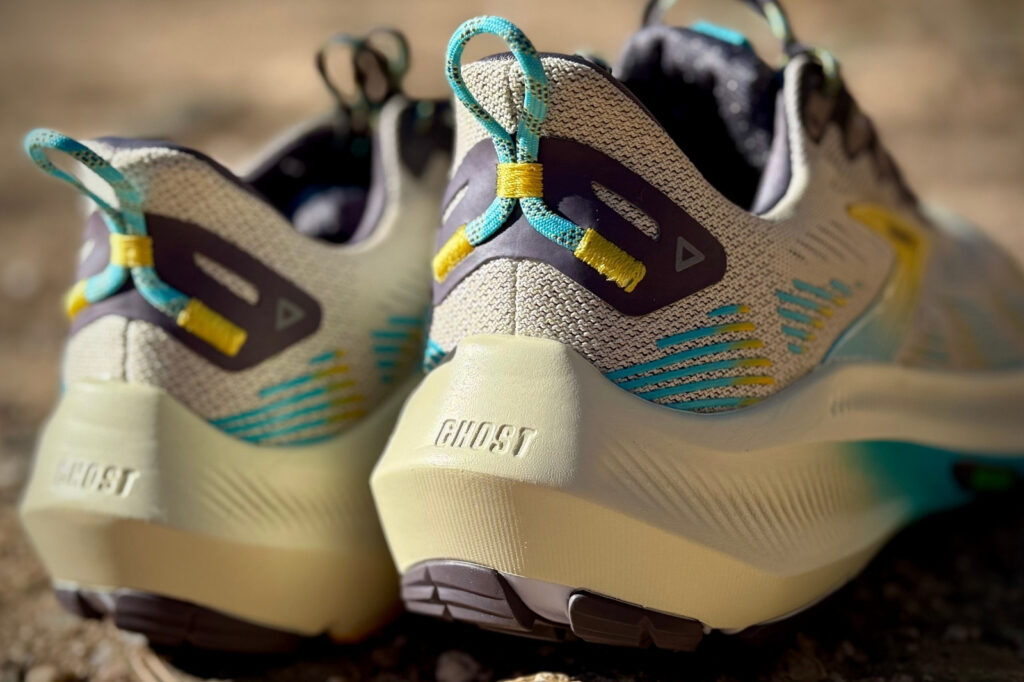
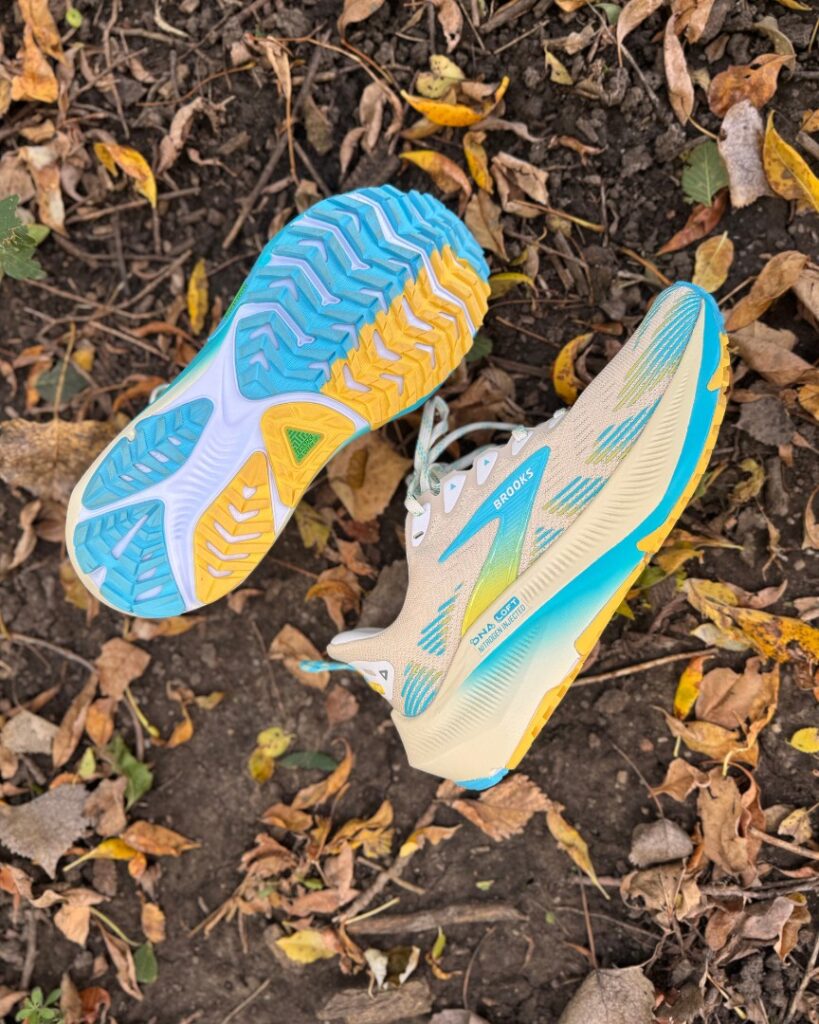
The Ghost Trail, however, aims to take the goodwill from their enormously popular Ghost line and offer a more exciting and performance-oriented shoe, but one that’s more suited to a variety of surfaces than the Cascadia 19. Compared to the Ghost 17, this shoe features a lower 8mm drop, a similar DNA Loft V3 midsole, an engineered mesh upper with 3D-printed protective overlays, and Brooks’ proprietary TrailTack Green outsole with 3mm lugs.
RENEE: “You get a trail version, and you get a trail version, everyone gets a trail version!” The Brooks Ghost joins the growing ranks of road shoes to get a trail version. Everyone wants to come over to the dark side and have an excuse to eat candy while running. I mostly run gravel roads, so I’m not complaining about the surplus of road shoes getting an outsole upgrade.
Personally, I’m glad Brooks went with the word “trail” instead of “gravel” here. Names aside, we all know shoes labeled as gravel, hybrid, or road-to-trail all have the same general purpose.
I’ve reviewed hundreds (without looking at my records, I’m guessing more than 300) shoes over the last five years, and I’ve never worn any version of the Brooks Ghost. I often wear a road shoe when running on gravel roads, but not a high-drop shoe. The 8 mm drop of Ghost Trail is a major plus for me compared to the 10 mm drop of the road version. But does the Ghost Trail earn the “trail” part of the name? Or is this shoe more of a hybrid?
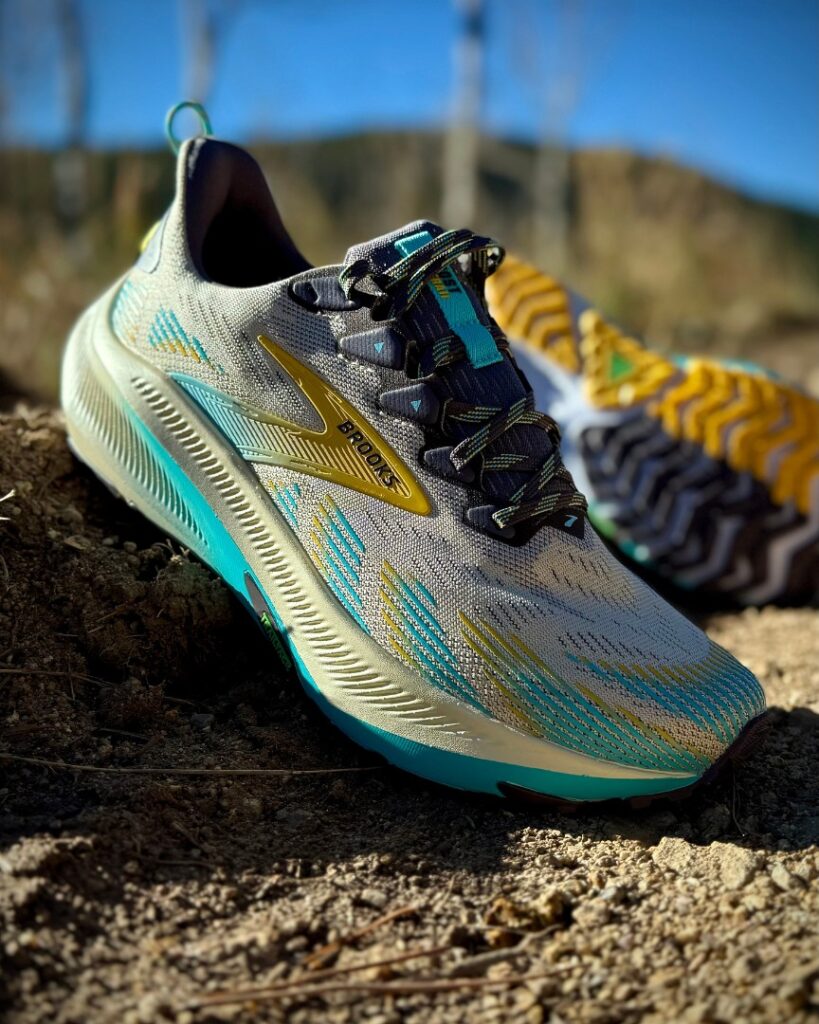
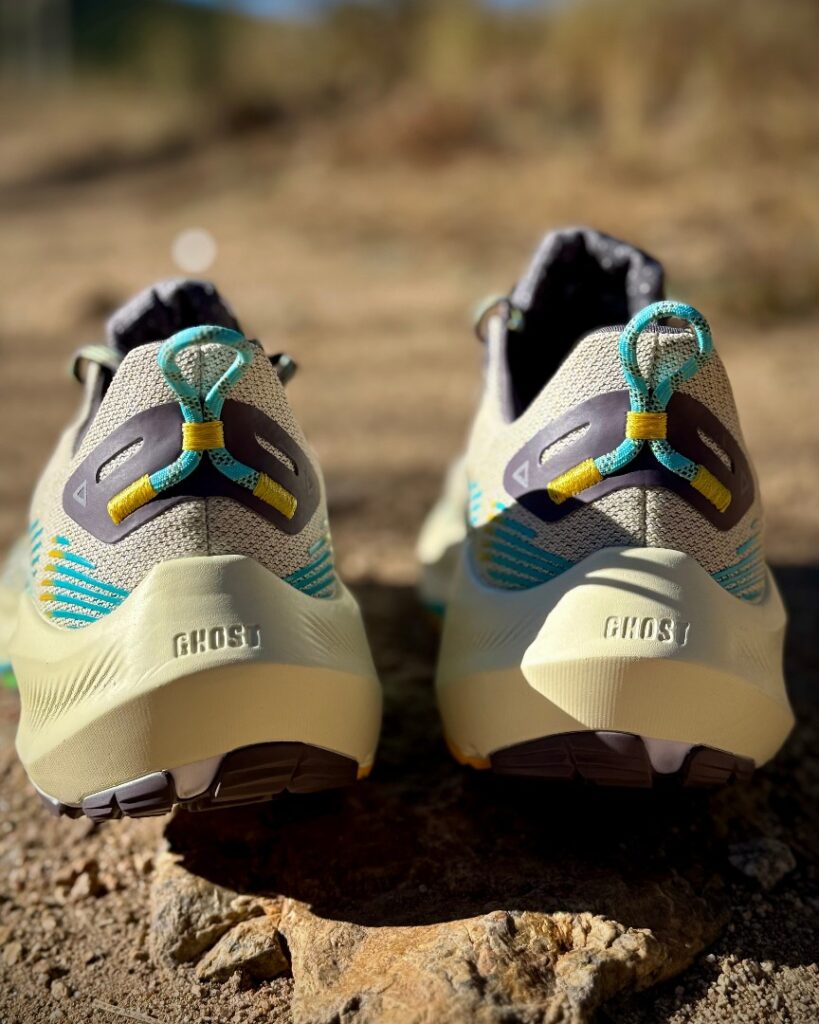
SAM: Brooks didn’t reach the top of the running shoe company mountain by making shoes with uncomfortable lasts, and the shape and feel of the Ghost Trail are a delight. I know it’s weird to call a fit a “delight,” but especially after this upper has broken in, this is a shoe I genuinely enjoy wearing. It’s lightly structured and well-fitted through the heel and midfoot, and has plenty of room in the toebox without feeling cavernous or looking like a clown shoe. There isn’t anything specifically unique about the engineered mesh that makes up the upper here, but the 3D printed texturing does add some extra structure and durability that help quash any lingering hints of road-shoe-ness.
The comfort in the Ghost Trail expands to the finer points of the upper, and it’s nice of Brooks to pay attention to the details. For one, the tongue is plush and perfectly padded. There isn’t enough there that you’re going to struggle with extra material, but you definitely won’t be feeling those laces. I actually think this shoe has a serviceable lockdown, especially considering it’s made from the last of a comfort cruiser road shoe.
I was able to cinch down the laces when I needed to without pain, and I felt like I had decent control of the shoe in moderately technical trail terrain. There’s also a perfectly sized and positioned pull loop on the heel of the shoe that your finger basically falls into when you’re pulling the shoe on. No fiddling with tiny pinched loops or tabs. Great stuff all around.
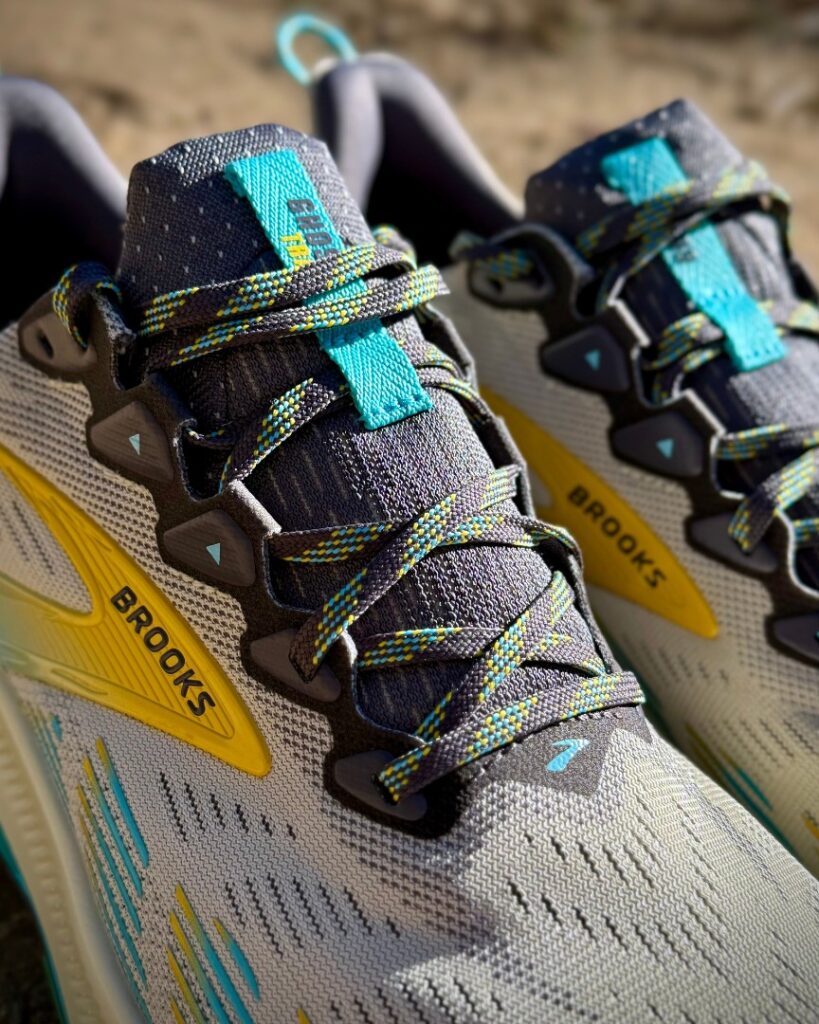
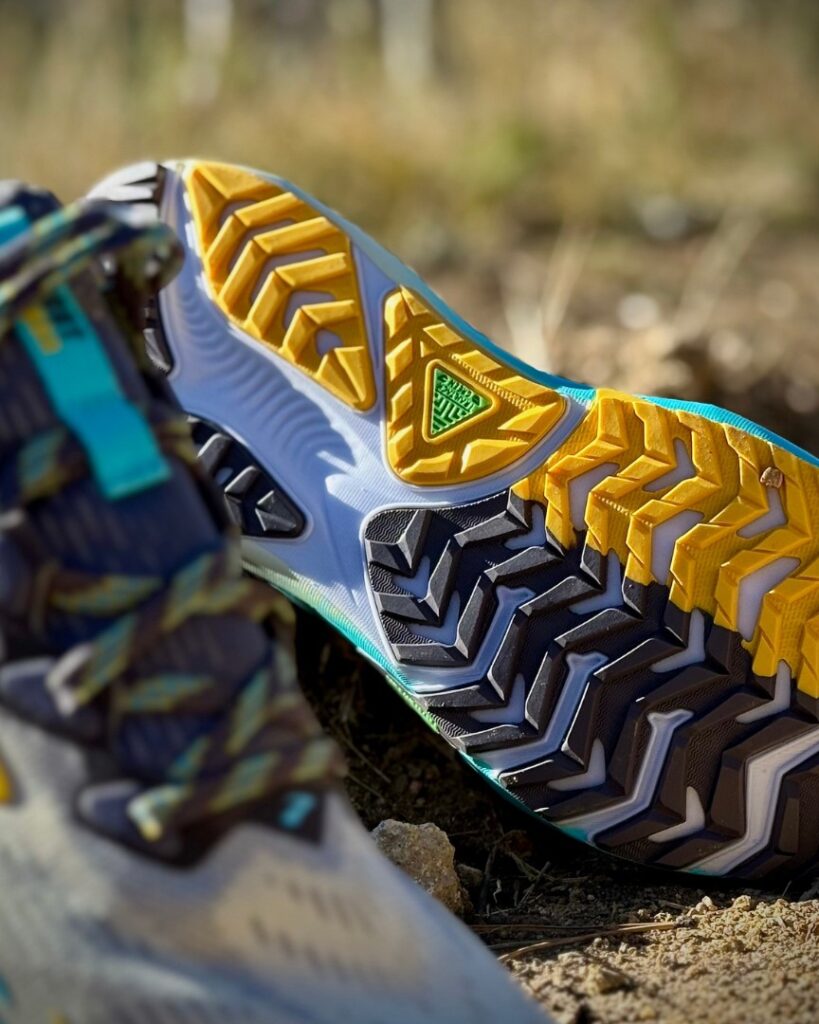
To be fair, much of that perception of control is given by what’s underfoot. The DNA Loft V3 here is soft in the heel and slightly firmer in the forefoot, providing a cushioned landing for heel strikers with a slight pop in the toe-off. It feels comfortable yet solid, like it’s going to last for miles. I did notice that the foam settled in after about 15-20 miles. This is a medium to firm midsole that still feels cushioned enough to be very comfortable on roads and trails. It feels nimble yet stable underfoot and has just enough liveliness to avoid being boring. It’s probably a bit more at home on trails and feels similar underfoot to what you find in this year’s Cascadia.
Can we just give Brooks’ TrailTack Green some kind of award already? I love this stuff, and I was constantly surprised by how grippy this shoe felt in all conditions and on all surfaces (with a small caveat related to lug depth, see below). You can buy the Ghost Trail in full confidence that you won’t sacrifice grip on most occasions.
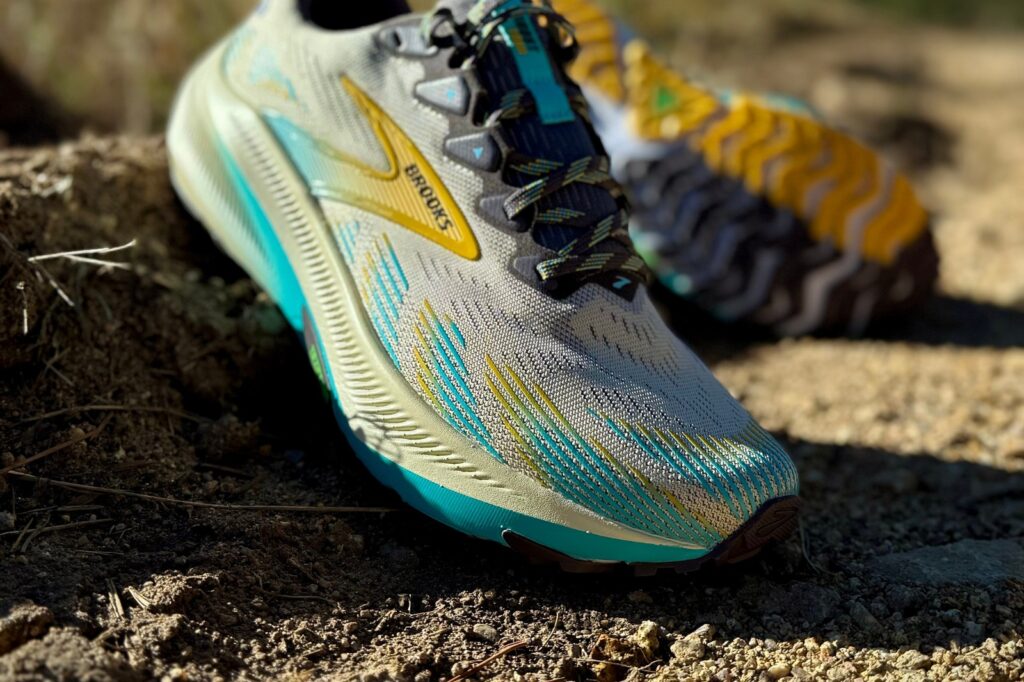
RENEE: I’ll answer my own question: the Brooks Ghost Trail is a hybrid shoe. Think gravel and moderate trail. You can eat up all of the miles in this shoe on that terrain. As a daily trainer, the shoe checks all the boxes: a smooth ride, a good stack for both short and long runs, and a comfortable midsole and upper.
The segmented sections of the outsole help with flex, a nice feature for running on (somewhat) uneven terrain. Getting miles in this shoe was easy. I’m not training for anything specific at the moment, so when I walk out of my door to run, I’m just doing whatever I feel like and have time for (on gravel, as I live in a rural area). And the Ghost Trail is up for whatever.
I have enough stack underfoot for long runs, and I can run strides and some tempo paces with this shoe, even if it’s not my preference for workouts. The outsole gives just enough extra for gravel and loose dirt to a certain extent. And cue the next section…
Shop The Shoe - Men Shop The Shoe - Women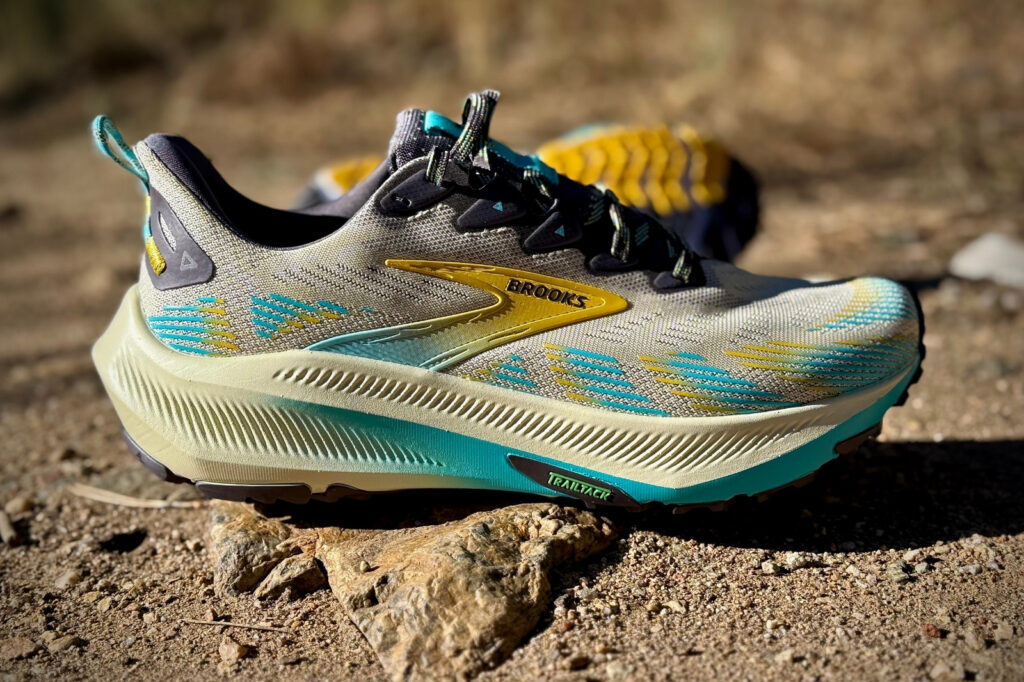
SAM: As someone who midfoot strikes, sometimes the firmer forefoot on Brooks shoes, where they employ this kind of variable durometer, feels overly hard. If I’m back on my heels a bit more, the Ghost Trail feels soft and friendly, with a little bit of fun pop to the ride. If I transition back over my toes, it feels firmer. This wore in after about 20 miles, and I like the overall durometer, but this isn’t a soft shoe under your toes.
It goes without saying, like usual, that this is a shoe meant to be kept to its purpose. Aggressive lugs, these are not. Technical fit, this does not have. It won’t excel in sloppy conditions or in places with wildly uneven terrain. That said, I had some really reasonable grip on undulating Mid-Atlantic single track, and only started to notice some slip when the leaf cover got really deep.
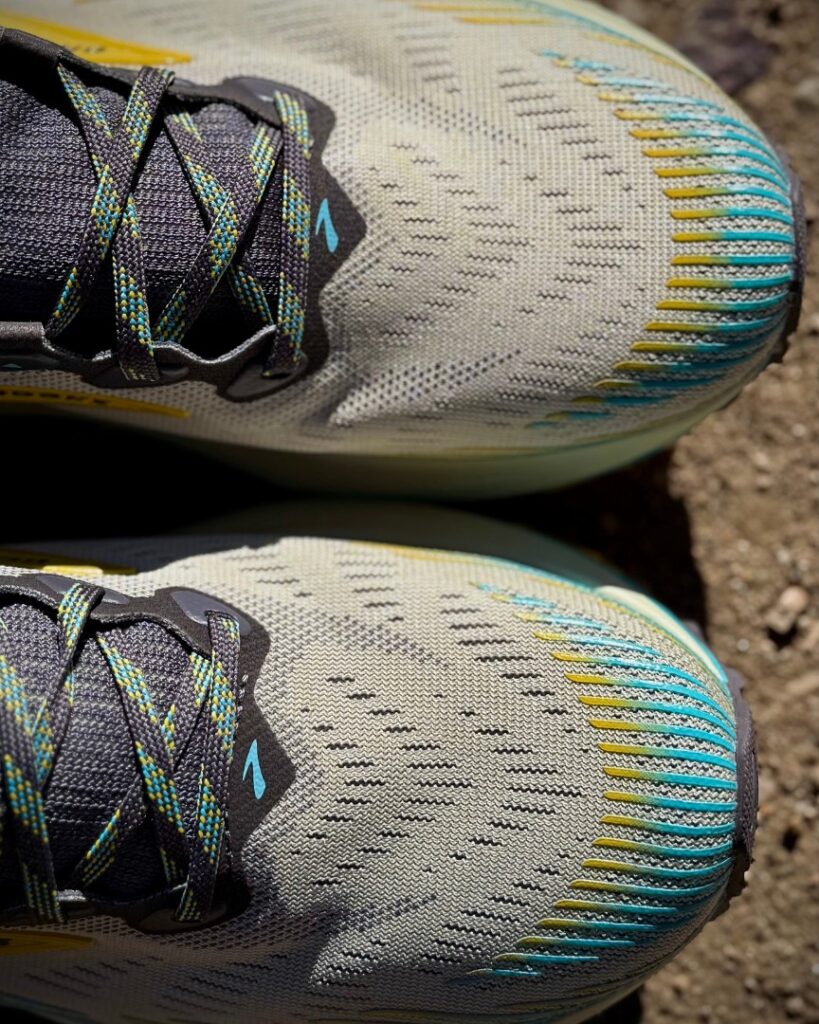
RENEE: I have no major negatives about this shoe, at least considering its intended purpose. My US W7.5 is a bit on the heavy side at 9 oz (255 g). Even trail shoes with aggressive outsoles tend to be lighter in weight. And I’m reading a few reviews that consider this a trail shoe, but that really depends on the type of trails.
The Ghost Trail has a road shoe fit and ride. The upper overlays provide some security but not a tight fit for running technical terrain or uneven, ungroomed trails. The 3 mm lugs aren’t really lugs in an aggressive sense, so in terms of traction, there’s not much. On uneven landings, the shoe might feel unstable for some. So, again, a buffed trail is fine. Technical or uneven terrain, not so much.
When running on single track (think a few inches only to stick a stable landing), the shoe feels more like a road shoe. Throw in debris-covered trails, and it’s not easy to run with confidence. If walking, a quality landing is easier, so I’m not doubting the shoe can handle technical terrain when walking (sorry, “power hiking”). While reviewing the shoe during the fall, leaves covered the roots, and I slipped on the inclines. If you prefer a nimble and controlled landing on trails with switchbacks, you may not consider this a shoe that suits your preference.
Shop The Shoe - Men Shop The Shoe - Women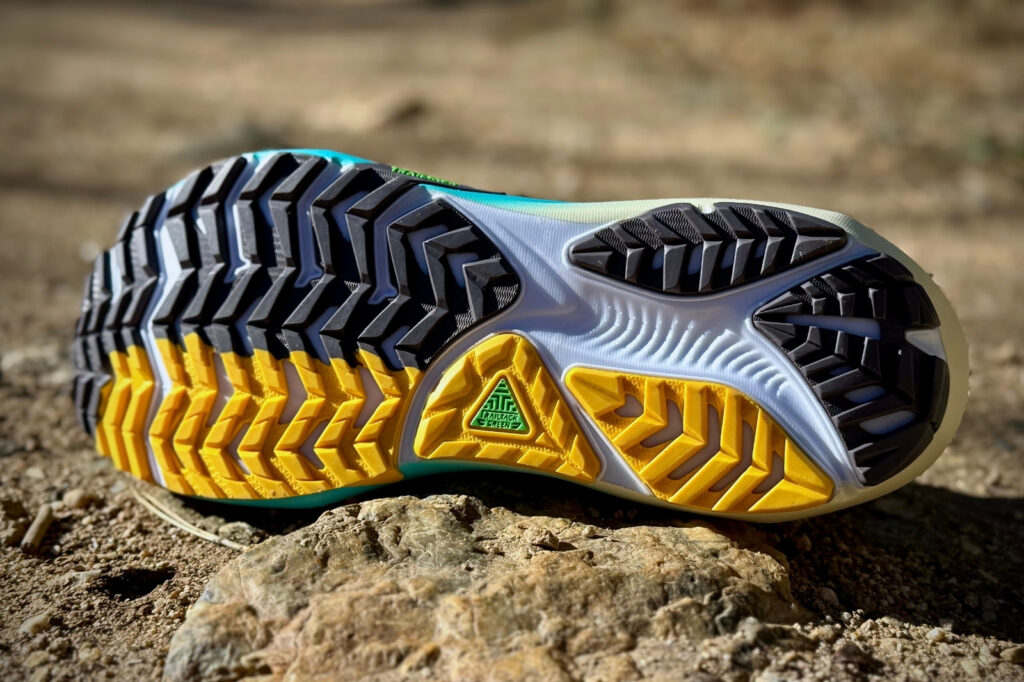
SAM: The gravel shoe is ascendant, and Brooks stays in the ring with the Ghost Trail. This is a nearly perfect-to-use shoe for all surfaces that won’t disappoint as long as you keep it in its lane.
I’m also impressed by how Brooks has set pricing on their workhorse options, such as this shoe. This, the normal Ghost, and the Cascadia all ring in at $150. This is, unfortunately, our new going rate for decent running shoes, but I love that Brooks is allowing their customers to choose a purpose without upcharging for what is essentially the same technology in all three models. Good on you, Brooks.
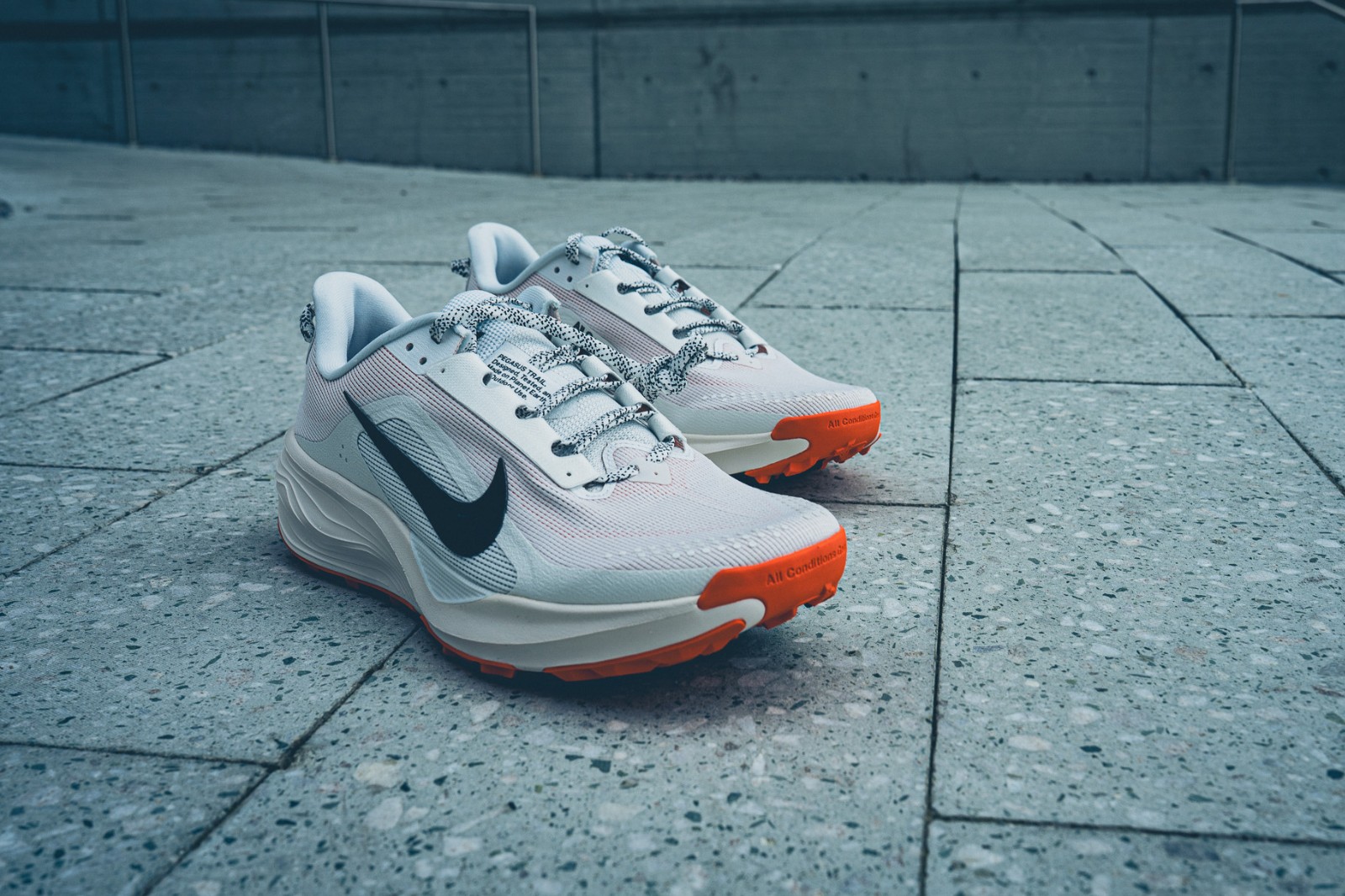
RENEE: The Brooks Ghost Trail shares the same purpose and execution as other road shoes, but features a slightly more aggressive outsole. The shoe reminds me of the Saucony Ride TR, Asics Novablast TR, On Cloudsurfer Trail 2, and, in some sense, the Nike Pegasus Trail 5 (I thought the Peg Trail 4 was a better trail option due to its tighter upper and firmer midsole, but that’s just me). I could probably compare the shoe to the Salomon Blaze and Glide GRVL, too. All of those shoes are good gravel shoes and can handle moderate trail. I’m not doubting these shoes work fine on more technical trail, but it’s not my preference for single track with loose rock, roots, or constant switchbacks.
The shoe has a great place in the Brooks lineup. It’s more refined than the budget Divide (a good deal in my opinion), cheaper and more user-friendly than the Catamount 4, and definitely more comfortable on easy terrain than the Caldera or Cascadia. I can see this becoming as popular as the Hoka Challenger 8, although that shoe is slightly better suited for trail use.
The world of gravel and trail running continues to grow, and Brooks’ role is solid. I think I’m finally embracing the gravel and trail version of road shoes. I’ll still wear a road shoe on gravel when possible, but a slightly more secure upper and beefed-up outsole help with a firm and protective landing. I’m here for this revolution. Ditch your pricey Maurten gels and grab those Nerd Clusters, my friends. Trail and gravel running is all the rage these days.
You can pick up the Brooks Ghost Trail for $149 from Running Warehouse (featuring free shipping and 90-day returns) by using the buttons below.
Shop The Shoe - Men Shop The Shoe - WomenHave something to say? Leave a Comment



Sam lives in Baltimore with his wife and two kids and spends his days fixing espresso machines for Ceremony Coffee Roasters. He runs with the Faster Bastards when he can, races ultras, and has been working on completing the AT section by section. He thinks the best days are made of long miles on nasty trails, but that a good surf session, a really stunning book, or a day of board games are pretty all right too.
All-time favorite shoes: Saucony Xodus Ultra, Topo Athletic Ultraventure 3, Altra Lone Peak
More from Sam

Renee lives in rural Nebraska and runs on gravel roads that may or may not be maintained depending on the time of year. If she’s not running on gravel or dirt, she usually opts to run trails instead of paved roads. Fun face: every Boston-qualifying road marathon she has registered for has been canceled.
More from Renee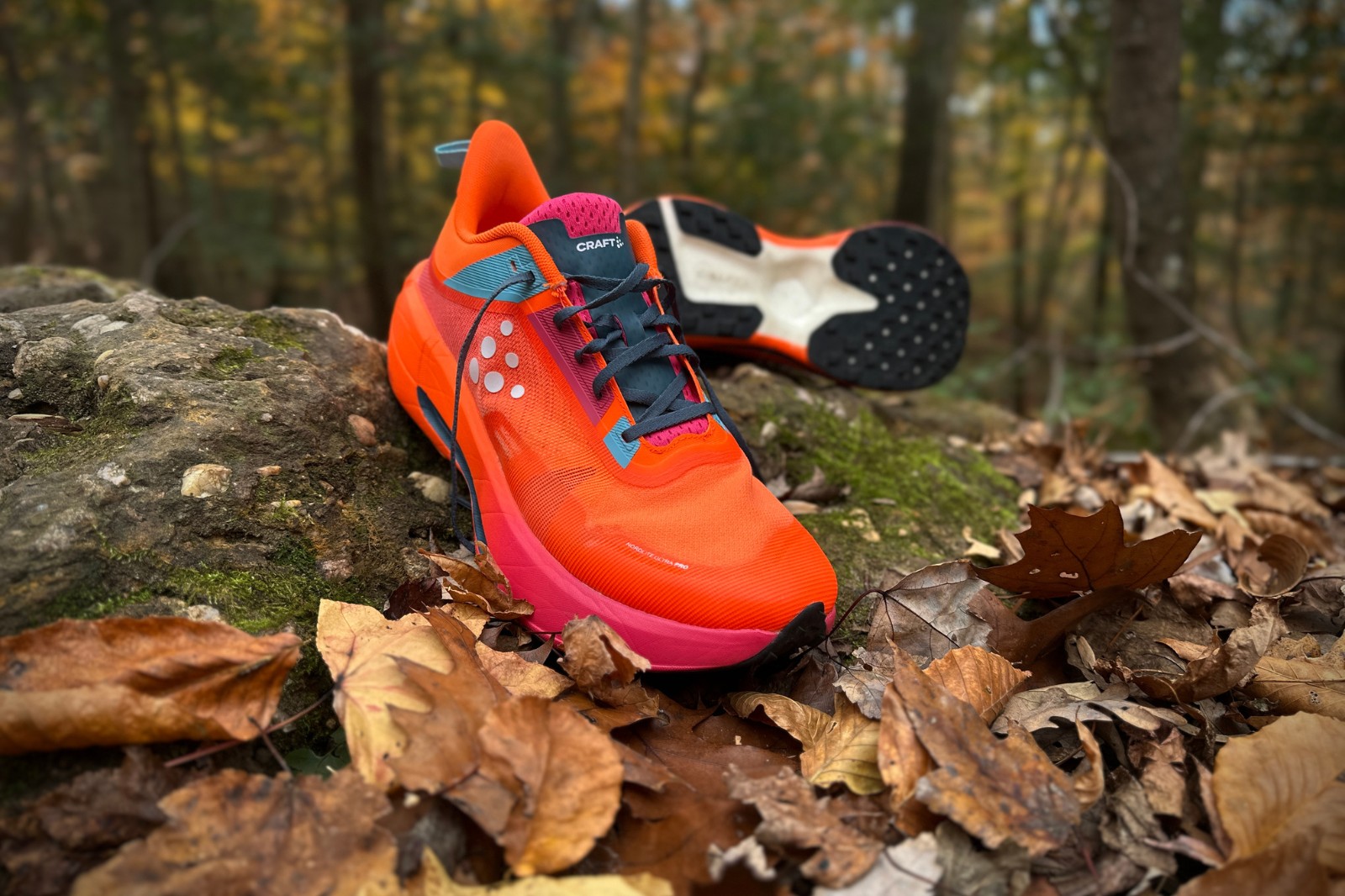
Sign in or create a free account to comment. You'll come right back here.
Sign in / Sign upA average from 2 runners · 1 runner has this saved
DemoRunneron their wall since June 12, 2026
Initial review · June 12, 2026
A
Solid road-to-trail option for mellow dirt days.
DownhillDanon their wall since May 12, 2026
Initial review · May 12, 2026
A
Road-to-trail done right. Lugs small enough for pavement.
Be one of the first runners to rate it.


Thanks for this thorough review! Really enjoyed it and appreciate the help. I’m excited to buy this shoe and try it out for light trail and road work. I’ll keep my other brooks for longer runs.
LOVE my Nerd Clusters on my long runs. That’s really all I got. This a good looking trail shoe.