We independently review everything we recommend. When you buy through our links, we may earn a commission.
9.4 oz. (266g) for a US M9 / 8.1 oz. (229g) for a US W7
42.5mm in heel, 34.5mm in forefoot (8mm drop)
Easy road cruising
Dual-density Enerzy NXT midsole, full-length Wave Plate, X10 rubber outsole, Engineered knit upper
Available now for $150
KARL: A common theme I’ve noticed in the industry over the last several years has been how brands try to evolve while keeping their core fanbase happy. Brands like Nike, Brooks, Hoka, and Asics all have their legacy lines — the tried-and-true staples (Pegasus, Clifton, Ghost, Cumulus, etc.) that have arguably paved the way for the exciting lines we felt would render the former lines useless.
The majority of the running shoes I’ve run this past year have been in the daily trainer category, and I’ll be honest, I’ve kind of been underwhelmed by a lot. I’m not sure if the Adidas Evo SL spoiled my expectations for a daily trainer, but I feel like this year has been a “whatever” year for daily trainers.
All the while, Mizuno has been cooking in the lab and has released some stellar performance super trainers in the Neo Zen and Neo Vista lines, which I’ve been a big fan of. Last year, Robbe was ranting and raving about how surprisingly good the Mizuno Wave Rider 29 was as a daily trainer, and even though I never got a chance to try it, I believed him just based on how good I thought Mizuno’s catalog was shaping up to be.
So now we’re here with the Wave Rider 30, Mizuno’s everyday running shoe — and it’s changed significantly for an anniversary year. One note that caught my attention was when we talked to the Mizuno reps at The Running Event last year, they told us the team disregarded the “Wave Rider” moniker during development. They set out to create the best daily trainer they could from scratch, and then attach the Wave Rider name to it. It’s a very interesting approach — a simple way of thinking that reimagines the Wave Rider and evolves it while keeping the name alive. So did that mentality pay off? Let’s find out.
JON: The Wave Rider enters a new era with its 30th edition. Seeing how major an update this is, it was no surprise to hear Karl’s inside baseball from Mizuno on this getting an overhaul.
I’ve had a hit-or-miss relationship with Mizuno over the years. Pre-super shoes, the Wave Inspire got me through several marathons. They were eventually retired due to excessive blistering. Coming back to it years later, nothing had really changed for me. The Neo Vista was the first model in recent years to grab my attention, but it fell flat, too. It was just too much shoe for its own good, and it didn’t work well for my needs.
There is a fine line when it comes to legacy models like the Wave Rider. Change too little, and people become bored and move on. Change too much, and the hardcore fans grab their pitchforks, stock up on last year’s model, and move on. Its tagline is “Trust the flow. Ride the next wave.” Time to see if that holds true.
CARYN: In my reviews over the years, I’ve talked a bit about how I didn’t run at all growing up. In fact, I was one of those kids who didn’t understand why anyone would want to run in circles for sport or wear those tiny shorts (oh, how the mighty have fallen). That said, I played a ton of competitive volleyball, and Mizuno was, hands down, my footwear of choice. Mizuno court shoes were so comfortable, supportive, and easy to wear for hours on the court (though it was diabolical that we had to run a timed mile in court shoes).
Why I never tried Mizuno when I embraced short shorts and running in circles as a young adult, I’m not quite sure. But years of working in specialty run introduced me to the Mizuno Wave Rider and its legion of fans. With brand icons like the Wave Rider, change can be hard. Mizuno claims to have started from scratch for the 30th (!) iteration of the shoe, and it looks nothing like Riders of yore. Is this a good thing? Only one way to find out.
Shop The Shoe - Men Shop The Shoe - Women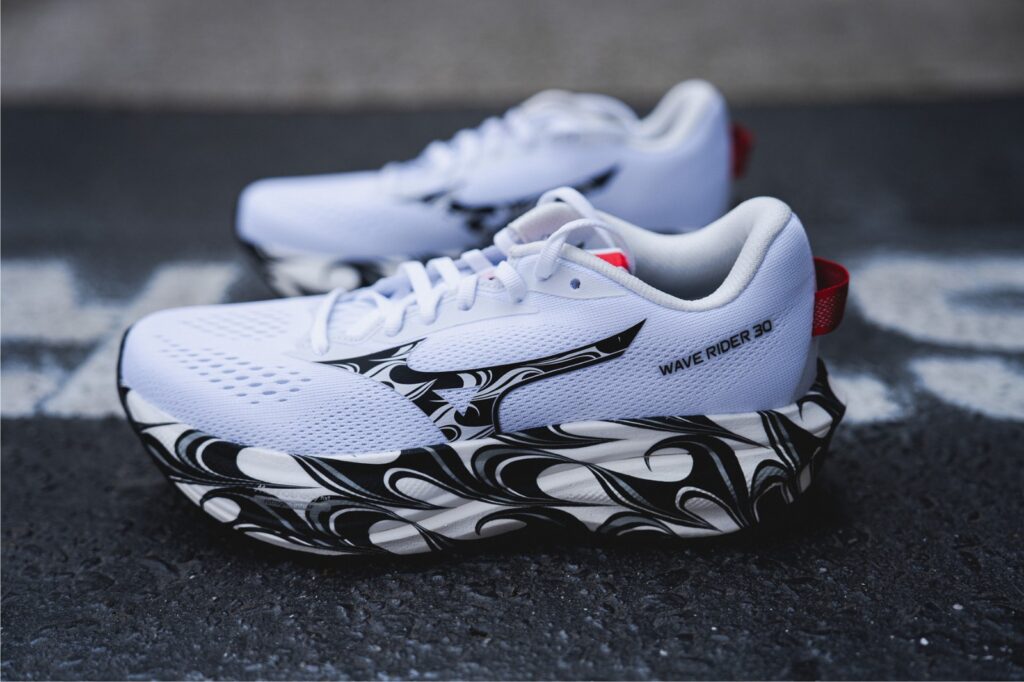
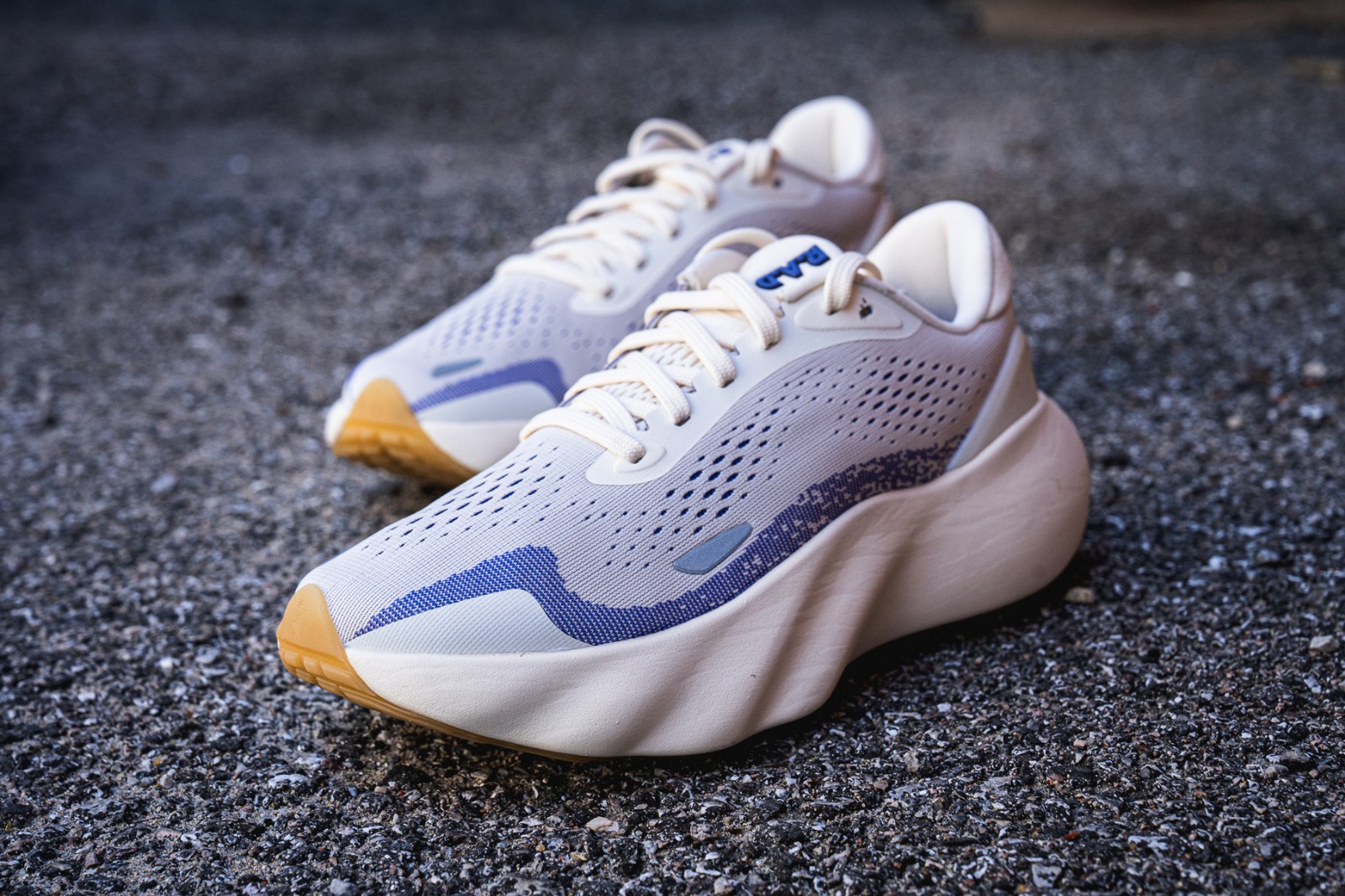
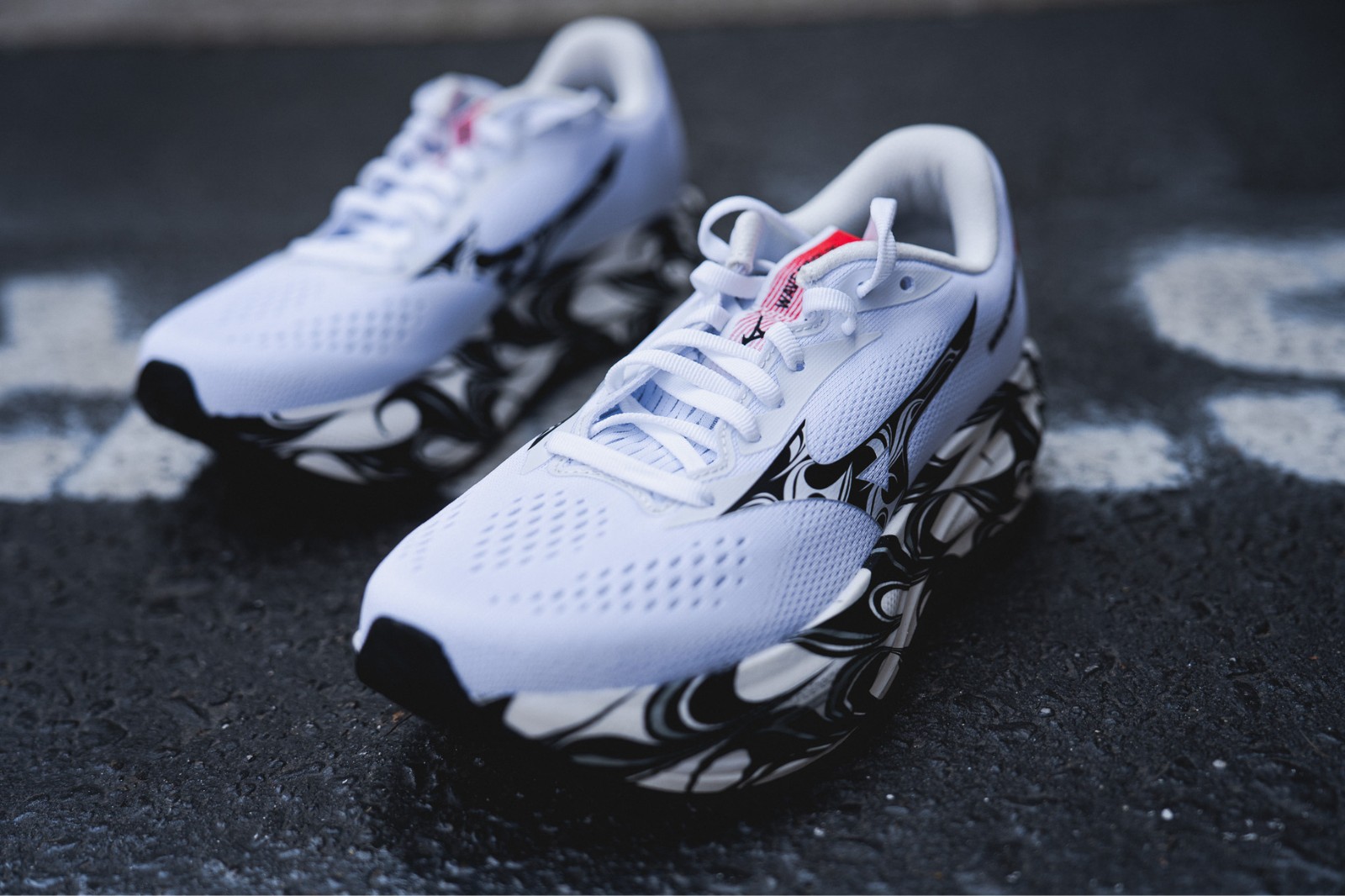
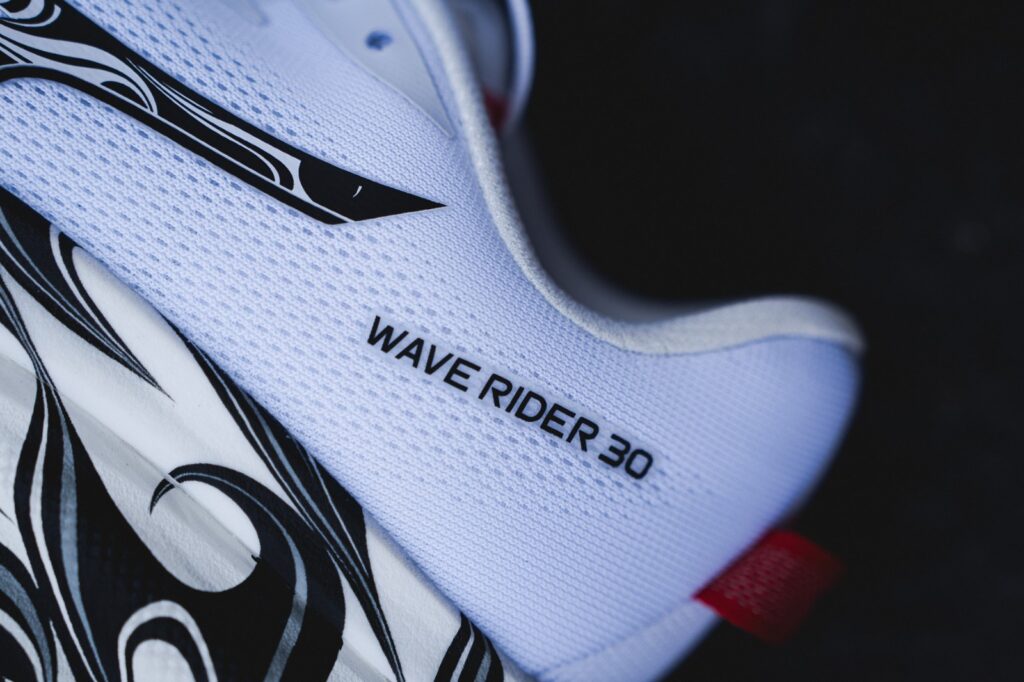
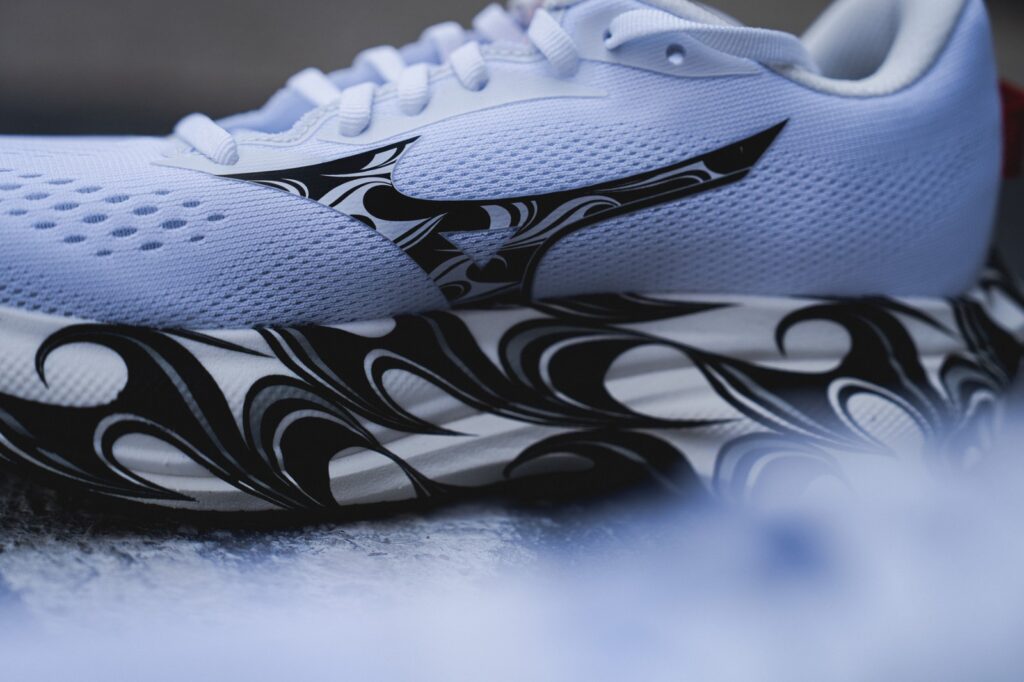
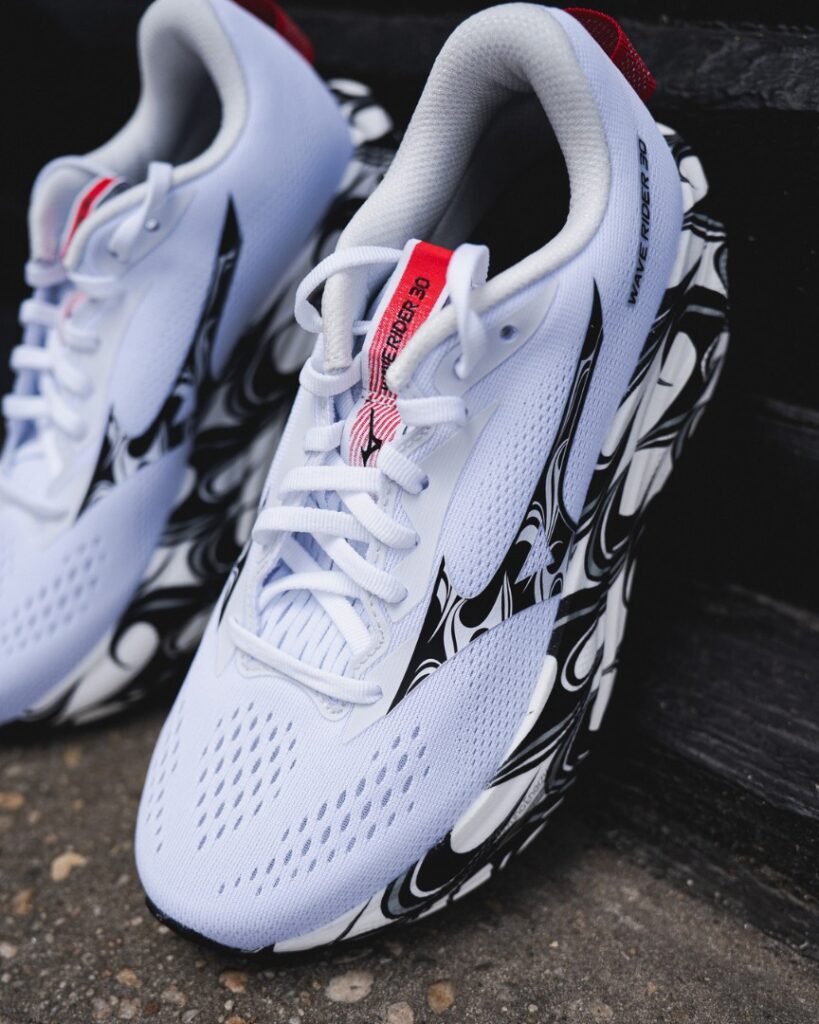
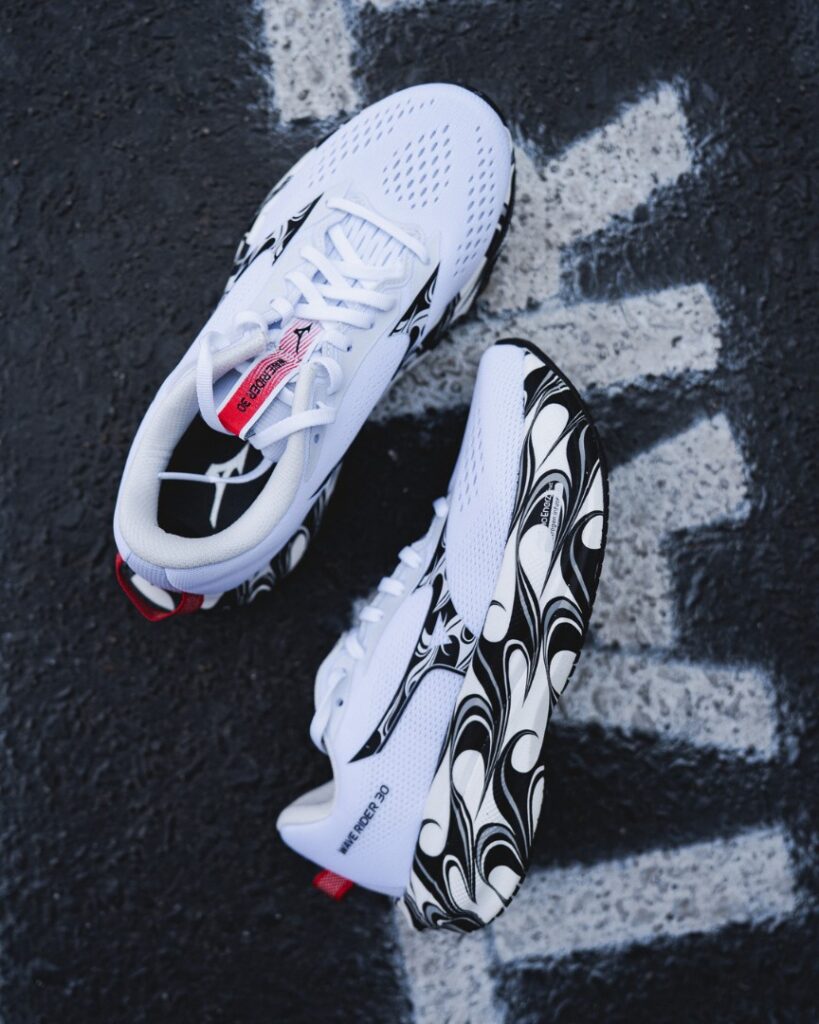
KARL: First off, I have to say the colorway I received is absolute fire. The design harkens back to the OG Wave Rider from many years ago. Mizuno’s “mystery shoe” designs from last year were a bit out there, but I think this style of black/gray wave art on the midsole and the Mizuno logo with the white upper and pops of red on the pull tabs really sing to me. The launch colorway our editor Ryan received is fine, leaning more into a blue/orange vibe with the white, but I’m very content with the design of mine.
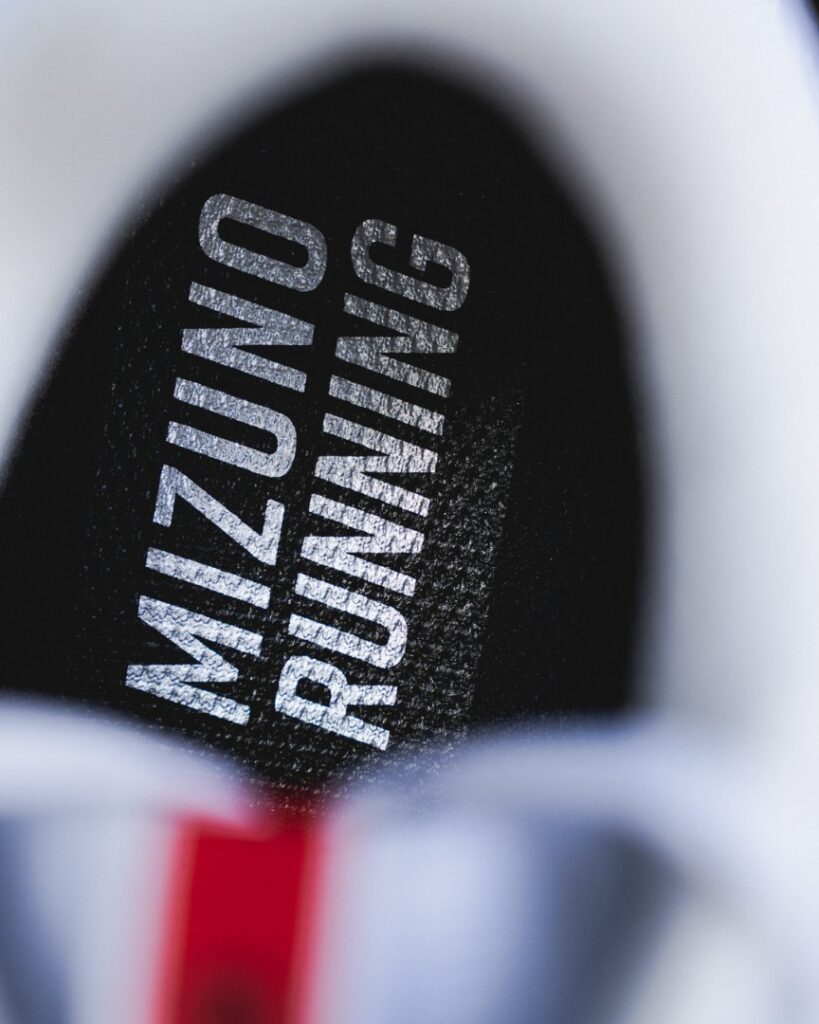
The engineered mesh upper is breathable and fits well with a generous amount of room in the toebox and width through the midfoot. I had no issues with lockdown or rubbing, and the pull tab on the heel and tongue made it easy to get on and adjust the fit. There’s a good amount of heel cushioning, and the laces, while not my sought-after sawtooth style, are at least flat and ribbed, which I felt helped maintain the comfortable fit.
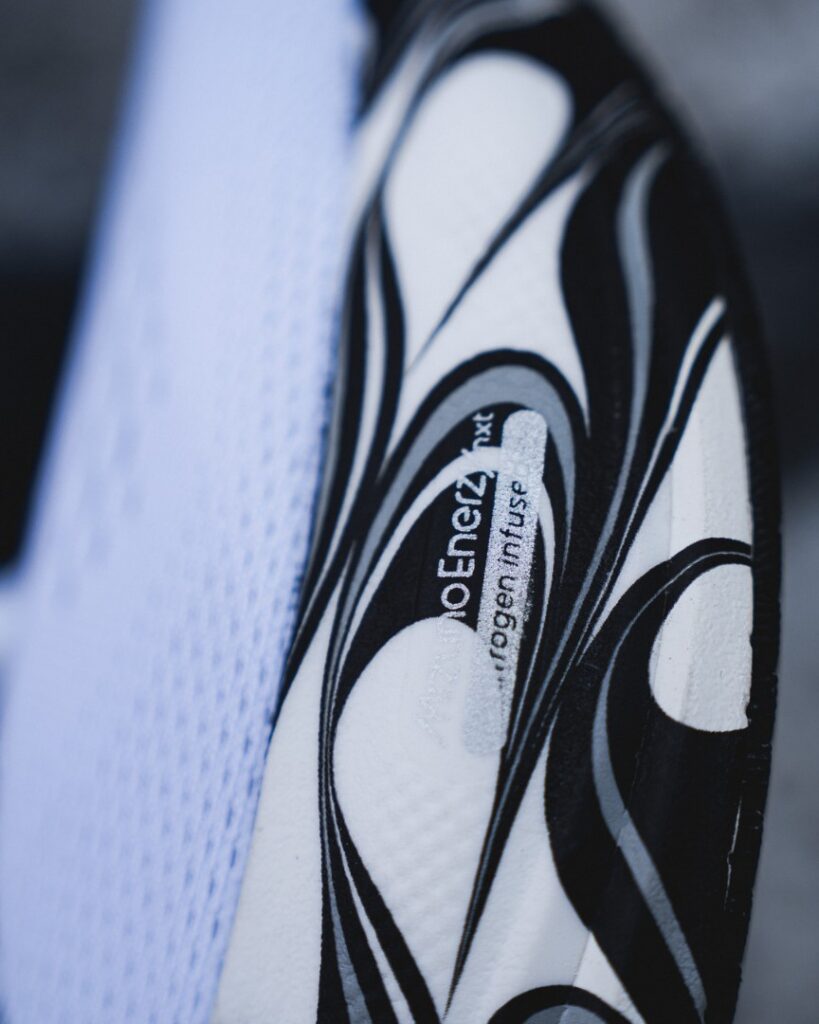
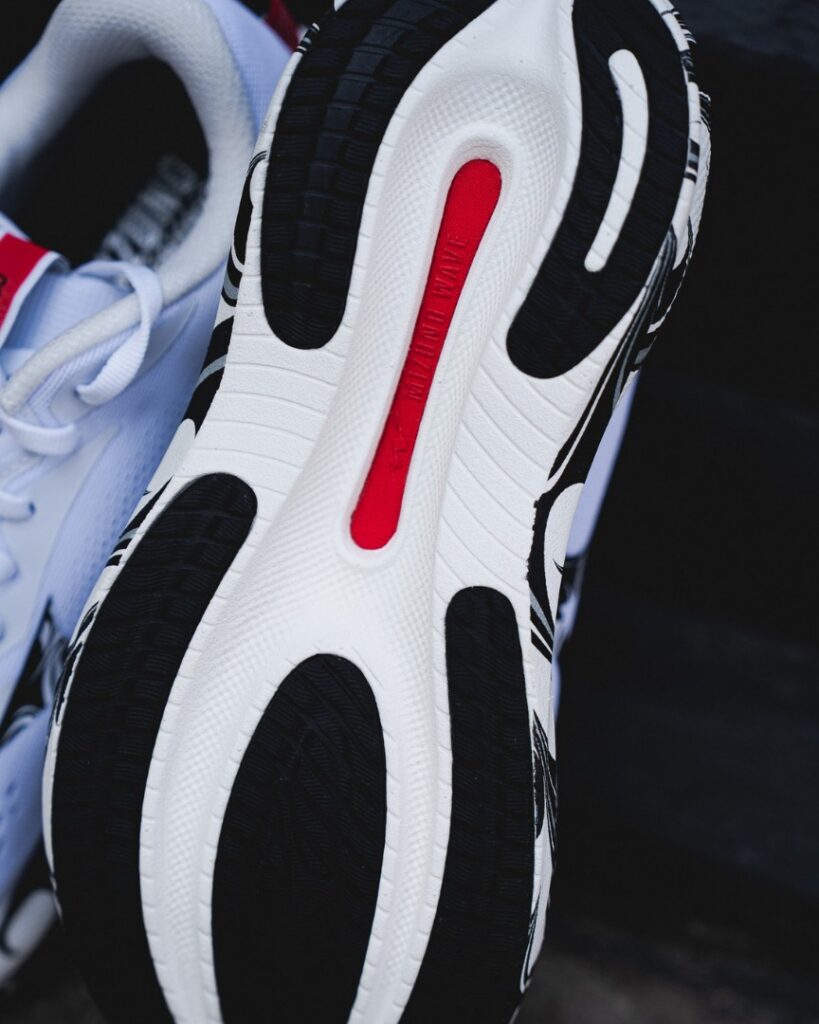
For the midsole, we have Mizuno’s Enerzy NXT nitrogen-infused foam at the top and EVA at the bottom for added cushioning and stability (with the wave plate sandwiched in between). They’ve also increased the stack height and lowered the drop — previously 39/29mm with a 10mm drop, now 42.5/34.5mm with an 8mm drop. And while the weight stays the same as last year’s, adding more cushion and extending the plate without adding weight is a solid win in my book. While the top layer of Enerzy NXT is soft and compliant, the wave plate and EVA bottom add a bit of balance, creating a soft yet energetic underfoot sensation.
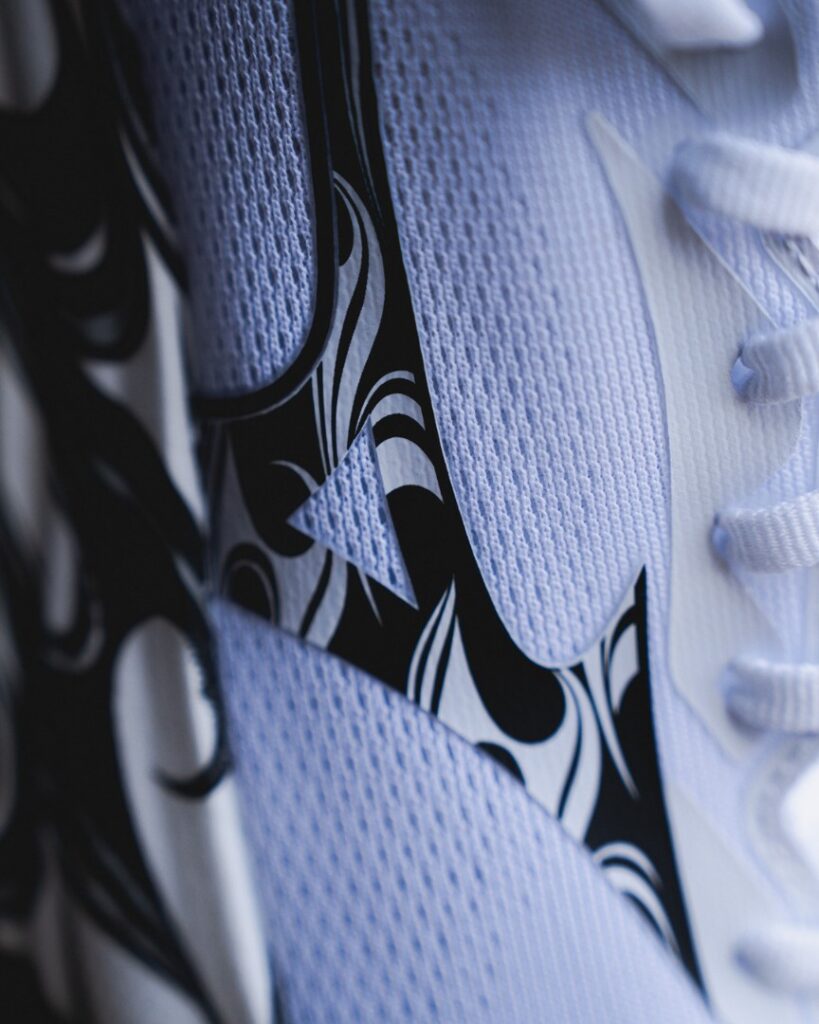
Another key point of discussion during Mizuno’s presentation at The Running Event was the shoe’s DNA and the overall end goal of the design. The main point of focus was a smooth transition from heel to toe. So one of the major changes this year is the wave plate’s design. Previously, Mizuno used a “half plate” design that extended from the heel to the midfoot, but now we have a full-length mesh wave plate. Drew Magaha, Head of US Product at Mizuno, states the newly designed plate “creates rigidity in the transition point but creates flexibility in points where you don’t quite need it.”
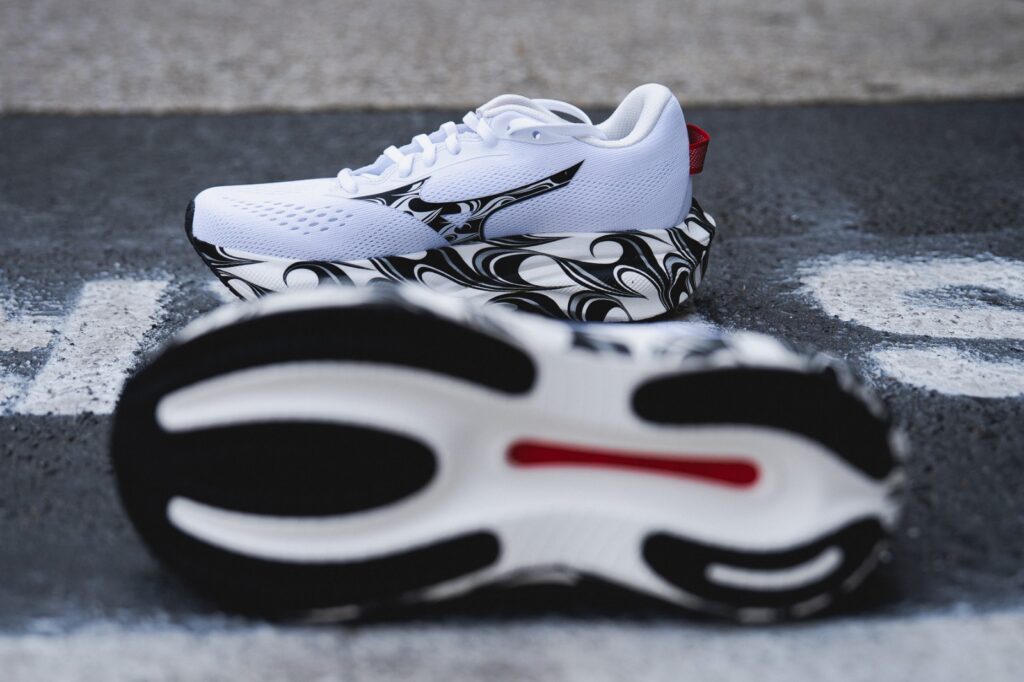
Looking at a breakout of the shoe and what the plate actually looks like, you can see that the toe-off is quite levered, which helps in the final stages of your stride to propel you forward. And what you’re left with is an incredibly buttery ride that starts from the heel all the way to the toe off. The underfoot feel kind of reminds me of the Adidas Evo SL in terms of propulsion and “fun factor,” but it’s slightly softer, wider, and more stable, at the cost of feeling a bit heavier. Now I know the Evo SL doesn’t have a plate, and it’s just one block of Lightstrike Pro, but it’s interesting to see how Mizuno got close to that feeling using EVA and a plate.
And because of the way the plate works along with the slight rocker, it doesn’t feel so aggressive if you’re going at an easier pace, but it can pick up nicely for some strides at the end of an easy run, for example. So while it’s not necessarily the first shoe I’d gravitate toward for speed or tempo work, it has some range for shifting gears in your daily miles — and at $150, the value lies in its comfort, ride, and slightly greater versatility. This makes it ideal for daily training and helps distinguish its use case from that of a super trainer like the Neo Vista 3.
JON: I received the crispy white, blue, and orange colorway that looked great on and off the run. The engineered mesh provided a great fit right out of the box, effortlessly wrapping around my foot. I had no issues with discomfort, lack of space in the toe box, or any problematic areas that might cause blistering.
The gussetted tongue prevented the laces from cutting into the tops of my feet, while the pull tabs at the front and the heel were a nice touch that helped me get the shoe on and off with ease, and a comfy heel collar kept things locked in.
The midsole underwent a complete overhaul, now offering a higher stack height with a full-length plate. Mizuno succeeded in adding more to the shoe while staying the same weight. The soft Enerzy NXT on top of a plate, with firmer EVA foam beneath, was a great combination. It helped absorb shock on impact with a snappy liftoff. The 8mm drop and rocker geometry provided smooth transitions and a pleasant ride from midfoot impact to the front-of-foot lift-off. The outsole gave good control and traction on dry surfaces.
Usually, when I see that there is a full-length plate, I expect the ride to be rigid. To my surprise, it was a dynamic experience offering a fuller range of motion. They did best on easy days when I wanted to zone out and not worry about pace, and I could adjust my gait so uphill, flat, and downhill grades felt smooth. The rocker let me shift gears when I wanted to pick things up. Most runs during my testing started easily with fast finishes. Probably not my first choice for a workout, but it worked great as a daily driver or for progression runs. That being said, my feet were sore after the first few runs because I was used to shoes that aren’t as flexible.
CARYN: I absolutely loved the white-and-neon color combo on the Wave Rider I received. The design is clean without being boring, which is just how I like a shoe. I had to loosen the toe box to get the shoe on (more on that below), but once I adjusted the fit, all was well. The upper and laces are simple but effective, with no issues on the run. In digesting the updates to this shoe, Mizuno did a complete overhaul with an entirely new midsole combo and wave plate, resulting in an overall higher stack of 42.5mm (Don’t forget that extra 0.5mm). The shoe also came down to an 8mm drop from 10mm, which is actually my preference for a daily trainer.
The midsole is essentially a sandwich – a full- length nylon plate lies between a top layer of nitrogen-infused foam and a bottom layer of EVA. I’m always surprised when I see brands still using EVA, but in this application, I found it worked decently well. The shoe has a level of responsiveness out on the run that makes it interesting and enjoyable to run in, but I did feel like the EVA contributed positively to overall stability.
Mizuno indicates there is a rocker profile here, but I didn’t notice it at all out on the run. I found this shoe served me best when running easy. I didn’t have much success picking up the pace, but hey, that could also easily be attributed to the number of night shifts I worked last week. I’m also someone who will always value a good, true daily trainer — a model doesn’t have to be able to do it all to have a valuable place in a shoe rotation.
I can’t leave this section without acknowledging the price. In the age of more is more, $150 fairly places the Wave Rider in the daily training arena with models like the Adidas Evo SL and the Asics Novablast.
Shop The Shoe - Men Shop The Shoe - Women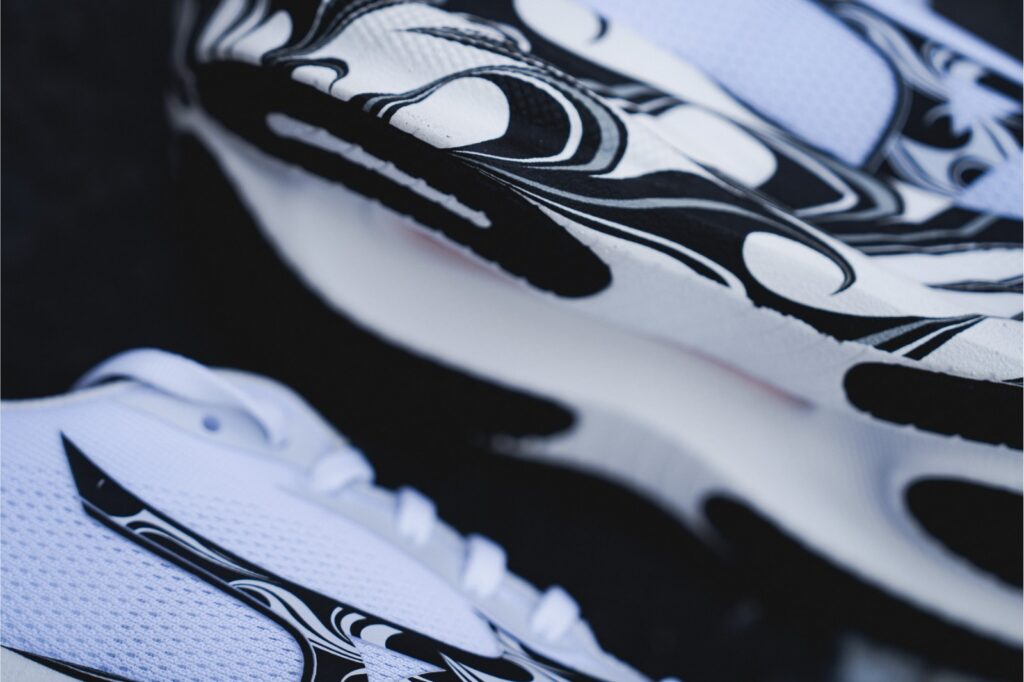
KARL: Honestly, there isn’t much I dislike about the Wave Rider 30. I’ve really enjoyed the miles I put in and can’t say I’d change much. The only thing I’d say is maybe find a way to cut the weight down, though it’s perfectly adequate for a daily trainer with this much cushioning and technology. However, the race is on for brands to cut weight on daily trainers, given that the Adidas Evo SL is relatively light and other brands are now getting into the mix — the Dynafish Xiaonian, which I’m testing now, is 7.4oz/200g in my size.
Needless to say, I don’t think 10.1 oz/288g is bad at all, considering the amount of cushioning, plate tech, and propulsion you get. So good job, Mizuno, for helping me keep this section pretty short.
JON: My main gripes were how the Wave Rider 30 performed when it was excessively hot or if there was rain in the forecast. I wouldn’t consider this a deal-breaker, but it was annoying enough to mention. The engineered mesh didn’t breathe well when humidity and dew points shot up. I am a heavy sweater, so there were days when the mesh and my socks were completely drenched. Unfortunately, these kinds of days are common in Maryland, so I constantly had to leave the shoes outside to dry out.
Traction also suffered in inclement weather. Any precipitation had me slipping around and losing some control at lift-off. Thankfully, the ride compensated for this, as I was naturally being pushed forward, but I noticed and had to adjust my stride.
CARYN: A couple of my gripes stem from the fact that I’ve tried quite a few daily trainers lately, so it’s tough not to immediately compare. I found this shoe to have a very low-volume toe box and an overall more narrow fit. Looking at the shoe from above, you can actually see the front taper towards a slight point, which is confusing to me, given that this is absolutely nothing like the shape of a human foot.
Having recently run in the Saucony Triumph, I immediately thought of it as a comparison to the Wave Rider in function and feel, but with a much better fit for my foot. I do think going up a half size in the Wave Rider could help, and I’d be curious if it changes the experience. I also agree with Jon that the upper wasn’t especially breathable. It’s been dumb hot here lately, and I’m an above-average sweater, so I likely noticed this more than another runner may.
Shop The Shoe - Men Shop The Shoe - Women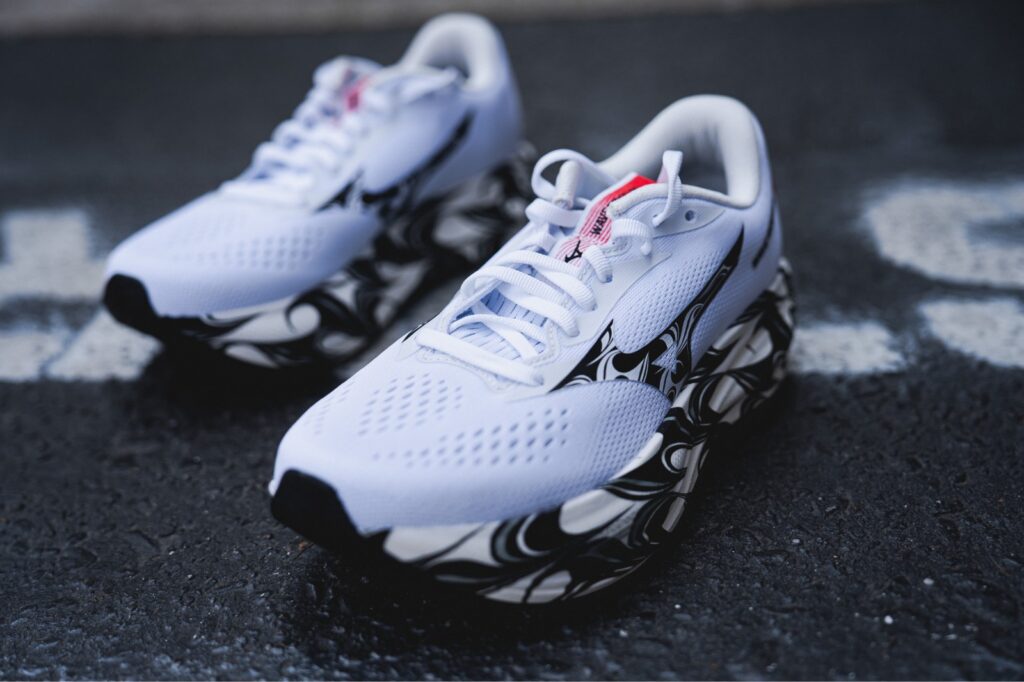
KARL: I feel like I’ve been beating a dead horse when I say I haven’t been wowed by most of the legacy daily trainer releases this year, or that Mizuno has an underrated lineup. I’ve said it in my Neo Zen 2 and Neo Vista 3 reviews, so why not just reiterate that point here for a third time? From daily trainer to super trainer to race day, I really do think Mizuno has one of the most cohesive lineups out of any brand this year.
If you like the Neo Vista 3 or already own one of the Hyperwarp race shoes and want a solid daily companion to pair it with, the Mizuno Wave Rider 30 is a no-brainer.
JON: Like Karl, I have been spoiled by the Evo SL and haven’t paid much attention to other trainers in this price point since I picked up my second pair of them. I’m glad that Mizuno offers something that performs well and looks great, and won’t break the bank. Mizuno has successfully reinvented its daily trainer, making it an attractive choice at this price point.
The Wave Rider is 30, flirty, and thriving.
CARYN: Mizuno definitely impressed me with this update! It’s a fun, competitively priced daily trainer with great design elements. I think I’m likely to stick with the Adidas Evo SL or the Saucony Triumph, but Mizuno fans will definitely enjoy this much more lively, contemporary Wave Rider out on the run.
You can pick up the Mizuno Wave Rider 30 for $150 from Running Warehouse (featuring free shipping and 90-day returns) by using the buttons below.
Shop The Shoe - Men Shop The Shoe - Women
Mizuno Wave Rider 30 | Full Review
Have something to say? Leave a Comment


Caryn is a recovering ball sports athlete and native Baltimorean who used to cry before the timed mile in gym class. Discovered running somewhat reluctantly when her pants stopped fitting in college, now a big fan of the marathon– go figure! Pediatric ICU nurse and avid UVA sports fan. Can usually be found with her chocolate lab, Gus, looking for a good cup of coffee.
More from Caryn
Karl is the Media Coordinator for Believe in the Run. Prior to joining the team, Karl spent the last decade working in the media industry as a cinematographer, director, screenwriter, and editor. He’s also an avid musician and craft beer aficionado. If he’s not running, he’s recording music, watching movies, or wandering around with his photo camera.
More from Karl

Jon accidentally got into running after impulsively committing to run a marathon in 2010. After losing 100 pounds and having a hell of a debut, he decided to stick around. He runs with the Faster Bastards and his happy place is Patapsco Valley State Park where he leads the Thursday night Ober Hills run. When he isn’t running he’s looking for cats to pet.
More from Jon