Shop BITR Apparel Shop Now
We independently review everything we recommend. When you buy through our links, we may earn a commission.
9.4 oz. (266g) for a US M10.5 / 8 oz. (225g) for a US W7.5
34mm in heel, 30mm in forefoot (4mm drop)
Daily training
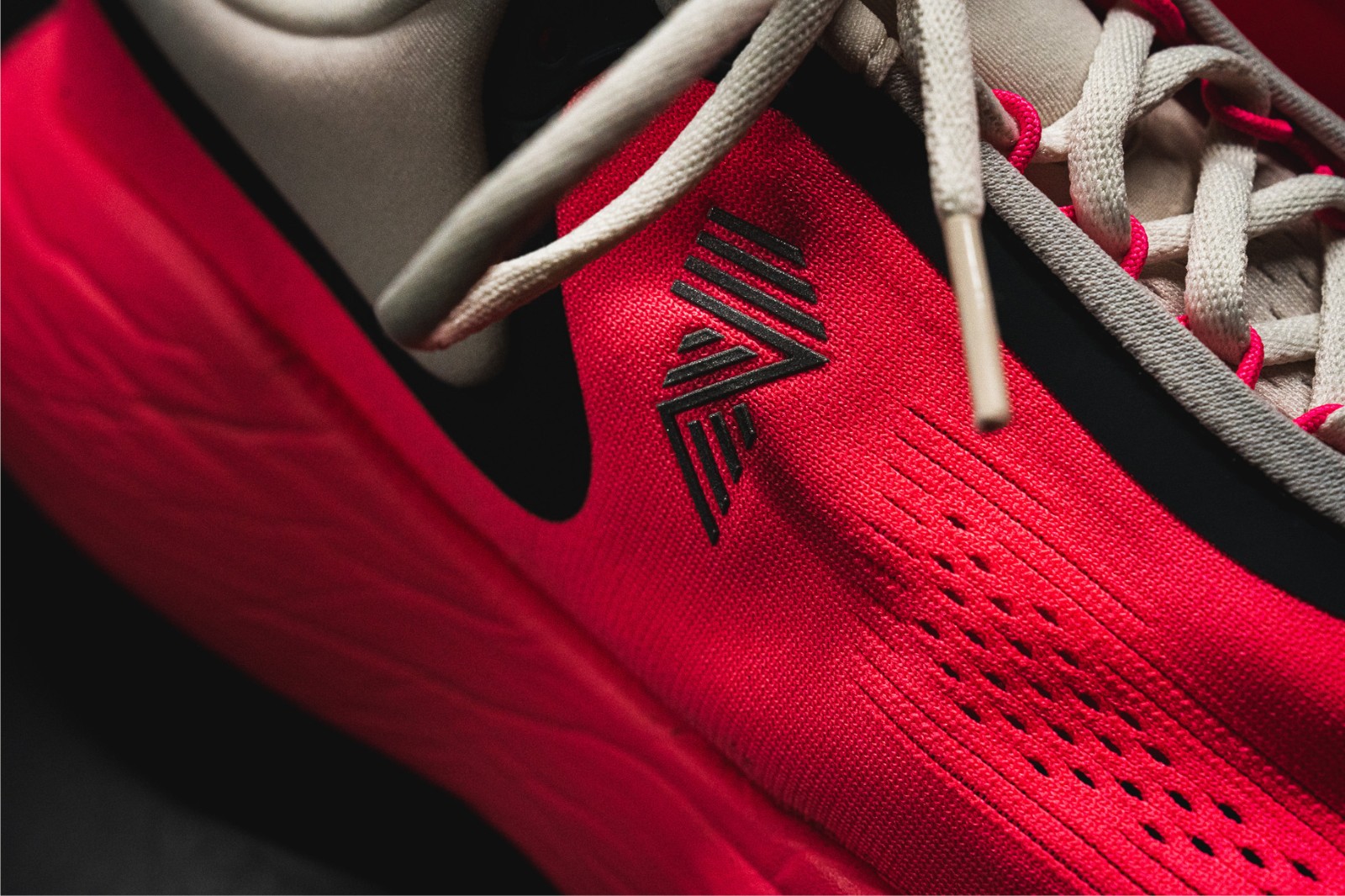
SupraFoam midsole, BioFlite upper, 360Fit wrap, LaceLock laces
Available now for $202
THOMAS: Act is new to us.
When they first reached out, I pulled up their website and immediately thought — jeez, these look a lot like Mount to Coast shoes. Clean lines, beautiful colorways, Helvetica-adjacent font as a design element. That’s a compliment. And, oh yeah, there is a Mount to Coast C1.
I told them I’d review the shoe, but I’d have to call out the similarities. They were cool with it, so they sent us the C1.
Act is a Certified B Corporation focused on sustainable, eco-friendly products. And look, in 17 years of reviewing running gear, “environmentally conscious” has almost always been a red flag.
Runners will tell you the environment matters. We need places to run. The earth has been pretty cool. But when the rubber meets the road, performance wins every time. Price is the other problem. Eco-friendly products cost more, and the “pay more, run mediocre” formula hasn’t been winning anyone over.
Allbirds was the poster child for a while. Now they’re pivoting into tech. Mason Jennings was right — all birds fly away.
The point is: unless the shoe performs, the moral high ground isn’t worth the premium.
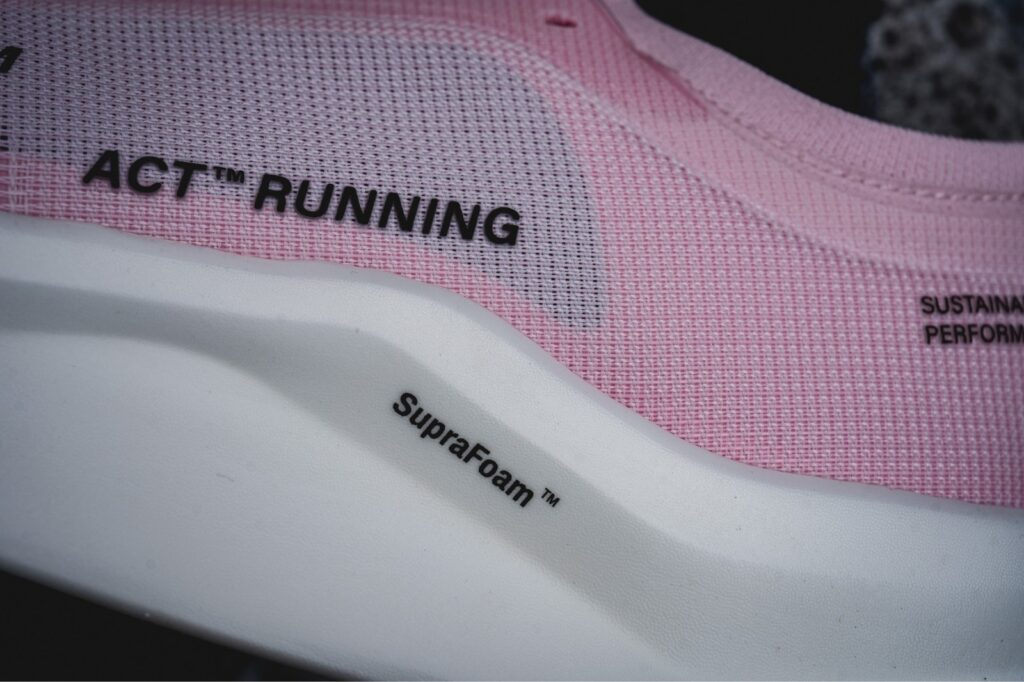
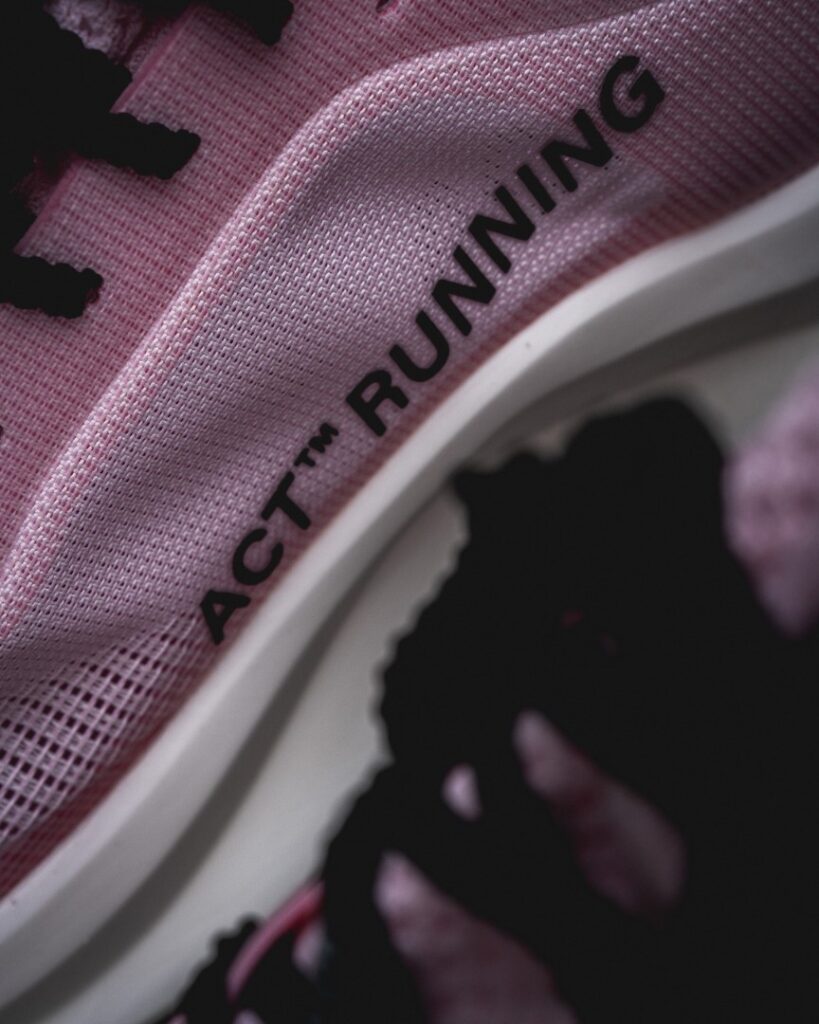
The good news is that environmentally friendly foams are starting to compete. The C1 runs on SupraFoam — a supercritical foam — and a bio-based upper called BioFlite that’s single-layer, lightweight, and molds to your foot. The shoe emits 3.62kg of CO2, about 14% less than a standard running shoe. Spread over thousands of pairs, that number adds up.
But if the shoe sucks, none of this matters. It doesn’t suck. It just has room to grow.
JOJO: My day job and passion projects all revolve around sustainability and climate technology. My main hobbies revolve around running far, biking hard, and sweating it up in hot classes. Historically, the materials that perform best in high-intensity, high-sweat environments have been petroleum-based synthetics, whereas bio-based and natural alternatives have tended to absorb moisture, dry slowly, and break down more quickly. True sustainability and true performance have rarely shown up in the same product at the same time.
So, when Act Running came onto my radar, and I received the C1 to test, I was excited! Never heard of the brand before. None of my friends have either. But here was an intersection of my interests — and if you’re reading this review right now, you’re probably just as curious about that intersection as I am.
First things first, I sent the brand to my friend, Ella, who sits at the crossroads of fiber science (how materials are built and how they hold up), materials innovation (how to engineer and successfully launch alternatives), and circular fashion (how to reduce waste and emissions). She’s also a francophile who ran the French Wine and Cheese Society at our undergrad college and has taken numerous trips to France to ski, mountaineer, and complete Le Tour de Mont Blanc. The perfect peer reviewer for this French sustainable performance-wear brand.
Second things second, as a part-time patent and LCA (life cycle assessment) assistant in the biotech and design tech space, I had to dig into the science and material processes of this shoe. Here’s the breakdown:
SupraFoam: Act’s nitrogen-infused supercritical foam. Compared to traditional EVA foam, the process uses no toxic chemical finishing agents, solvents, or water. There is also no residual carbon gas emissions from the finished product — what you’re wearing is cleaner at every stage of its life.
BioFlite: Act’s upper. Based on BioFlex, BioRip, and BioPerf’s product descriptions, this appears to be derived from castor beans. Castor beans are one of the most promising renewable resources for bio-based materials. They require minimal water, thrive on marginal or degraded lands, and do not compete with food chains or contribute to deforestation. Ella broke down the castor bean-to-wearable-material process for me.
In short, the oil from castor beans undergoes numerous chemical steps to arrive at the same end material as its petrochemical equivalent — just with a plant-based starting point instead of fossil fuels. Though not biodegradable, its durability — resistance to abrasion, UV, and wear — has been proven. Ella also flagged that the brand appears to have conducted a full LCA, especially given its B Corp certification, which is a meaningful signal of transparency in the fashion space, where greenwashing is common. If the castor bean attribution holds, this is bio-based materials done right, and the upper should be more durable, even if light.
Two spotlight materials. One ambitious claim. The “sustainable” part of “sustainable performance” checks out on paper. But the “performance”?
Let’s see…
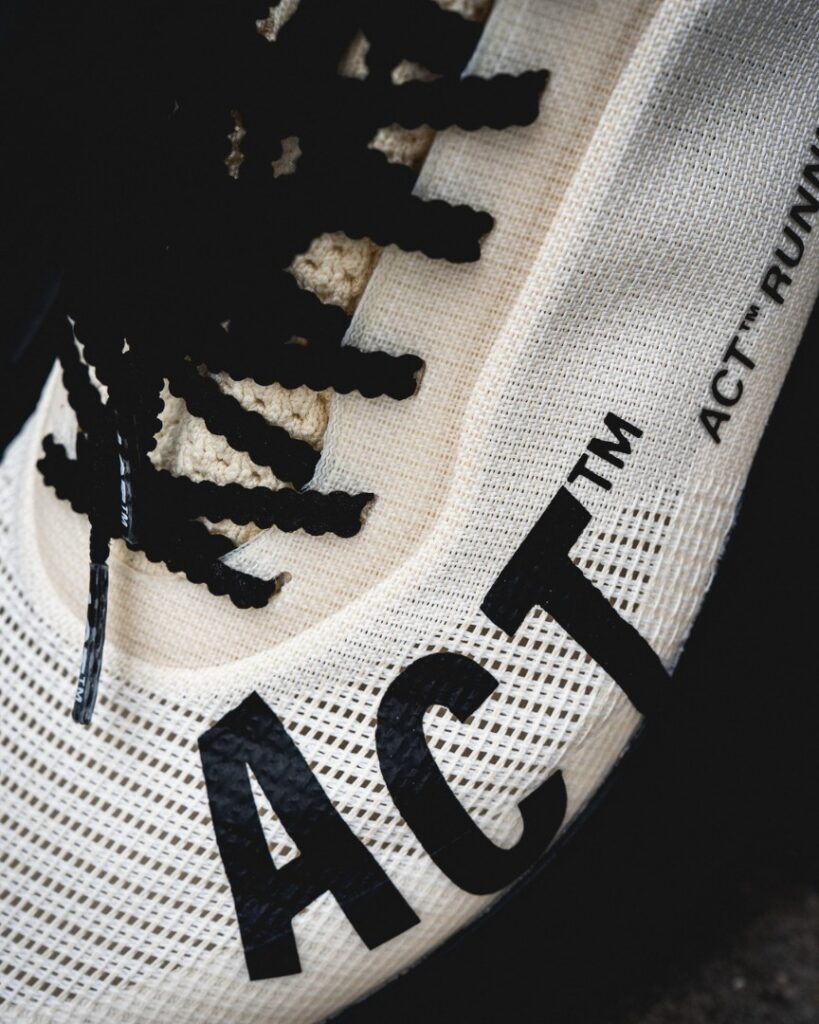
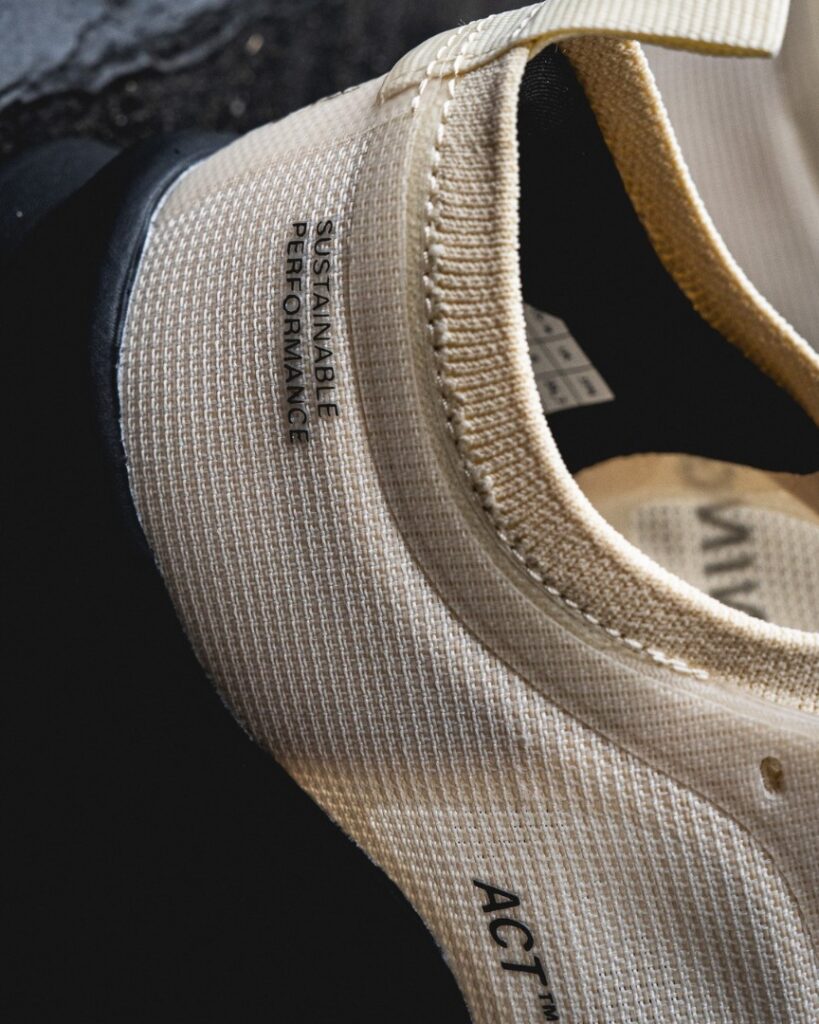
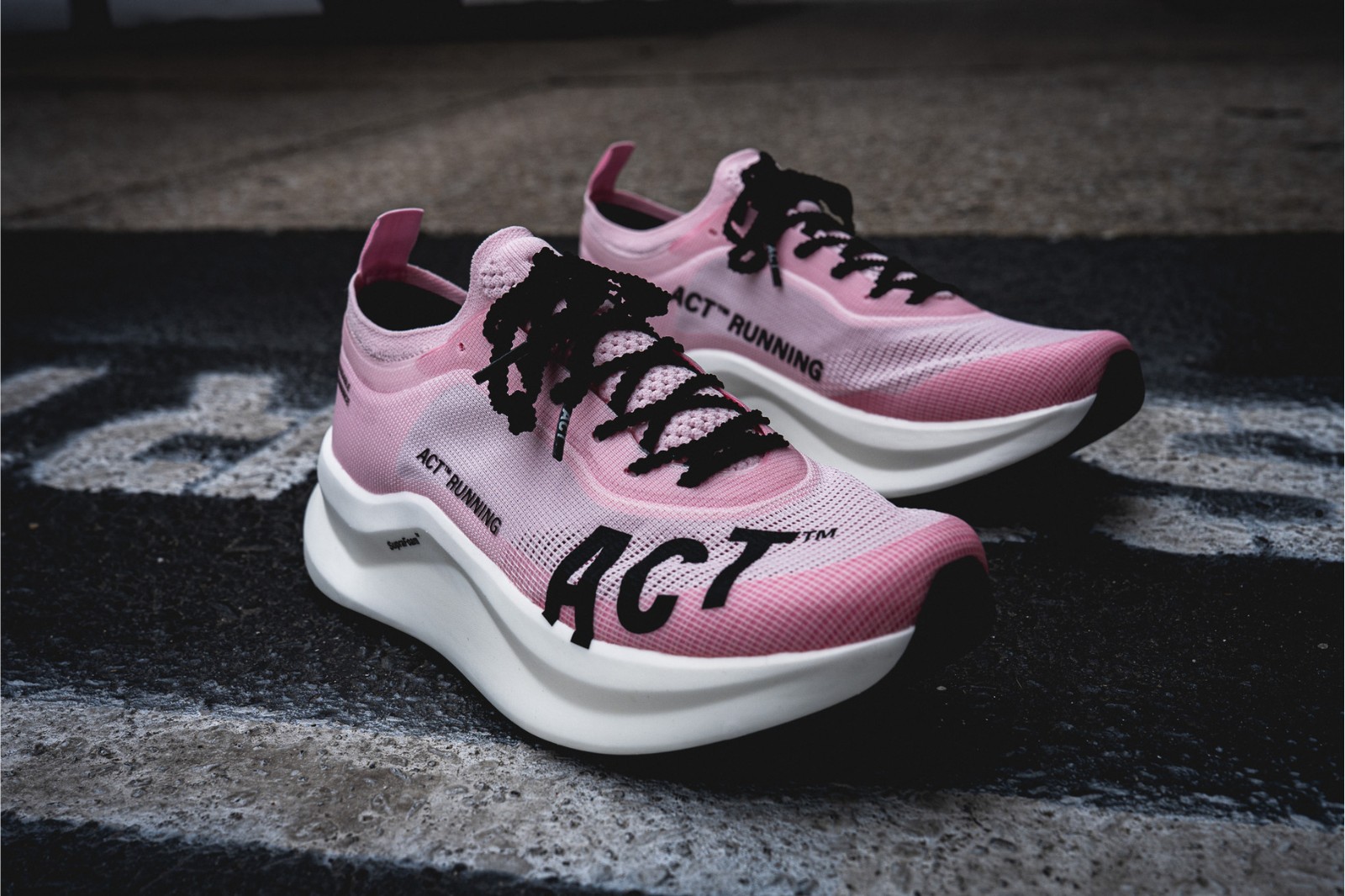
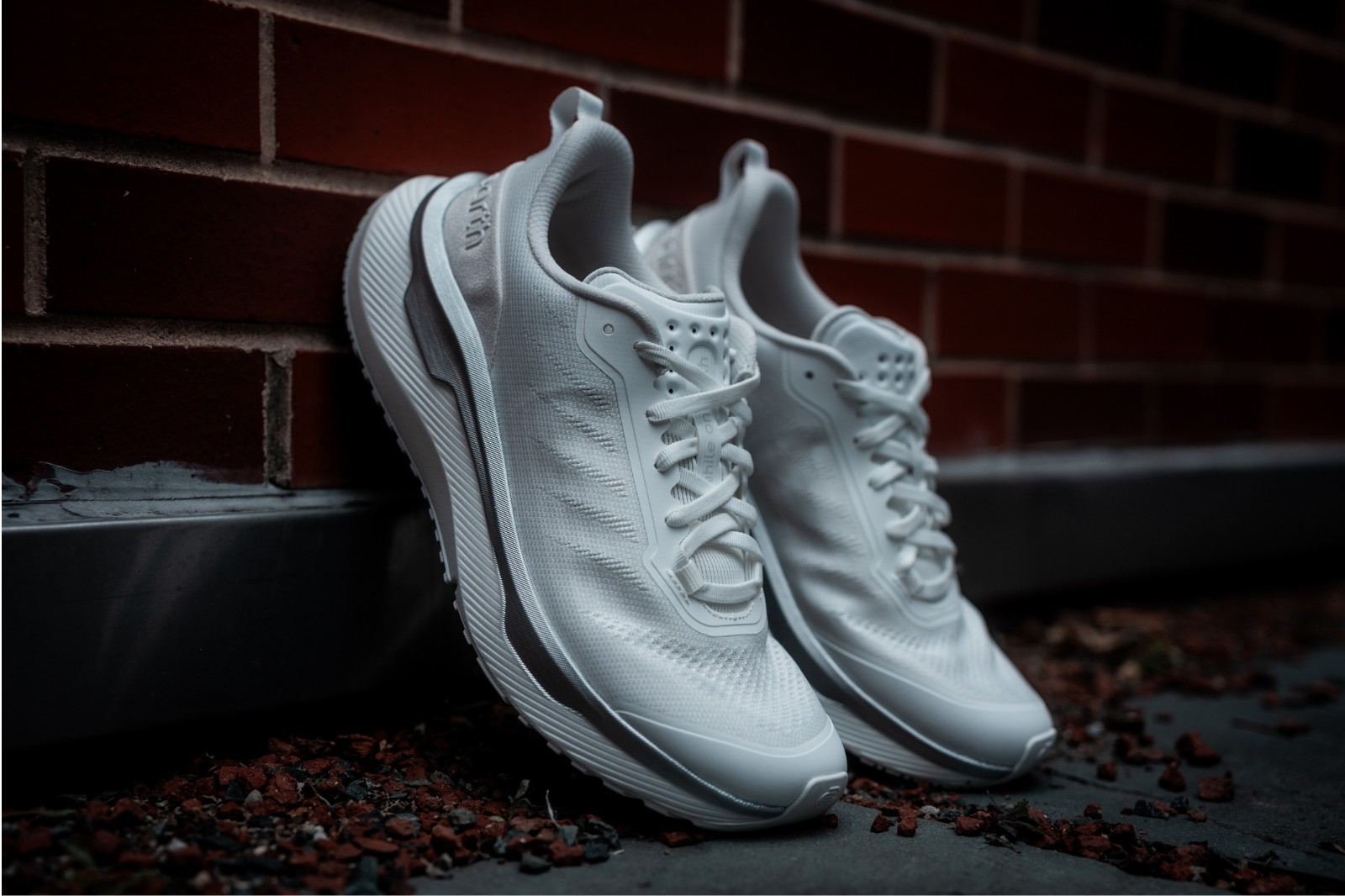
THOMAS: The shoe is beautiful. The colorways are considered. Act is a French company, and it shows. They know what we know: you eat with your eyes first.
The upper fits well. Open mesh over the toes keeps air moving with every stride. No complaints there.
The real surprise, however, was the SupraFoam.
At 34mm over 30mm, this thing has more cushion than I expected from a bio-based foam, with decent compression and rebound. It doesn’t just compete on the sustainability scorecard; it competes with high-stacked foams on comfort.
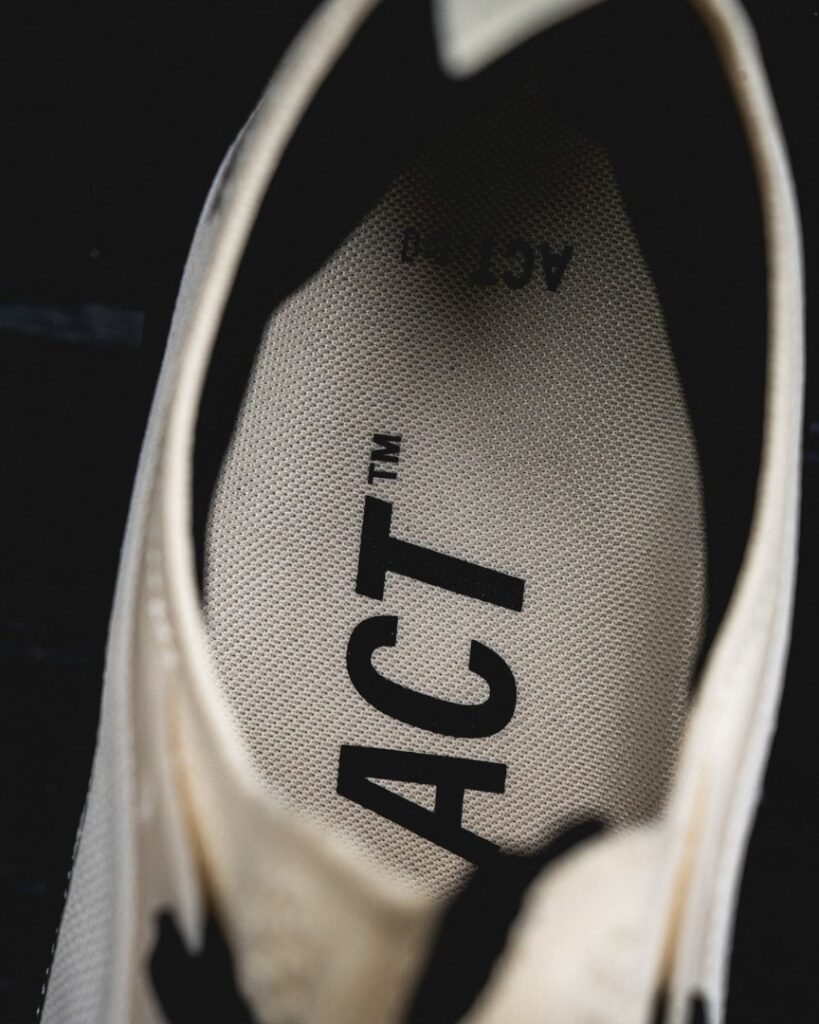
JOJO: Everything in the sustainability breakdown above fits right here, too.
On the performance side, I was pleasantly surprised by the BioFlite upper. Slipping on the shoe for the first time, I found it narrow at the toe and slightly loose at the heel — the opposite of ideal. However, as the miles went on, it loosened naturally and fit my foot well. The upper’s breathability helped reduce foot swelling, especially in the summer heat. The ride was firm with real ground feel, but somehow still cushioned enough for comfortable, long miles. Is that a contradiction? I think that might just be the SupraFoam doing its job!
Shop The Shoe - Unisex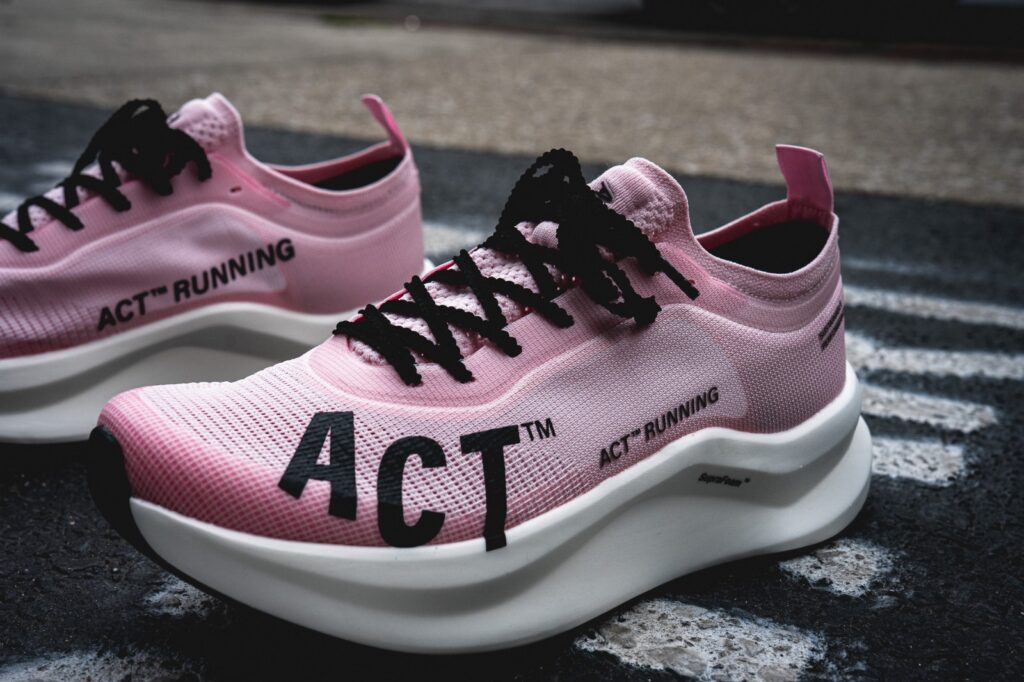
THOMAS: For me, the upper is where things fall apart.
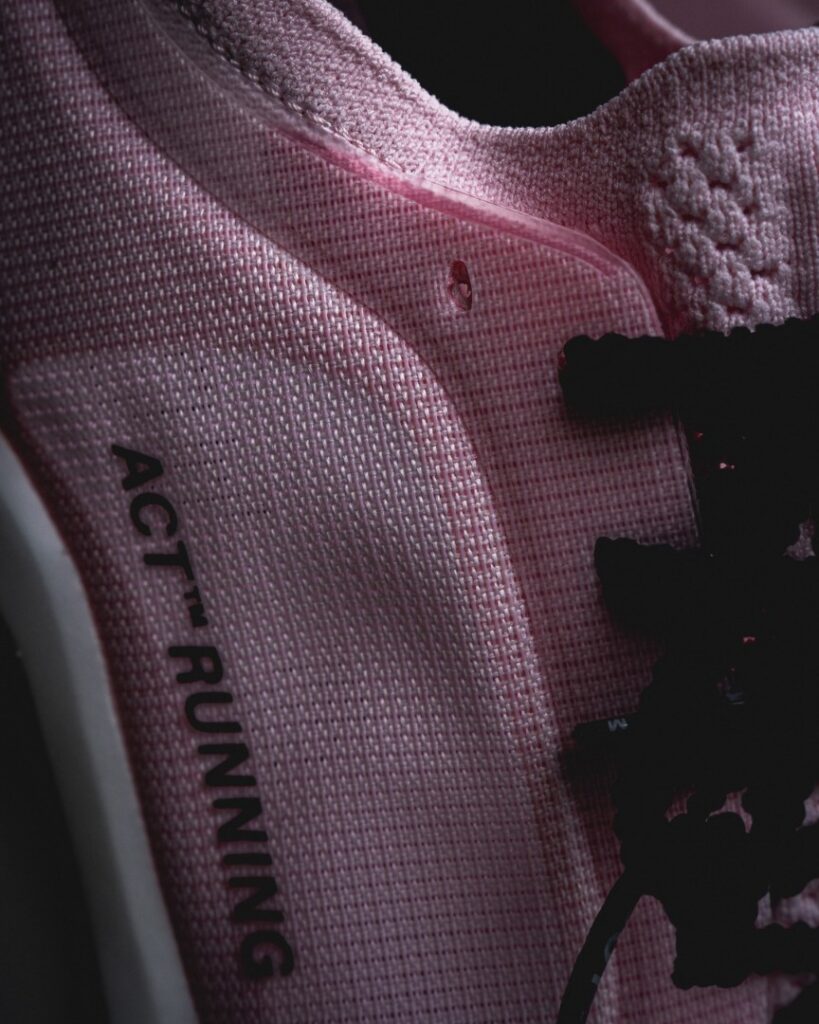
The integrated tongue is stretchy but thin and flimsy. The pull tab feels like an afterthought, because it probably was. It’s useless. We love a sawtooth lace, but these feel underweight for the build of the shoe. The materials don’t feel premium to the touch, and that’s a problem when the shoe looks this good.
Down below, Act’s outsole has the opposite problem: It’s too much of a good thing.
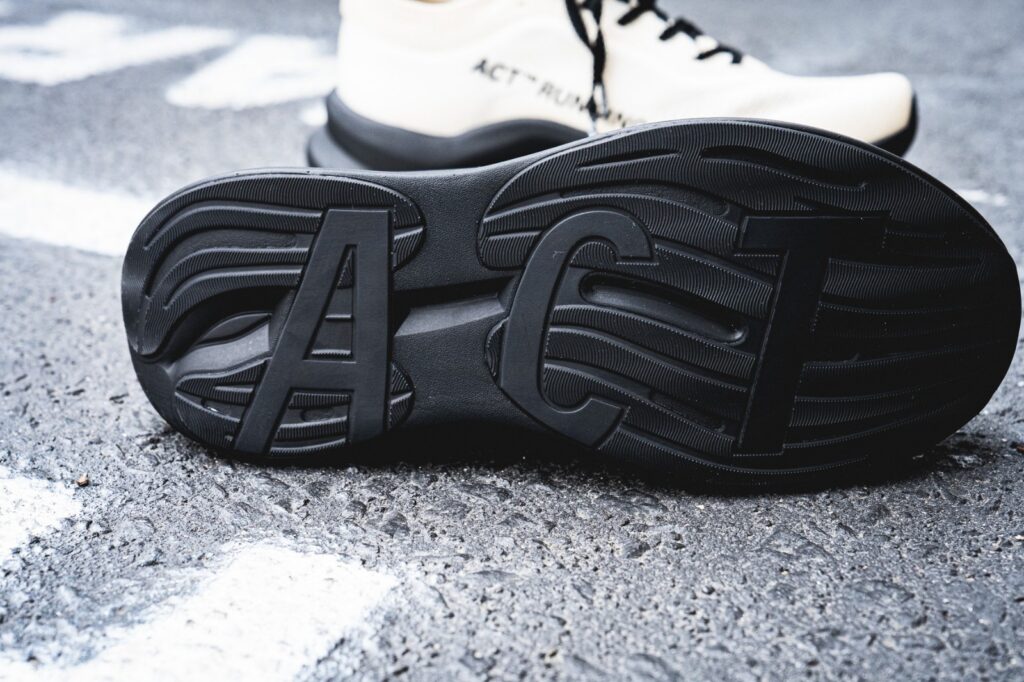
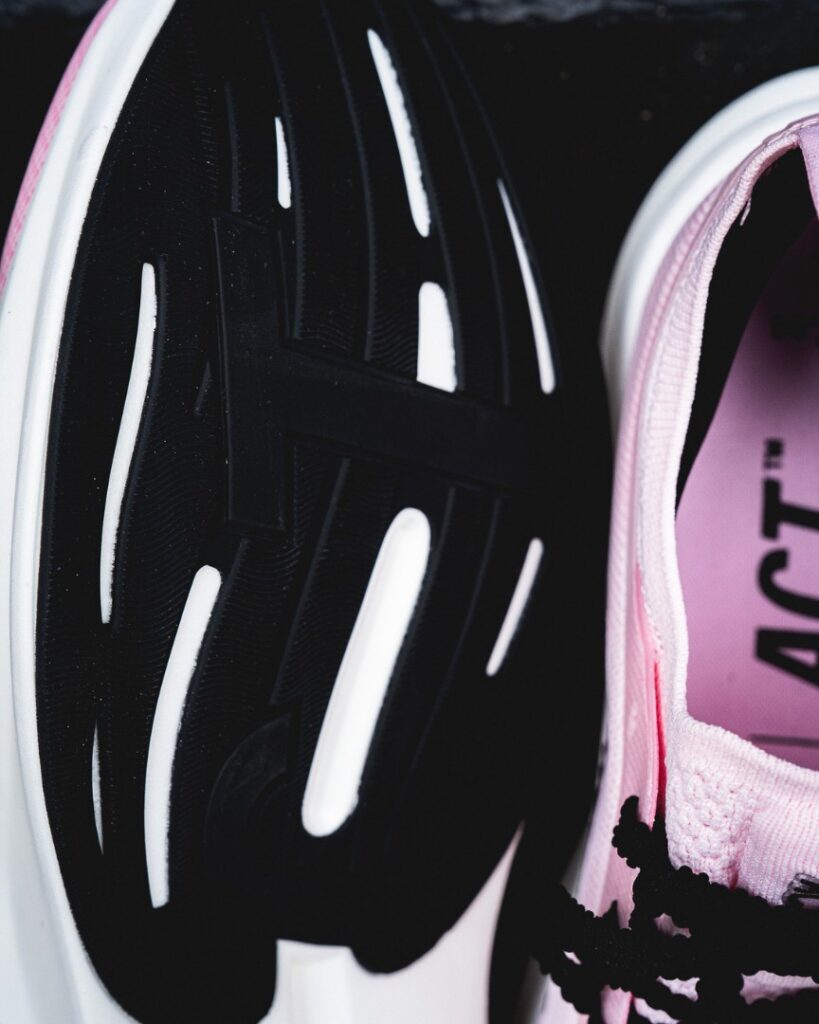
Full rubber coverage is generous to a fault. After 30-plus miles, the exposed foam shows no real wear, which suggests the rubber doesn’t need to do much heavy lifting. Pull some back. Open up the coverage areas. You’ll gain flexibility, drop some weight, and lose nothing in durability.
Lastly, the price. $202 for a daily trainer puts this shoe in the category of “are you buying the product or the comfort of being 14% more green?” It hardly feels like a fair conversion when the shoe costs €150 if you’re buying in Europe.
JOJO: With all of that, I had a pretty rough start with the Act C1. Some context:
I ran two miles in my Mount to Coast C1 to pick up the Act C1, and immediately put it on to finish my 10 miles for the day. What a way to compare shoes, huh?
Immediately, with the narrow toe box, I felt my bruised toenails for the first time in a long time! The pain faded after around three miles — probably a combination of the form-fitting upper and the discomfort fading into background noise. But still, the rest of the run was a roller coaster: old knee pain flared, big toe joint pain resurfaced, and my body seemed to be protesting the shoe switch in real time. It all resolved itself by the end of the run, but it was a lot!
Flash forward three days, and I finally felt warmed up to the shoe after 18 miles. At this point, I wanted to test out the speed and different workouts. Tempo runs, slower end of my usual. Threshold workout, faster felt harder. The rocker was not as advertised for me. The sawtooth lacing system came undone once.
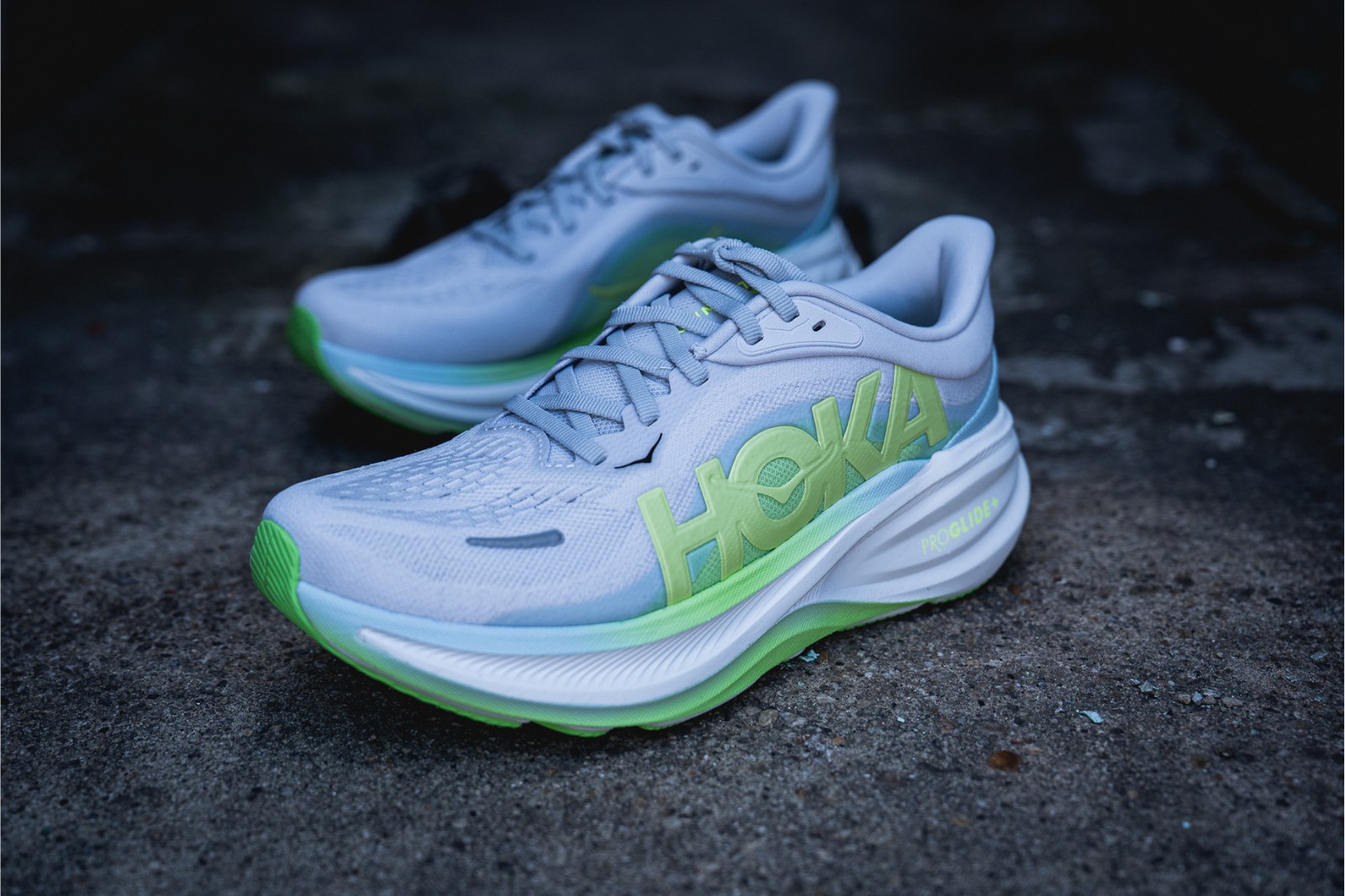
On the design side — and this is me being extra picky — I’m not a fan of black shoelaces on lighter colorways. I am someone who applies color theory to my artwork, my home, and my fashion choices. And as someone who likes to coordinate my running fits and dress colorfully, I found myself reaching only for my black gear! I would love to see white or lighter laces as an option (as Hoka does) for the softer colorways, such as pink and mint green.
Shop The Shoe - Unisex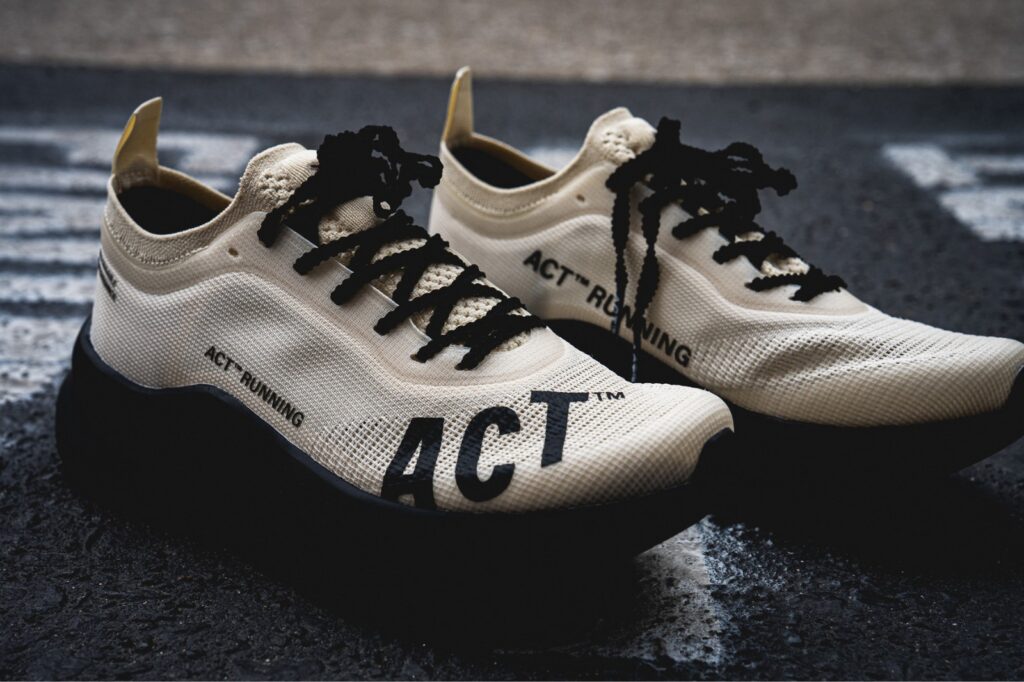
THOMAS: The Act C1 is a solid introduction.
With some refinement, Act has a real shot at becoming a legitimate alternative for runners who care where their gear comes from. They’re not alone in that space; Hylo is doing the same thing. It’ll be worth watching these two figure out performance with a conscience.
The consumer for this shoe knows who they are. Style and sustainability over all-out performance. That’s not an insult — that’s a lane.
I’ll keep wearing the C1. Probably more for fashion than running. But that actually makes it a great travel shoe. You’ll get your miles in and walk into a restaurant after without changing. That’s a win.
JOJO: All that being said, by the end of my first week and beyond my testing miles, I found myself reaching for the Act C1 voluntarily.
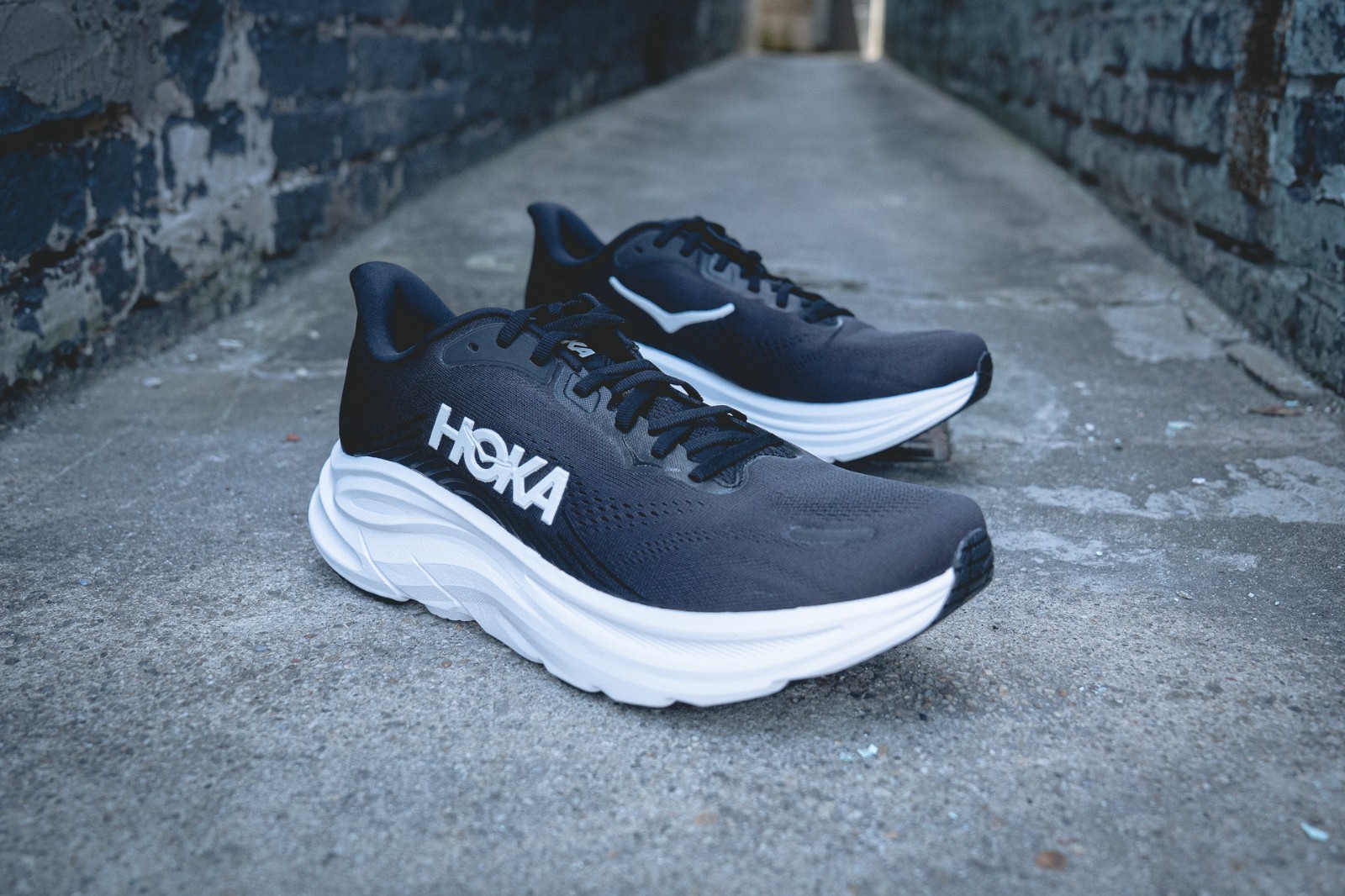
I’m still gauging if it could confidently sit in my running rotation, though. It is less cushioned than the Mount to Coast C1, my daily trainer and recovery shoe of choice. It is slower than the Hoka Mach X, my staple for tempo and long runs.
As with any innovation, I have so many questions. The most important one for now: how many miles can this shoe sustain? Durability is where sustainability and performance most directly collide, and for a shoe fresh to market, it remains an open question. A sustainable shoe that wears out after 200 miles is a different environmental story from a conventional one that lasts 500 miles.
For now, I’ll give this “sustainable performance” shoe an overall rating of B. The “sustainable” portion maintains its beginning-of-life credibility, but we still need to understand its durability at the end of the life cycle. The “performance” portion currently doesn’t stack up against established daily trainers, especially at the price point.
BUT, someone has to trailblaze this space. New supply chains, new materials, new manufacturing processes — none of that comes cheap, and the brands willing to absorb that cost and do it right deserve the runway to get there. Act Running looks like one of them, and I’m excited to follow the brand along its journey!
You can pick up the Act C1 for $202 from Act Running by using the buttons below.
Shop The Shoe - UnisexHave something to say? Leave a Comment
Sign in or create a free account to comment. You'll come right back here.
Sign in / Sign up


As the founder of Believe in the Run, Thomas’s goal is to help runners pick the shoes and gear that will make their running experience the best that it can be.
More from Thomas
Jojo thrives at the intersection of movement, sustainability, and community.
Baltimore is her home base. She loves logging long miles across the city and Patapsco State Park, bringing her pup to run clubs, and deepening her yoga practice. During the week, she is a Business Strategy Manager at Lumina Solar, where she helps accelerate the transition to renewable energy. On weekends, she dedicates her time to climate restoration efforts serving Baltimore’s parks and waterfront and hosts dinner parties and creative events for her friends and the fitness community. Jojo also loves creating shared adventures, organizing group trips that inspire friends to run their first trail races, take on ultramarathons, and explore new corners of the world together.
More from Jojo
Be one of the first runners to rate it.