Shop BITR Apparel Shop Now
We independently review everything we recommend. When you buy through our links, we may earn a commission.
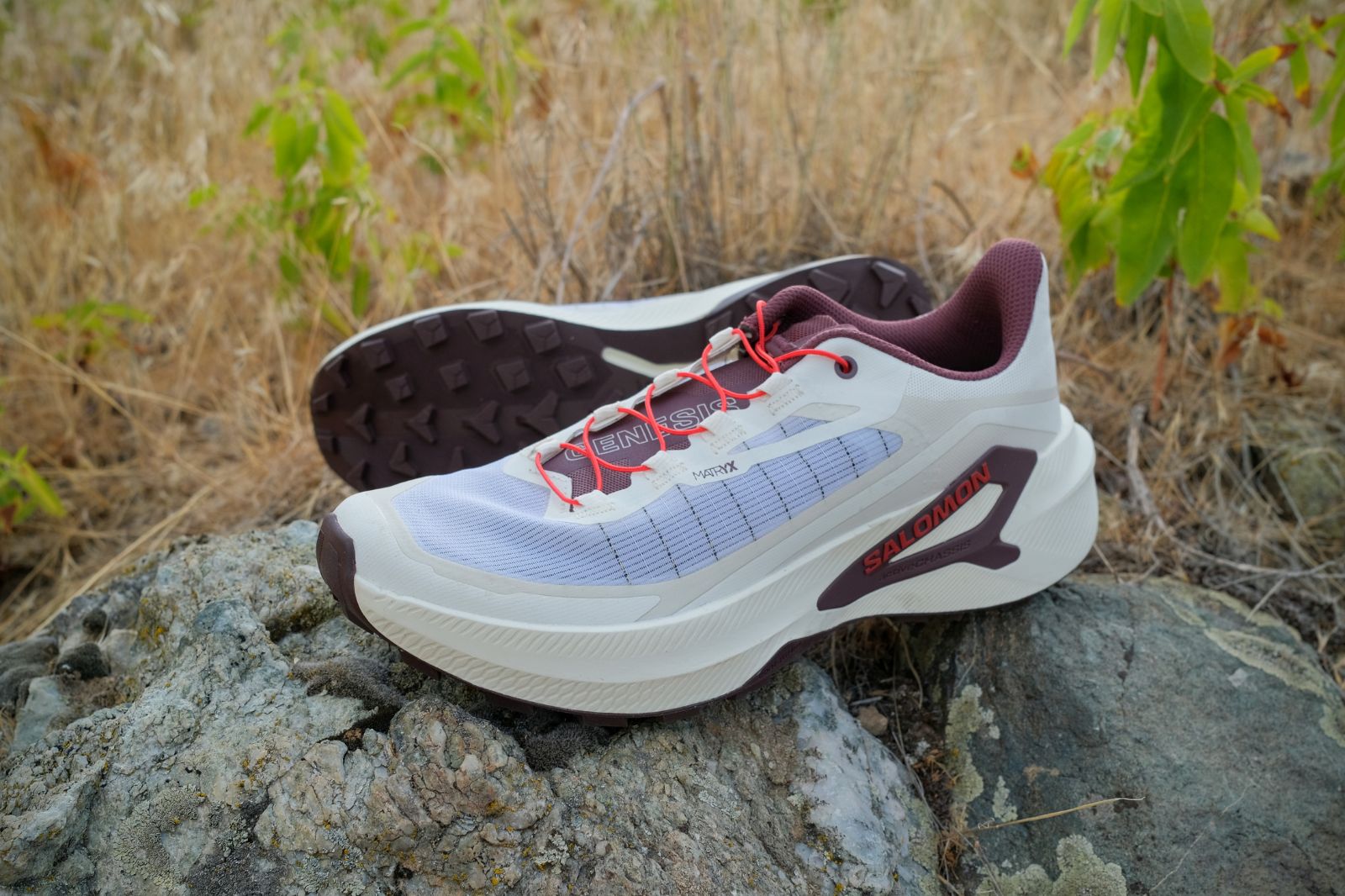
9.6 oz. (264g) for a US M9 / 8.3 oz. (235g) for a US W7
34mm in heel, 26mm in forefoot (8mm drop)
Technical trail running
OptiFoam midsole, Active Chassis, Matryx upper, ContaGrip outsole
Available now for $150
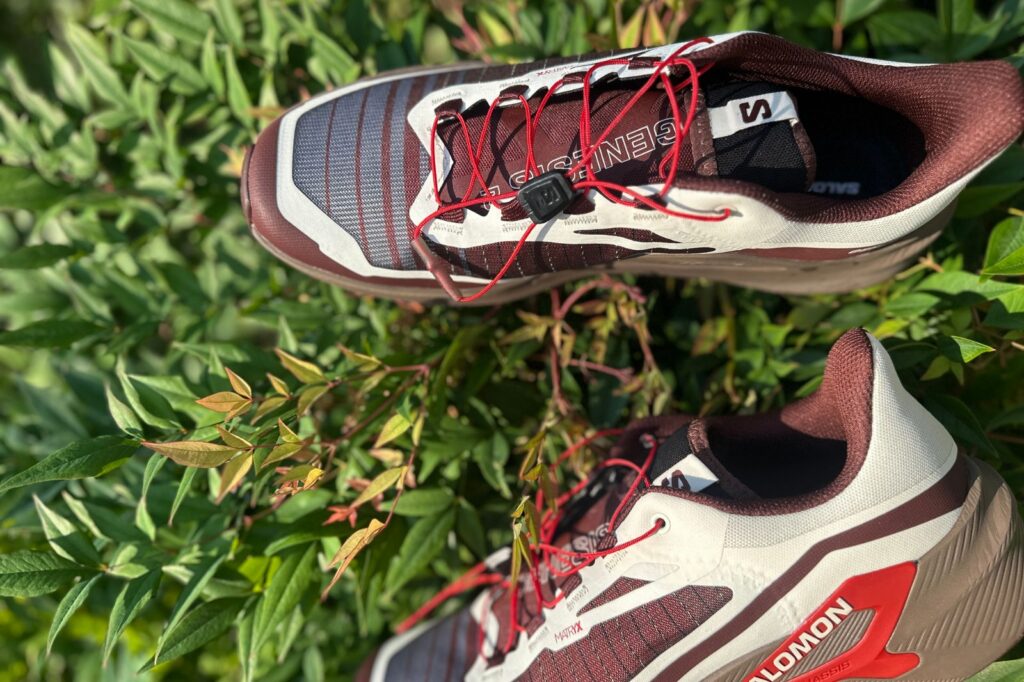
ALEX: The Salomon Genesis 2 is positioned as a mountain adventure and technical trail workhorse in the Salomon trail lineup. The Genesis was designed specifically to be highly durable and handle rugged terrain over long distances. This positions it right below their high-end S/Lab racing tier. The Genesis 2 is loaded with premium components that aid in the shoe’s durability and versatility.
I really enjoyed running in the first version of this shoe, largely because it came with no surprises. Salomon was my go-to brand for nearly seven years, and I always felt like I could pick up one of its shoes and know exactly what to expect. Unlike many brands, I felt like Salomon was able to stick to who it is and not chase trends or replicate others.
Honestly, that’s my biggest problem in running right now: Change. There have been so many instances where I’m loving a shoe and open to a lifelong commitment, and then it changes in fundamental ways, and I have to divorce it. It loses touch with its sole (or maybe its literal soul) and becomes unrecognizable. The thing that brought us together no longer exists, simply because my shoe wants to be something it was never designed to be.
Anyway, back to the point… Salomon is sticking true to its core identity, and those loyal to the brand are likely to appreciate this iteration of the Genesis.
JOHN: I’ve run in many Salomon shoes, but this is my first ever time reviewing a pair. I guess I got lucky, or maybe fate is on my side. I love all shoes, good, bad, or whatever, but when you get a Salomon shoe to review, it’s like watching the sunrise on the beach, the birth of a child, eating at a five-star restaurant for the first time, or like watching the Star Crash episode of Mystery Science Theater for the first time. It’s a deeply spiritual, life-changing experience.
Where does the Genesis 2 rank on the Genesis scale? So many classics: Neon Genesis Evangelion, playing Shinobi on the Sega Genesis, Invisible Touch by the band Genesis!
I mainly wore the Sense Pro when I first started running in 2017-2018, but Salomon became less accessible for me, and I opted for stuff like the Brooks Cascadia that I could get at the local running stores where I worked. I’m very excited to get back to Salomon. Let’s see how the Genesis did!
RENEE: To keep this section short, I’ll focus on one of my main concerns for any shoe: price. The Genesis 2 is $150. Aside from true budget shoes, we aren’t getting many shoe options at this price anymore, especially for truly technical trail shoes. So, let’s see if there’s still value in the more affordable realm.
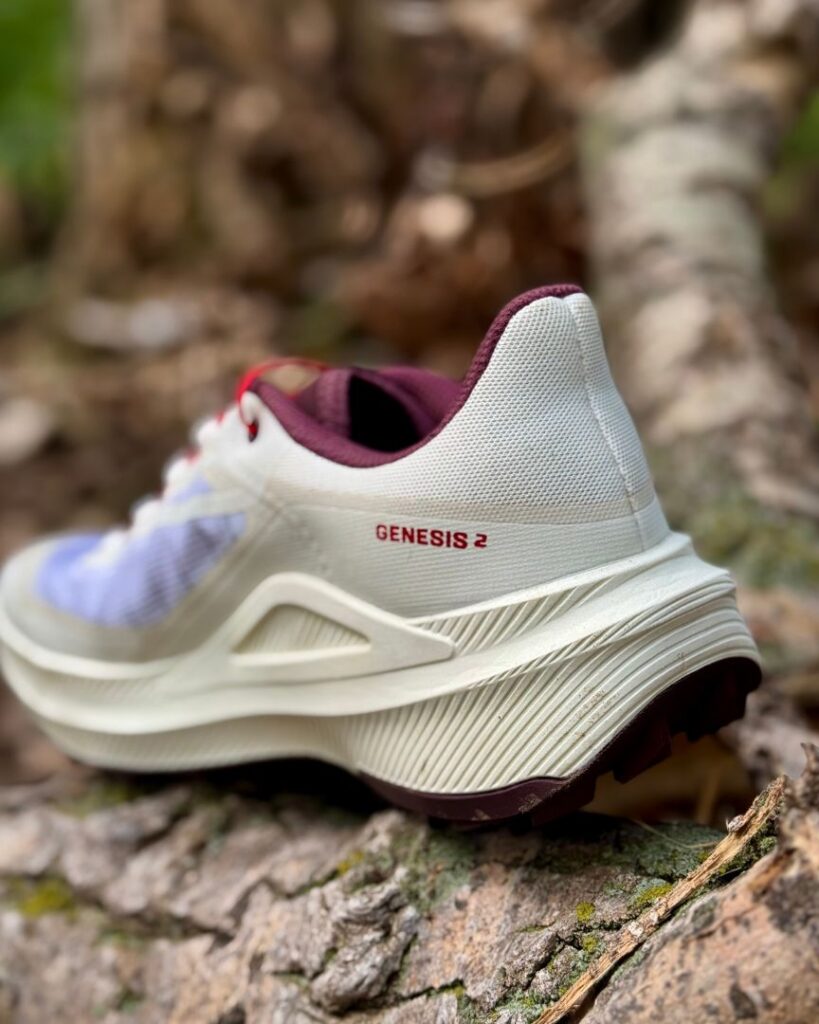
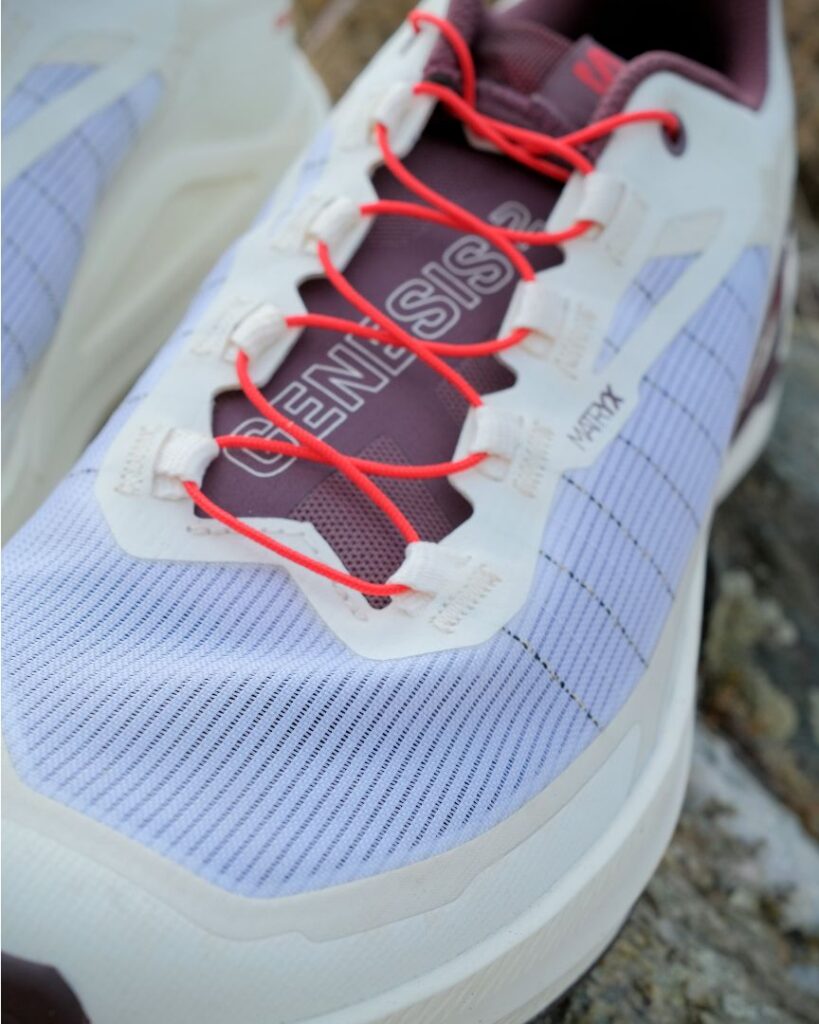
ALEX: The Genesis 2 is a shoe that knows exactly what it wants to be. It’s like that friend in college who always had a plan, followed that plan, and became the rural medicine physician they were always destined to become. Lately I’ve run in a lot of trail shoes that seem to borrow ideas from everyone else, sometimes ending up as a collection of (sometimes mismatched and unbalanced) features rather than a cohesive package. Salomon continues to lean into its steadfast identity, and that authenticity shows. Nothing feels trendy, in the best way.
Compared to the original Genesis, version two adds a bit of weight, but it’s intentional and worth the wait, or weight. The slightly wider platform and increased forefoot volume make the shoe more stable without losing the precise fit you expect from Salomon. It maintains a relatively low-volume fit, but it’s more accommodating than before while maintaining a secure fit.
The updated ActiveChassis integrated into the midsole is one of my favorite updates. Rather than relying on bulky overlays, it provides stability from within the midsole platform. The result is a confident feel and a smooth, natural stride. It adds some density underfoot, but the ride stays balanced instead of feeling heavy.
The OptiFoam EVA midsole strikes a nice balance between protection and ground feel. There’s enough cushioning for long days on technical terrain without disconnecting you from the trail, and the stable platform inspires confidence. The ride feels a bit dense, though it strikes a nice balance between agility and not feeling like you are being rockered or flung off of rocks.
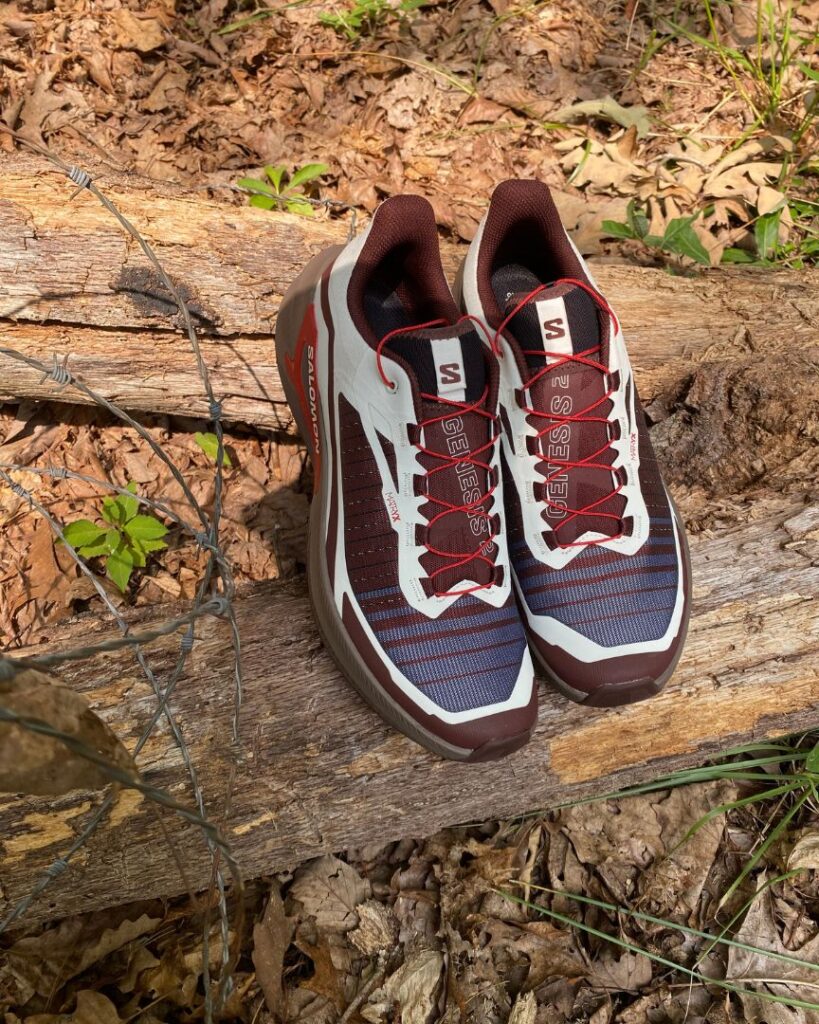
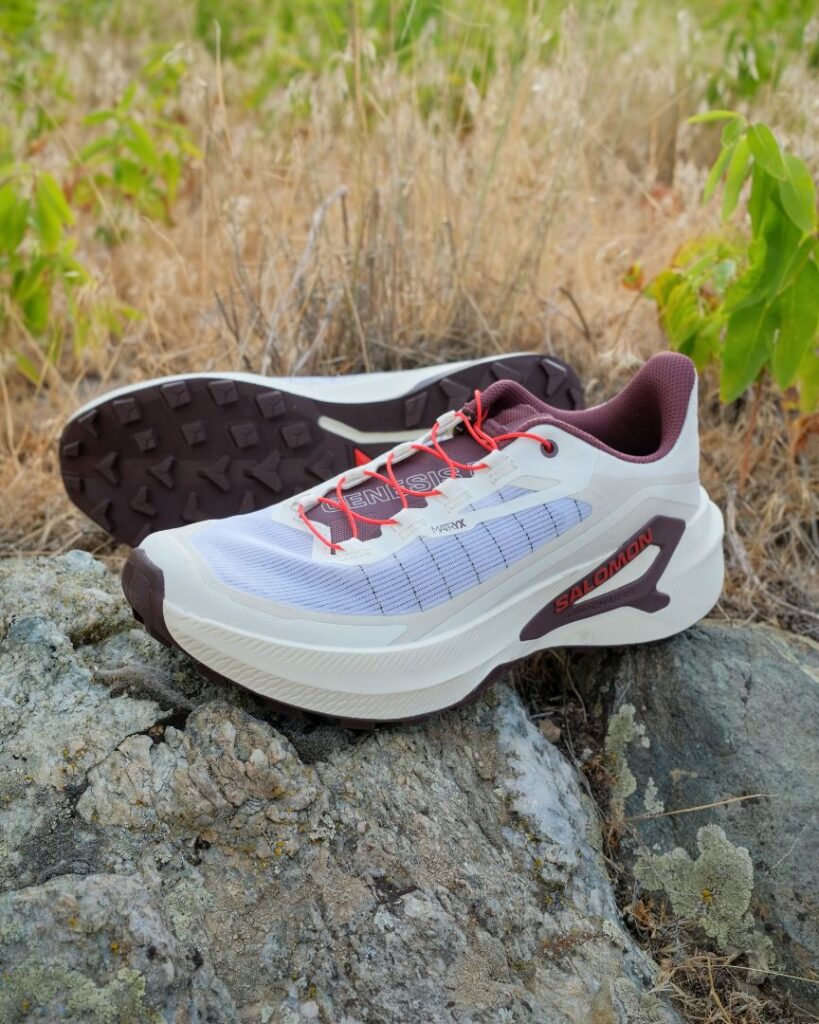
The Matryx upper continues to be a standout for me when it is on just about any shoe. It’s durable and highly abrasion-resistant, breathable, and drains water well instead of absorbing it. Paired with Salomon’s EndoFit internal sleeve, the foot feels securely wrapped.
The heel collar deserves some recognition as well. This is the area of the shoe that can quickly become a dealbreaker for me. It’s soft enough to be comfortable while still providing enough structure to keep the heel locked in on uneven terrain. Salomon could probably shave a few ounces here, though I am not sure I want them to. This just works. The 8mm drop combined with the plush heel collar that sits at the perfect height feels like a joyride for my Achilles.
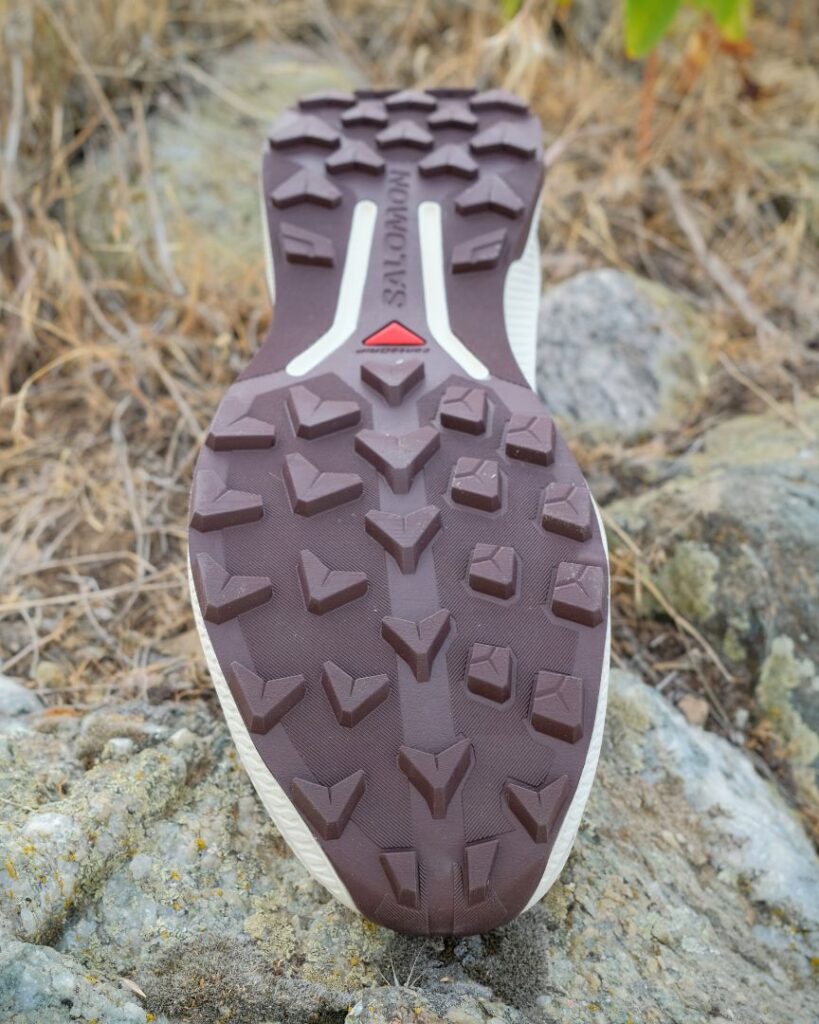
The rest of the shoe is classic Salomon. A familiar tongue and Quicklace system make it easy to dial in a quick, consistent fit, while the updated 4mm ContraGrip lug pattern delivers reliable traction.
Finally, and maybe most importantly, there’s the price. At $150, the Genesis 2 is an impressive shoe for the money. With premium trail shoes regularly pushing $200 or more, it’s refreshing to see Salomon keep this model accessible without sacrificing durability or quality. You shouldn’t have to spend $200 to get a well-built, capable mountain shoe, and the Genesis 2 proves that you don’t.
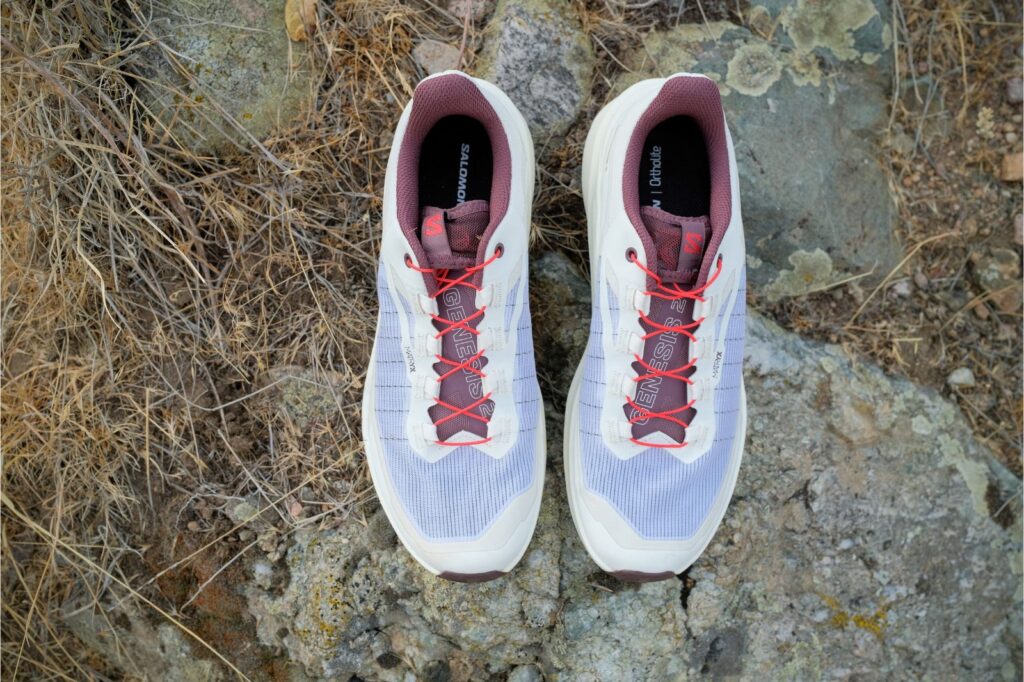
JOHN: The moment you put on the Genesis 2, you realize you are about to run in a trail shoe that’s on a higher tier. It doesn’t matter if this is your first time using the Salomon lacing system or your 50th; it’s an old friend that just really helps dial in the perfect fit. As great as it is, I’ll have some thoughts in the next section.
The ride almost made me cry. I’m not a good trail runner. I’ve done many hard races just by being stubborn. My road times don’t match my times running on trail at all, but the Genesis 2 feels incredible and gives me road-like confidence on trail, which is a real big deal because I’m normally all over the place on trails.
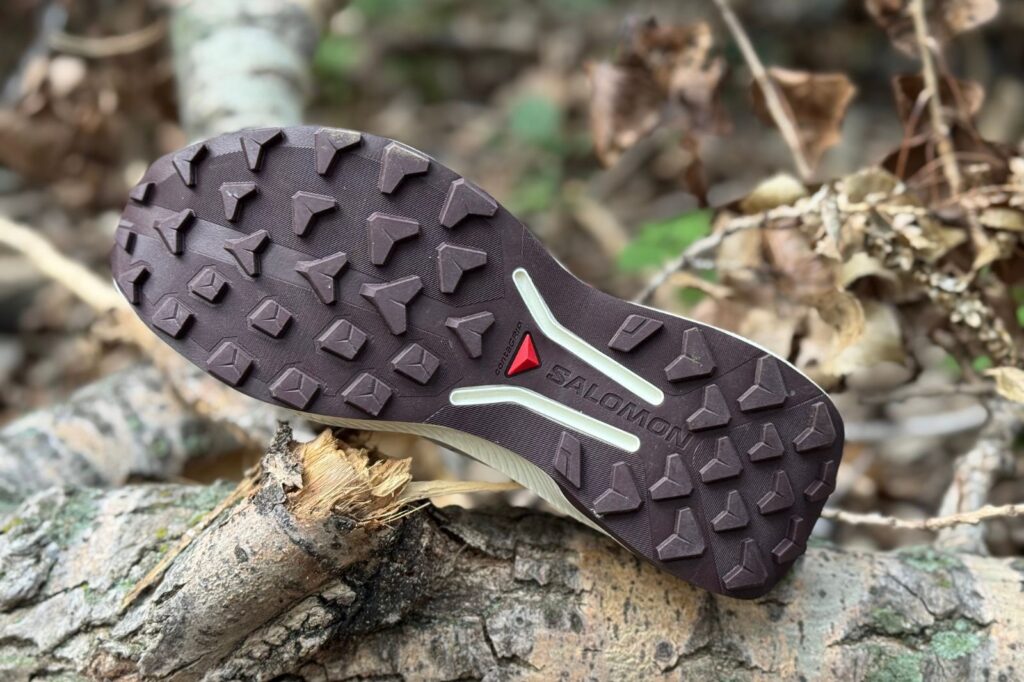
The combination of OptiFoam cushion and ContaGrip lugs makes the trail feel easier. The lugs are also pretty aggressive, but it doesn’t feel overdone and didn’t feel bad running on little stretches on the road to get on trail either. The 21 miles I ran in the Genesis were delightful! I consistently felt good running uphill, downhill, rough terrain, and easier stuff. I did have some issues with rougher surfaces, but we will touch on that in the next section.
The Vanilla Ice / Iron / Lava Falls colorway is also legendary (this may very well be the best name for a colorway ever). I’m just going to say it: a lot of trail shoes don’t look cool. As much as I loved the Cascadia 20, my fellow reviewers had a legitimate grievance regarding the look of the shoe. That’s not the case here; the Genesis 2 looks like a blend of a hiking boot and a sleek road running shoe. It’s really the standard of what a trail shoe should look like. Not a clunky SUV but a highly tuned Forza car.
Also, $150 is totally worth it (with a few caveats we will address in the next section). I thought the price was a mistake. I don’t know how Salomon can pull this off, but I can only imagine what the high-end Salomon shoes are like.
RENEE: I’ll try not to repeat what my fellow shoe geeks wrote, because I agree with everything they think. The Genesis 2 is a trail shoe for trails. Duh, right? Not really. The shoe world is filled with road-to-trail options and hybrid shoes that aren’t great for technical terrain. Salomon sticks to what it knows best. For ground feel and control on uneven switchbacks, the Genesis 2 is a top option for $150.
The design aesthetics are good-looking, too, not that I’d suggest using this as a casual shoe. The outsole lugs coupled with the ground feel work great on loose rock and some mud. If you frequent sloppy and less-than-ideal surfaces, the Genesis 2 has you covered.
Shop The Shoe - Men Shop The Shoe - Women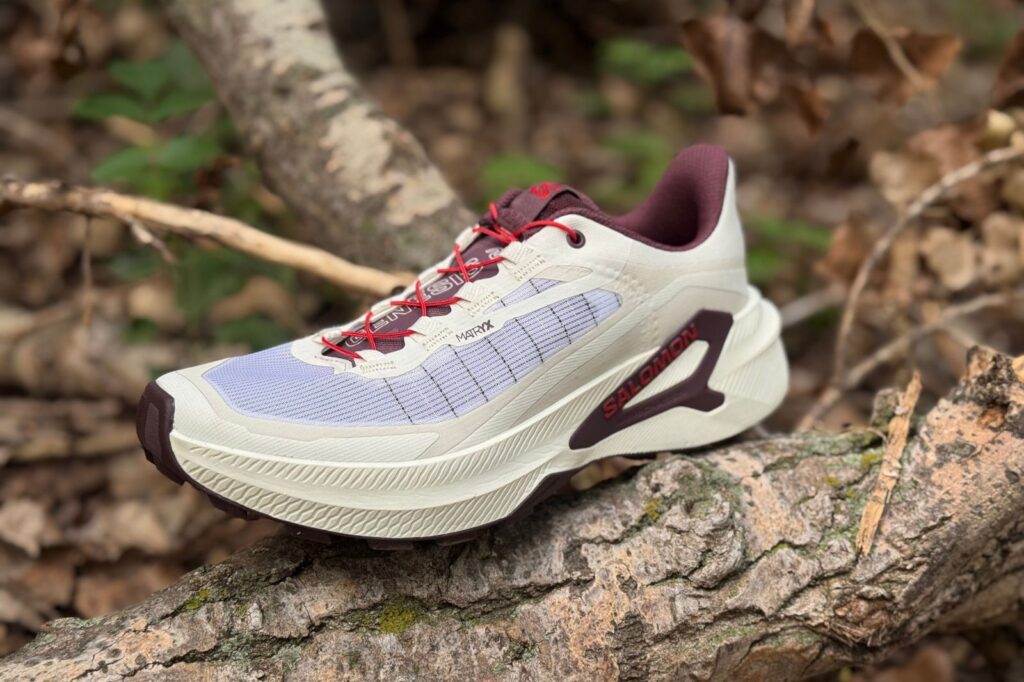
ALEX: With both the Genesis and Genesis 2, I felt a little less confident in the durability and performance of the Quicklace system. On the first version, I experienced the laces slipping and coming loose a bit. In this version, it seems a little less durable, showing slight evidence of fraying. I have never had an issue with the Quicklace breaking, though my anxious mind definitely considers the possibility, especially if I were to wear this for a race.
My US W8.5 weighs about 9.5 oz, which is not the lightest shoe on the market, and it gained weight slightly from the previous version, but it is definitely not a dealbreaker given many of the improvements support a more durable package and comfortable ride
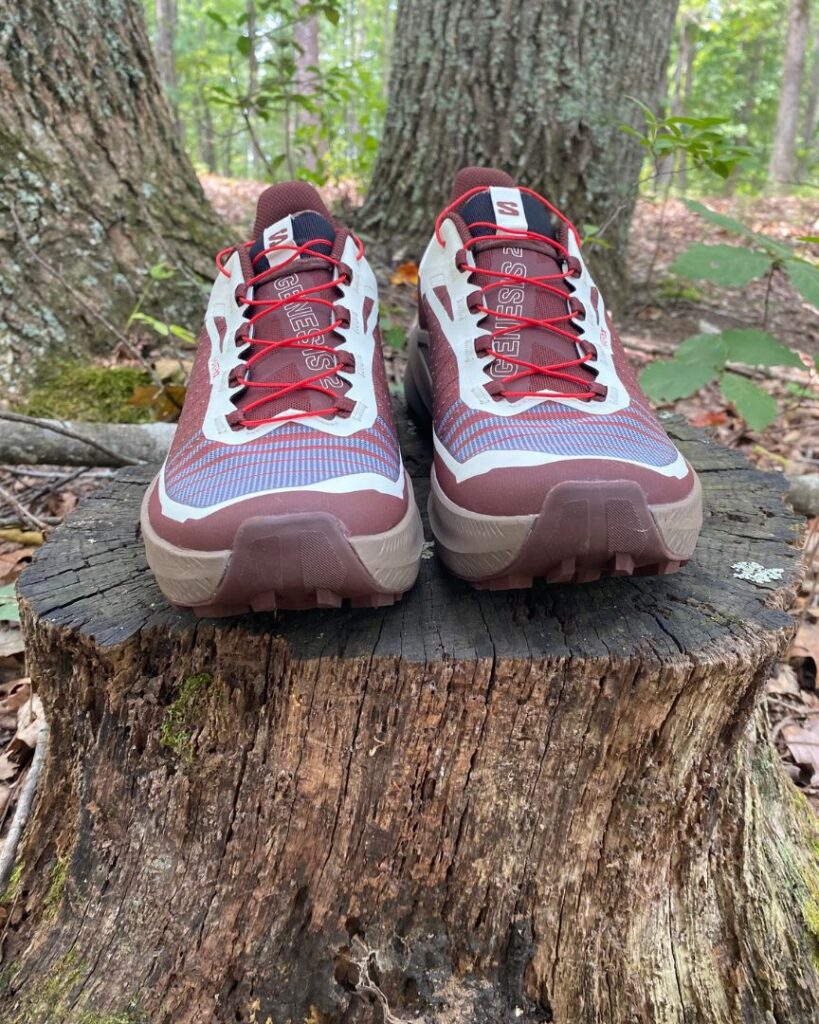
JOHN: One thing about being a reviewer is that when you get a big name brand that you haven’t reviewed before, you can’t get starry-eyed. As much as I love this shoe, there are a couple of things I can’t shake. Right out of the box, the lacing system seemed slightly janky and frayed in spots.
I love the Salomon lacing system, and even with it seeming somewhat defective here or not of the best quality, I don’t see it tearing during a race. I’d never be organized enough to have a backup, and I damn sure wouldn’t be able to replace it on an ultra that requires motor skills. I’m curious to hear if this was an issue my fellow reviewers had or if mine was an isolated case.
My next issue is that the Genesis 2 isn’t very protective underfoot. Even on fire roads, I could feel stuff poking me at times. I’m used to running in minimal shoes, so for me it wasn’t that big a deal, but it did surprise me, and I feel like I should share in full disclosure because this definitely isn’t a minimal shoe, and if you have a tender foot, use it at your own risk.
RENEE: Again, my peers cover my thoughts. I’m not a big fan of the Quicklace for lockdown, and my US W7.5 is equivalent to an EU 39 1/3. Like most Salomon trail shoes (not their gravel options), looking at EU sizing works best for me. I have a bit more length than I prefer, especially given the elf heel. I didn’t have the heel lockdown I would want for a shoe meant for nimble movements on technical trails.
To echo John, the forefoot is a bit unforgiving, so I wouldn’t want to spend hours in the shoes if I’m solely on runnable terrain. Now that the second version of the S/Lab Genesis is out, Salomon has the first version on sale (at the time I’m writing) for the same price as the Genesis 2, and I’d recommend that shoe as an option with a bit more padding.
Shop The Shoe - Men Shop The Shoe - Women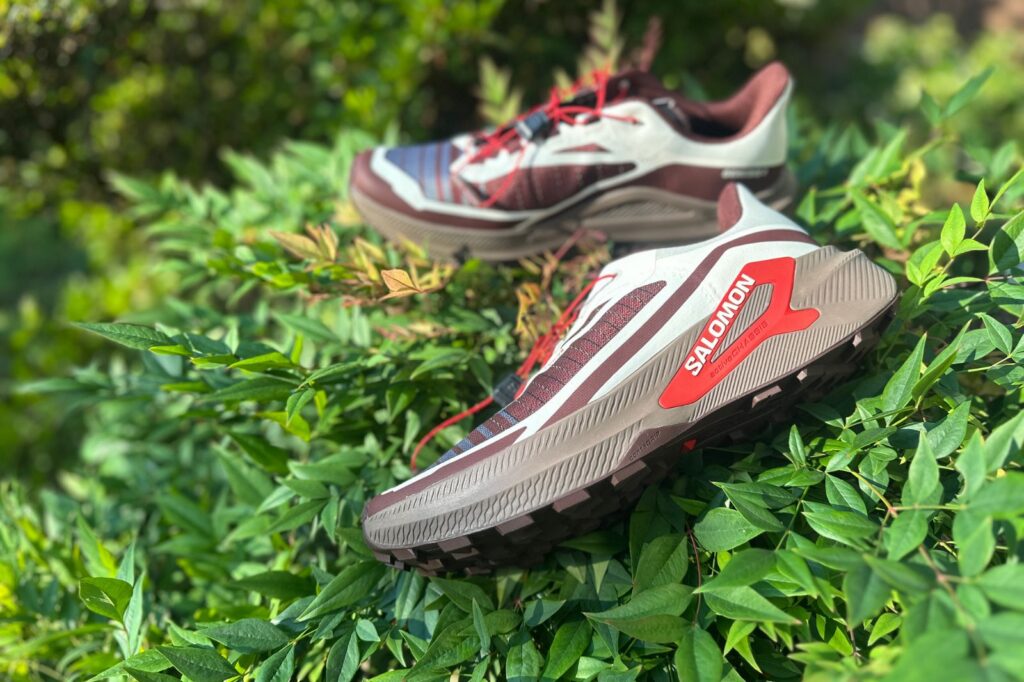
ALEX: Salomon, keep being you. You’re killin’ it.
JOHN: “Anywhere can be paradise as long as you have the will to live. After all, you are alive, so you will always have the chance to be happy. As long as the Sun, the Moon, and the Earth exist, everything will be all right.”
This is arguably the deepest thing said on Neon Genesis Evangelion. If you are a trail runner, the Genesis 2 gives you an extremely high chance at happiness.
I love high-end shoes, but I’m a value guy at heart. I really enjoy having that review of a $75 rotation shoe that’s serviceable (looking at you K-Swiss Shadx with much love). I’m very self-aware that that’s my lane here at Believe In The Run, and I really enjoy it. With that said, I can say with about 90% accuracy this is the second-best shoe I’ll review this year, and if I review a better shoe than this I’ll be shocked. That’s how good the Genesis 2 is.
Up to this point, my favorite this year was the Cascadia 20, which is only $140. For that price, it offers an incredible balance of protection and comfort across multiple surfaces. I ran the Old Dominion 100 in it. The Genesis 2 is very close, but for me, it just isn’t as protective underfoot, and I’m not going to be super nitpicky about how the shoe’s lacing system arrived. That said, it’s annoying for a shoe to arrive for review with any component in poor condition.
RENEE: If you need or enjoy traditional trail shoes, here’s your $150 option. Runners who enjoy Salomon’s other trail shoes will be happy with the technical abilities of the Genesis 2 without having to shovel out more cash. My first version of the S/Lab Genesis is still in good condition, and if I need a technical shoe, I’d pick that one. For more comfort and a shoe better suited for mixed terrain, Salomon’s gravel shoes (the Aero Blaze or Aero Glide) and the Ultra Glide 4 offer more flexibility, even if at a higher price.
You can pick up the Salomon Genesis 2 for $150 from Running Warehouse (featuring free shipping and 90-day returns) by using the buttons below.
Shop The Shoe - Men Shop The Shoe - WomenHave something to say? Leave a Comment
Sign in or create a free account to comment. You'll come right back here.
Sign in / Sign up


An obsessed runner, John has run in most ultra races in the Mid-Atlantic area. Since he’s an ultra runner, it’s no surprise he’s also a lover of food. He’s also a dedicated father, caregiver, and veteran.
More from John
Alex is a trail and ultra runner originally from Minnesota, where she built her foundation on long winters and the rugged, rooty trails of Lake Superior’s North Shore. Now based in Utah, she trains along the Wasatch Front and continues to lean into long, multi-day efforts. She was the first female to set a supported FKT on the 310-mile Superior Hiking Trail and gravitates toward races that demand durability — especially in tough conditions, where sleep deprivation blurs the edges, and she’s learned to make friends with the hallucinations.
More from Alex

Renee lives in rural Nebraska and runs on gravel roads that may or may not be maintained depending on the time of year. If she’s not running on gravel or dirt, she usually opts to run trails instead of paved roads. Fun face: every Boston-qualifying road marathon she has registered for has been canceled.
More from Renee
Be one of the first runners to rate it.