Shop BITR Apparel Shop Now
We independently review everything we recommend. When you buy through our links, we may earn a commission.
4.35 oz. (123 g) for a US M9 / W10.5
Stack height unavailable (World Athletics approved)
800-meter racing
Carbon fiber plate, six-pin spike plate with titanium pins, full-length PEBA midsole
Available now for $160
KALEB: Well, the track season is about over, and I’m a wee bit behind on this review coming out of another busy college semester. Many distance folk right now are trying to avoid too many left turns, and getting their minds wrapped around their summer prep for cross country. But plenty of athletes are looking at their track-toasted superspikes and wondering where to go next.
Also, before we get too much further, the “you” I’m referring to in the title is the royal-est of royal yous — the spike is too fast for me, too, as I’ll explain in a moment.
Hoka has always flown under the radar when it comes to spikes. Sure, you got a lot of beginners attracted to something cushioned like the ol’ Crescendo MD of yore, but there’s never been a tip-top offering. Even the FlyX, Hoka’s first superspike, was never super aggressive; just a bouncy chonker of a distance spike with a no-longer-legal 25mm stack. As folks look to expand their spike rotation, I don’t expect many to look at Hoka… but maybe they should.
Fresh off the new 20 mm stack limit, Hoka has split the FlyX into two branches: Lite for long distances and Elite for middle distances. The FlyX Lite appears to be identical to the original FlyX, albeit with a lower stack. But the FlyX Elite —the spike we’re talking about today — this sucker is a whole new beast.
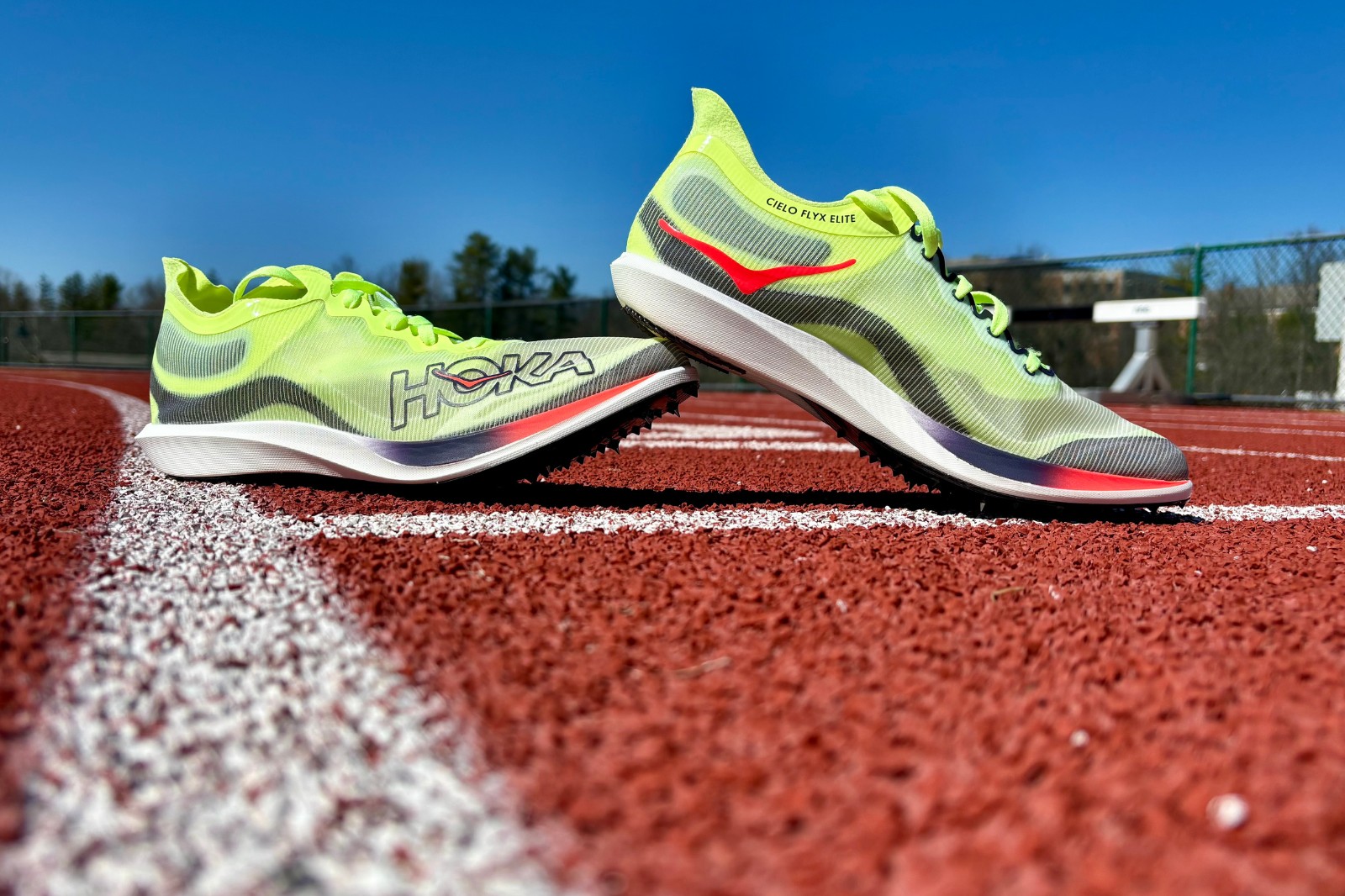
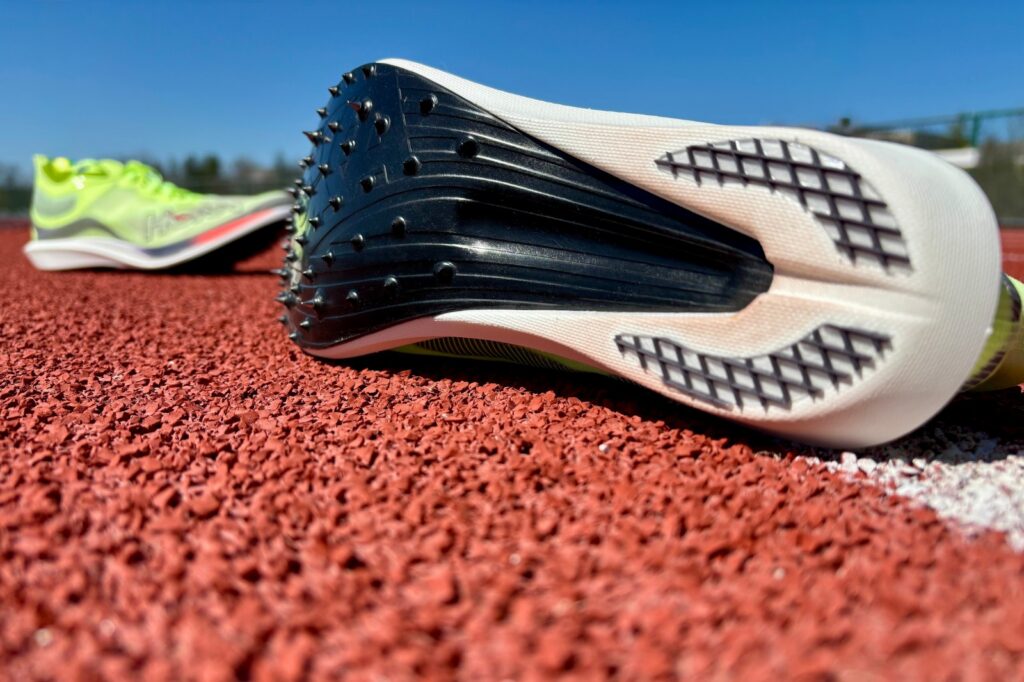
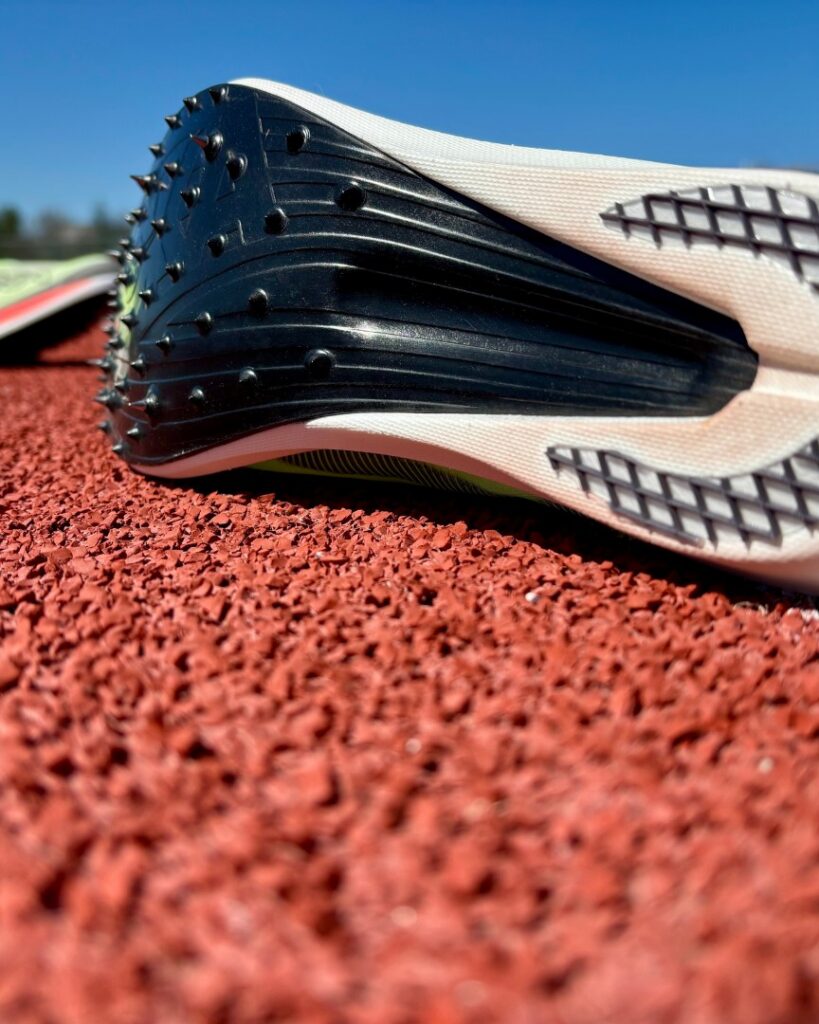
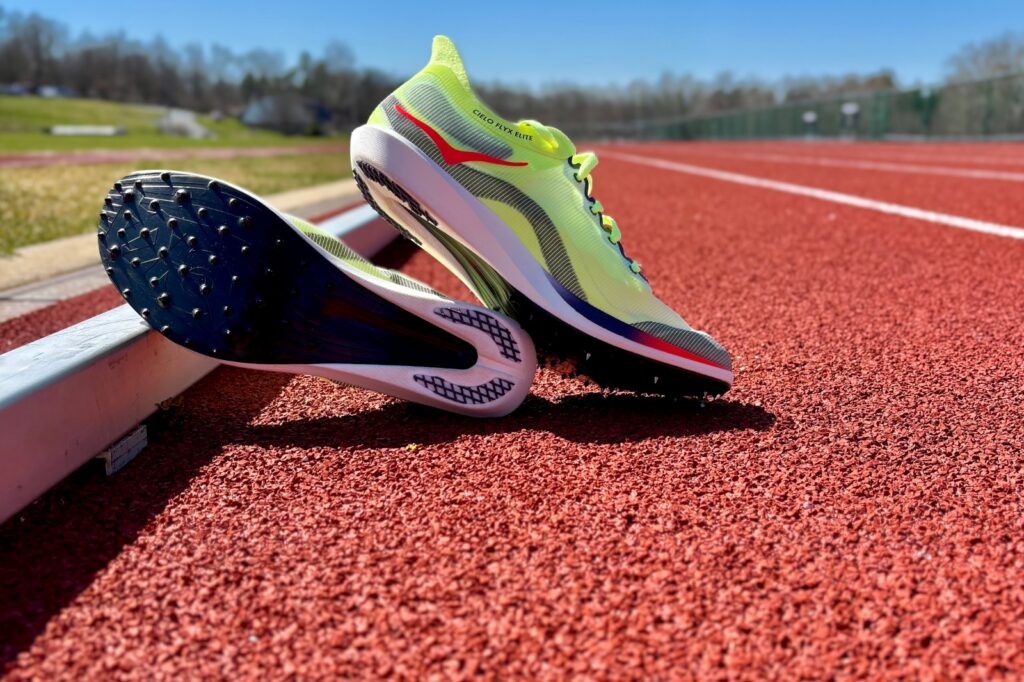
With 20 mm of PEBA underfoot, a full-length carbon fiber plate, a permanent titanium 6-pin setup, and a razor-thin mesh upper, the FlyX Elite looks to make a splash from the 400m up to the Mile. Let’s see if the Max Cushion Company has the guts to quit the pillow fight and make a real weapon.

KALEB: I always chuckle a little when “Elite” or “Pro” or some other upper-echelon word is thrown into the title of a shoe or spike. At the end of the day, the “Brooks Hyperion Elite MD” or the “Nike Dragonfly Elite” is probably going to find itself on the feet of just as many middle schoolers as pro athletes. Everyone always wants the best they can get, so even shoes designed for professionals will trickle down without much consequence.
Wearing the FlyX Elite was the first time I ever thought, “Oh, shoot, I might not be fast enough to wear this thing.” This spike is aggressive. Gone is Hoka’s wishy-washy max-cushion form of PEBA; gone is an underfoot stack that sinks gently into the track before adding a bit of pop to your race; gone is the “heavy but fun” sensation of the original FlyX. Hello to whatever formulation of PEBA Hoka put in the FlyX Elite, cuz hot dang can it get up and go.
I credit a lot of this to the plate geometry: stiff as a board and raised in both the heel and the toe. The lowest part of this plate is right under the ball of the foot, so no matter how you land, it’ll launch you forward. While I haven’t run in New Balance’s MD-X, the geometry of this spike is visually similar, arguably more aggressive, and with a firmer, more energetic foam compound than FuelCell.
My first reps in the FlyX Elite were some 200m strides early in the spring, just trying to feel some faster turnover. Immediately, the sheer force returned to my stride just about made my form collapse. That sounds like a bad thing, but that energy return was a massive plus once I adjusted to the pop the spike was giving me. I used the FlyX Elite for everything from 250m sprint reps to 800m races through the Spring season. While it wasn’t my best season of racing, I certainly can’t blame the spikes for that — they did their job just fine.
This is very much an 800-centric spike, bordering on 400-optimal, which I believe is a good thing. Could you take it up to a mile? Sure, if you’re an efficient runner. Would I take it a meter further? No, and that’s a good thing, because it means you’re really getting enough power in the shorter events that the spike shouldn’t be able to shift up too far in distance. Heck, I even recommended this spike to one of my sprinter friends who was looking for something with more cushion than a true sprint spike but enough aggression to handle a good 400m.
Underlying all the aggression is a set of six titanium perma-pins to save weight, working together with the thin-yet-strong upper to keep the FlyX Elite sub-4.5oz. My US M9 weighed in at 4.35oz, which is noticeably… erm, unnoticeable underfoot.
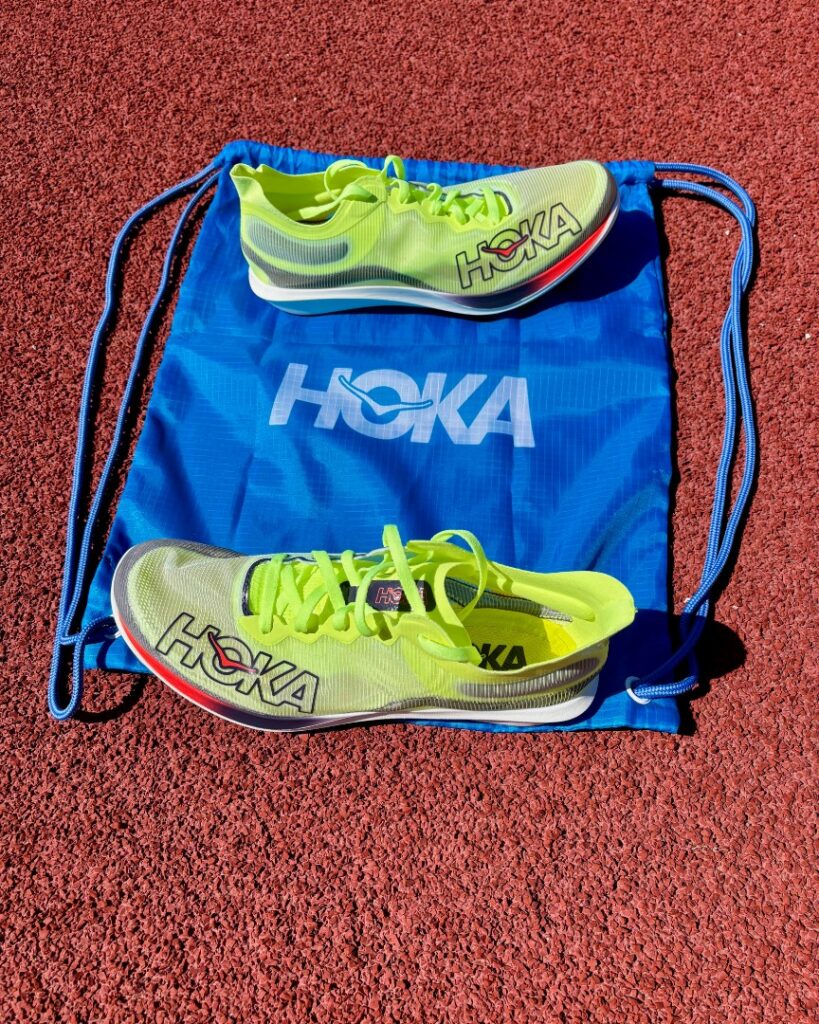
Last but not least, the Hoka FlyX Elite comes with a Hoka-branded spike bag… because companies are sick and tired of everyone toting their spikes in Nike Track and Field bags.
All of this for $160… that’s a significantly better price than almost any other superspike on the market right now.
KALEB: The same aggression that makes this spike so great is what will make it a terrible spike for some people. Unlike some brands, the “Elite” title is rather accurate here. This is not a spike for newer runners or athletes with slow turnover and messy form, but Hoka also makes other solid spikes that will better suit those athletes. The speed of a spike doesn’t come from nowhere; aggression in a plate doesn’t magically produce force; it just shoves you through your gait cycle harder and faster to propel you forward.
No matter how efficient and speedy a spike is, running faster still costs more energy than running slower: an aggressive plate is essentially going to force you to expend energy if you let it throw you around too quickly.
Aesthetically, the lemon-lime yellow with black and red accents really did not thrill me. It’s a clean design, but not one that makes me feel particularly sexy… and for someone as sexy as me — a distance runner — that’s clearly a problem.
Also, the laces are… microfiber? Weird? Soft and spaghetti-like? They stay tied and prevent lace-bite, but don’t feel sturdy and make the lacing chain a bit annoying to lock down properly.

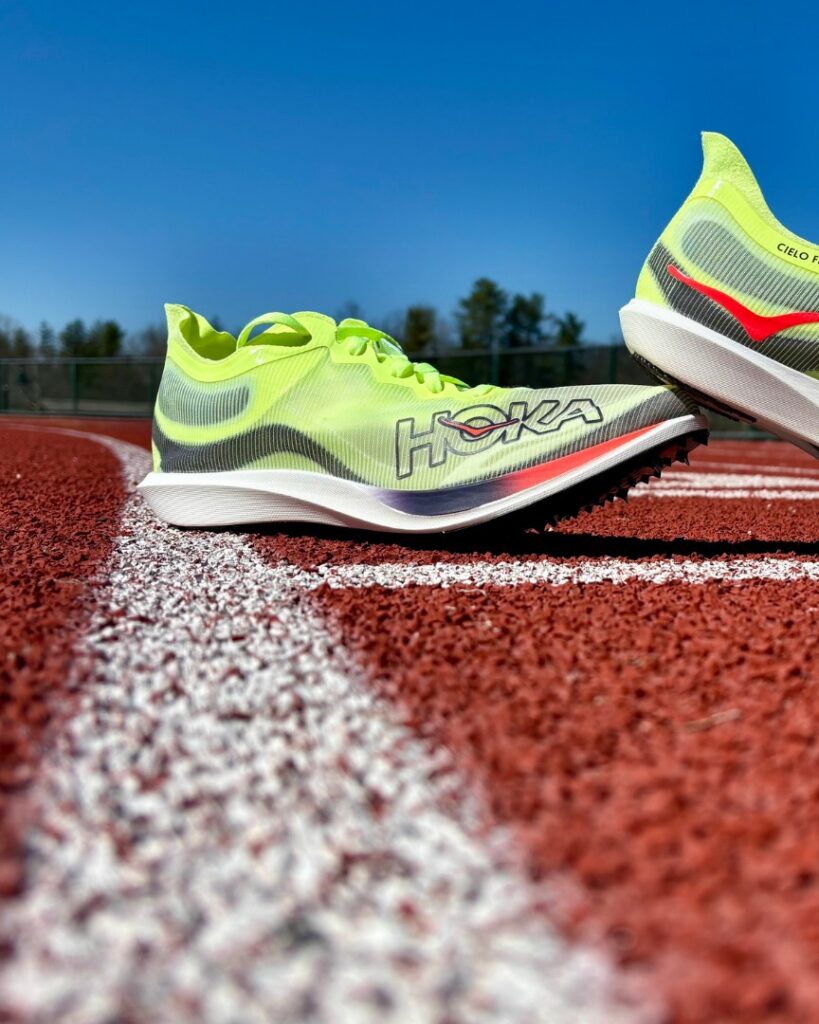
KALEB: The Hoka FlyX Elite truly lives up to its name. A better runner than me could rock this thing all the way through a mile and fully benefit from it, but I’ll continue to use this spike for 800m racing and the occasional 4×4 leg. For higher-end athletes looking to max out their middle-distance performance, Hoka might finally be the company to keep your eye on.
You can pick up the Hoka Cielo FlyX Elite for $160 from Hoka by using the buttons below.
Shop The Shoe - UnisexHave something to say? Leave a Comment
Sign in or create a free account to comment. You'll come right back here.
Sign in / Sign up
Be one of the first runners to rate it.


Ah yes, too aggressive, the nicest problem to have. Been waiting for this one for a while
As a washed former track runner, my legs hurt thinking about this one… but I guess aggressive is nice for something all-out and short? I dunno, I’ll give Hoka some credit on the price at least.