Shop BITR Apparel Shop Now
We independently review everything we recommend. When you buy through our links, we may earn a commission.
Runners are trading technical tops for non-running tees with more personality
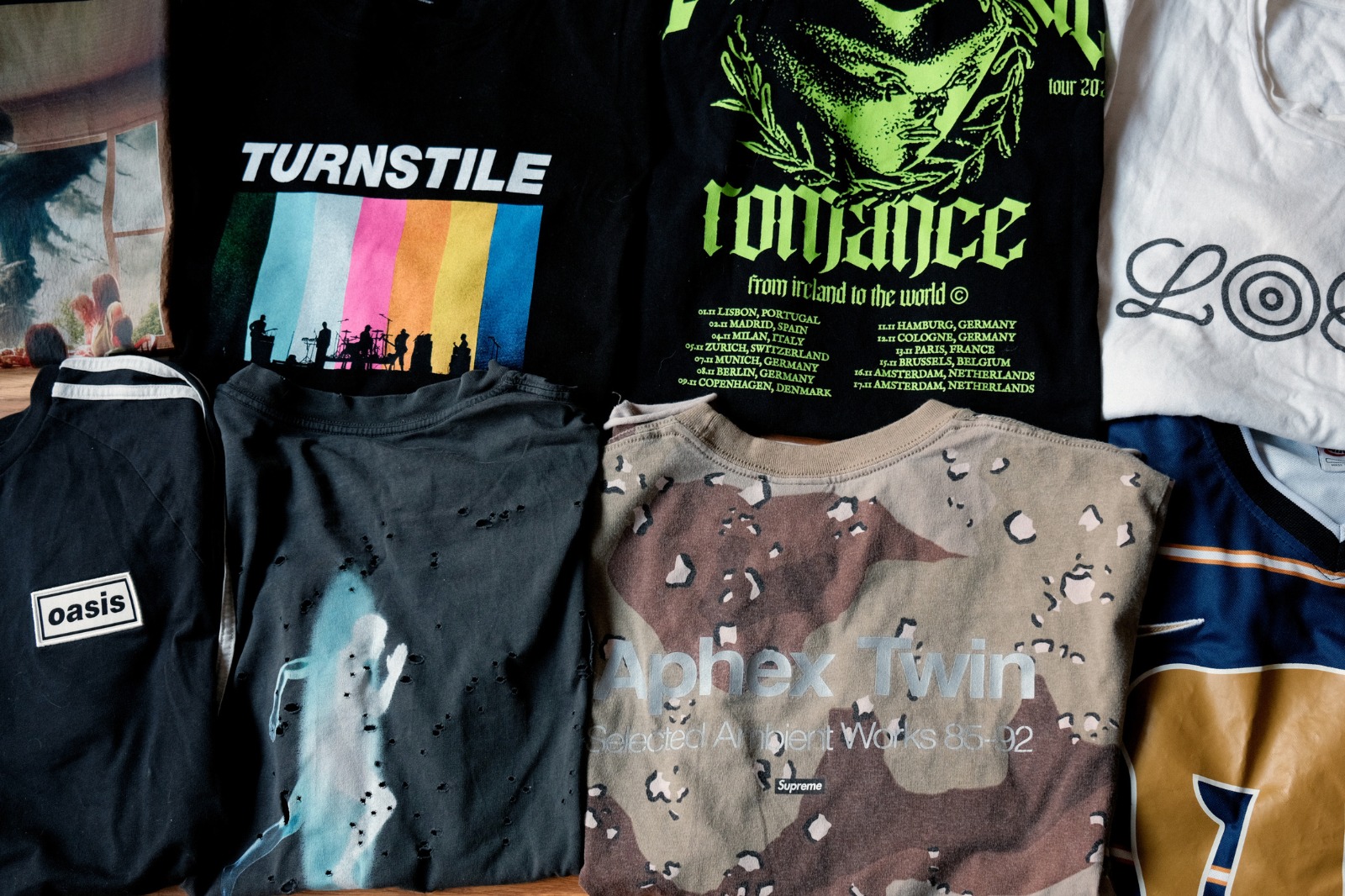
The shift goes into four categories: vintage race tees, band tees, soccer jerseys, and promo shirts
Running style keeps moving from pure performance to self-expression
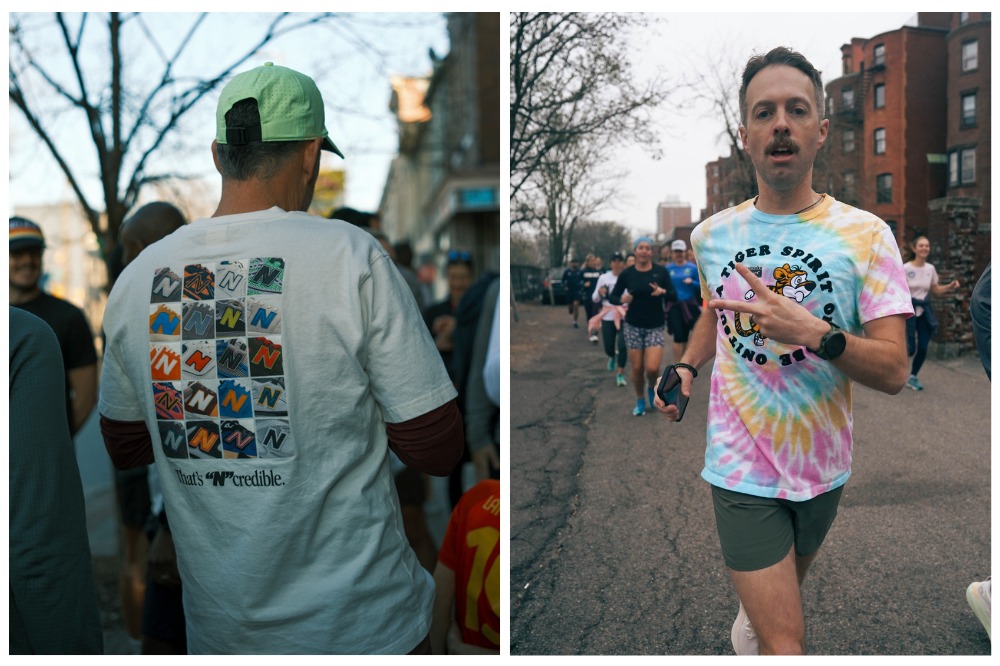
Big fans of cotton tees here at Believe in the Run
The most radical thing you can wear to a group run in 2026 isn’t a $300 super shoe. It’s a beat-up Nine Inch Nails tee you pulled from a thrift store bin (good luck getting one before the vintage resellers pluck it up). For race day, sure, you want the lightest singlet possible. But for a recovery run, a group run, or a 10K, or any other run that isn’t a long run in the dead of summer– almost any T-shirt will do the job.
Across the world, a growing crew of runners is rejecting three decades of synthetic performance orthodoxy, choosing cotton marathon relics, band merch, and soccer jerseys over technical fabrics.
Whether we like it or not, running brands have become the new streetwear. At a time when Bandit, Satisfy, and Tracksmith aren’t exactly underground anymore, the search for individuality in running has started to move elsewhere: personal style. That’s where the rise of the non-running shirt comes in.
Proof that tech ruins everything
(And why the spell is breaking)
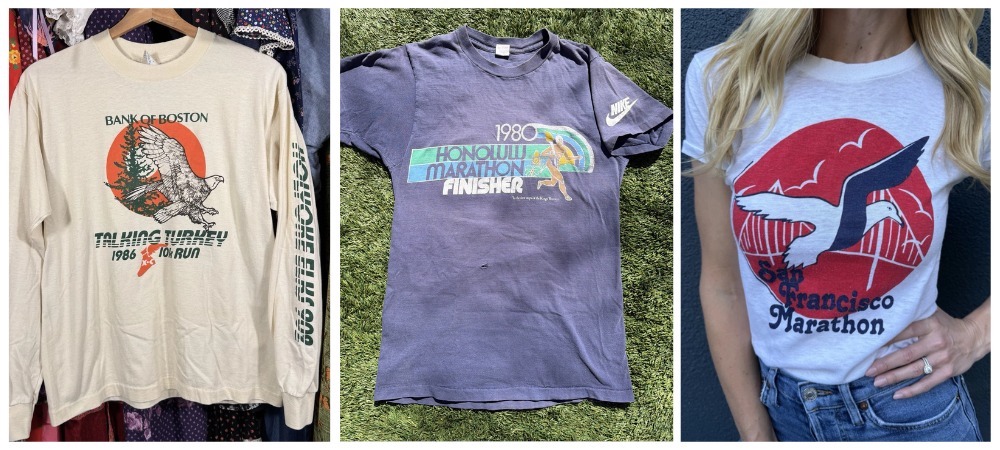
During the 1970s, runners wore simple cotton tees with bold typography, made in the U.S. of A. The fabric chafed badly and, in cold weather, could quickly make things go from bad to worse. Nobody knew better.
Things began to change in the mid-’80s to early-‘90s. Adidas introduced Climalite in 1986. Nike followed up by debuting its now-standard Dri-FIT in 1991, positioning polyester microfiber as the scientifically superior replacement for cotton.
By the early 2000s, “cotton is rotten” had become the running world’s most sacred mantra, repeated in every beginner’s guide.
The pendulum stayed there for two decades. Then brands like Tracksmith started pushing back. Tracksmith’s Grayboy tee, inspired by Georgetown University’s vintage track uniforms, was a running shirt designed to feel like one you already loved. Paris-based Satisfy followed with the now-iconic MothTech tee, made from cotton and designed to look distressed, with pre-pocked ventilation holes in strategic sweat zones. Ten years later, most brands– especially boutique ones– are releasing cotton T-shirts and even button-down shirts that function as running garments.
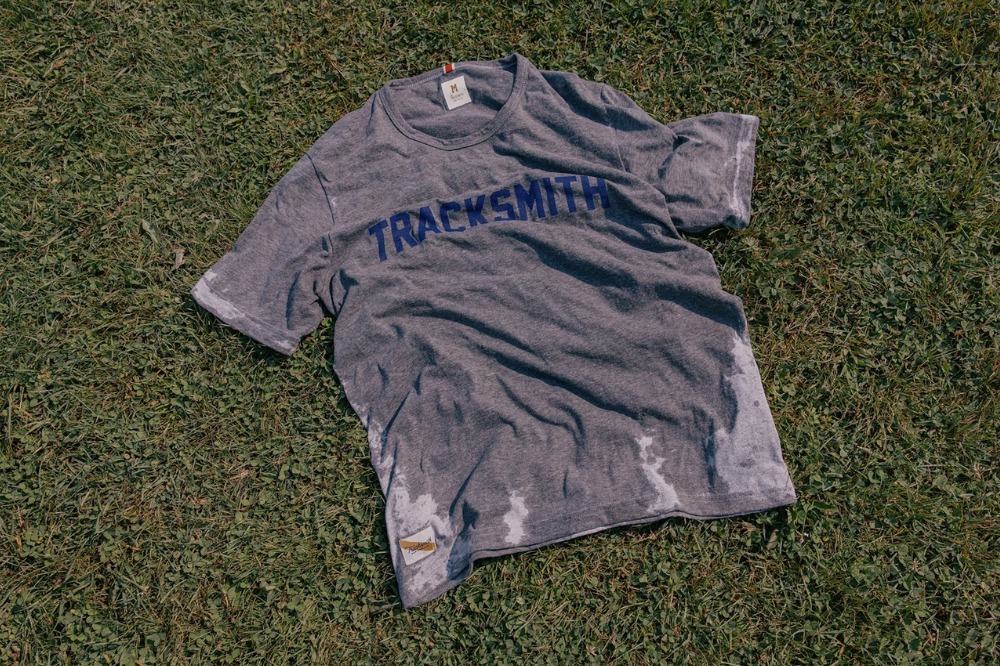
Tracksmith Grayboy Tee ($65)
Level 1: Vintage marathon tees
The easiest way to reject the norm is to throw on a vintage marathon shirt. Usually made of cotton, loaded with hand-drawn graphics, and faded in that perfect natural way that makes you look like you’ve been around. If it’s from a marathon major or an iconic city, it comes with extra bragging rights and usually a higher price tag.
There are people who genuinely dedicate themselves to collecting vintage running apparel for the love of the sport, and plenty are willing to part with pieces from their archive, so the variety is out there.
Beyond the majors, vintage tees from local or underground races tend to be even better. Most importantly, the personal connection to a hometown race is hard to beat.
Brands know this, which is why a lot of new apparel is starting to borrow the look of old race graphics. That’s just how the cycle goes.
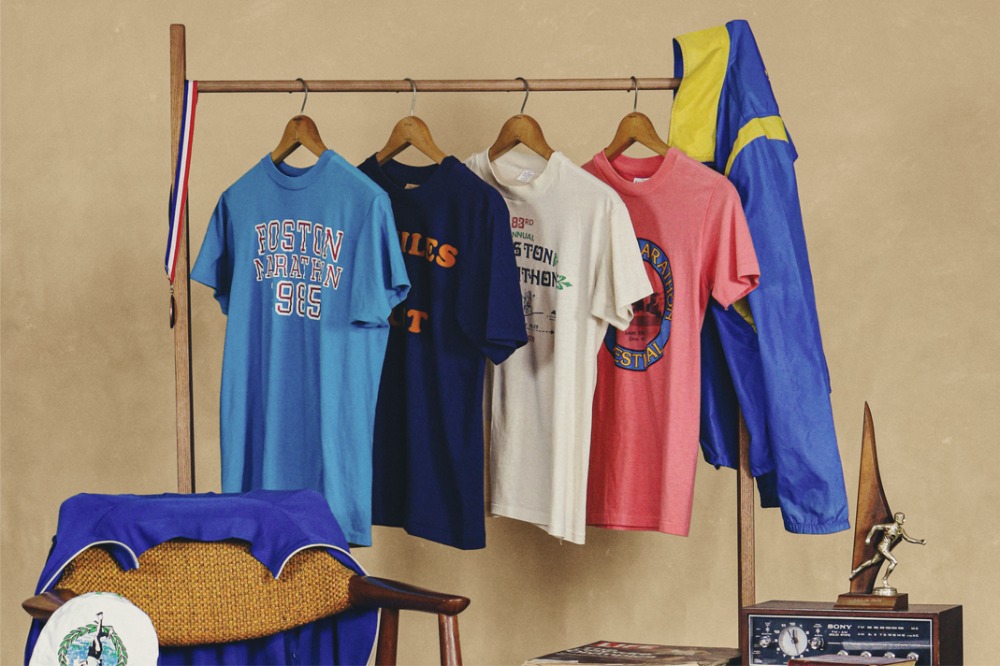
Pieces from Cole Townsend’s personal collection at his 2025 Boston Marathon pop-up with Swiftwick (photo courtesy of Running Supply)
Level 2: The band tee
The band tee on a runner’s back has long been a quiet act of rebellion, a refusal to let the sport’s optimization dictate identity. A Steely Dan tee at 6 a.m. says what Dri-FIT never could. Every shirt is personal, tied to a concert, a memory, a version of yourself. It says running belongs to you, not the brands.
These days, it doesn’t matter whether the shirt is from a rare ’80s metal band or a pre-Covid hardcore show. What matters is that you love it. Harry Styles in a vintage Parliament long-sleeve shirt is proof of how widely this kind of style resonates.
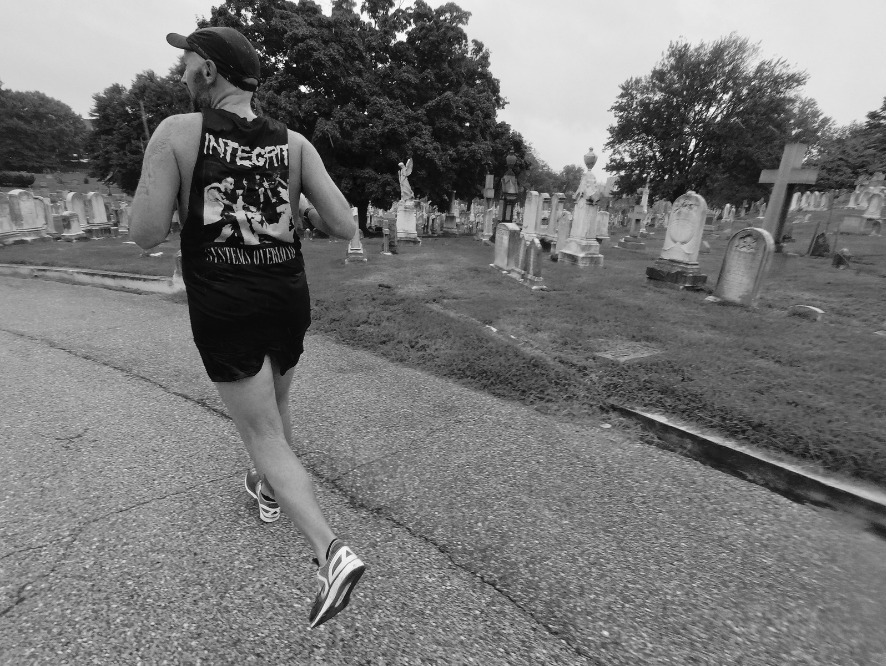
Cut-off hardcore tees work great
Level 3: The soccer jersey
Soccer jerseys, football for the rest of the world, have also become a fashion staple. So it’s only natural that brands like Bandit have started releasing running shirts that tap into that visual language. Bandit’s soccer-inspired tops were some of the best-looking running pieces of the past year. Koreatown Run Club in Los Angeles also sells soccer-style jerseys as official merchandise.
Take it one step further, and hardcore soccer fans– already famous for wearing jerseys everywhere to slightly unreasonable levels– have found another excuse to wear their Barcelona or Inter Miami jersey for a quick run. This is also the one category that stays closest to synthetic fabric, so it still hangs onto some of the performance logic of the garment.
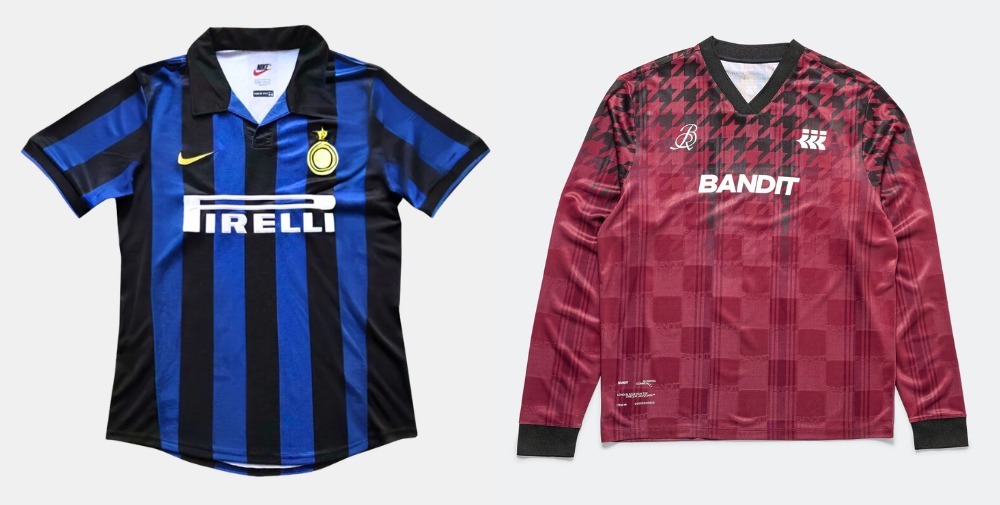
Level 4: The irreverent promo tee
The ultimate non-running tee is the one that really is just that: an old tee. One with no obvious meaning, but one that somehow says everything about who you are and what you’re into. We’ve seen it all: Camel cigarettes, political campaigns, military camo, amusement parks, public service agencies, vintage fashion. If it looks different, it looks good.
This is the final level because it’s the point where runners stop trying to explain themselves and just wear their favorite piece, no matter the activity. Deep down, they know they’re cooler than everyone else anyway.
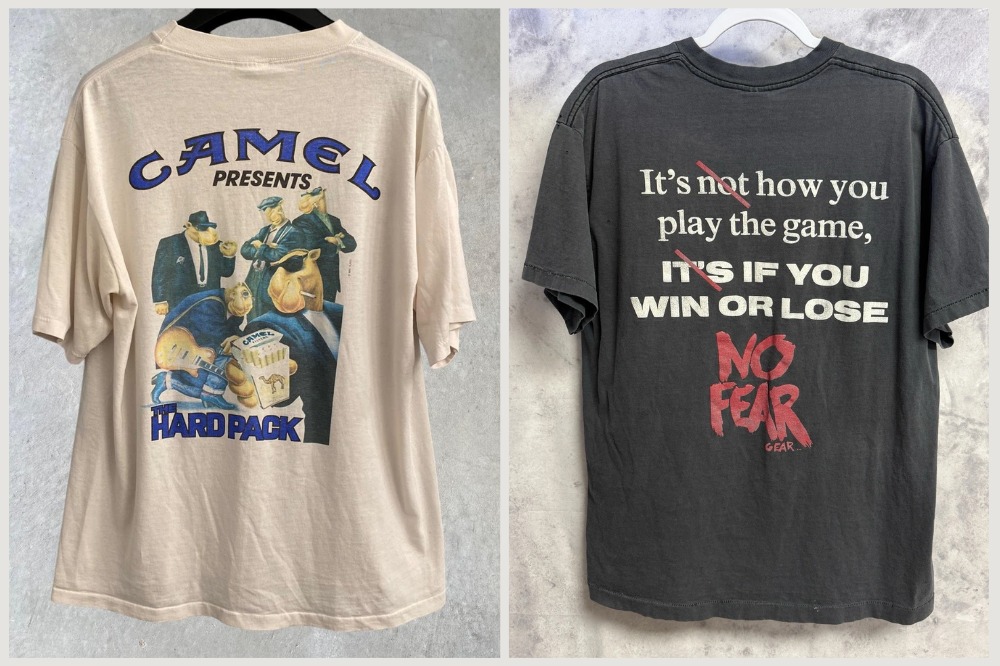
We used to be a proper country
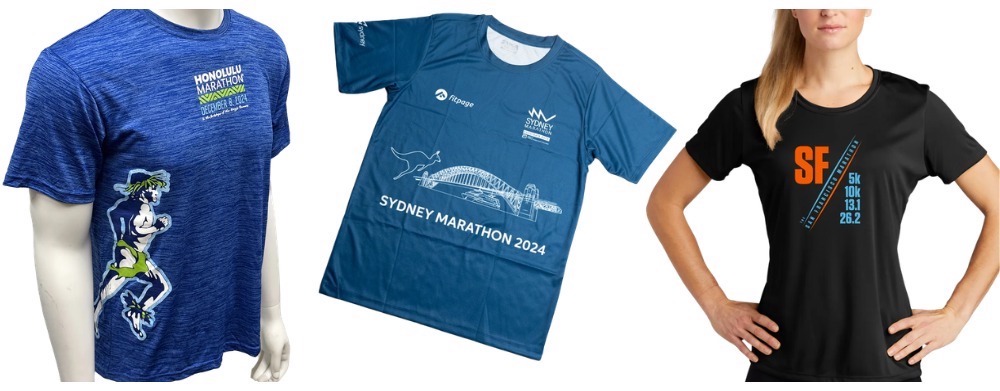
One area of running that still seems resistant to the cotton-tee movement is the race giveaway. For years, the synthetic race shirt has been the default expo souvenir, and while some runners still like them, the truth is that most shirts end up buried in a drawer and rarely worn, or worse– dumped off at Goodwill and then into a landfill where they’ll remain for centuries.
If you’re a race director and you’re reading this, let us say loud and clear: The current tech tees suck, the designs are forgettable, and once you have one, you don’t need another. Stop being cheap and start giving people cool apparel they can keep in their drawer for decades to come. Make the race tee the new race medal.
At Believe in the Run, we think it’s time for race sponsors to put more effort into the design and quality of race shirts, more like the ones you find in vintage shops. Imagine artist collaborations, memorable graphics, and iconic imagery from the city itself. That’s the kind of race shirt worth keeping for years. And if a cotton ends up in a landfill, we know it’s biodegradable.
What are we even doing here
If there’s one lasting lesson from The Devil Wears Prada, it’s that even when trends seem far removed from everyday people, they eventually reach everyone. People who claim not to care about fashion still care about what they wear, whether it’s for convenience, comfort, or performance.
Wearing a cotton or non-running shirt used to feel almost outrageous a few years ago, but things are changing. We’re starting to see the appeal of these garments, whether they’re old or new. In the end, we all run differently. So it only makes sense that we should be allowed to dress differently, too, especially if it makes us feel good.
Say it with us one last time: Bring back cotton for good.
Have something to say? Leave a Comment
Sign in or create a free account to comment. You'll come right back here.
Sign in / Sign up

Alfredo is a runner, writer, creative director, and cultural analyst based in Berlin. After years as a casual runner, his move to Berlin transformed his running into a vital practice for mental health and a source of tranquility during cold, early morning runs. His interest in clothes comes from uniforms and sportswear, combined with a love for innovation and research—which might explain why he meticulously charts his winter running gear.
More from Alfredo


Preach. There’s a soccer jersey I’ve worn for a bunch of half marathon trail races. It’s been to the Atlas Mountains in Morocco and is going to Cortina this summer. A Nike Dry fit kid’s XL Canadian National Soccer team with Atiba Hutchinson on the back. Bought at a World Cup Qualification match in Edmonton in November 12 2021. If you know, you know, The Greatest Canadian player who suffered decades of loss only to build a generation that now wins to get in. I hope everyone tells their story of their favorite shirt.
Been doing this myself for years! If you want a great Mothtech look for a fraction of the price, just get a soldering iron or wood burning tool with a small tip and just burn little small pin holes all around the shirt. the holes don’t start to run as bad as the little cuts do and they are better ventilation. Amazon wood burning tool with a fine tip is like $20
As a heavy sweater in a humid climate, I literally cannot wear cotton for running, guess I’ll never be stylish.
The brands that make good-looking apparel out of high-performance technical fabric are the ones that will have real longevity. Vintage race/band shirts (or overly priced “MothTech” shirts) that look cool at 2026 run clubs are simply a fad.
Thanks for the shout, Alfredo! Spot on as usual. The technical tees don’t break in all that well and race ones are covered in ads. The market is ripe for a nice feeling natural-synthetic blend…