Shop BITR Apparel Shop Now
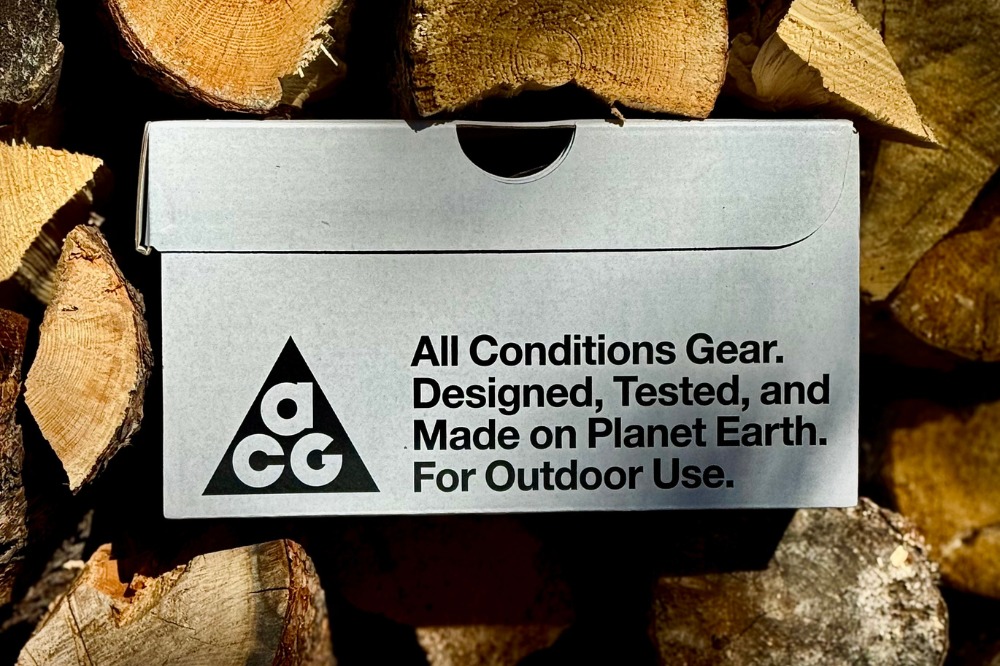
It was somewhere between the patches of Sasquatch hair and the curling stems of ibex horns when the feeling began to take hold — Nike ACG is back.
Flipping through social media, the initial teasers for the recent relaunch of ACG look like a heist from the original mood boards of the Nike sublabel that first debuted in 1989. A yeti bangs away on a Compaq Presario, loading photos at speeds that give me flashbacks of the wars I fought as a teenager for Jenny McCarthy swimsuit pics. In another reel, a video of planet Earth is edited in a grainy, camcorder-style, featuring a David Attenborough-like narration intertwined with extreme outdoor pursuits. Consider me teased. This shit is like pure adamantium injected into the old bones of us who grew up in the 90s.
This was the future we had been promised — an unadulterated slice of the past.
Soon after those teasers, a massive launch campaign followed, complete with influencer invites to a full-blown ACG train ride in Europe to run in alpine snow (cramp-ons required, so maybe not all conditions) and glamping in the Pacific Northwest (attended by Believe in the Run, full disclosure). It’s been a few months since that mad rush of marketing. The dust has settled, and the Nike-orange blaze has simmered to a softer glow. With a full stock of product on the website and on the shelves of select retailers, we finally have a better idea of what the ACG relaunch looks like.
And what it looks like is this: boring.
I’ve long yearned for the real return of ACG. The sublabel has always carried a certain cachet, serving as the fringe element of Nike that has always seemed equal parts art project and technical sportswear. The original iteration brought dashes of color combined with the playful ACG delta logo, with designs that seemed less corporate boardroom and more “what if we just made the wild ideas in our heads?”
The entire ethos of ACG came about thanks to outsiders and adventurers taking Nike products into the wild and doing things they weren’t supposed to do. Most notably, the unofficial inception of ACG occurred when climbers Rick Ridgeway and John Roskelley summited K2 in a yellow-with-blue-swoosh pair of Nike LDV (Long Distance Vector), one of Nike’s premier running shoes in the late 1970s. The infamous photo of the two men at base camp shows them shaggy-haired and sun-soaked, looking just like the shoes on their feet — beaten and battered, but still in one piece.
The path from that K2 summit to the official launch of ACG nearly a decade later saw some of the most creative designs from the Nike archive: the Lava Dome and Son of Lava Dome, the Magma, and the Approach. There was the everyman Air Mada and perhaps the best of them all — the Nike ACG Air Mowabb, a Tinker Hatfield-designed classic that makes you feel something inside, like you were meant to be outside.
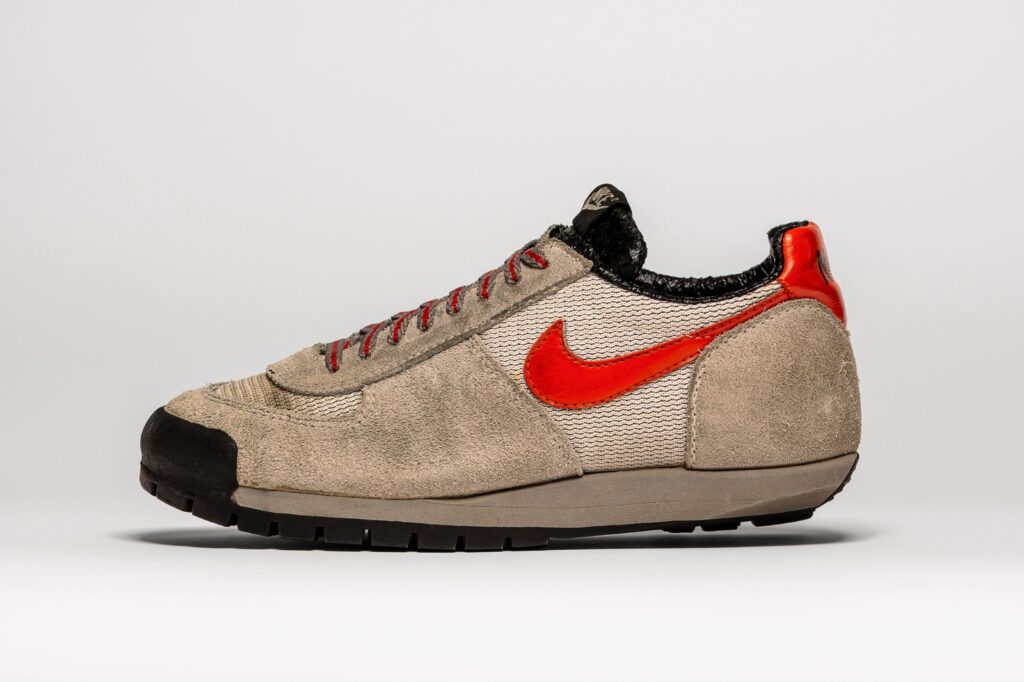
All of those shoes had character and were simply the crown jewels in a chest full of treasures from the entire ACG range, a catalog that included anoraks, parkas, long sleeves, half-zips, t-shirts, and more. It was a unified look that told people you were part of a club that did things differently.
As the 90s came to a close, ACG went dark with flashes of light. You had to be on the cutting edge of fashion and the bleeding edge of gorpcore to really know how or where it existed within the Nike ecosystem. Sometimes there would be ACG product available, other times not. A relaunch was attempted in 2014, but in the following years, the helm was steered by a carousel of designers, each with their own interpretation of what it should look like. Reissues of the Mowabb and other silhouettes came and went. Five years ago, I bought my kid an ACG waffle long sleeve on clearance for $20. I have no idea why it was even for sale.
ACG remained in limbo even as trail and ultrarunning went mainstream. The outdoor recreation industry had seen gradual growth before COVID; since then, it’s exploded to the tune of nearly $1.3 trillion a year. All the while, ACG remained largely dormant.
That’s not to say that Nike totally abandoned its outdoor approach during that time; Nike Trail started in 2014, featuring all-new models in the Kiger and Wildhorse, worn by athletes like Tim Tollefson, Sally McRae, and Zach Miller, up-and-comers in the ultrarunning scene. The Nike Trail design team carried on the ACG aesthetic throughout the next decade, producing some truly memorable colorways and designs. I still think the Terra Kiger 5 is a top-three Nike running design of the past decade, with the Wildhorse 6 and Pegasus Trail 3 following close behind (the Pegasus Trail 3’s paint-splattered midsole is a clear callback to Hatfield’s Mowabb design, inspired by the speckled sides of rainbow trout).
Despite the creativity within Nike Trail, the trail side never seemed to get the attention it deserved from inside its own ranks. The shoe performance was always average, the outsole rubber was absolute trash — the shoes seemed to get the scraps from the development floor. The best thing they had going for them was that you could always count on a Gore-Tex version that absolutely ruled. On the business side, there was near-zero promotion around Nike Trail in general, even as ultrarunning caught fire. Meanwhile, brands like Hoka and Salomon gobbled up the trail consumer segment. Smaller companies like Norda and Satisfy staked their claim on cool.
The abandonment of the ACG sublabel always seemed like a huge miss. Nike had an ace up its sleeve, a heritage icon built on authenticity and originality, and was letting it flounder. Combine that with a nostalgia for the ‘90s and all things pre-internet, and it was clear that an ACG revival was needed. So it did. Elliott Hill took over the reins and realigned the brand with performance and athletic achievements. The wheels started turning. And ACG was reborn.
We’re so back, I thought.
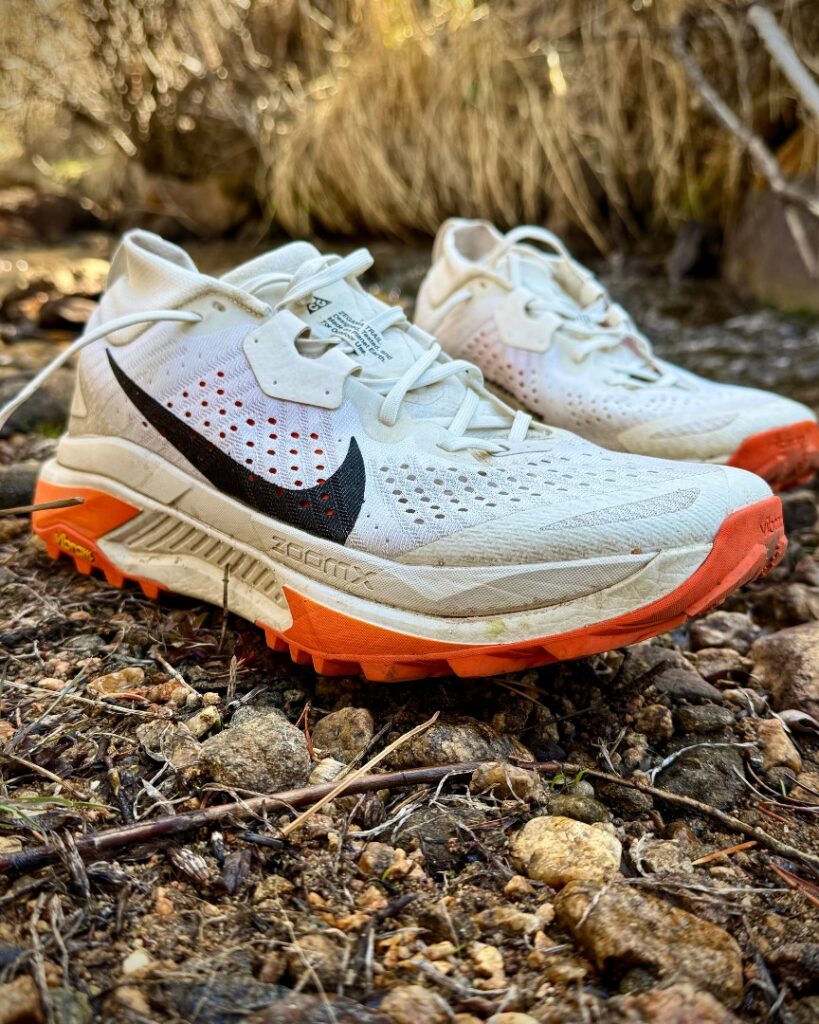
Nike leaned hard into the archives. As noted above, the storytelling felt like a 90s skate video combined with archival camcorder footage from Yosemite dirtbags chasing summit clouds instead of internet clout. Nike orange was front and center, like a Midas touch with a construction cone aesthetic. The ACG delta was big, bold, and emblazoned on everything stocked at influencer base camp — coffee mugs, camp chairs, duffels, and lanterns. All-in was an understatement.
But that was the spring, and this is the summer.
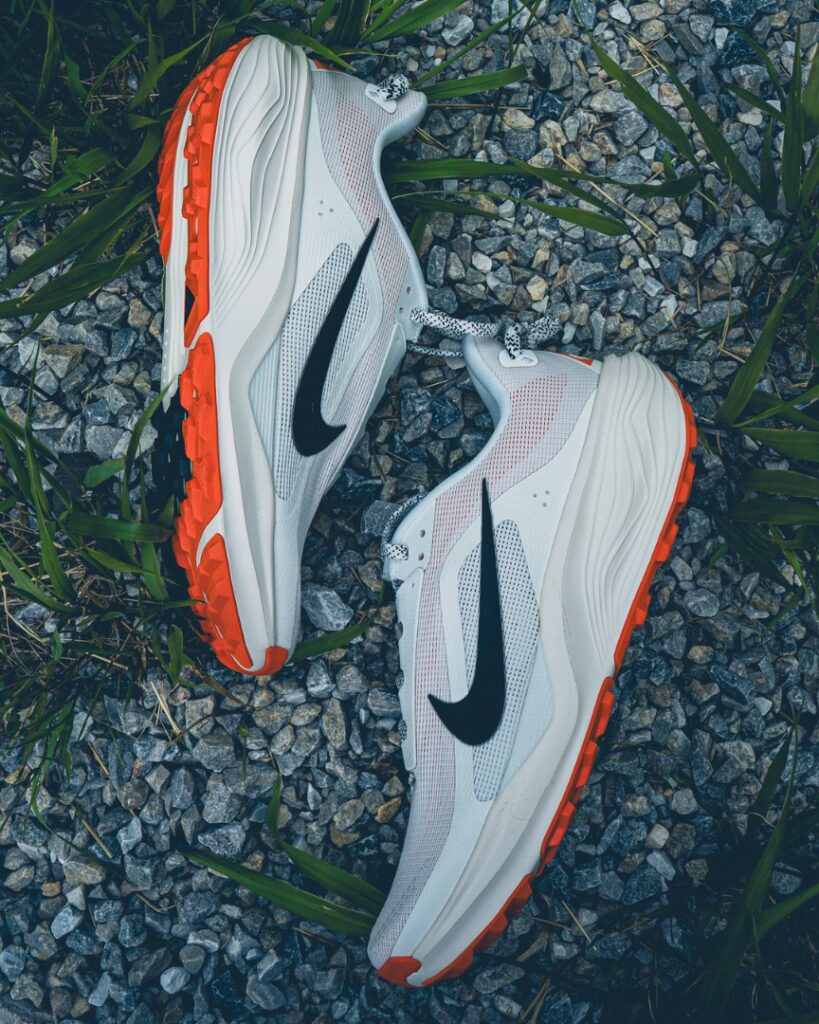
Just last weekend, I was running the Nike ACG Pegasus Trail and thought, “Man, this is really the same shoe as the last one. Except a more boring design.” The much-ballyhooed ACG Ultrafly — the first shoe to come out of the ACG relaunch — came and went with a pretty mediocre review from our team. Design-wise, it looked more like a Pegasus than an elite racing shoe. Hell, the previous version of the Ultrafly looked miles ahead in terms of design.
Boil things down to the bolts, and it’s apparent that the heritage is doing all the heavy lifting here. Take the ACG insignia off the shoes and apparel, and it all looks plain, like an off-the-rack collection from the local outlet mall. The communications and marketing team and third-party creative agencies understood the assignment, but I feel like Nike itself rolled out ACG without having the product to back it up.
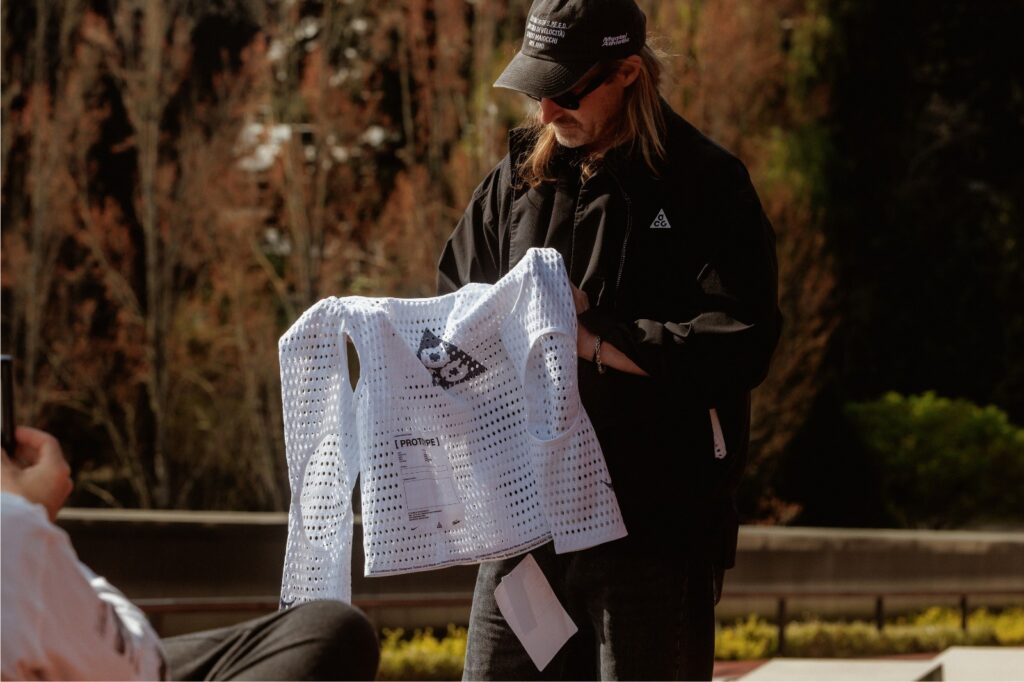
I mean, look at the ACG inventory on Nike’s website and tell me what stands out? Nothing. It’s all very blank, in the same way that Burger King restaurants and Pizza Hut huts have now been designed to look like the inside of an Apple store. We want our stained glass dining room lights and Hamburglar seats, dammit. Nobody asked for this quiet luxury from ACG. We want the loud sounds of the outdoors — rushing waterfalls, the buzz of rattlesnake tails, the sound of lightning splitting a tree wide open.
Sure, the Swiss cheese aesthetic of the Radical Airflow shirt may create conversation, but it’s more gimmicky than iconography. Despite the social media content that breathlessly tries to convince you that ACG is back and exciting and fun, the truth is this: ACG is boring and basic and overpriced. Two of those aspects are a betrayal of the brand.
The good news is that there are brands out there doing ACG right. It’s brands like Janji, who are always going all-in on designs that look like fever dreams and product that’s peak utility. Their new line of bags and ever-improving trail product is what ACG wishes it were. The colorways and color-blocking are S-tier at nailing upcoming trends.
Boutique designers like Alex Zono are way out there, tossing candy cane stripes and plaid patterns onto run and run-adjacent apparel, to the point where he’s got us looking like a damn daycare center on the run. It’s weird as shit, but at least he’s taking swings. And most of them are landing.
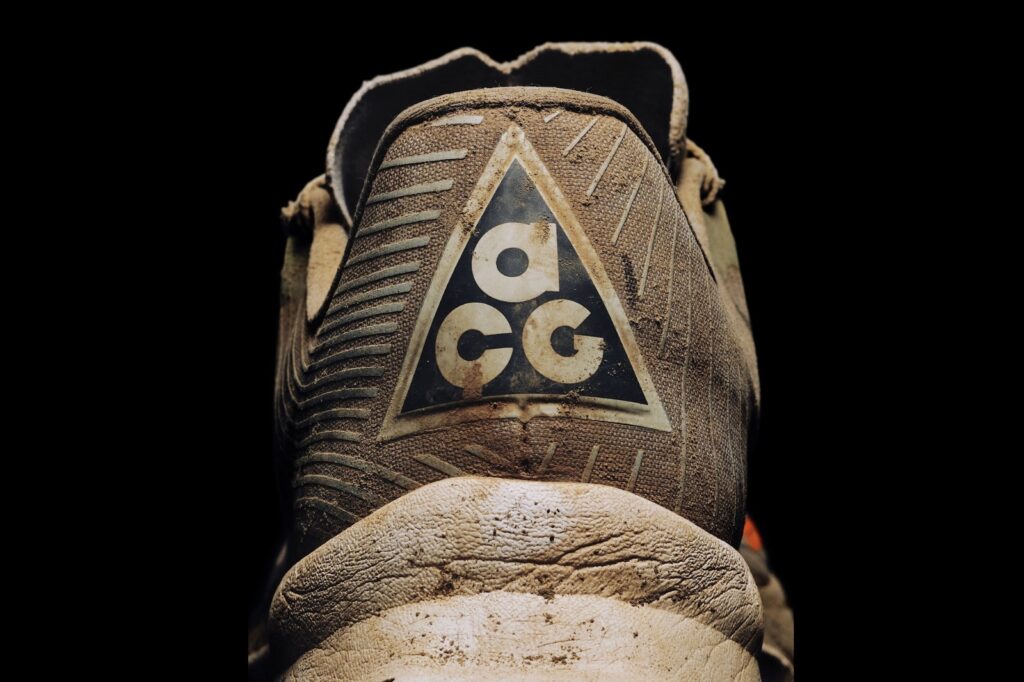
Meanwhile, the most exciting ACG item right now is the “Worn to Be Wild” poster reissue from the original Son of Lava Dome launch.
I’m not sure where the disconnect lies. Maybe it’s the corporate cologne that makes the whole thing stink. It smells like nothing, like air without dirt, wildflowers, or color.
There’s irony in the relaunch, as there often is when you put lipstick on a pig. One of the better promo reels on the ACG Instagram account features two Nike athletes cruising through Moab, getting dirty and putting the ACG Zegama through its paces (the lone bright spot in the ACG relaunch). Caleb Olson and Addie Bracy are giving their reports in a transmission-from-alien-planet-back-to-earth way. It’s really well done. It feels right.
But man cannot live on vibes alone.
That Moab expedition is a direct callback to the aforementioned Mowabb; named, of course, after Moab. Tinker Hatfield was inspired to create the shoe after repeated trips to Moab, which he talked about in a 2008 interview with Sneaker Freaker. He was hanging out with another Nike employee who would often come down to the Utah desert with a group of his friends, “people who were doing extreme things, really hard rock climbing and dangerous mountain biking and even more dangerous bar hopping at night, all that kind of stuff.”
For a week or so, they just got into it, including “numerous times [they] nearly died and were given up for dead.”
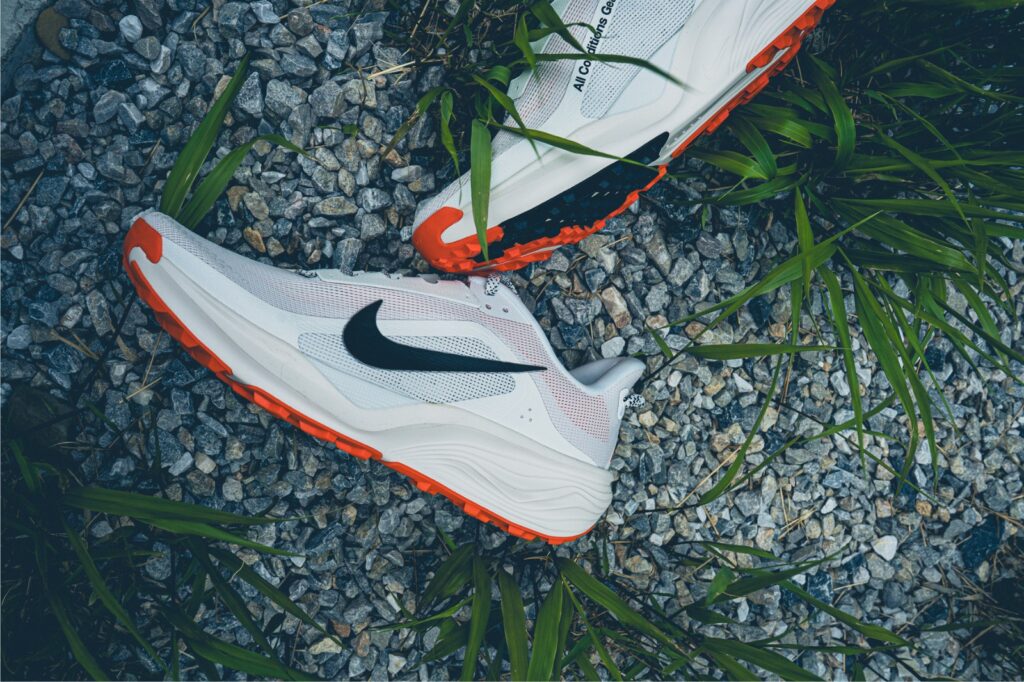
Out of that time came the inspiration for a moccasin-like shoe, something flexible that could conform to any surface. Hatfield then started thinking about fish, the colors of their skin, and the waters they swam in. There was dirt and natural leather that could be applied to the toe box, and maybe something like a Pendleton blanket around the collar.
It was nature at first, and then came the shoe. And that’s how the Mowabb was born.
So when I see ACG as it is now, it looks like boardroom first, investors second. And a third-party creative agency to make it seem like the first two don’t exist.
The final result? Product that looks born to be mild.
And that’s a shame, because while we love remembering the past, you gotta give us something to hold onto in the future. Because, as it stands, ACG looks forgettable.
That’s one condition we just can’t accept.
Have something to say? Leave a Comment
Sign in or create a free account to comment. You'll come right back here.
Sign in / Sign up


Robbe is a podcast host and reviewer at Believe in the Run. He loves going on weird routes through Baltimore, finding trash on the ground, and running with the Faster Bastards. At home in the city, but country at heart. Loves his two boys more than anything. Has the weakest ankles in the game.
More from Robbe