Shop BITR Apparel Shop Now
We independently review everything we recommend. When you buy through our links, we may earn a commission.
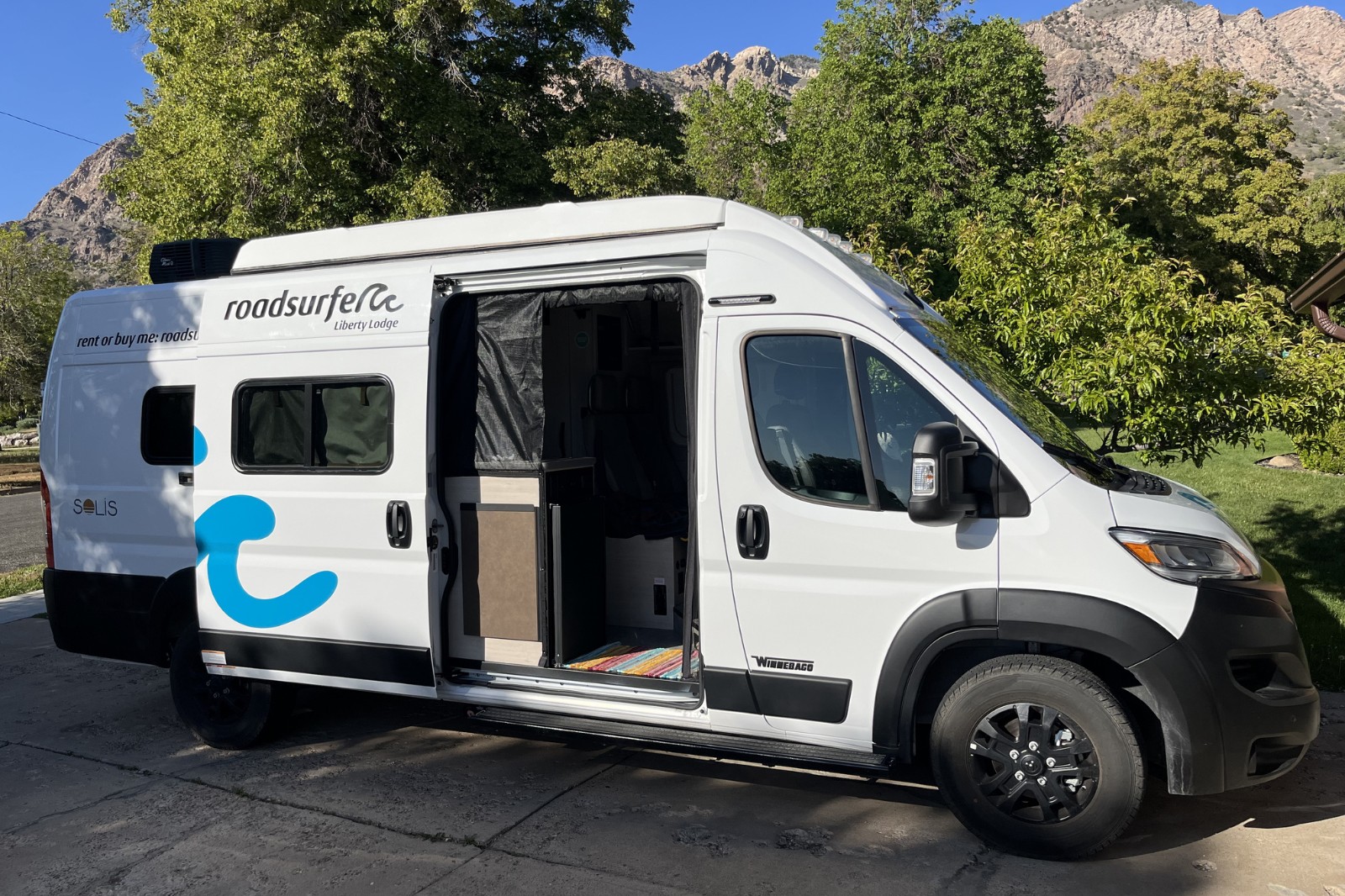
Sits and sleeps four people
280hp gasoline engine
Kitchen, indoor toilet and shower, media connections
12V and 120V connections, auxiliary air heater
129 qt. fresh water tank, 28 qt. black water tank
From $115 per night
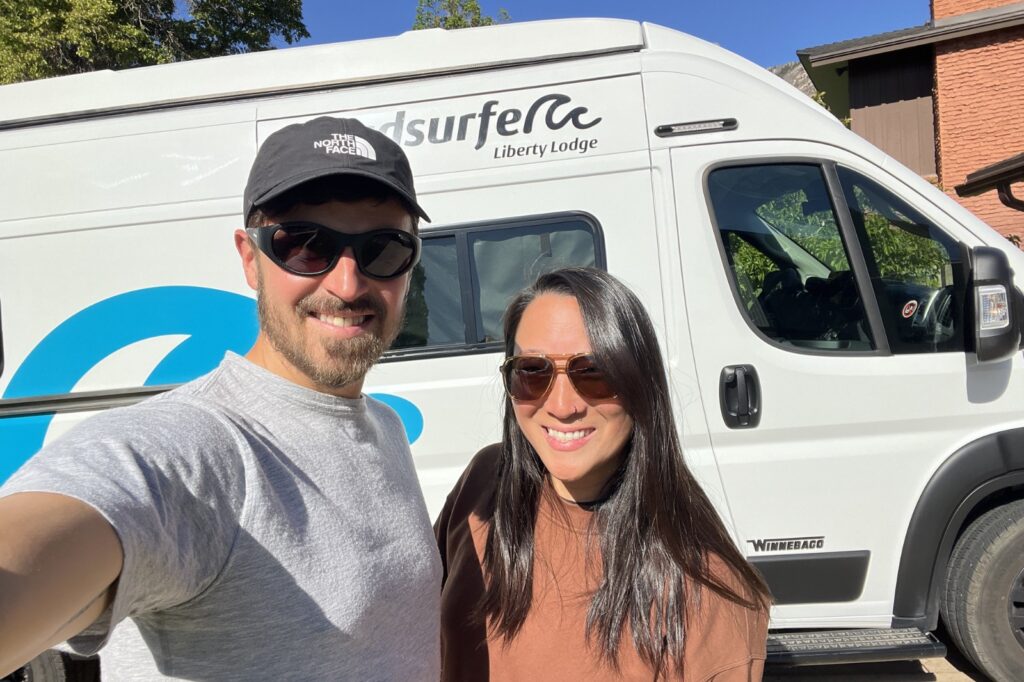
When you’ve done an ultra or two (either running or crewing), you get used to the way things are. Set up becomes routine, but space always feels like it’s at a premium. So, when you switch from your trusty hatchback to an RV, you start to look at life a little differently.
As we loaded up the van the night before our trip to Arizona for Cocodona 250, we kept noticing how much space we still had left. We were used to packing everything into our Subaru Outback, which could feel like a game of Tetris. The van gave us room to breathe.
We left our home in Ogden early Saturday morning for the 10-hour drive to Black Canyon City. A couple of hours into the trip, Alex had to pee. Normally, that means finding a gas station somewhere off the interstate. Instead, she just walked a few steps to the back of the van. That set the tone for the entire week.
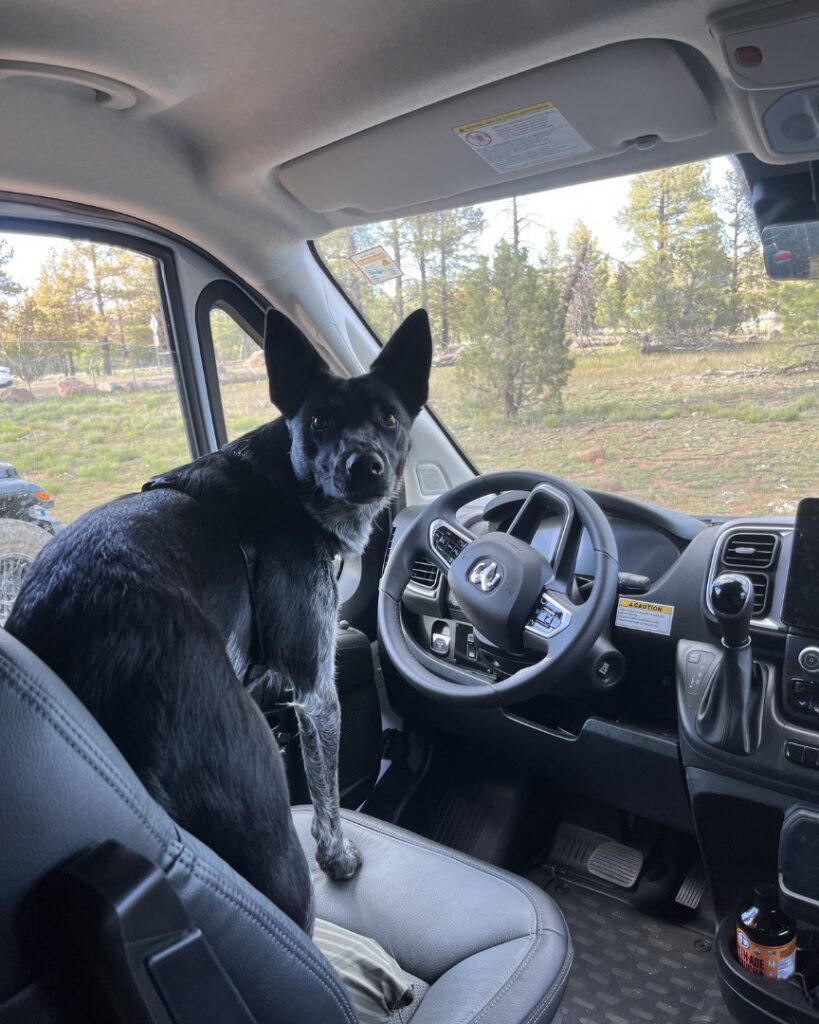
Later, after stopping for gas, Alex took over driving while I stretched out in the back with my feet elevated and our dog Seiji curled up next to me. I could get used to this.
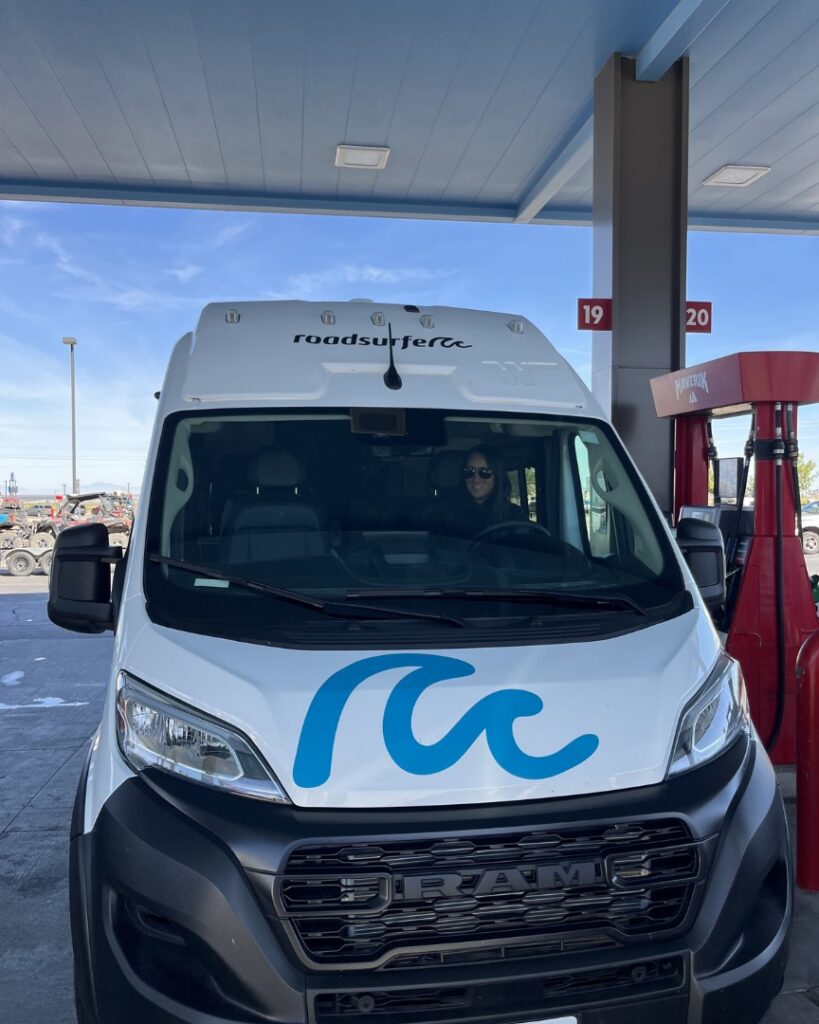
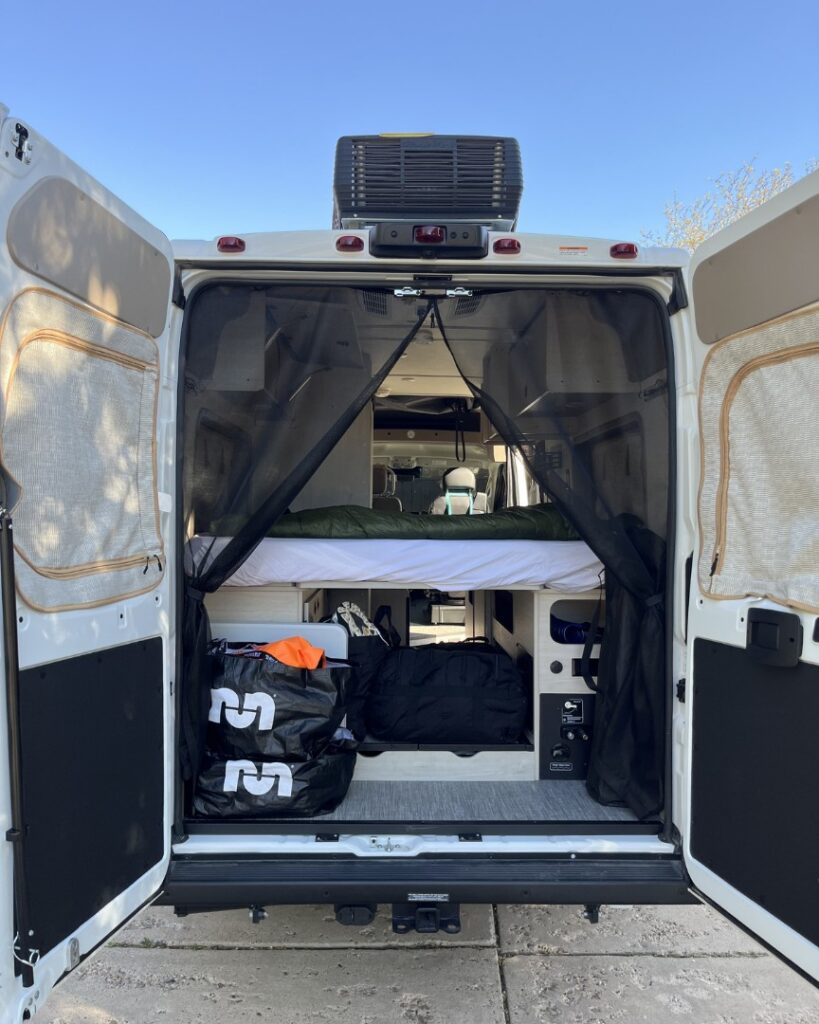
We stayed in an Airbnb before the race so Alex could get better sleep the final nights before the start, but honestly, I found myself wanting to stay in the van.
The race started Monday morning. One of the biggest logistical concerns of the week was the drive into Crown King; a long, rough climb on washboard jeep roads. I was skeptical about taking a 2WD camper van up there, especially without much clearance. Surprisingly, it handled the road better than expected. It was a rough ride, but it made it in and out without issue. I wouldn’t push it much further than that, but for forest roads and aid station access, it did the job.
Back at Bumble Bee Ranch after Crown King, I was tired and still had another hour drive ahead to Prescott. Instead of eating snacks while I drove, I stopped and fired up the stove to make a hot meal. Before heading back out on the road I just relaxed in the van for a while decompressing. That ability to pause and recover a little between long stretches of driving ended up mattering more than I expected.
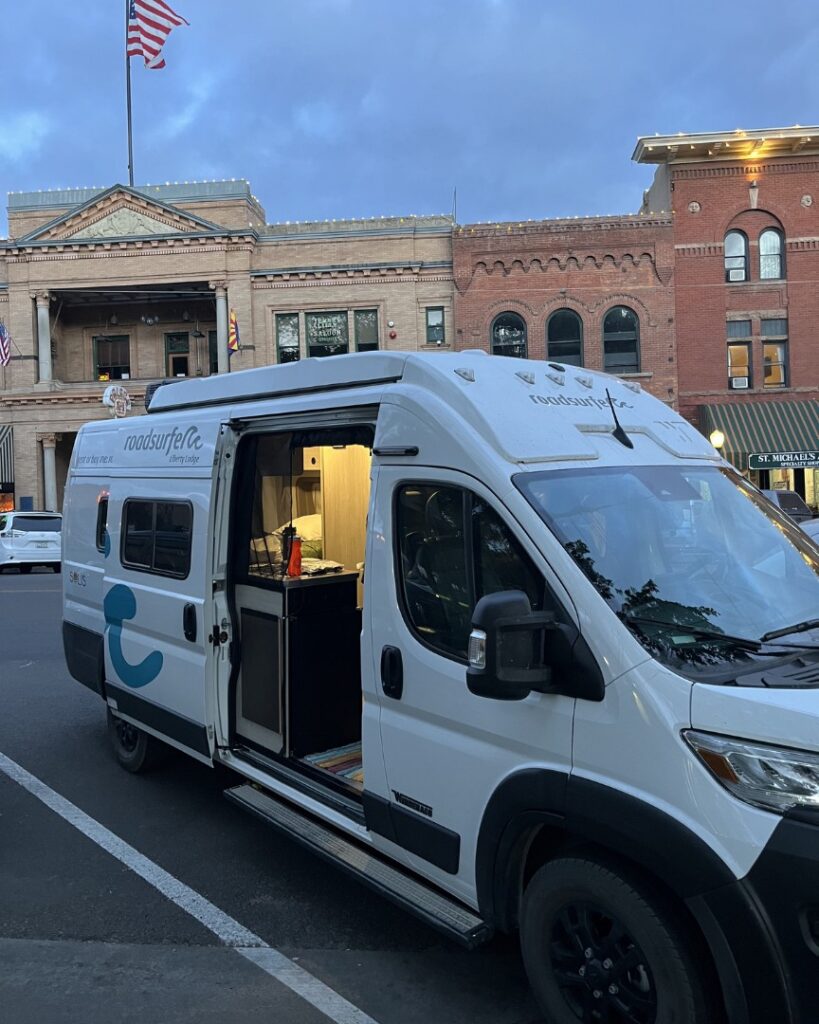
The next morning in Prescott, I parked right next to the Whiskey Row aid station and turned the van into a full mobile crew station. I spread out Alex’s fuel, hydration, and foot care supplies across the counter alongside a pizza I had grabbed for her. When she came in from the overnight section, she climbed into the van, changed clothes in privacy, swapped shoes, ate, reset, and headed back out.
That became our rhythm for the week.
By the time Alex reached Sedona, the skies had cleared, and temperatures were climbing. I fired up the generator and AC before she arrived. Within minutes of getting inside, she was wrapped in a blanket, shivering from how cold the van got. She ate, changed clothes, took a short nap, and left with her pacer, Monica, looking like a completely different person.
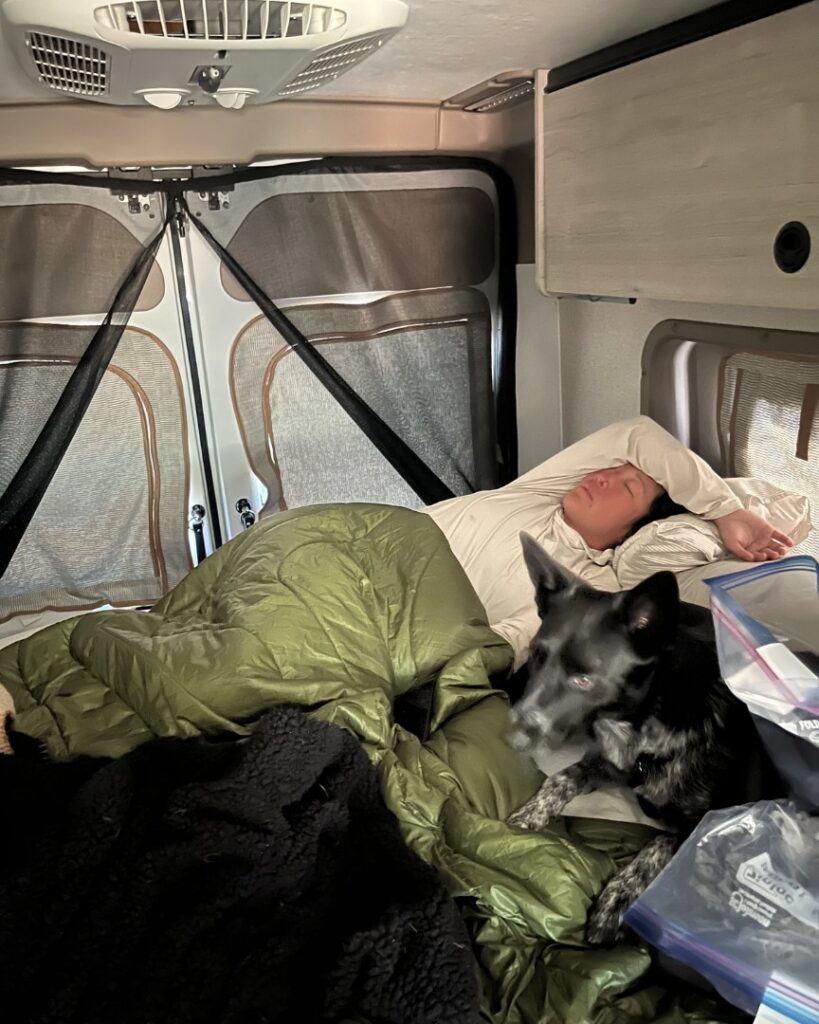
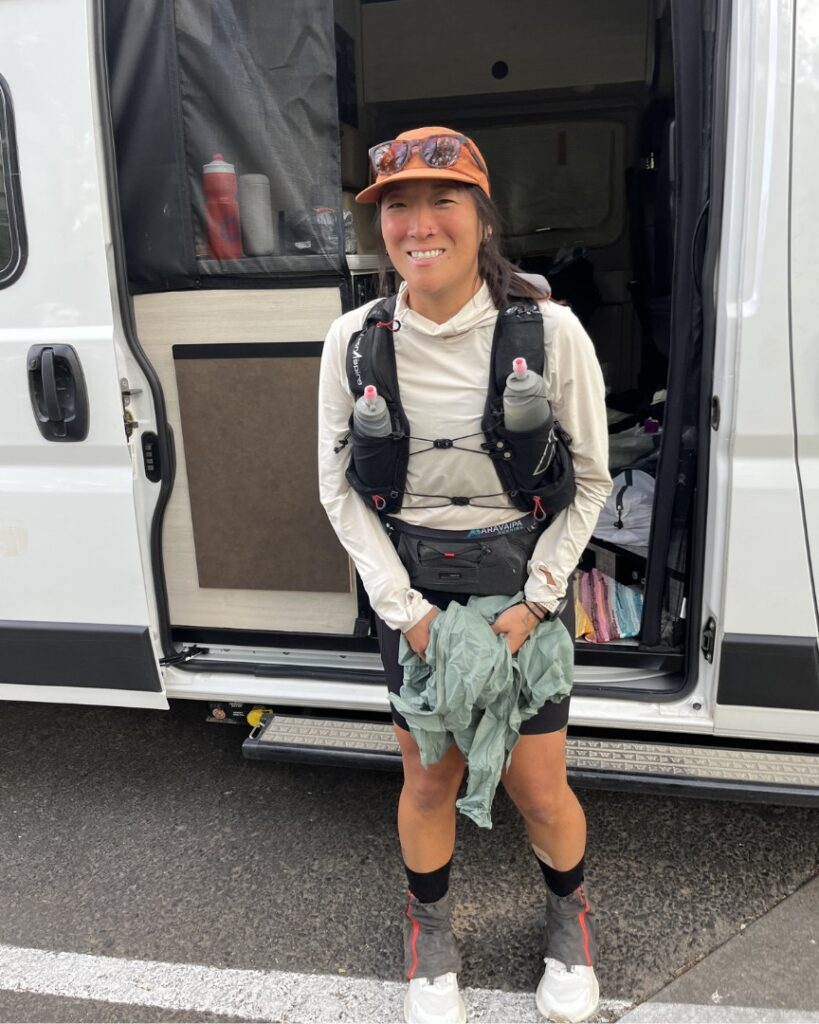
Later that night, I reached the next aid station early enough for Seiji and me to crawl into the back and sleep for a couple of hours while we waited. When Alex and Monica arrived, both of them were ready for a nap. We released the two latches for the upper bed, and suddenly, three tired people had a place to sleep in the middle of a 250-mile race.
The van gave us a place to regroup, recover, eat real meals, cool down, organize gear, and get some sleep whenever we could. In a multi-day race, that made a huge difference.
I slept more while crewing Cocodona than I ever could have in my Subaru. Alex reset better at aid stations. The crew functioned better. Everything felt a little more manageable.
That’s ultimately what made the Roadsurfer Liberty work so well for this trip. Van life aesthetics aside, it was a functional piece of gear that reduced friction during a race where small moments of comfort, rest, and convenience make a big difference.
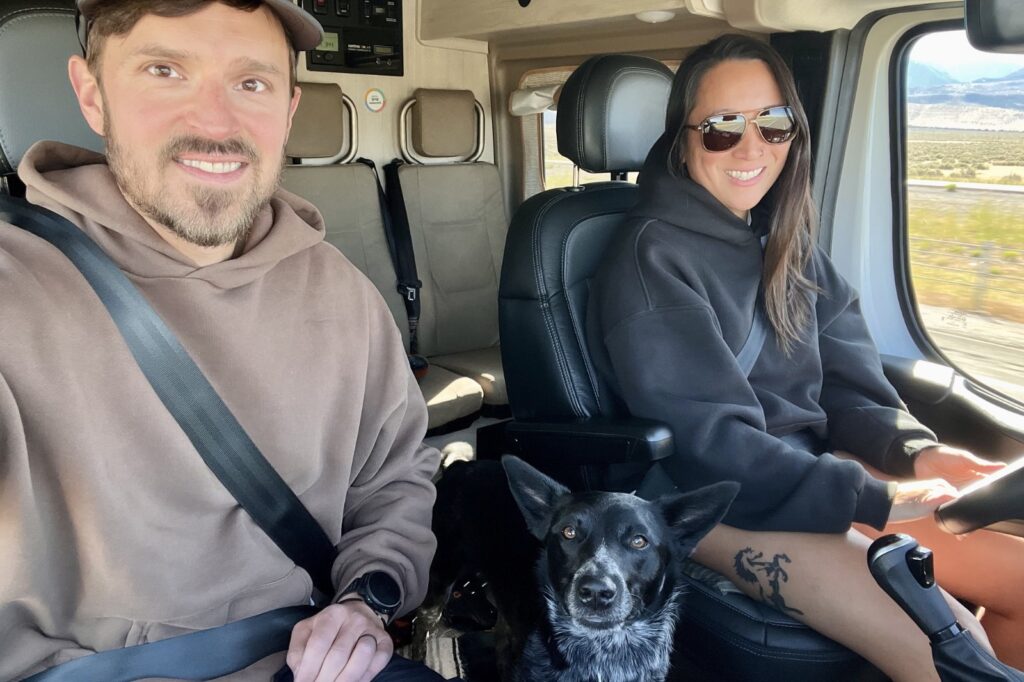
Alright, think of this section as a little tl;dr — we’re just going to hit what’s good and send you on your way, kind of like Alex flying through an aid station at mile 100.
Obviously, beds rule. Quick naps became realistic possibilities at aid stations, and the pop-top added space for more than just Alex to catch a few winks. The Liberty Lodge was also packed with storage space, which was clutch compared to our trusty Subaru.
Also, the fridge stayed cold the entire trip and recharged while driving, which was huge for keeping drinks, recovery food, and ice-cold beverages ready for runners coming into hot aid stations.
The van also added a nice degree of privacy, making changing a little more comfortable during stops — and the A/C went a long way toward helping us refresh, too. On the opposite (hot) end of the spectrum, the gas stove allowed for hot meals at a moment’s notice, which is nice any hour of the day.
Oh, and a mobile bathroom — need I say more?
Rent A RoadsurferHave something to say? Leave a Comment
Sign in or create a free account to comment. You'll come right back here.
Sign in / Sign up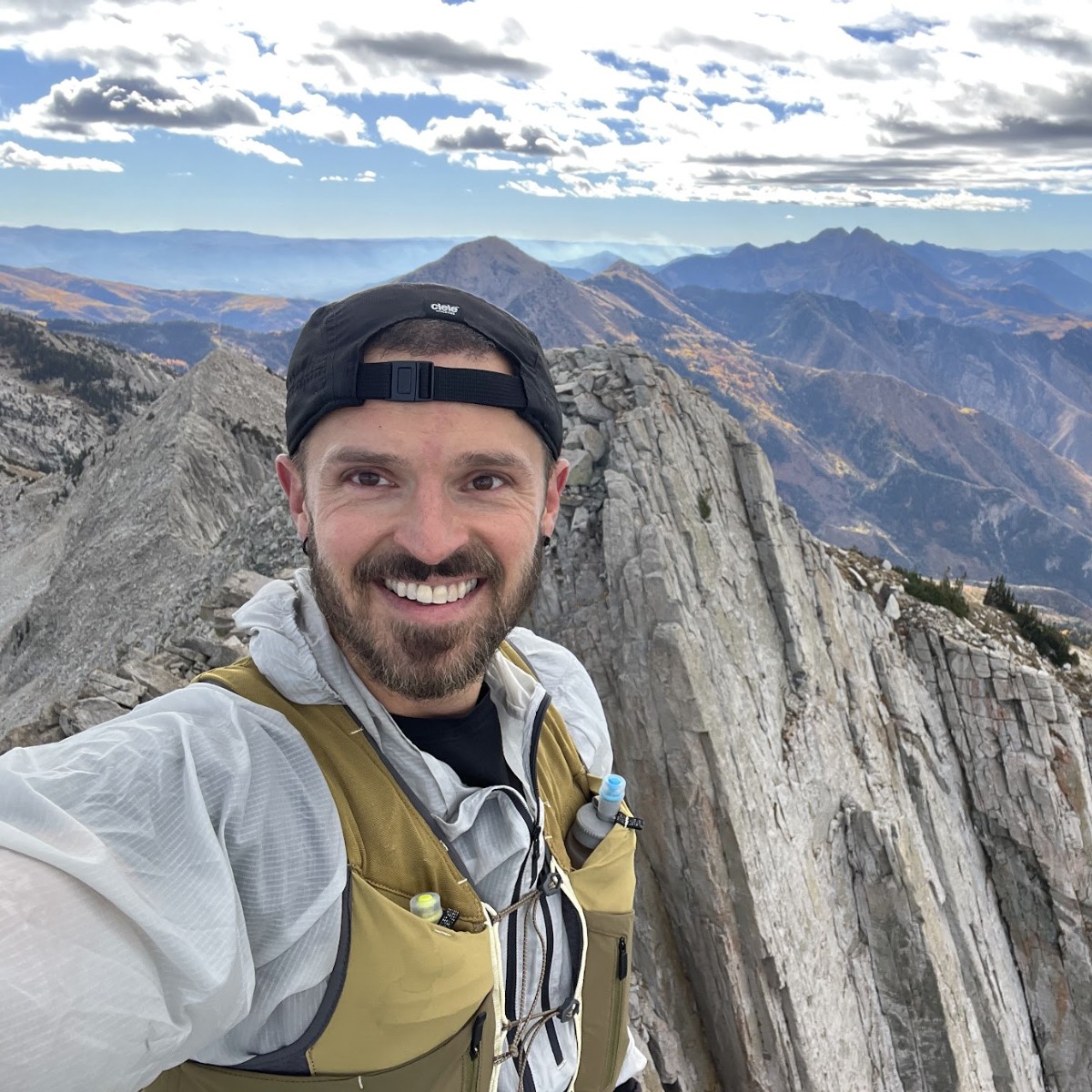
Jared is a trail runner living in northern Utah, where he explores the Wasatch Mountains. He enjoys big mountain adventures and rugged races, with finishes at Hardrock 100, IMTUF 100, Wyoming Range 100, and Arrowhead 135, among others. When he’s not running, he works in software design, roasts coffee, and spends winters on Nordic skis.
More from Jared