We independently review everything we recommend. When you buy through our links, we may earn a commission.
9.7 oz. (275 g) for a US M10 / 8.3 oz. (235 g) for a US W8
Men: 37 mm in heel, 33 mm in forefoot (4 mm drop)
Women: 35 mm in heel, 31 mm in forefoot (4 mm drop)
All-terrain trail runs
Supercritical EVA midsole, Vibram Megagrip outsole, Woven textile upper
Available now for $165
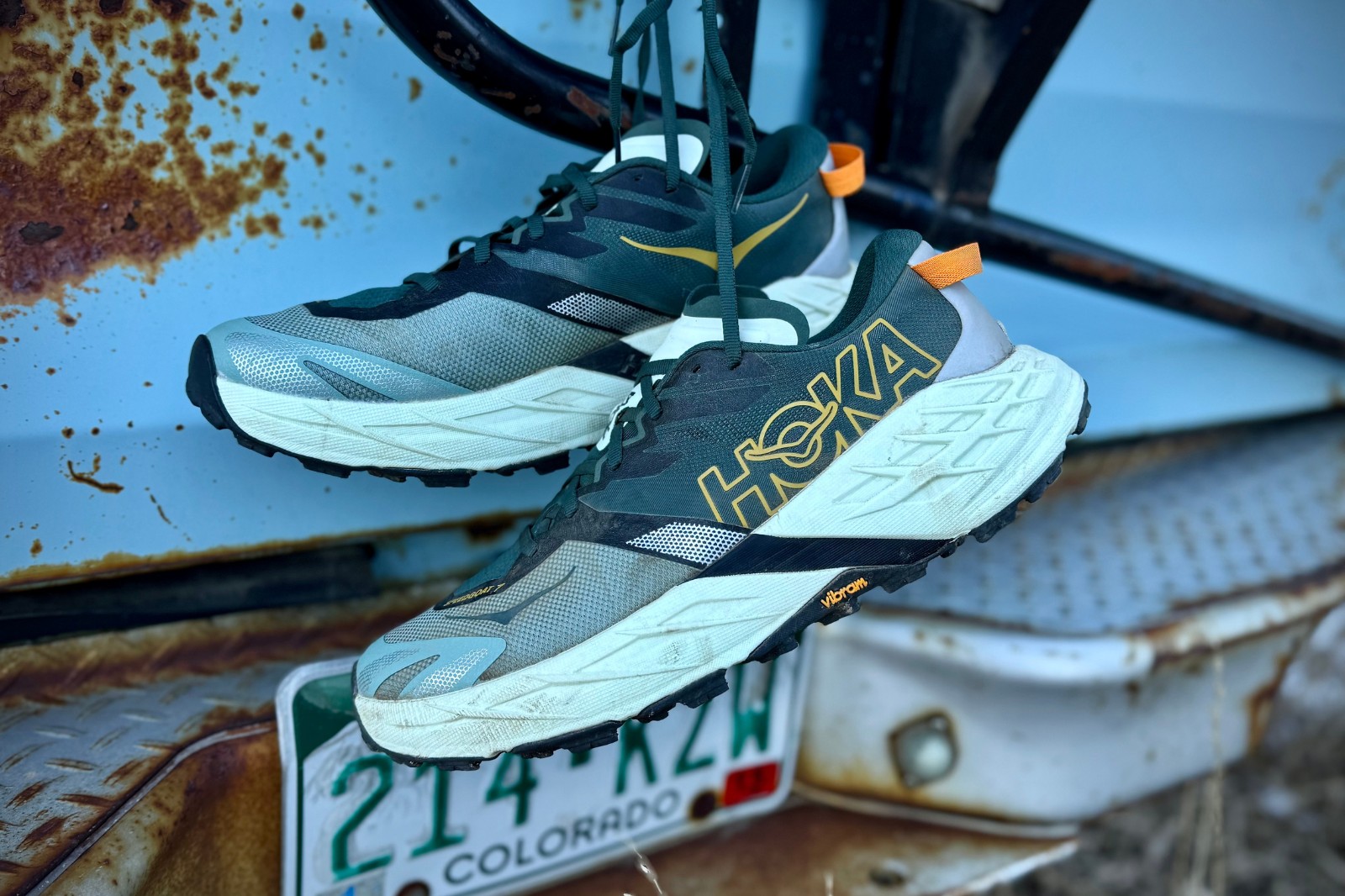
TAYLOR: It’s back for round seven. Even though it’s been several years since the very first iteration, the Hoka Speedgoat has always remained among the most highly anticipated trail launches. No, maybe it hasn’t always received an update each year, but when it does, it gets our attention. It’s a foundational shoe that has influenced much of the trail industry’s performance trajectory.
If we’re being frank, and we like frank around here, the Speedgoat series had a lock on the industry for a time because of its revolutionary ability to provide high-stack protection while being able to tread upon the heights. Many iterations pushed the needle forward in this category. This is the shoe that most companies were striving to be like.
Though it is highly acclaimed, the Hoka Speedgoat series has been criticized more recently as well. The main reason was not keeping up with the times, not being able to compete in the very category they created and made popular. The shoe that was once the pinnacle of performance lay lackluster in the dirt because of the ever-rising tide of competitors.
Hoka listens, though! They made key changes from Speedgoat 5 to Speedgoat 6, influenced by the hotline. The Hoka Speedgoat 7 features even more adjustments based on runners’ feedback. Hopefully, a newly dialed upper and the introduction of a more modern midsole will not only end the drought of the Speedgoat series but remind us again why the Speedgoat has been such a landscape-changing shoe.
Those are high hopes.
ALLISON: Just like Taylor said, the Hoka Speedgoat has become one of the most popular trail shoes in the game; however, it makes it all the more interesting that so few running shoes are actually named after pro athletes, given how personality-driven the sport is. The Speedgoat, inspired by ultrarunning legend Karl Meltzer, and the Skechers GOmeb, named for Olympic silver medalist Meb Keflezighi, are two of the only true examples that come to mind.
Today, though, I’m focusing on the Speedgoat 7 and leaving the road shoes to the experts over at Believe in the Run. I’d consider myself a Speedgoat aficionado, having run in every version since the 2 (and yes, the EVO Speedgoat still has my heart). After finding the Speedgoat 6 a little too “speedboaty,” I was especially curious to see how Hoka would hopefully refine the ride and overall feel.
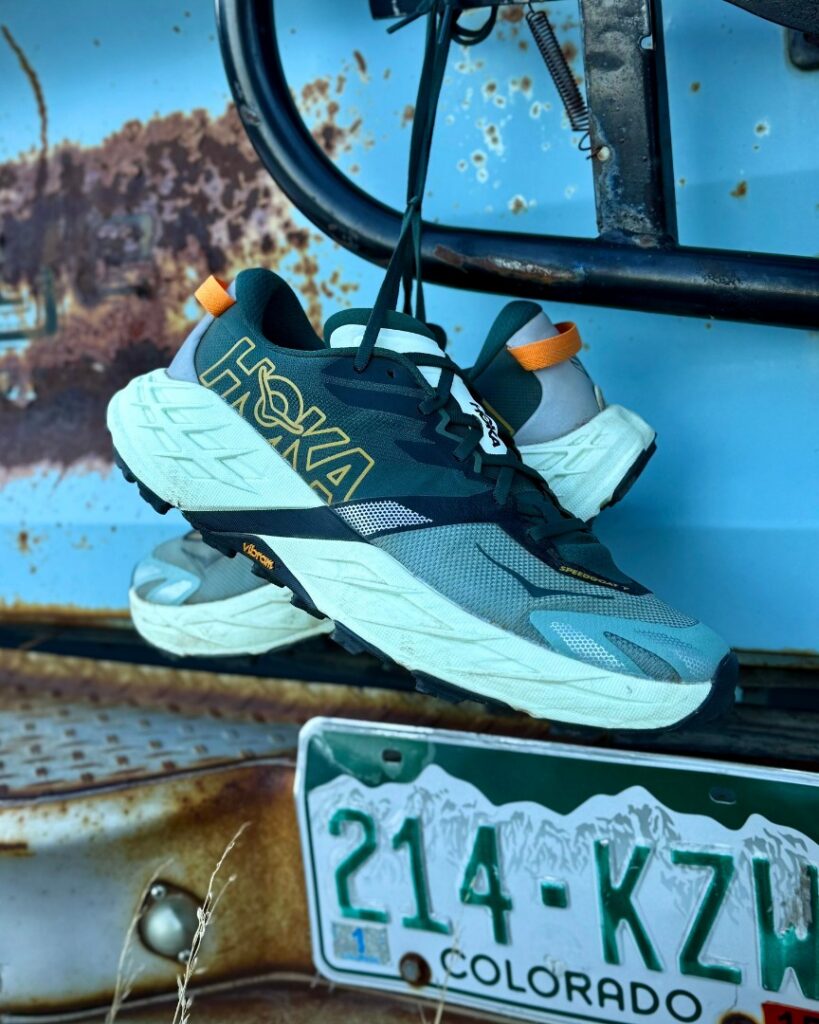
TAYLOR: I’m going to break from tradition and go right for the midsole. Out with the CMEVA midsole.
Pop! Pop! Pop! That’s confetti falling, FYI. Let’s get the party started in here!
Admittedly, this isn’t the most exciting midsole I have been in, but it is leagues better than what Hoka had. It’s enough to get the ball rolling in the right direction to bring relevance back to the Hoka Speedgoat 7.
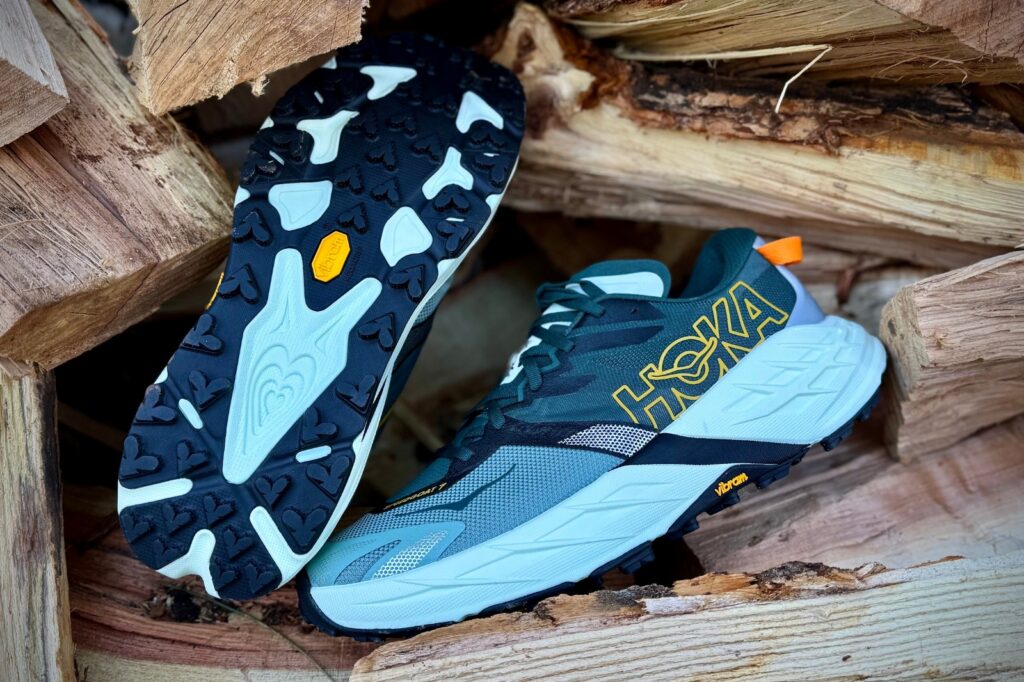
All it took was a thick slab of supercritically formed EVA. This medium-density, more airy-feeling, lighter-weight midsole gave enough pep to be satisfied while having my back on all the other aspects the Speedgoat series is known for. With a 37/33 mm stack (for the men’s sizes), there was enough foam underfoot to give some actual character while still providing the protection and dynamic stability for a higher-stack shoe.
One key point that we have been feeling in a few other shoes in this category lately is that a little bit of forefoot ground feel seems intentional. I felt well-protected yet grounded enough to feel in control. Shoes like the Merrell Agility Peak 6, Scott Kinabalu Trail, Topo Athletic MTN Racer 3, and The North Face Vectiv Infinite 3 all share that characteristic and make for awesome all-around trail runners.
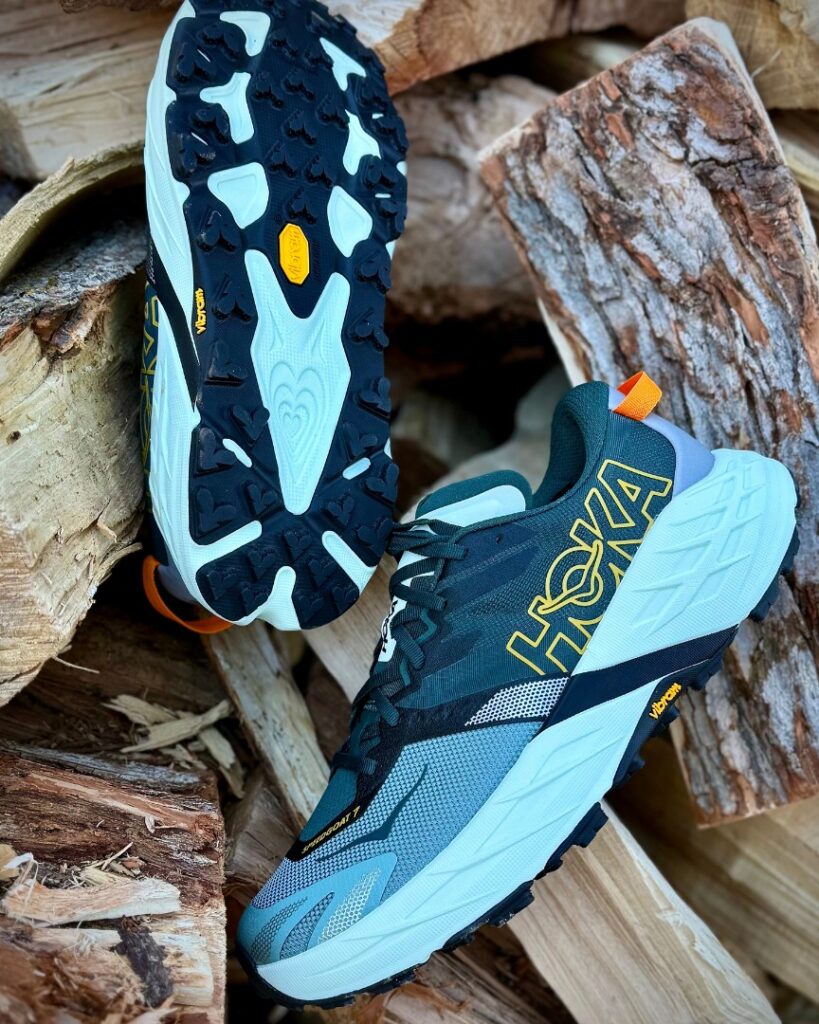
As in the past, the Speedgoat isn’t the most cushy experience; however, the new midsole did break in and provided a pleasing amount of cushion for the long haul. So, at the end of the day, if you’re looking for a stable underfoot experience that’s well-protected and has a touch of zest in each stride, the Speedgoat 7 could be a viable option.
Next is the upper. As we found with the Hoka Speedgoat 5, if you can’t stay on top of the midsole, there’s no way runners will take this into the intended, more-technical arenas the Speedgoat was made for. Like with the midsole, we have a winner with the upper, too.
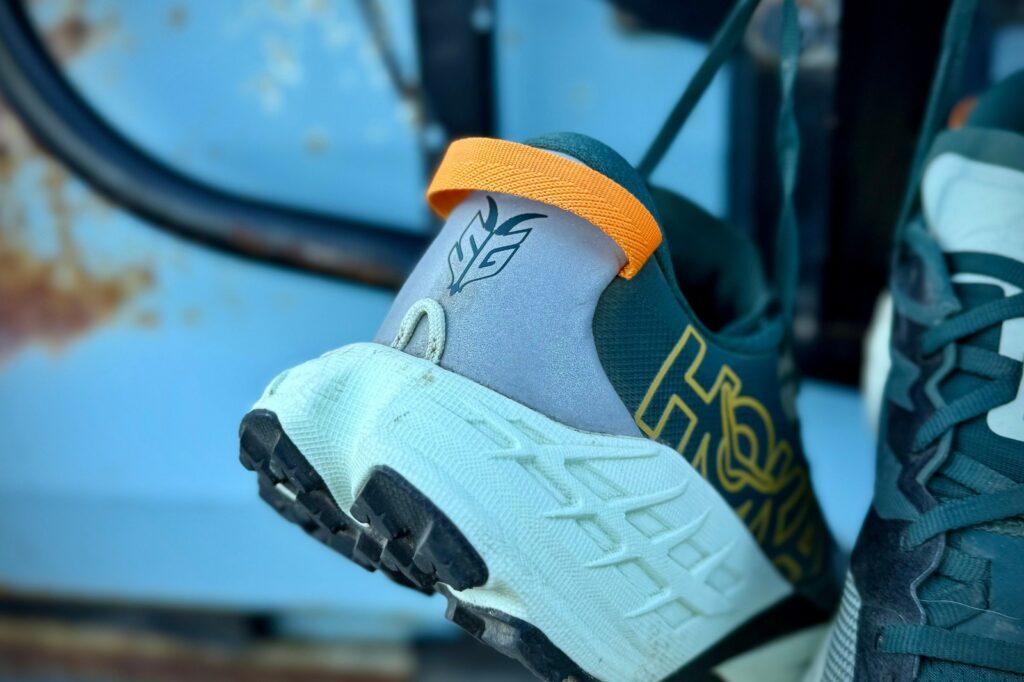
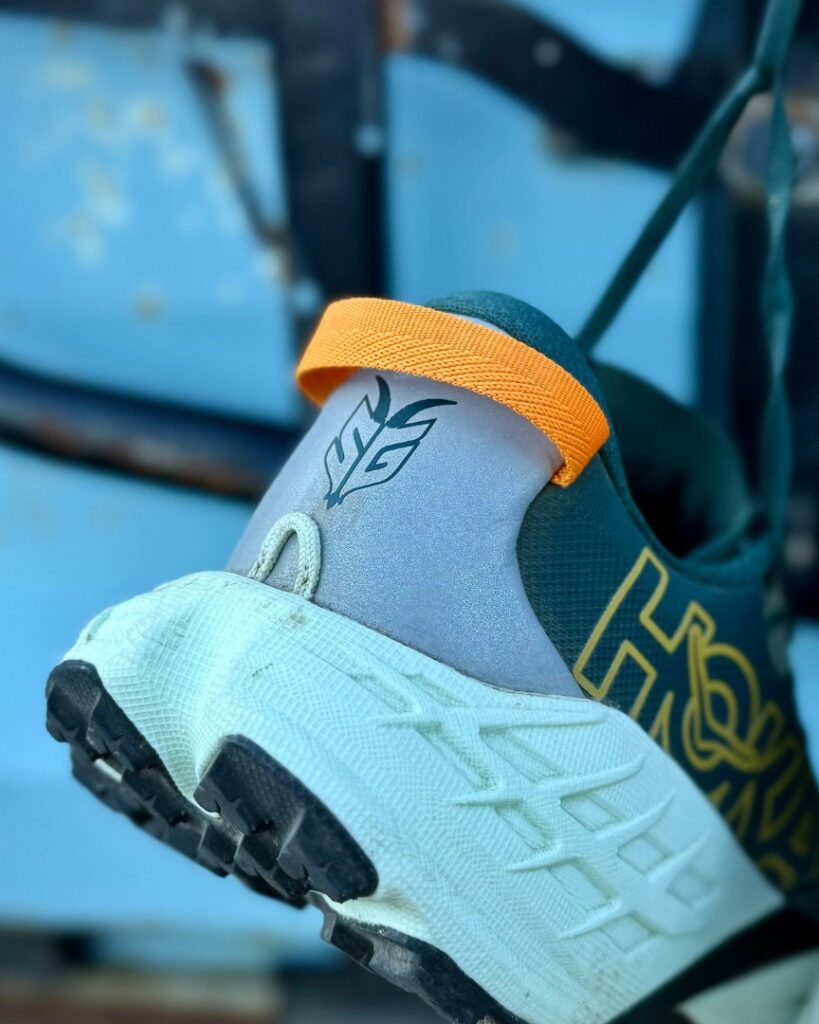
It took on a bit of a Frankenstein approach, piecing together multiple materials to achieve the desired outcomes. The rear of the shoe is softer and more comfort-oriented. A stout, well-cushioned heel collar, like that found in the Hoka Mafate X and the Hoka Rocket X Trail, provided primo comfort and confidence. I was able to achieve a great lockdown and remain cozy for an onslaught of miles. Even the medium-cushioned racer-style tongue posed zero issues.
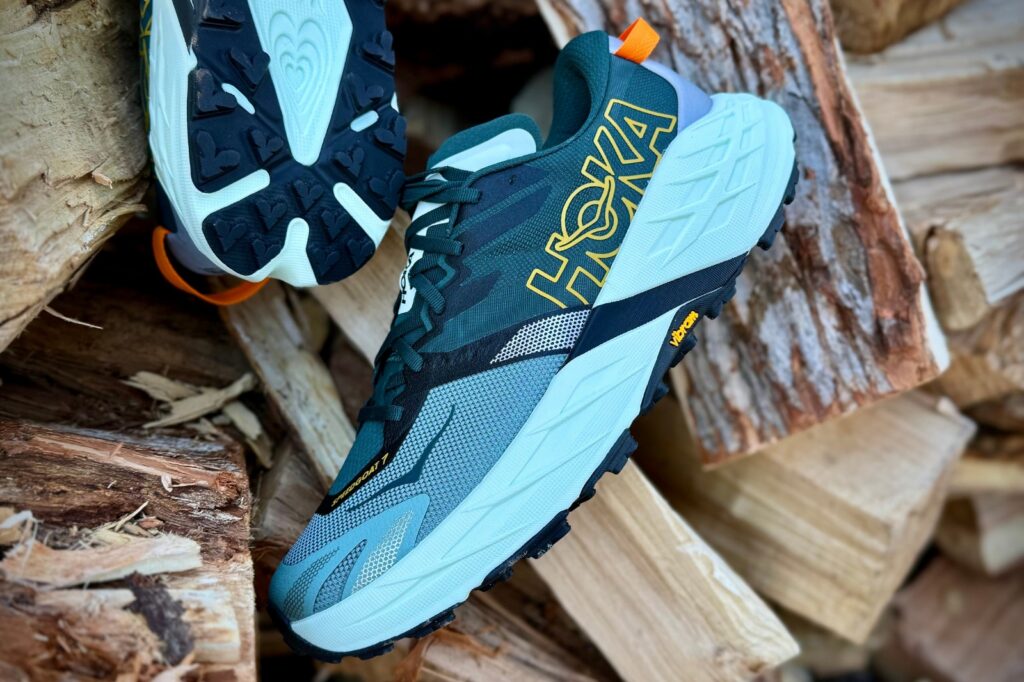
From the midfoot forward, the materials change. The woven textile upper (engineered woven mesh) added a secure, durable feel to an area that previously had concerns. A forefoot vamp (at the bottom of the tongue) allowed for slight amounts of flexibility in the forefoot, which were welcomed for comfort purposes. For the most part, I felt comfortably locked in and ready for any adventure. Hard turns, off-trail, and even adding some speedy descents were all checked as satisfactory.
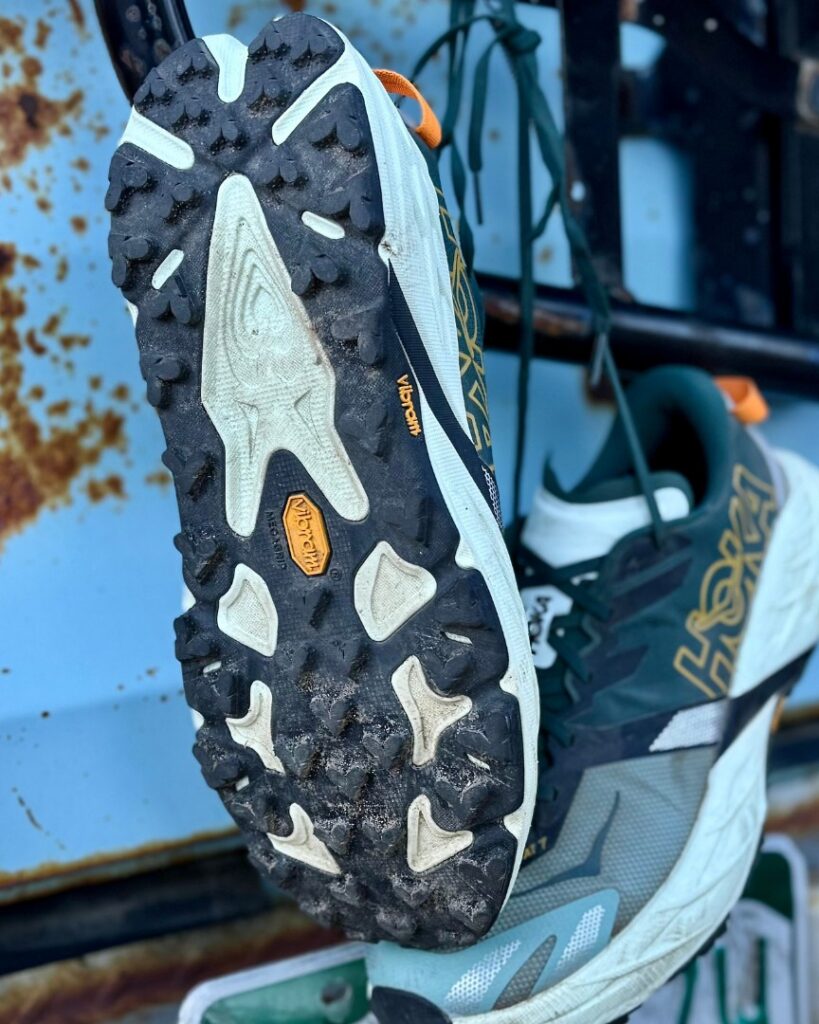
As one might expect, Vibram Megagrip is definitely one of the reasons the Speedgoat series has received so much notoriety. These 5 mm Microtraction (little knobs on the side of each lug) lugs are incredibly confidence-inducing. Our winter has provided a really weird array of conditions to test in. This outsole defeated all of them. I was very happy traversing the soft and sloppy, the rock solid, and everything in between.
ALLISON: I’ll keep the party going with what Taylor said about the Speedgoat 7 feeling surprisingly responsive. Is that even possible for a shoe with this much stack and trail pedigree? Apparently yes. As the miles went by, they just kept clicking, and even when I picked up the pace, it didn’t seem to matter. The shoe felt more like it was floating than plodding, which is not something I’ve ever associated with the Speedgoat line. In past versions, I always felt aware of the shoe, its bulk, its shape, its presence. With the Speedgoat 7, that awareness faded into the background, and I could just focus on running.
What really caught me off guard was how well it handled road segments. I took it onto pavement for a few stretches and was genuinely shocked by how lightweight and natural it felt, something I’d normally reserve for the Hoka Challenger, not a full-on trail shoe. For someone like me who bounces between roads and trails, sometimes within the same run, that versatility is a massive plus. And given that our roads have basically turned into a slip’ n’ slide lately, thanks to ice storms, having a shoe that feels stable and confident on surfaces has been a game-changer.
Of course, the defining trait that keeps me coming back to the Speedgoat is the Vibram outsole. It’s the kind of grip that builds real trust over time. That outsole has saved me, and probably my knees, more times than I can count, keeping me upright in conditions where other shoes would have sent me straight to the ground. Even with a few spills this past month, I never once questioned the traction. It’s still the gold standard for me in trail confidence.
Shop The Shoe - Men Shop The Shoe - Women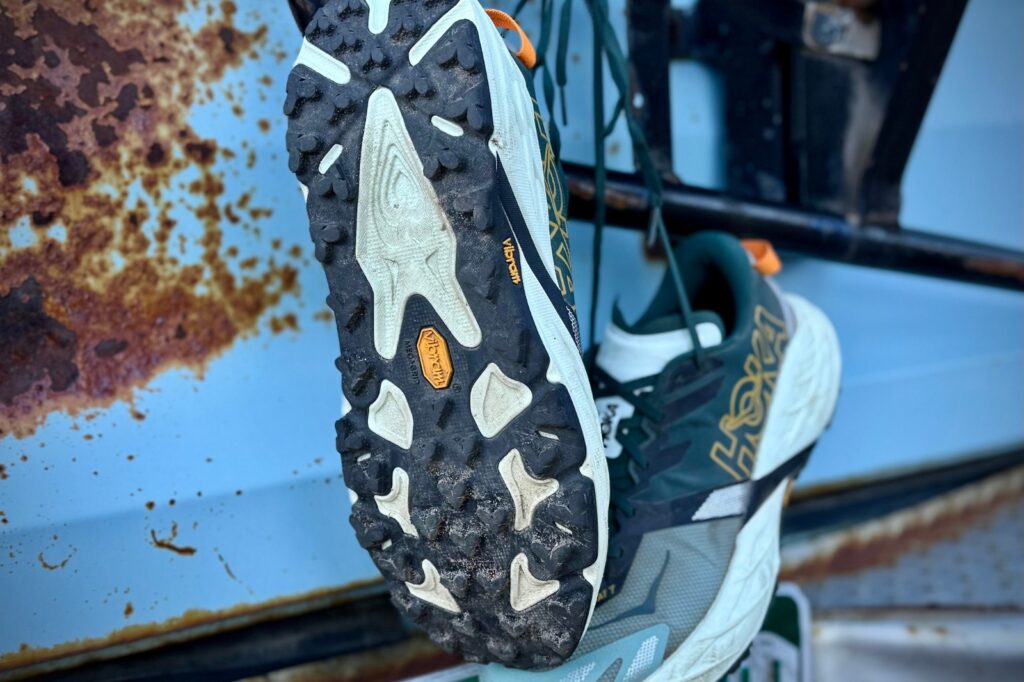
TAYLOR: Ah! It’s refreshing to sit in this section to deliver only a few fairly routine complaints about the Speedgoat series.
With the Hoka Speedgoat 7, the toebox shape remained the same. One of the chief complaints throughout the history of this line is that the toebox is “narrow” or “pointy.” That’s still the case. To be fair, it is one of the reasons runners feel so secure in the Speedgoat; however, it doesn’t provide optimal comfort. I did have some rubbing on the outside of my pinky toes.
This shoe also comes in “wide.” So, if you have the same issue with pointy toe boxes, you may want to check into that option… hopefully, the wide sizing won’t mess with the rest of the fit too much.
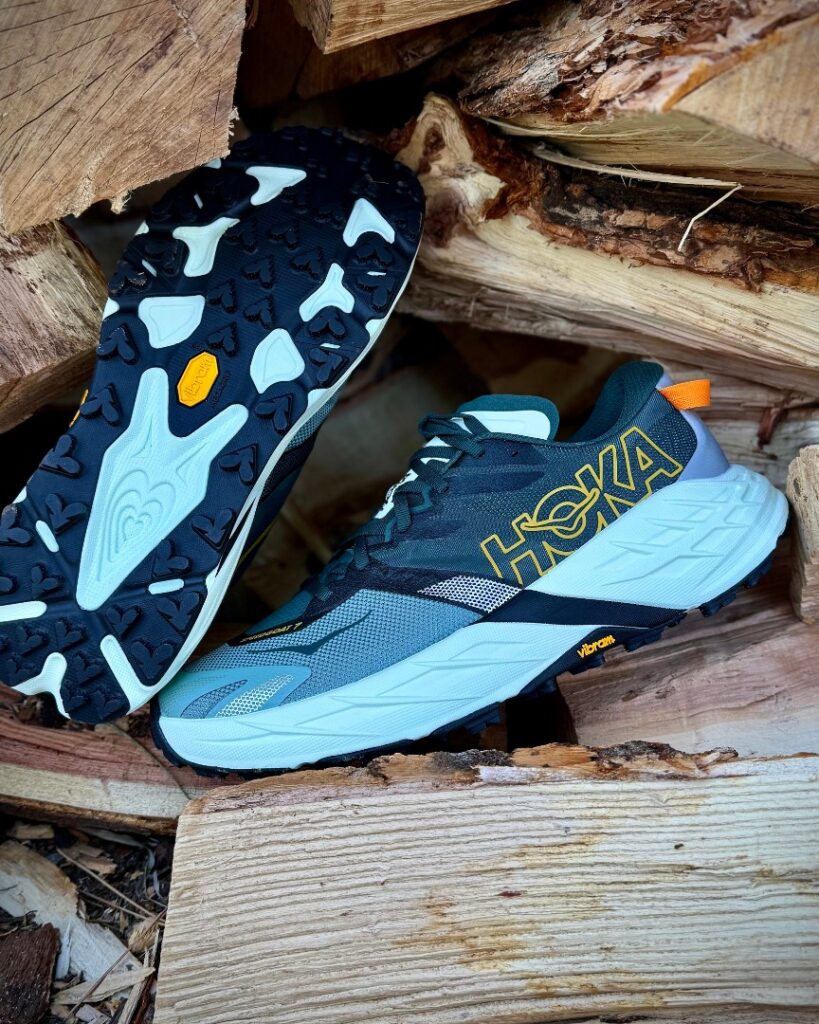
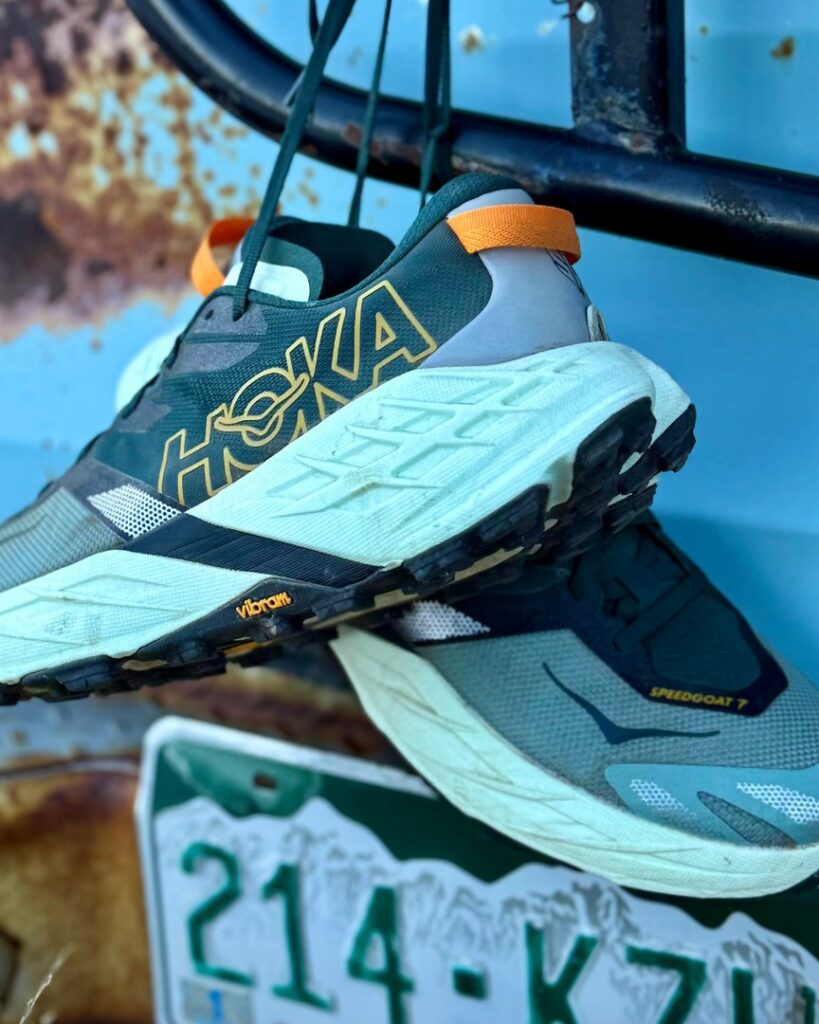
Also, the toe bumper was a little rough on some downhills. Part of that could be a “me” thing, along with the pointier toe box. I typically wear a US M10.5. I could often wear an 11 and be just fine. So, if you’re in the same boat as me, you may want to consider sizing up a half size. For the most part, though, I felt like the length was just fine.
I do have some durability concerns, too. Chalk them up as purely concerns because my pair is starting to delaminate after less than 50 miles in the shoe. It could be my sample. It could be the whole batch. That’s not something I can confidently put a mark on. All other signs about the Hoka Speedgoat 7’s durability are positive.
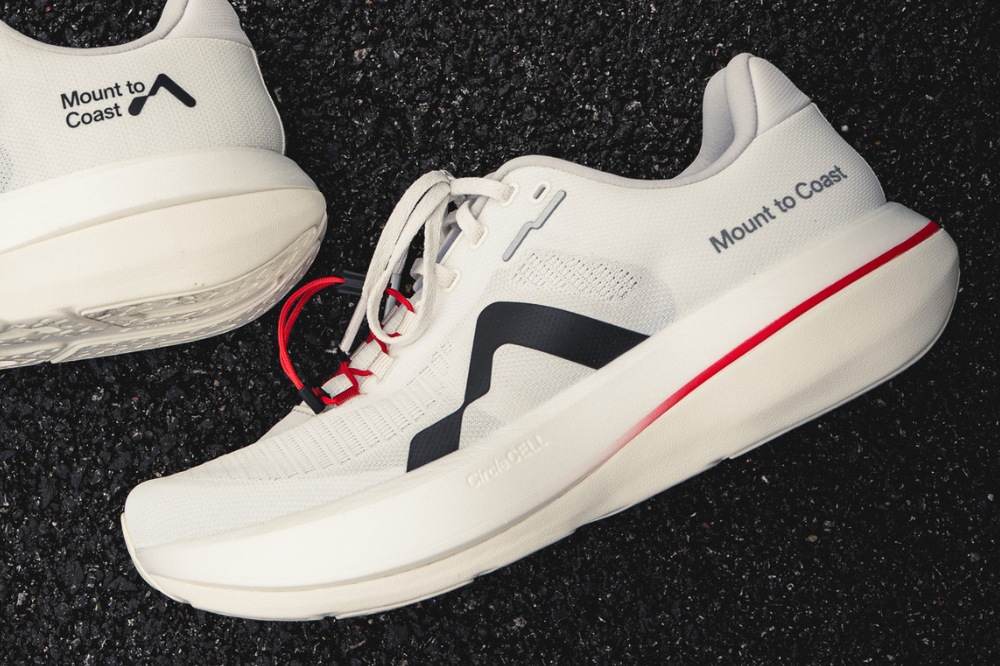
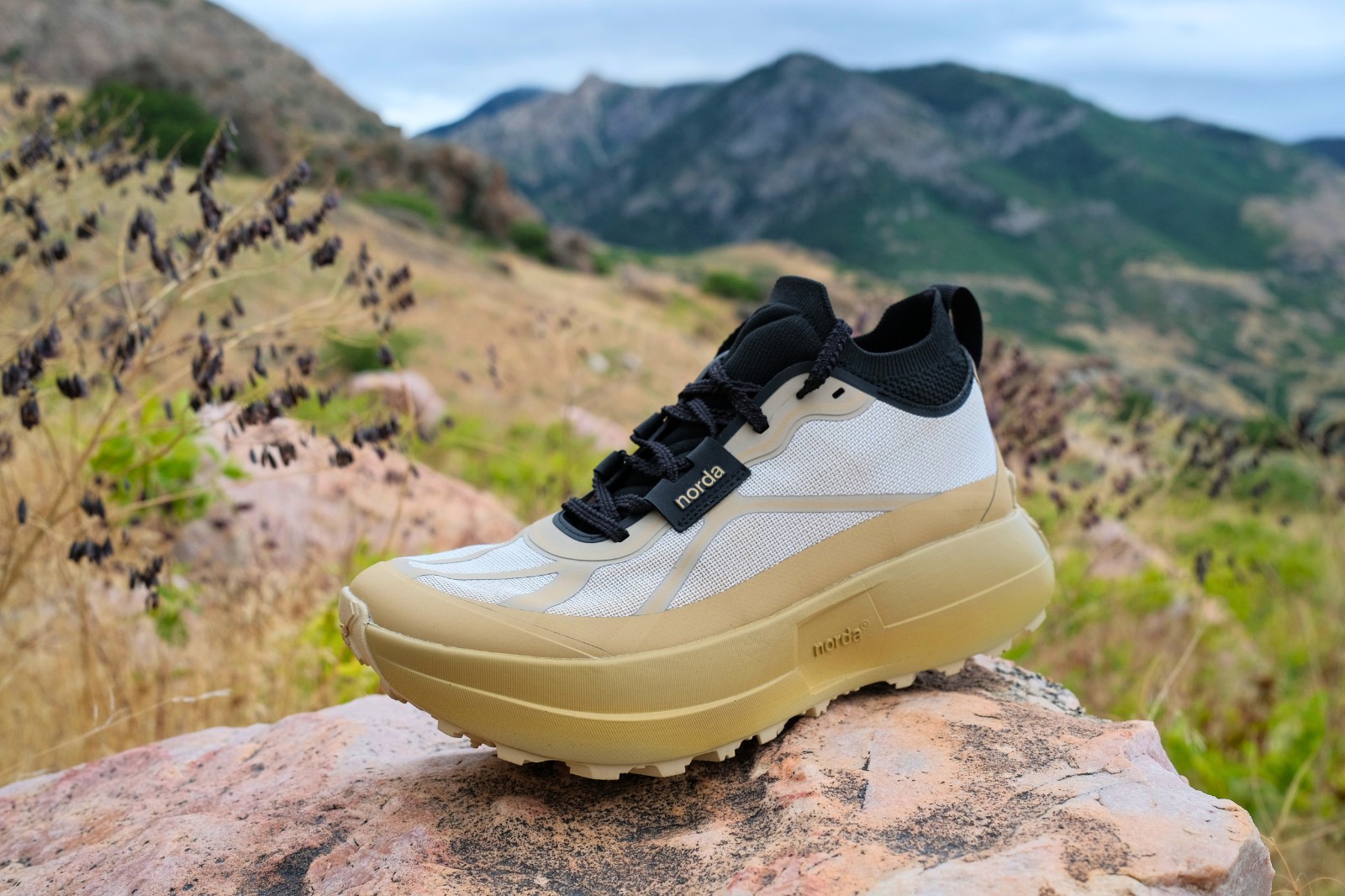
Finally, I think it’s worth noting again that the midsole itself won’t be wowing! It’s not necessarily a negative point. If you are looking for a more cushy, bouncy midsole with a similar stature, that’s where you should check out the Mafate series or some other options in the same category, like the Norda 001a, Mount to Coast T1, or The North Face Vectiv Enduris 4.
ALLISON: While Taylor covered many of the major drawbacks above, I’ll add that my overall experience with the Speedgoat 7 was far less frustrating than it was with the 6, so credit to Hoka for clearly listening to feedback. That said, I’m still baffled by the toe cap situation. It’s not nearly as bad as in some other shoes I’ve reviewed, where it becomes a constant distraction or even a blister factory, but it still feels like an unnecessary design choice that adds little benefit.
The biggest gripe for me remains the tongue. Ever since the Speedgoat 4, Hoka has stuck with this thin, minimal tongue, and I just don’t think it works for a shoe that’s meant to be worn for long hours on technical terrain. I’d happily trade a few grams for a bit of padding and comfort here. And while the Speedgoat 7 is lighter and more refined, I still can’t fully escape the “speedboat” feeling Taylor mentioned, or maybe more accurately, a tugboat. It’s stable and dependable, but the overall shape still feels bulky and somewhat unwieldy when I want something that feels more agile underfoot.
Shop The Shoe - Men Shop The Shoe - Women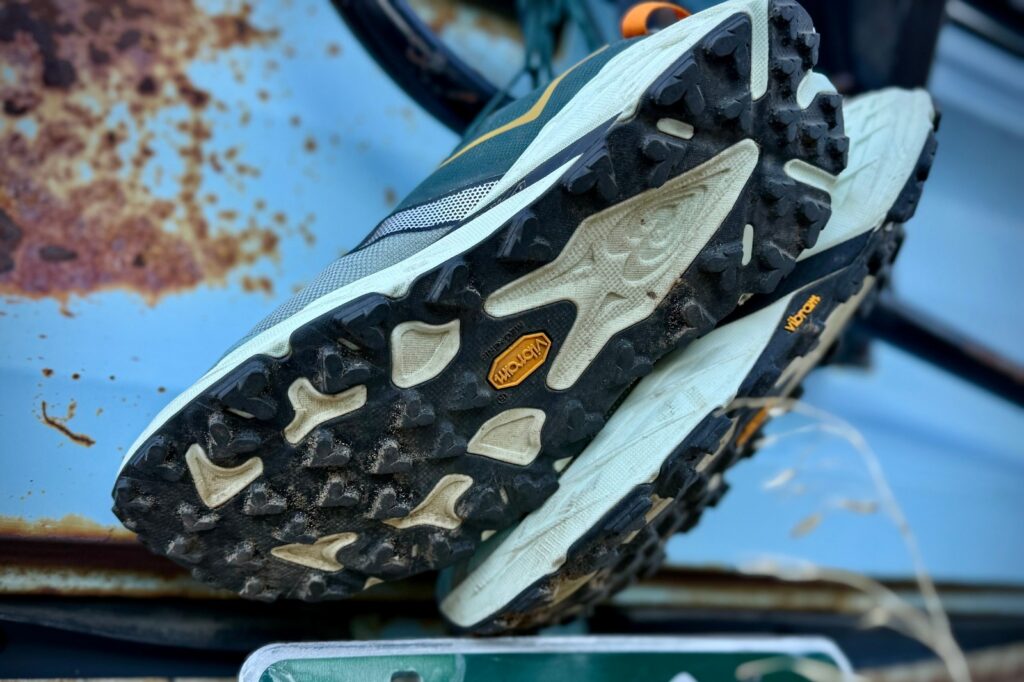
TAYLOR: While the Hoka Speedgoat 7 isn’t exactly the blow your socks off update, it’s more like a sigh of relief. I think it really redeems itself. It’s like, actually worthy of the name again.
The Hoka Speedgoat 7 is another viable option among the masses. It will be especially exciting if you’re looking specifically for that consistent feeling underfoot, without too much pizazz, and you just want to be confident. Runners will be pleased with the renewed sense of comfort and control for a wide variety of trail-running needs.
ALLISON: The Hoka Speedgoat 7 isn’t flashy and doesn’t lean on trends like carbon plates, but it doesn’t need to. It simply does what the Speedgoat line has always done well: deliver comfort, protection, and confidence over long miles. The ride feels more refined and versatile than previous versions, with better balance between stability and responsiveness. It may not be the most exciting shoe on the wall, but it’s one of the most dependable. And sometimes, especially in trail running, that’s exactly what you want.
You can pick up the Hoka Speedgoat 7 for $165 from Running Warehouse (featuring free shipping and 90-day returns) by using the buttons below.
Shop The Shoe - Men Shop The Shoe - WomenCoinciding with the launch, Hoka is inviting trail runners around the world to explore new terrain and push their limits with the Hoka Speedgoat 7 Vert Challenge. Beginning April 9, 2026, participants will aim to achieve 7,000 feet (2,134 meters) of vertical gain in 30 days. Runners can participate in the challenge via Strava. Runners will have until May 9 to complete the required 7,000 feet of gain.
Participants who complete the challenge will receive a digital completion badge, in addition to being entered to win the grand prize, which includes:

Hoka Speedgoat 7 | Full Review
Have something to say? Leave a Comment



Taylor Bodin is a trail and ultra runner living in Estes Park, Colo., with his wife and daughters. As the head of the Dirt Division at Believe in the Run, trail running is pretty much the only hobby he can manage right now and loves it. Every so often, he will pop off a race or FKT attempt because competition is pure and the original motivator for him getting into running anyway.
More from Taylor
Born and raised in Atlanta, Georgia, Allison is a die-hard sports enthusiast and long distance runner. As co-leader of Trail Sisters and FKT manager, she’s dedicated to fostering community and empowerment in the outdoors. Fun fact: she met her husband on Strava, proving that it does go down in the DMs.
More from Allison