We independently review everything we recommend. When you buy through our links, we may earn a commission.
We break down our top 10 best Asics running shoes for 2026
From racing to tempo to slow days to trails, we got you covered
Any questions? Drop it in the comments. Otherwise, let’s get you educated
NOTE: This is an ongoing list and is constantly updated to reflect our current opinion. Last edited on April 1, 2026.
American running companies seem to dominate the landscape nowadays, but it’s tough to top the long and storied history of Asics. Launched initially as Onitsuka Tiger, the Japanese shoe company has over 70 years of experience packed into its laces. That’s good news for you, as there’s an extensive list of shoes to fall in love with.
Especially since Asics has really turned the corner over the last couple years. For awhile, Asics was a ho-hum brand with seemingly the same shoes every year; however, they’ve now morphed into one of the best across-the-board brands in running. With fresh looks and designs and the performance to back it up, Asics is leading the way in giving runners what they want. We’ve run a ton of miles in all of these shoes, and can tell you that these are the best they have.
And while our recommendations are packed with plenty of new hotness, we can’t forget a few of the workhorses that got Asics to where it is today.
Here are our picks for the best Asics running shoes to get you pounding out the miles.
Asics’ primary (and most basic) midsole foam, designed to provide a lightweight shoe without sacrificing cushion and protection. FlyteFoam is tuned in different ways across ASICS products to optimize performance.
A cushioning foam material with excellent bounce. It absorbs high shock levels for long-distance runs and may provide some protection against ankle, shin and knee injuries.
A lighter and bouncier version of FlyteFoam Blast, found in the more premium shoes like the Novablast 4 and Gel-Nimbus 26.
A lower-density variation of FlyteFoam Blast that feels slightly softer and more responsive, used in shoes like the Novablast 5 and Glideride Max.
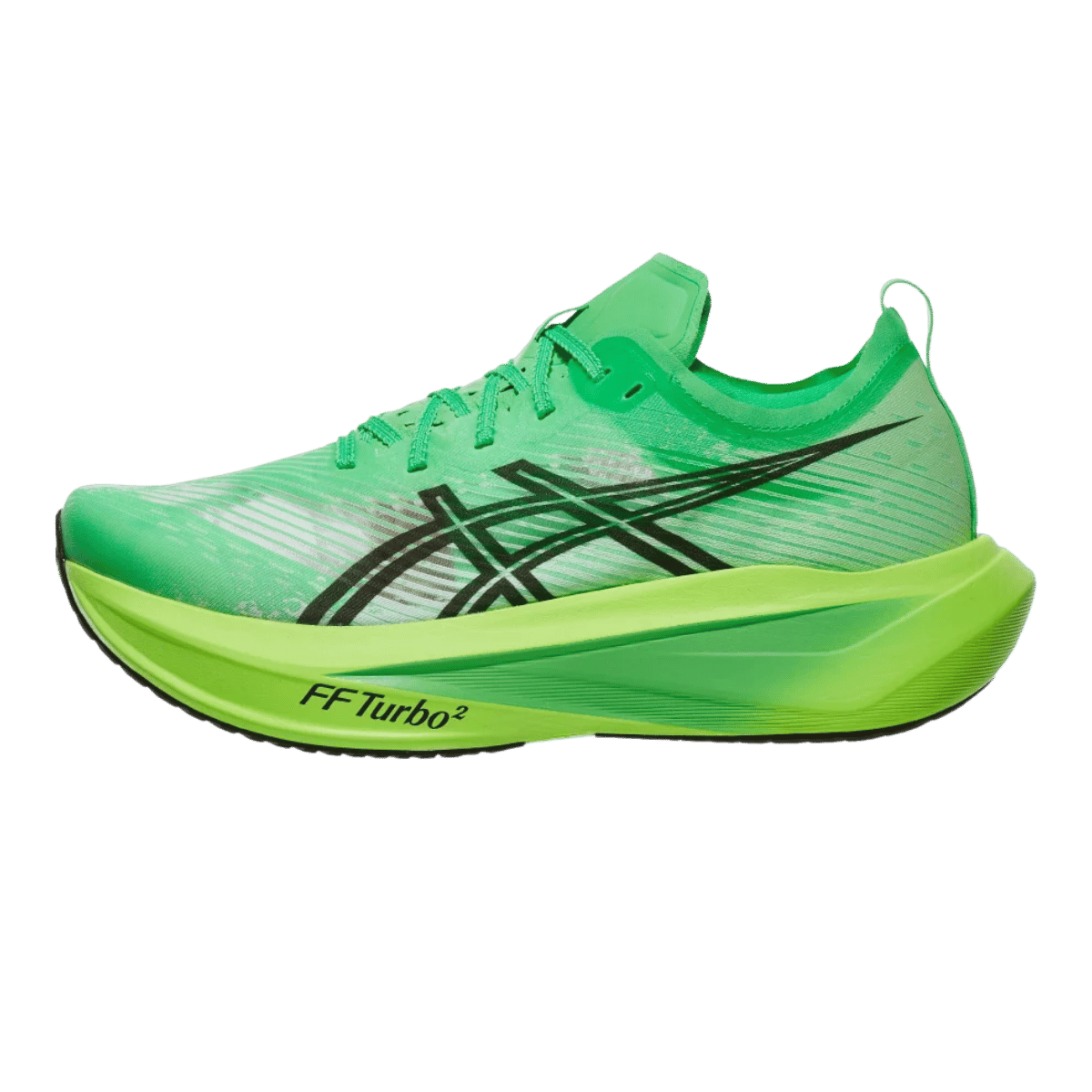
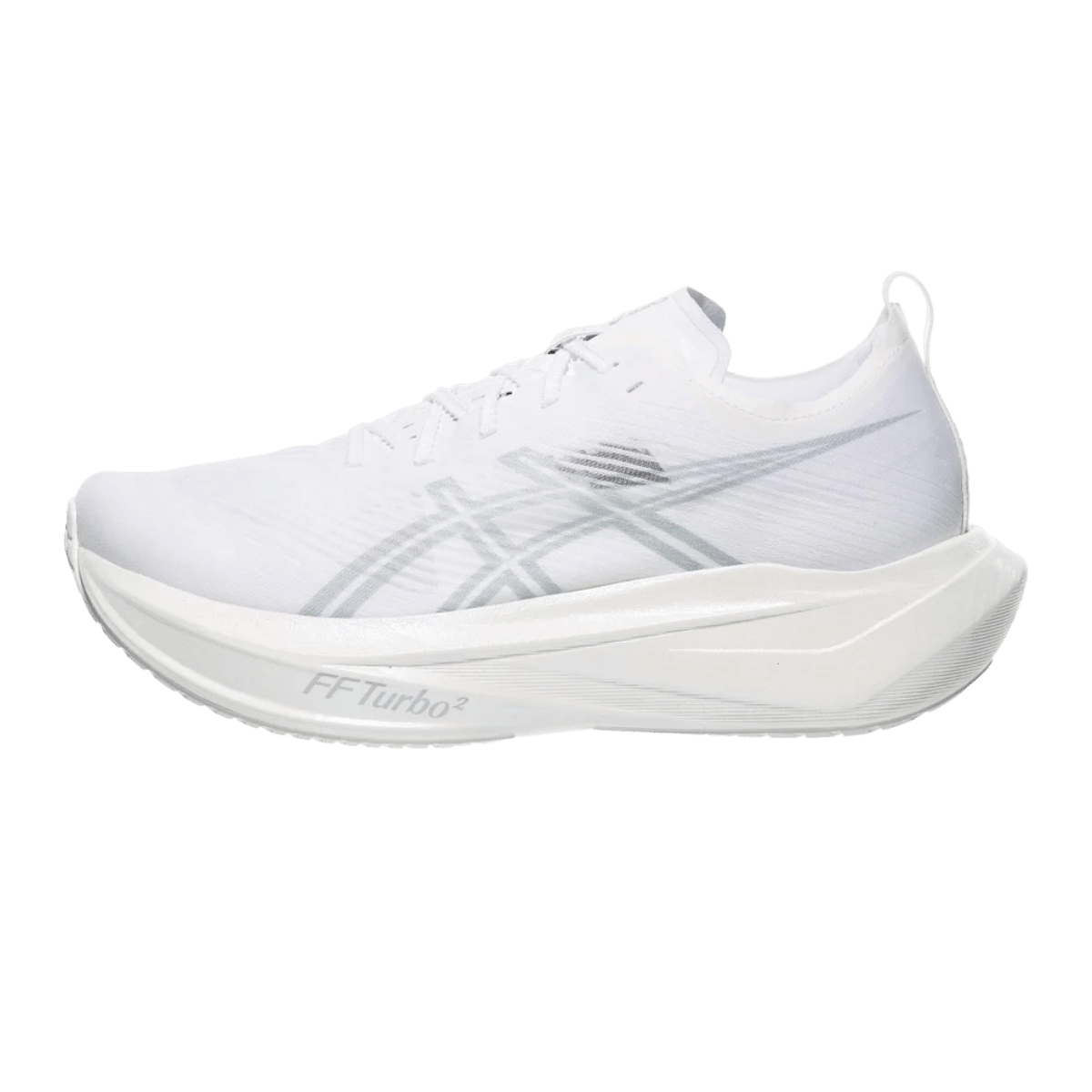
Asics’ foam for high-performance shoes, standard Turbo is a nylon-based foam, while Turbo Plus is a PEBA blend used in the current Metaspeed Sky and Edge models. Turbo Squared is an even more advanced version utilizing ATPU, used in the Megablast.
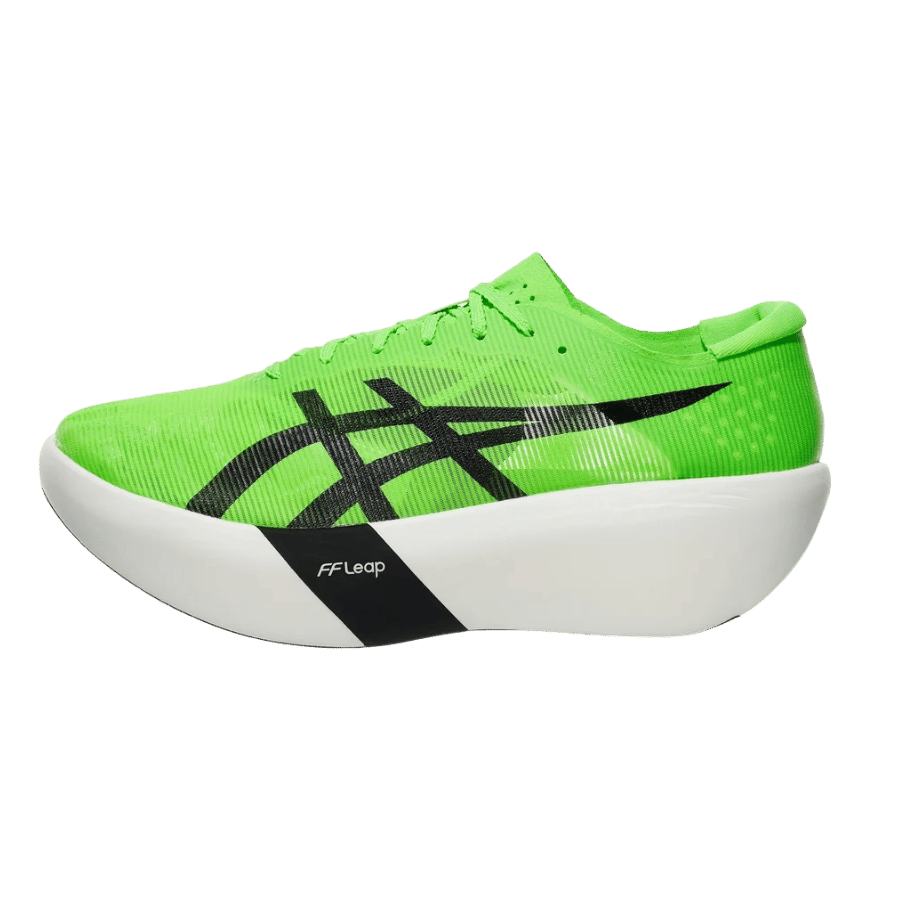
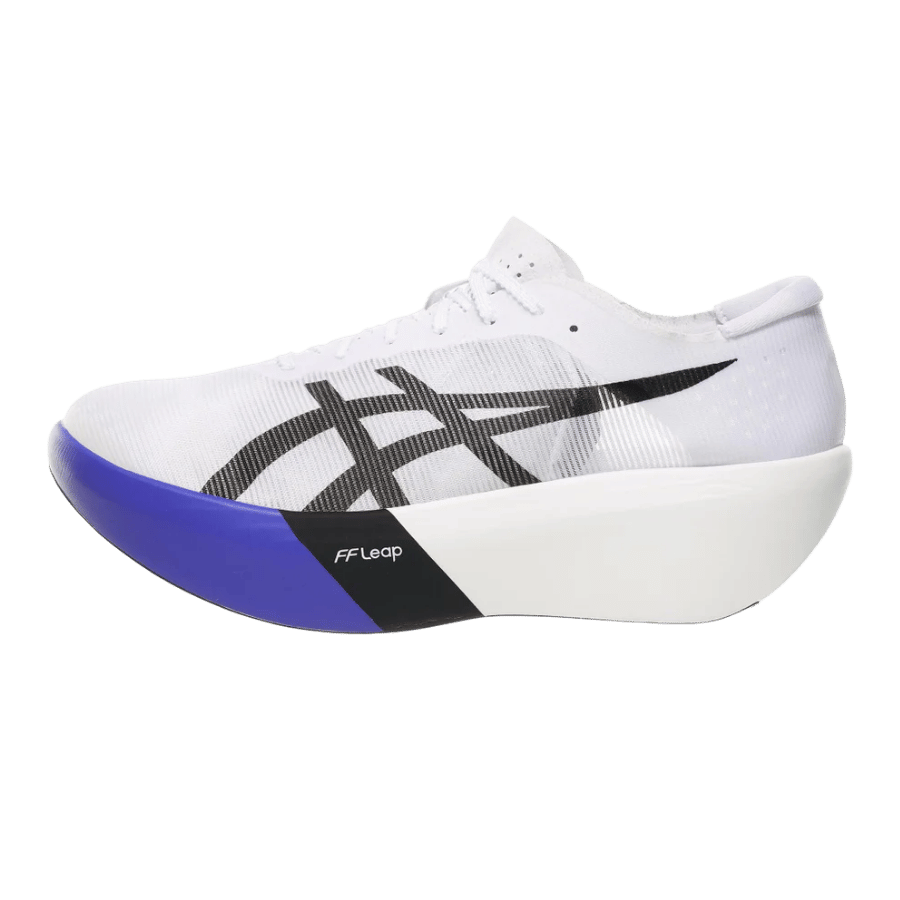
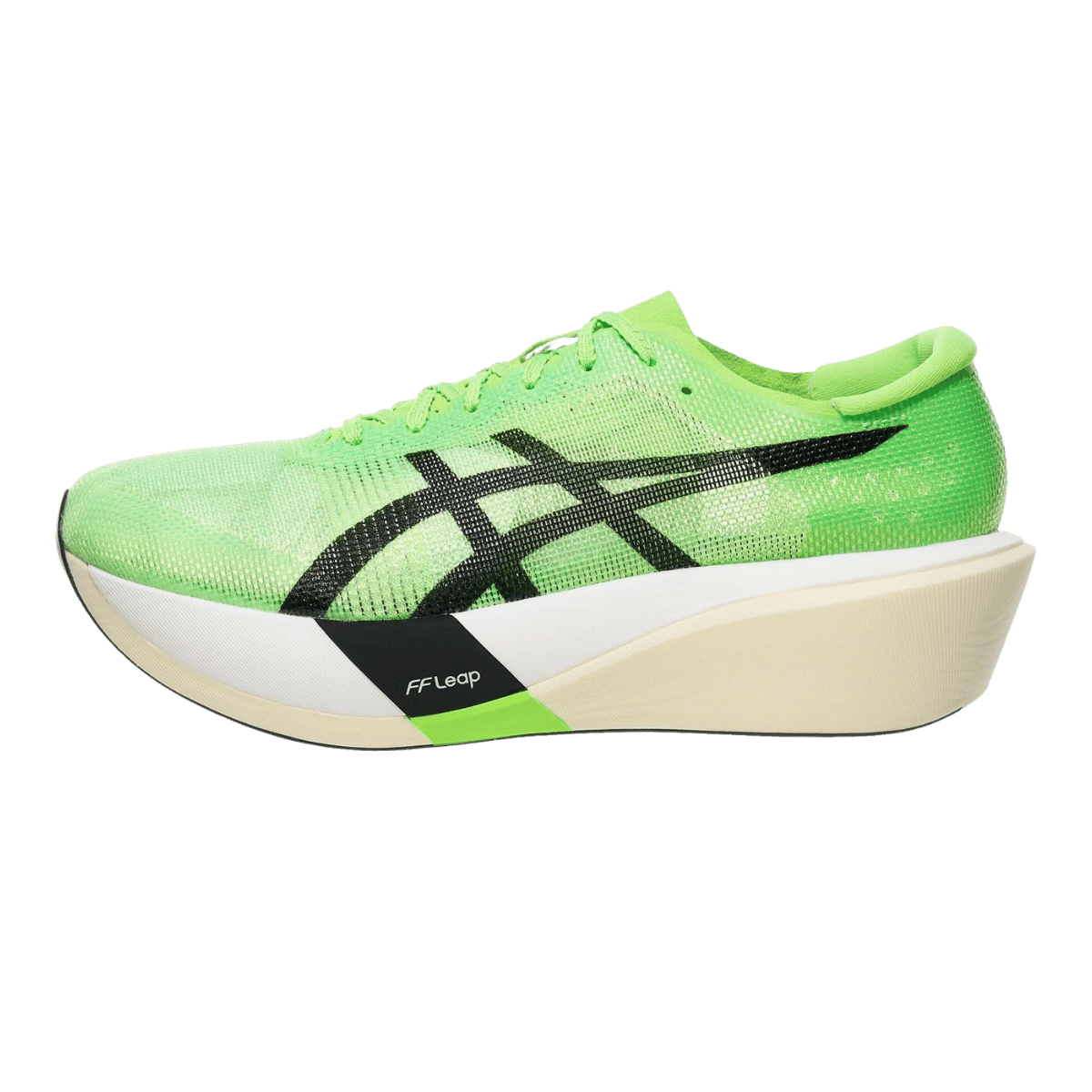
Asics’ most advanced foam, this lightweight ATPU features bounce and resilience and is used in the Metaspeed Ray.
Asics’ proprietary rubber outsole that provides the perfect grip on a variety of terrains.
A combination of AsicsGrip technology and AHAR Plus rubber that gives better traction and softness. Featured in shoes like the Glideride Max.
An updated form of Asics’ classic shock-absorbing cushion, often placed inside the heel of a shoe
Daily training, long runs, uptempo efforts
8.5 oz. (242 g) for a US M10,
7 oz. (199 g) for a US W7.5
46.5 mm in heel, 38.5 mm in forefoot (8 mm drop)
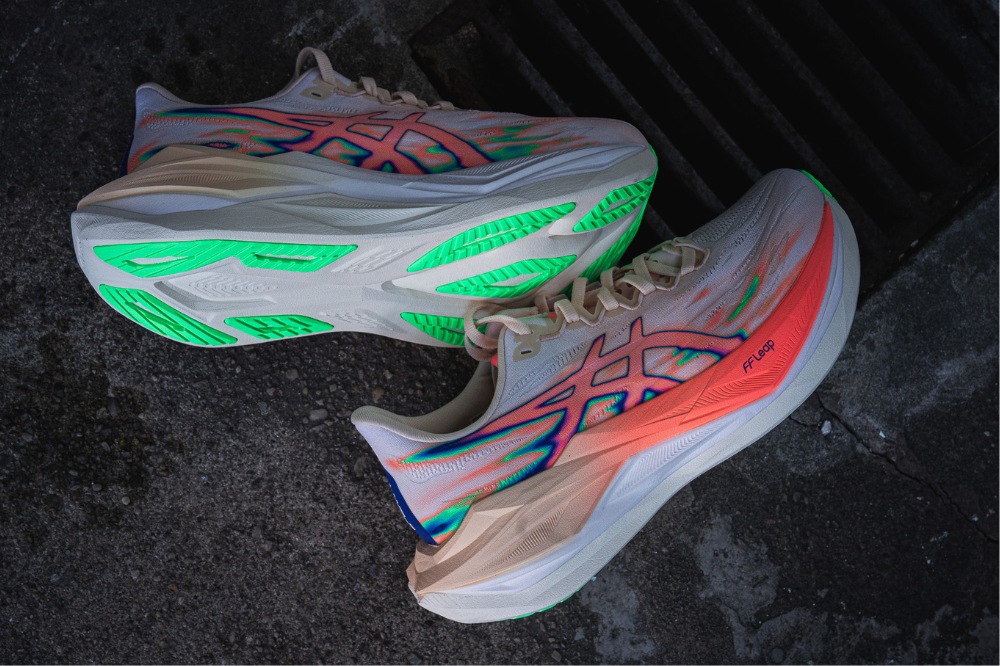
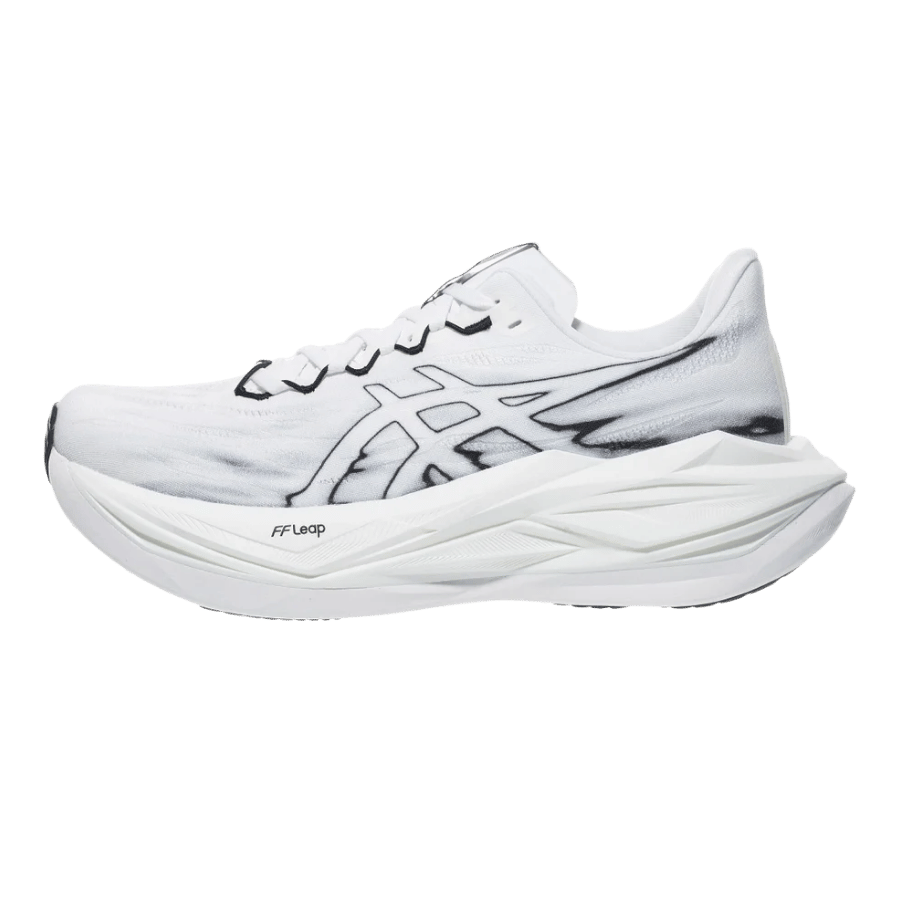
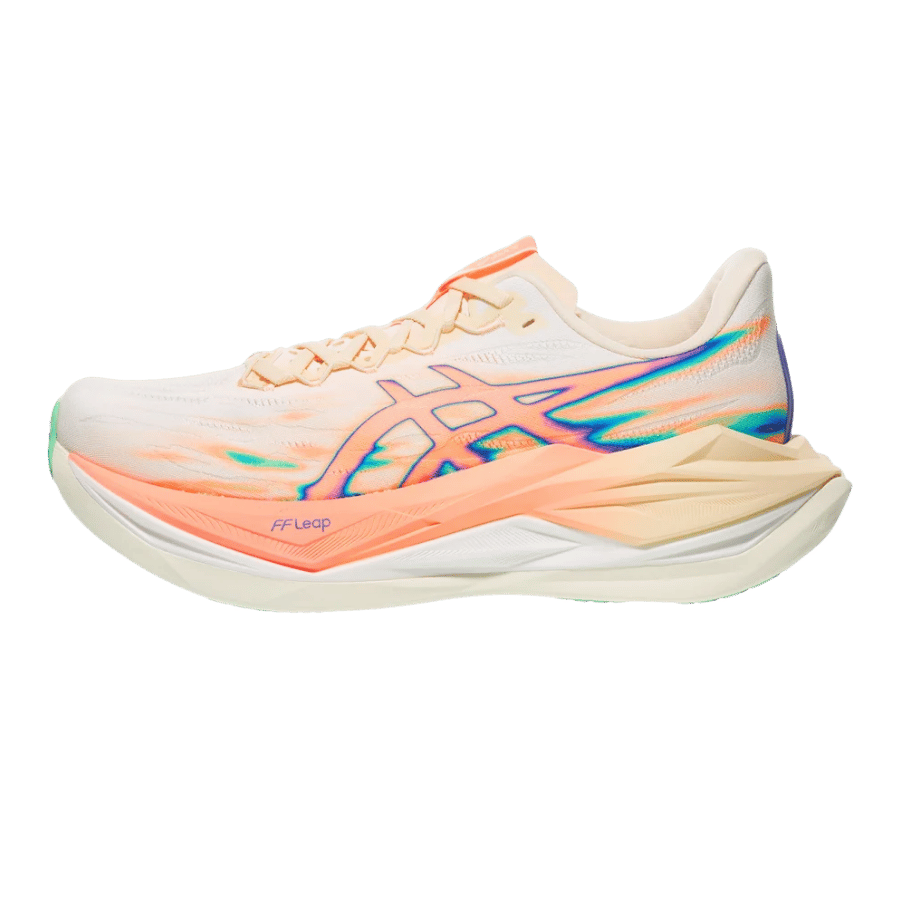
Imagine the Superblast 2 saw a fork in the road and choose a new direction. One way was the Megablast, the other way was this shoe, the Superblast 3. The Megablast was light and fast and leaned more towards an uptempo or conservative race day shoe. The Superblast 3 is softer, still light, with a significant pop from the forefoot.
Firmer or softer, pick your pleasure.
For daily training purposes, we love the updates in the Superblast 3. Most notably, the Flytefoam Leap top layer of the dual-density midsole– the same foam used in the elite race day shoe of the Metaspeed Ray. Closer to the ground, Asics uses Flytefoam Blast Plus foam to stabilize the ride and provide a secure footfall.
The most interesting thing about the shoe is its unique geometry in the forefoot, as Asics cut out a diamond channel both above and below the midsole foams, allowing the foam to compress more on landing and spring back quickly, providing a noticeable spring on toe-off. That alone makes this shoe more exciting than past versions. That said, if you’re not a fan of softer feeling shoes, then it may make sense to pick up the Megablast. Honestly, you can’t go wrong either way.

Daily training, long runs, some faster paces
9 oz. (255 g) for a US M9,
7.9 oz. (225 g) for a US W7
41.5 mm in heel, 33.5 mm in forefoot (8 mm drop)
One of our returning favorites, the newly updated Novablast 5 features minimal yet noticeable changes from its predecessor. That being said, iterating on an already-solid shoe is tough work, especially when you’re throwing upper mods into the mix.
So, the upper. Although re-engineered to be more lightweight and breathable, it leaves some structure to be desired for those with narrower feet. Still a strong do-it-all trainer, we’re not sure that’s going to end up being a dealbreaker here.
Biggest change we see in the Novablast 5 is the midsole swap, which now features Flytefoam Blast Max for a softer and lighter ride compared to last year’s Flytefoam Blast Plus Eco midsole. That being said, we still found plenty of stability given the softness and stack height. The swap even shaved off a bit of weight in the men’s version (0.4oz). Overall, the Novablast 5 still offers great value for such a high-cushioned ride, sitting at $150 (originally $140).
Read The Review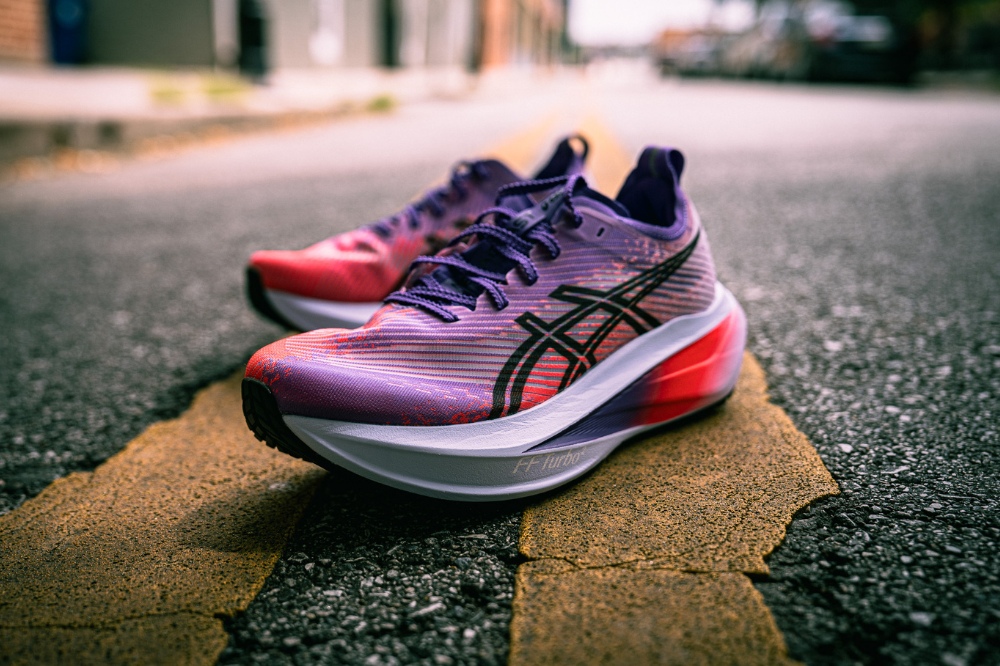
Daily training, long runs, marathon
8.1 oz. (230 g) for a US M9
45 mm in heel, 37 mm in forefoot (8 mm drop)
If you were looking for an update to the Superblast 2, then you may have been looking for the all-new Megablast. This shoe harnesses everything that made the Superblast a great shoe and elevates the whole package. We get the PEBA-blended Flytefoam Turbo Squared midsole, a light and bouncy midsole that can be used for anything from daily training to long runs without sacrificing performance or comfort. The mesh upper is incredibly lightweight and breathable. The AsicsGrip outsole is sticky and performs well on almost any terrain.
So what sets this apart from the Superblast? Consider this one a touch more responsive, especially in the forefoot. It’s lighter and faster and a little less blocky than the Superblast. As we said, it’s a trimmer and more elite version of that shoe. In a pinch it could even be used for the marathon distance on race day. And yes, it’s $225, but it’s one of the better performing and most versatile running shoes that money can buy.
Read The Review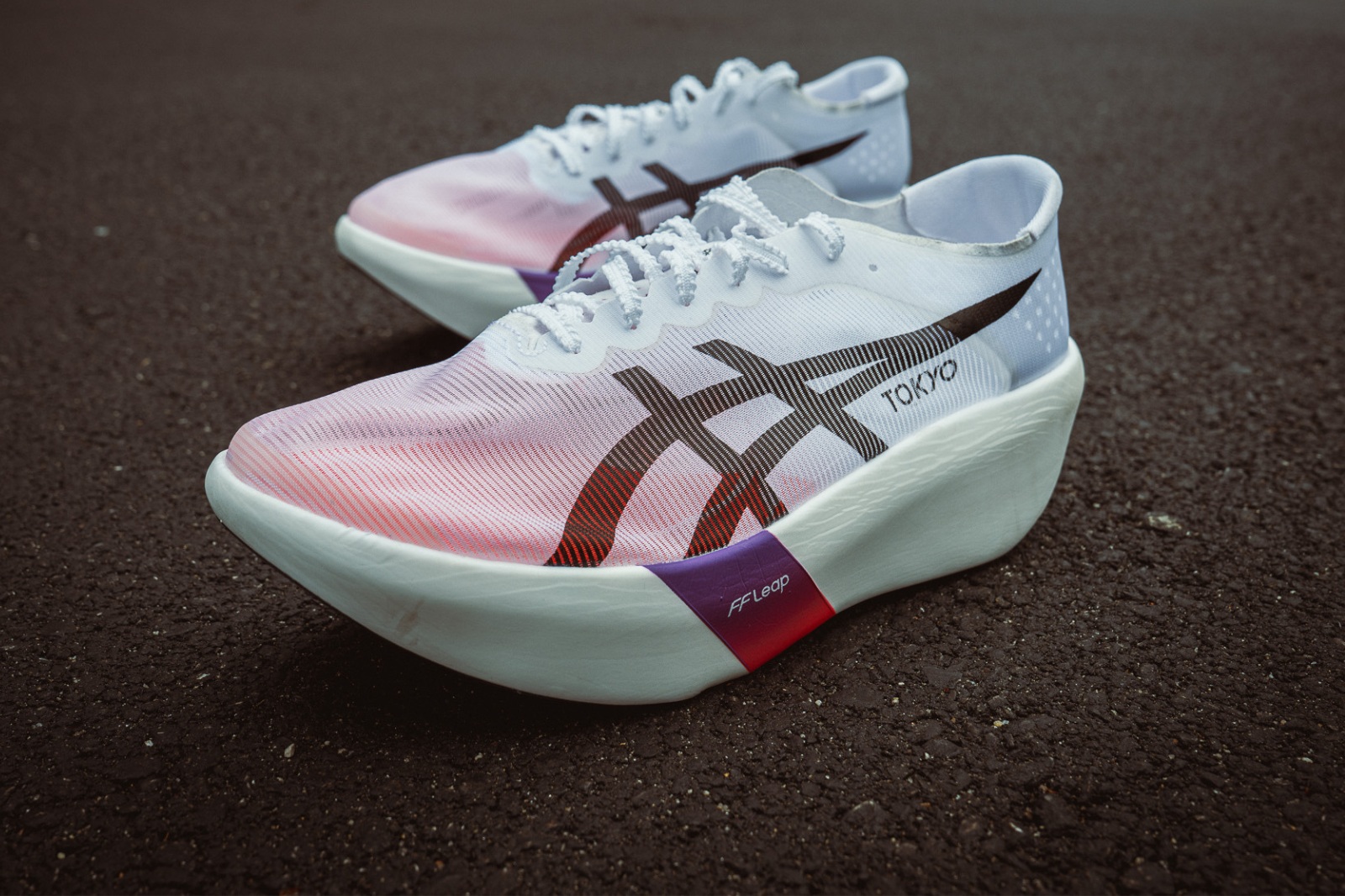
PR on race day
4.5 oz. (129 g) for a US M9 (unisex sizing)
39.5 mm in heel, 34.5 mm in forefoot (5 mm drop
A featherweight freak if there ever was one, the Metaspeed Ray comes in at an absurdly light 4.5 oz. for a US M9. That’s the second lightest marathon we’ve ever tested, next to the $500 Adidas Adizero Adios Pro Evo. This shoe has pretty much the same ingredients when it comes to performance, utilizing a full chunk of Flytefoam Leap (ATPU) for exceptional bounce, speed, and resilience (Meg took this one over 100 miles and reported on its performance and longevity).
A tear-drop shaped carbon fiber plate sits in the middle of the shoe, giving it a propulsive boost through the stride, while the premium Matryx upper is barely there but provides the proper support in conjunction with optimal breathability. A thin, sticky layer of AsicsGrip rubber rounds out the shoe and offers much better traction than the slick Continental layer found on the Adios Pro Evo 2.
We will offer one caveat– this is a high-performance trainer designed for strong runners going fast. The foam is highly unstable, so if your ankles are wobbly or you don’t love a softer midsole, then we’d recommended shifting down to the Metaspeed Edge or Sky.
Read The Review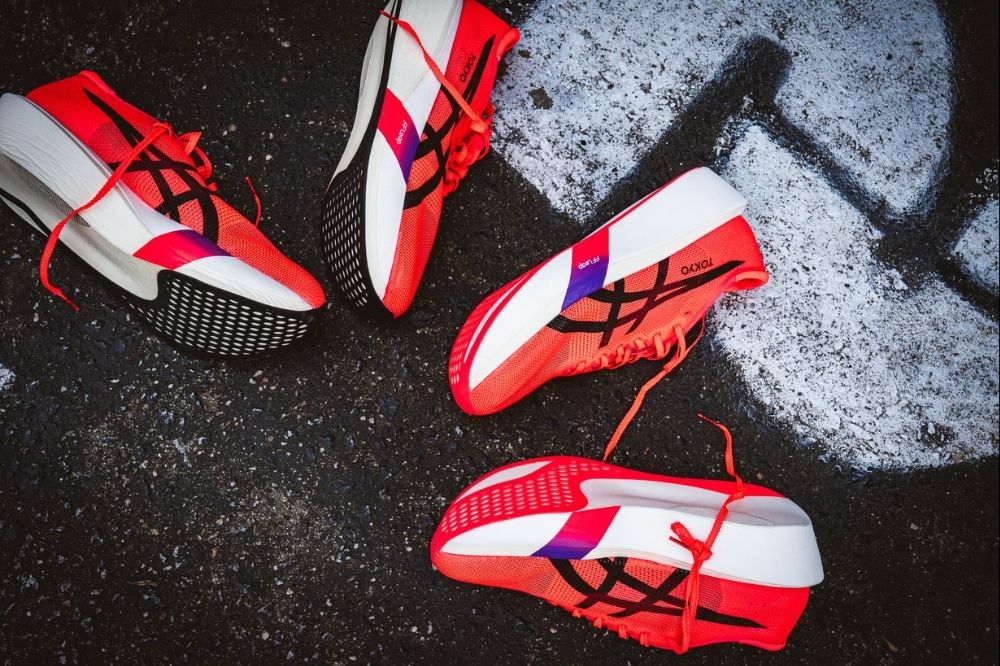
Race day
6 oz (170 g) for a US M9
39.5 mm in heel, 34.5 mm in forefoot (5 mm drop)
I mean, what list of Asics shoes would be complete without the cream of the crop? This pair is probably what you’ve been waiting for, and now it’s time to dig in. Let’s get one thing straight, though — this should really be the Metaspeed Sky 4 and Edge 4 because they’re the fourth generation of shoes. However, Asics likes to name their shoes around major running events, hence Tokyo (for the 2025 World Athletics Championships).
Both shoes feature a dual-density midsole that incorporates the all-new Flytefoam Leap, an ATPU foam that provides incredible bounce and increased durability. That pairs up with Flytefoam Turbo Plus, a PEBA-based foam. The difference between the two models is that the Metaspeed Sky gets the FF Leap on the bottom and FF Turbo Plus on the top (and a carbon plater closer to the foot), while the Metaspeed Edge gets the FF Leap on the top and the FF Turbo Plus on the bottom (with the carbon fiber plate further away from the foot. Both come in with a stack height of 39.5 mm in the heel and 34.5 mm in the forefoot.
The Motionwrap 2.0 upper is breathable and fits great, offering everything you need on race day. At 6 oz., it’s one of the lightest racing shoes that money can buy, so know that you’ll be lightning quick on your feet.
So what’s the difference between the two shoes when it comes to actual running? If you’re looking for a softer and more cushioned feeling, then go with the Edge. If you like a snappier feel, go with the Sky.
Read The Review - Sky Read The Review - Edge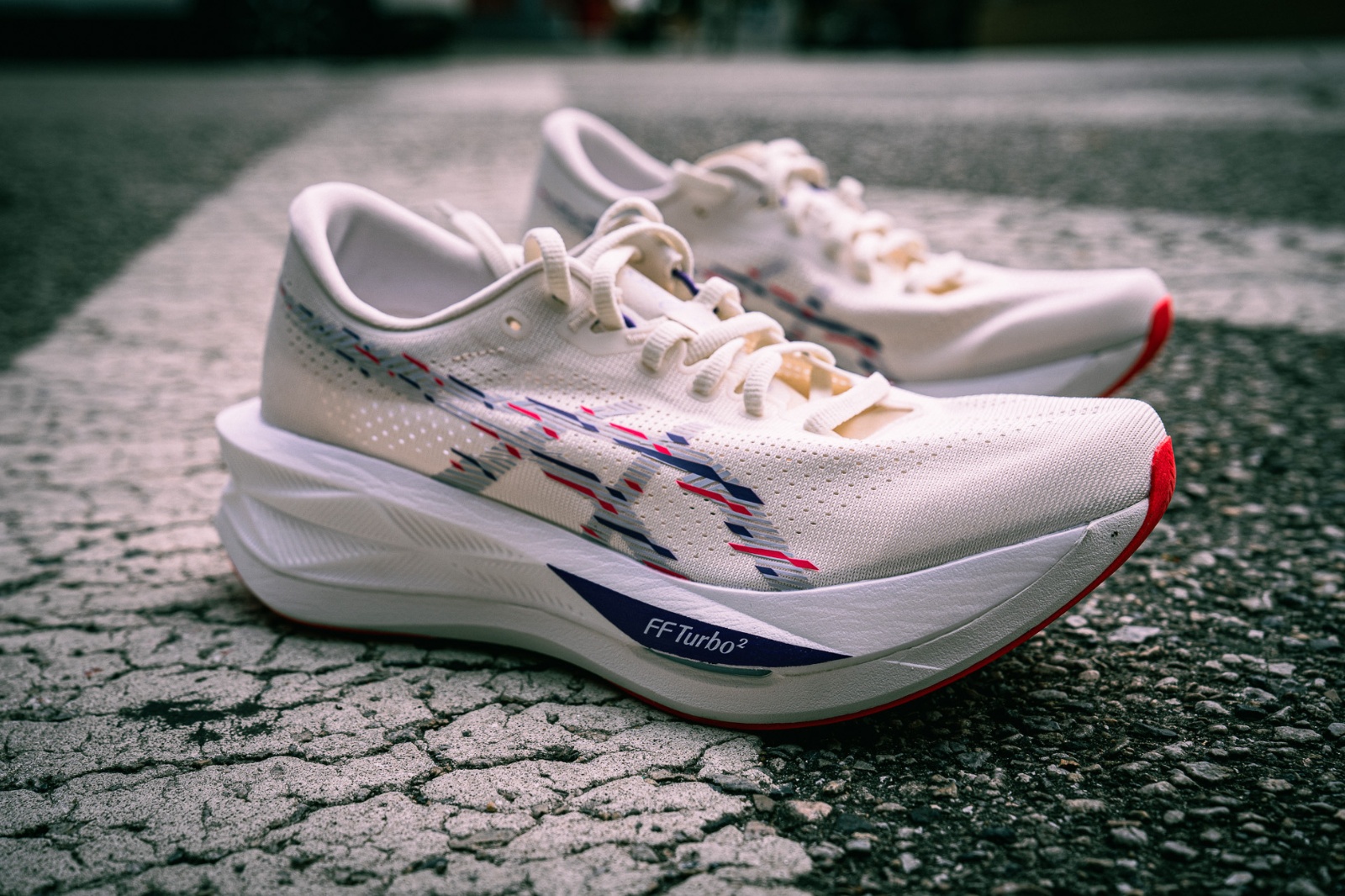
Daily training, uptempo
9.9 oz. (282 g) for a USM 10,
7.4 oz. (209 g) for a US W7.5
46 mm in heel, 38 mm in forefoot (8 mm drop)
After four versions, Asics killed off the Magic Speed. It was a shoe that never caught on with the masses as it fell somewhere in between a speed shoe and a daily trainer without hitting either mark. The rebirth of that shoe is the Asics Sonicblast. Things are quite different as Asics goes for a more super trainer approach, giving the shoe a top layer of Flytefoam Turbo Squared (the same foam found in the Megablast), a bottom layer of FF Blast Max, a PEBAX Astroplate in the middle, and an AsicsGrip outsole for traction and grip.
The result is a shoe we keep coming back to for anything in the daily mileage to tempo range. While not as light as the Megablast and Superblast, it comes in at an acceptable weight that keeps it in the standard daily trainer range. However, the bounce from the midsole and the propulsion from the plate give it a little bit of pep, things you won’t find in the Gel-Nimbus. It’s a touch firmer than the Novablast (and a bit more blocky), so this is the shoe for those who like to feel the ground, especially in the forefoot.
Read The Review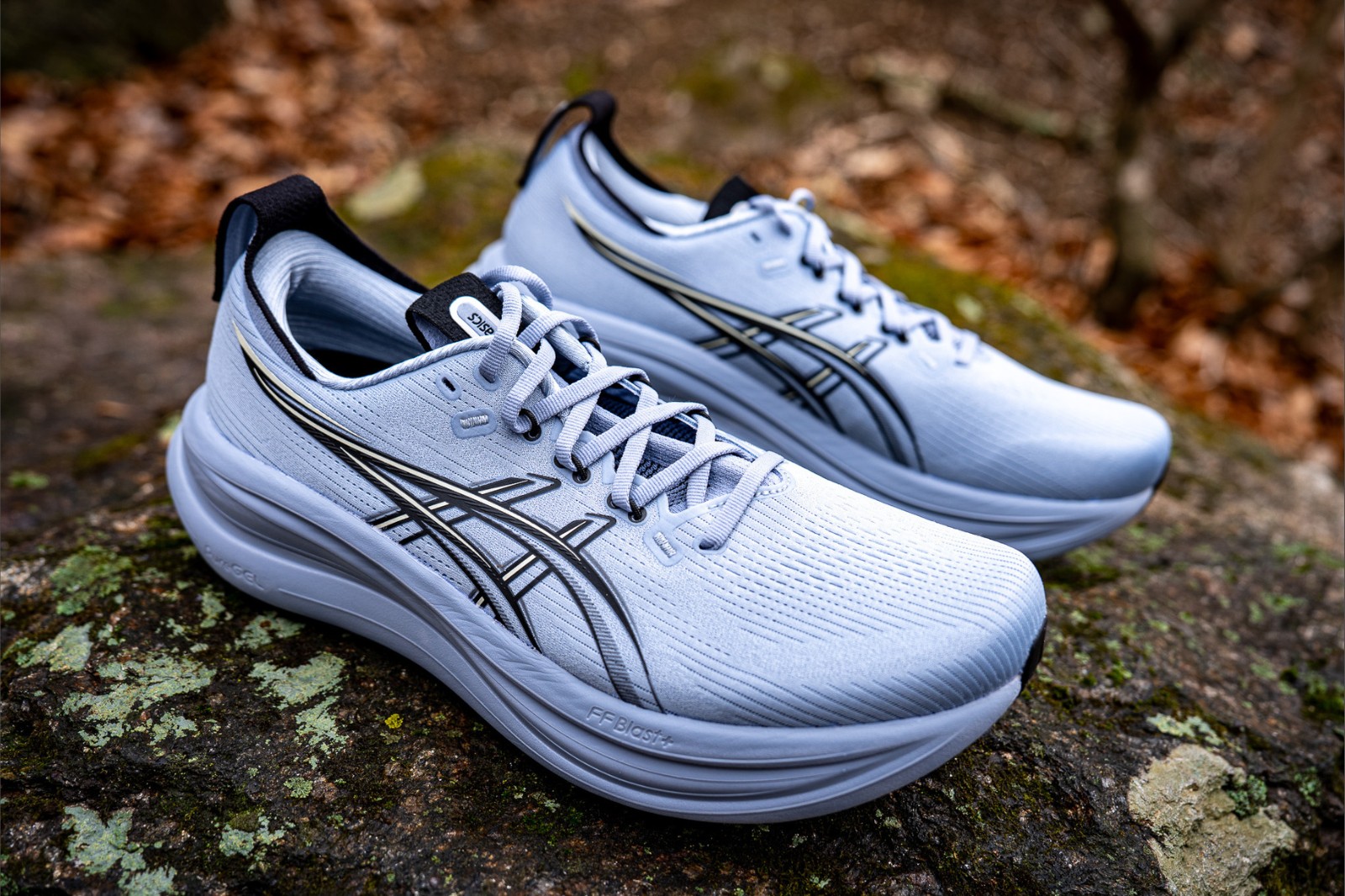
Long runs with a smooth rocker
9.6 oz. (272 g) for a US M9,
8.2 oz. (232 g) for a US W7.5
43.5 mm in heel, 35.5 mm in forefoot (8 mm drop)
A few versions ago, the Nimbus underwent some formative transformations. The look was streamlined, the visible Gel was banished, the stack height was increased. Somehow, the Nimbus became… cool? It helped that it was a great running shoe as well.
Asics has mostly stuck to that formula with the Gel-Nimbus 28. The comfort remains top-notch– this is Asics’ premium daily trainer, after all, so that is to be expected. Comfort in the upper, comfort underfoot with the Flytefoam Blast Plus midsole, comfort all around. It also shaved of a bit of weight, coming at just over 9.5 ounces for a US M9. Throw on a grippy and durable hybrid AsicsGrip/AHAR Plus outsole and you have a shoe that can stay with you for hundreds of miles, through all your daily training and long runs.
Plus, it looks great too. Wear it on the run, wear it wherever. Just know you’ll feel good either way.
Stable road miles
10.5 oz. (298 g) for a US M9,
9.0 oz. (255 g) for a US W7.5
40 mm in heel, 32 mm in forefoot (8 mm drop)
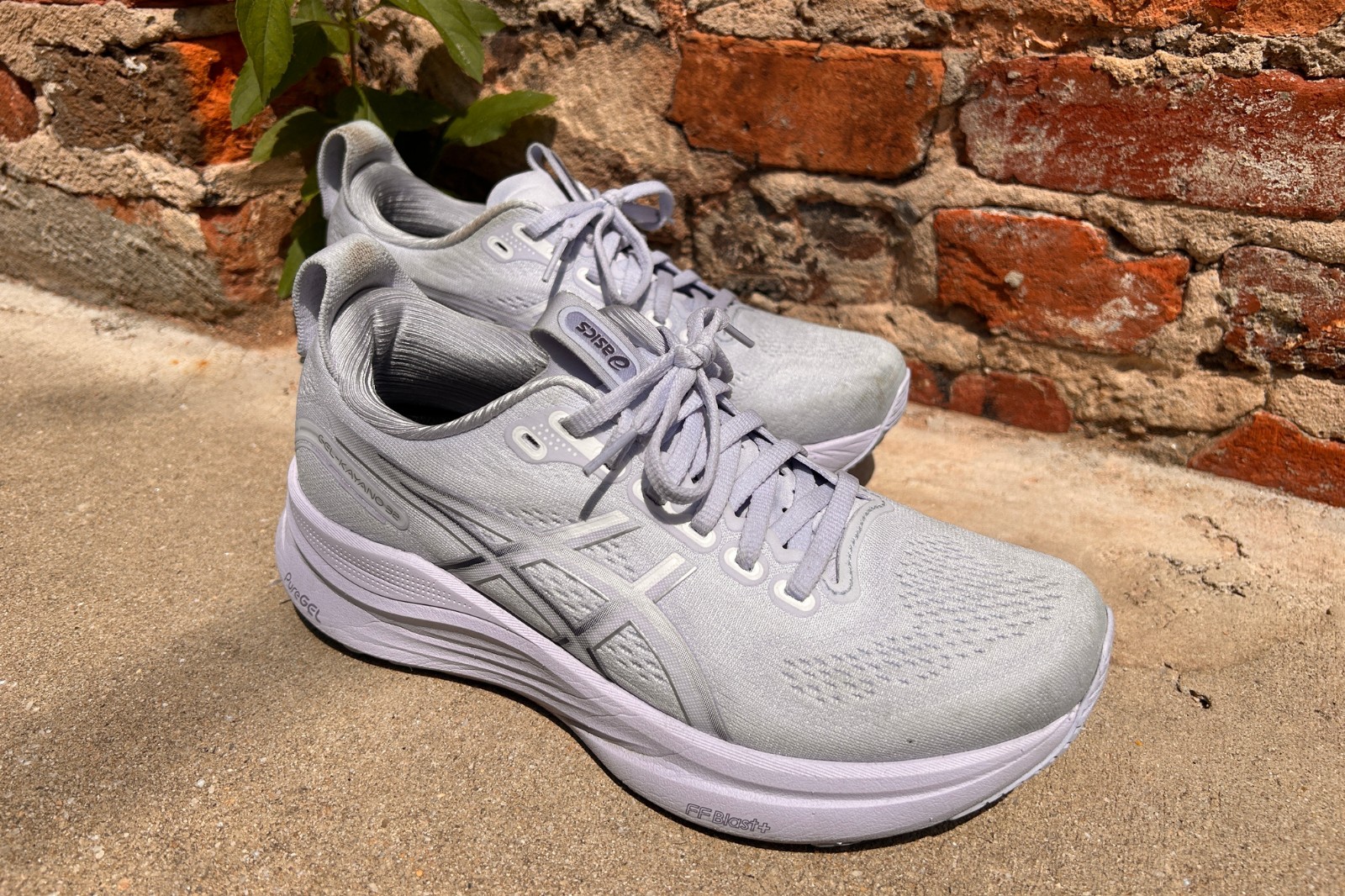
What were you like in the nineties? Just ask the Asics Gel-Kayano 32, which has been around since 1993. So much has changed since then, and yet, the Kayano remains a steady friend in time of need.
This newest version features a 40 mm stack height in the heel, but fear not!– the 4D Guidance system and slightly firmed up Flytefoam Blast Plus Eco midsole keeps things secure. A rear section of PureGel sits under the heel for a but extra cushion on landing, which our reviewers appreciated. Of course, you can’t go wrong with the AsicsGrip rubber, a sticky compound with numerous grooves that will surely give you a good lifespan. And while the upper isn’t exactly super breathable, it does provide the comfort you’re looking for over the long haul.
I mean, it’s the Kayano– it’s a legend for a reason.
All of our recommendations come directly from our feet to your screen. We test countless running shoes here at Believe in the Run, and we let our reviews guide our decisions. However, we also consider other reviews and our BITR community, as not every runner has the same experiences. We also aim to stick with shoes that are currently available so you can give our recommendations a try.
Want to learn more about how our review process works? Check out this guide.
Have something to say? Leave a Comment






If price didn’t matter, would you pick up the meta speed series for all your runs or would the Novablast or Nimbus 25 still be the choice? The super blast needs new colors before I think about those.
If price doesn’t matter, then Superblast all the way. Would save the Meta series only for speedwork or race days.
No Fuji Lite? My favourite shoe for summer trail running – light, flexible and nimble – somehow I always have fun in them.
I was on the fence about getting the Novablast 3 until they came out with the TR. They corrected the only possible weakness of the show. I got over 90 miles on them, most on runs below 0F. They still look like they just came out of the box. Looking forward to another 500miles in them.
Thank you for this feedback! Definitely going to try out the superblast now.
Is this updated? Looks like only the Superblast 2 was added (Novablast 5, Gel-Nimbus 27, Magic Speed 4, or Gel Kayano 31, GT-2000 13, and Trabuco Max 4 are all the new models)
How does the Magic Speed 4 compare to the Deviate Nitro 3? I love my Deviate, but it’s a tad narrow and regardless of how I lace it up it starts to bother me on runs longer than 8 miles. I’m a clydesdale north of 200lbs. and love a good plated option with some pop.
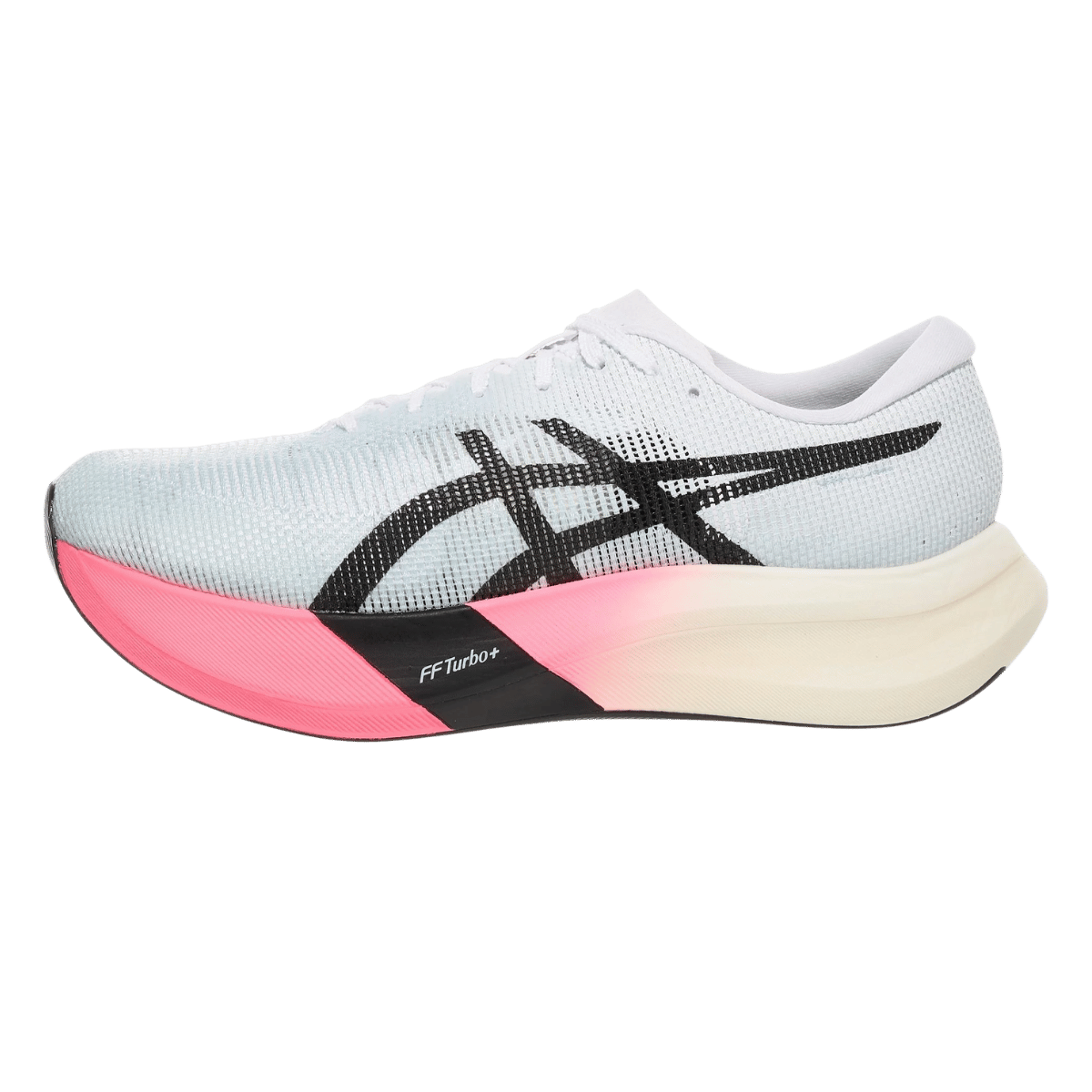
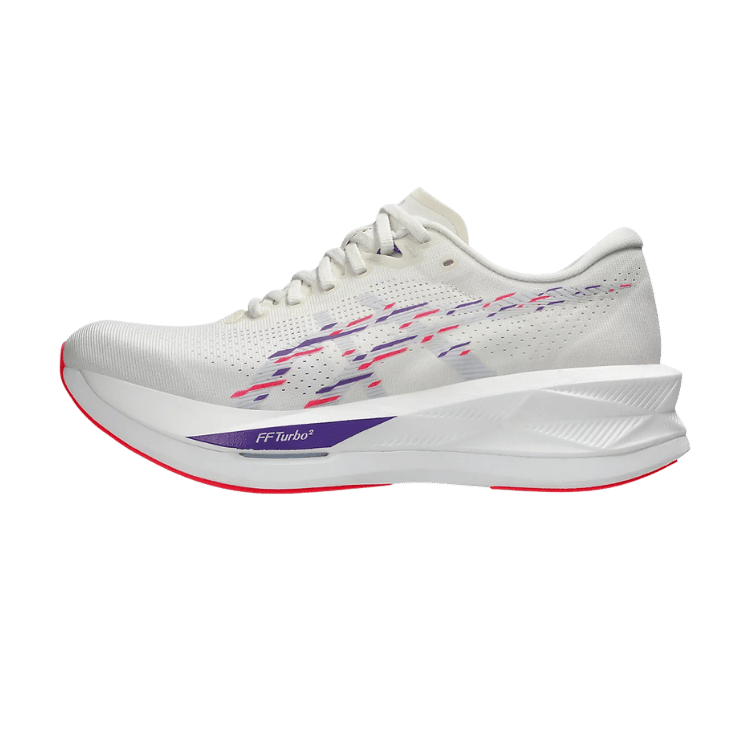
Just curious as to why ASICS’ newer foams are not included in here, like Flyte Foam Turbo+ and FF Turbo^2. Also very curious as to why the Metaspeed Paris series are in here and not the Tokyo Series (excl. Ray) the Metaspeed Paris series aren’t really ASICS Shoes right now
Hey, thanks for pointing this out. We missed that on the update, but it’s been fixed to include the Tokyo versions. All the Turbo foams are listed under the same category at the top. Thanks!
The Magic Speed lives on. Keen for your thoughts on number 5 if you can. I hated the 4s but these look better
Asic’s didn’t kill off the Magic Speed 5 for now though. The Sonicblast and Magic Speed 5 both sit in the lineup as of right now.