We independently review everything we recommend. When you buy through our links, we may earn a commission.
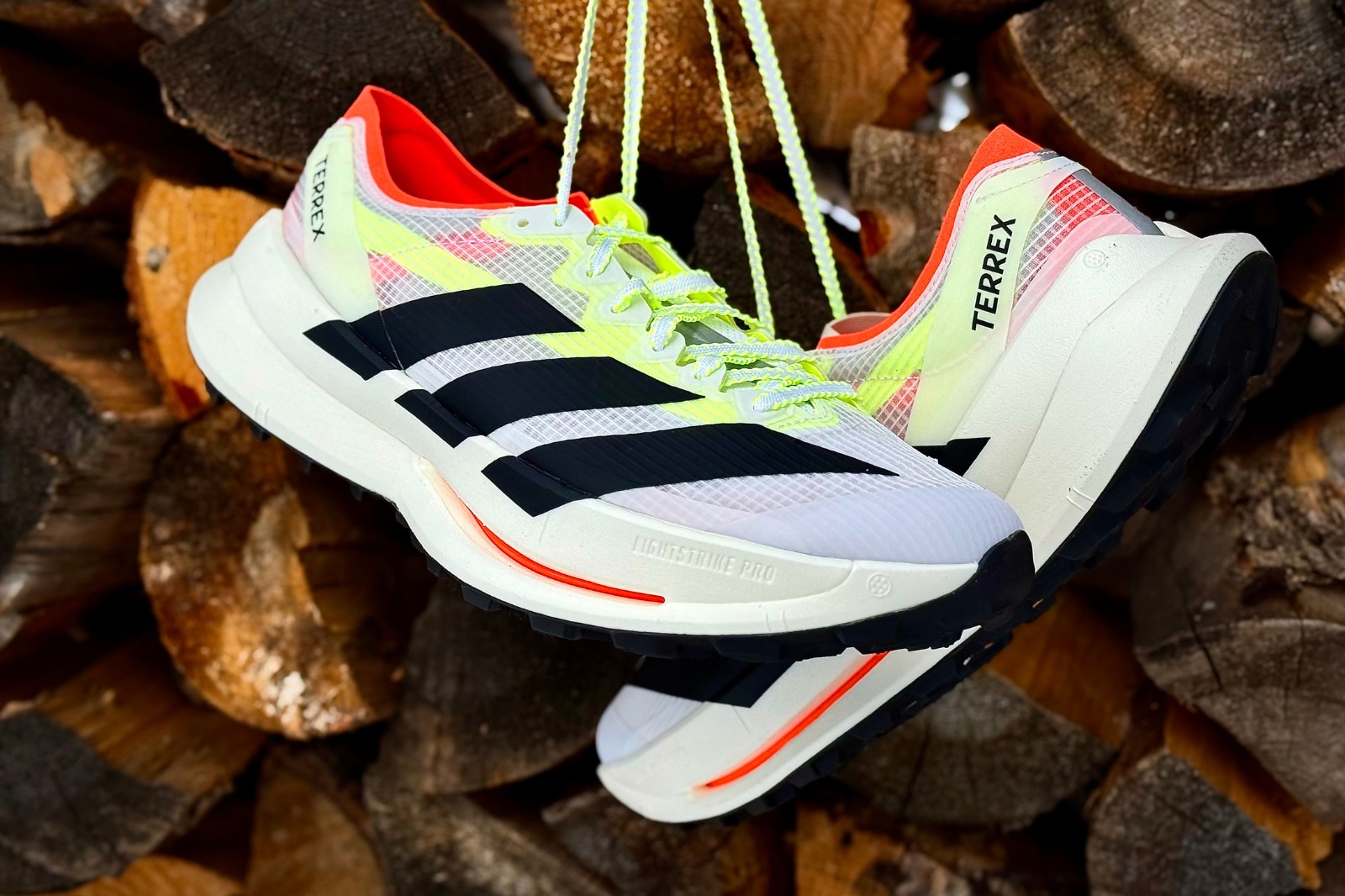
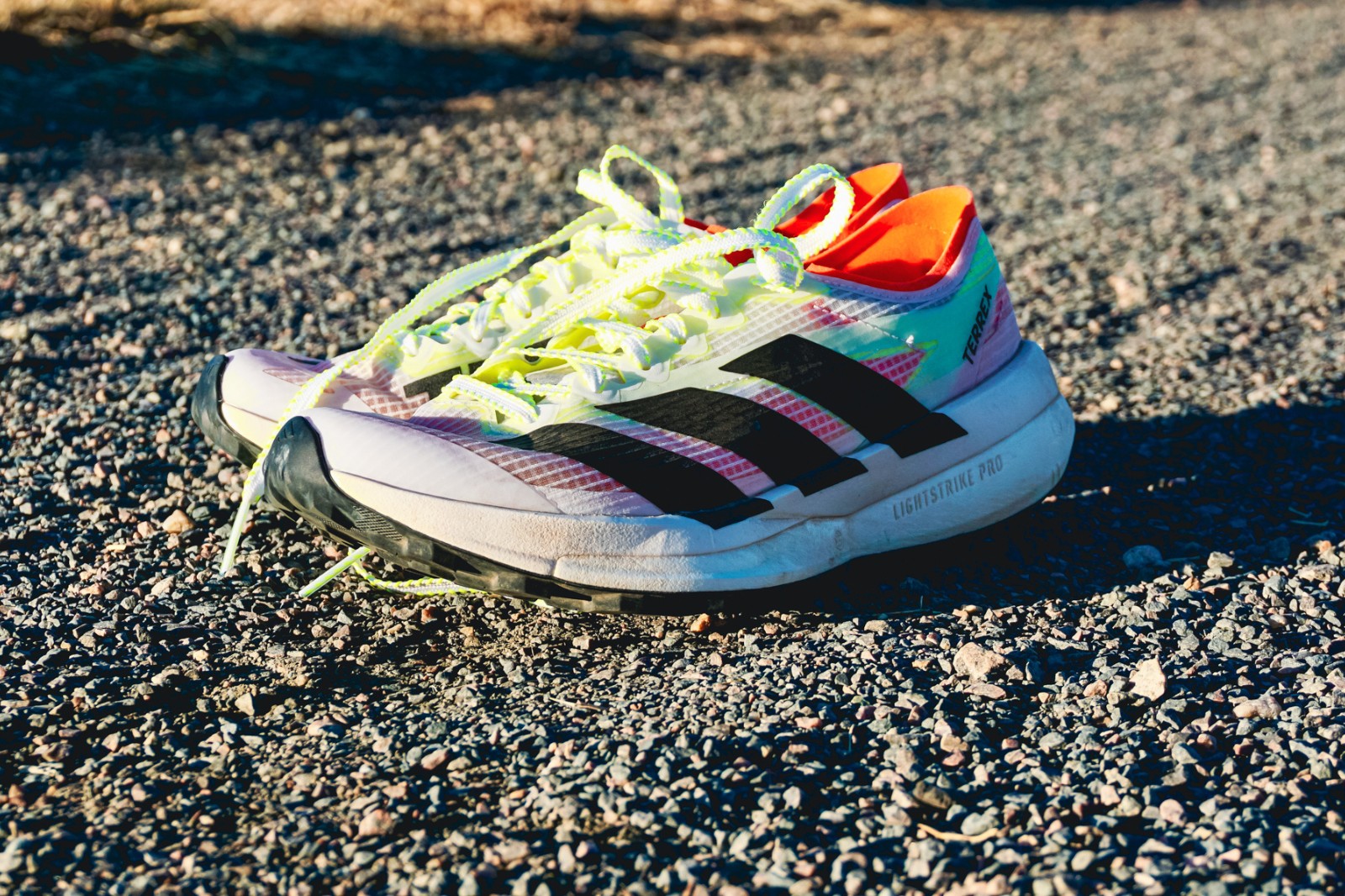
8.1 oz. (230 g) for a US M9 / 6.8 oz. (195 g) for a US W7.5
35 mm in heel, 27 mm in forefoot (8 mm drop)
Trail racing at sub-ultra distances
Lightstrike Pro and Lightstrike midsole, Continental Rubber outsole, Textile upper
Available March 2026 for $165


REESE: I wasn’t a fan of the Terrex Agravic Speed Ultra (either version), not because they were inherently bad shoes, but because both times I tested them, I got a bit injured. The rocker on that shoe is wildly aggressive, and my hips were less than excited about it. I actually called that shoe my Bosu Ball shoe. It was like an insanely advanced Sketchers Shape Up. Maybe if I had stuck with the shoe or run in it sparingly, it would have helped strengthen my hips, quads, and ankles. Alas, I stuck with it just long enough to get super sore and injure my hip flexor. And I all but swore off running in it until I was pain-free.
Also, while racing, I tend to stare at the shoes of runners nearby. And jeez, watching people run in the Agravic Speed Ultra was painful. It was a horror movie of watching ankles twist and turn constantly. No, thanks.
All of that to say, I had low expectations for the Agravic Speed 2. I was unsure whether the lower stack would fully address its sibling’s instability.
Well, let’s just say I’ve been reaching for this shoe long after I wrapped up my testing miles. I definitely haven’t sworn off Adidas’ less premium offering.
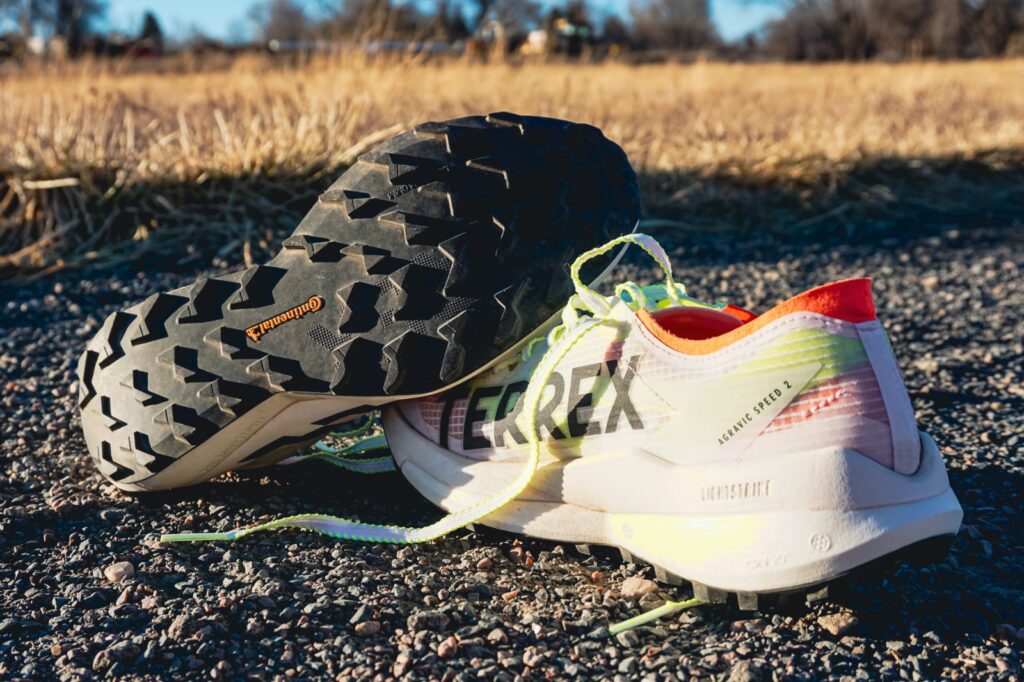
ALLISON: I’ll admit it — it took me a while to finally try a pair of Adidas trail shoes. For years, the brand lived in my head mostly through the performances of elite athletes like Ruth Croft and Abby Hall. Watching them race at the highest level definitely built some intrigue around what adidas was doing in the trail space, but I never personally took the leap.
After trying the Speed Ultra 2 and seeing what Reese and other reviewers were saying about Adidas Terrex’s improved direction, my curiosity only grew. The hype around the lineup felt real, and I wanted to experience it firsthand. So when I finally got the chance to run in the Terrex Agravic Speed 2, I was eager to see if the shoe lived up to the buzz. Could Adidas really compete with the established trail heavyweights? After logging miles across different terrain, I came away with some clear impressions.
JOHN: I’m a little late to the party on this one. I just received the Adidas Terrex Agravic Speed 2 in the mail a few days ago. Luckily, I’m constantly doing ultras, and I’ve got Hashawha Hills 50km Trail Run with the Virginia Happy Trails Running Club this weekend to test them out.
It’s been a minute since I reviewed an Adidas shoe, but this is actually my fourth. My first ever review at Believe In The Run was the Adidas Terrex Soulstride Flow, then the Adidas Terrex Agravic 3, and lastly the Adidas Terrex Soulstride Ultra. I can honestly say that, as I’ve reviewed Adidas trail shoes, they have listened to a lot of feedback, and each time I’ve reviewed their shoes, they’ve gotten better. I’ve never disliked the shoes, but you can definitely see a progression.
I’m very excited to be reviewing the Adidas Terrex Agravic Speed 2 because it fits well for a test at the Hashawha Hills 50km, which is extremely runnable but has some East Coast BS: water crossings, mud, snow, and up-and-down hills. It will be a perfect test, so let’s see if Adidas can pass.
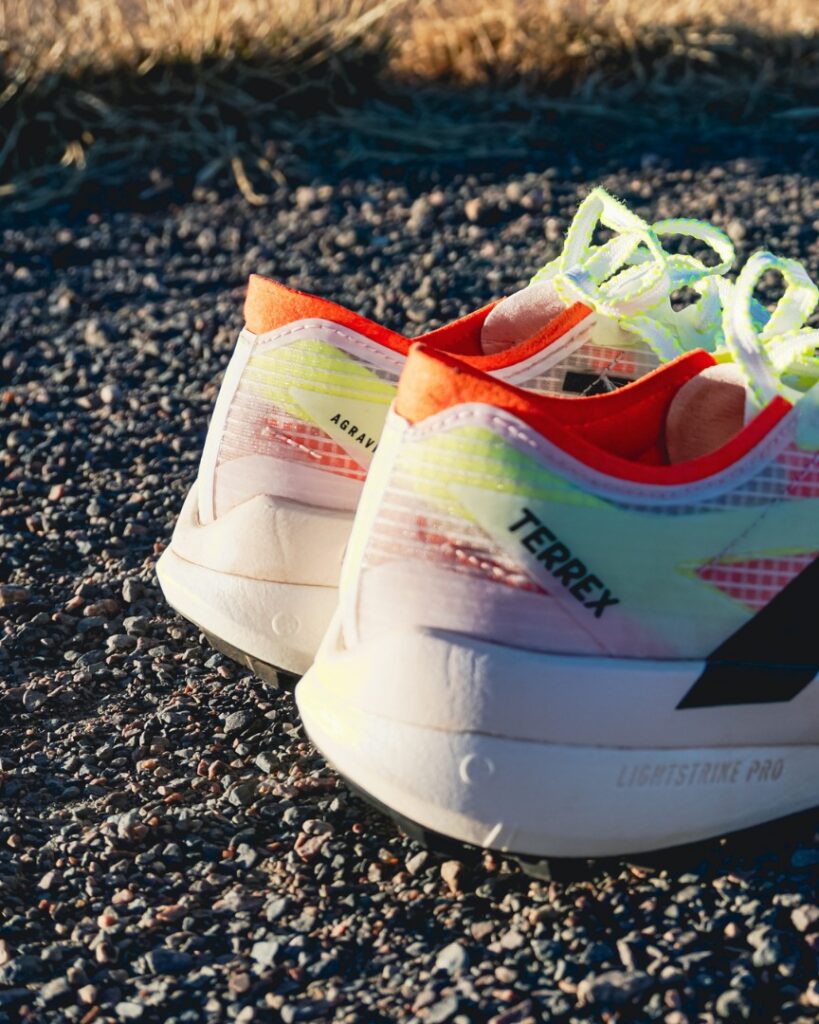
REESE: Here I am, writing this while eating humble pie. And I love the taste of it. There is a lot to love about the Adidas Terrex Agravic Speed 2. Though, can we please make the name shorter? I’ve yet to say it correctly on camera. I guess that’s a me issue, but I digress.
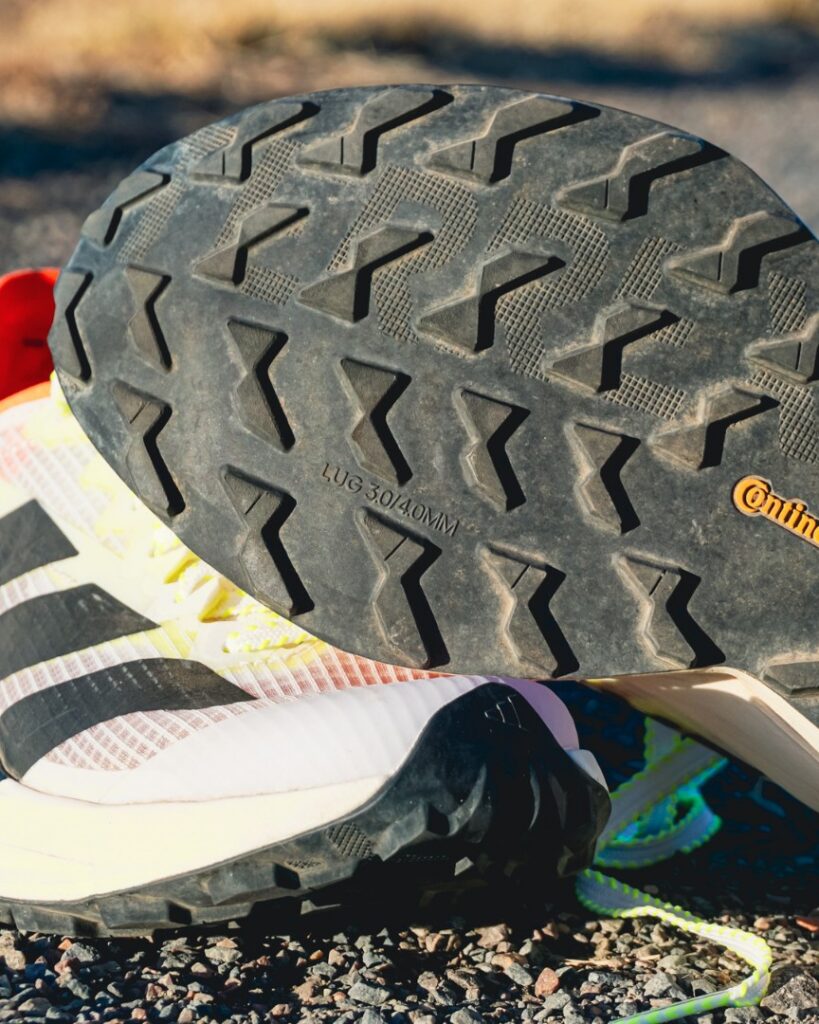
Let’s go bottom to top. The outsole, like the Agravic Speed Ultra 2 and the Agravic TT, is Continental Rubber. As a cyclist, almost all my bikes have, at some point, used the Conti Grand Prix 5000 tire. I have it on my road bike right now. It’s pretty much the most versatile road tire out there. It might not be the lightest or sexiest race tire, but it’s damn good and reliable. And for most training rides, that’s exactly what you want. No one wants a flat. That’s a good way to ruin a ride. Now, does Continental’s expertise in tires translate to running? In my opinion, yes.
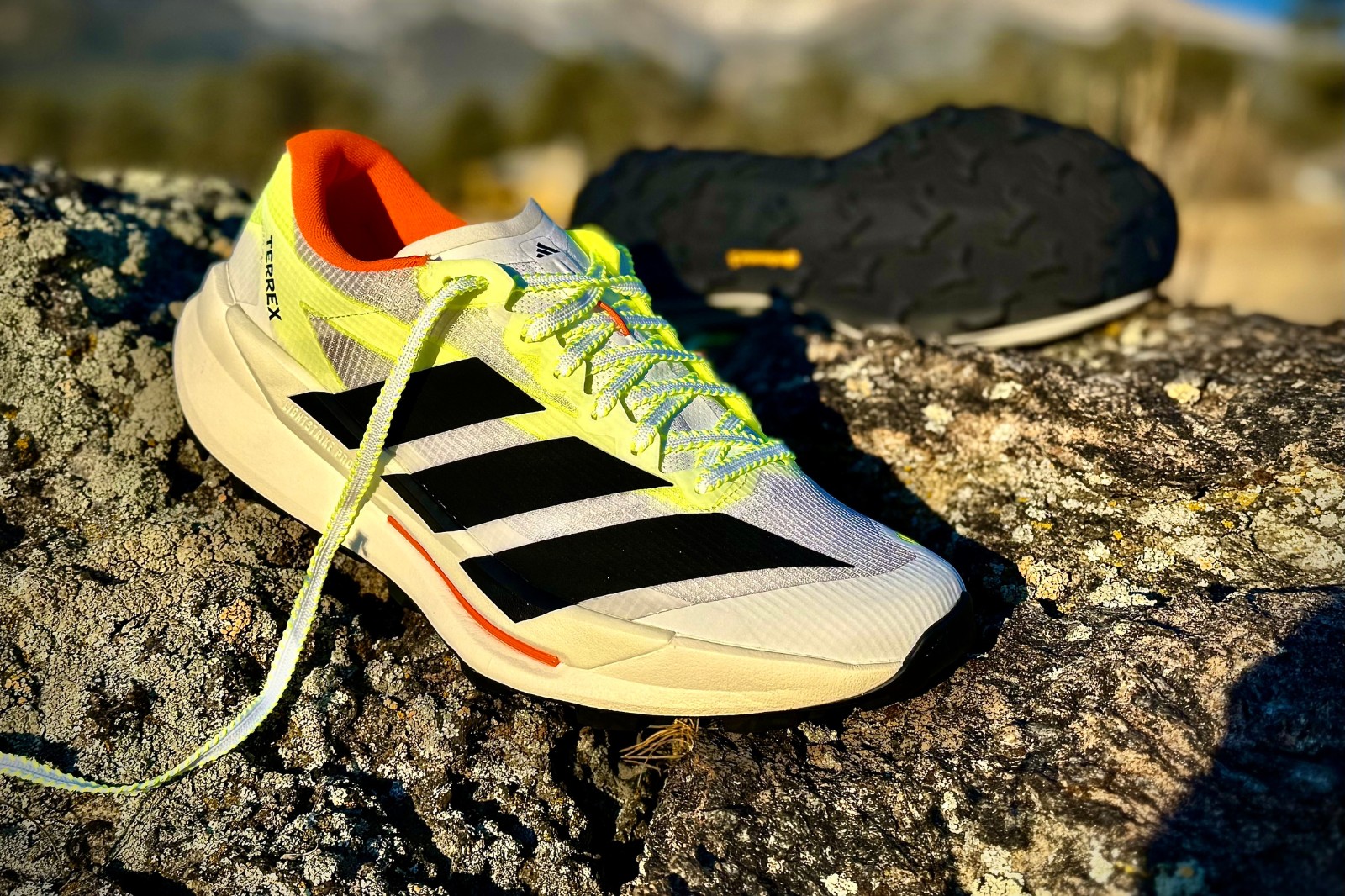
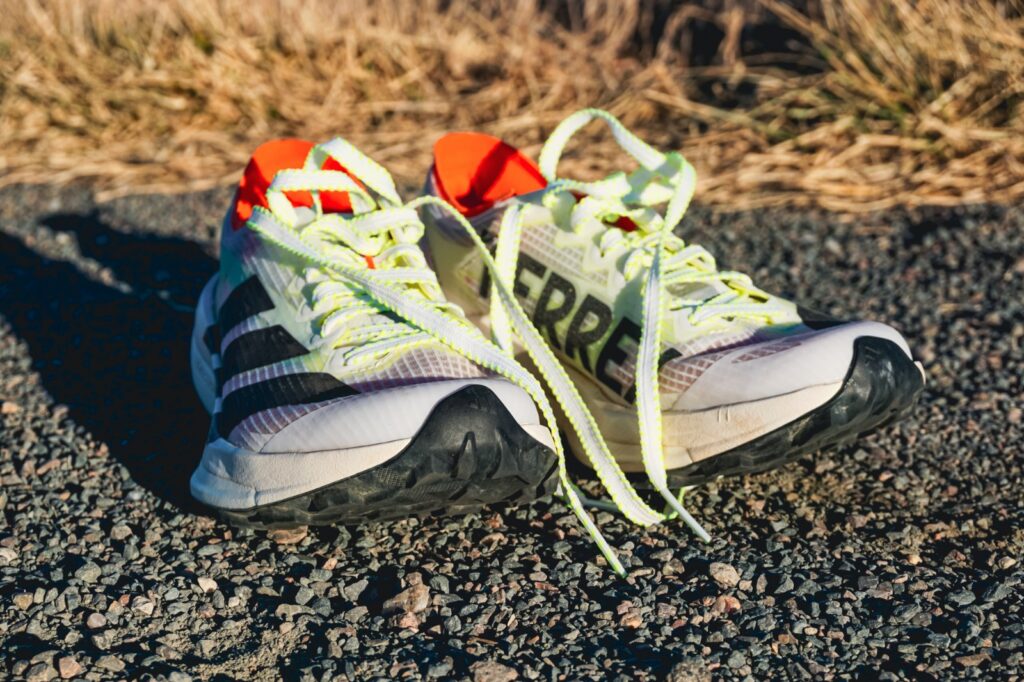
The lugs, which range from 3-4 mm to 1 mm depending on location, are minimal but robust and strategically placed. The Continental compound, while not the Vibram Megagrip we’ve all come to love without question, is a solid performer on just about any surface, even with a smaller lug depth. I really put this through its paces, running up and down all sorts of trails. From roads, to smooth, buttery trails, to loose kitty litter, to trails where I needed to jump from rock to rock, to trails where I needed to dodge baby head rocks.
This shoe was fine, traction-wise, in most of those circumstances. I didn’t even mind my two-mile run on the road to get to the trails in these shoes. I slid back a bit in the kitty litter gravel trails going uphill, but otherwise, for how minimal the lugs are, this shoe stuck the landing.
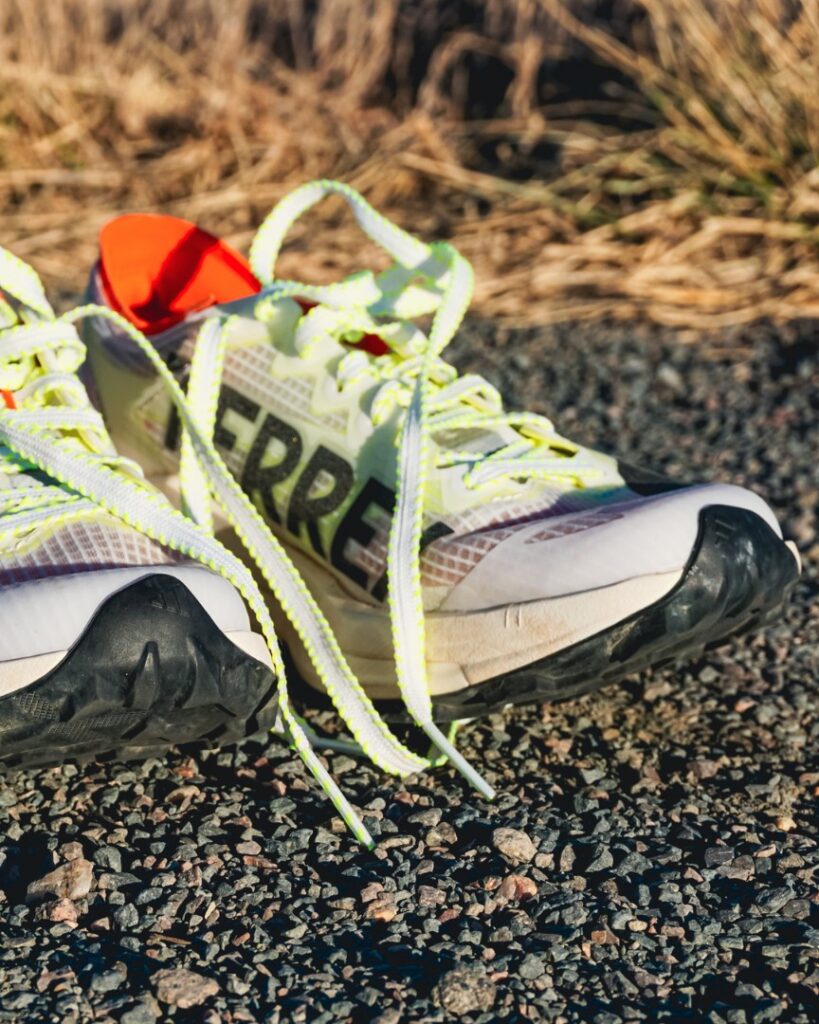
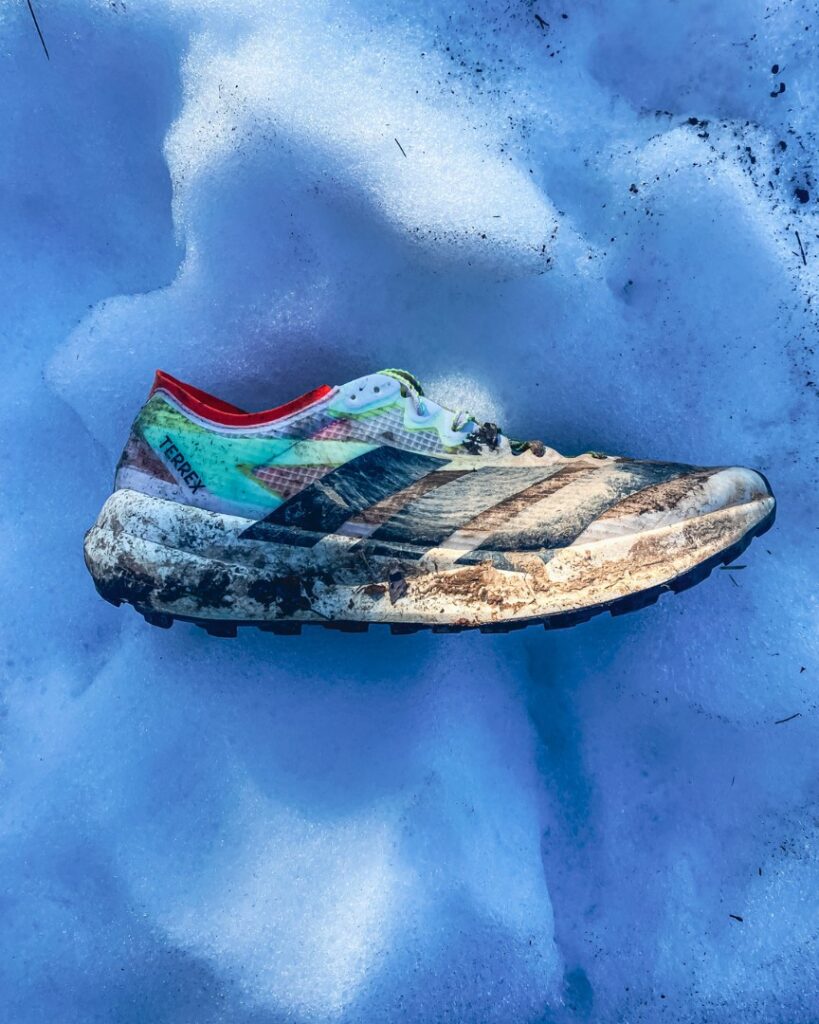
Let’s talk about stability, which combines the fit, upper, and midsole, because if those things aren’t spot on, stability is generally compromised. While I was concerned about stability given the Speed Ultra 2, I actually felt really confident in this shoe on technical trails. This is where things get weird.
The Speed Ultra 2 and the Speed 2 both have an 8 mm drop and basically the same upper. So it comes down to the stack and the rocker changes that balanced out the shoe for me. I’m honestly surprised I felt so confident on descents in a shoe with an 8mm drop. The Nike ACG Ultrafly’s 8.5 mm drop felt big to me. I guess stack height and a big carbon plate really do change the dynamics of a shoe. Who knew? (We did.)
The Lightstrike midsole felt like it provided just enough cushion without being overly plush, likely thanks in part to the full coverage outsole. Adidas says this shoe is built for sub-ultra distances, but I would wager people will use it for 50-100 km.
The Speed 2 fits like a glove. I loved the minimal heel and heel collar. I know some people hate a minimal heel, but personally, I think it’s amazing. The midfoot was snug and locked in. I typically wear a US W7.5 in Brooks and The North Face, but I found the W7 to fit me really well. For what it’s worth, I wear a W7 in Hoka, should anyone be curious about how sizing is all relative.
The upper was exactly what I’d expect from a shoe built for fast, shorter distances. Minimal, breathable, and light. My feet never overheated in this shoe.
And drumroll, please. The laces. The laces are good! The correct size. The correct race lace. Bravo, Adidas! It’s the small things…
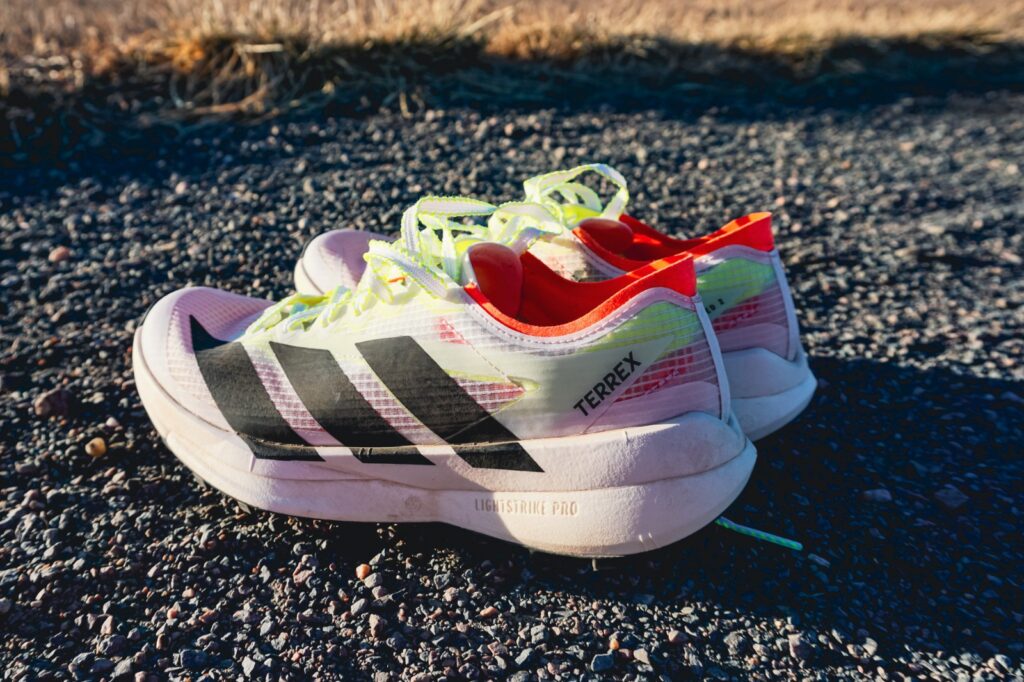
ALLISON: The first thing that stands out with the Agravic Speed 2 is just how lightweight it feels on foot. The shoe disappears in a way that makes turnover feel natural and efficient, especially when pushing the pace. It never feels bulky or overbuilt, which makes it a strong option for faster efforts, daily trail miles, and even race scenarios where efficiency matters.
The ride is also refreshingly controlled. Unlike many modern trail shoes that rely on aggressive geometry, the rocker here feels restrained and predictable. There’s no sense of being forced forward or fighting the shoe’s mechanics. Instead, the transition feels smooth and natural, allowing your stride to dictate the experience rather than the other way around.
Breathability is another highlight. The upper is extremely airy and keeps the foot cool, even during longer efforts or warmer conditions. Combined with the lightweight build, this creates a fast, minimal feeling without sacrificing comfort.
The lacing system is simple but effective. It’s easy to dial in a secure fit quickly, and once locked in, the shoe holds your foot well without needing constant adjustment. Overall, the Agravic Speed 2 delivers a streamlined experience focused on speed, comfort, and efficiency.
JOHN: Just looking at the Adidas Terrex Agravic Speed 2, I initially judged it as a West Coast shoe specialty gear for extremely runnable courses. That’s not the case! I beat the hell out of this shoe at Hashawha Hills 50K. The lugs offered excellent grip in the mud, snow/ice, and deep water crossings. During those crossings, the upper also did a great job of keeping debris out of the shoe and of quickly draining water.
Even on extremely sketchy ridges, I felt safe in this shoe, and it felt great on the road as well. Uphill or downhill, this shoe kept me upright on all types of slick surfaces. I was really impressed.
I really appreciate the minimal upper. It may seem flimsy, but I assure you it’s definitely tough and held up well. The past Adidas trail shoes I’ve reviewed have been a lot of shoe, which made them hard to run in.
I love that Adidas’ fit has always been consistent for me. It is a bit narrow, so definitely keep that in mind when considering this shoe. The lacing is great, and the midsole gives just the right amount of comfort and springiness. It’s a trail shoe that feels like a road shoe, not clunky and not heavy. It’s definitely a lot of fun to run in.
A huge part of this shoe that I really appreciate is the $165 price point. In the past, I’ve felt that Adidas trail shoes were priced far too high, but this price is a strong selling point.
Shop The Shoe - Men Shop The Shoe - Women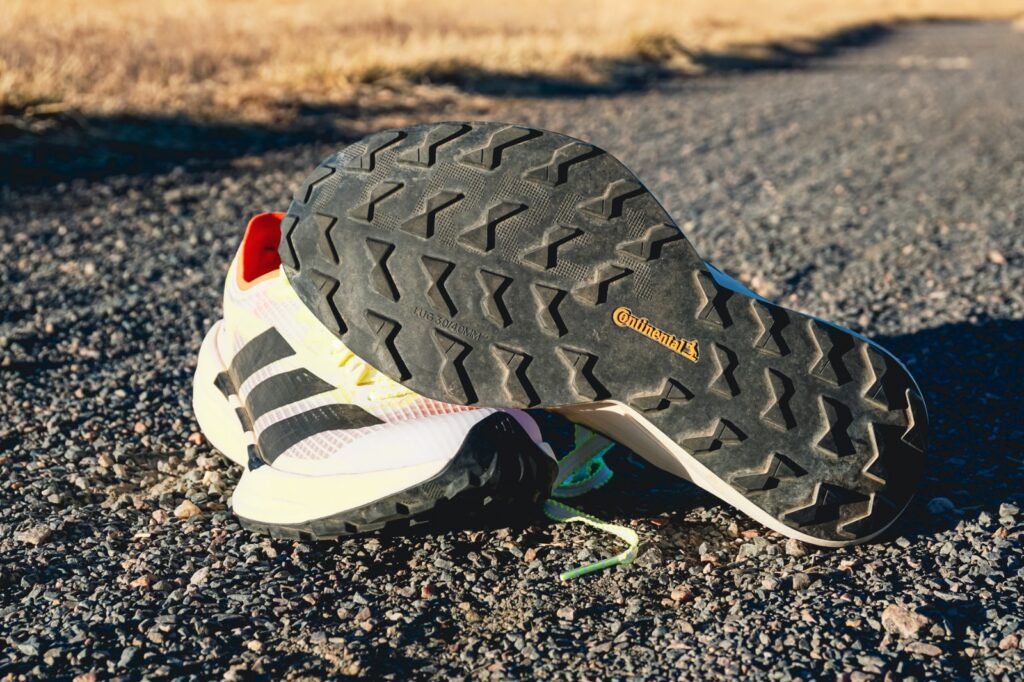
REESE: It’s not all roses and humble pie, however. There were a few things about this shoe that raised an eyebrow or at least made me question how long I could run in the Speed 2.
First, the tongue gusset. It felt a little bunchy at times, like there was a little too much fabric. I often had to take the shoe off and put it back on again to resituate the fabric. Not a huge deal, but worth noting.
The Speed 2, while not as unstable and Bosu Ball adjacent as the Speed Ultra 2, took some getting used to. I feel like I land a little differently in this shoe, maybe use some muscles I don’t typically use in my everyday shoes. I’d recommend easing into this shoe, not getting it and immediately logging 15 miles. I did that… and my quads were sore the next day, so moderation is a good thing.
I mentioned above that Continental Rubber is pretty damn good. I’m wondering why Adidas chose full coverage of the outsole. Most race-day shoes have some midsole foam exposed. It could be because the Lightstrike Pro foam needed the extra protection, but if we’re counting grams (Men’s 230 g / Women’s 195 g), shaving off some outsole rubber would be a way to do it.
Onto the fit. While it was nearly perfect, I noticed that on my pinky toes, I started to feel some minor rubbing and irritation after an hour and a half of running. The toe box, while wide at the midpoint, tapers quickly.
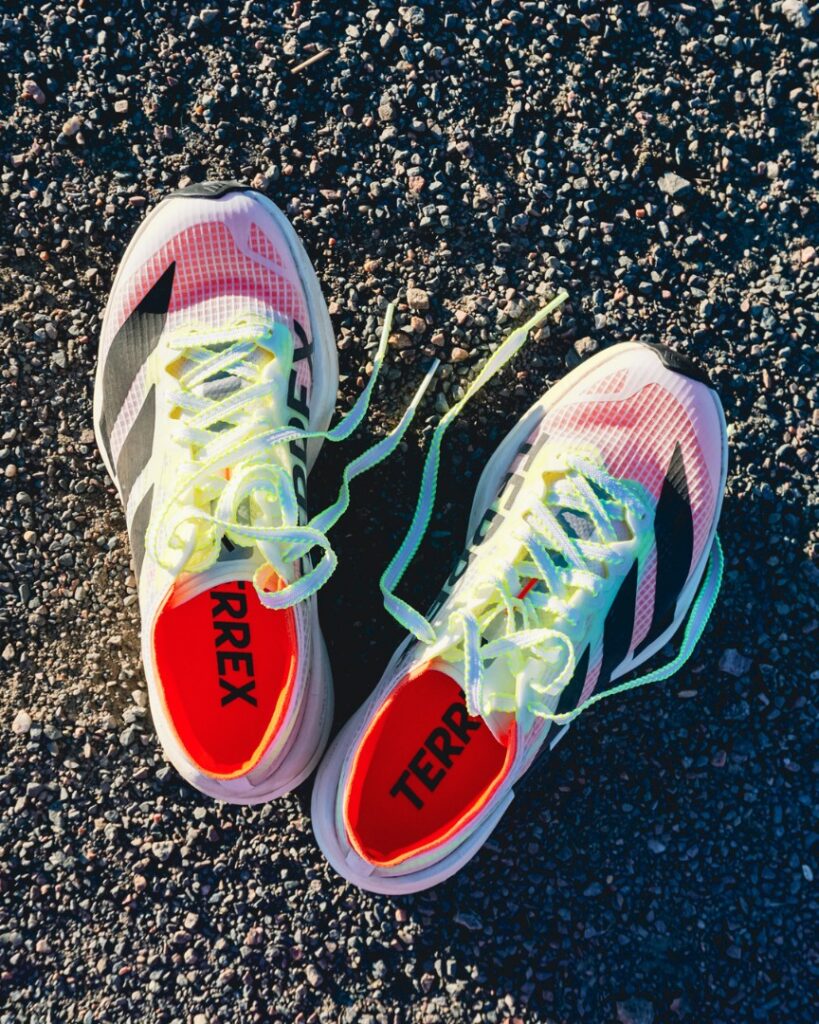
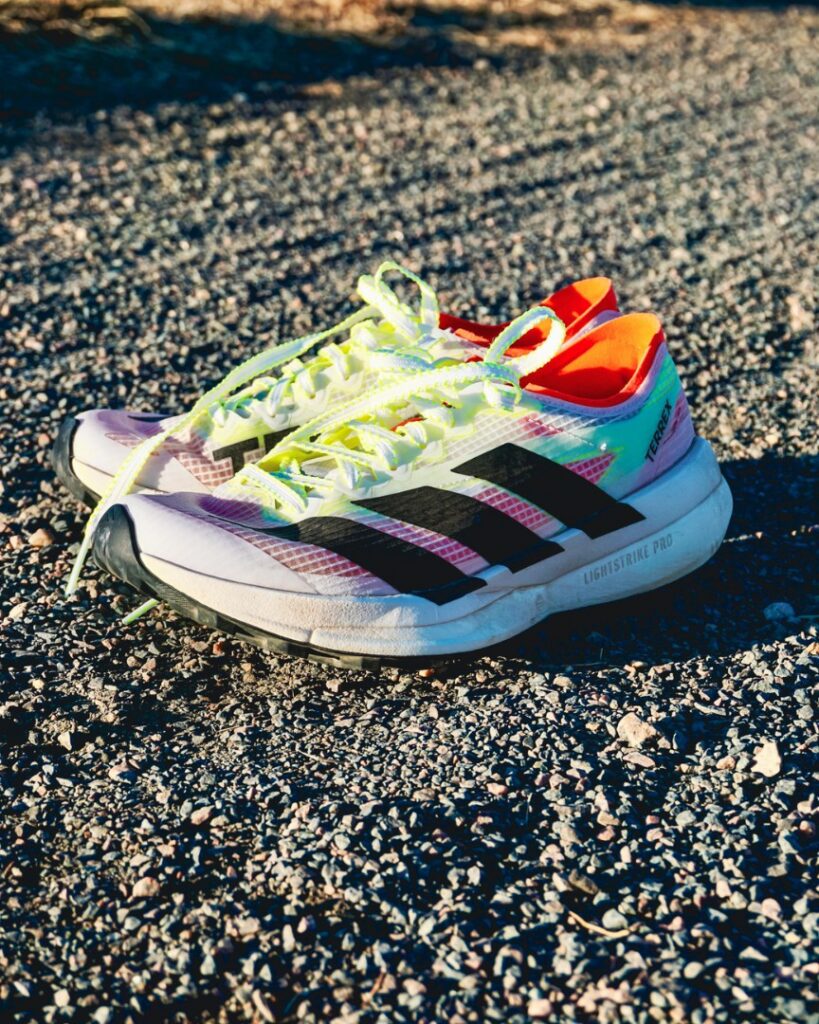
ALLISON: Despite the strong performance aspects, the fit won’t work for everyone. The forefoot is noticeably narrow, and on longer runs, I felt consistent rubbing along my pinky toe (similar to Reese). It never became painful enough to stop a run, but it was always present and raised concerns about comfort on ultra-distance efforts or extended technical outings. Runners with wider feet will likely notice this immediately.
The upper also raises questions about durability and protection. While the thin mesh contributes to the excellent breathability and lightweight feel, it feels almost too minimal. On rocky terrain or when brushing against trail debris, I found myself wondering how much protection my toes actually had. The material doesn’t provide the reassuring structure or reinforcement that some trail shoes offer, which could be a concern in more aggressive environments.
These issues don’t ruin the experience, but they do limit confidence when conditions get rough or runs get long.
JOHN: The main issue I had was that my big toe rubbed at times. I didn’t blister or anything, and it didn’t happen during the entire 50k, just here and there I’d notice it. My foot is also far from wide, so this could be a concern for certain foot shapes. I really enjoyed this shoe. The fit was the only thing I felt needed some tweaking.
The only other thing I noted is that at one point, I kicked a root and really felt it. For the most part, the shoe kept me very protected, but in spots, you can feel some pain if you hit things a certain way. Again, this only happened once, so just be careful.
Shop The Shoe - Men Shop The Shoe - Women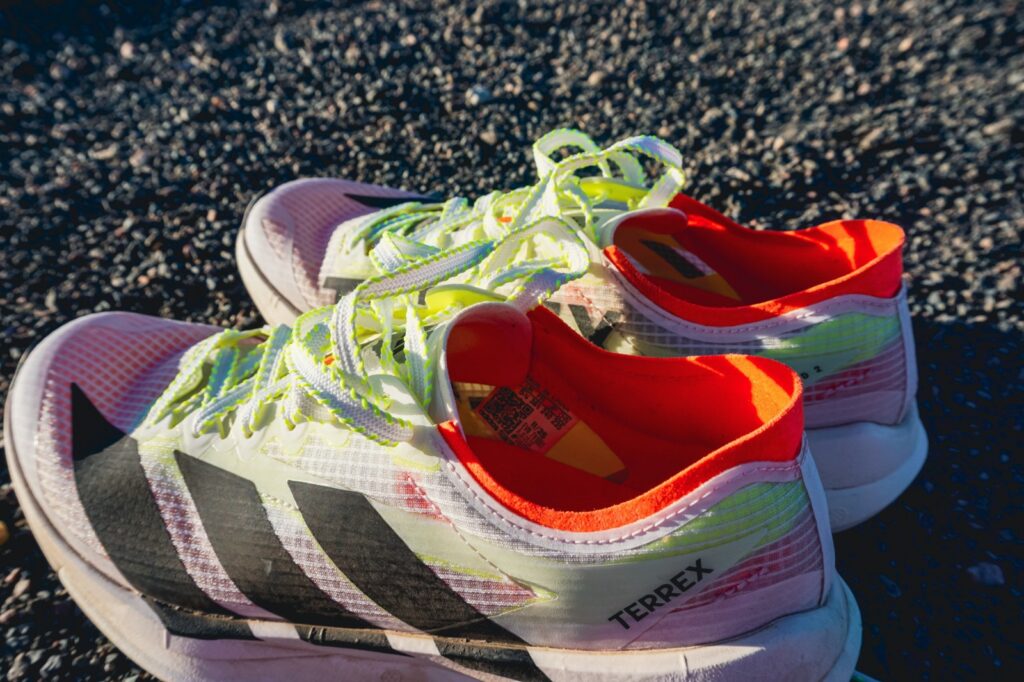
REESE: I love the taste of this humble pie. I’m loving the Agravic Speed 2, even if I can’t say the name correctly, ever. It’s slowly working its way into my normal rotation, especially for those speed workouts up and down hills.
I tend to love a minimal race-day shoe, both in material and stack height, so this one hits all the check boxes for me. I tend to push the distance boundaries for stable shoes, so a shoe marketed as “sub ultra” will often be one I’d wear in an ultra. I’m willing to endure an hour or two of foot regret if it’s a shoe I feel confident in. The jury is still out on whether this will take the top spot from my usual go-to shoes, but it’s certainly caught my attention.
At $165, this shoe feels like a hell of a deal. I suspect that if you liked the Agravic Speed Ultra 2 but want something a little less pricey and a little more stable, this is your ticket.
ALLISON: The adidas Terrex Agravic Speed 2 is a fast, lightweight trail shoe built for efficiency and simplicity. It delivers excellent breathability, a smooth and controlled ride, and a clean design that works well for faster trail efforts. However, the narrow forefoot and minimal upper protection may limit its appeal to runners who need more space or durability on technical terrain. It’s a strong option for speed-focused trail running and moderate conditions, but it may not be the most versatile choice for every runner. If you value light weight and natural ride feel, the Agravic Speed 2 is worth a look.
JOHN: I beat the hell out of the Adidas Terrex Agravic Speed 2, and it didn’t show excessive wear or anything. It was great. I figured it would do well on an easier trail, but it really surprised me on the more technical side. I was initially worried about using it on the peanut butter mud, snow/ice, and walking down creeks, etc. It did great! It’s light, inexpensive, fits well, and is fast.
As long as you set proper expectations for this shoe, I totally think it’s a no-brainer to have in the rotation, especially if you have faster races coming up and need a lighter and faster trail shoe. I found it to be extremely fun to run in at Hashawha. Again, even in cruddy conditions, I found this shoe to be a fun hang. This is one of the favorite shoes I’ve ever reviewed! I’m really glad the Adidas Terrex Agravic Speed 2 got here right on time!
You can pick up the Adidas Terrex Agravic Speed 2 for $165 in March 2026 from Running Warehouse (featuring free shipping and 90-day returns) by using the buttons below.
Shop The Shoe - Men Shop The Shoe - Women
Adidas Terrex Agravic Speed 2 | First Thoughts
Have something to say? Leave a Comment


Reese Ruland is a Fort Collins, Colorado-based ultra trail runner with over 15 years of competitive running experience. She has a penchant for PopTarts, a gear addiction, and is always taking photos of her two French Bulldogs, Loaf and Oatie. In addition to her athletic endeavors, Reese serves as an ambassador for Project Heal, a nonprofit organization dedicated to promoting accessible mental health care for those affected by eating disorders. She’s also one of the fastest women ever to run R2R2R (7:59).
More from Reese
Born and raised in Atlanta, Georgia, Allison is a die-hard sports enthusiast and long distance runner. As co-leader of Trail Sisters and FKT manager, she’s dedicated to fostering community and empowerment in the outdoors. Fun fact: she met her husband on Strava, proving that it does go down in the DMs.
More from Allison

An obsessed runner, John has run in most ultra races in the Mid-Atlantic area. Since he’s an ultra runner, it’s no surprise he’s also a lover of food. He’s also a dedicated father, caregiver, and veteran.
More from John