Shop BITR Apparel Shop Now
We independently review everything we recommend. When you buy through our links, we may earn a commission.
6.1 oz.
39mm in heel, 35mm in forefoot (4mm drop)
Race day
Lightlock 2.0 upper, new Lightstrike Pro midsole, carbon infused Energy Rim, Lighttraxion / Continental outsole
Available now for $275
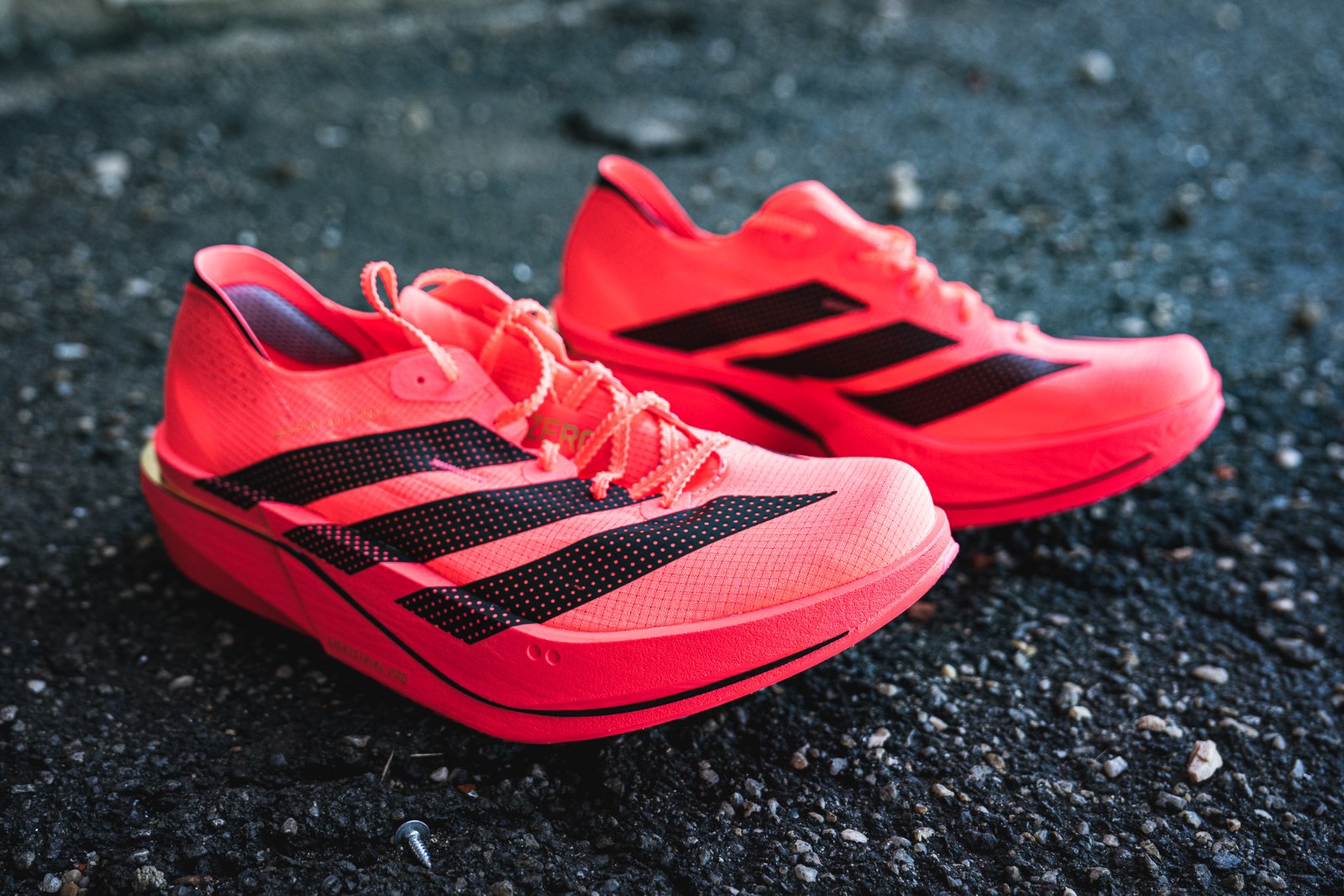
KARL: It's been quite the year for Adidas. They developed the shoe that Sebastian Sawe ran his sub-2-hour marathon in at London earlier this year (Adidas Pro Evo 3) and completely revamped the Boost range with the Hyperboost Edge. It only makes sense to close out the year with a bang with the new Adizero Adios Pro 5, their flagship (and more attainable) marathon racer.
It seemed kinda obvious, no? It’s been almost two years since Adidas released the Adios Pro 4 at Berlin 2024 (alongside the Evo SL). We were fans of the Adios Pro 4 and had the pleasure of racing the Berlin Marathon in it. At the time, it felt like Adidas finally hit its stride in the racing department. But two years later and with all that Adidas has accomplished recently, how does all that translate into the next iteration of the Adios Pro?
THOMAS: Karl's right, Adidas has had a great year, but the real story is the glow-up. A few years ago, Adidas was slinging forgettable daily trainers and third-tier race-day shoes. Now, in 2026, they're the standard everyone else is chasing.
More interestingly, they're doing it their own way. Adidas doesn't seem to rely on a release calendar very often. I don't think there's a Q3 roadmap, nor does there seem to be a marketing countdown. When a shoe is ready, it ships.
The Adizero Adios Pro Evo was the perfect flex; it went from concept to competition before anyone saw it coming. Blink, and it's already on someone's feet at the starting line.
The Adios Pro sits on the opposite end of that spectrum. Adidas only touches it when they've actually built something better. The jump from version 4 to version 5 took two years. Not because they were slow. Because they were waiting until it mattered.
Why bother releasing a shoe that doesn't make an athlete’s performance better?
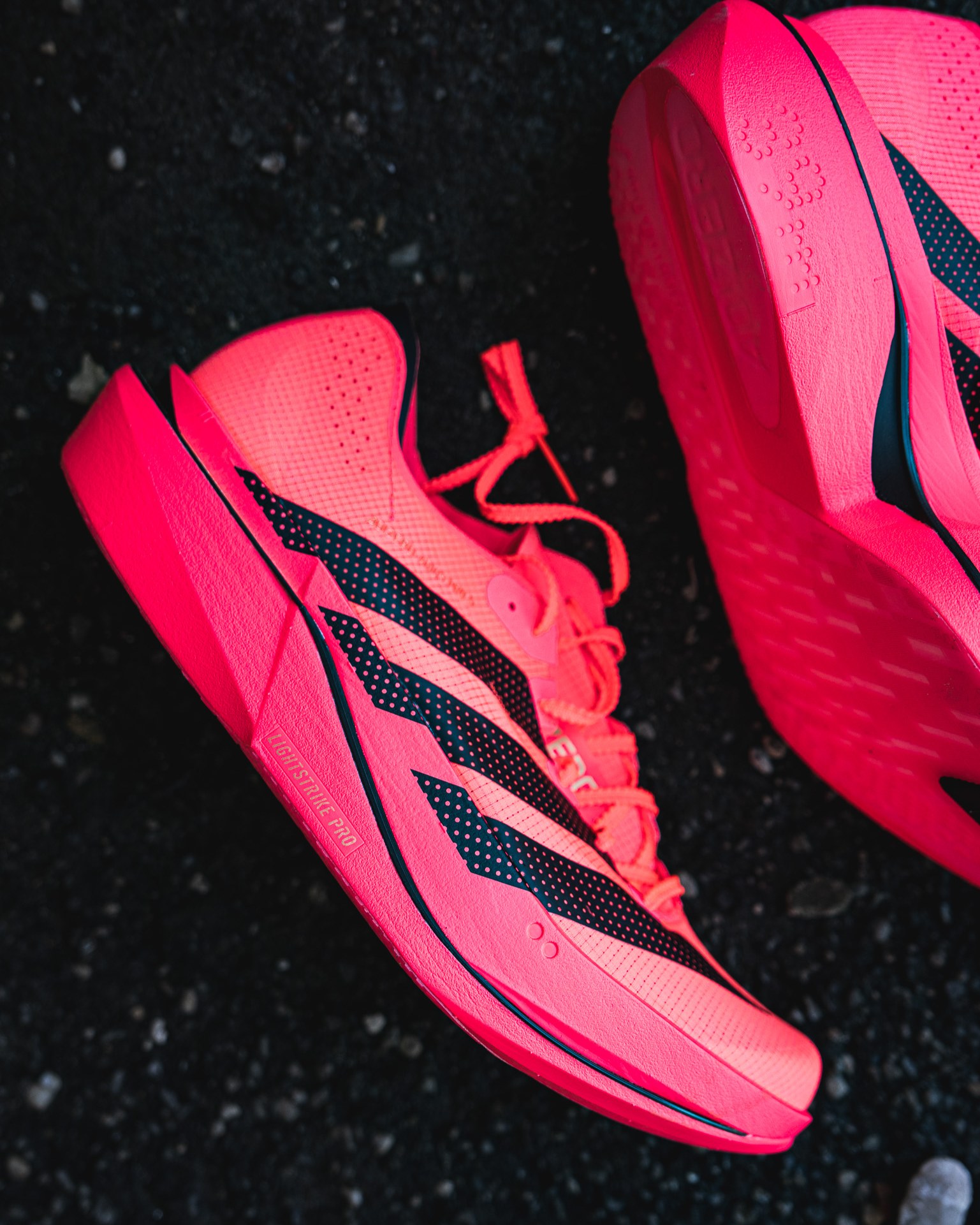
KARL: Putting the Adizero Adios Pro 5 side by side with its predecessor, it doesn’t look like a ton has changed at a glance. However, Adidas made some pretty meaningful changes to the overall design; you just won't notice them at first. It trickled down some tech from the Pro Evo 3, and I’m all about it.
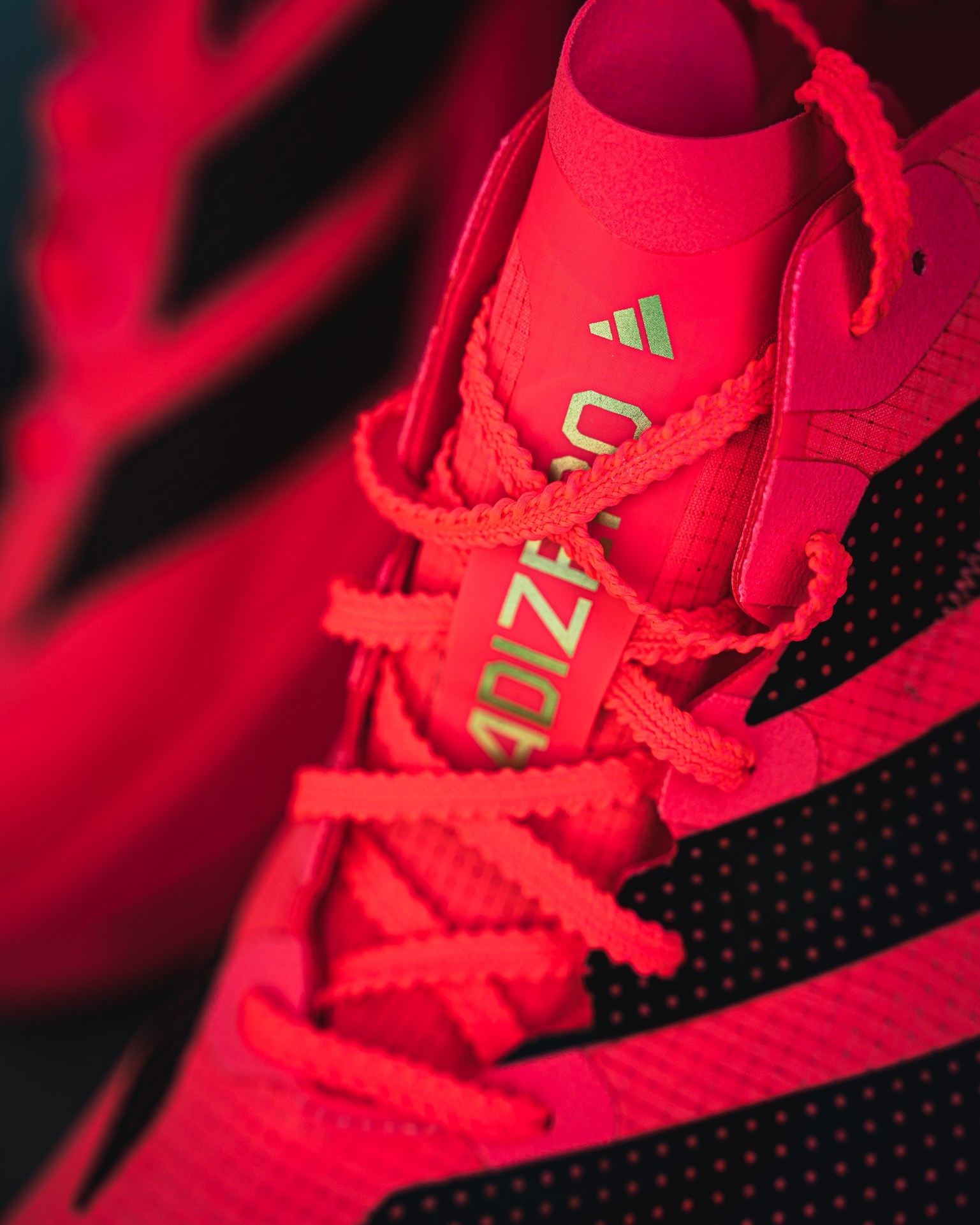
The Lightlock 2.0 upper is very light and breathable but still very pliable and lays nicely around the foot. It seems like Adidas has ever-so-slightly widened the forefoot for a more accommodating fit. The heel counter has slightly more padding than the Adios Pro 4 and, while the tongue is still stitched in instead of gusseted, I haven’t had any issues with it not sitting right.
Yeah, that's right: Sawtooth laces for the win.
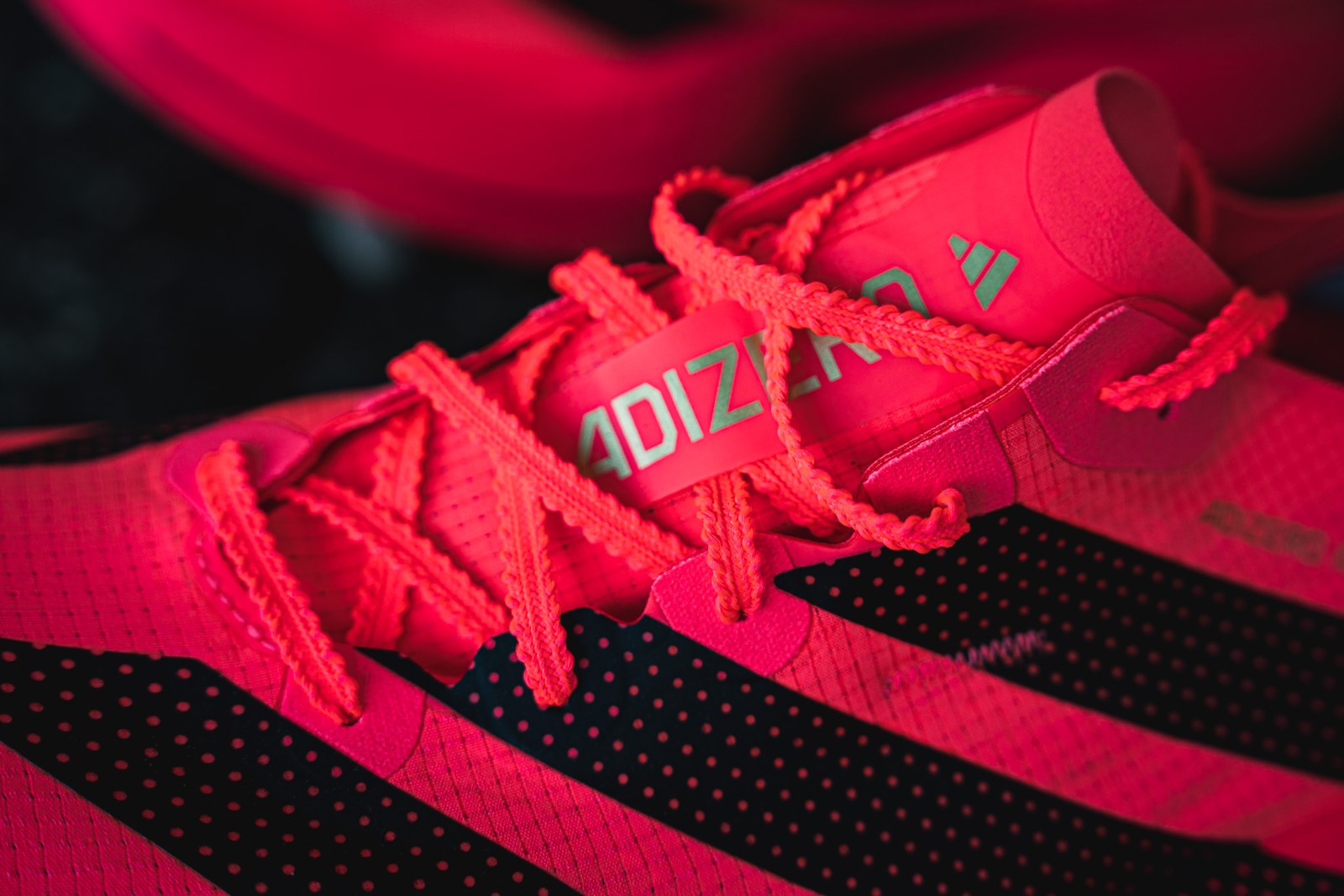
I also have to call out that finally Adidas has put it in the sawtooth laces we’ve all come to know and love. I feel like I say it every review, but these need to be standard, especially in race day shoes.
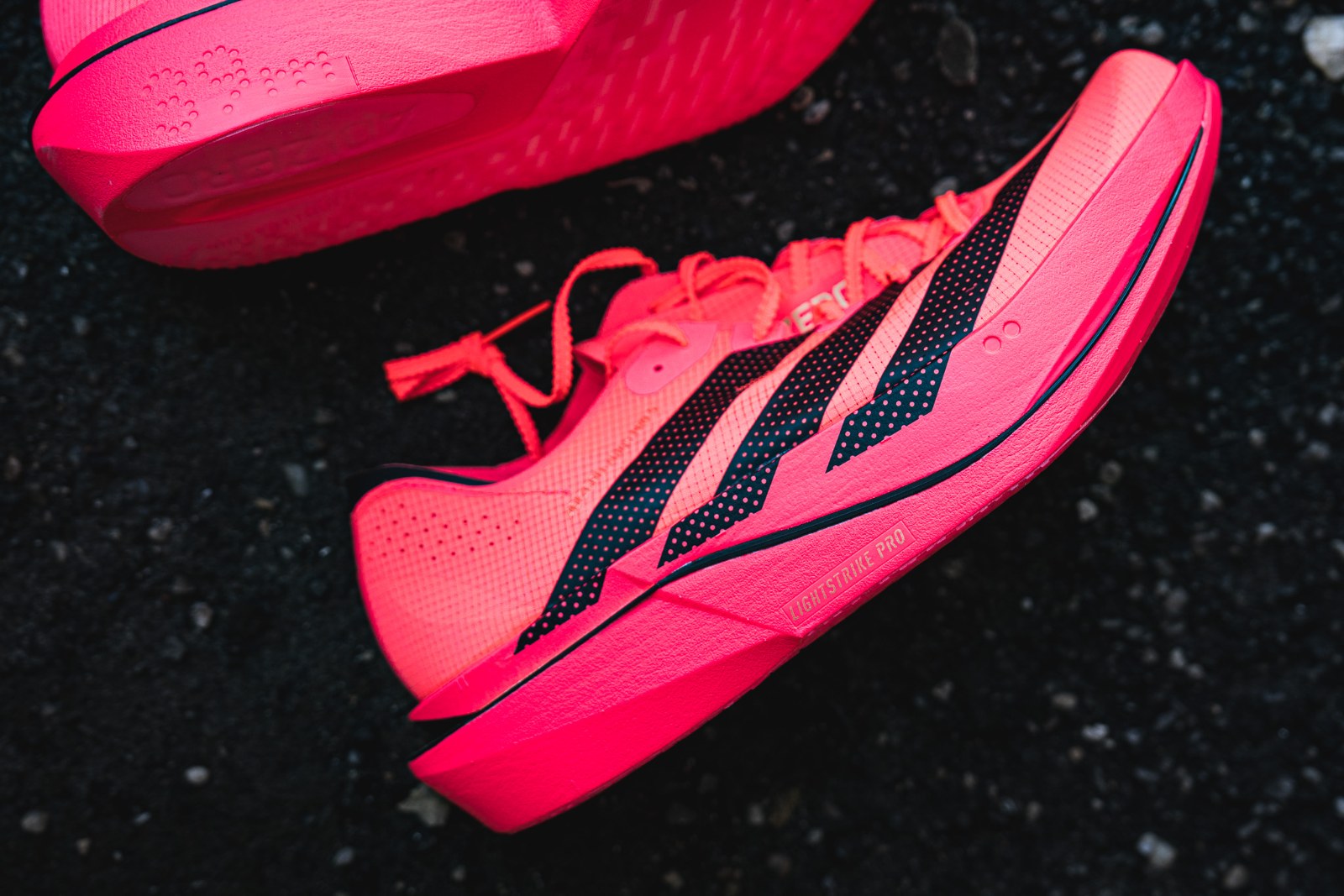
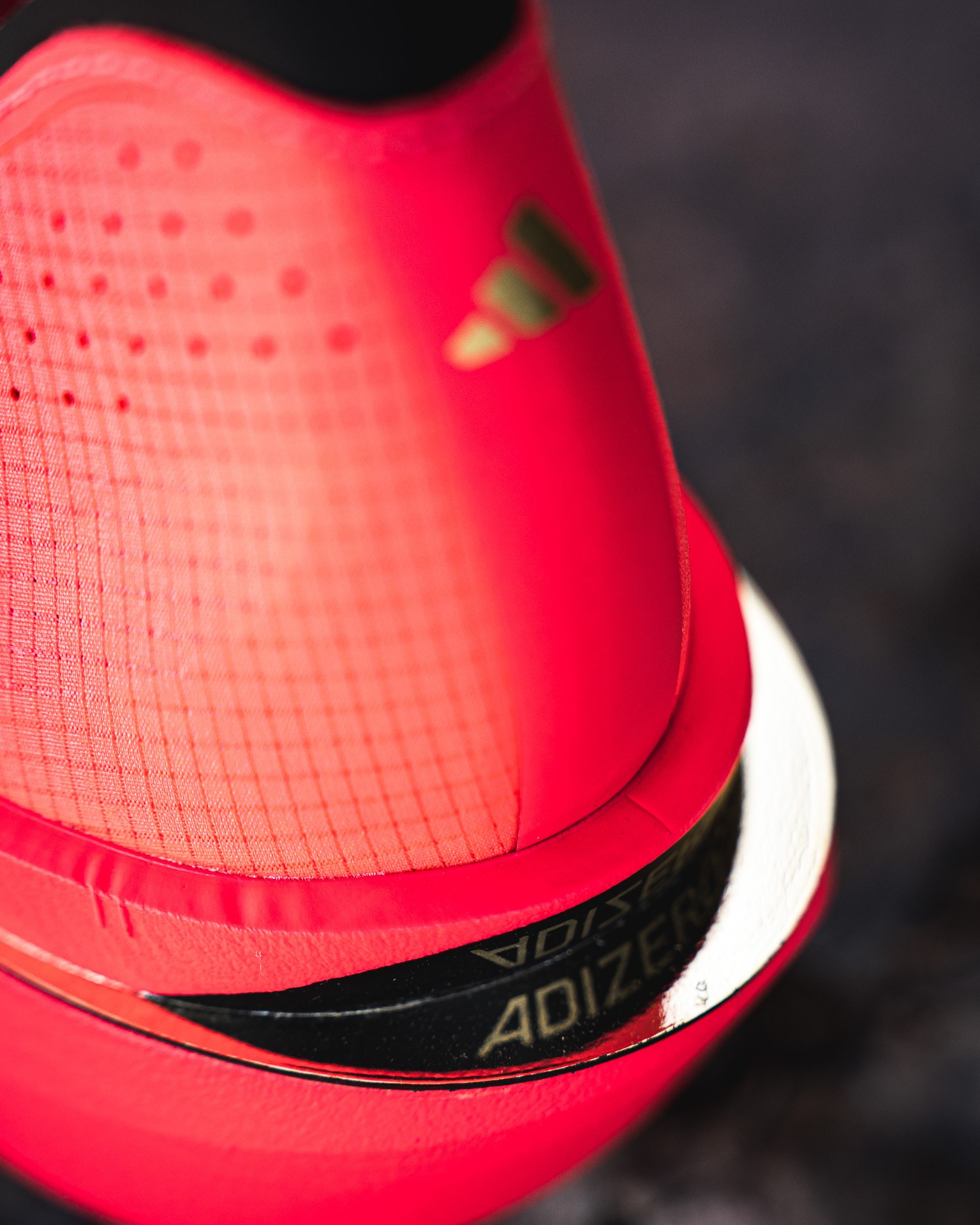
There’s no little foldable heel collar this year (with the hidden message “This Too Shall Pass” when flipped over on the Adios Pro 4), but there is a nice detail where there’s gold reflective material on the carbon rim in the heel — the word Adizero printed upside down on the shoe to be reflected correctly in the mirror. It’s such an elegant, clean detail, one that is so on brand for the Three Stripes.
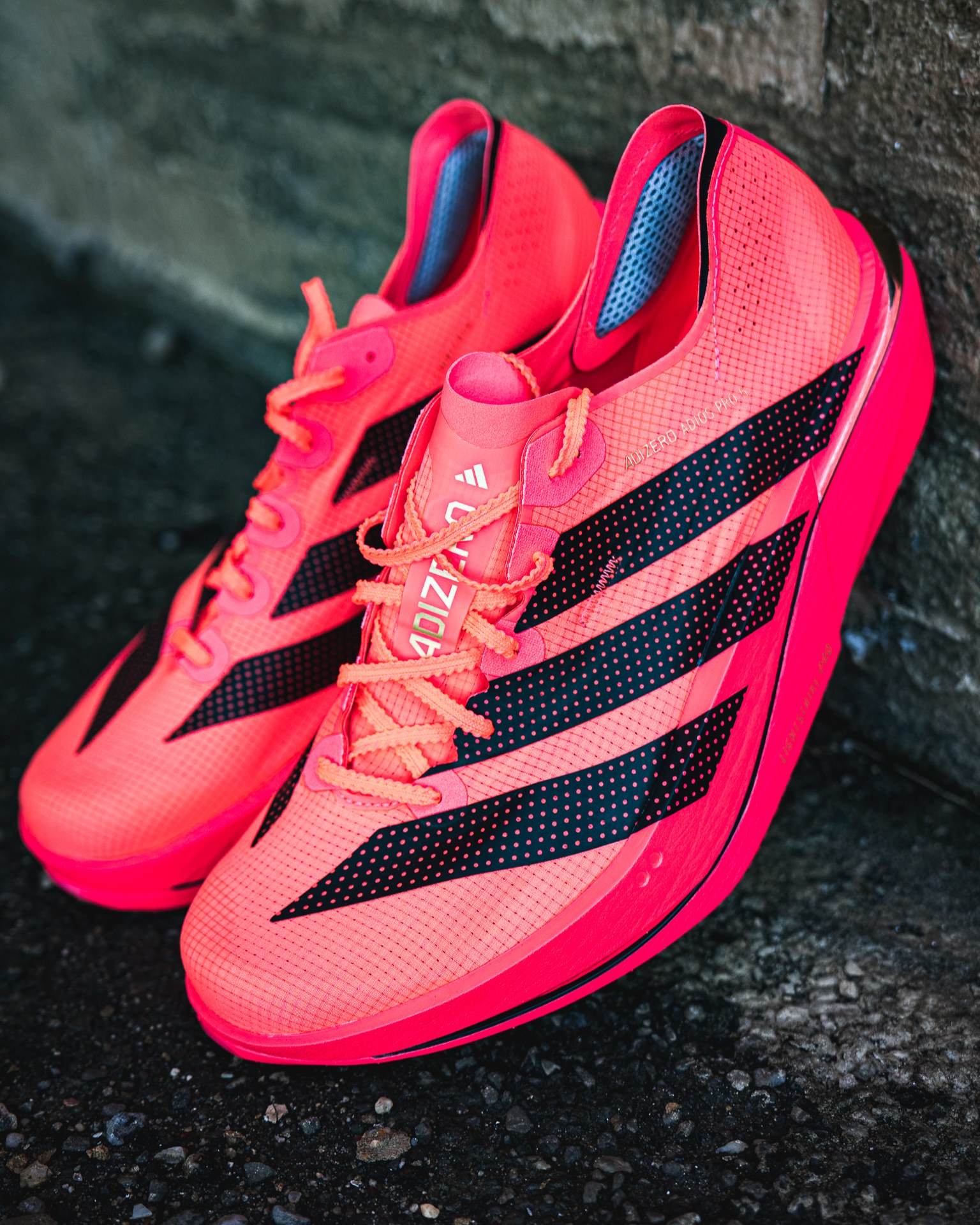
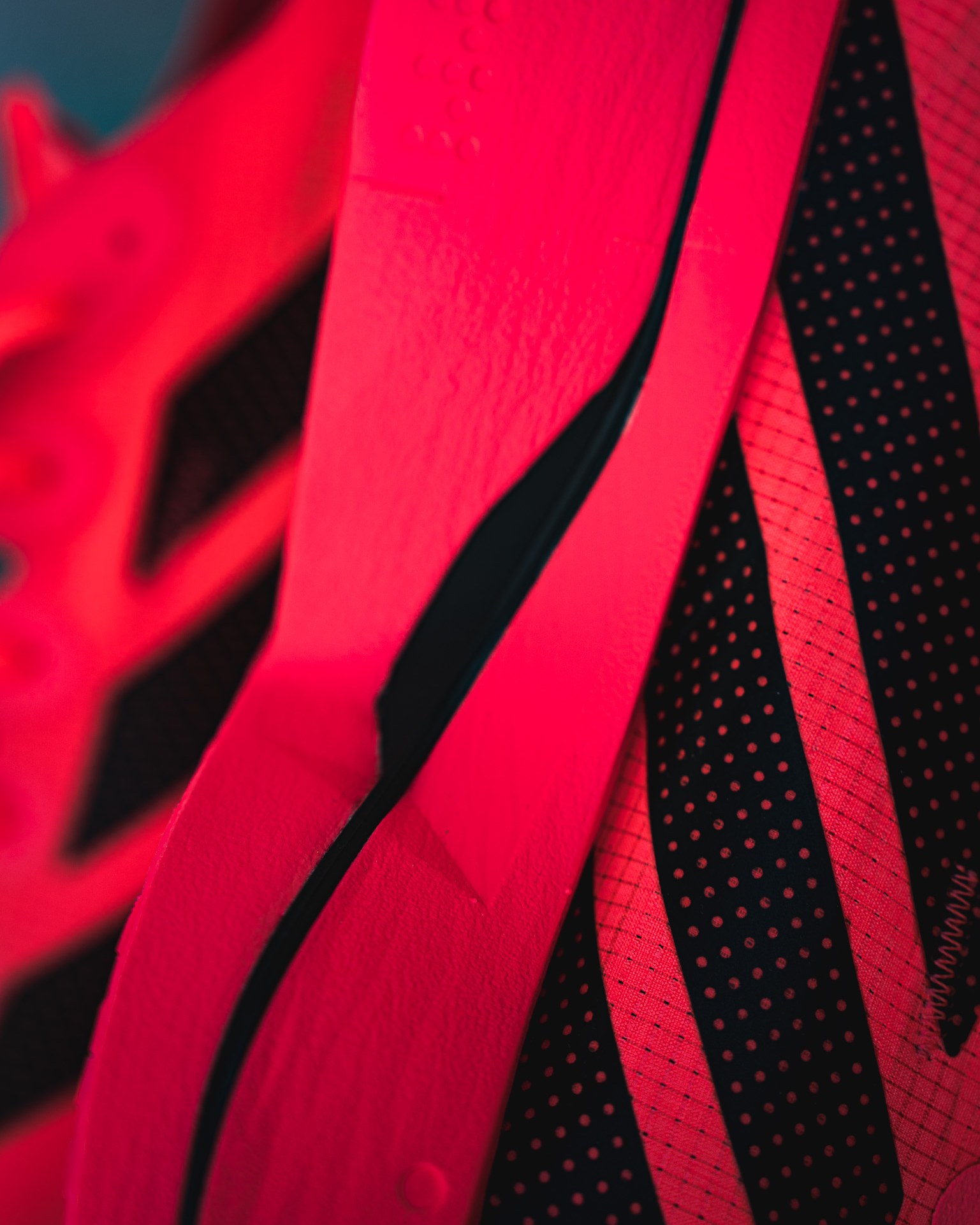
Moving down to the midsole is where things get interesting. The Adios Pro 5 uses Lightstrike Pro foam, but it's a new formulation that Adidas claims gives 9% more energy return than its predecessor. What’s interesting is the makeup of the Lightstrike Pro. A source at Adidas told us it is two layers, with the top being PEBA and the bottom being ATPU.
The EnergyRods that have long been used in Adidas products are now gone, replaced with the EnergyRim found in the Pro Evo 3. It’s a carbon-infused rim that lines the perimeter of the shoe and acts as the main stiffening agent, which lends the shoe a more natural feel underfoot.
The Adios Pro 5 also loses 12.5% of its overall weight compared to the Adios Pro 4, coming in at a respectable 6.7oz (164g). The light weight is accentuated by the Lightstrike Pro; it's soft with a lot of rebound, and the ATPU bottom layer acts as a denser carrier foam.
Some people may find it odd to race without the sensation of a carbon plate underfoot, but the EnergyRim does a good job of providing stability and rigidity while the Lightstrike Pro works to give you all the spring and bounce you expect from a marathon racer. It does feel peculiar at first, but the more you put into the shoe, the more it gives back, as opposed to the more aggressive plated shoes that force you to the toe-off.
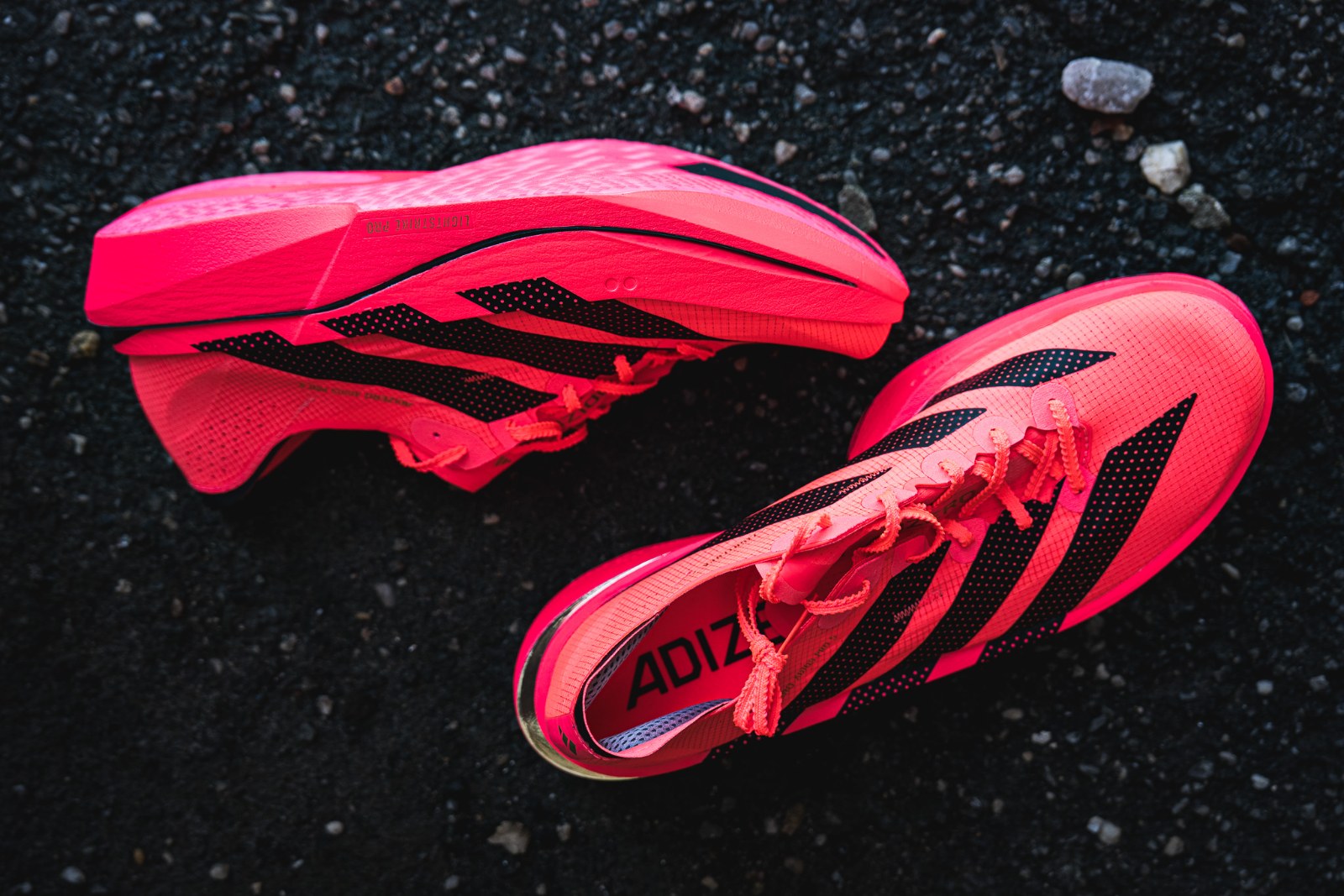
Putting on the Adios Pro 4 and Adios Pro 5 side-by-side, the Pro 4 feels like it has a bit more of that aggressive racer DNA. The Adios Pro 5 features more of a late-stage rocker, though it still has a very significant toe-off. The Adios Pro 4 rocker comes in a bit earlier and adds to that propulsive, on-your-toes feeling I mentioned before. Some people may not like that in this new version, but I think it works for me. I dig this approach where Adidas tuned the shoe’s comfort without sacrificing performance.
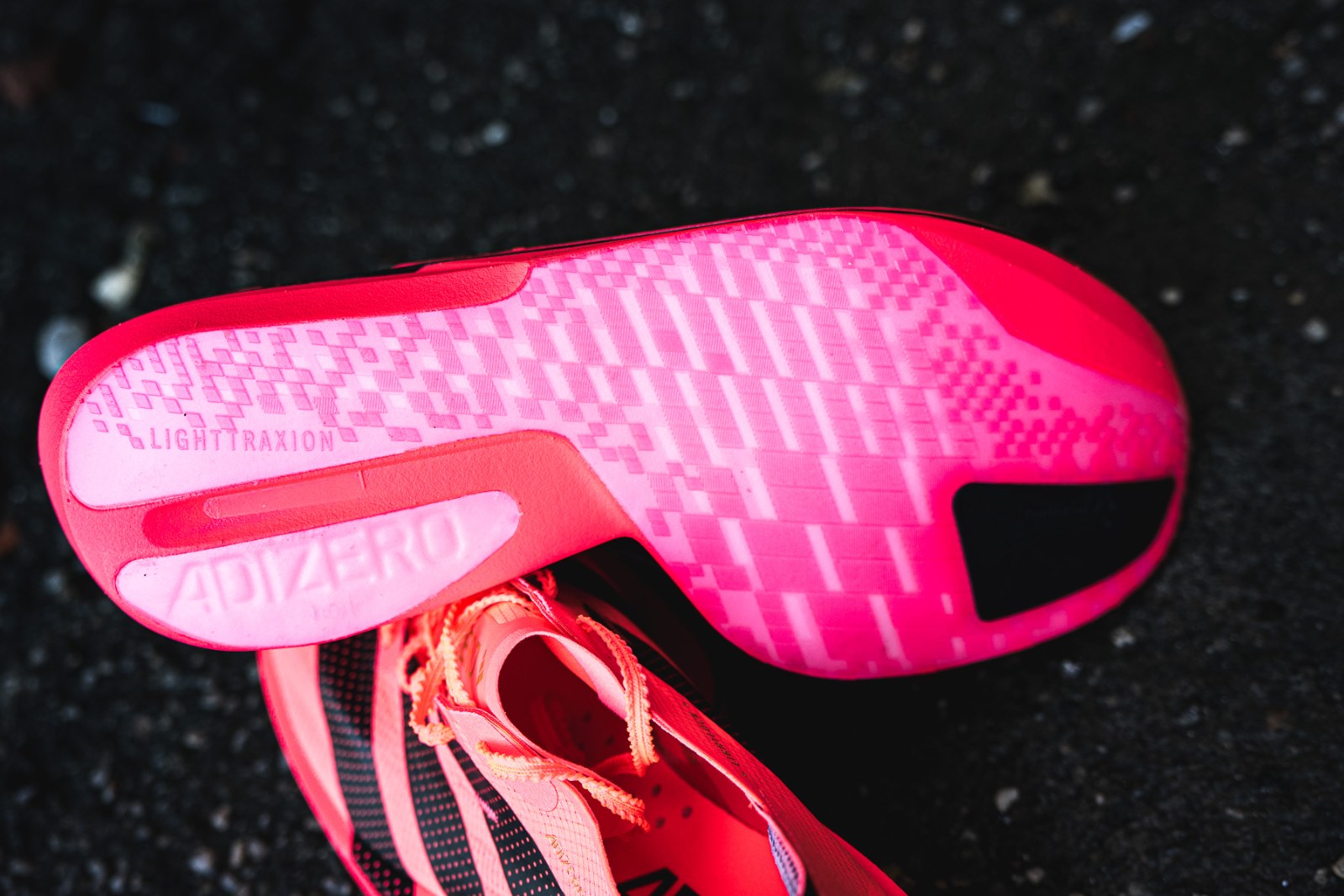
Briefly touching on the outsole, it looks identical to the previous iteration but has been slightly modified. The Lighttraxion rubber looks to be a tad thinner, but you still have solid coverage with a pad of Continental rubber under the big toe.
The Adios Pro 5 can handle a wide range of paces. Hitting marathon pace workouts felt great, as did easy miles, with legs feeling fresh the next day. Thomas and I will be racing the Berlin Marathon this year in this shoe, and while I haven’t had the best training block throughout this wet, hot American summer, lacing this shoe up for a long run gave me back some confidence, which is exactly what a premier race day shoe should do.
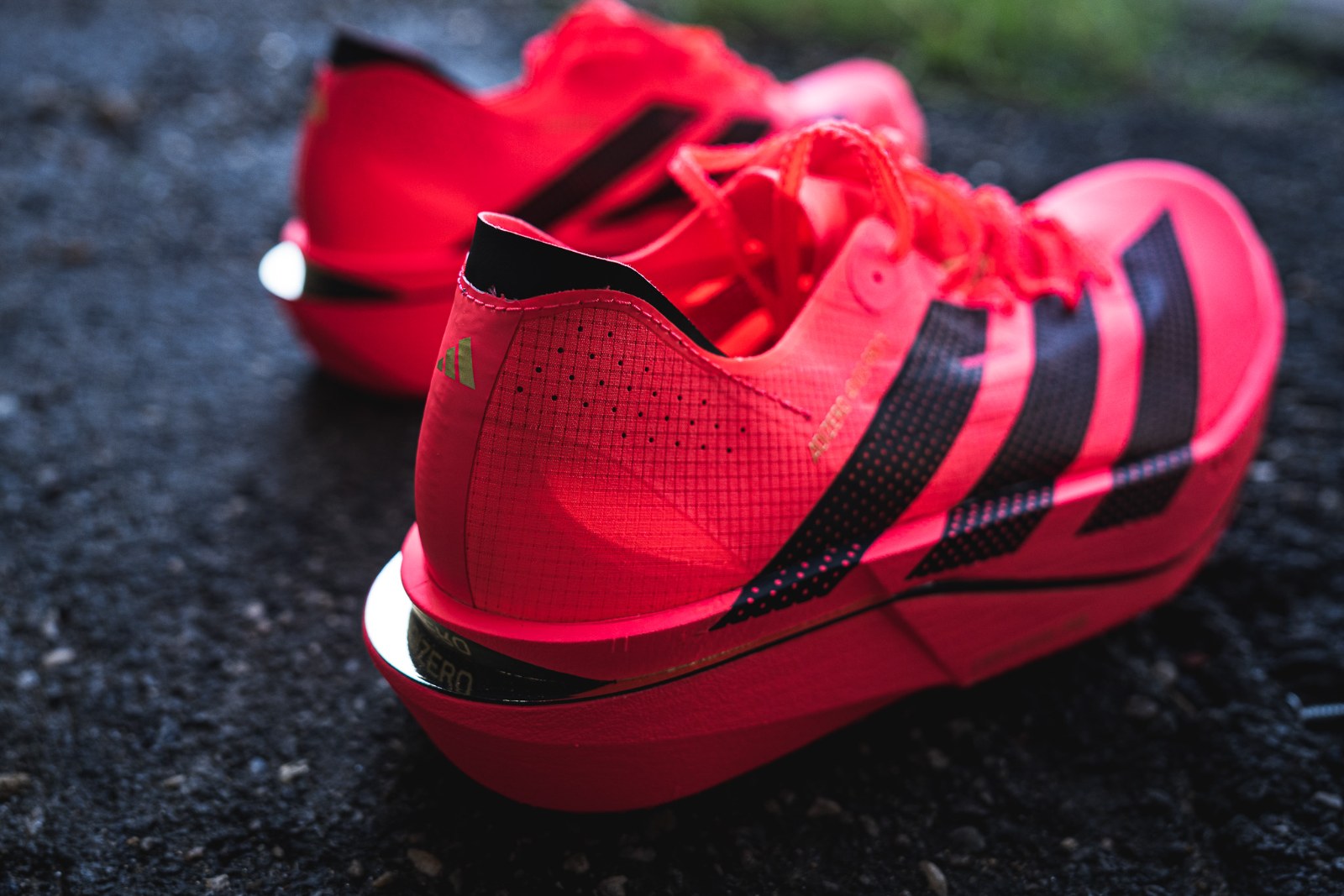
THOMAS: Karl nailed the stats and the materials, so let's get down to business. This shoe works for me.
At first, I was skeptical. No rods, no plate under the ball of the foot. That's not what I'm used to feeling when I lace up a race day shoe. The soft PEBA right under the forefoot feels too comfortable to be fast. Sure, losing more than an ounce gives the Adios Pro 5 a light, quick feel, but I was worried it wouldn't have the pop I've come to expect.
My fears were soothed fast. During my first workout in the shoe, turnover was easy. The new carbon rim gives the Adios Pro 5 the rigidity it needs to back up the soft foams, so the ride stays snappy instead of mushy.
After more than 40 miles in the Adios Pro 5, I have all the confidence I need heading into Berlin.
The fit is similar to the Pro 4, but Adidas added some volume in the vamp this time. Toes aren't packed in like before. I went with a US M10.5, and it fits just right. I usually float between 10 and 10.5, but for this shoe, stick with the half size up. No hot spots, and the traction held up even on wet days.
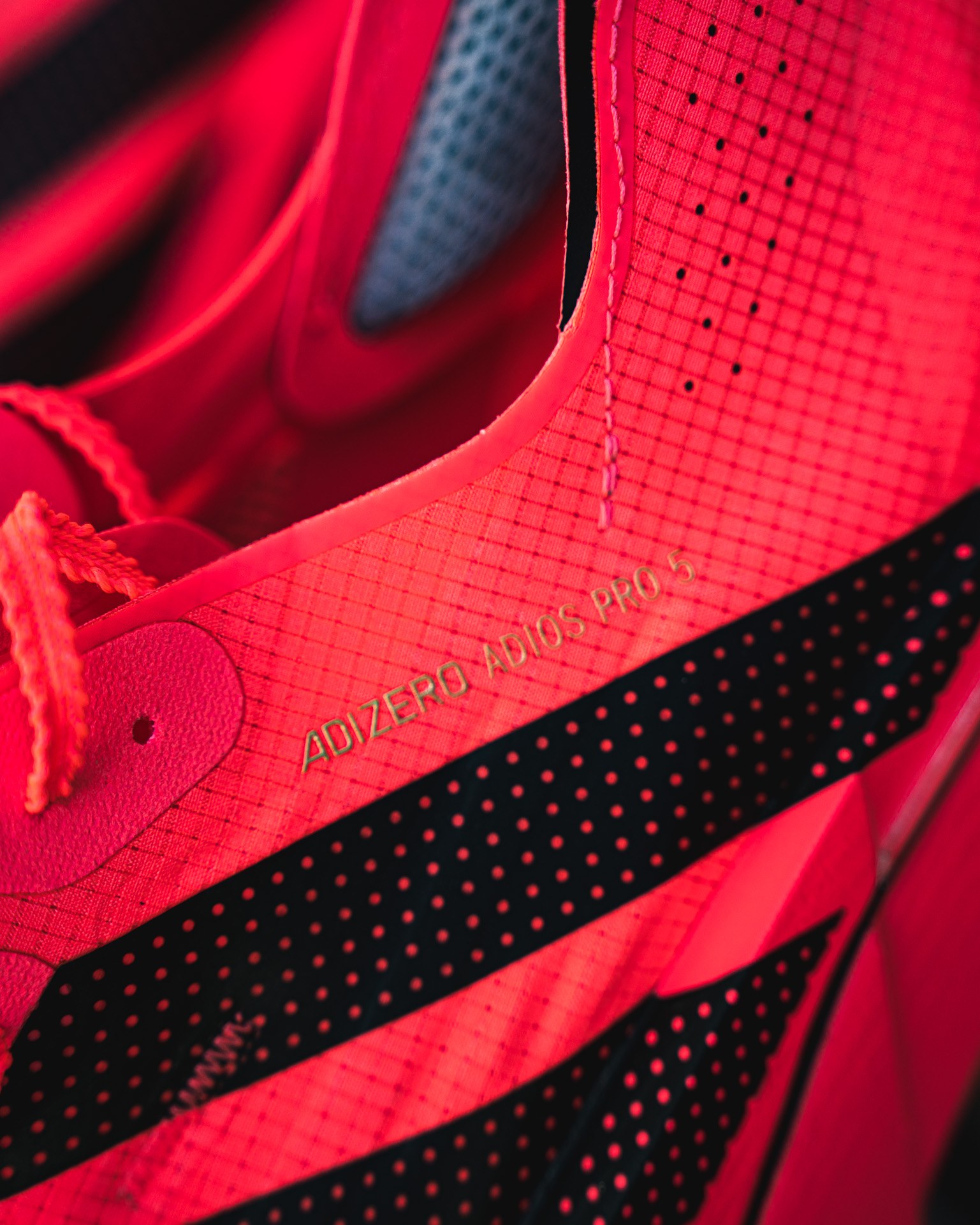
KARL: There isn’t much to dislike about the shoe. Again, if you're looking for that more aggressive, always-on-your-toes type of racer with the feeling of the carbon plate under your foot propelling you, you may be slightly disappointed. The underfoot sensation is a bit of a departure from those racing shoes, but still performs just as well, if not better, in a lot of circumstances.
I mentioned this earlier, but the shoe did widen out a bit. It’s not by much, but for you super narrow-footed people, this may also be a tick against the shoe (though Thomas loved the fit and didn’t have any problems with it).
The price has also gone up to $275. It is on the pricier end, but I think it’s warranted given the redesign and new technology featured in the shoe. There’s a bit of competition in this price bracket — the Hoka Cielo X1 3.0 is said to feel similar (according to Thomas), and then the new Nike Alphafly 4 is just $5 more. I find the value in the Adios Pro 5 to be there if you’re looking for a fast, lightweight racer that maybe doesn’t feel like the shoe isn’t completely guiding you and has more of a natural/freeform feel.
THOMAS: I did the one-shoe-on-each-foot test: Adios Pro 4 on one, Adios Pro 5 on the other. The Adios Pro 4's toe spring is more aggressive, and it shows. That shoe transitions faster off the toe. But out on the road, the Adios Pro 5's weight advantage wins the argument. Lighter beats snappier over 26.2.
This one's going to sound silly, but I miss the pull tab on the Pro 4. Yeah, there was a fun Easter egg hiding under the flap, but it wasn't just for show. That tab actually helped get your foot into the shoe.
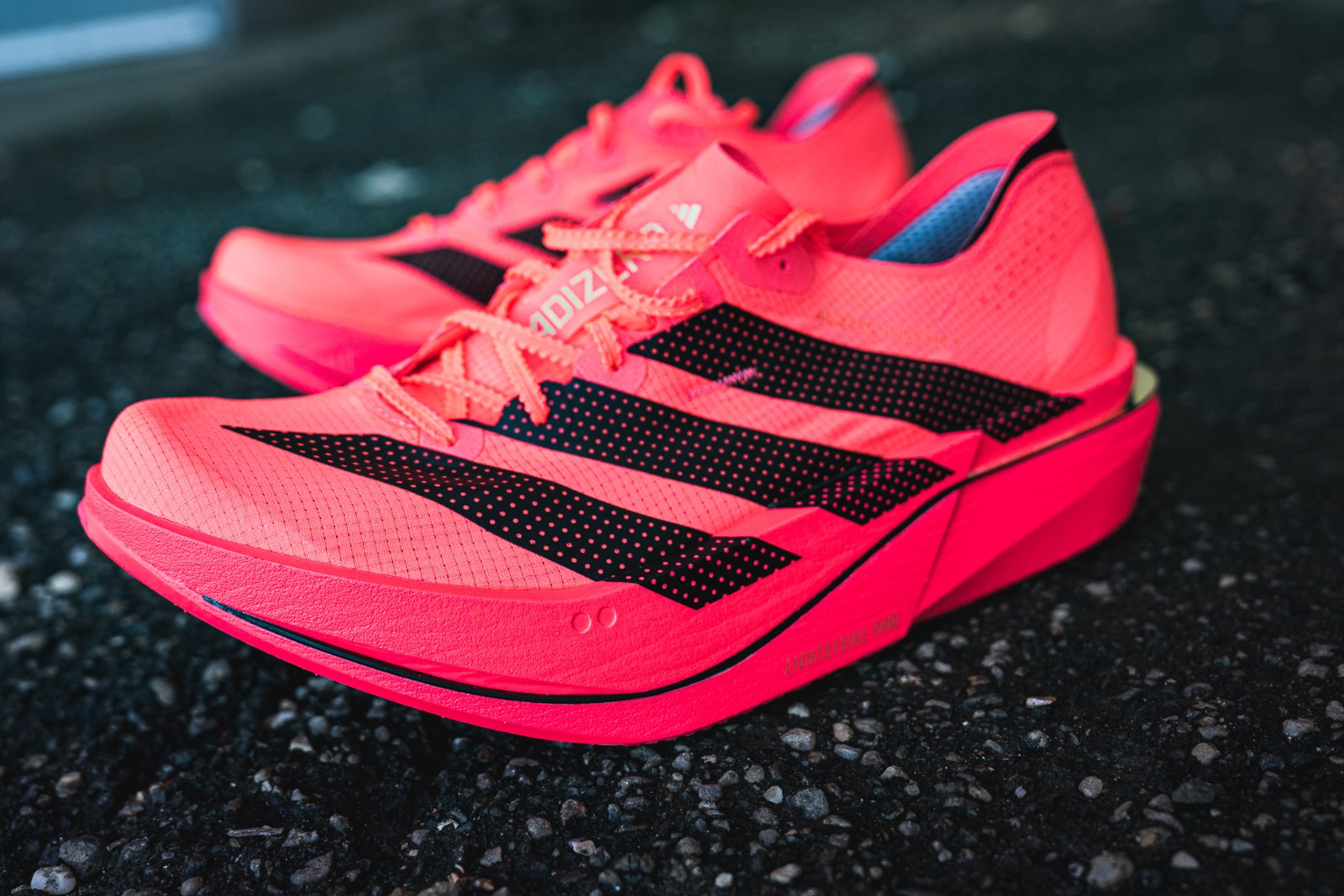
KARL: I think Adidas has been on fire all year, and the Adios Pro 5 is a solid update to version four. It's fast, lightweight, aggressive (albeit not the most), and visually looks like a stunner. I think most people who liked the Adios Pro 4 will enjoy the Adios Pro 5. It’s certainly one of my favorite racing shoes of the year, and I’m excited to toe the line in Berlin.
THOMAS: Karl's on point with the conclusion again. We'll follow up on YouTube after Berlin to confirm or contradict everything we're feeling right now. My gut says this is a great pick for the marathon, and I'm hoping to come back with good news. The best compliment I can give a race shoe is that I feel confident in it.
You can pick up the Adidas Adizero Adios Pro 5 on September 22 for $275 at Running Warehouse (featuring free 2-day shipping and 90-day returns) by using the shop link below.
Sign in or create a free account to comment. You'll come right back here.
Sign in / Sign up
Karl is the Media Coordinator for Believe in the Run. Prior to joining the team, Karl spent the last decade working in the media industry as a cinematographer, director, screenwriter, and editor. He’s also an avid musician and craft beer aficionado. If he’s not running, he’s recording music, watching movies, or wandering around with his photo camera.
More from Karl


As the founder of Believe in the Run, Thomas’s goal is to help runners pick the shoes and gear that will make their running experience the best that it can be.
More from Thomas
Be one of the first runners to rate it.