Shop BITR Apparel Shop Now
I’m not sure when I first heard of heart rate training, but I feel like it’s similar to when I first heard of a 401k- I was younger, didn’t know what it meant, nor did I care, but I knew I should probably get into it. Luckily, I learned my 401k lesson with enough time to leverage compound interest and– wow– if you’re still reading, I promise it gets better.
If you’ve never heard of heart rate training, let me give you a quick rundown (and I am by no means an expert, so forgive me if this isn’t completely accurate).
Heart rate training is focused around the idea that for a runner to optimize his/her performance, they need to first be aerobically fit. That is, improving your aerobic system by executing a majority of your training at a lower heart rate in order to burn more fat than carbs. (This is a very surface-level generalization, by the way). The end result is a more fit aerobic system, which translates to faster paces at a lower heart rate. Although there are many methods of achieving this, one of the more popular ones is MAF training, as popularized by Dr. Phil Maffetone (MAF actually stands for maximum aerobic function and has nothing to do with the dude’s name).
In very simple terms, to improve your aerobic system, MAF training dictates that you run the majority of your runs underneath a certain heart rate, and by doing so, you build aerobic fitness. How do you calculate that heart rate? Different heart rate training plans have different formulas, but using the MAF method, it’s calculated with a generalized formula that works for most runners, which is 180 minus your age. For me, this is 143.
According to MAF, by running exclusively with your heart rate (BPM) beneath this number, your heart rate should eventually come down while your pace stays the same, allowing you to then go faster while staying at that same heart rate limit.
Here’s the thing though– it takes time. A long time.
For the plan I did/am still doing (Extramilest by Floris Gierman), it was a full three months of base building. Essentially stripping down all of my running and starting over, keeping every run below that MAF heart rate number. Now, this type of plan was ideal for me at the time, because 1) I was just coming out of a year and a half long injury that I’m still dealing with to some degree (as documented in this article), and 2) COVID-19 was just around the corner, so there were no race plans and nobody to run with for the foreseeable future.
Let’s dial it back real quick. In fall of 2018, I ran a marathon in 3:27– not earth-shattering, but a major PR for me. However, I was in bad shape afterward. I peaked at a mere 45 miles a week in training and was cranking out 8-mile hard speed workouts. I was actually only running four days a week (give me some slack, I had a newborn and a 3-year-old). The result? I ran the last four weeks of that marathon training on a torn upper hamstring that eventually turned into a chronic tendonitis.
Like many runners, my two top running goals are to qualify for Boston and run a sub-3-hour marathon. After that marathon PR in 2018, I felt like Boston would be impossible, and that dream fell even further away as I struggled through running and life (the injury was a constant low pain) over the next year.
Eventually, I found a good physical therapist (shout-out to my neighbor Joe) who got me on the right track to recovery. At the same time, I found Floris Gierman’s Extramilest podcast, Facebook group, and training program.
In Extramilest, day after day I’d read testimonials of runners who went from 4-hour marathons to sub-3 or even 2:45. Was it easy for them? No. Did it take a lot of patience? Yes. But I thought, if it worked for all these people, then I think I should give it a shot. I realized it would be a challenge, but the idea of running slower to get faster appealed to me, especially since I was coming off an injury, and because I wanted to be a runner for life, not burn out when I was (semi) young.
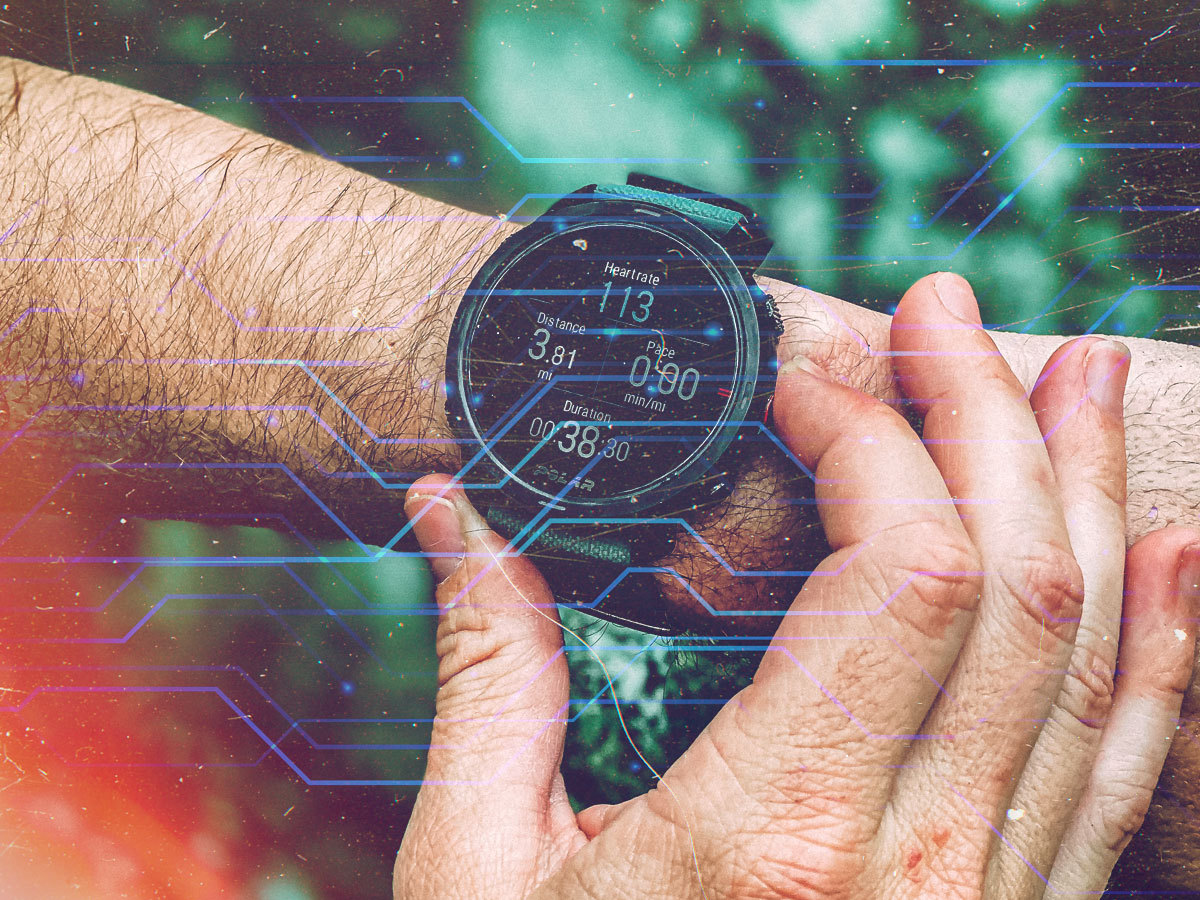
So I slowly built up my miles from essentially zero to 25 miles and started my MAF training in mid-February. (Side note: to accurately track my heart rate, I use a Polar H10 or H9 chest strap monitor, both of which I’ve been using daily for a year with flawless performance. I also use the Polar Grit X watch. NOTE: Although the Polar Grit X wrist-based heart rate monitoring is solid, the only truly accurate measurement of heart rate is from a chest strap.) Anyway, as I started MAF training, I assumed my aerobic fitness would be a bit slower than my previous “easy” pace (around 8:45-9:00 miles), but boy, was I in for a rude awakening.
One of the key components of MAF training is a MAF test. Essentially, every month you try and replicate a run of 5 miles or 8 kilometers and see if you’re making progress. Ideally, this is done on a track at the same time of day and similar weather conditions as previous tests. With MAF training, really the first thing you do is a MAF test to see where your aerobic fitness is at.
My first MAF test? A f***ing 10:45 pace, for a whopping 4.2 miles in 45 minutes. I mean, I knew my mileage was just building up and that I hadn’t been very fit in the last year, but damn– that was humbling.
It went that way for about another month, most of my runs painstakingly slow, any elevation beyond sea level rendering me to a walking pace. (As I mentioned above, the plan I am doing calls for 3 months of base-building– essentially every run at or below your MAF limit). But then my heart rate started to come down; slowly for sure, but lower it fell. I started seeing some early miles in my runs dipping into the high 9-minute range while still maintaining a 143 (or below) heart rate. Note that the 143 number is not the average heart rate. It is the number I had to stay under for the entirety of ever run. And as anyone knows, the longer you run in a workout, the higher your heart rate goes (called cardiac drift), and the slower your miles become. So while mile 1 may be in the high 9-minute range, I’d be finishing runs in the high 10-minute range.
Granted, I’m not perfect and would sometimes go over my target heart rate, hills especially. But for the most part, I stuck with the plan.
I should probably be honest here– while I was doing well with strength conditioning and okay with my diet in the beginning of my MAF journey, coronavirus totally wrecked everything. The Extramilest plan incorporates cross-training or strength conditioning, as well as healthy eating habits. During the beginning of coronavirus, I didn’t really plan on it, but I just started drinking a lot more. I used to have a beer maybe every other day, and now it was at least one, maybe two a day, and more on weekends. Additionally, our cabinets looked like they’d been personally curated by an Oompa Loompa, packed with enough sugar to fuel Buddy the Elf until next Christmas. It was all very weird.
Stress eating, combined with the actual stress of COVID-19 in March caused me to really plateau with my heart rate progress, and even start backtracking a little bit. However, Floris of Extramilest warned the training group this would happen, mostly due to stress and shitty sleep, and he wasn’t wrong.
I definitely gained a couple pounds and spent way too much time on Twitter during this period, but after a couple weeks, I started seeing more progress again. I was also starting to consistently run 25-35 miles a week, which also helped. My nagging injury was only flaring up once or twice a month, and I was getting stronger in my running.
In mid-May I did my third MAF test. I replicated the same conditions as February (a freak cold snap gave me high-30s temperature on a Saturday morning), and in 45 minutes, I ran 4.9 miles, for a 9:15 average pace, a whole minute and a half faster than my MAF test in February.
Now, I can’t say this was totally unexpected. I had started to see my everyday runs trending lower. I was also running more miles and feeling fitter. But boy, what a difference. It’s pretty incredible to go back over my training logs and see the pace consistently coming down while maintaining the same heart rate.
I’m currently at four months in (and have another MAF test coming up), and while the beginning of summer with rising temperatures and Maryland humidity saw some of my progress momentarily slip away, I’ve since become heat acclimated, my heart rate has come back down again, and I’ve seen some crazy improvements. My first mile or two is almost always in the high-8-minute range, even on hot and humid summer mornings. (For reference, my heart rate used to spike immediately to 143 in 40-degree weather at a mid-9-minute pace, where now it takes a couple miles to get there at a faster pace). Afternoon or evening runs are always about 5 bpm higher, so I try to get the majority of mileage done in the mornings, although I do love me some double days.
I’ve been doing those double days about 3-4 times a week while increasing my mileage steadily, especially during GRIT, Believe in the Run’s summer distance project (I’m currently around 40-50 miles a week). Additionally, after the initial MAF base-building of three months, it’s recommended to incorporate some speed work, but never going above the 80/20 rule (80% of runs under MAF heart rate). So now I’ll do a group trail run or a fast 5K/mile once a week), and that seems to jumpstart the system a bit too.
To really test where I was at, I did a 10-mile “close to race pace” run of the Baltimore 10 Miler course on the day it was supposed to happen this year, Saturday, June 6th. It was about 80 degrees with 90% humidity when we started. And since it was the beginning of June, I wasn’t totally heat acclimated. Nevertheless, I felt great almost the entire time, even towards the later miles when my heart rate got into the 180s. I finished 25 seconds per mile off my Baltimore 10 Miler PB, so not an incredible achievement, but due to my prior injury, this was also only my third double-digit run in a year. Keep in mind I had done zero speed work in the last 18 months as well.
All that to say, after four months of doing MAF, I’m 100% in. I’ve seen that it works, I’ve felt that it works, and I’m having more fun than ever with running. I’m not burned out all the time, I’m not dealing with injuries every few weeks, and I’m getting faster.
Trust me, it took awhile to get over the stigma that everyone on Strava was seeing me run 10:30 miles, especially as someone who manages a running review website. But I’m committed to the process for a year, because 1) it’s working, 2) I love weird experiments, and 3) seriously what else do I have going on?
For anyone thinking about doing MAF, I’ll say this– if you’re interested in trying it, now is the time. We all know your race schedule is just as empty as mine, so why not give it three months? If you do commit, don’t half-ass it, or it really won’t work. And if you do commit, know this– you will do mental gymnastics with yourself trying to convince yourself that you’re aerobically fit (you’re not) so you can pad your MAF heart rate. You will run so slow in the beginning that you’ll think your heart rate monitor is broken (it’s not, as long as you use a chest strap). You will think people care about your pace per mile like they care about their Instagram feed (they don’t).
Like I said, I used the Extramilest plan, and Floris is super engaging and accessible and prepares you for all the doubts you’ll have early on, which I found to be supremely helpful. That said, there are other plans out there as well. Whichever one you choose, follow it thoroughly, and have patience. Otherwise, you’re just cheating yourself.
Also, if you have any questions, feel free to reach out to me as well, or comment below. Thanks for reading, and I’ll be back with a 6-month progress report in August.
Polar sponsors some content on Believe in the Run. Extramilest is not a sponsor of Believe in the Run, but the plan was given to me in exchange for my training documentation.



Robbe is a podcast host and reviewer at Believe in the Run. He loves going on weird routes through Baltimore, finding trash on the ground, and running with the Faster Bastards. At home in the city, but country at heart. Loves his two boys more than anything. Has the weakest ankles in the game.
More from RobbeSign in or create a free account to comment. You'll come right back here.
Sign in / Sign up