We independently review everything we recommend. When you buy through our links, we may earn a commission.
11.3 oz. (320 g) for a US M9 / 9.5 oz. (269 g) for a US W7
Stack height unavailable (6 mm drop)
Heading from roads to moderate trails
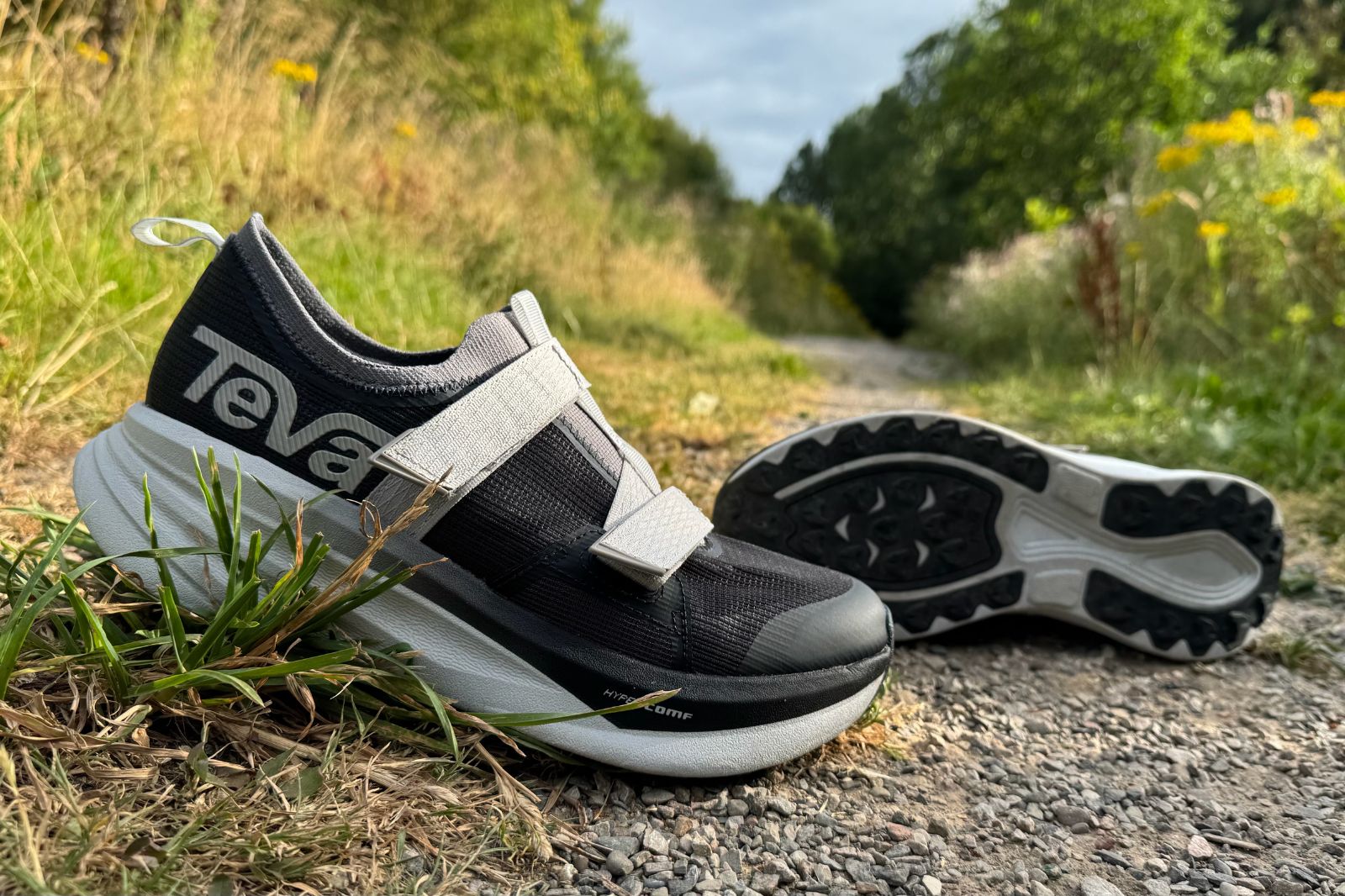
Spider Rubber outsole, Hyper Comf midsole, Nylon plate, W-strapping system
Available now for $160
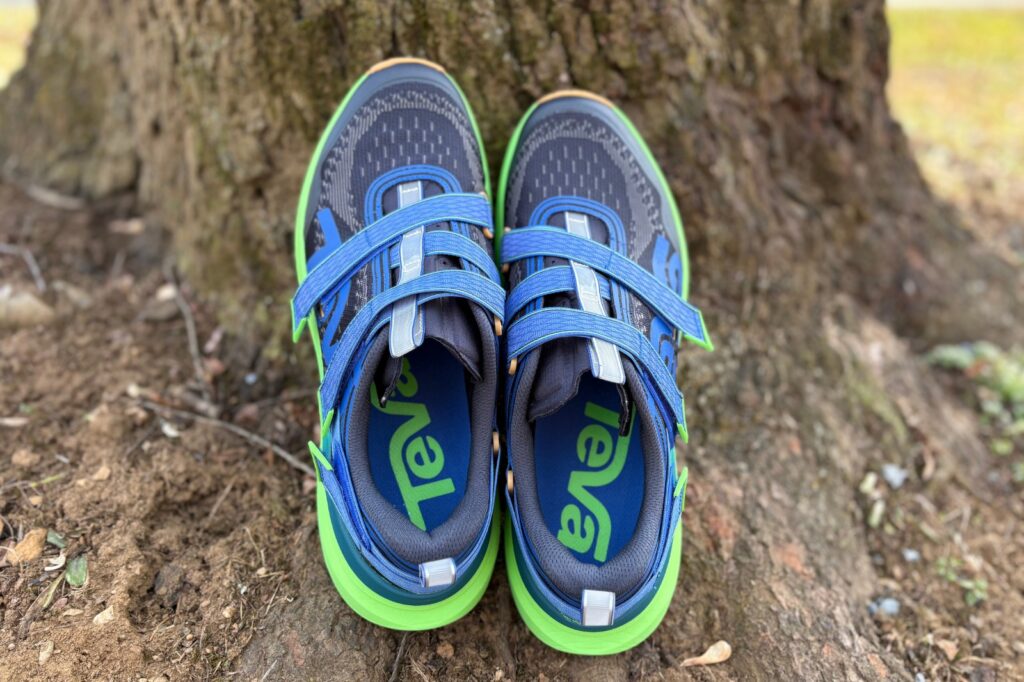
MELISSA: I’ll admit it — when I first saw the Teva Aventrail, I didn’t take it seriously. The Velcro immediately triggered associations with toddler shoes scattered around my house. A hook-and-loop system on a trail shoe felt gimmicky at best, and my own long-standing mental image of Teva, rooted in the ’90s sandal era, didn’t help.
That skepticism followed me right up until I took Aventrail out on the trail. Very quickly, it became clear that this wasn’t a lifestyle hybrid or trail-inspired casual shoe. The Aventrail is a true max-cushion trail runner with a high stack, a firm and protective ride, and a clear design goal: smooth out rough terrain and prioritize stability and confidence over speed.
I tested the Aventrail across technical trails, mud, smooth singletrack, gravel, and a few miles of road, and in every scenario it behaved far more like a traditional trail shoe than its unconventional appearance suggests.
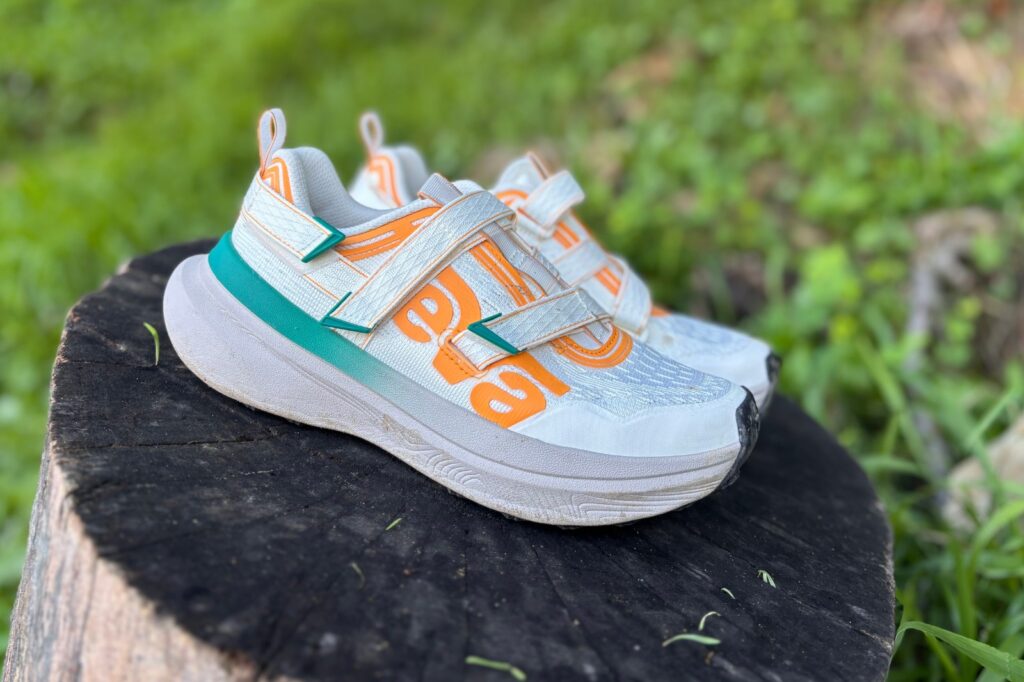
CHAD: No, your eyes aren’t deceiving you, your favorite Clydesdale shoe reviewer is now officially moonlighting in the Dirt Division! The year 2026 for me is all about trying new things, which includes getting into trail running and running my first 50K. I hope you all enjoy my part-time transition as much as I have! Trail running is a completely different animal, and I love it.
Now, on to my first trail shoe review. By way of background, I am 38 years old, a tried-and-true elder millennial, born in the late 80s but spending most of my childhood in the 90s. I was also born and raised in the backwoods of New Hampshire, so between those two things, I am MORE than well-versed in the brand that is Teva (except for the fact I always mispronounced it, saying Tee-Va).
Our summers in New Hampshire may have been short in duration, but you couldn’t go anywhere during those 3-4 months without seeing everyone and their mother rocking Teva sandals; you know the ones I’m talking about. Three straps: two on the top and one on the back, with cool designs emblazoned upon them. At a music festival? Tevas everywhere. Watching a performer wildin’ out with his Devil Sticks? He’s rocking them on his feet. Find yourself in a hacky-sack circle? You bet your sweet ass those Teva sandals would be as ubiquitous as the Nevermind CD in people’s Discmans.
I’m new to the trail running world and to the Dirt Division; in fact, the Teva Aventrail Shoe is only the second pair I’ve received to review. But I had the same initial reaction as Melissa; this shoe legitimately made me think of the ones I’ve been wrangling onto my kids’ feet for the last eight-plus years. But after watching the TRE interview that Taylor and Reese did with Nick Deneffe, Senior Product Line Manager at Teva, I was excited to give it a go.
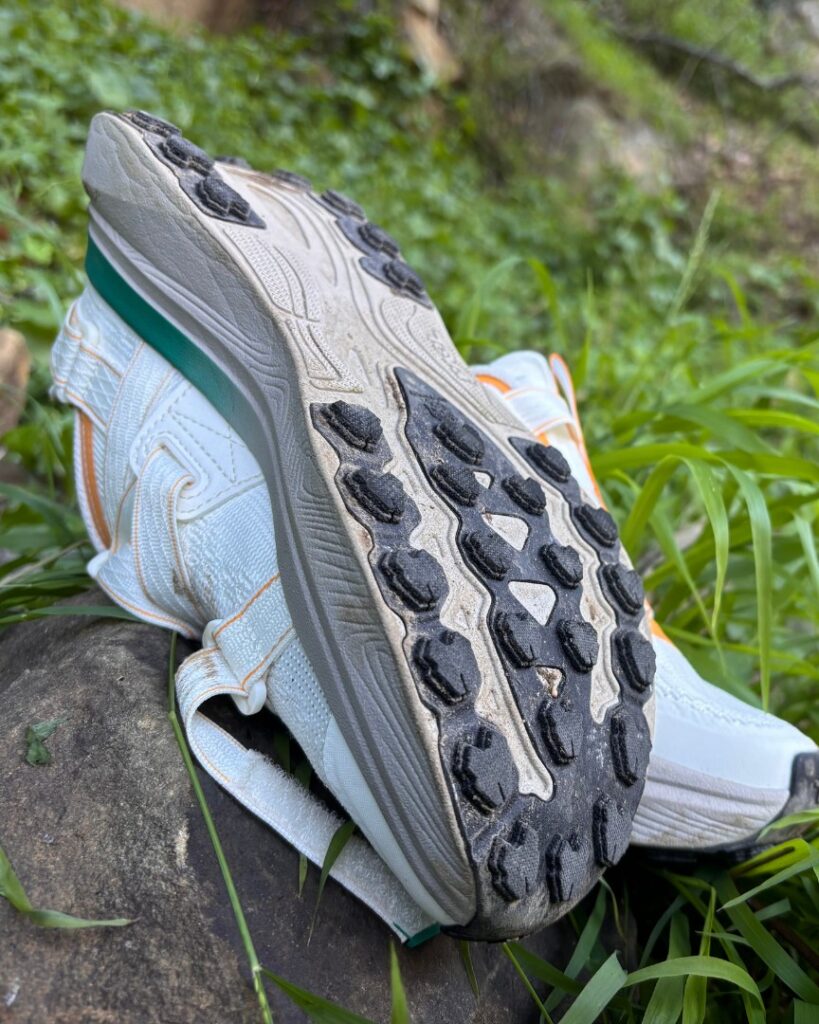
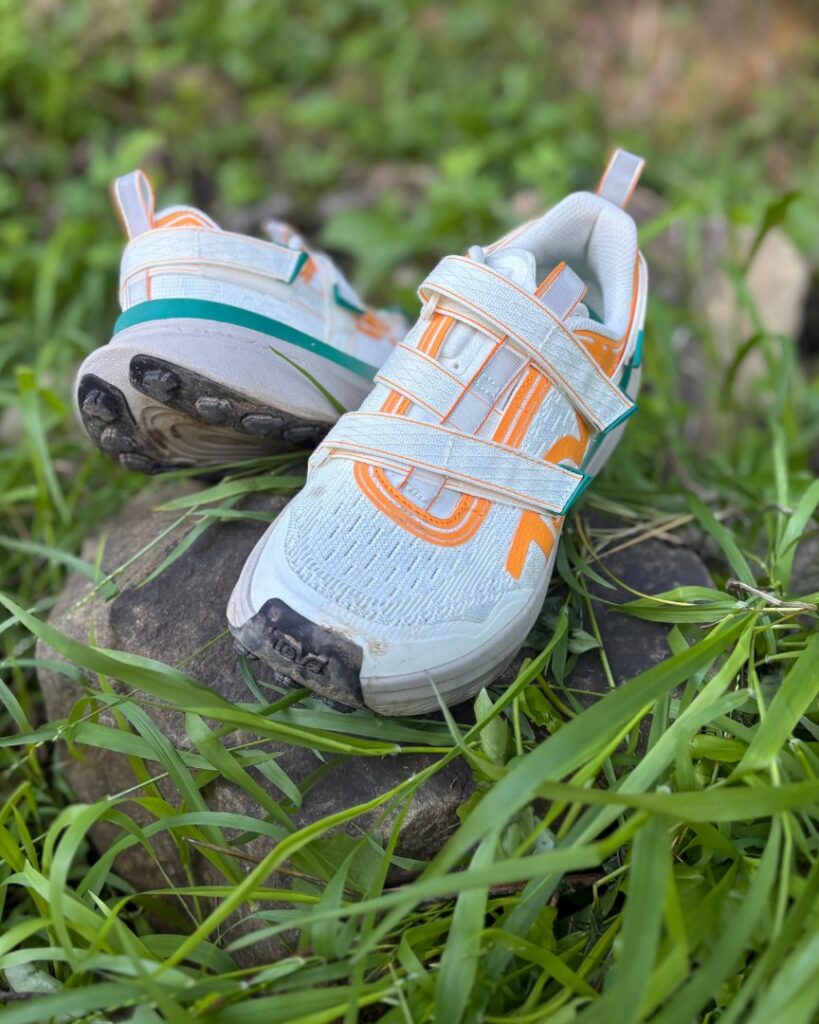
MELISSA: The Aventrail delivers a cushioned, stable ride that feels particularly well-suited to technical terrain and longer efforts. The higher-stack Hyper-Comf midsole provides great underfoot protection and does an excellent job smoothing out rocks and roots, even on descents, where the shoe feels confident and controlled. Despite the stack height, the platform never felt unstable or overly soft. Instead, it remained composed and predictable, offering a firm, supportive feel that inspired confidence on uneven footing.
Traction from the Spider Rubber outsole proved dependable across technical trail, mud, loose gravel, smooth singletrack, and short road sections, making the Aventrail a versatile option for runners who encounter mixed terrain in a single outing. Braking felt controlled on descents, and the outsole delivered consistent grip without feeling overly aggressive or specialized.
The mesh upper strikes a strong balance between breathability, support, and flexibility, allowing a natural foot movement while still feeling secure. Once dialed in, the hook-and-loop-based W Strapping System provided consistent lockdown through climbs, descents, and terrain changes. Beyond performance, the strap-based closure offers a meaningful accessibility benefit for runners who struggle with traditional laces due to dexterity challenges, arthritis, mobility limitations, or simply preference for a quicker, simpler system, the Aventrail offers a trail-ready alternative without compromising protection.
The shoe also feels solidly constructed throughout. From the upper materials to the outsole, nothing about the Aventrail feels flimsy or overly pared down. It gives the impression of a durable, high-mileage shoe designed to withstand repeated use across varied terrain.
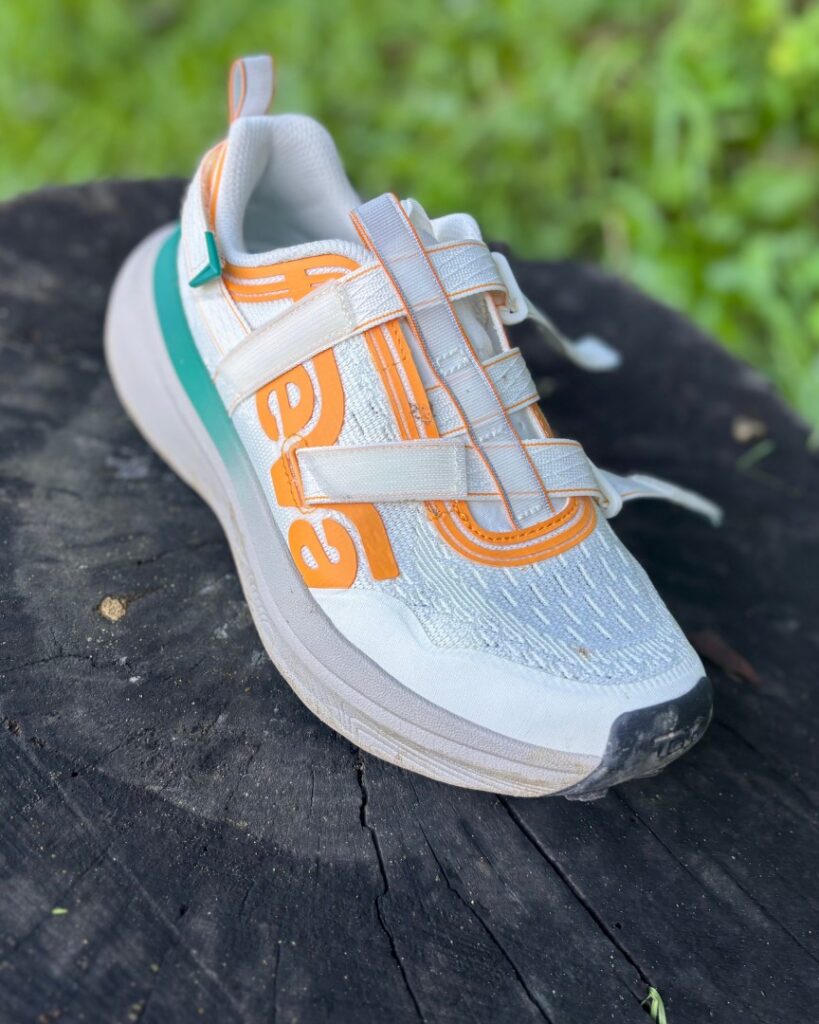
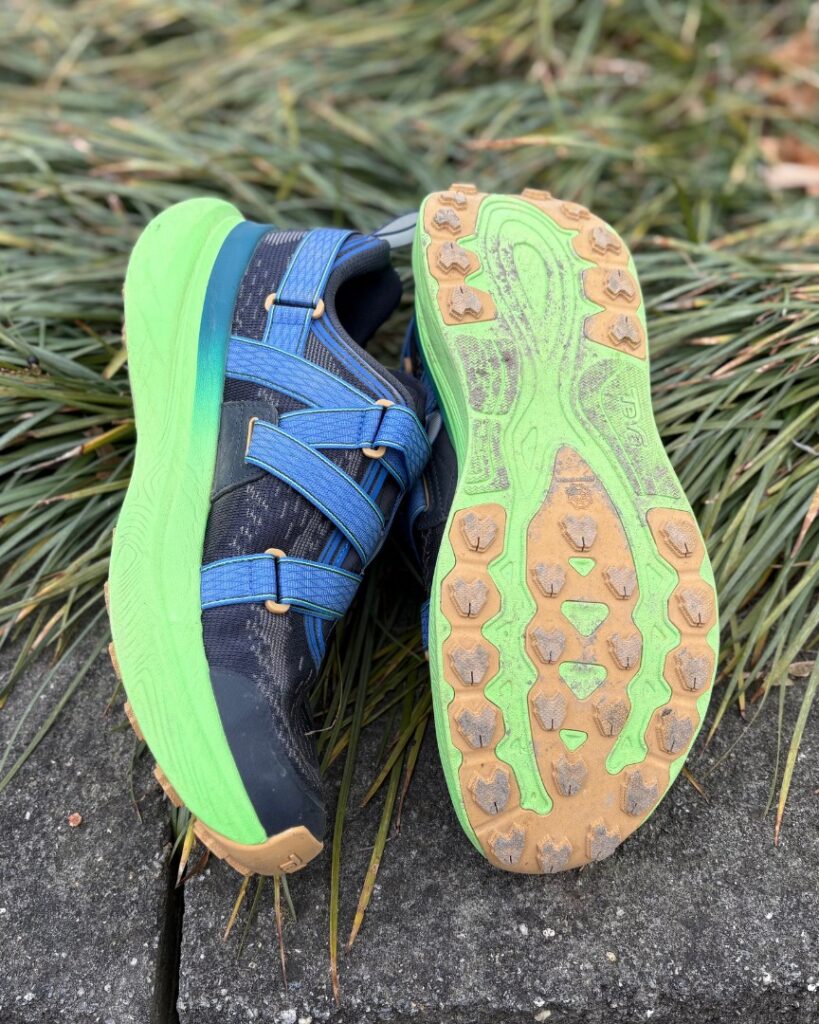
CHAD: So, even though my initial thoughts at first sight were a bit skeptical of the hook-and-loop closure system that Teva calls W strapping, there’s definitely a lot to like about the Aventrail Shoe. When I first got the shoe, held it in my hand, and gave it a squeeze, the Hyper-Comf midsole felt like it would be soft underfoot, but I actually had the opposite experience. The ride was actually fairly firm and rockered, making for a pretty smooth feel on the trails. That firmness led to a feeling of pretty decent stability underfoot.
The lugs are fairly small and do not cover the entire outsole; they cover only the heel and forefoot. This led to a very comfortable experience on gravel paths and non-technical dirt trails, making the Aventrail Shoe a viable road-to-trail or hybrid option. However, the Spider Rubber outsole felt like it would provide decent traction in many conditions you’d face.
The upper fit was accommodating, and the W Strapping System really allowed you to dial in the fit without worrying about the thing I dread most: lace bite. Running in this East Coast winter, I found the mesh fairly breathable, but my toes still ended up a bit chilly. But I’d much rather have chilly toes in the winter if it means my feet can breathe in the summer months, because to me that is paramount.
Shop The Shoe - Men Shop The Shoe - Women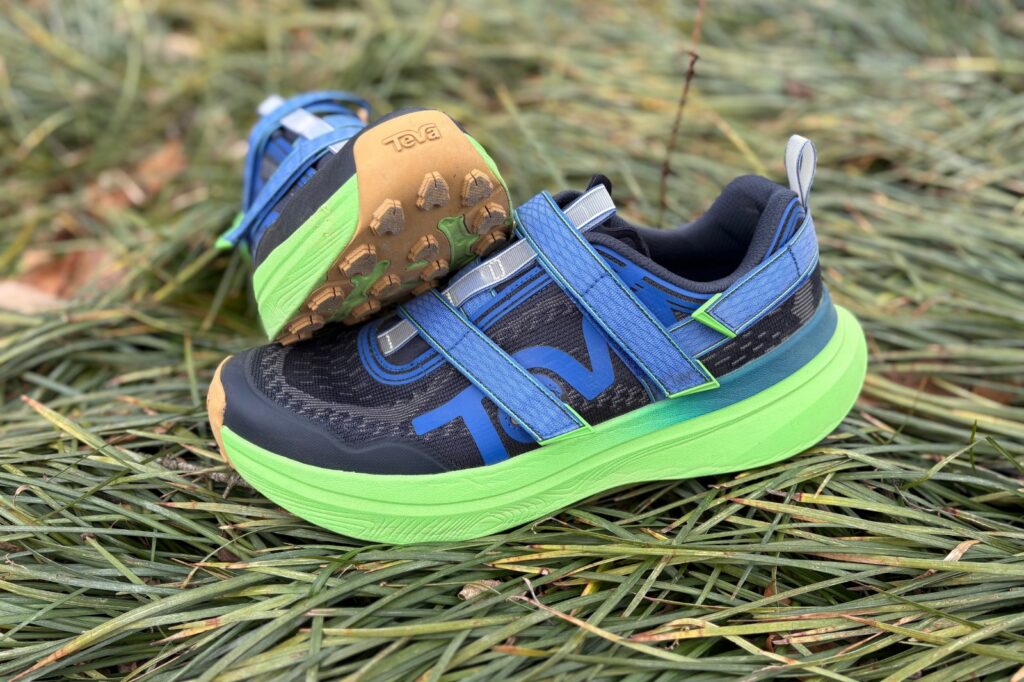
MELISSA: The W Strapping System comes with a learning curve and isn’t entirely “set it and forget it,” particularly on longer efforts as feet swell. With my wider forefoot, I experienced occasional toe numbness on longer downhills. Loosening the forefoot strap helped relieve pressure, but it compromised overall lockdown and heightened concern about lateral movement and potential ankle rolls. This highlights a key limitation of the strap system: it doesn’t offer the same level of micro-adjustment as traditional laces, which may be an issue for runners with wide forefeet or who are sensitive to descents.
The Aventrail also runs on the heavier side, and while that weight contributes to its protective, stable feel, it becomes more noticeable when trying to pick up the pace, particularly on less technical terrain. The ride prioritizes comfort, durability, and stability over responsiveness, making it less appealing for runners seeking a faster ride or race shoe.
CHAD: So that accommodating upper? Yeah, I think it’s a bit too accommodating. Even with the hook-and-loop straps really tight after multiple re-adjustments, I could feel my feet moving around quite a bit, especially in the heel. Melissa is correct that it takes some time to get the fit right with the strapping system; however, I never felt super confident that my lockdown was super secure.
The shoe also runs on the heavy side, with a US M9 weighing 11.3 oz. With the midsole foam being firmer and not bouncy, once the miles started to get up there, the higher weight became more noticeable. I understand that the strap around the back gives it the Teva aesthetic, but I think they could probably ditch it and shed some weight, since it doesn’t really help adjust the fit of the shoe.
I also have a really hard time with the shoe’s aesthetics. Between the velcro straps and the colors on the version I received (black/neon green/neon blue), this shoe looked like a shoe for a toddler, the Teva My First Trail Shoe. Certainly not a shoe I would look at in a retail setting and set my sights on.
Lastly, I’m not sold on the Aventrail as my go-to choice for more technical trails. Between the wiggling of my feet in the shoe (which hinders stability, even though the sole is stable), the smaller lugs, and the lug spacing, I felt like my footing was a bit dicey at times on the more technical sections of the trails I took it on.
Shop The Shoe - Men Shop The Shoe - Women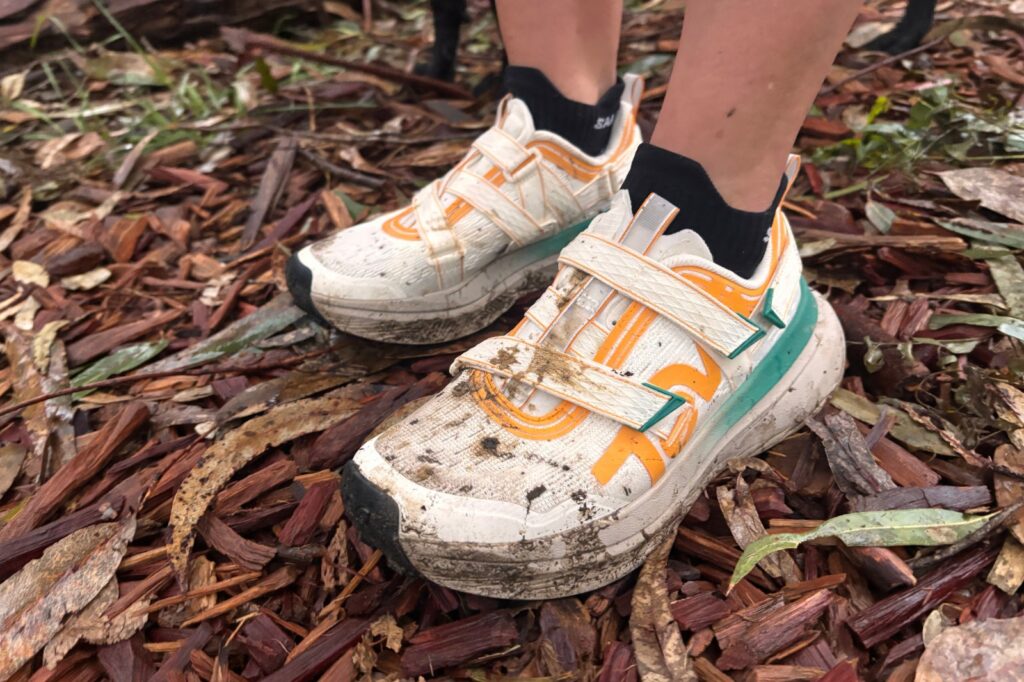
MELISSA: The Teva Aventrail is a serious trail shoe hiding behind an unconventional first impression. It consistently delivers a protective, stable, and predictable ride, performing well across all surfaces. The high-stack Hyper-Comf midsole smooths out rough terrain without feeling unstable, prioritizing confidence over speed.
The breathable mesh upper is thoughtfully designed and works well with the Velcro-based W Strapping System once dialed in. However, fit will be more nuanced for some runners. With my wider forefoot, I experienced occasional toe numbness on downhills. Loosening the forefoot strap could relieve pressure, but at the cost of overall lockdown, increasing concern about potential ankle rolls. This highlights a key tradeoff of the strap system: while accessible and effective, it doesn’t offer the same precision fit as traditional laces.
The hook-and-loop also comes with a short learning curve and isn’t entirely “set it and forget it,” especially over longer efforts. That said, once properly adjusted, it remained consistent across terrain changes. The strap-based design offers significant accessibility benefits for runners who struggle with traditional laces due to limited dexterity or mobility in their hands/fingers.
While the Aventrail isn’t lightweight or particularly “spunky,” its max-cushion build prioritizes protection, stability, and durability. The shoe feels solidly constructed throughout and capable of handling high mileage and various conditions without issue.
Choose the Teva Aventrail if you’re looking for a protective, stable trail shoe that performs reliably across mixed terrain and offers a non-traditional lockdown system. It’s best suited for moderate to technical trails, road-to-trail use, and longer efforts where comfort and durability are more important than speed. Runners who rely on precision fit and lockdown may want to approach with caution.
And if your mental image of Teva still lives in the ’90s sandal era, the Aventrail is a clear reminder that the brand has evolved, and in this case, evolved thoughtfully into the trail running space.
CHAD: There’s a lot to like about the Teva Aventrail shoe. If you’re looking for a shoe with an accommodating fit that runs on the firmer side in terms of midsole foam, with the ease and convenience of a strap system rather than laces, then this could be the shoe for you. I think this would make a solid road-to-trail, hybrid, or gravel option, and possibly light trail work; however, I don’t see myself taking this out in muddy (or currently, icy) conditions, as I’m a little wary of how it handled the even moderately technical terrain I was on.
You can pick up the Teva Aventrail Shoe for $160 from Teva by using the buttons below.
Shop The Shoe - Men Shop The Shoe - WomenHave something to say? Leave a Comment


An attorney by day, Chad lives in Central Pennsylvania with his wife and three kids. Never much for running growing up, Chad began running as a way to improve his physical health. He went from his first 5k in 2015 to running the Paris Marathon in 2016. Given his larger physical build, Chad is the resident Clydesdale runner, providing shoe and gear insights for those with a bigger build and taller stature.
More from Chad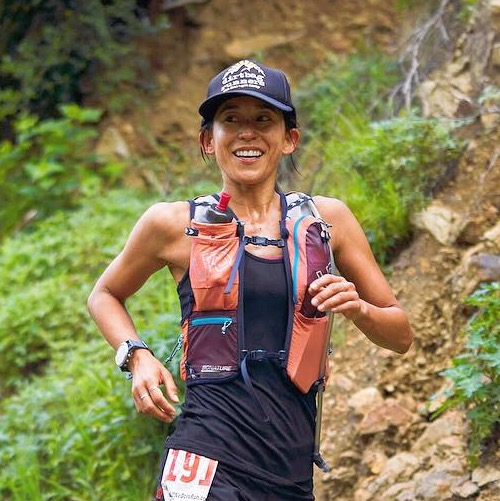
East Coast raised and West Coast trained, Melissa is now retired from racing ultras but still holds a deep love for long miles and time on trail. She’s currently doing what she can to delay a hip replacement, at least until completing a full lap around the earth, which she expects to hit in 2026.
Based on the Southern California coast, she now enjoys slower, easier miles, stroller runs, and time in the gym focusing on strength training. (And still sneaks in some spicy running when she can)
More from Melissa