Shop BITR Apparel Shop Now
We independently review everything we recommend. When you buy through our links, we may earn a commission.
Apparel and accessories from Raide Research
Each piece has been designed with female runners in mind.
$129-349, Available now
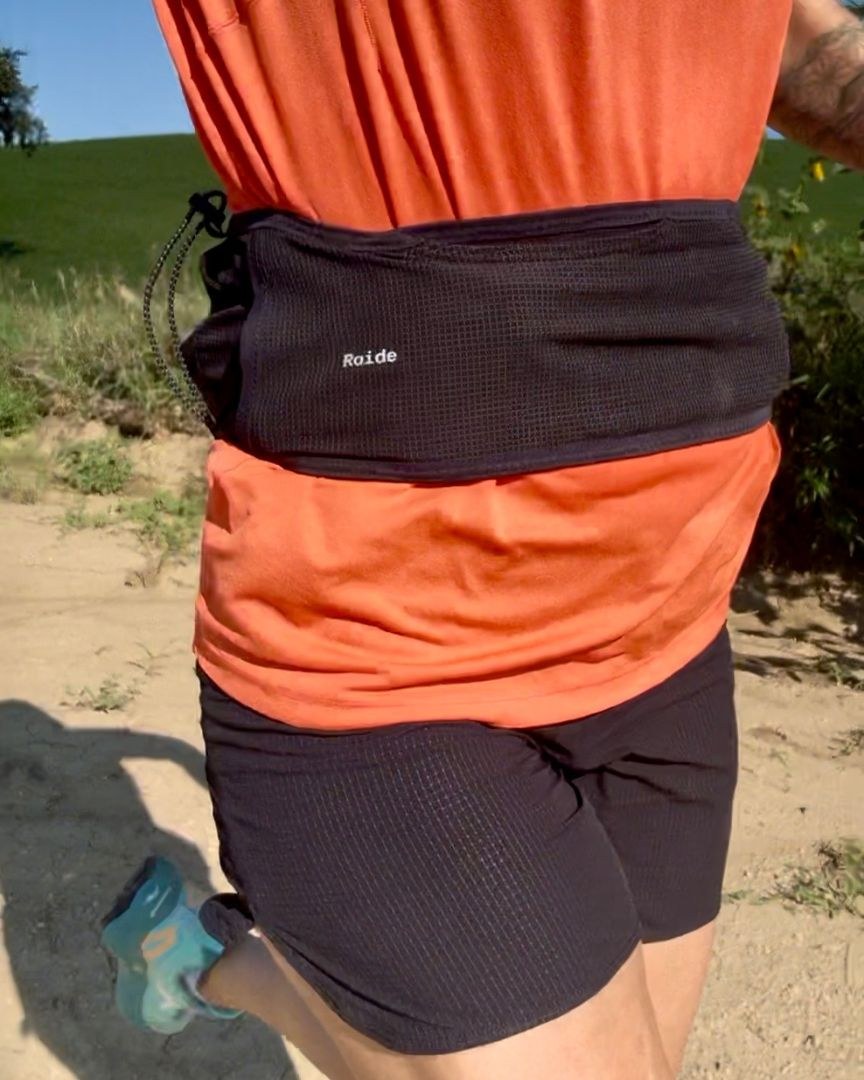
Raide Research is still a relatively small name in the pantheon of big-name outdoor brands, but that’s changing rapidly as they’ve been making big waves. The Colorado-based outfit first caught our attention with its packs before bringing that same engineering-based approach to running gear, most notably the LF running belt. That belt has since become a staple for a lot of trail runners, and it's notable how many more brands have since made a move toward the more structured, high-capacity belt concept that Raide helped bring onto the scene.
Until recently, Raide’s apparel and running systems were largely built for, and around, men. The expansion into a dedicated women’s line is welcome, particularly because Raide didn’t simply take the “pink it and shrink it” approach and call it women’s gear. The fit and construction have been thoughtfully reconsidered for women’s bodies, which matters a lot when you’re creating clothing meant to comfortably carry water, poles, nutrition, a phone, and everything else we deem necessary for the mountains.
The women’s selection is still a little limited compared to the men’s side of things, but hopefully this is just the starting point.
Also note that Raide sits on the high end side of trail-running gear. The prices won’t be for everyone. That said, the brand has developed a reputation for making gear that lasts. Their gear is aesthetically clean, thoughtfully designed, and, in my experience, built to last. This is no surprise, as the founder of the company has a background in mechanical engineering and performance outerwear design.
Now that women get their turn with the brand, Renee and I got to see whether Raide’s intentional design approaches translate as well when the gear is designed for us.
Price: $149
Running in the heat or layering
Integrated stow pocket, UPF 50 protection, micro dot air fabric
Cropped at waist, relaxed
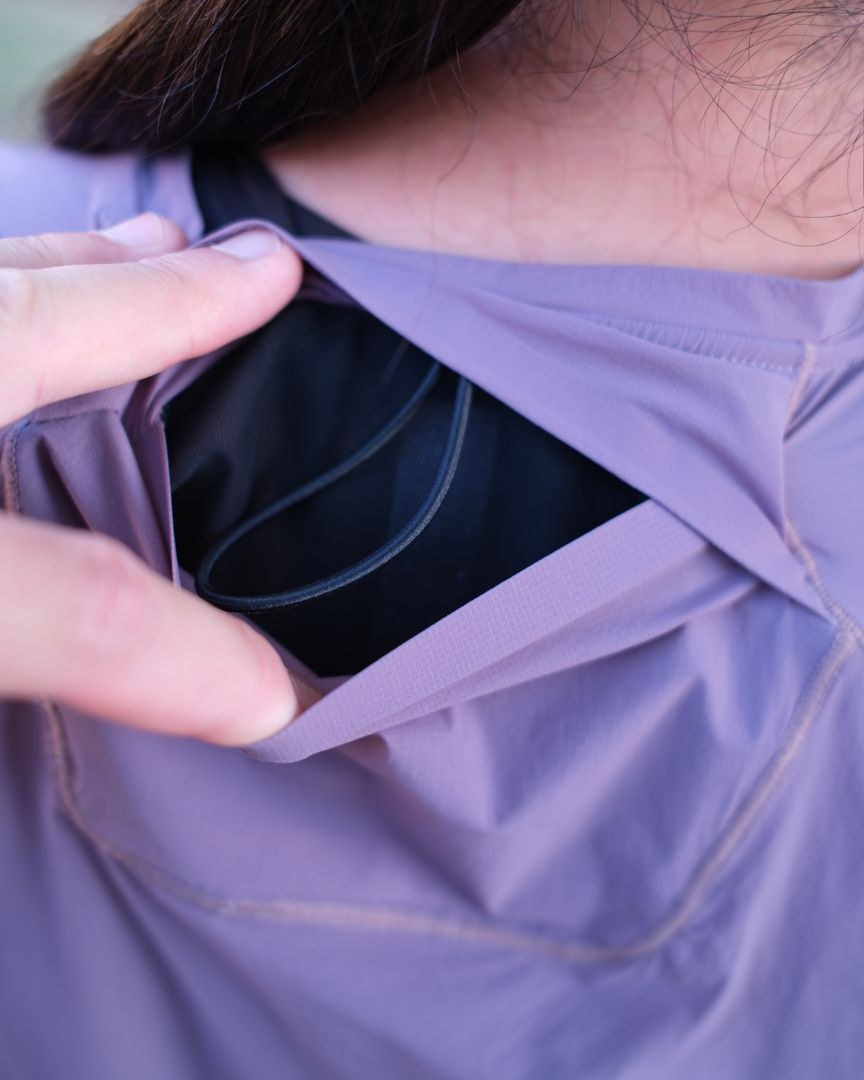
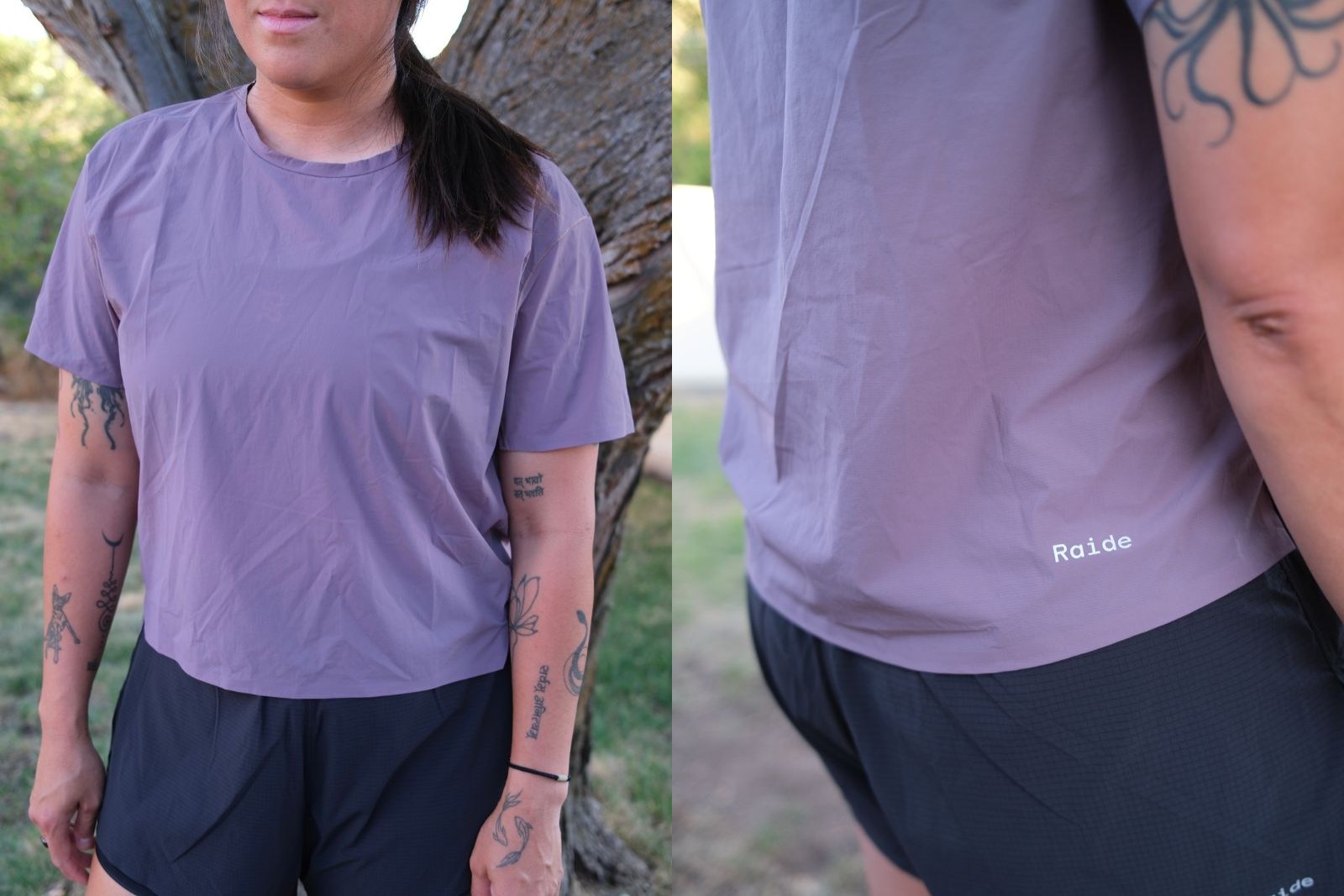
ALEX: The RaceTech tee is a super lightweight tee that does what it says it will do: disappear. When a shoe or article of clothing is described as disappearing on the run, it’s truly the best compliment.
This tee allows full freedom of motion with some added sun protection. The ice pocket is a nice touch, and works well if fully loaded with ice. I can also see the frozen sponge method working well for this particular design. It's a great detail, and the pocket doubles as a stow pocket if you want to take the shirt off and throw it in your belt. It also has pit vents to aid in cooling.
I wear a medium in this, and it fits well. It's roomy enough to not feel restrictive, yet not so boxy that it feels like there is excess material. I really like the cut and feel of this one. I also appreciate that the sleeves aren't cut so short that it feels like you are wearing a cap sleeve shirt.
Hopeful for more colorways in this one; would especially appreciate a black option!
Price: $169
Pairing with a Raide belt
5 pockets, 3-inch inseam, hidden bands for ice axes, poles, and more
Snug at first, takes a break-in period
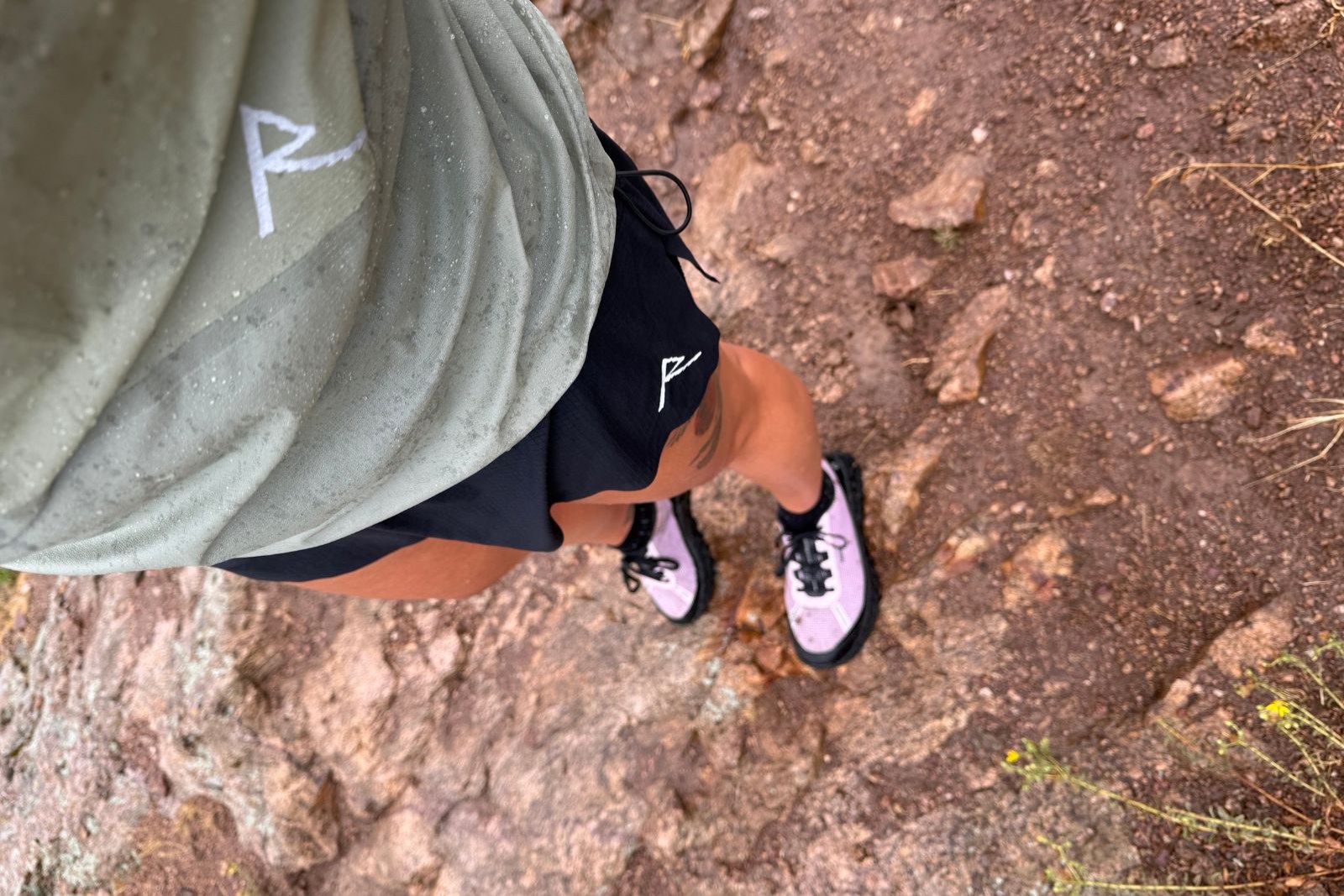
ALEX: I'm not gonna lie, the first time I tried these on, I immediately hated them. They felt way too tight when I pulled them up over my hips, and I hated how the waistband squeezed me in all the wrong places.
They stared at me from my pile of review gear for two weeks. Then, with the review deadline approaching, I thought, what the heck, I need to be able to say something more than "got them halfway on and abandoned them forever."
To my surprise and delight, after a few runs, they relaxed a bit, and on the third run, I didn’t even think about them. I can’t explain how or why this happened; I’m just glad it did. Now that we’ve learned to comfortably coexist, these are becoming the shorts I grab on every run.
The pockets and carrying capacity are fantastic, and nothing moves. In a good way. Thanks to that aggressively snug initial fit, nothing bounces around when you load up the pockets. I love the ability to carry everything without adding a belt or vest, especially on shorter to medium distance runs.
Even with a belt, the pockets on these shorts were designed to sit below the belt so you can use both simultaneously. In theory, you could carry a soft flask in your belt, one in your shorts, and a lot of other gear.
We didn't expect shorts with a break-in period, but now they fit just right.
The shorts feature five pockets: two large pockets, two gel pockets, and one zippered pocket in the back. They were designed to be accessible from the front or sides. I found the pockets to be functional, and as I said earlier, these shorts don’t budge on me, so loading them up lends itself well to a very secure ride. I like putting my key and a gel in the smaller pockets, and the larger pocket will accommodate a 360 mL soft flask. Or a big obnoxious iPhone.
Another thing I had to get used to was the liner. At first glance, I thought the liner might go a little bit below the hem of the outer shorts. This was not the case. They rode up a little bit, but ended up staying put once they found their place. The silicone grip on the hem of the liner is nice so that they don’t continue to ride up and become a brief. Again, it took a little bit of getting used to, but after a couple runs, I barely thought about it.
In addition to all of the pockets and internal carrying capacity, there are two elastic bands that allow you to carry an axe or trekking poles. Another great use for these is a jacket or layer that you want quick access to.
The overall design and construction of the shorts are very well thought out and consistent with the rest of Raide’s products. They feel durable and very high-quality.
I think they could greatly improve the accessibility of this product by increasing the sizes available and maybe adjusting that perforated waistband to allow for slightly more stretch. I understand what they are trying to do in creating a secure ride and replacing the need for a belt. However, they’re gonna lose a lot of people at that first try-on. It was not a pleasant first impression.
At $169, this is an expensive pair of shorts. If you think of it more as a belt-plus-shorts combo, which is what it is ultimately designed for, eliminating the need to carry things on your back, then maybe it’s easier to get behind that price tag. That being said, if the fit works for you, this could easily become your go-to running shorts, and if you maximize the use of those pockets, you can potentially skip buying that belt.
Price: $349
Outer protection
3-layer fabric from Japan, 5-micron PU membrane
Slightly relaxed for layering
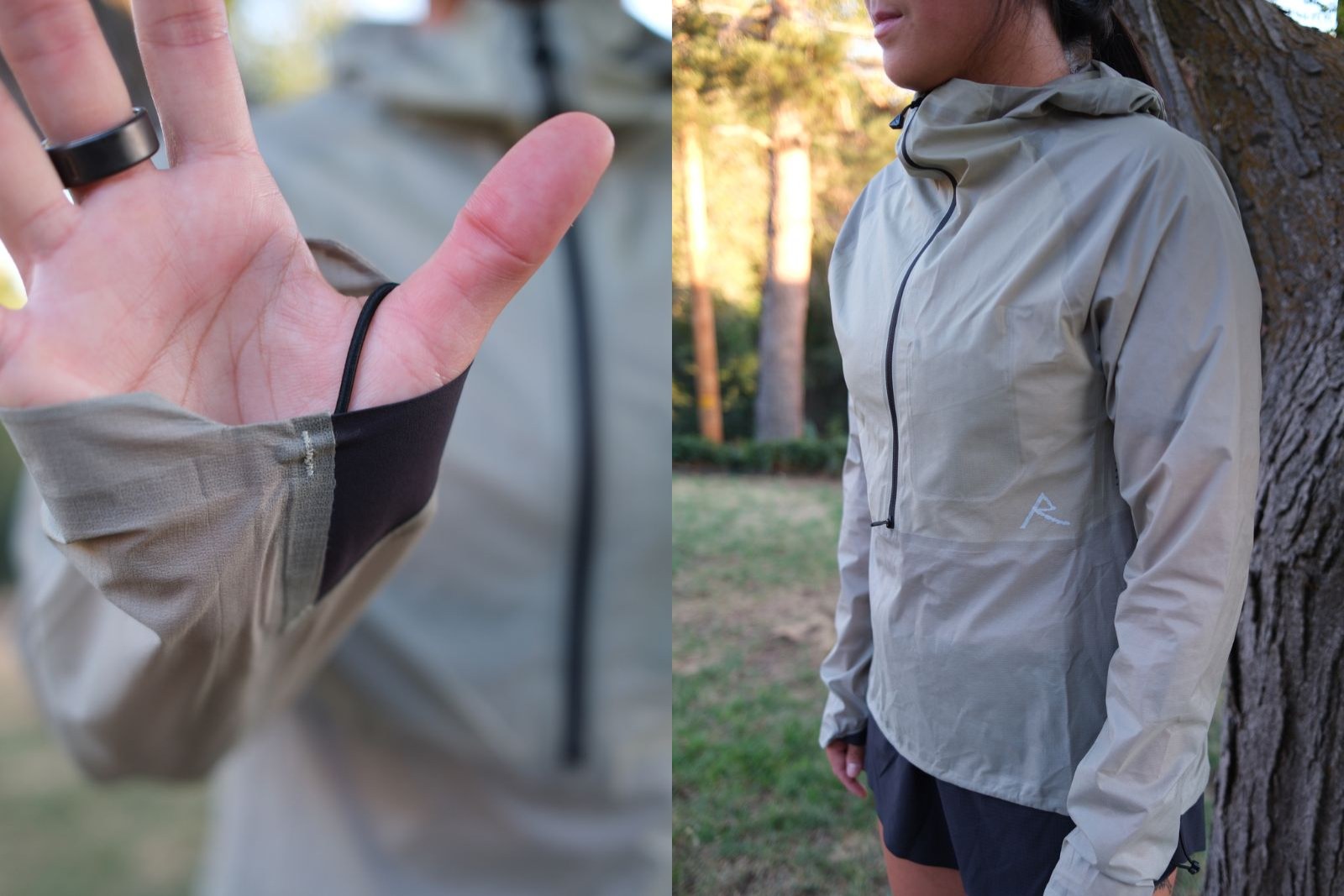
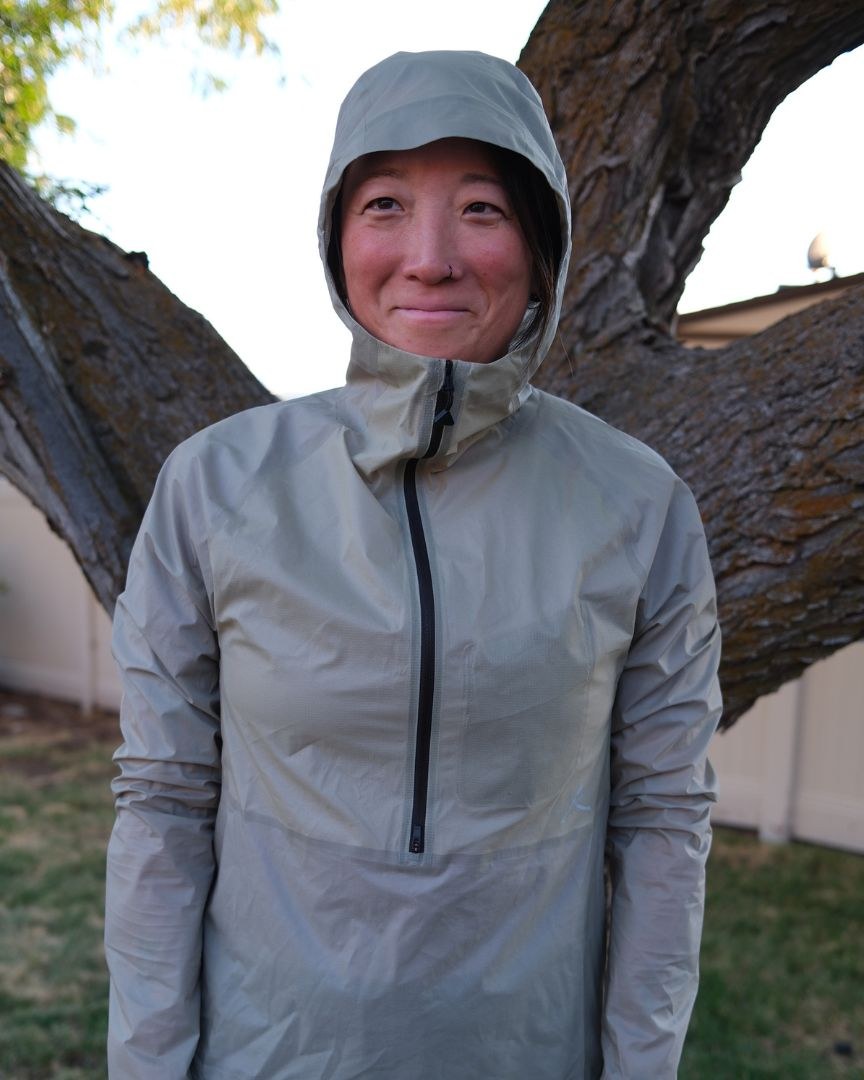
ALEX: I love the features of the Shell Anorak. The first things I look for in any jacket that I review are: 1) an adjustable hood, 2) a side adjustment at the bottom of the jacket, and 3) a two-way zipper. This one immediately checked all three of those boxes for me. The adjustable hood matters a lot when you're wearing different types of headwear, from helmets to hats to a headlamp.
I’ve had hoods that are highly protective but so big and baggy that they fall over my headlamp or that I have to hold down when it’s windy. This one adjusts effortlessly. The side adjustment also matters, as it allows you to cinch it up to be above a belt or loosen to accommodate more layers and/or pull it over a belt. I love the option to do either.
In a race setting, I typically tuck my jacket into my belt so that I can access everything. When the weather turns, however, it’s really nice to be able to pull it over everything and get some protection. Finally, the two-way zipper is wonderful for ventilation, especially in a half-zip pullover style like this one.
Speaking of ventilation, this piece breathes exceptionally well, despite the three-layer waterproof membrane. This is especially due to the ability to vent through the zipper, but is also aided by strategically placed laser-perforated venting. Whenever a jacket breathes well, I start to question its protective qualities. While I didn't spend hours in a storm in this thing, I did get it out a few times in a soaking rain, and the membrane performed very well.
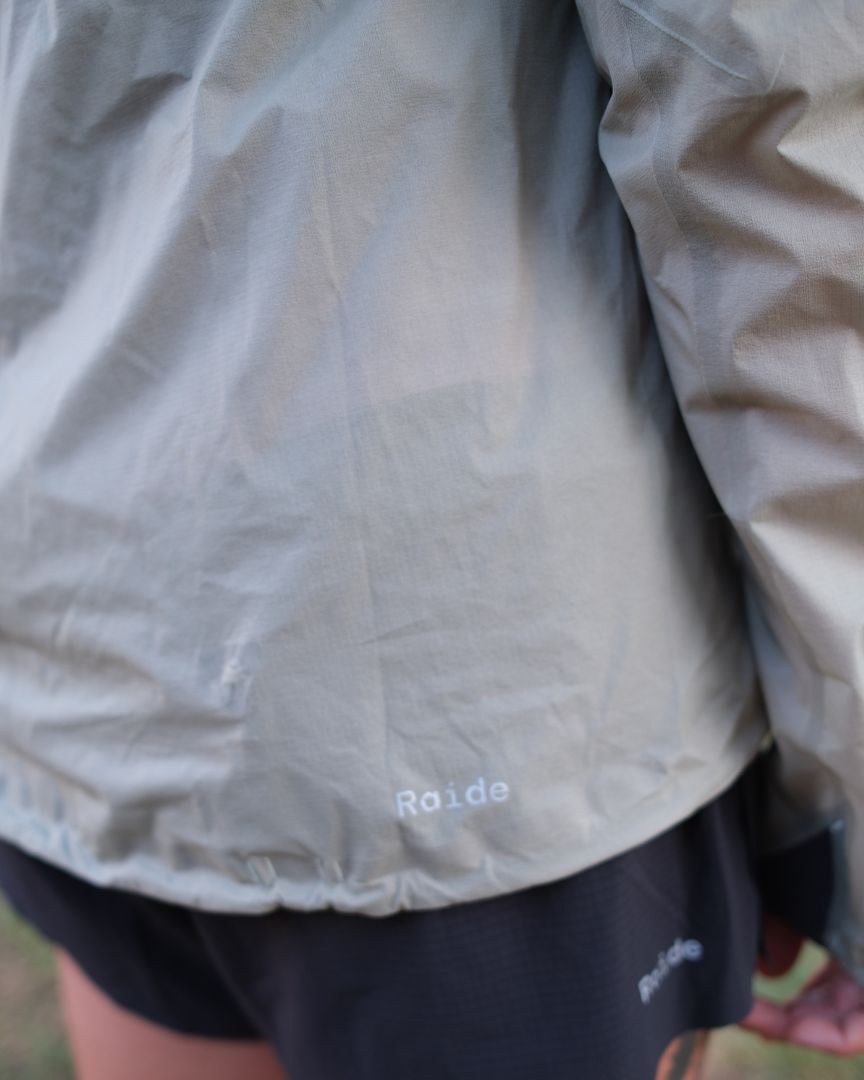
One thing I didn’t notice was that when I got a little sweaty, the innermost layer did feel a bit sticky against my skin. Not my favorite feeling, but also not a dealbreaker, as most of my shells do this.
The entire jacket stuffs into its own internal stow pocket and can be easily packed into a belt. It's impressively lightweight and packable.
At $349, this is an investment piece. This will absolutely be in my belt or vest 90% of the time moving forward. It's still going to have to prove itself over the coming weeks (hopefully bringing more storms) if it wants to become my “oh shit” jacket, aka that bombproof layer that will protect you from anything. For context, my current “oh shit” jacket is my Arc’teryx Beta AR. It's not this light or packable, but it has saved me in a lot of storms up high. Including protecting me (as much as a jacket can) from torrential downpours and golf-ball-sized hail at 13,000 feet.
Overall, the quality and intention behind this piece were evident at first glance and felt and appreciated over miles and when the weather turns quickly.
Price: $149
Race day, storage without a vest
Precise fit, no bounce, two stuff pockets, three zipper pockets
Women-specific, tapered at the top and bottom
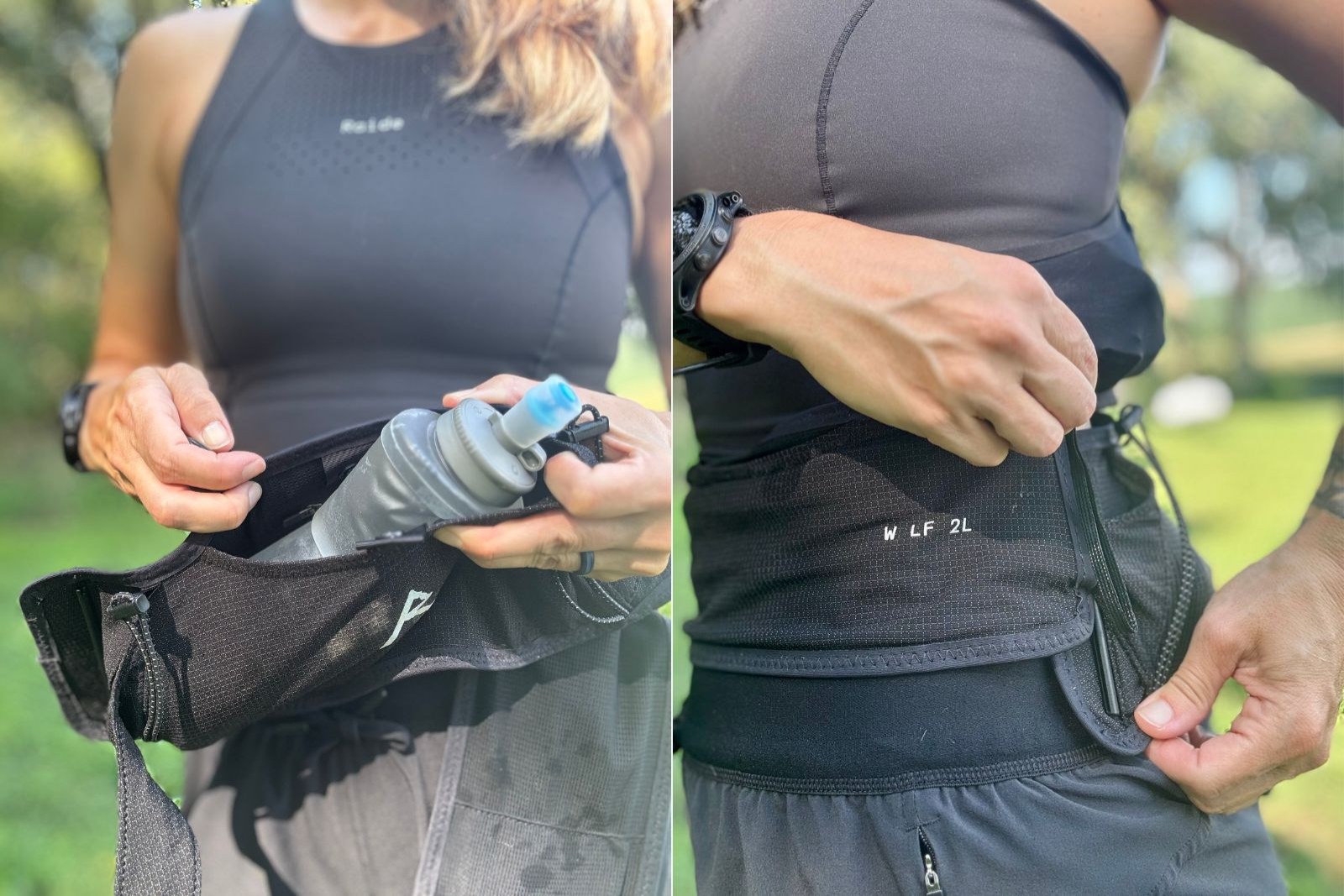
RENEE: I’ve been reading rave reviews of the Raide LF 2L Running Belt, but alas, I’m a vest girl. Even when I don’t need to carry max capacity, I’m normally choosing a vest over a belt. Why? I’m also picky about my shorts. I don’t like anything tight on my waist when running, and even several years after having two C-sections and a hysterectomy, I still don’t like anything tight-fitting between my belly button and scar. It’s uncomfortable and a recipe for GI issues. But if you want a women’s-specific review of a belt, well, here it is.
The Women’s LF 2L Running Belt addresses the issues I have with other belts, which feel overly tight, bounce, and tend to bunch up around my natural waist. I end up having to constantly adjust other belts, pulling them down to my hips.
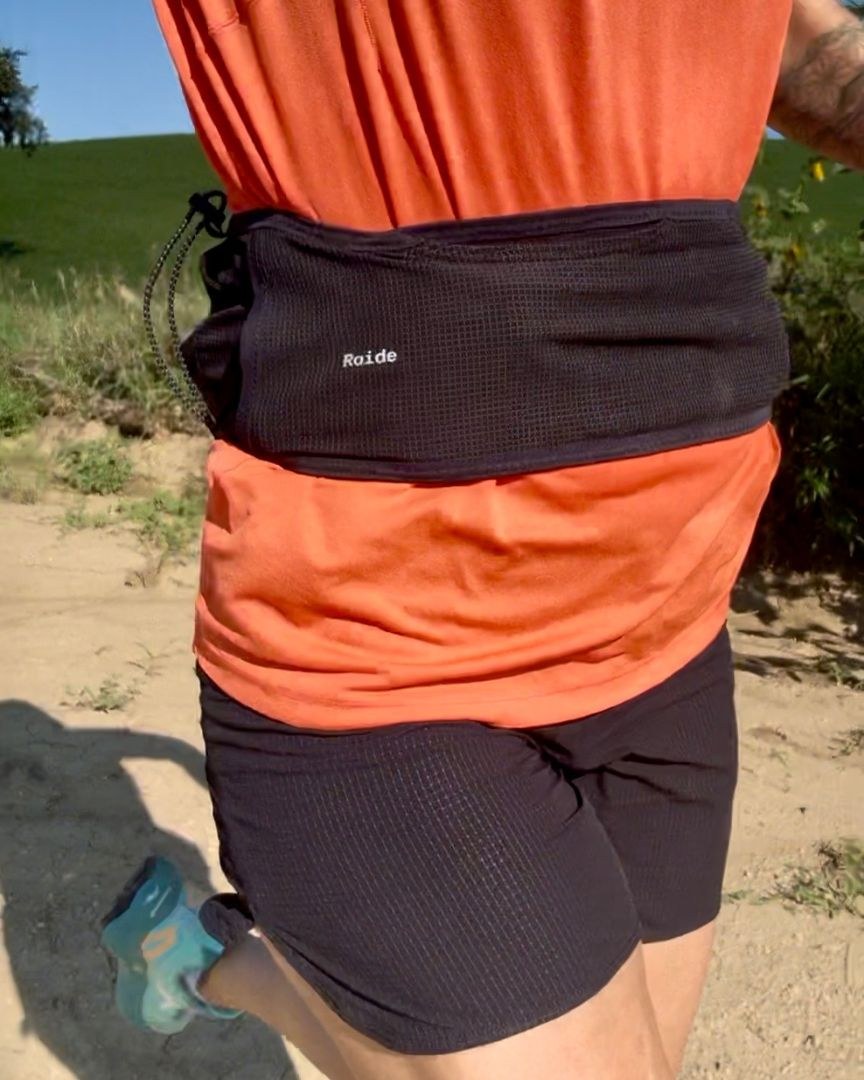
The W LF 2L stays in place. Problem solved. The belt has structure, and the tapered fit means no pulling down constantly and no bunching. I reviewed a size small, my usual size in running shorts. I have a few size small shorts that are becoming too tight in the waist, but I found the size small in the W LF 2L belt to be a great fit. If between sizes in shorts, the smaller size will be fine.
For capacity and items, I used the 650ml HydraPak flask stored in the back stuff pocket. The flask has a lock cap, which is a nice feature given that some flasks leak when shoved in open belt pockets. The back stuff pocket has one snap to keep the flask in place, but I left it open and had no issue with the flask bouncing around, even when almost empty. The back has a small zipped pocket too. The opening is about 8cm wide and about 6.5mm deep, just big enough for a key fob.
The front storage has another open stuff pocket with two top openings around 10.5cm. Getting my iPhone Pro Max in those pockets isn’t easy, but once it’s in, it’s secure and doesn’t bounce. I shoved my fuel (GoGo Squeezes, gels, and candy) in the open pocket as well. The sides of the front area are open, but I had no issues with the items moving around or falling out. The front has two zippered pockets, but I found those difficult to access while running. Both of those zipped pockets have a 11.5cm opening, with a 15cm length and 8.5 cm depth.
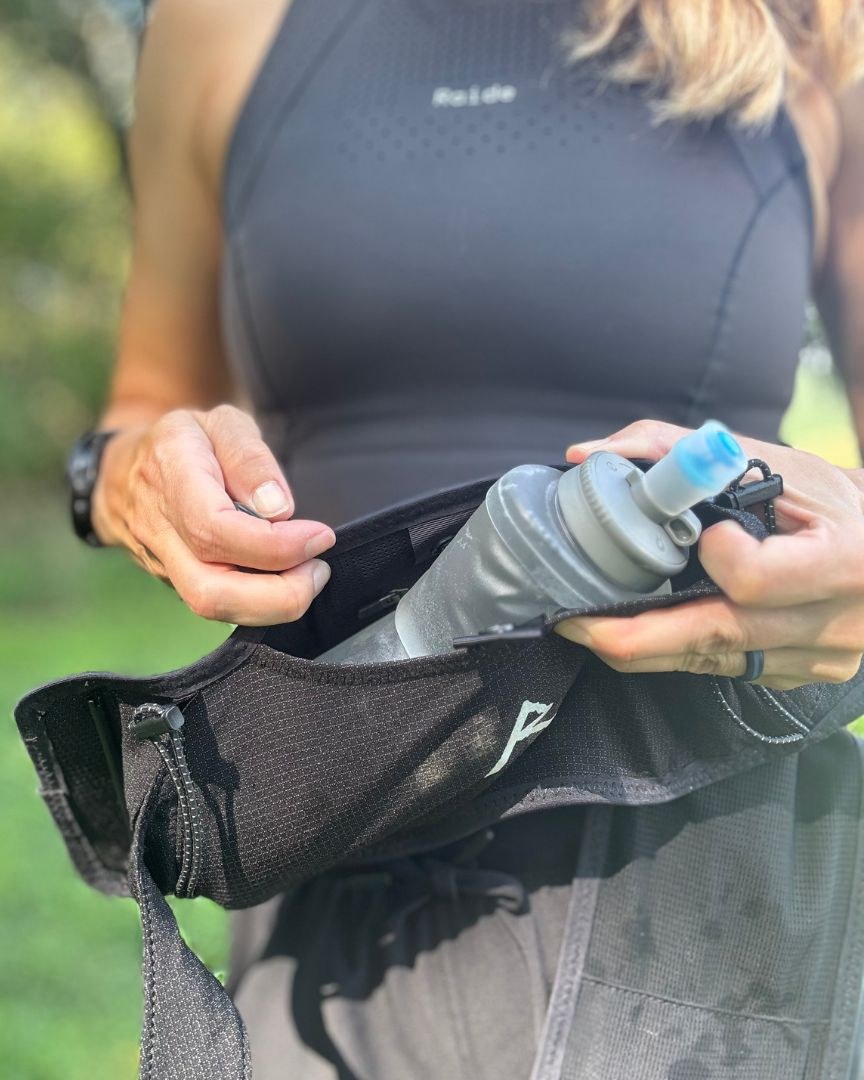
The Women’s LF 2L solves issues I have with other belts that bounce and bunch. With any piece of running gear, there’s some give and take. A few negatives might be the storage. Other belts (the CompressSport running belt or Instinct Reflex Belt) have completely open pockets, so you can shove a lot of items in with easier access to grab in comparison to this belt. Those belts are cheaper too.
I didn’t have any skin irritation when wearing a shirt under the belt, but the belt’s structure irritated me when I wore it with the TrailTech Cargo tank. Otherwise, these two items pair well together, and between them they reduce a lot of bulk across the chest in comparison to wearing a vest.
Possible negatives aside, the belt is the only one I’ve used that didn’t bounce or bunch. For women who have struggled with less structured belts in the past, or who have a notable difference between their true waist circumference and stomach (i.e., that beautiful area between the belly button and hips), the belt is worth the cost.
Price: $129
Race day, runs when you don't want a vest
Integrated bra, storage options, bounce-free (maybe), perforated ventilation
True to size
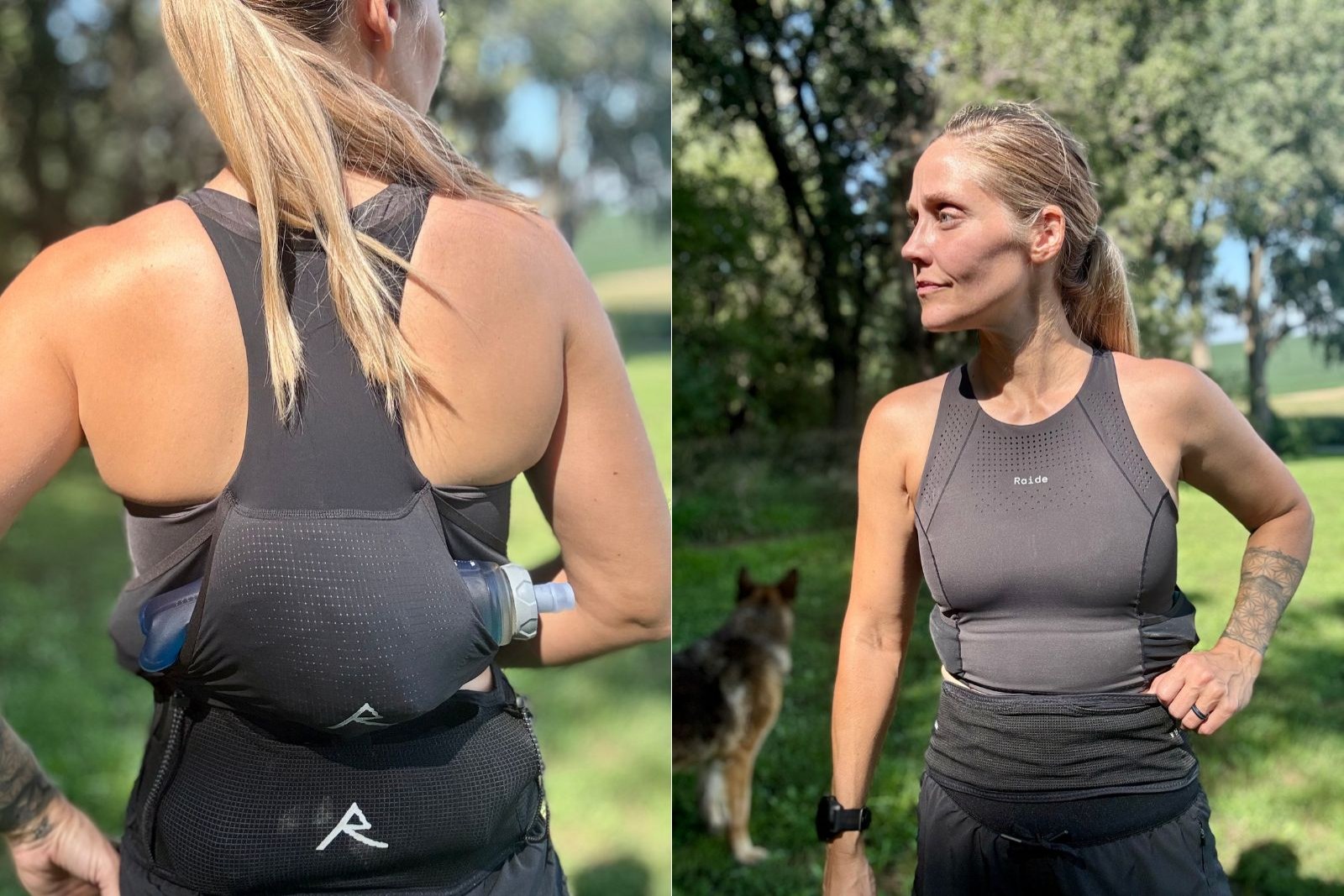
RENEE: It’s a bra. It’s a tank. It’s a vest. It’s... all of them? Well, sort of.
Let’s start with the most important feature, the integrated bra. I took one look at the TrailTech Cargo tank and thought, “Nope. I’m going to need to wear an actual bra under this.” But for the sake of review, I tried it without.
A quick sizing note: I reviewed a size small, my usual running top size. However, I normally need a size medium in a sports bra. This tank is tight, as in you might need a buddy to help get this thing off after a sweaty workout. While there’s not actually a “bra” integrated into this tank, it’s actually more supportive than I thought simply because it’s so tight.
The bra is more of a camisole, just an extra fabric integrated into the inner tank with a tight elastic band. You don't get padding or cups here. Again, because it’s so tight, I was able to get a sports-bra-like security. With a size medium instead of small, I probably wouldn’t be able to run with the tank.
For large or busty women, the integrated “bra” might not be enough support. I’d like to see the next version have seams separating the bra into two cups, maybe with padding. Not padding for aesthetic reasons, just something to keep the girls from bouncing. Again, I didn’t have support issues with the tank, but I think it’s because the tank was a very tight fit. Not uncomfortable, though, to clarify.
That covers the bra aspect. Now onto the tank and storage. The tank material is tight too, so while the “bra” feature isn’t much, I was getting compression from the tank as well. The tank has perforated ventilation on the upper chest, which was welcome while reviewing in the August humidity. Still, the tank felt hot. A lighter material would help, but at the risk of decreasing the compression, which aids in the breast support.
The tank has open pockets on both sides that extend some to the back. At the bottom, those pockets are only 7cm, so I thought my gels and fruit snacks would fall out. They didn’t. Again, the material is tight, so I did not have issues with small fuel items bouncing or falling out. The upper back has the perfect open pocket for my phone. The lower back has two overlapping pull-through slots. I stored a windbreaker on the outer slot and a flask in the inner slot.
Another improvement I’d like to see from the tank (aside from changes to the bra) is to make one of those pull-through slots narrower and more tubular, with silicone bands. I ran with a 500ml capacity flask, which started to slide out almost immediately. The 650ml flask that I got with the Women’s LF 2L belt fit better because it’s wider, but even then it didn’t feel secure.
The premise of the TrailTech Cargo Tank is awesome. Running with only one item, as opposed to three items (a bra, a shirt, and a vest), felt freeing. Slight changes to the bra integration and the back flask storage would be great and a major selling point for the $129 cost.
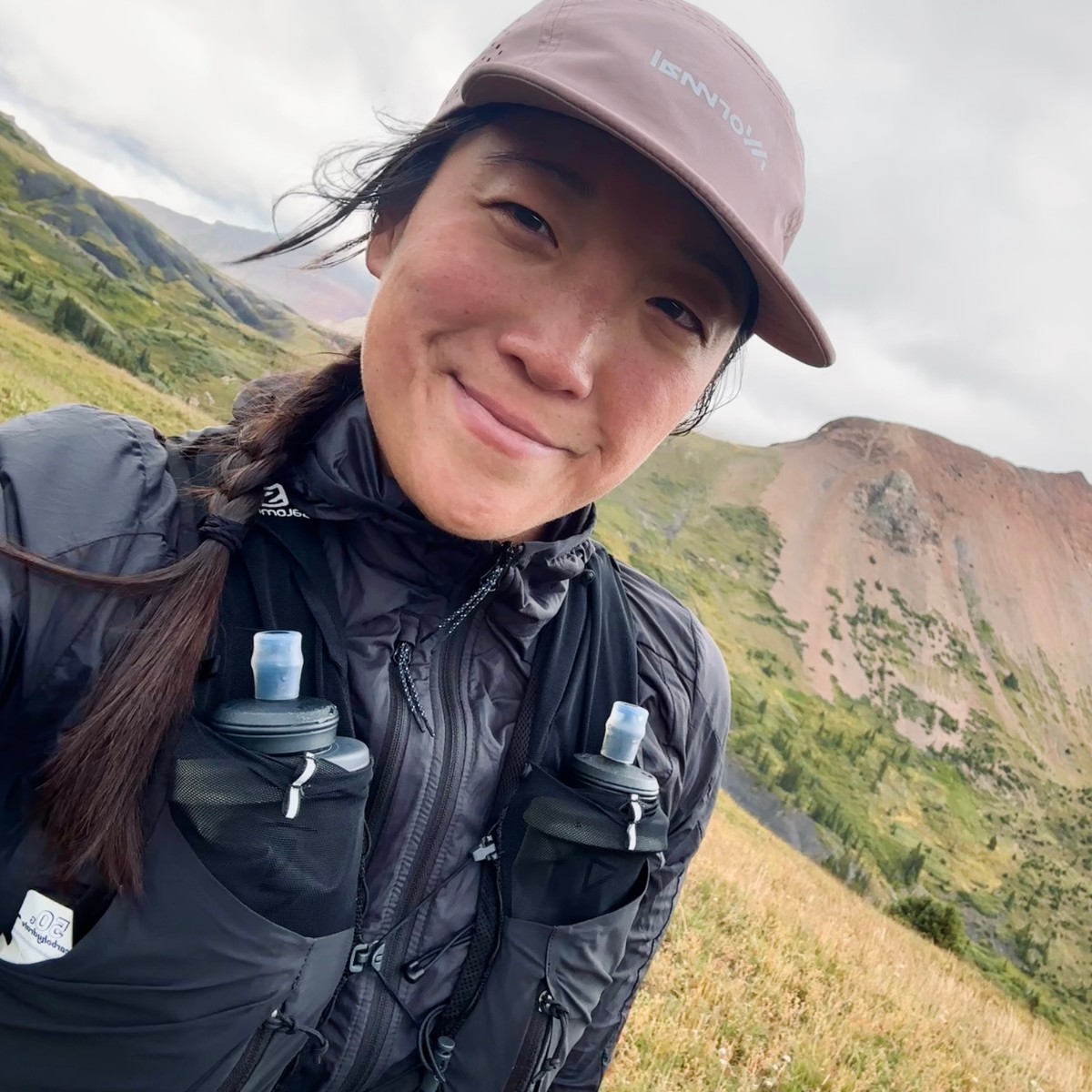

Alex is a trail and ultra runner originally from Minnesota, where she built her foundation on long winters and the rugged, rooty trails of Lake Superior’s North Shore. Now based in Utah, she trains along the Wasatch Front and continues to lean into long, multi-day efforts. She was the first female to set a supported FKT on the 310-mile Superior Hiking Trail and gravitates toward races that demand durability — especially in tough conditions, where sleep deprivation blurs the edges, and she’s learned to make friends with the hallucinations.
More from Alex
Renee lives in rural Nebraska and runs on gravel roads that may or may not be maintained depending on the time of year. If she’s not running on gravel or dirt, she usually opts to run trails instead of paved roads. Fun face: every Boston-qualifying road marathon she has registered for has been canceled.
More from Renee


Comments
The comment thread opens here when the post is live.