Shop BITR Apparel Shop Now
We independently review everything we recommend. When you buy through our links, we may earn a commission.
Our top picks for trekking poles
Options with different grips, collapsible designs, and bright colors
$209-280, available now
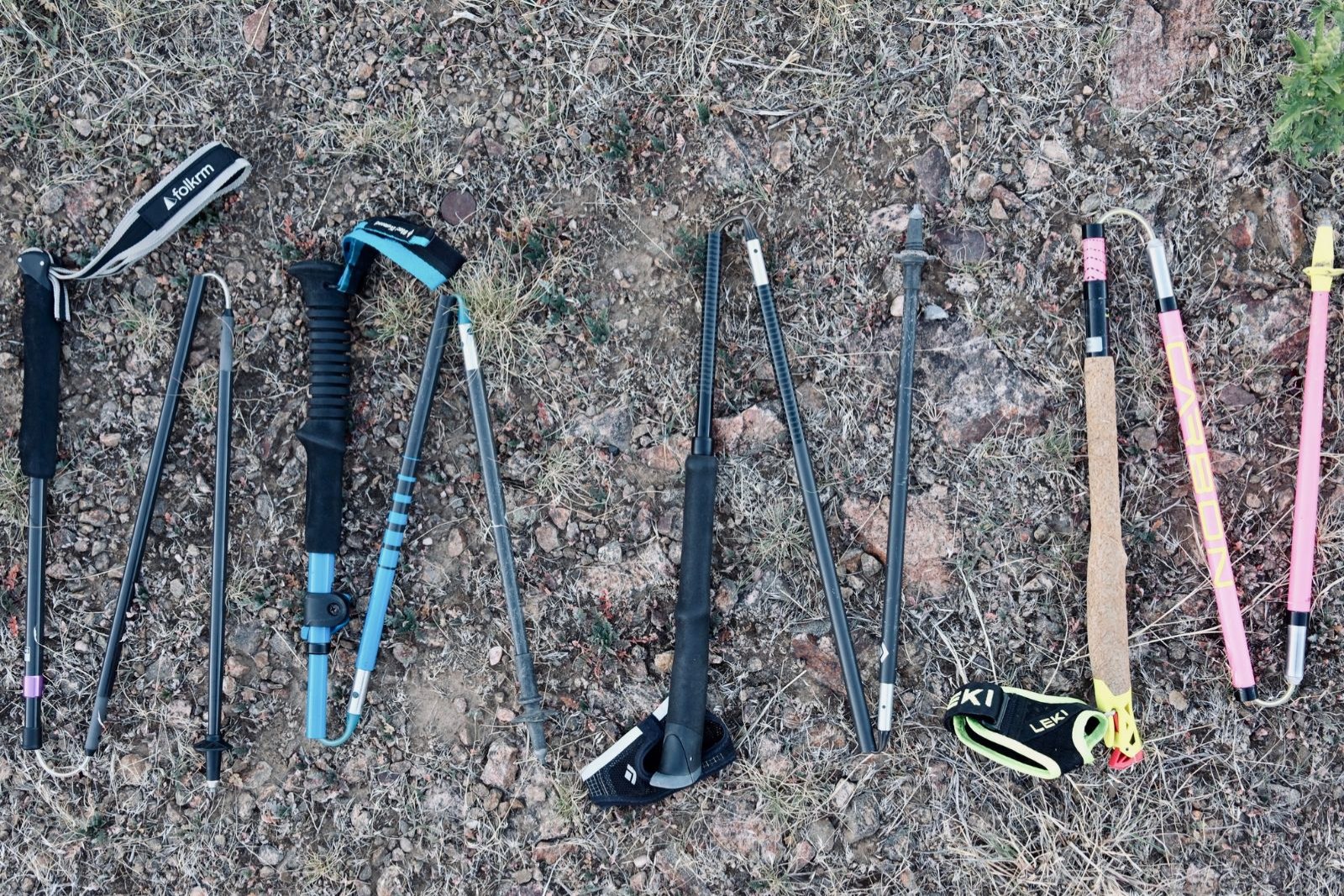
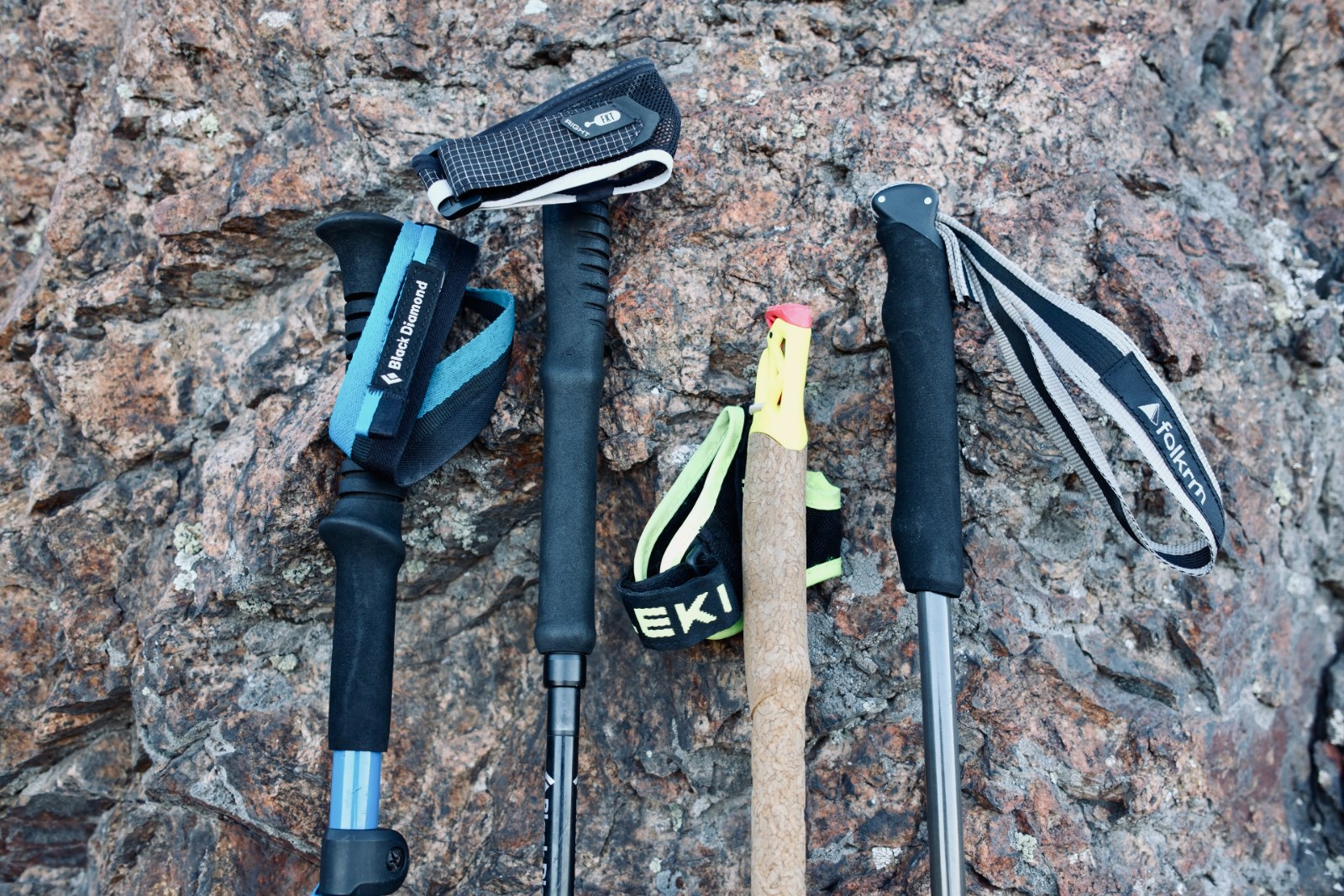
ALEX: Hot take: I love a good trekking pole. I strive to use them efficiently, but I know I often fall short. That's a lot of what happens in trail running; what can I say? I try to channel my inner Courtney while ascending steep terrain, though my reality is better characterized by fumbling to get poles in and out of a quiver or belt loops, tripping myself, or just carrying them awkwardly.
All that to say, design matters. Weight, grip, deployment, and storage can make the difference between poles being useful and just another thing that adds weight and requires management. Deep into an ultra, when you're reduced to sleepwalking your way through miles, all you want is simplicity, not a complicated problem you have no brainpower to solve.
Now that I've had the chance to put some of the best trekking poles on the market to the test, I wanted to share what I appreciate most about each, where they stand apart, and some considerations for your next adventure.
Price: $209
Ultralight simplicity and convenient storage
115g per 120cm pole
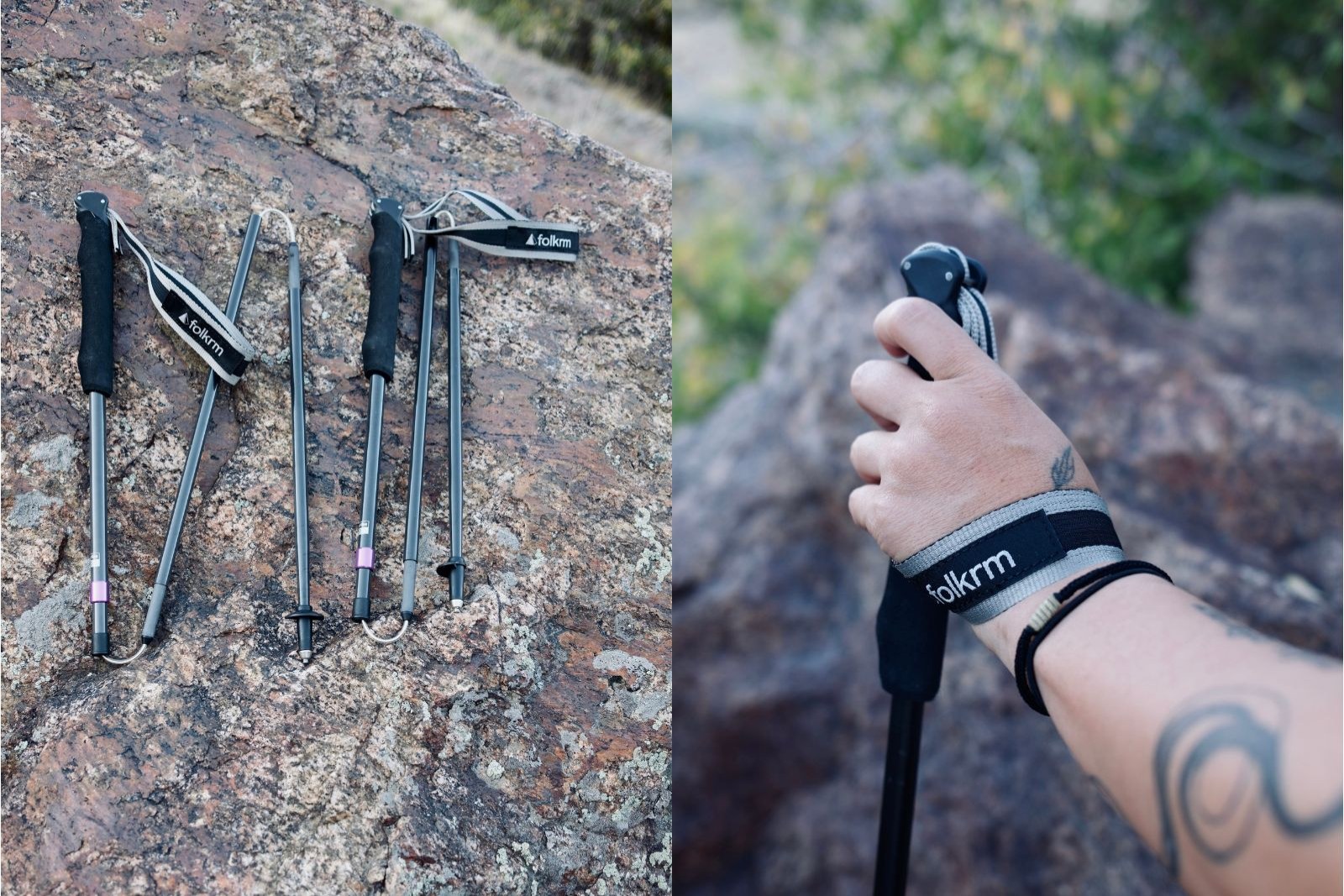
High-modulus carbon, three-section Z-fold design, adjustable double-backed loop strap, EVA foam grip, replaceable shaft sections, included pole quiver
ALEX: I put this one at the top not only because it’s the most recent addition to my trekking pole lineup — apparently I have a trekking pole lineup — but because it’s also my current favorite. The Folkrm Timberline combines a lot of what I love about the rest of ’em into one very well-thought-out package.
They’re incredibly lightweight (the lightest of all the following), weighing just 115g per pole in the 120cm length, but still feel impressively stiff and durable due to the high-quality carbon construction. They are also one of the few versions that I can easily slide in and out of a quiver.
I’ve been a fan of Folkrm's winter poles for a while, and I love seeing a smaller company extend that same thoughtful approach to trail running. The Timberlines fold down compactly, deploy quickly, and have a comfortable foam grip and secure, adjustable wrist straps. They come with a quiver, which I really appreciate because pole storage shouldn't necessitate an added purchase or some complicated setup.
I love when the details and use are thoroughly considered by a brand. Another detail I really like is that the lower and middle sections are replaceable. Trekking poles take a beating, and I have broken my fair share of carbon poles. Being able to replace a damaged section rather than an entire pole is a huge bonus on so many fronts.
Price: $250
Efficient climbing and secure grip
184g per 120cm pole
16/14 mm carbon, three-section Z-fold design, Trail Shark grip, detachable Shark Frame Strap Mesh, push-button deployment
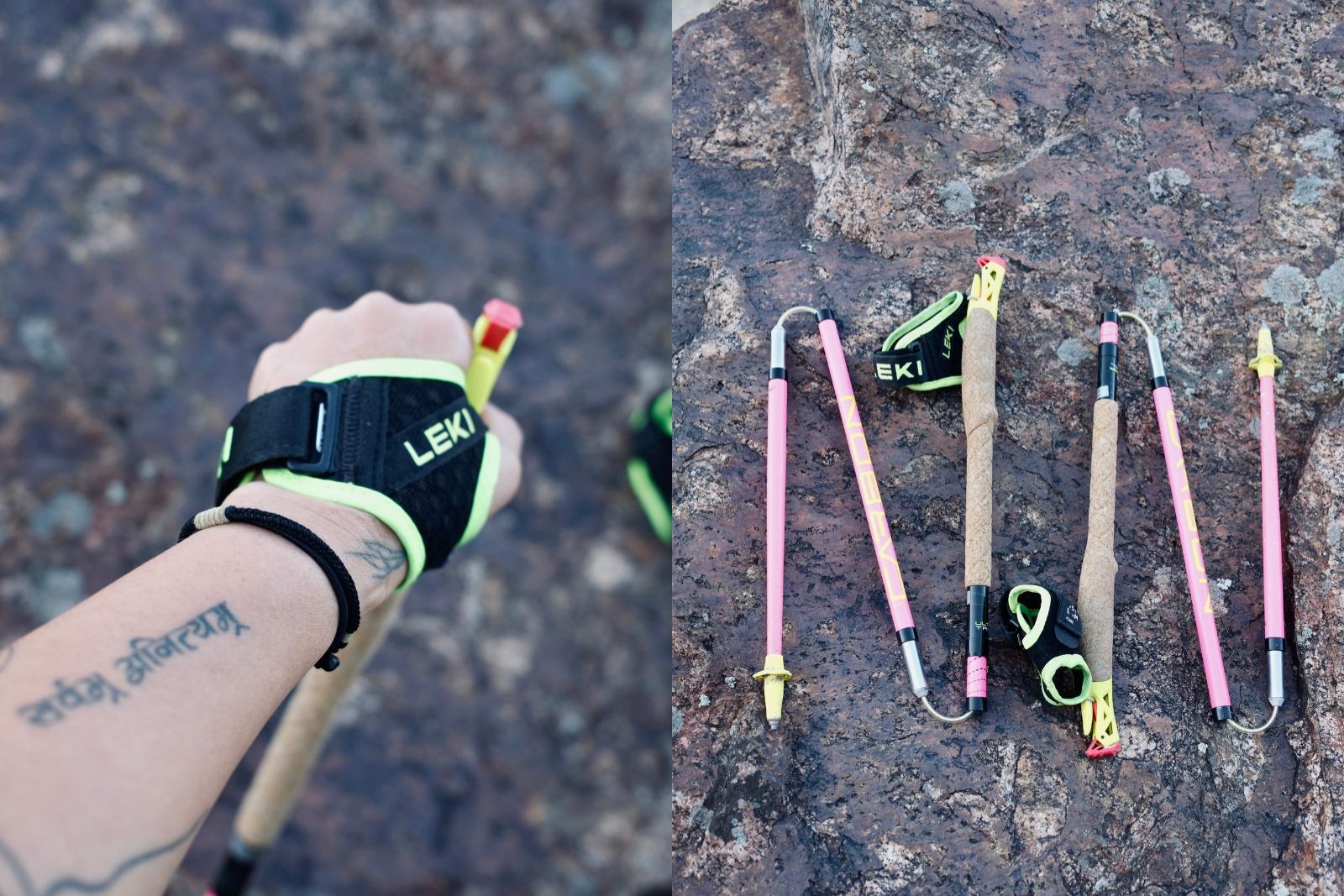
I was super excited to try these when they came out. The Leki Ultratrail FX One feels a bit like a Nordic ski pole strap due to the Trail Shark grip and strap system. The glove-like mesh strap clips directly into the pole, allowing you to push off through your hand and wrist rather than relying entirely on your grip. Which, over the course of many miles or multiple days, matters. The result is a more natural, rhythmic poling motion, particularly on sustained climbs. This also produces more power.
The quick-release mechanism also (in theory) makes it easy to disconnect from the poles without removing the straps. I find that keeping the straps on also prevents me from forgetting my poles at aid stations or leaving them behind after a quick dirt nap.
When the click in/out Trail Shark grip works, it works well. The things that interfere with it working include dirt, dust, sweat, and frozen sweat. Have had multiple instances where the cord that clicks in gets a little swollen with gross, dirty stuff and doesn't readily click in or out. Enter the meltdown/small tantrum…
Price: $240
Adjustability and versatility
168g per 110-125cm adjustable pole
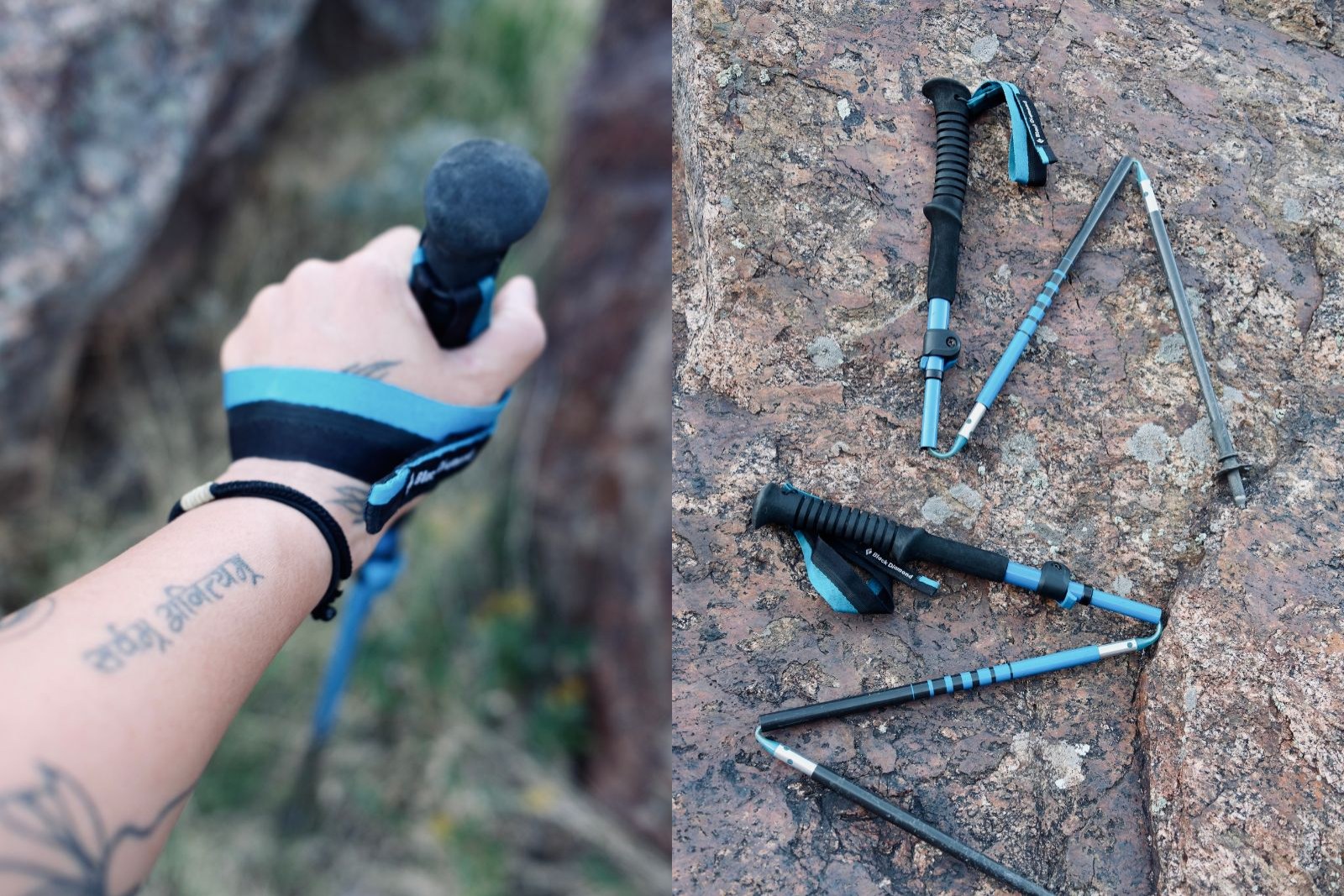
100% carbon, three-section folding design, FlickLock+ length adjustment, EVA foam grip and extension, breathable recycled nylon strap, interchangeable carbide and rubber tips
ALEX: These are my tried-and-true trekking poles. I was talked into a pair of these at the 2021 Hardrock pre-race gathering and have been using them religiously ever since.
I love the reliability and adjustability of these. These were also the poles that first made me realize I prefer a longer length than typically recommended based on my height. I felt like it not only helped on the descents, but on the climbs as well.
These have the same z-pole three-section folding design as the others. The FlickLock+ is super easy to use and adjust on the run. The nylon straps are really straightforward, and I especially like these when I know I'm going to wear a thicker glove or mitten. For thin gloves, the Leki and Black Diamond Z FKT pole strap is fine; it just gets more cumbersome as you wear bulkier gloves.
These are the poles I bring to the San Juans every summer. Love them and will always have a set of these in my lineup.
Price: $280
Simplicity and quick transitions
156g per 120cm pole
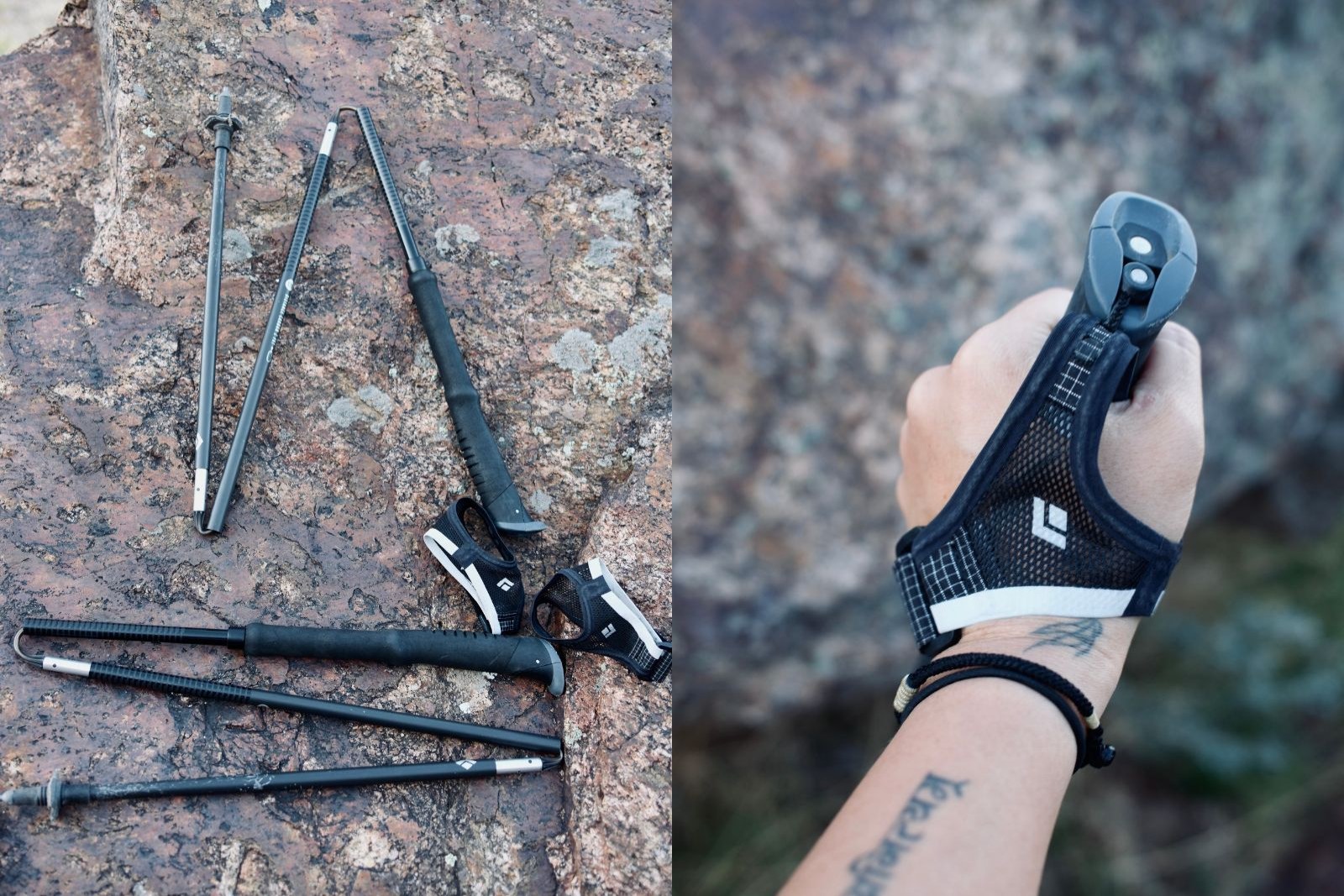
100% carbon, Z-fold construction, ultralight glove-style strap with quick-connect attachment, EVA foam grip and extension, speed-cone deployment, interchangeable tips
ALEX: Black Diamond Z-poles (above) have been a consistent piece of gear in my pack for the past decade. The Z-pole construction is incredibly light and is one of the quickest systems to deploy and stow.
This is my first experience with the FKT model, and after using it, I’m not sure I can go back.
The Distance Carbon Z FKT Poles swap the traditional strap for a lightweight mesh glove, which noticeably improves power transfer. While LEKI has leaned into this style with its Shark system, Black Diamond’s execution feels dialed in. It’s more minimal, more breathable, and overall just easier to use.
Early on, the magnetic quick-connect system felt smooth and intuitive, but deep into Cocodona, I found myself fumbling with it. By mile 230, when I was exhausted and mentally cooked, clipping in and out stopped feeling seamless and started becoming frustrating. It’s one of those systems that works well when you’re fresh, but in a long, multi-day race where coordination and patience start to disappear, I found myself wishing it were a little simpler and easier to manage under fatigue.
I especially appreciate the tapered shape of the collapse button compared to the traditional round version. It's a small change, but it makes the button easier to engage, particularly when I'm tired, have cold, puffy hands, or am trying to collapse my poles quickly.
Shop Black Diamond Distance Carbon Z FKT
I have developed some relatively strong opinions about trekking poles. And have acquired enough pairs to justify those strong opinions.
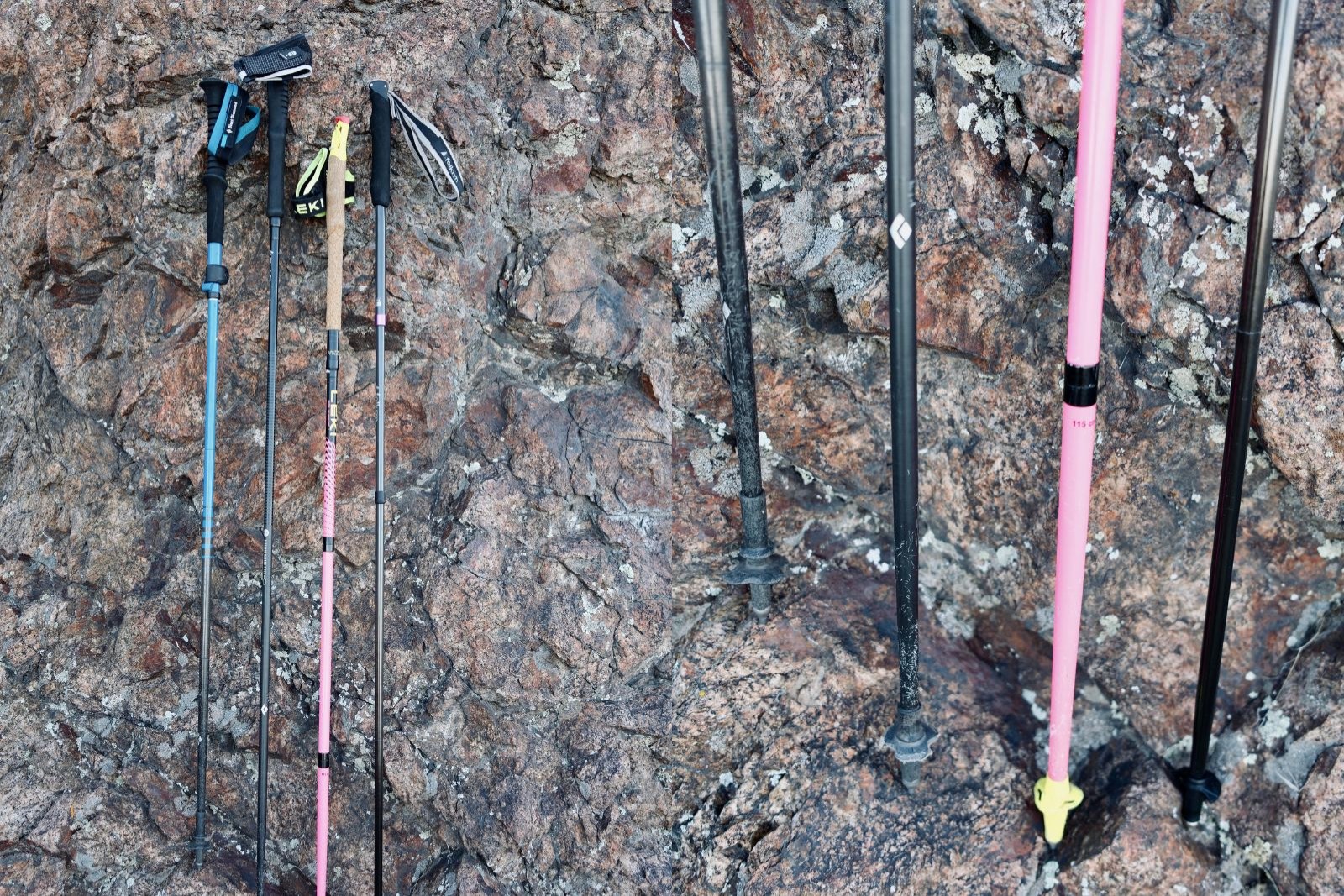
After putting all of these to the test, I've realized there isn't one perfect pole for every situation. The Folkrm Timberline is my current favorite for its combination of low weight, simplicity, thoughtful design, and convenient storage. The Black Diamond Carbon FLZ remains my reliable standby, particularly when I want adjustability or know I'll be dealing with varied terrain and conditions. And both the Leki Ultratrail FX One and Black Diamond Distance Carbon Z FKT offer advantages when it comes to power transfer and efficiency.
Ultimately, the best trekking pole is the one you can use without having to think too much about it. When I'm 200 miles into something questionable, I don't want to troubleshoot my gear. I just want to keep moving, preferably with a little less effort.
Trekking pole hacks: use them to lean on for a quick nap. When you start to tip over, start running again. A good way to keep the nap short (unless you have amazing sleeping balance). Also related to sleeping: point the handles (or tips, just be consistent once you decide) in the direction you are going when you lie down for a quick dirt nap.
Sign in or create a free account to comment. You'll come right back here.
Sign in / Sign up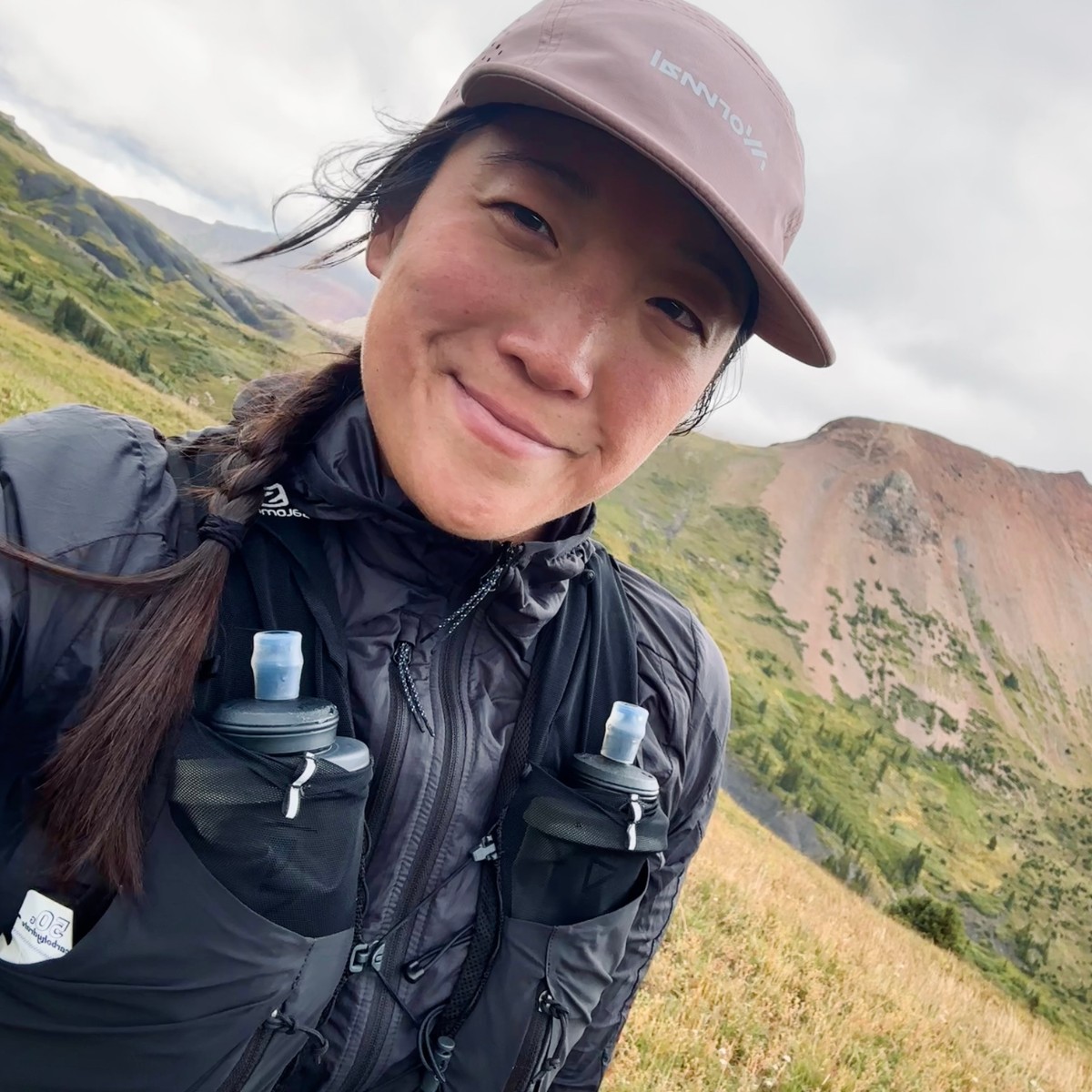

Alex is a trail and ultra runner originally from Minnesota, where she built her foundation on long winters and the rugged, rooty trails of Lake Superior’s North Shore. Now based in Utah, she trains along the Wasatch Front and continues to lean into long, multi-day efforts. She was the first female to set a supported FKT on the 310-mile Superior Hiking Trail and gravitates toward races that demand durability — especially in tough conditions, where sleep deprivation blurs the edges, and she’s learned to make friends with the hallucinations.
More from Alex